Category Archives: World War II

The View from Canada

This is a post from my Okanagan, Canada blog. It shows some of the lessons I have drawn from my recent stay in East Iceland, and explores what Gunnar Gunnarsson meant by poverty and wealth.
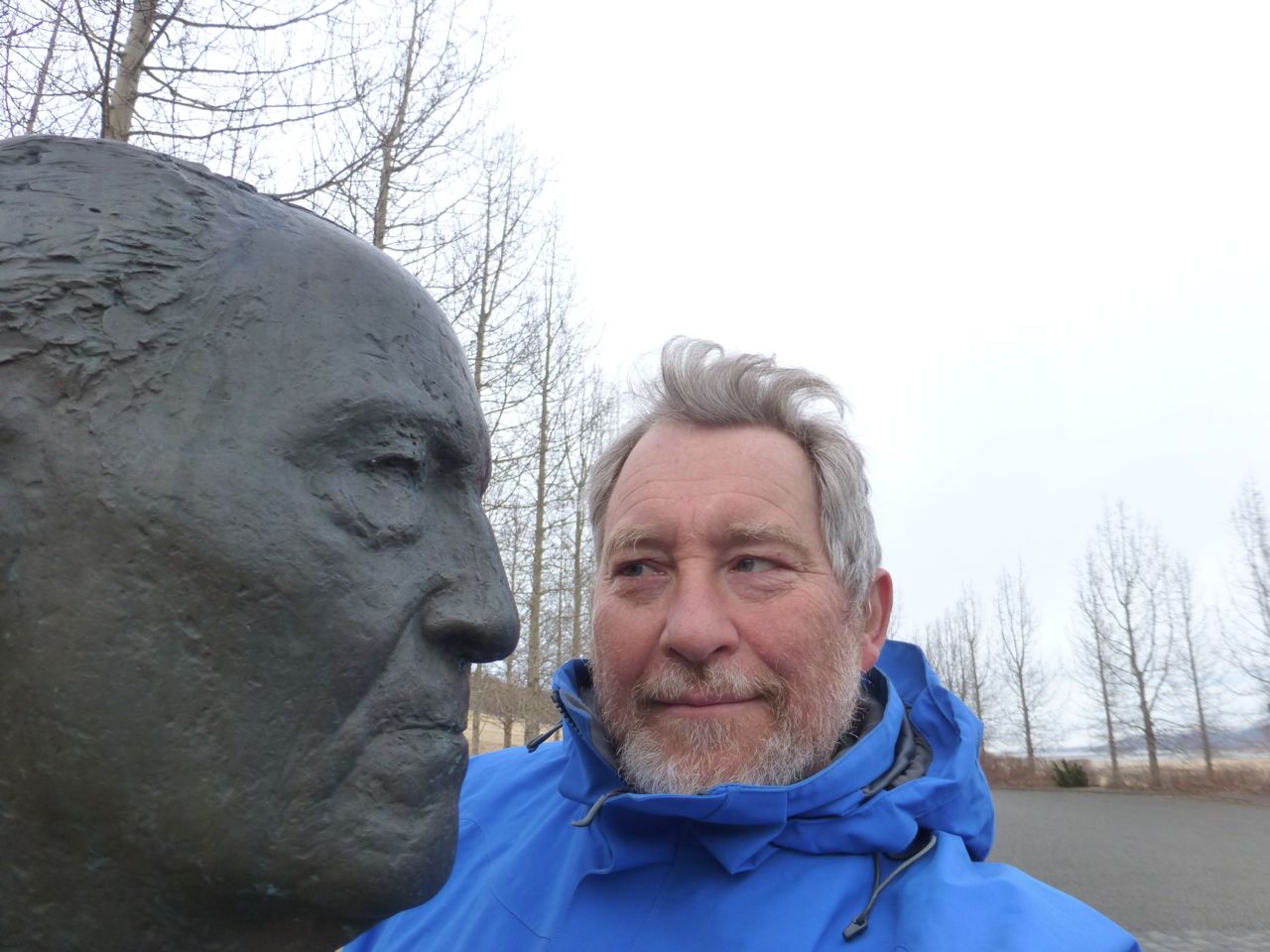
P1530046Harold and Gunnar

Sharing a last windy debate in the East.

What passes for environmentally sound practices today are deep reflections of an economic system, but they’re not green, and they’re not going to ensure either the survival of the earth or of our children. Right now, the City of Vernon, British Columbia is debating whether to keep spraying treated sewage water over indigenous grasslands, golf courses and soccer fields in infilled wetlands or to just pour it into Okanagan Lake. The issue is cost. The reason for that is that “land” and “water” are considered “raw materials”, which are “capital” in an economic system that mines the earth’s creative potential, without ever replenishing it. What I learned in Iceland over the last two months is that “land” and “water” are not raw materials, and creative potential is the only potential there is. An economic system that is complacent about wasting that potential has no future. The one green option in Vernon, to rebuild the grasslands so that the water is moved by the sun and gravity again, at reduced cost and leading eventually to no cost at all, or true wealth, is not part of the debate, although it should be leading it. Here, let me show you. Below is an image of Okanagan Landing, taken this morning, looking Southwest from the Bella Vista Hills.

P1590773

Now, let me show you the image again in an annotated version, so you can see clearly the story it tells.

annotate

A Story of a Lost Environment

The indigenous grassland in the foreground has retained at least some of its capacity to move and store water and to process it into food. The vineyard to the right has mined this environment for three raw materials: “sun”, “land” and “water”, in order to increase the sale prices of the houses on the subdivision above them. The water in the lake is fossil water, left over from the melting of the glaciers 10,000 years ago. It regulates the climate, and ensures that life can live on the hills. It is not for use. The infilled wetlands and the lost grasslands above them are irrigated with water removed from the system that feeds the lake through its forests, grasslands and wetlands. It costs millions of dollars to do, against the millions of dollars of free profit from the land that the earth would otherwise have provided. What’s more, almost all of this earth has been alienated from public use, for now and forever in the future. Now, let me show you a different economic model. This one’s from Iceland.

waterfallhut

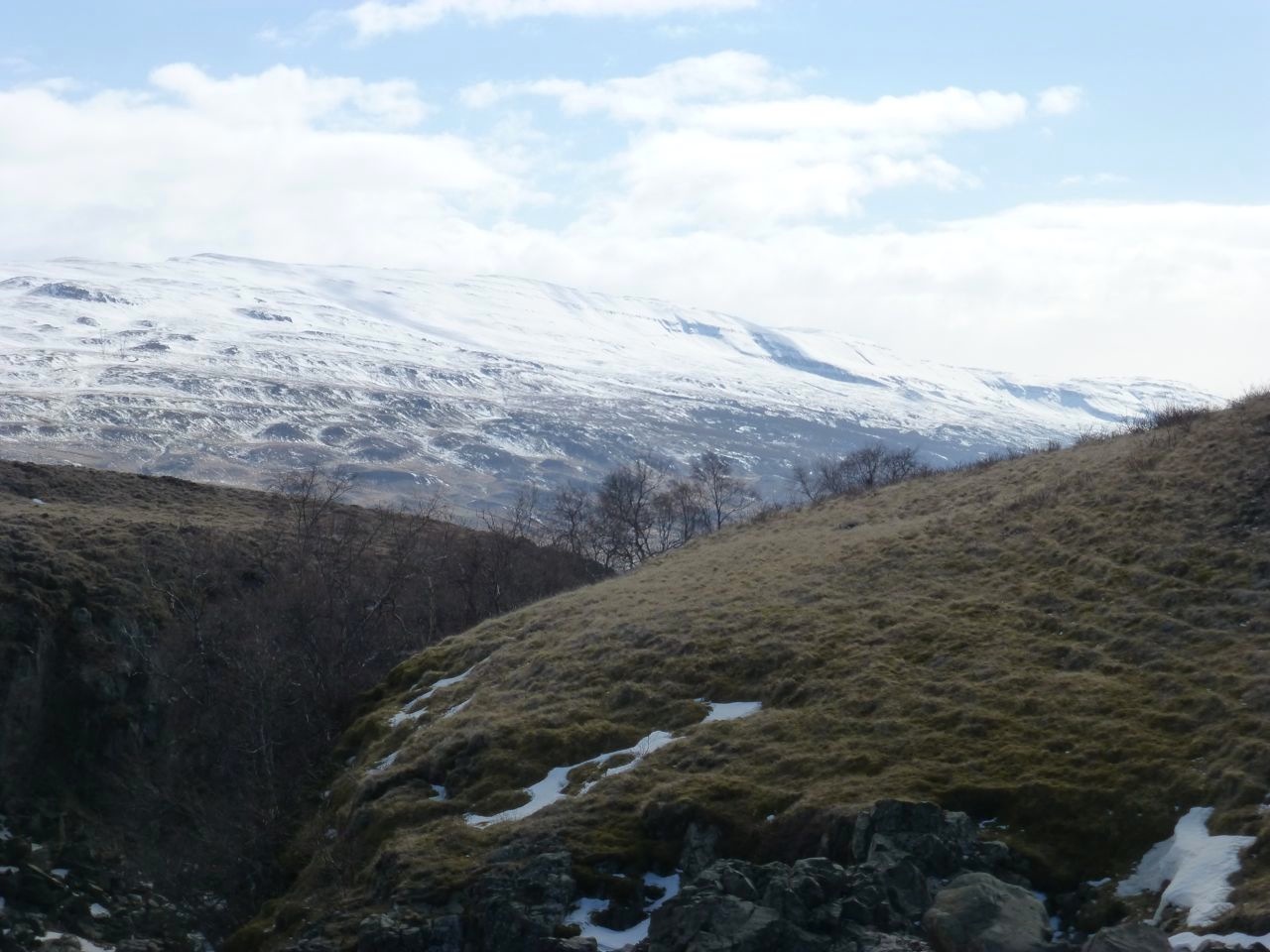
Just one of the Kazillion Un-named Waterfalls in Iceland, Suðurdalur

Now, take a look at the annotated version below, to see the story this piece of earth tells.

annotatedturf

This was once home. Although the over-grazing induced by poverty led to the depletion of the original birch forests here, the Icelandic system of retaining the creative capital of the environment has allowed for reforestation, without impacting future creative uses of the land, including such public uses as tourism or recreation. Future wealth has been created. What wealth was there in the past has been retained. This isn’t always quite what it seems. Here’s what that waterfall above looks like from the current road below …

junkEvery bit of wealth that has been removed from the cycle of this piece of earth, in the form of capitalized equipment of one form or another, has been used until it is out-dated, in the fashion of such products, and then is banked, so that the creative potential within it can continue to benefit the farm. It was never the product that was important, but what went into the product. The shape of a piece of metal is more valuable than the metal itself. Here’s that reservoir of creativity again, this time with my little rented Yaris. Someday, it will retire to a farmyard like this — where it will be no less valuable than it is today, ready for its creative energy to be mined for new purposes.
lotsajunk

None of this is junk. In a fully capitalized system, such as the one in Vernon, this material would be melted down and recapitalized as new material, and all of the human ingenuity it contains would be lost, as would the original investment, which came from sheep grazing these hills. As such, the above image is actually an image of environmental sustainability and green thinking. So is this…

hut

Ruined Farm, Reyðarfjörður, Iceland

Notice that the old turf-wall system has been incorporated into the new Post-World-War II system of using discarded American military materials. Ingenuity is something that Icelanders are loathe to waste, and which Canadians discard readily because in Canada’s economic system that ingenuity and the creative potential of the land it draws upon has long ago been mined, capitalized, and replaced. That all costs money. Not only that, it costs earth. I’m not romanticizing here. I mean, there are ruins in Iceland. For example, here’s a ruined turf house in Reyðarfjörður…

turfhouse And here’s the ruin of the post-War concrete house it was replaced with …

window Like the turf house, it was not built to last, because it was not removed from a natural process. It spent no creative energy. It only gave it form for a time. The thinking that went into the construction of this house utilized old scraps, such as the iron bar that used to tie the wall together above this window that looked out from the kitchen, next to the stove.P1440496

Over and over and over, the Icelandic writer Gunnar Gunnarsson pointed out that poverty is the greatest wealth. Those are the words of a man whose mother died of poverty when he was eight and who had so little economic wealth when he was young that it wasn’t a part of life at all. What then did Gunnar mean? Among other things, he meant this:

ropeBeach Wrack, Reyðarfjörður, Iceland

To any man who lived on what he could scrounge from land or sea, this rope would have been great wealth. It is now garbage, because it has no capital potential and thus, in a capitalized system cannot be exchanged for wealth. The seaweed that would have once fed the man’s sheep, is also now waste upon the shore — although it is as fully wealth as it was once in the past, and perhaps will be some day again. Gunnar meant more than that, though. He also meant this:

wallhouseMultiple Generations 

Stock buildings (foreground), fence, turf house, and boat shed by the water … this was Gunnar’s Iceland: a country where wealth that came from human creative energy meeting the creative energy of the land was built up over time. Its products (wool, lambs, children and so forth), were created directly out of this energy. In other words, they were creative products, not the physical ones that capitalization demands. As such, they could be sold without diminishing the land’s capacity to provide more creative energy — something impossible in a capitalized system, in which the wealth follows them, extracted continually from the earth, which is compensated only with money that can only be spent on products that lie outside of the land’s cycles and which must be continually replaced, generation by generation. This is what the Vernon model has done by removing water from the earth’s own economy and placing it in a technical framework, which must nonetheless be paid for by the land. These price includes a social cost, as real as any other economic input. Not only is the transformation of water into a utility economically unviable in the long term, but it costs this:

iceClose up of the Water Fall I Showed You Above, Suðurdalur

Without beauty and mystery, there is only enslavement and poverty. Let me put that another way: once the creative potential of earth has been spent, it loses all beauty and mystery and ceases to be earth. It becomes a product, and the people who live upon it become products as well. In the economic system in Vernon, British Columbia, every piece of earth gets removed at a certain point in history and “developed” — usually into subdivisions, and is no longer a part of the earth’s economy. Building that economy, however, is the goal of environmental sustainability. As the Icelandic model shows, it can be done in a couple ways, at least: one is to maintain an economy built on creative physical energy rather than on capitalization; another, perhaps more practical in our present age, is maintain that creative physical energy within the products already paid for and developed, such as this:

silhouetteHorse-Drawn Manure Spreader, Skriðuklaustur, Iceland

This piece of antiquated machinery represents the lives of hundreds of sheep and many men and women and horses who lived and worked here. It also represents the energy of its designers and creators, and of the men who mined the ore and the others that smelted it into the iron that made it, and the others that shipped it here. Withdrawals can be made from this bank of energy in the form of useful pieces of fabricated steel, which represent the social and creative energy that went into them, and which can be recombined into articles of new cleverness, not new machines, per se. Withdrawals can also be made more directly on the social capital of this machine, by turning it into art, or history, or tourism, or a deep sense of belonging, or respect, or a connection with one’s ancestors. That is what it is to be a human on this earth and of this earth. It is not a world of things. It is not a world of raw materials. It is a world of creative potentials, in which the economy is creation. The earth keeps giving us chances. It’s time to run with some of them. Here’s one…

yellowNot Green but Yellow and Blue

The photo doesn’t show it, but that’s a wild bee with a neon blue abdomen, on a dandelion growing in an overflow beach parking lot near Okanagan Lake. The bee lives on wild land, while domesticated bees are dying out. The dandelion has colonized land that humans have thrown away from their capital plans. It has, in other words, brought creation to it, and holds within it the potential for several new industrial ventures, which will enrich the creative potential of the land in the same way that the flower has by growing here, rather than than making withdrawals from it that it never intends to repay. Well, the earth is telling us that it is time to repay our debts. It doesn’t want our money. It wants us to create within its own economy. Rebuilding the earth would be a use of economic capital that would show a tremendous return on investment. Here, for instance:

sask3 Saskatoons in Full Flower

Another industry in potential. These lush, fruiting bushes live on free water.

… and here …

P1590753

Remains of Indigenous Gardens, Bella Vista

Yet more industry in potential.

And what are our politicians talking about? Sewage and money.
Gunnar Gunnarsson Secret Agent: the Transcripts

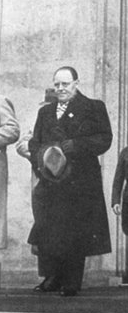
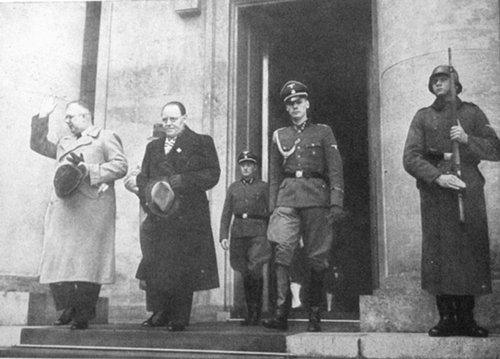
In 1940, the writer Gunnarsson went to Germany on a book tour, for which, among other things, he has been called a Nazi. I’ve been giving you photography that will be the heart of the book I’m writing about him, but there is a point at which his story as a man of the land clashes with the affairs of the world, and it was here, in the moment just before this photograph was taken …

gunnar_hittir_hitler_1a_lille_1172715

Iceland-Danish Author Gunnar Leaving his March 1940 Meeting with Hitler 3 Weeks Before the  Invasion of Denmark and Norway Source: http://fornleifur.blog.is/blog/fornleifur/entry/1257968/

From left, Hinrich Lohse, Gauleiter of Schleswig-Holstein, Head of the Nazified Nordic League Literary and Film Club of Lübeck, of which Gunnar was a member and under whose auspices he was on this tour (Lohse was soon to become Kommissar of the Baltic States as well), a hidden man in civilian clothes, Gunnar, two SS Officers (likely Werner Best, later the Nazi administrator of Denmark, and Otto Baum, later head of the Das Reich Division of the Waffen SS), and an SS guard.

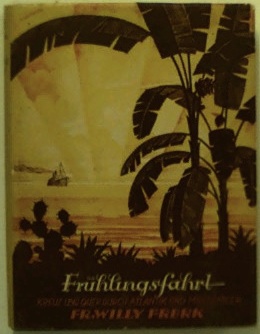
What was said inside that building that could make Gunnar so upset? I have been working on this for a few days now. Here’s my theory: in 1928, Gunnar went on a cruise to Atlantis (Ireland, Madeira, Teneriffe, Lisbon, Morocco, Seville, Mallorcca) along with, I believe, this soon-to-be-prominent Nazi-era photographer and photographic pioneer …

frerk

Frerk’s 1928 Book About a Cruise to Madeira, Tenerife, Lisbon, Morocco, Seville, Mallorcca…

There’s a big story about the Atlantis idea, but let’s just say that it was a huge fad at the time in many circles, including Nazi ones, that the continent of Atlantis (and its ‘advanced spiritual civilization’) had sunk into the mid-Atlantic in a volcanic explosion, leaving only the islands and cities mentioned above, plus Iceland. This isn’t that story. It is, however, the story of Gunnar’s decision to become a spy, without mentioning it to anyone, and to do so by writing cables back to Denmark that used literary language that could easily double as criticisms of the Third Reich’s racial policy. I believe that  Herman Wirth, one of the architects of that policy, may have been on the cruise, and I believe it was that voyage that the “non-existent” Luftwaffe installed and tested a prototype ship-launched fighter plane, disguised as a mail-delivery plane. At any rate, read Gunnar:
 “It’s good for one’s health to get off the ship. From the cool of the ship and the shadows of the quay, one rises on smooth, wave-beaten steps of stone into the deafening sunshine. The humming of the sun and the murmuring of the sea boil together in one’s head; one becomes dizzy. Out of the boiling light, a pair of heavy palms suddenly cut themselves; there they stand, with their blank green, sharply drawn against a blinding white wall.”

Gunnar, Islands in a Great Big Sea, 1936 (originally published in Copenhagen’s Politikken, 1928)

Sure, it could just be the words of a man on a romantic cruise with a woman who was not his wife, enchanted with the landscape, in love, and catching a glimpse of exotic green trees in a stunning landscape, not the need to escape from the odd, racist environment of the ship’s dining room conversation, or the security personnel in plain clothes (or not). Still, the book doesn’t really read like that, and his next books, Vikivaki (1932) and “The Good Shepherd” (1936) read as parables, which can be read anyway you want, depending on your prejudices. “The Good Shepherd” certainly was. It was used as propaganda by the Germans, the British and the Americans, and then at the close of the war was among the books that suddenly read as secret condemnations of the Nazis, published from within the Nazi Propaganda Ministry. At any rate, more on that story later. There is a third text, even less widely distributed, and that’s the speech Gunnar gave in 44 Third Reich Cities before meeting Hitler, whose support of Gunnar’s books [albeit as propaganda material for a Scandinavian annexation] had made Gunnar very rich. I believe this speech, called “Our Land”, was a correction to the message in “The Good Shepherd”, and was intended to correct the propaganda aims to which that book had been put despite Gunnar’s efforts to keep it as a message of peace extended to all men, regardless of their politics. A passage from this text is just below. When you read it, remember that Gunnar’s friend from the pre-Nazi Nordic League, Fritz Höger, who had wanted to be the Reich’s leading architect and redesign its buildings along North German (ie Danish) lines, had lost out to Albert Speer, who was responsible for the monumental, kitschy architecture that came to represent the Reich (including the building in the image above). Here goes:

“What is necessary is to open the eyes of Icelandic youth to Icelandic nature and its beauty. Not as if they don’t see it; but do they know what they see? Have our youth been lead to understand clearly for themselves, what goes well within our Icelandic landscape and what less so? At the very least one sees no sign of it in the newest of Icelandic buildings and the way people carry on through the country and even, at times, in the villages themselves. It pains one to see the way the land is mishandled and alienated through tastelessness, through kitsch, which will lead only to a a weight on the people themselves and bring disrepute to our land and our people. It is far better to view the inner life of people in the way it views itself, without outside direction, than to do so with words and discipline. To see the right path from these roots is more important than one might think from a distance. And, at any rate, one sacrifices little if one holds to taste and good manners. And if it ever should be time to talk of sacrifice, our land has already earned it completely, and our joy at its beauty will never be complete, so long as these things are not put into an order that no longer give any cause for rebuke.”

I believe that Hitler heard that exactly as he was meant to, behind his tiny desk in its huge room like a concert hall in the Chancery in Berlin, where he usually greeted heads of state. He would have heard this…

“What is necessary is to open the eyes of German youth to German nature and its beauty. Not as if they don’t see it; but do they know what they see? Have your youth been lead to understand clearly for themselves, what goes well within their German landscape and what less so? At the very least one sees no sign of it in the newest of German buildings, built by that idiot Speer, with his head in Italian clouds, and the way people carry on through the country and even, at times, in the villages themselves. It pains one to see the way the land is mishandled and alienated through tastelessness, through kitsch, which will lead only to a weight on the people themselves and bring disrepute to our land and your people. It is far better to view the inner life of people in the way it views itself, without outside direction, than to do so with words and discipline. To see the right path from these roots is more important than one might think from a distance. And, at any rate, one sacrifices little if one holds to taste and good manners. And if it ever should be time to talk of sacrifice, your land has already earned it completely, and Höger’s and my joy at its beauty will never be complete, so long as these things are not put into an order that no longer give any cause for rebuke.”

After all, both Gunnar and Hitler shared a believe in the identity of Iceland and Germany as Nordic states united in brotherhood — they just understood that differently. Here’s Gunnar a little later in the speech (Remember, at this time the British and the Americans hadn’t invaded Iceland and there were no appreciable building projects of any kind, but there were in Germany)…

Few lands that can call themselves populated are so little touched by the traces of time. Here it’s not, as it is in richer territories, buildings and the works of man that make a land appear all-powerful. On the contrary. In the past, the houses stood so simply and artlessly in the land that they were hardly to be reckoned as houses, and human habitation snuggled into the landscape and passed well with it. In recent times, a massive change has stepped in to this relationship, and sadly not for the best. It is sad to see how foreign so many of the new houses appear above their home meadows and how ugly and gauche they clash with the Icelandic valleys, among its rivers and against the strata of its mountains. Regrettably, out of tastelessness, which they are also anchored within, springs only decline and bad fortune.

Again, neither of these two men were stupid (That Hitler was evil is another matter), they shared a symbolic language, and I believe that what Hitler heard went much like this:

Few lands that can call themselves populated are so little touched by the traces of time as Germany. Here it’s not, as it is in France and Italy, buildings and the works of men [the Nazi Party] that make a land appear all-powerful. On the contrary. In the past, the houses stood so simply and artlessly in the land that they were hardly to be reckoned as houses, and human habitation snuggled into the landscape and passed well with it. In recent times, a massive change has stepped in to this relationship, and sadly not for the best. It is sad to see how foreign so many of Speer’s Greek palaces and your new Autobahn bridges appear above their home meadows and how ugly and gauche they clash with the German valleys, among its rivers and against the strata of its mountains. Regrettably, out of tastelessness, which they are also anchored within, springs only decline and complete and utter defeat and destruction.

In both of these speeches, a tiny change, well within the compass of the title “Our Land” and Gunnar’s relationship with the audience to which he was speaking, bring out an amazing subtext. Gunnar’s 1930 novel “The Black Cliffs” demonstrate that he had the depth of writing skill and the depth of psychological understanding to attempt to pull this off. Can any of this be proven? No, hardly. It does, however, make absolute sense. If it is in any way true, however, Gunnar’s reputation as a early-to-mid-twentieth century writer needs to be reassessed. If this is what Hitler got out of those speeches, the conversation inside that building, of which Gunnar never mentioned a word, would not have gone well. Any other writer who had tried to use his authority as a writer (and none were more famous or sold better or were more beloved than Gunnar) to trump Hitler’s had wound up in Buchenwald, even Ernst Wiechert, whose Baltic folktale novels were very similar to Gunnar’s nordic  ones. If such a half-veiled threat had been made, and was accepted bluntly and openly rather than as the psychological suggestion I think it was intended as, Gunnar’s expression would have been understandable, especially given the company he has on those steps. Here is that photo again:

gunnargrimaceGunnar Gunnarsson: A Man Trying to Broker Peace?


A Vision for Writers from a Sculptor

There is a line that makes a story. It’s the path any person can walk along to get from one place to another, or the one my dog used to always find in the weeds, because the edges of the gravel are where everything happens, or maybe it’s just because it’s just where someone has passed by. This is a problem that doesn’t even bother sheep.

P1420751

Sheep Tracks, Hengifossá Canyon

If you leave enough tracks they don’t make a trail. They make a net. A net’s a great thing, but if you catch the world with one, what then? Where are you going to drag your catch? 

Maybe it’s not so hard. Maybe sometimes writers just need to be dragged out of their words and given a new pasture to run in.

blue2

Icelandic Writer Staying Close to Home at Feeding Time

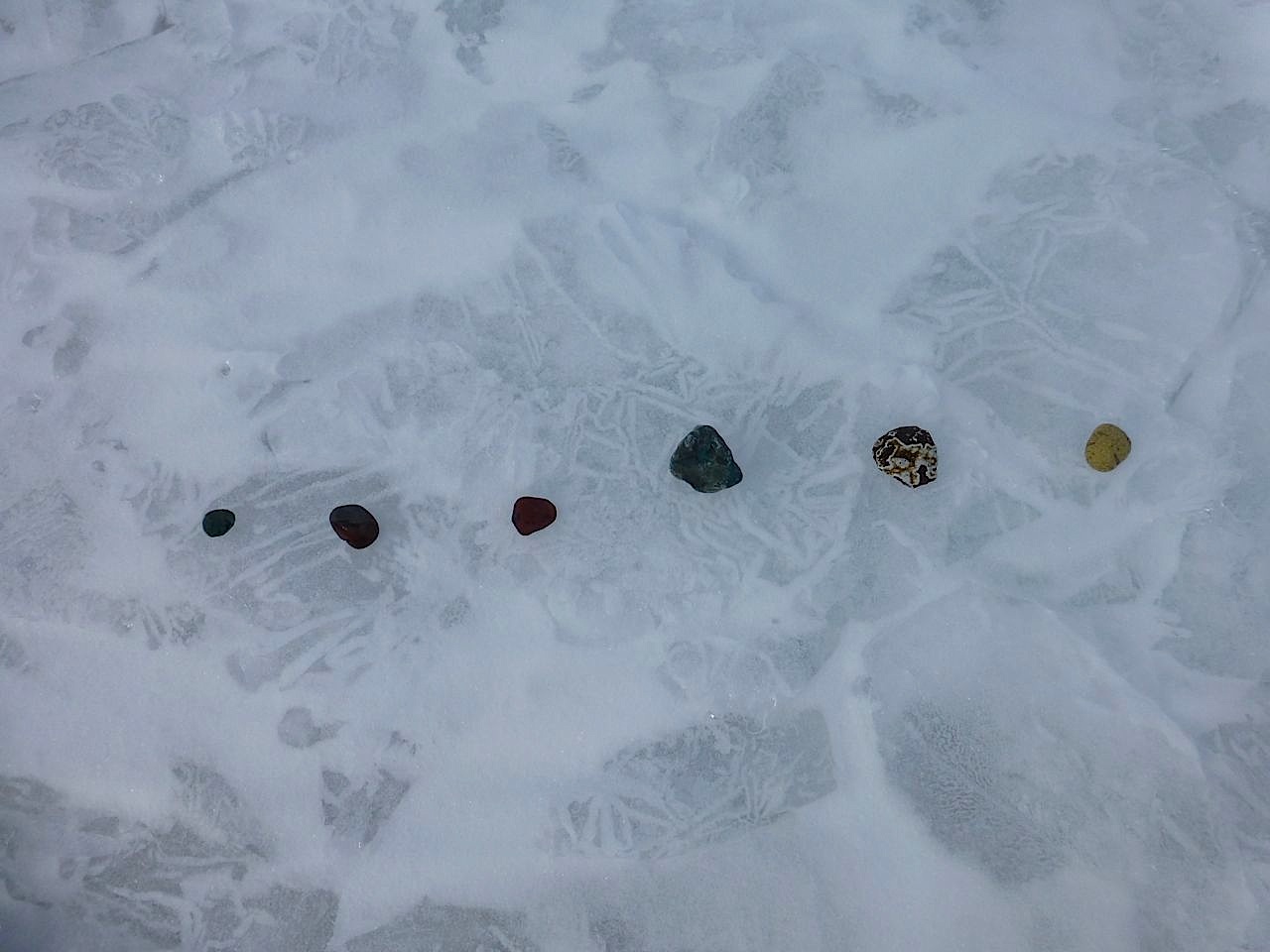
Or maybe not. Maybe it depends. A couple days ago the sculptor Ken Blackburn asked me to go out and make a line in Iceland. Everything in the world, he said, starts with a line. So, I made a line. I liked this idea. I could feel what the very beginning of something looked like, and not a story already made which I stub my toe against, which is usually the case. Gunnar’s story (whose house I haunt here) is certainly like that. And would you just look at what found me in its first moment, as I set it into the world …

littlelinecloserA Line of Volcanic Stones

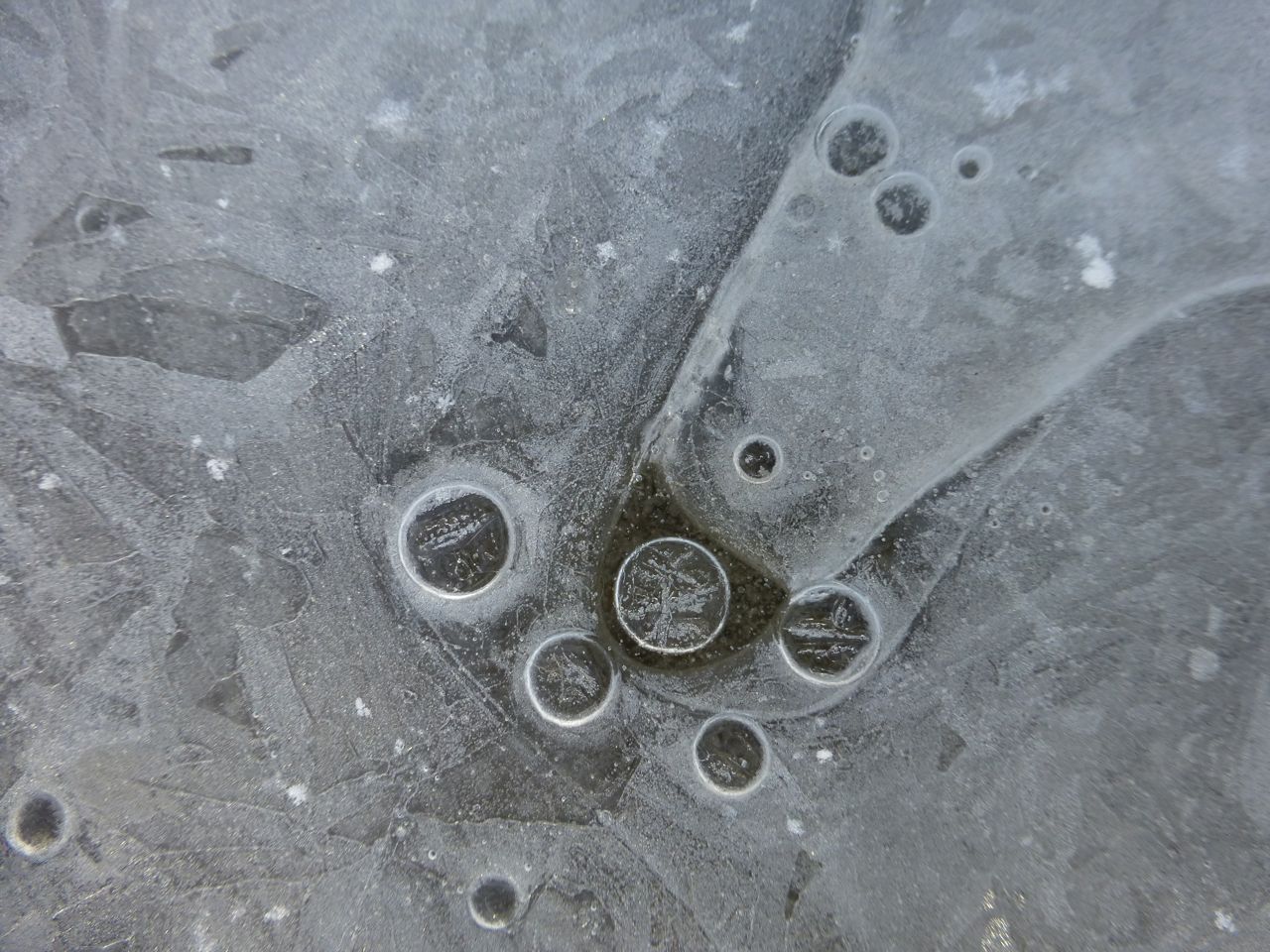
In this case, the edge is in the midst of the ice. It leads from itself to itself, and quivers there, while the ice could just as well extend to the edges of the universe. Maybe it does. Maybe it’s only humans who say, “Look! There’s an edge to this stuff.”

Imagine what a story would look like if it were written like that. The beginning and end would lie side to side, cuddling up close in the centre, and all the rest of the story would stretch out in folds of sheets and kicked off blankets to the sides. You might have to pick up the book, and read it any way you wanted. The edge would always find you. Maybe I didn’t stub my toe against Gunnar’s story. Maybe, as a man largely of the 20th century (so far), I was always in it and by walking far enough stubbed into the line that was always there — maybe at the centre, maybe way off to the side … who’s to know in a spherical world? But you see, that’s a writer thinking. What did Ken say? Make a circle, he said. A sculpture, he said, is just a line, too. A circle! Aha!

P1430091Well, Sort of a Circle

And, this right on the sight of that original line, too, which looked like this when I showed up today …

P1430070

Gone!

A most unwriterly art form. Writers are always thinking about making a mark that stays. This one, though, is gone … it’s finished. 

Still, a circle, eh. A story that was a circle and not a line, that might have a swan feather in its belly, that might at any time be blown off by the wind … what a book that would make: a book that would mean anything at all, depending on who you are. But wait… I know some books like that. They were the books that Gunnar wrote in the 1930s, especially his “Advent in the Highlands.”

51jjvzSMACL._SL500_SS500_

Advent in the Highlands

The Approved by the 1936 German Propaganda Ministry Version

Don’t jump to straight lines. That book, that Gunnar wrote to promote peace, was used to send German boys to Czechoslovakia, but 4 years later it was used to generate an American desire to go to war, in this edition:

0A36.3L

Advent for Americans

A message of peace for both sides — that circle was Gunnar’s intention. That it was used for other purposes was not. 

So, circles. I thought, well, what if a circle is not alone? What then? So I tried to find out …

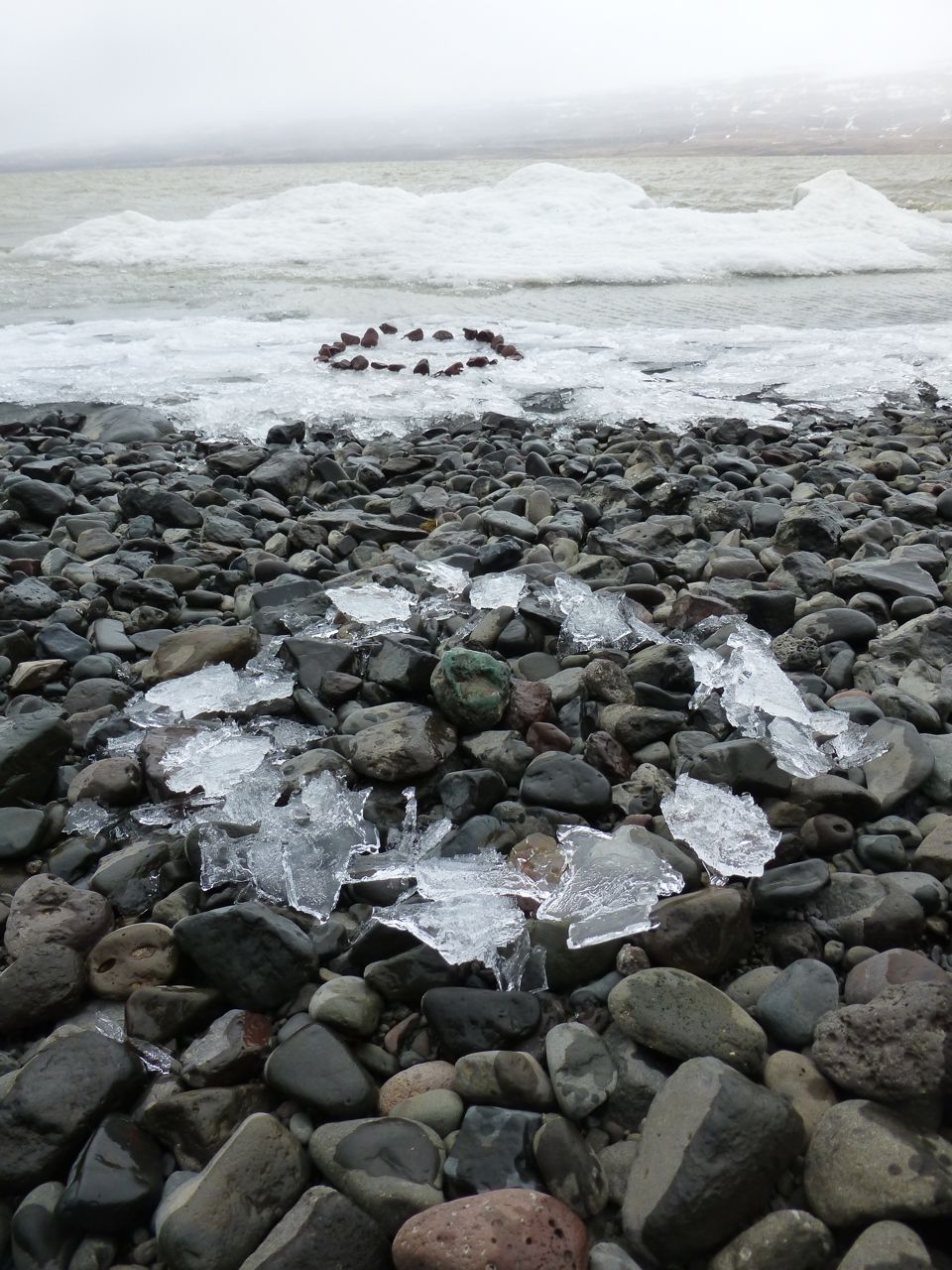
P1430110

Two Circles

 Well, that felt good, you know. Look how they turn the space between them into a … well, not a line exactly, but a space that could be a line, or anything… a space of possibility. Not a No-Man’s Land, but an All-Man’s Land. So, I wanted to see how far this would go…

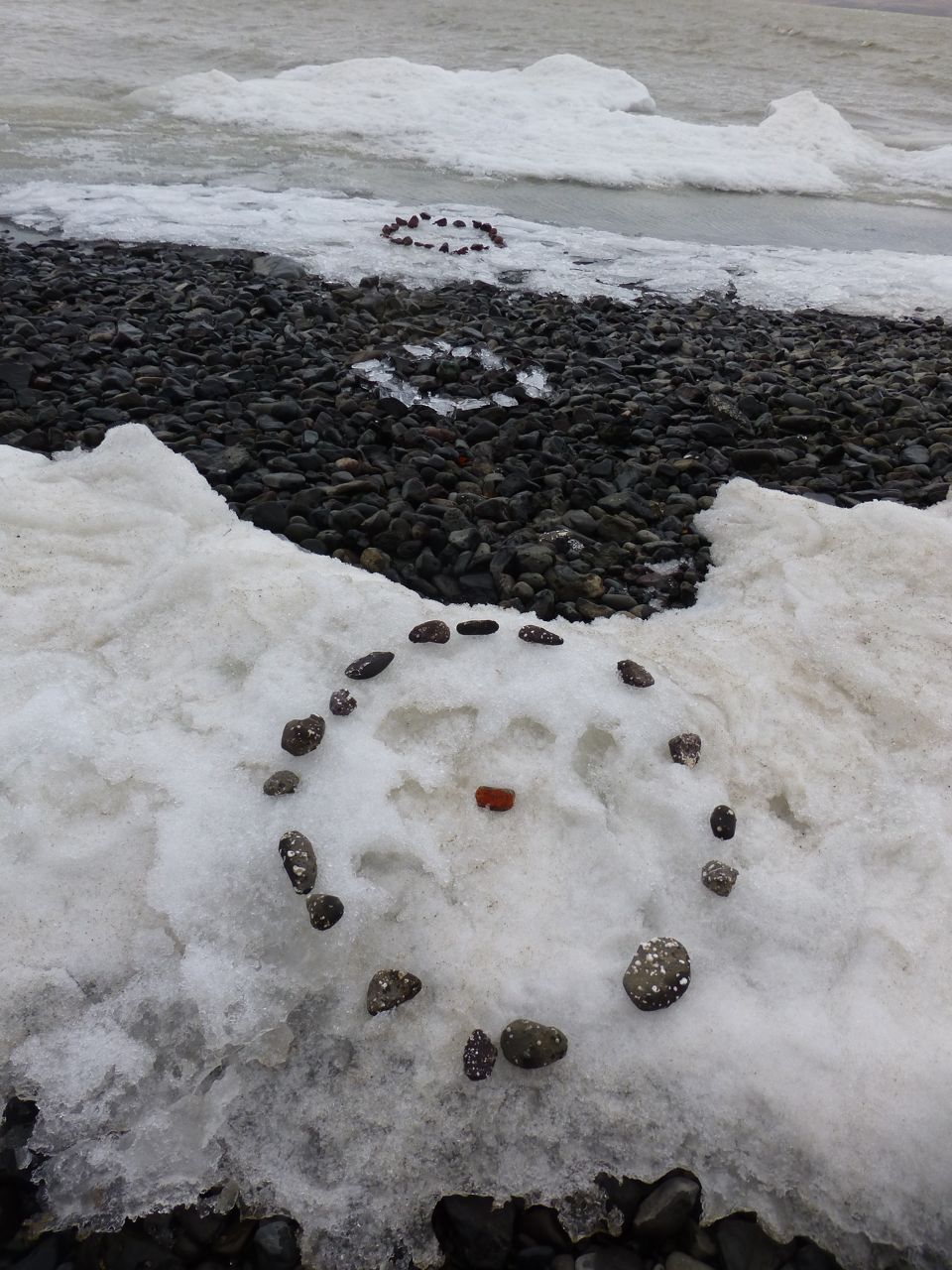
P1430114Three Circles!

Now there’s a line and no line, and the middle circle is within the position of possibility.

What would a story put together like that look like? It wouldn’t be a story, for one thing, so much as a bunch of stones and ice on a beach that the writer and readers could all walk around in together and stub their toes against … but would that be a bad thing? Is that what Gunnar was missing? A third circle? I mean, his stories were all about this…

iceringThe Shore of Life

It separates the island from the sea, or the colony from the colonizer, in Iceland’s case, and is deadly and life giving at the same time. Death and life are inseparable in Gunnar’s world. He does not means this as an easy sentiment.

But what if in all his haste to tell a story, to try to save Iceland from colonization and other invasion, through the admittedly ridiculous medium of words, he missed this?

P1430151They Float on Light!

Maybe novels and their traditional structures were the net that caught Gunnar. Maybe that’s an important lesson in literary form, learned from sculpture. I think it is.

Gunnar Gunnarsson and the Nazis

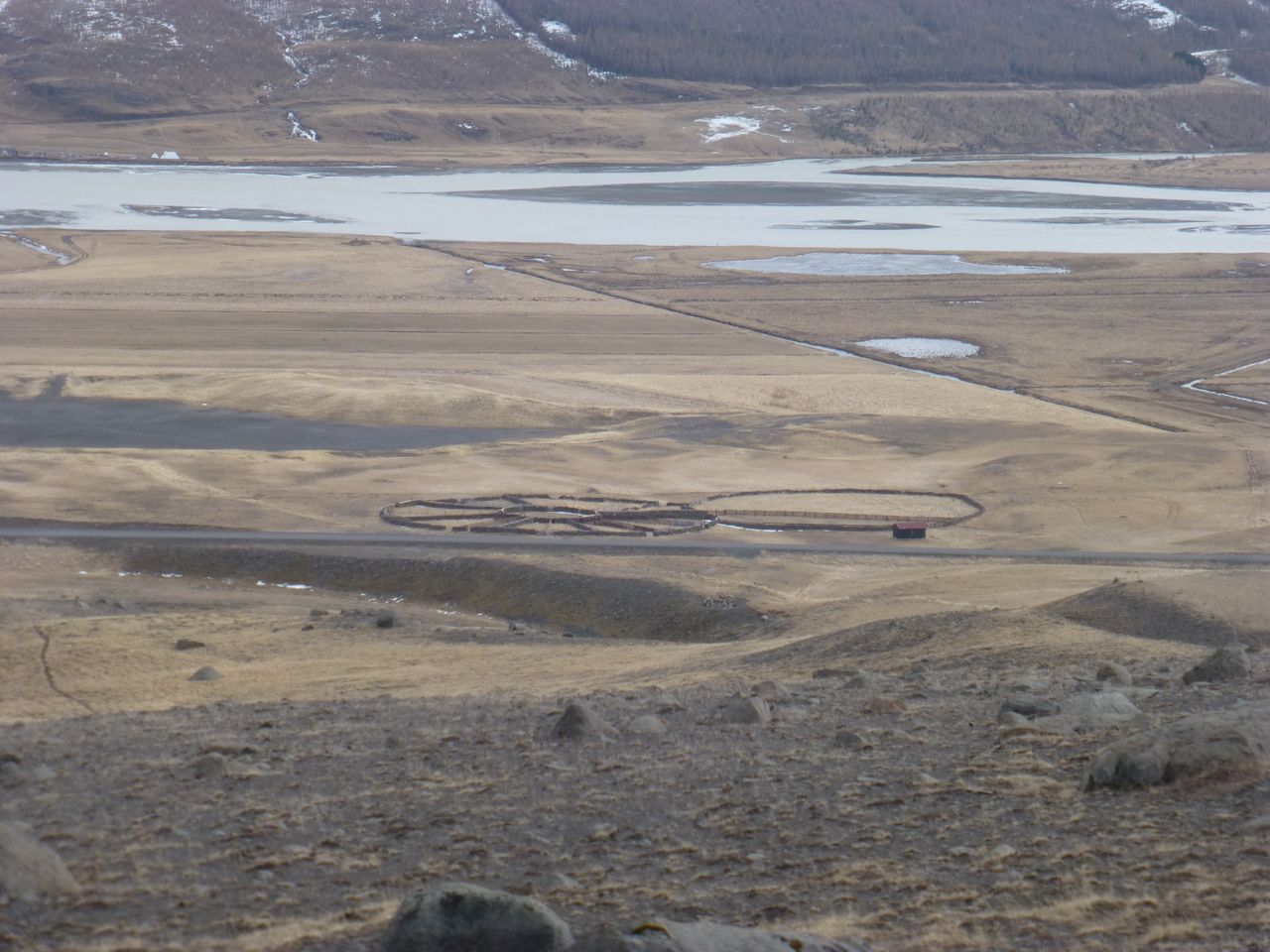
“Nazi” — the word means so many things that it is close to meaningless, and that’s a problem, because the real Nazis were a group of vicious, dangerous thugs with an ideology that continues to attract a disturbing number of people worldwide. Nazism should be strenuously guarded against, because its outcome is misery and chaos. So, let’s use it accurately, as the first line of defence against its resurgence and the first act of understanding the complexity and diversity of what went on in Germany during the 1920s, 1930s and 1940s, and what is still going on around the world. To set the record straight, Gunnar used this sheepfold …

fold

to sort sheep as part of communal activity. In contrast, Nazis used this pen …

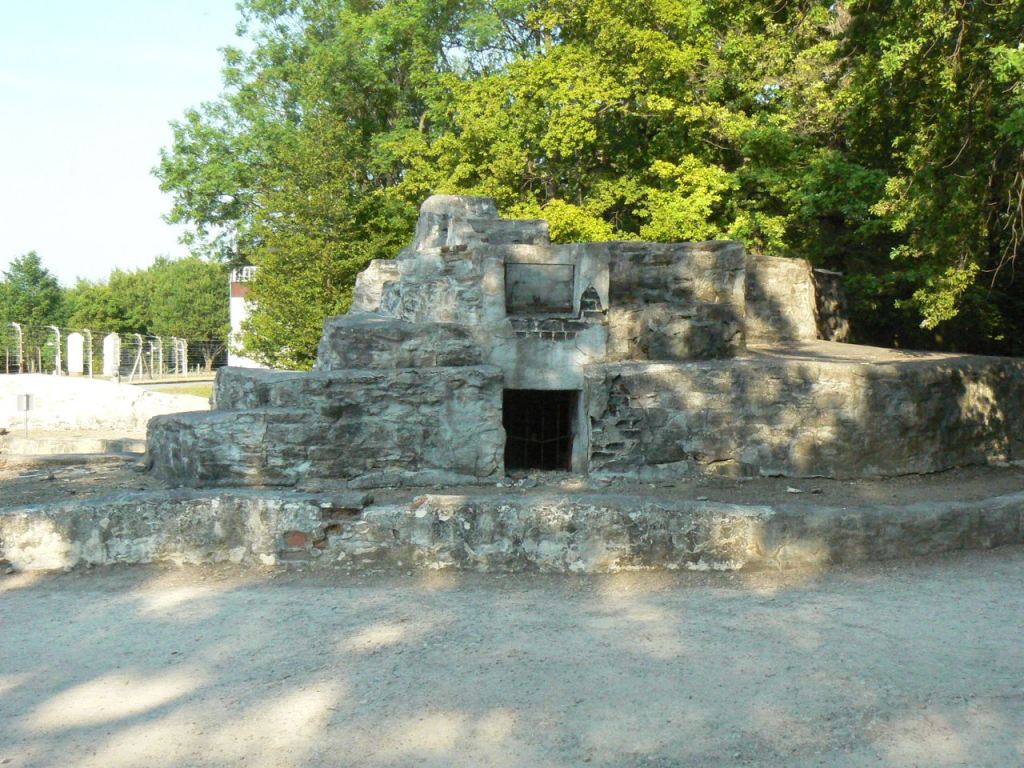
p1140486Nazi Zoo at Buchenwald

… to stage bear fights, as a lesson to new guards about the need to have no squeamishness about violence against Russian prisoners and communists, who, after all, were “Russian bears” and “beasts” were known in Nazi ideology to be politically self destructive, and used the electrified fences of the camp (right beside the zoo and visible in the upper left of the image) to herd people and spiritually and physically destroy them. Today I am writing an essay about the complicated relationship between Gunnar and the Nazis, but, ultimately it is as simple as the difference between these two types of fences and the uses to which they were put.


Colonial House Building 101, an Icelandic Novel

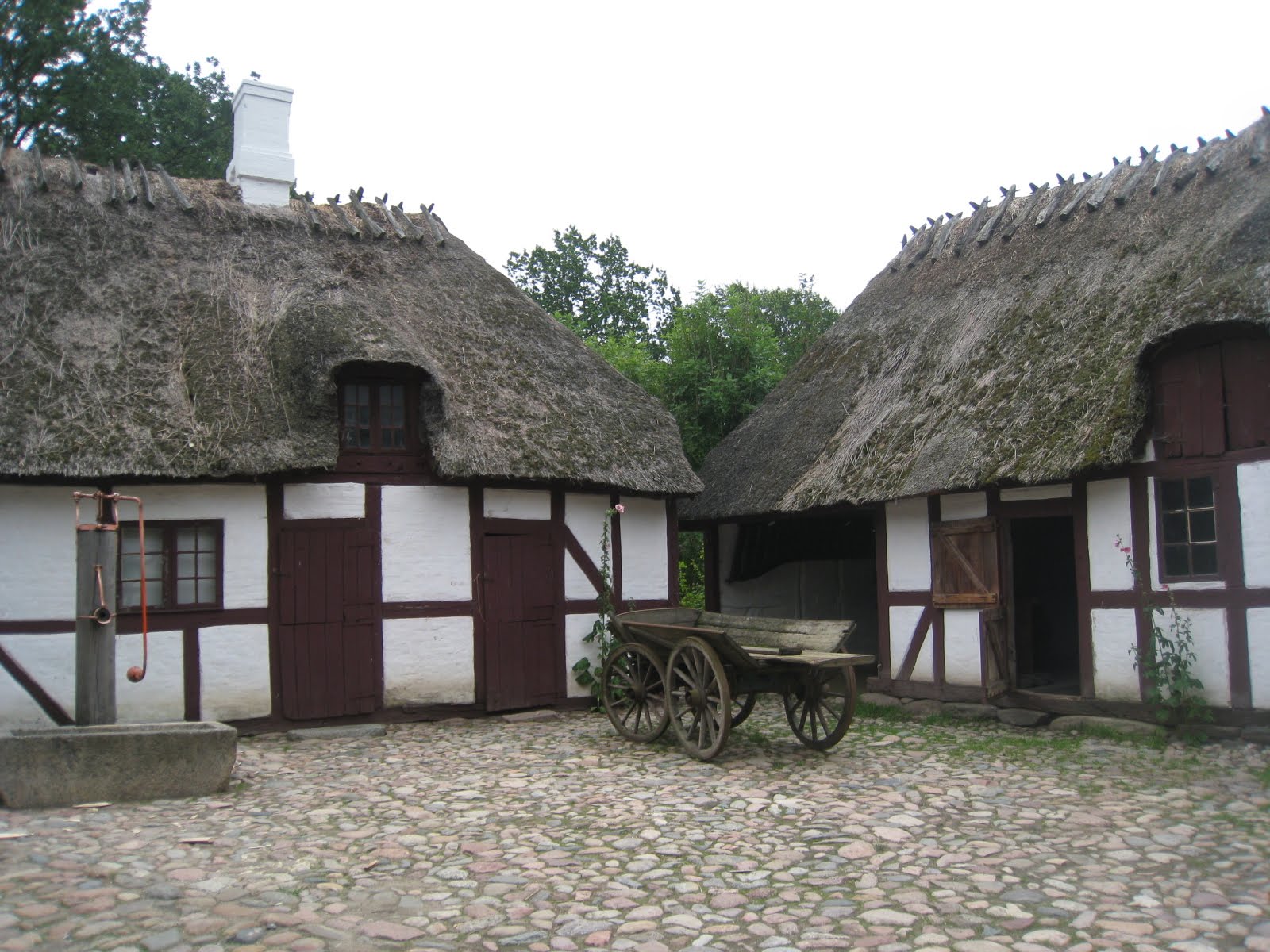
Gunnar Gunnarsson, Novelist and boy from the colonies, left Denmark (the colonial heartland) in 1939 to build a farm on Iceland (the colony) that would provide in a physical form the cultural direction of his novels. His friend the North German architect Fritz Höger, who volunteered to design Gunnar’s farmstead, had in mind something like this …

010Half-Timbered Danish Farmhouse

Den Fynske Landsby, Fyn, Danmark. The working courtyard in front follows the ancient Norse (and thereafter Icelandic) architectural model of a tun, an open air working room between buildings. Gunnar’s farmstead was to have a large an open tun between buildings, which was abandoned when the additional buildings were never constructed.

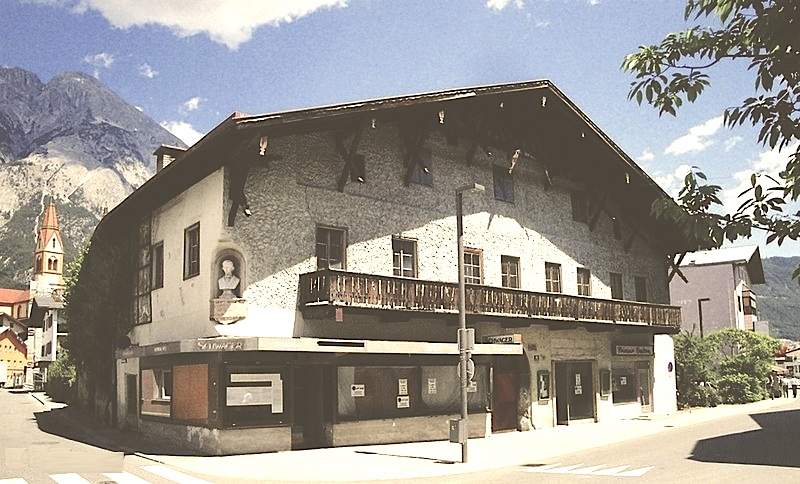
A German architect building a Danish-style building on Scandinavian soil for a man who lived his life between the German and Danish worlds would be a way of making peace with the Prussian takeover of Schleswig Holstein (Höger’s area of Germany) from the Danes. It was, of course, the time of an ascendent Nazi Germany, so the idea of a country house built by a German architect would contain some notions of German country houses, and in this case, a Tyrolian one (dominant at the time, with the annexation of Hitler’s Austria fresh in everyone’s minds, and all) …

Telfs, Untermarkt strasse, Tirol, AustriaTelfs, Austria

Note the balcony. It provides a commanding viewpoint. A central part of Höger’s design was to build a large terrace in a roman or Italian extension of this model. An absolutely key part of German culture is that Germans like to live outside. Their terraces are their summer homes. It’s not quite like that for Canadians, like myself, or Icelanders, who lives in countries a bit less amenable to lounging around in the cold. Still, what was done was done. What Gunnar had in mind was a totally different idea of living outside, much like this …

landhusLandhus Farm Barn, Fljótsðalur

This is a variation on the icelandic version of the previous two architectural methods: build the house out of the materials of the earth itself; your whole life is lived within and on the land. In such a situation, a terrace is rather redundant. Gunnar was committed to the idea of human habitation fitting into the land as if it were not even there, or as if it were an extension of it, like this…

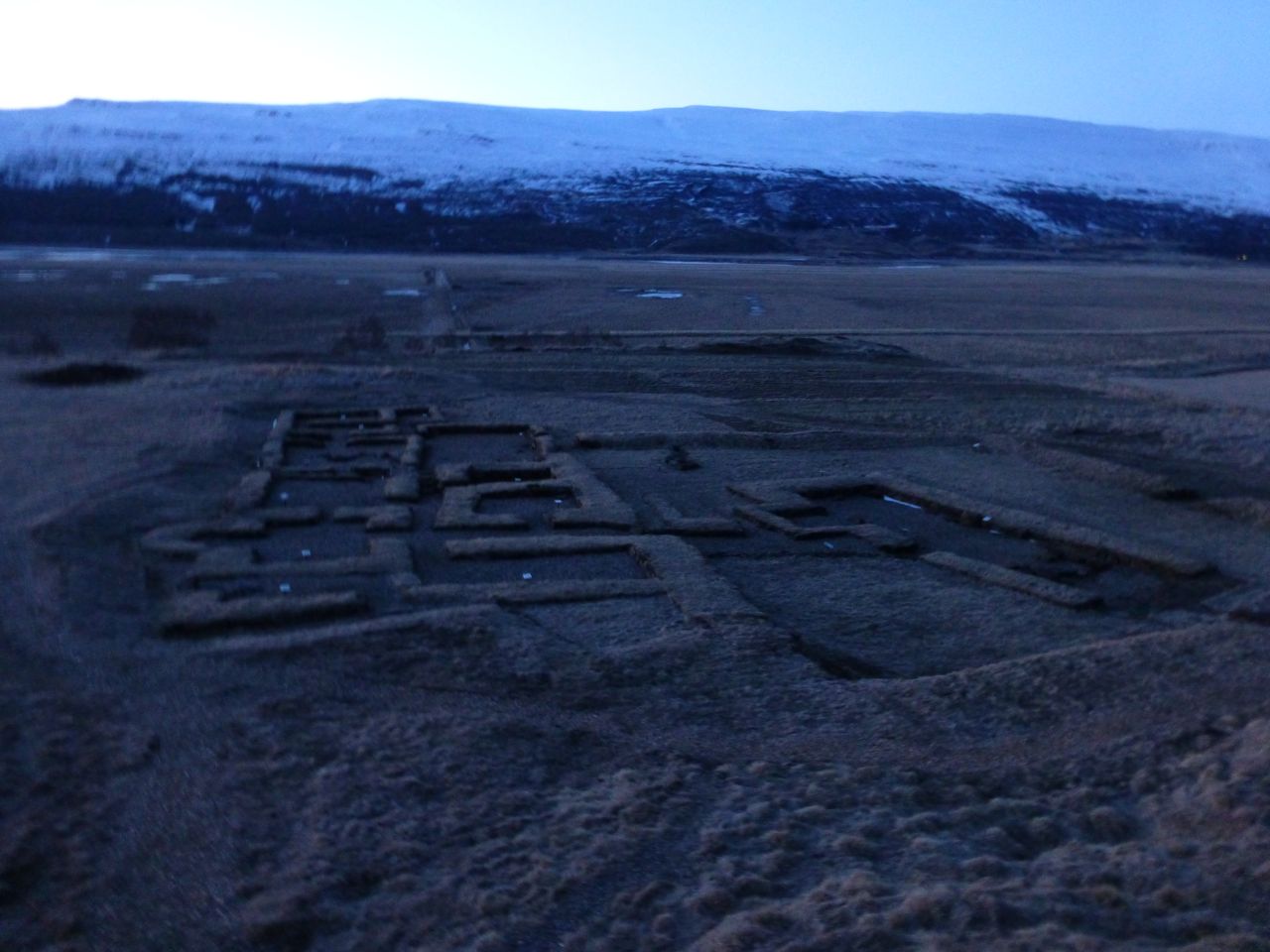
housepointThe Foundation Walls of a Former Turf House

Overlooking the Lagarfljót

What he got is more like that than other houses in Iceland …

snugGunnar’s House Seen from Down the Hill

True to Gunnar’s vision, it changes colour with the seasons. True to Fritz’s, it is made out of cemented, rather than stacked stones. Fritz had in mind cut, square blocks of good German rock. There is no such rock in Iceland. The local boys settled on round stones from the river. Score: Germany 1; Iceland 1. A draw.

Thing is, Gunnar’s whole idea was that architecture, and especially how it fit into a landscape, determined the soul of a people and their ways of thinking. He was dead set against putting non-Icelandic architecture within Iceland, as it would, he felt, damage the people and their ability to survive. Now, one reason his farming venture failed is that there was war (started by his readers, the Germans), and a resulting invasion of Iceland by the British and the Americans, who paid so well for labourers to build their infrastructure that there were no surplus young men to care for animals like this …

top

Icelandic Ewe Demonstrating Ancestral House Roof Clambering Technique on a Hay Bale

Go, girl!

… and in this way the war ripped out the economic underpinning of Gunnar’s farm. What’s more, the rough and ready construction methods the young men learned on the American and British bases had a kind of effect that eventually led to this…

red

Definitely Not Gunnar-Approved Architecture

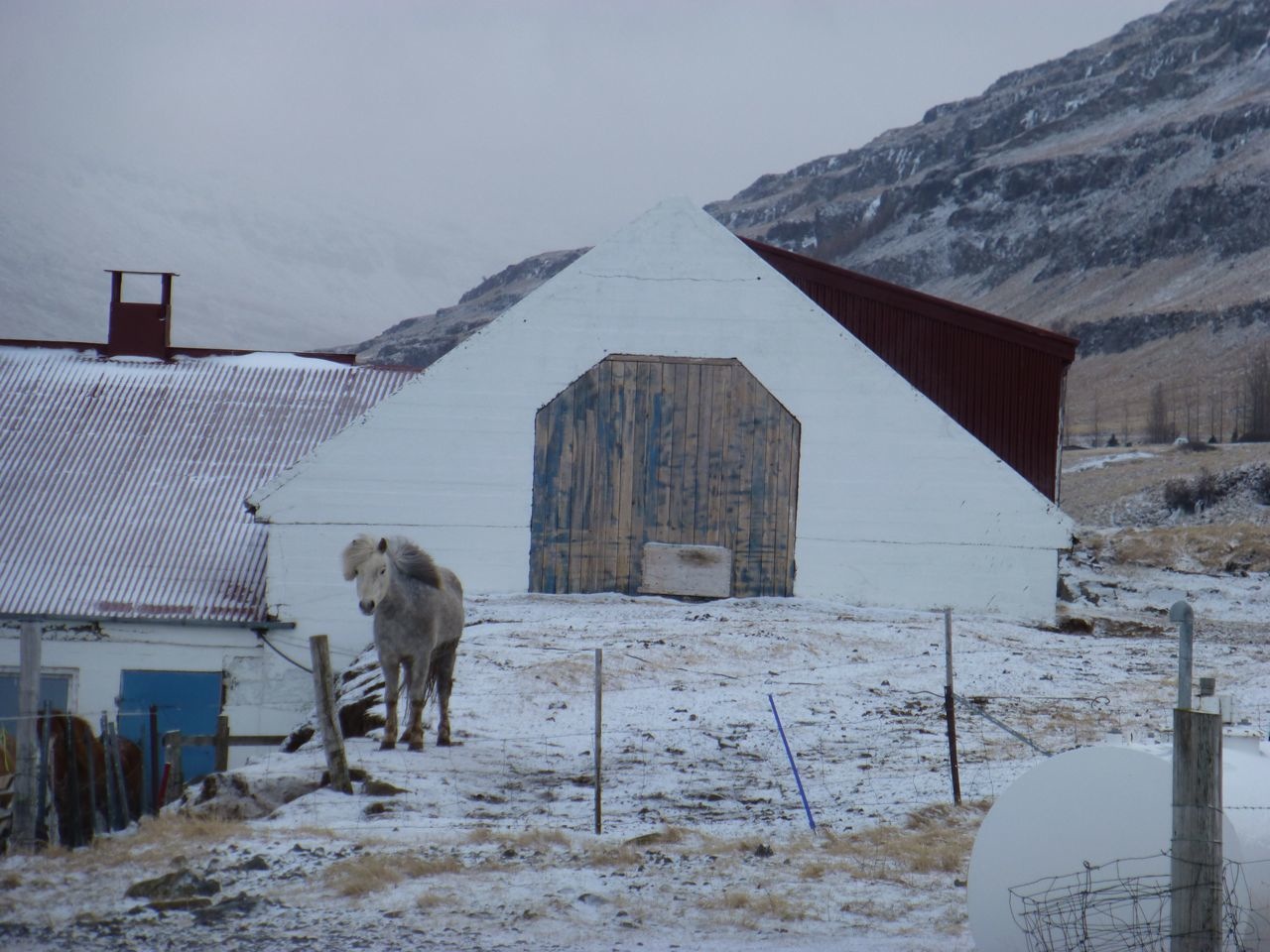
Thrown together for reasons of utility and nothing else. That is what farms look like throughout Iceland. There doesn’t appear to be the money on many to build anything better and, besides, it works. This kind of raw utilitarianism would not have appealed to Gunnar, and he would have feared that it would have led to sloppiness. He might have seen this, for example, as a consequence …

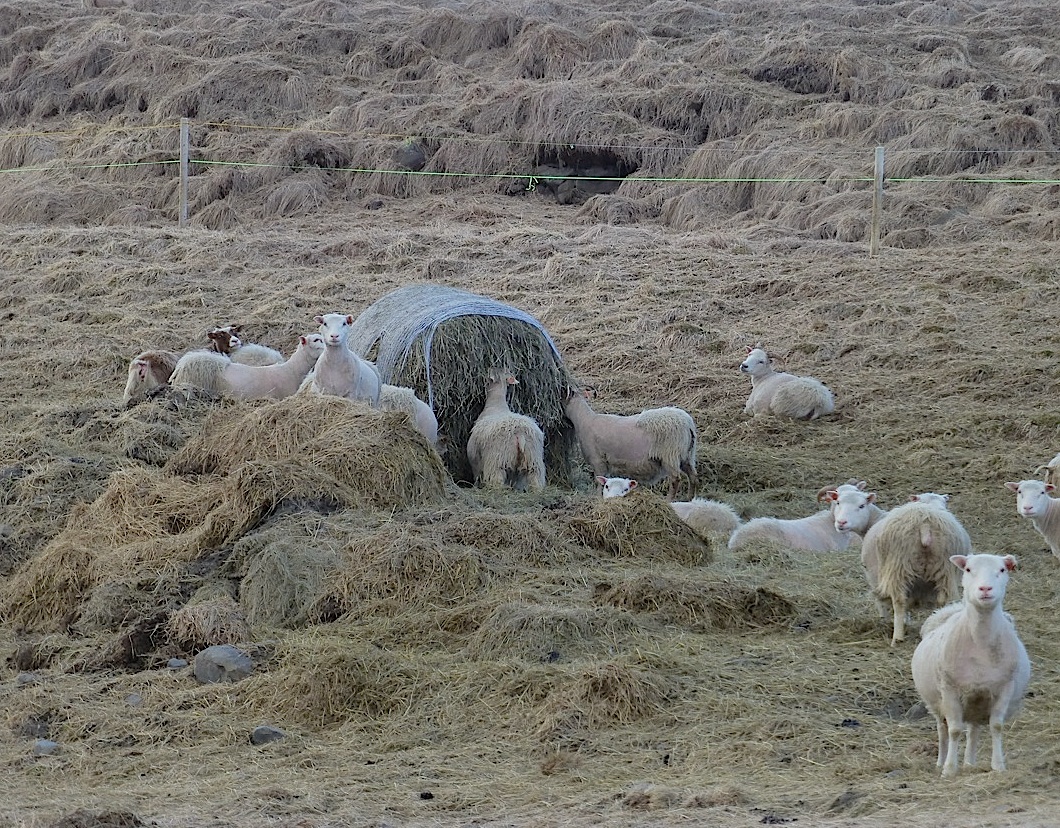
stuffSheep Pigging Out on a Haybale

But what Gunnar did not foresee was a permanent divorce of Icelanders from their land. A tiny fraction of the original rural population now has to grow more sheep, cows and horses than ever before … something has to give. The solution has been German, rather than Icelandic, industrial farming methods, capitalized on American industrial farming models. Has all this led to the wealth and security Gunnar was trying to create with his tun-based farmstead that would bring German agricultural models to the land and separate Iceland from colonial overlordship by teaching farmers how to get more wealth from their land, and keep it rather than giving it away to colonial capital managers?

0307-Iceland2_full_600Not quite yet. There’s more than one way to lose your sovereignity. Perhaps the process of decolonization is not complete and something can still be learned from Gunnar’s attempt. Heck, it could have been him holding that protest sign. Perhaps Gunnar’s time has come.

Gunnar Gunnarsson Secret Agent: Part II

When the Icelandic writer Gunnar Gunnarsson returned to Iceland in 1939, with fame and fortune and a reputation greater than most other North European writers, he built the house that houses me now at Skriðuklaustur farm. His goal was no less than to save Iceland. The question of “from what?” is a good one — and one important to ask and to answer in the early 21st century.

wind

Icelanders Standing Firm Against the Wind

Hofstaðir, March 20, 2013

A drive to protect his homeland had been a major motif of all Gunnar’s novels, essays, reading tours and his innumerable literary and political lectures from before the First World War up through the beginning of its sequel. They took him down roads few followed, tangled him up with German nationalist ideology, Danish communist ideology, Scandinavian pan-nationalism, nordic cultural politics and English globalism, and left him as a riddle. It’s not that hard to unravel, though, and goes to the heart of modernism and the developments that came out of it, including the time you and I live in today.

beatles

Competing Beer Signs and a Bit of 1960s Who-ha

Not exactly Gunnar’s idea. Reykjavik, March, 2013.

Gunnar was a conservative man, who in his own life climbed several social classes and learned some hard lessons about being a colonial subject along the way (and carried some of its brittleness along with him). In the new colonialisms that are springing up around the world as I write these words and you read them, including new political structures based around oil, water, religion and the melting of northern ice, Gunnar’s words of warning and mock-modesty to a gathering of students in Copenhagen in 1925 are as much to the point now as they were then.

I am embarrassed to be speaking out publicly on a matter which by many will undoubtedly be labeled as a Utopia and thus probably rendered inconsequential, despite that we and all our surroundings are nothing but former Utopias, but since I have been requested to do so I have not wanted to refuse the request. There may be as much liability in silence as in speech.

The Northern Kingdom, 1925

By this point in history, Scandinavian politicians had given up on pan -Scandinavianism. Not Gunnar. Seemingly, not some students, either. The point about silence being culpable remains a good one, however slyly it may originally have been said and however much it might be turned on its head, to say that there is as much liability in speech as in silence.

In a way, as a rural intellectual and literary artist (as was Gunnar), I know what he means. One has things to say that come from a great distance from urban intellectual structures and one must try to find a way to translate them, with words that remain elusive and at times just don’t see quite up to the job. This guy knows it, too, I suspect.

grimsstadir

Bragi Benediktsson Shelters from the Wind Behind His Weather Station in Grimsstaðir

A Chinese Billionaire wants to buy this land for a golf resort. It looks more like the setting of a Biblical parable or a northern military outpost. As a point of interest, Bragi would have been four years old when Gunnar came back home.

Still, Gunnar was worrying a bone. It’s worth looking at what he found and had sunk his teeth into. I’ll be doing that here over the next few days, as I argue that Gunnar was acting (at least in his own mind) as a secret agent, even a double agent, in Iceland’s interests (as he understood them). He was doing so in complex literary ways that fit none of the regular literary genres. Fiction? Short story? Parable? Political tract? Essay? Poetry? Saga? All of them at once is more like it. None of his literary endeavours were really fiction or literary as the terms are understood today — to our poverty, by the way, not his.

novelsandothers

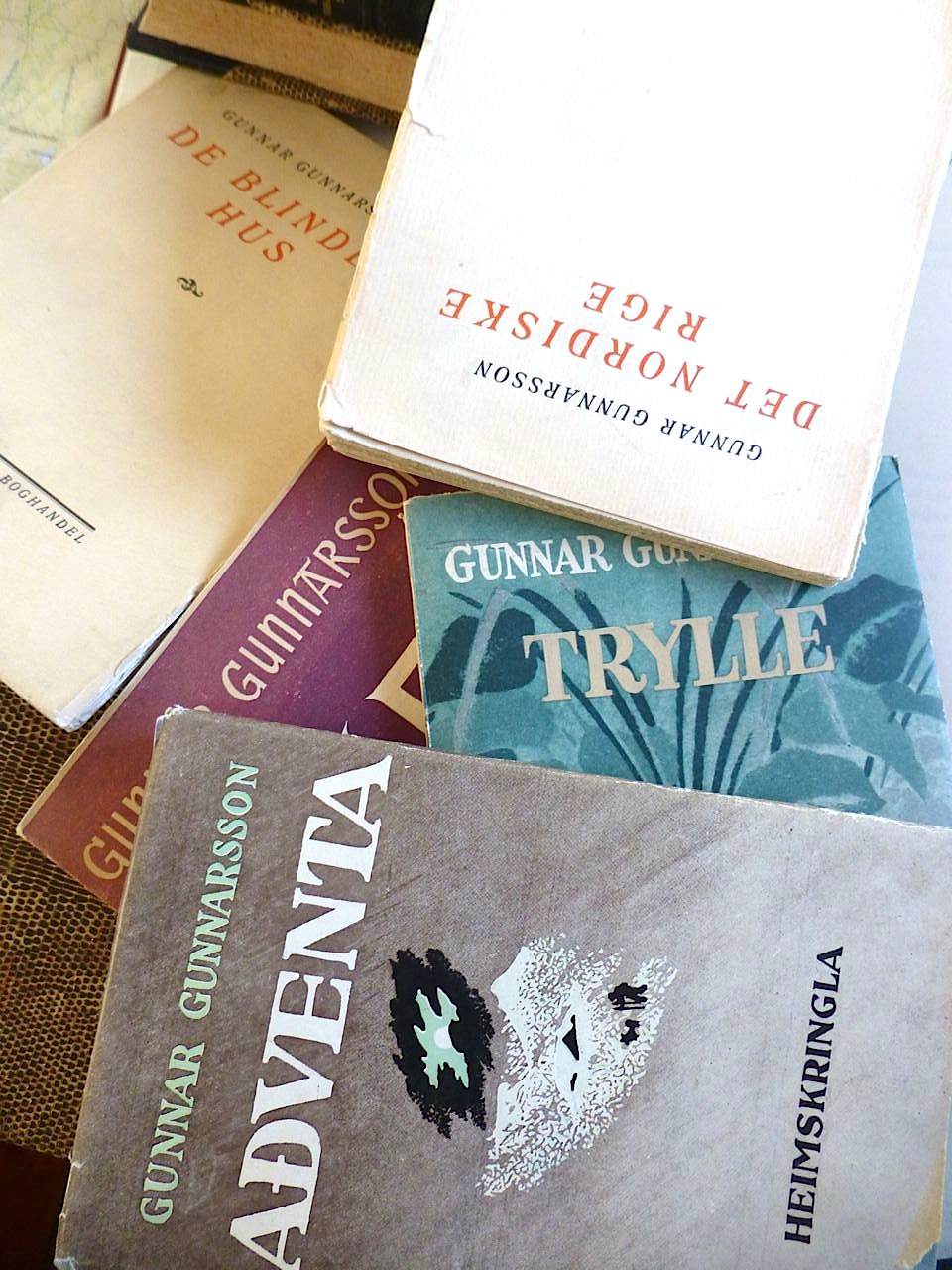
Some of Gunnar’s Books in the Skriðuklaustur Artist’s Residence

And some novels on the bottom shelf. What a change in worlds.

Still, poverty. Gunnar had known incredible poverty from childhood, he had a very clear view of it, and he wanted to dispel it. Part of this poverty was the poverty of lack of access to influence structures of power, including the ruling social classes. More precisely, Gunnar knew poverty well enough to know that it could be a strength, as long as it did not lead to powerlessness, foreign occupation, exploitation, and starvation. Those were all within Icelandic experience as well, and he believed he had found a way to dispel them by writing in Danish, the colonial language, and using it and his immense popularity within Germany as springboards to influence German public opinion and ultimately German foreign policy in the crucial years leading up to World War II.

P1390067

Gunnar’s Book “Advent” Was the Perfect Cover for a Secret Agent

Literary, a Christian parable, autobiographical, romantic, and heroic, Advent was first published in German in 1936, in Danish in 1937, and in English in 1939. For a book that has gone on to sell a million copies, it is intriguingly non-narrative. There is, I think, a message in that for writers everywhere.

Advent appealed to all groups of Gunnar’s audience, and had a special political message for each of them. Let me take a moment here to show you some portions of the German one. This is the story of a shepherd Benedikt who returns every year to the highlands, as Icelanders still do every year, to gather in sheep that others have abandoned to the cold. Alone except for his animal companions, he goes where no others will go, heroically overcoming the harsh elements. We should remember that no book was published in Germany during the rule of the Third Reich that did not further its political aims, and what were those in 1936? The same as the always were: the annexation of Germany’s territories divorced from it by the Treaty of Versailles after World I, firstly, as well as the annexation of Austria and all Germans to the East, secondly (for example in the Ukraine and Russia), into a Greater Germany. They were, in the sense of the Regime, lost sheep, that only a true leader dared to bring home. The imagery of the book, however, is not particularly German, as that is understood today. Take a look:

51jjvzSMACL._SL500_SS500_

Alpine Imagery in “Advent in the High Mountains”

Germany is a largely flat, rainy, foggy country. The imagery here is from its edges: Austrian, Bavarian, Czech and Polish — exactly the objects of Hitler’s eye. Not only that, but this peasant figure is a common folk motif from the Mountains of Giants in Silesia — the old man of the mountains, said to have sprung from the land and the trees themselves, the ancestor of all Germans. Accident? No, not in the Third Reich.

This kind of identification of land, heroism, personality, and politics differed little from Gunnar’s return there to set up his farm (or ideal country) in 1939. It’s a story in which his farm was a kind of novel (and political vision), just as “Advent” was a kind of farm (or political vision). There really was very little difference — they just operated in different spheres, that’s all. Well, there was one difference, of course. That difference looked a bit like this…

ski

German Mountain Troops on a Skiing Break, 1936

The photo was taken in Garmisch-Partenkirchen during the Mountain Division’s early build-up in 1936, on the site of the 1936 Winter Olympics, on the slopes of the Zugspitze, the highest mountain in the Bavarian Alps. These troops were instrumental in the assaults on Greece and Crete. Hitler sacrificed them all.

Gunnar, nationalist that he was, was not a National Socialist. His vision was nonviolent and inclusive of all points of view — and Hitler’s was neither. The German people? No, Gunnar’s audience wanted the rural ideals that Gunnar did. They wanted to return home to the land from the nightmare of exploitive urbanization and industrialization. For the most part, it was simple and sincere, rather Utopian, as Gunnar seemed to have realized deep down, and as strangely complicit in and mis-used by the National Socialist program as was Gunnar himself. The path to that realization, however, was a hard one for all.

stamp

Back to the Middle Ages: 1945, Hand-Printed Russian-Occupied German Stamp

Ironically, if such a word can even be used for such horrors, the retrogressive nature of Hitler’s agrarian-political vision, forged in the poorhouses of Vienna, hardened in the trenches of the First World War, and cynically enabled by the German military classes in the 1920s, led in the end to the simplest, physical expression of the core of its vision: destruction of modernity and the true creation of a new agricultural peasantry. So much for fantasy written as the world.

Well, that was Hitler’s vision gone wrong. Gunnar’s was far more wordly than that, and escaped  much of the tragic fate of Hitler’s. The parallels with Hitler are strong: nordic romanticism, strong central leadership, the shaking off of colonial chains, re-definition of culture on the most elementary of local terms, and so on, but it ends there. Gunnar was neither a Nazi nor a violent man. In fact, he had more in common with his American contemporary, Ezra Pound, than anything, and even in comparison to Pound, Gunnar was an angel. Pound was just a brilliant fool, caught in a hard place by his own folly and pride.

13469_Ezra_Pound_1945_May_26_mug_shot

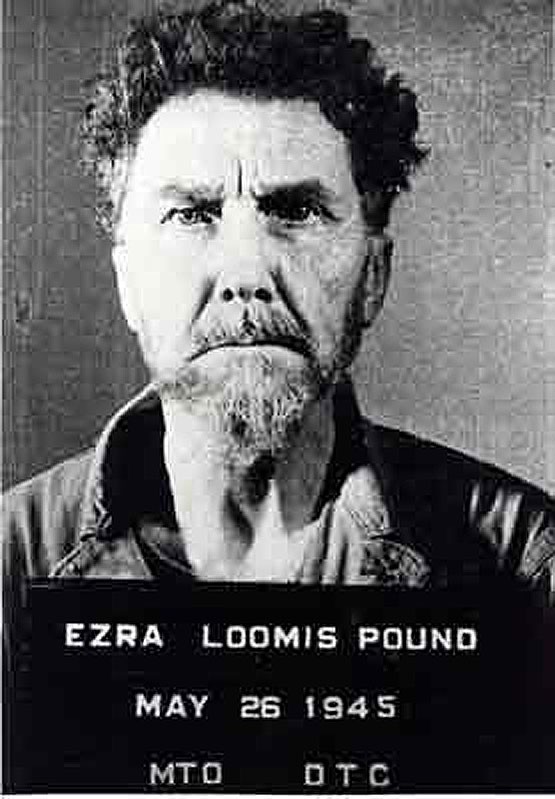
US Army Mugshot of the Poet Ezra Pound

Pound, a staunch American nationalist and a naive supporter of Mussolini’s centralized leadership, stayed in Italy during World War II, in part to retain contact with his daughter, who was raised by peasants in the Italian alps. “What thou lovest well,” he wrote, ” remains. The rest is dross.” He paid his way during the war years by broadcasting rambling speeches over Radio Rome, encouraging American GIs to give up the war by explaining to them such things as the poetry of ee cummings. He paid for that by arrest on a charge of treason, and eventual incarceration for 13 years on a charge of insanity. Was he a fascist and a Nazi? No, not really, but even so he went miles further down the road of complicity than Gunnar ever did.

It’s important to straighten out the “nazi” word, or history will remain a cloudy pool and our collective future decisions will be made in a darkness that Gunnar and Pound, despite their failings and tom-foolery attempted, at the least, to shine light within. Gunnar’s publication in German was brave, foolish, dangerous and perhaps misguided and imperious, but was not done in any way to further Germany’s racial and military goals. It was done to further his own goals. Even the Americans did not share those. Advent went on from Germany to have a remarkable history. It even became an American Book of the Month Club selection, when the Americans needed some propaganda symbol of Icelandic independence and the heroism of lone sailors in the bitter cold of the North Atlantic, battling the German U-Boot threat from Reykjavik. Paper was rationed in the United States at that time; books were not published that without the approval of the Army. In that context, Advent must have had strong approval, indeed, as it was widely distributed.

shepherd

Now Benedikt is Young and Wearing a Fur Version of an American Military Helmet!

And the mountains look like North Atlantic Waves. Amazing.

And that was Gunnar, Icelander to the core, negotiating a path between worlds, used by all, and seeking to retain is independence in between — not always successfully, but never without stoic pride. Ironically, the American occupation of Iceland, and the more damaging German occupation of Denmark, which led to Icelandic independence in 1944, a kind of child of the United States (while Denmark was still occupied by a more sinister invader) created the climate in the mid-1950s in which Iceland was deemed worthy of reward for a Nobel Prize — a country that had come out of the Second World War with its independence (just the kind of humanism that the Nobel Prize was set up to support). A deeper irony denied the prize to Gunnar, and gave it to the Icelandic communist Haldor Laxness instead (not exactly the primary goal of the Nobel Prize Committee). The gods must be laughing.

Odin_hrafnarOdin’s and His Ravens, Thought and Memory

Sharing gossip about the world.

This conversation will continue tomorrow, with a closer look at the game Gunnar was playing with the Nazis. Thought and memory (or mind) … we’ll certainly be coming back to that, too.

Easter on Middle Earth

Christ has arisen. This isn’t just a bit of a ghost story with a happy ending. If your imagination is rooted in the earth, or even in books, should that be your fate, it is mathematics and geometry.  Here’s the middle view of Christ’s ascension, in this stopping house, this alms house, this shelter from storm, this cloister between worlds:

churchforfarm

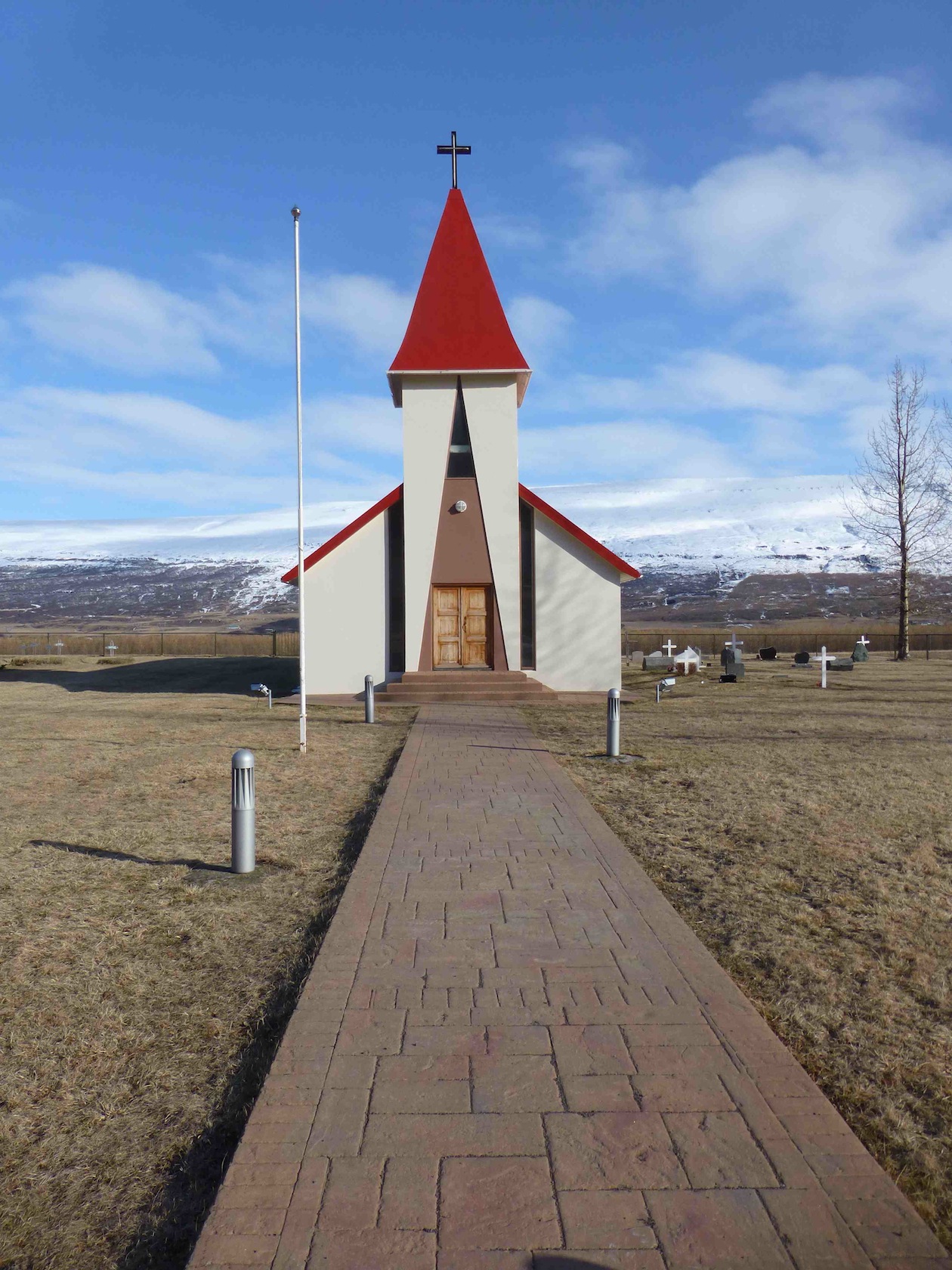
ValÞjofsstadur Church, Fljótsdalur

Note the mathematical precision of its construction. Note as well the Father, the Son and the Holy Ghost of the entrance, and how one enters through the Middle Way, Christ, the Son. That’s not an accident.

The Church makes eternal order out of temporary beauty. That’s kind of its point. It is a form of intellectual activity.

crossforfarm

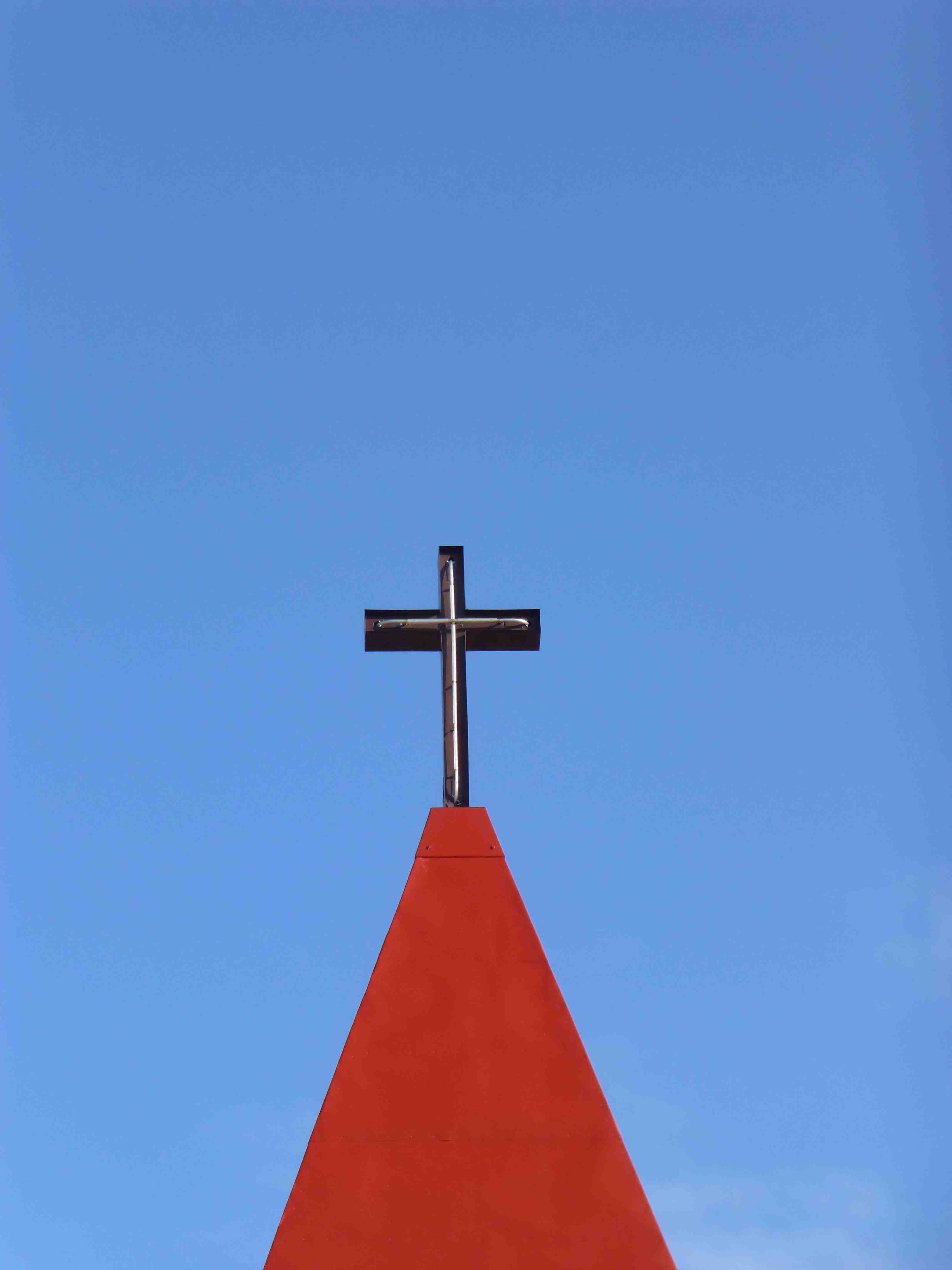
The Point

It’s not just a cross. It’s an entire intellectual tradition. All Western peoples today stand within it. It’s inescapable. Nor should it be escaped from. It is.

Gunnar Gunnarsson’s childhood farm, that guided much of his writing, faced out over the graveyard where the church now stands. Here’s how it looks today, with the old turf houses gone but the old trees remaining.

valpjofsstadur

ValÞjofsstadur

This is the week that the farmer brings the manure out by the wheelbarrow load and dumps it in his field. You can see some of it there in the centre of the image, just in front of the buildings. Sweet springtime!

Easter is a celebration of rebirth and renewal from the dead (and the stink of closed winter barns full of way too many animals). Another way of putting that is to say that the dead don’t leave the living, nor do the living leave the dead, but that they’re all travelling together on one road that leads out into the fields and the light after a long, cold winter. Here, then, is the real church, in its wild state …

ahnenValÞjofsstadur Graveyard

The ancestors lie quietly in their pews, most with a form of mathematical perfection rising from their souls. It is a joyous place, a sanctuary from the work of the world, a kind of retirement, shall we say, a waiting.

I have been writing poems about Easter, so forgive my mind for wandering like this through the trunks of these trees, but look, both churches are standing together in communion, the church among the ancient trees, the ancestral church, and the new one rising from the mind …

twochurchesChurch, Ancestors, and the Ancient Trees, ValÞjofsstadur

All travelling together into the sky, all tied to the earth, on the middle way.

When the earth and its peoples are stood with organically, as Gunnar stood with them and that farmer with his manure still does, rather than under-stood, or standing under, as a priest might put it (especially in the past), looking down from his or her pulpit and speaking the Words of God to his or her “flock”, its patterns flow like water and light and know no bounds. A boy, or a man, such as Gunnar, perhaps, could learn to write books just by walking in the world with his eyes open.

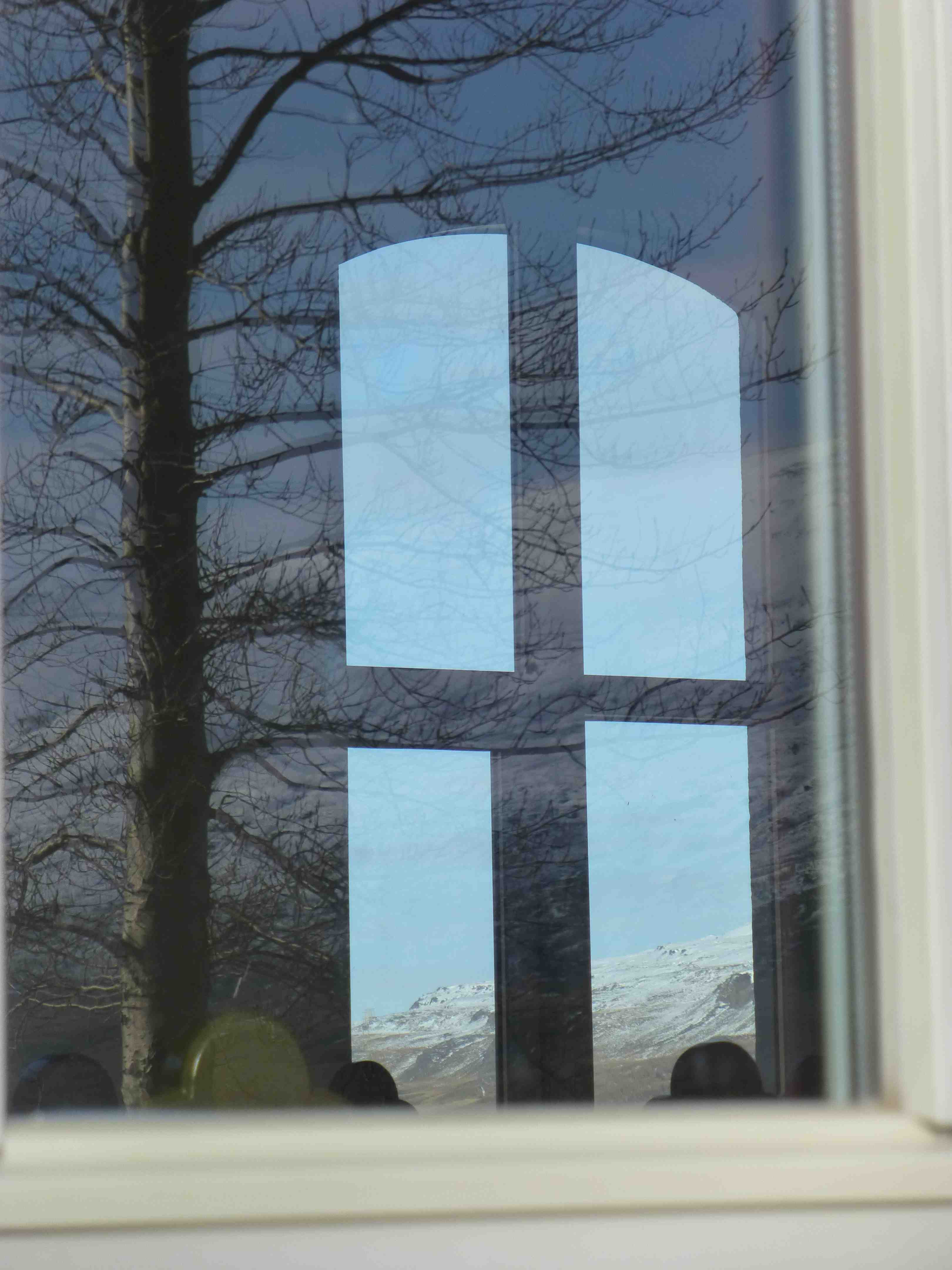
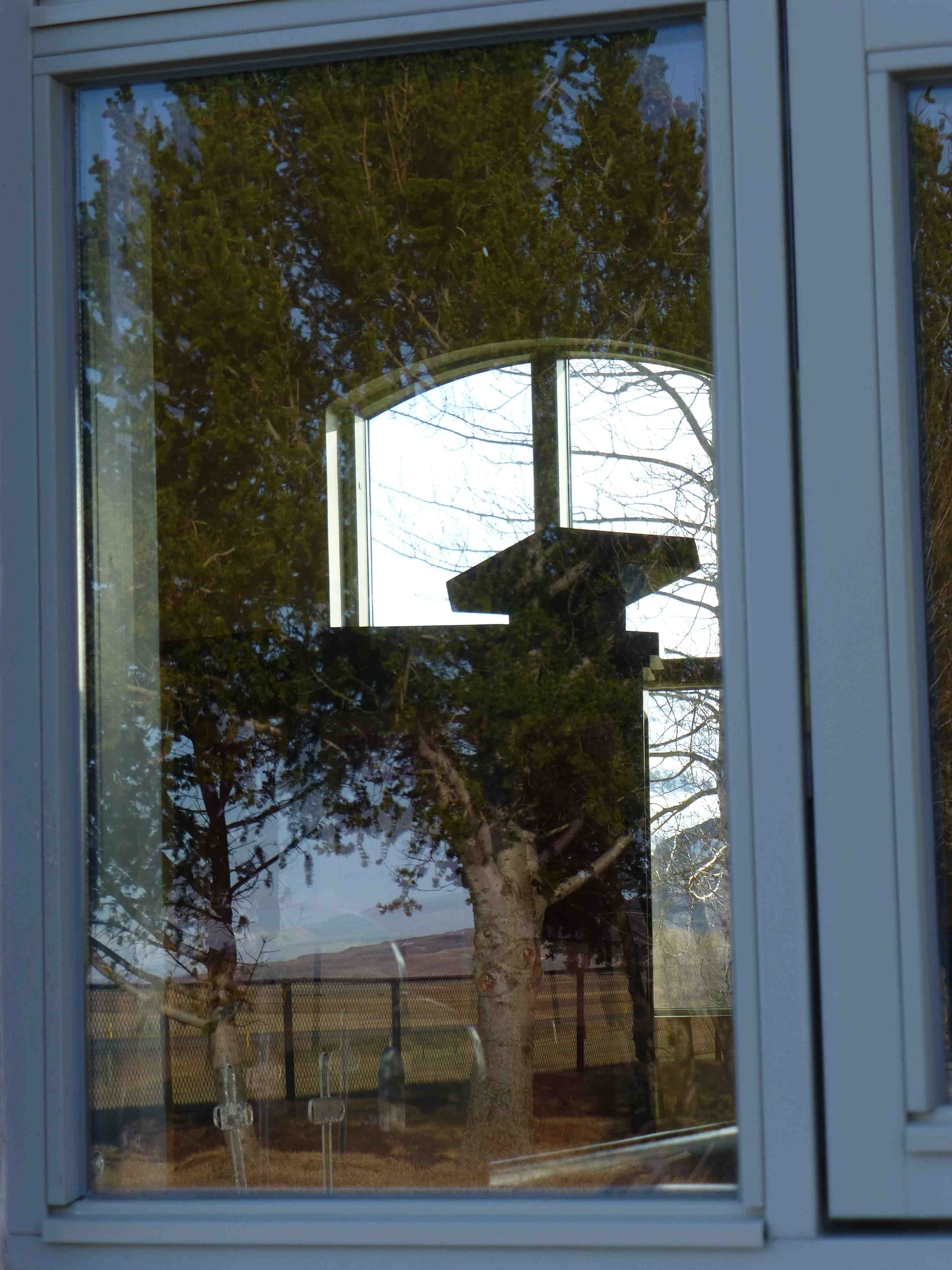
treewindow

The Church, the Cross, Chairs like Tombstones, the Mountains and the Ancient, Sacred Trees

Are all woven from light, from the inside and the outside, from reflection and what is seen through.

A window, now that’s an ancient word. Consider this, every river in Iceland has the same name. It’s an á, pronounced ‘ow’. In German, that would be an “au”, a meadow, a place of particular fruitfulness, naturally fed by wetland water — and usually the place at which Irish monks set up their missionary churches in the 9th century. That’s not far from Iceland, really, where the early farms were set up along river bottoms, which could produce the abundance of grass necessary for 10th century Norse farming practices, and these rivers were all variations on an á. One just down the road from Skriðuklaustur, for example, is the Hengifossá …

hengifossaHengifossá Mouth

And the river of the wind? Ah, here it is …

windowquadrants

The Four Cardinal Directions

Notice how the Wind’s Á, its meadow, opens from inside, so the outside can come in. First, though, one has to go inside.

The tradition of the church and its remarkable magical buildings constructed to ancient conceptions of mathematical balance and beauty go very deep, with roots in the world. Here’s the pulpit …

pulpitThis is a Book

But not just a paper one. The world is part of the spiritual picture. It is through it that one finds the light. And the Word. And the word.

By “world” here, I don’t mean the usual thing. I don’t mean “the community of men and women and their children” and the national and international relationships they build up between themselves, as the word is often understood, but the world as stood with, which is often called the earth. There’s an old book in Nordic tradition, called Volvens Spådom (The Prophecy”, which in one of its opening passages goes like this…

volvensThe Middle Way from Volvens Spådom

Without a world, the sun and stars have no anchor. That is to say, no tether, no home, which is to say that they are not at-home, or, to use the old word, they are not haunting. In the middle way, on Middle Earth, things haunt.

Things haunt like the reflections in the windows above, like the trees growing from hallowed ground, and like this image that has been made from them, purified in the manner of making wine (in this case, making wine from light and the world) …

eyewindow2

The Eye of God and the Mountains of ValÞjofsstadur…

…seen through the wind’s oh, its á, its au, its river of ValÞjofsstadur Church. The mind streams in with it. That’s the kind of spiritual place this world is, witnessing the mathematical beauty that streams through it, because, after all, a window opens two ways. It is, in fact, not a mouth or an eye, but a passage, a path, a way.

I took those images yesterday. Today, I went out to witness the sun rise, and I discovered that on this holy morning, before the first planes started flying to Keflavik from Europe, the Middle Earth was clear for all to see who were awake and walking. In the West …

P1370820

The Moon, Setting

… and in the East, across the sky …

P1370776

The Sun, Rising

… and in between …

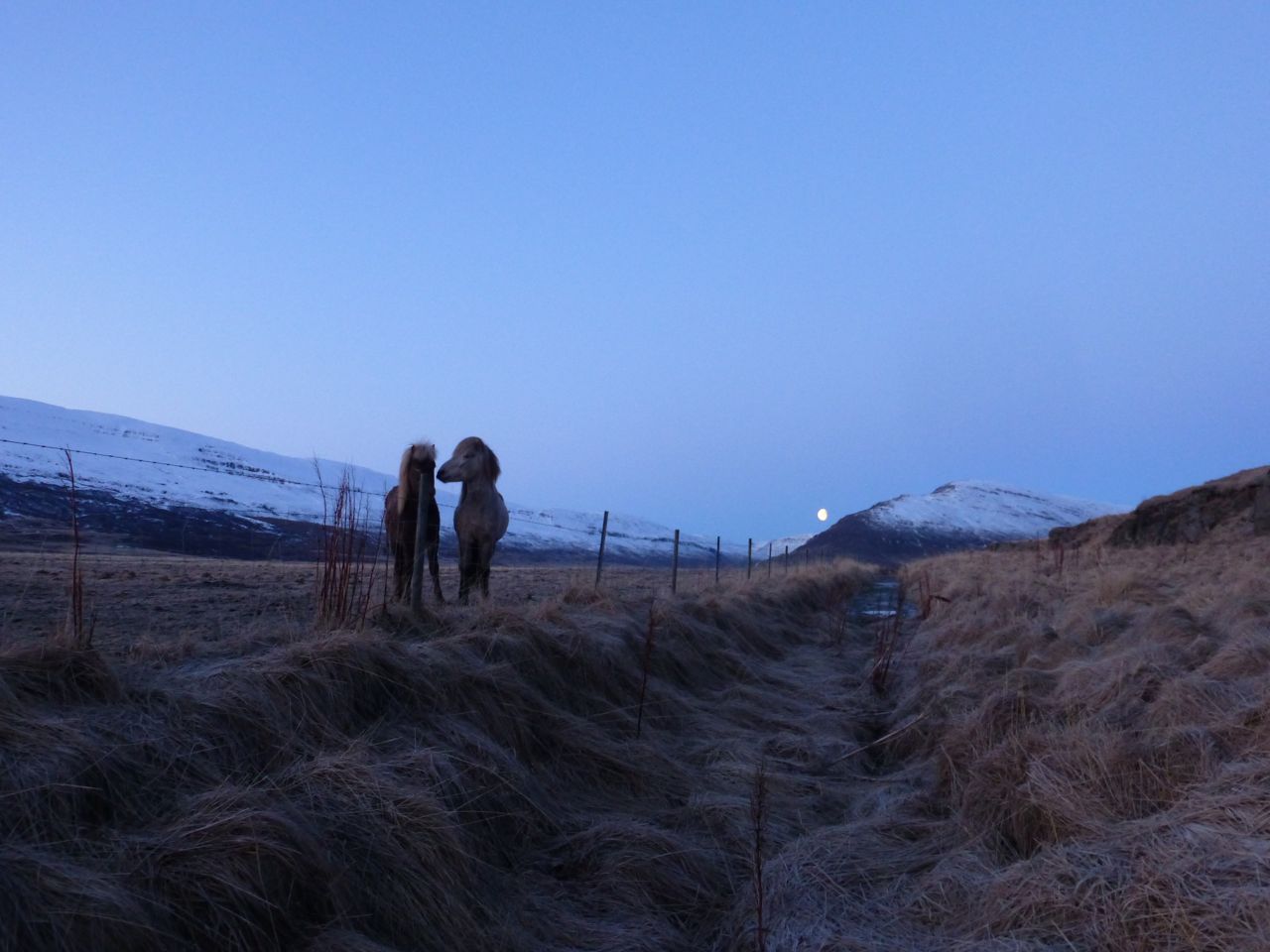
P1370850The Horses of the World

The horses are spiritual creatures. Here they are in the words of the scottish poet Edwin Muir, best known for translating Kafka into English. This is written after the devastating war that Gunnar had hoped to prevent by uniting all Nordic peoples on the Middle Way. Ironically, it ws Muir, who endured more directly the anguish and fear of that conflict who found, in the horses of the world, the horses of God’s Grace, his Eden, his au…

(Dear Readers, it’s a longish poem, but not a difficult one, and it is one of the best in all of human tradition. If reading poetry is not your thing, why not scroll down to the images or listen to my reading of it here. The link will take you to a new page. When done, please press the back button to continue …

The Horses.

I hope you’ll listen and read and look at the images. That would be like being together on this day.)

Here’s am image to set the scene …

P1370886

The Horses

Barely a twelvemonth after
The seven days war that put the world to sleep,
Late in the evening the strange horses came.
By then we had made our covenant with silence,
But in the first few days it was so still
We listened to our breathing and were afraid.
On the second day
The radios failed; we turned the knobs; no answer.
On the third day a warship passed us, heading north,
Dead bodies piled on the deck. On the sixth day
A plane plunged over us into the sea. Thereafter
Nothing. The radios dumb;
And still they stand in corners of our kitchens,
And stand, perhaps, turned on, in a million rooms
All over the world. But now if they should speak,
If on a sudden they should speak again,
If on the stroke of noon a voice should speak,
We would not listen, we would not let it bring
That old bad world that swallowed its children quick
At one great gulp. We would not have it again.
Sometimes we think of the nations lying asleep,
Curled blindly in impenetrable sorrow,
And then the thought confounds us with its strangeness.
The tractors lie about our fields; at evening
They look like dank sea-monsters couched and waiting.
We leave them where they are and let them rust:
‘They’ll molder away and be like other loam.’
We make our oxen drag our rusty plows,
Long laid aside. We have gone back
Far past our fathers’ land.
And then, that evening
Late in the summer the strange horses came.
We heard a distant tapping on the road,
A deepening drumming; it stopped, went on again
And at the corner changed to hollow thunder.
We saw the heads
Like a wild wave charging and were afraid.
We had sold our horses in our fathers’ time
To buy new tractors. Now they were strange to us
As fabulous steeds set on an ancient shield.
Or illustrations in a book of knights.
We did not dare go near them. Yet they waited,
Stubborn and shy, as if they had been sent
By an old command to find our whereabouts
And that long-lost archaic companionship.
In the first moment we had never a thought
That they were creatures to be owned and used.
Among them were some half a dozen colts
Dropped in some wilderness of the broken world,
Yet new as if they had come from their own Eden.
Since then they have pulled our plows and borne our loads
But that free servitude still can pierce our hearts.
Our life is changed; their coming our beginning.

Edwin Muir
P1370898An Icelandic Blue in the Skriðuklaustur Pasture
Middle Earth contains not just humans and horses on their spirit paths, but, of course, our trees …
P1370752
Poplar on Easter Morning
… elves (more on that, soon) …
P1370763Easter Sunrise Through Frosted Glass
… sacred space …
P1370767The Cloister at First Light
… trolls, charmed …
P1380048
… the dead, of all kinds …
P1370860
Giant’s Skull in a Cave in the Skriðuklaustur Cliff
Turned to stone, I may point out by the rising sun … which, on this day, is Christ ascending. Accident? Coincidence? No. It is part of the sacred order of things viewed as things. After all, a “Thing” is a meeting place, in the old languages, a parliament, a place of talking and coming together, of all the people … including, I presume, the sheep which shelter in this cave in summer.
… because even though it is a Christian world, it is built upon the bones of an older one, and does not dishonour them and is not dishonoured by their presence. How could it be? If it were so, God would be made by men. It is to this world that Gunnar returned when he left Denmark in 1939. All during his time on Mainland Europe, he was walking the Middle Path, living between worlds, trying to be a broker between them, trying to be a writer, which in the pre-modern Icelandic tradition of his birth and youth meant to be a pastor, to write sacred texts and to present them to the people, to stand among them but slightly apart, and to look both ways, like a wind’s á. This is the character we meet in his 1932 novel Vivivaki, a reclusive writer in the Icelandic highlands, to whom the Dead awake on New Year’s Eve, to the sound of the Danish National Hymn on the radio, and who look to this rebirth as the Resurrection and look to him as God. Next, I’ll unravel the rest of Gunnar’s life as a Secret Agent, but first, the blessings of this day of rebirth and ascension and grace, from the blind earth …
P1370782
… to the light of the sky …
P1380096
Blessings, all, from Skriðuklaustur.

Gunnar Gunnarsson, Double Agent: Part 1

Yesterday I mused on the origins of story in lines that cut across pools of presence. Part of the story was the human response to them, that brought them together into art. (If you missed it, you can track through it right here.) Today I’d like to talk about Gunnar Gunnarsson, and how some of those lines are circles, and that they too have a story. Now, circles are very special lines. They have no beginning or end, no directionality and can can extend from every point into every conceivable shape, as long as it has no beginning and end. Circles are eternal. Their boundaries separate into inner and outer representations of … what exactly? Ah, that’s Gunnar’s game. Here’s a circle:

grassline21 Air Caught Within a Seasonal Icelandic Pond

Intersection of Highways 848 and 87

And here’s another:

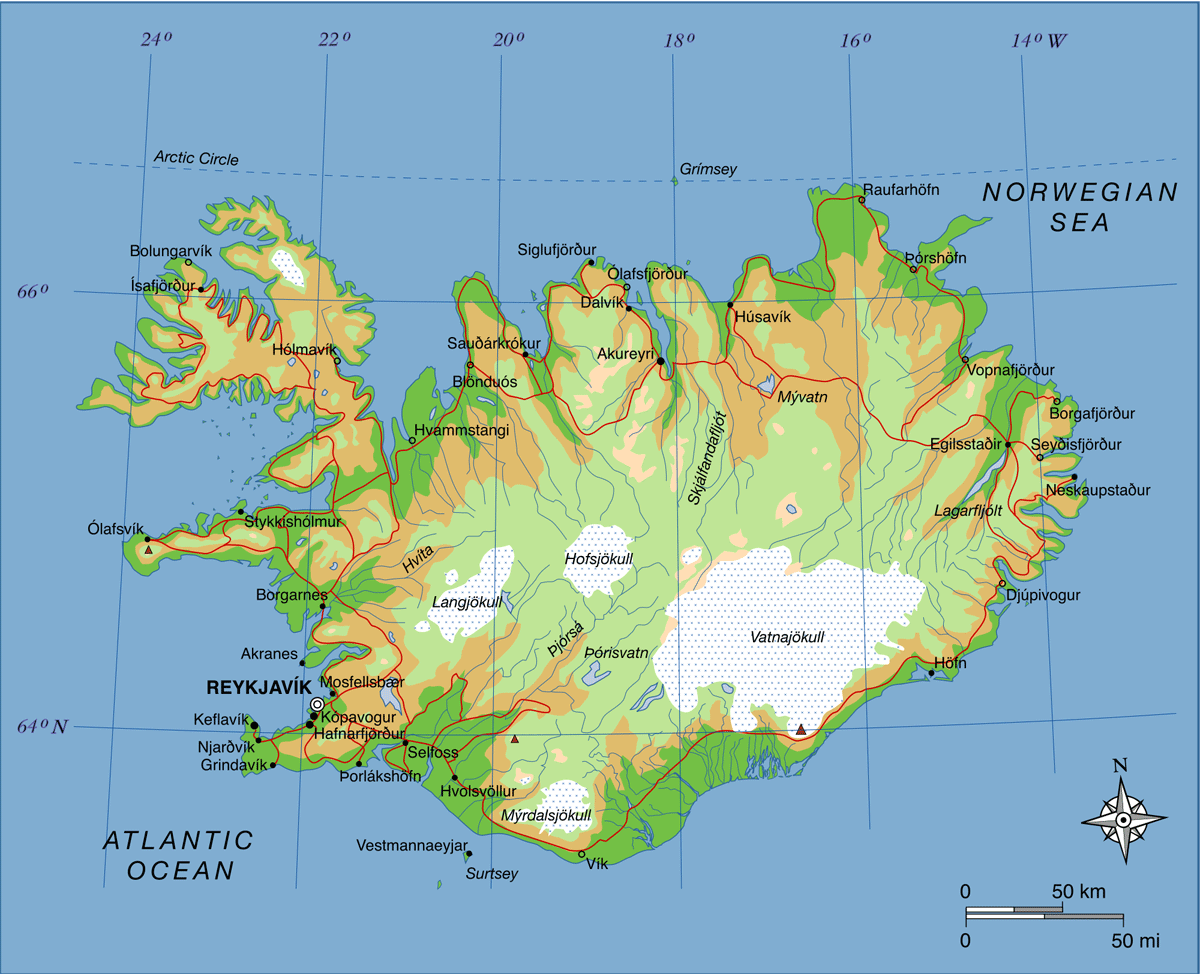
iceland-physical-map

Iceland (Source)

Well, almost a circle. Sort of. If you took off the scrunchy bits. It has a circle-like edge, at any rate. Here, this might be closer:

2maps

Three Maps of Iceland

Two for tourists and one in words to keep tourists away.

That’s a copy of the text “Unser Land” or “Our Land” that Gunnar read on his spring 1940 tour of 50 cities in Germany, immediately after the sod was laid on the roof of his house and just before the German invasion of Denmark and Norway. Here’s how Gunnar starts off:

It rises majestically out of the sea when approached from the water. It grips the heart like a heroic song, touched with eternity, sown with destiny. There is nothing small about its appearance.  Even though its face varies from place to place, it remains integral — a pure vision.

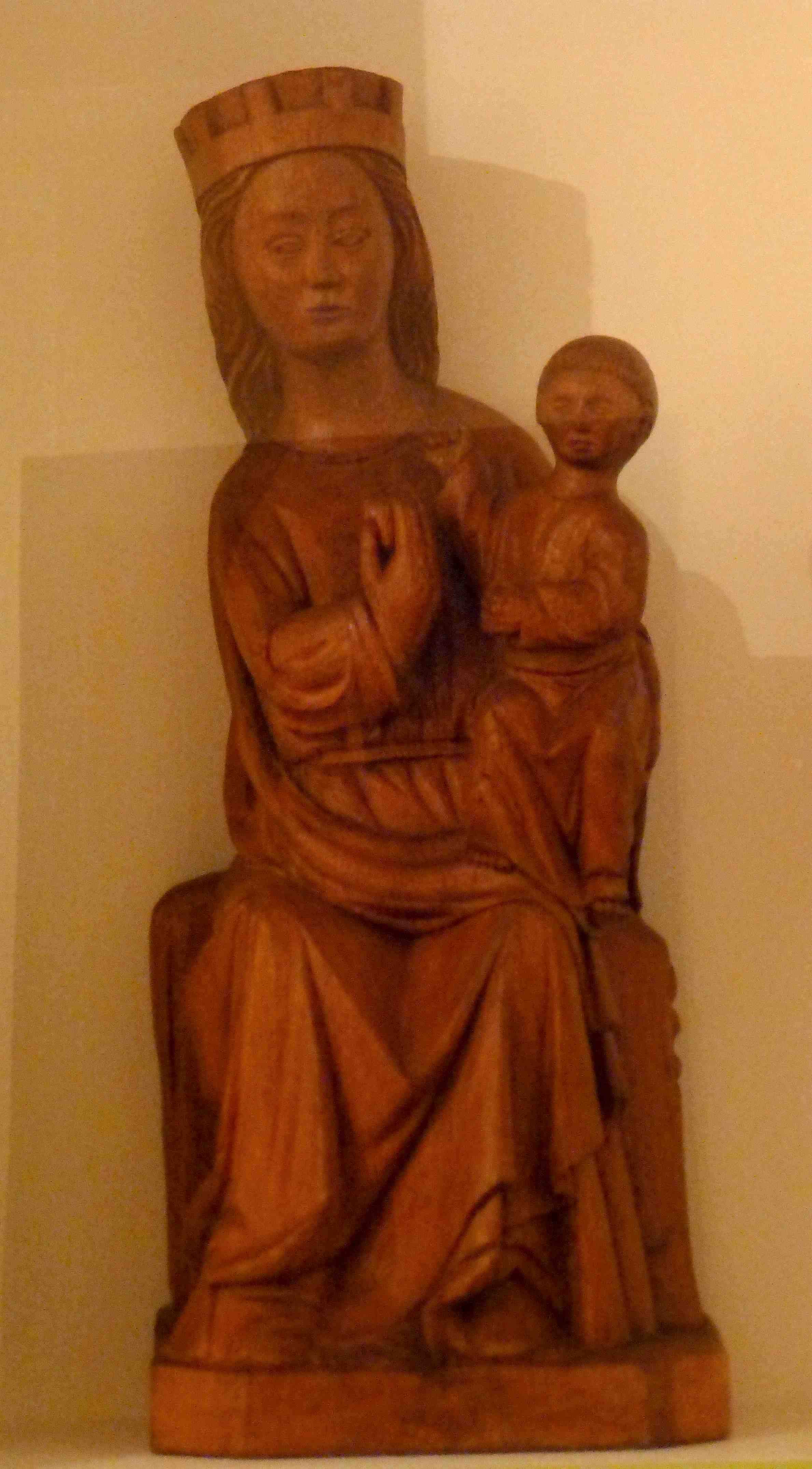
A pure (or untrammelled) vision? It’s like a shaman’s spirit stone or a statue of Mary with the Christ Child. Speaking of which, here’s one:

madonna2

The Skriðusklaustur Madonna…

… in her glass box, with reflected light, and looking very Icelandic indeed (replica).

By “pure vision” Gunnar had many things in mind, including nature in its rawest, least adapted, least, shall we say, artistically crafted, farmed, developed, urbanized or written version and the Madonna. Now, even if we accept that Gunnar idealized his mother and lost her at the age of eight, and then bought the farm next door some 45 years later and set up his writing desk where he could look up the valley and see that childhood, which he called the purest image of eternity, and even if we accept that Iceland, the land, is alive and represents human consciousness just as the consciousness of Icelanders represents the land (which, indeed, Gunnar argues in the latter part of his speech), and even if the madonna above comes from his farm in East Iceland, the Madonna and Iceland — or even Gunnar’s farm — just aren’t exactly the same thing. In his text, though, they are. The title gives us a clue as to what he means by that: “Our Land”. Whose land? Apart from raw, physical and spiritual nature, like this …

ice28here are some of the many possibilities:

ourlandThe Our Land Game

In playing this game, it’s good to remember that Gunnar was a showman and a businessman speaking to his main audience: the Germans, who had swarmed (to take a word from the German) to his books for decades. Indeed, they had done so to a whole genre of Nordic romances from Sweden, Norway and Iceland, that was fed, ultimately, into the German war machine. In other words, Gunnar was speaking to two audiences at the same time: Icelanders (himself, most specifically) and Germans who had a longing to get out of Middle Europe and to create a new centre of balance around the Baltic (somewhat removed from them by the Treaty of Versailles). If I’m right, he intended his text to be a cipher, read differently by both groups. The madonna was intended for the Germans. The pure nature for the romantics. The way of looking both ways at once, for himself. Himself, Gunnar was a boy from the fjords of East Iceland, a farm kid, from a long line of farmers. He remained so to the end. In the context of 1940, with German and Russian invasion of Poland a fait accompli and Germany reassertive along the south shore of the Baltic, “Our Land” meant several further things, which I will speak to over the following few days in this Easter season of death and rebirth, grace and forgiveness. One of them was “land to live upon,” a concept which was one of the cornerstones of Germany’s violent foreign policy, by which Germany sought to fulfill what it (or at least Hitler) saw as its “destiny” — another word that Gunnar carefully sows at the beginning of his speech. His audience would have been all ears. In my next post I will discuss the bearing this concept had on Jews and their culture and the horrific story of the Holocaust, but let’s be kind to ourselves. These things are hard and need their time and space to unfold. Until then, look at the world of Gunnar’s nature, islands of air, always different, always the same, and frozen into one picture of pure spiritual vision. Applying this boyhood observation of paradise to the divisive and self-devouring complexities of German political life in the 1930s might have been unwise on Gunnar’s part, but the boyhood observation is a thing of beauty…

iceandlines51


The question is: what does one, as a man, make out of that? And that cross we will carry tomorrow.

Home in Skriðuklaustur

The residency begins. Gunnar Gunnarson was there to greet me. The tree growing out of his head, that’s my wish for growth and spirit here. gunnarGunnar Gunnarson at Skriðuklaustur

Gunnar came here when there was nowhere else to go but to go back home. It was 1939. The war he had dreaded was on the horizon, and some of its shadow stuck to him. He resolved to go back farming.

reddoor

Skriðuklaustur Chicken Coop

The farming didn’t pan out all that well. My father and grandfather came to Canada from Germany with the same dream, and under very similar pressures, one after the first half of the Twentieth Century War and one after the second half of it. I am the dream they made, and so when I see things like this …

rustMy Father’s and Grandfather’s Tools at the Top of the World

The remains of Gunnar’s dream, Skriðuklaustur

… I know it is time to roll up my sleeves and get back farming. Tomorrow my work at Skriðuklaustur begins. I intend to farm here, but in words, and at a very deep level. Look for my discussion of the life in rock, as the first words from this new and old ground. It feels great here. I am here to honour Gunnar and my own ancestors, and to bring their stories together in the living ground of words. As I came close to the Klaustur, this is who saw me first …

horsesHorses in Fljotsdalur

What a great welcome!

Gunnar’s Warning to the Germans

Look at the riddle Gunnar Gunnarsson told the Germans in 1940, just a few weeks before the invasion of Denmark and Norway and the resulting invasion of Iceland by the British and then the Americans:

It is far better for a man to recognize true inner human nature without touching it than through the words and behaviours people dress it in. Such a view into truth is far more vital than casual thought would have it. And certainly it’s no great sacrifice to hold to good taste and respect in all things. And since the talk is about sacrifice, our land has at least fully earned that, and our joy at its beauty will never be complete until these issues are ordered in such a way that gives no more ground for reprimand.

The text it is from a speech called “Our Land.” It can be read many ways. Here’s one:

fold

Turf Sheepfold, Reyðarfjörður

Here’s another, referencing each sentence of the passage quoted above to the argument Gunnar built up in the pages preceding it:

1. It is far better for a man to recognize true inner human nature without touching it than through the words and behaviours people dress it in.

Translation: Iceland has no history, except nature. Elsewhere (Germany included), nature is interpreted through the habits and clothing of people — in other words, through the changeability of time. In Iceland, however, nature is naked, and so are people: they are dressed in nothing, except each other. They do not exist in time — only in place. When one builds a bridge in Iceland (it is an example that Gunnar uses), one has to build it out of Iceland and not out of imported ideas, which sit within foreign customs and gardens rather than within nature itself, no matter how successful they were in other places. In Iceland, they won’t work. The land is not forgiving of any departure from its forms.

P1190151

Workers’ Housing, Aluminum Smelter, Reyðarfjörður

Gunnar would not have liked this.

2.  Such a view into truth is far more vital than such casual thought would have it.

Translation: Truth is untouched nature. It can be approached (and dismissed) casually, but it is not in itself dismissable. Nature is not the contemporary idea of “all things green”, nor the idea of “landscape art”, nor the notion of a goddess of nature called Natura. It is God: wordless, idea-less, unrepresentable and uncontainable. God is Iceland is Nature — or they would be, except God and Iceland and Nature have no names, and no words or ideas can be given to them, only drawn from them.

P1010427Streambed Near Njardhvik

3. And certainly it’s no great sacrifice to hold to good taste and respect in all things.

Translation: Just as with the sacrifice of Christ, good taste and respect (based on an underlying devotion to God) are not sacrifices but a practical good in their own right. Life flows in patterns. On earth (that is to say on “Our Land”), one lives within them. Land is this shore of life, which other people call a planet, and which yet others call countries. “Our Land” is a changeable idea. It really means, “Who we are.” That’s not a modern idea.

stream2

Ryolite Streambed Near Njardhvik

4. And since the talk is about sacrifice, our land has at least fully earned that, and our joy at its beauty will never be complete until these issues are ordered in such a way that gives no more ground for reprimand.

Translation: Iceland has earned the sacrifice of human desire to its eternal forms; all those wishing to speak of sacrifice must learn to do so in a way consistent with the forms of the shore, in the way water finds its path through the grasses yet still moves with great power. Societies can be repurposed. Land cannot. Any attempts to do so will destroy the society of humans on earth. The joy of Icelanders at the beauty of those forms will not be complete until human temporal constructions are ordered in a way no longer out of touch with the streambeds of nature. The bonds between humans and God — a bond called “Our Land” — must be respected, not with words or ideas or customs, but with bodies and with rock. Only the people of a place can build there. All else will fail.bird

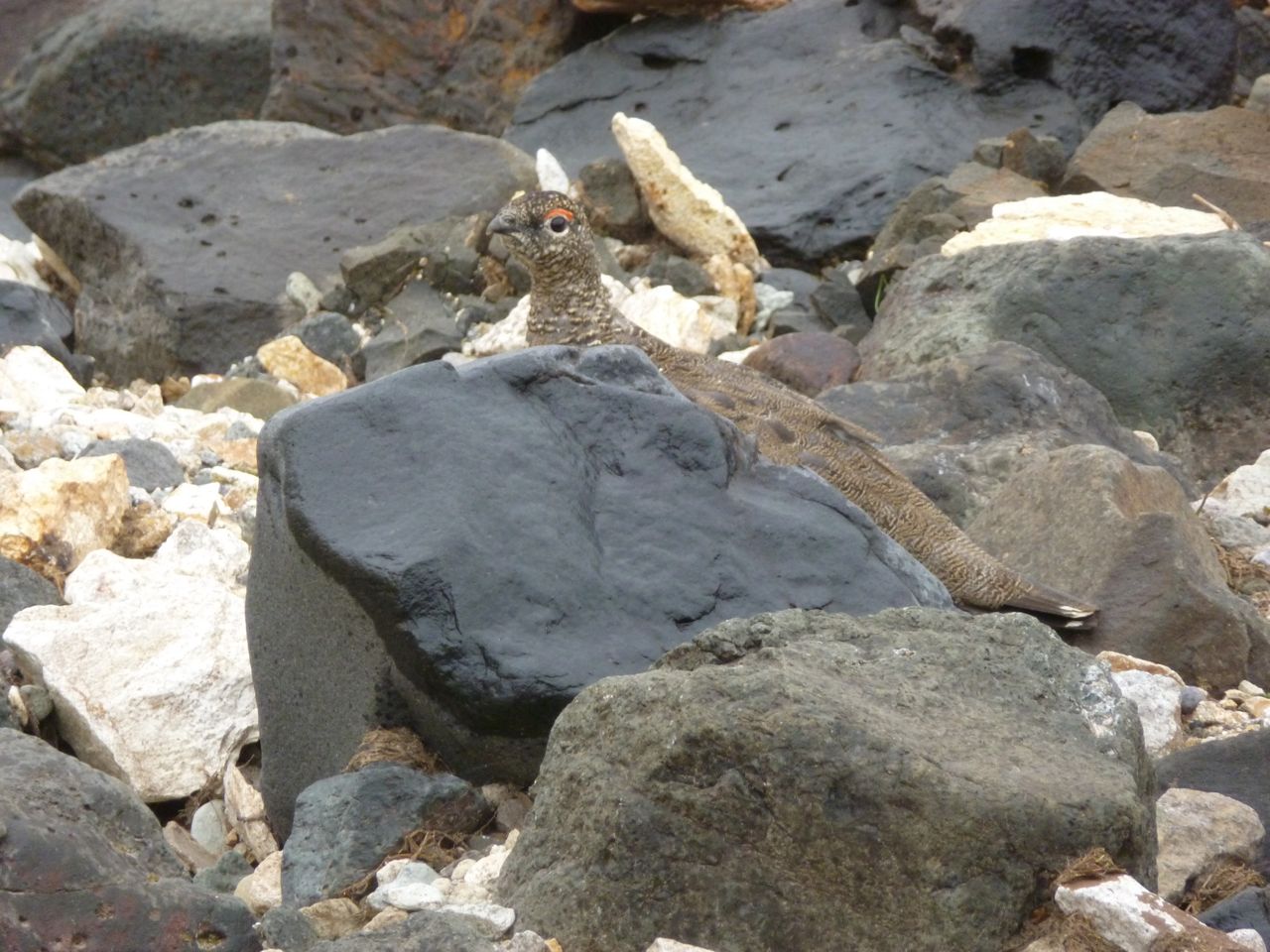
Ptarmigan Waiting for Me to Go Away

It’s a remarkable thing to say, especially to a country in the throes of praise for the sacrifice of thousands of its young men in capturing Poland to provide, in the language of the times, land for nordic people, especially when Finland is falling and talk of Scandinavia’s strategic importance is in the air. Invasion plans have already been drawn up, by both the British and the Germans. It’s an especially remarkable thing from a man like Gunnar, who spent decades advocating for a pan-Scandinavian state and who earned his income writing Scandinavian books for a German audience enamoured with the idea of becoming Scandinavian rather than Mediterranean. It’s an especially pointed statement to a Germany that has just united with Italy, on the Mediterranean, especially when Italy, Norway and Iceland are the three poles of the world given in Gunnar’s speech. Did I say ‘speech’? I meant sermon.

christ

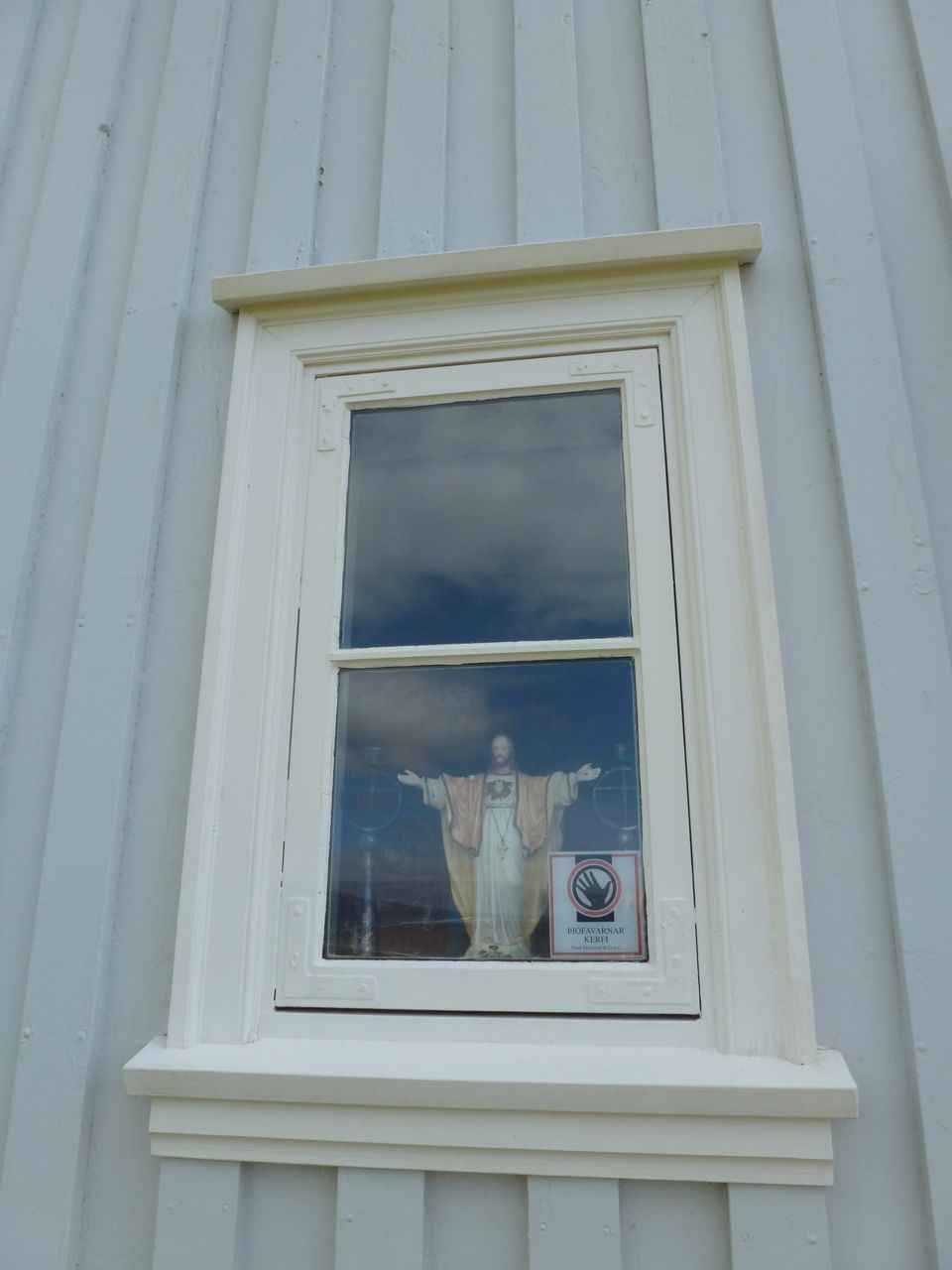
Two Security Systems Hard at Work and Ready to Embrace You. Strandakirkja

Choose the one that works for you.

Next: Gunnarsson as a Lutheran.