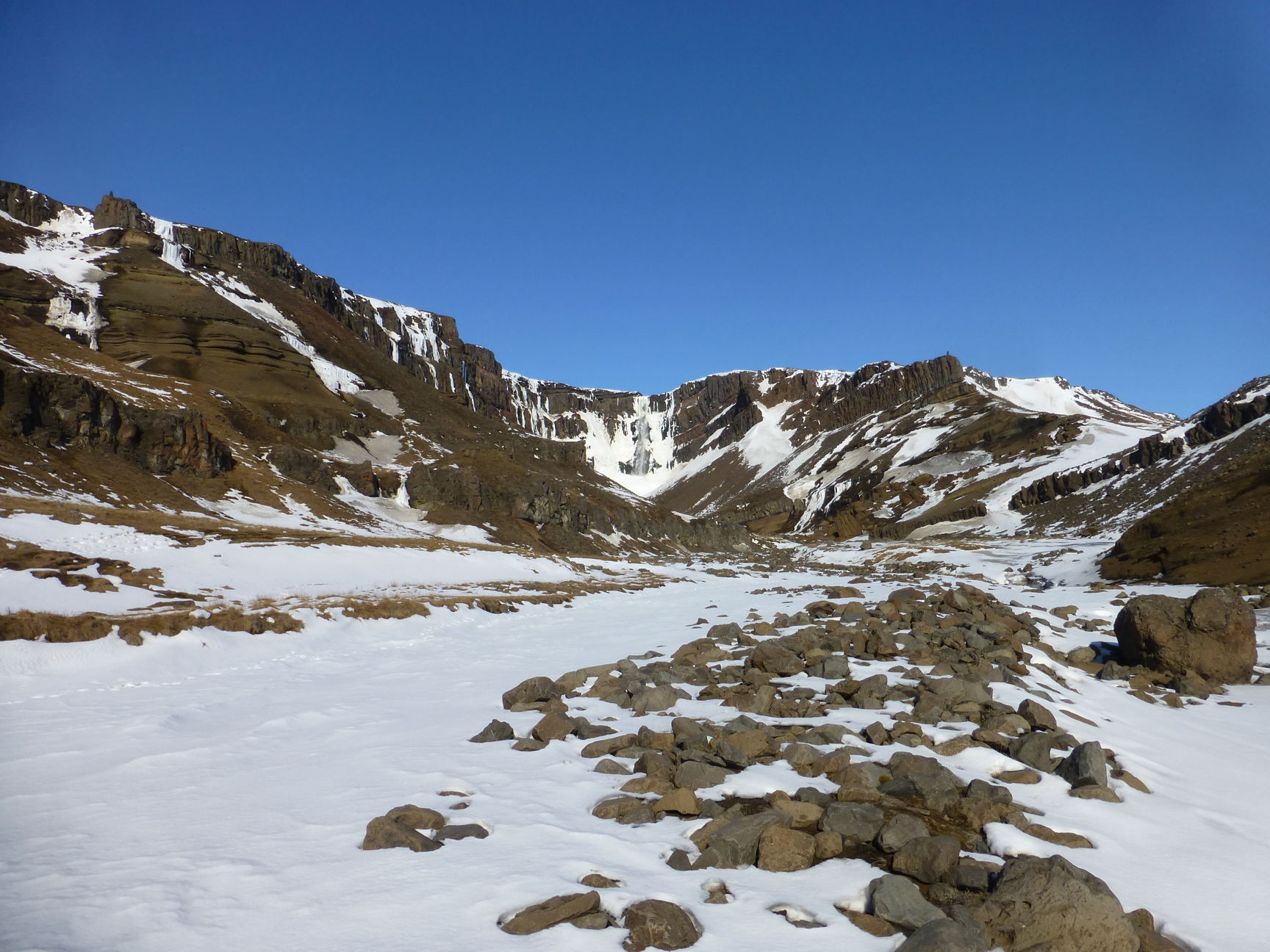
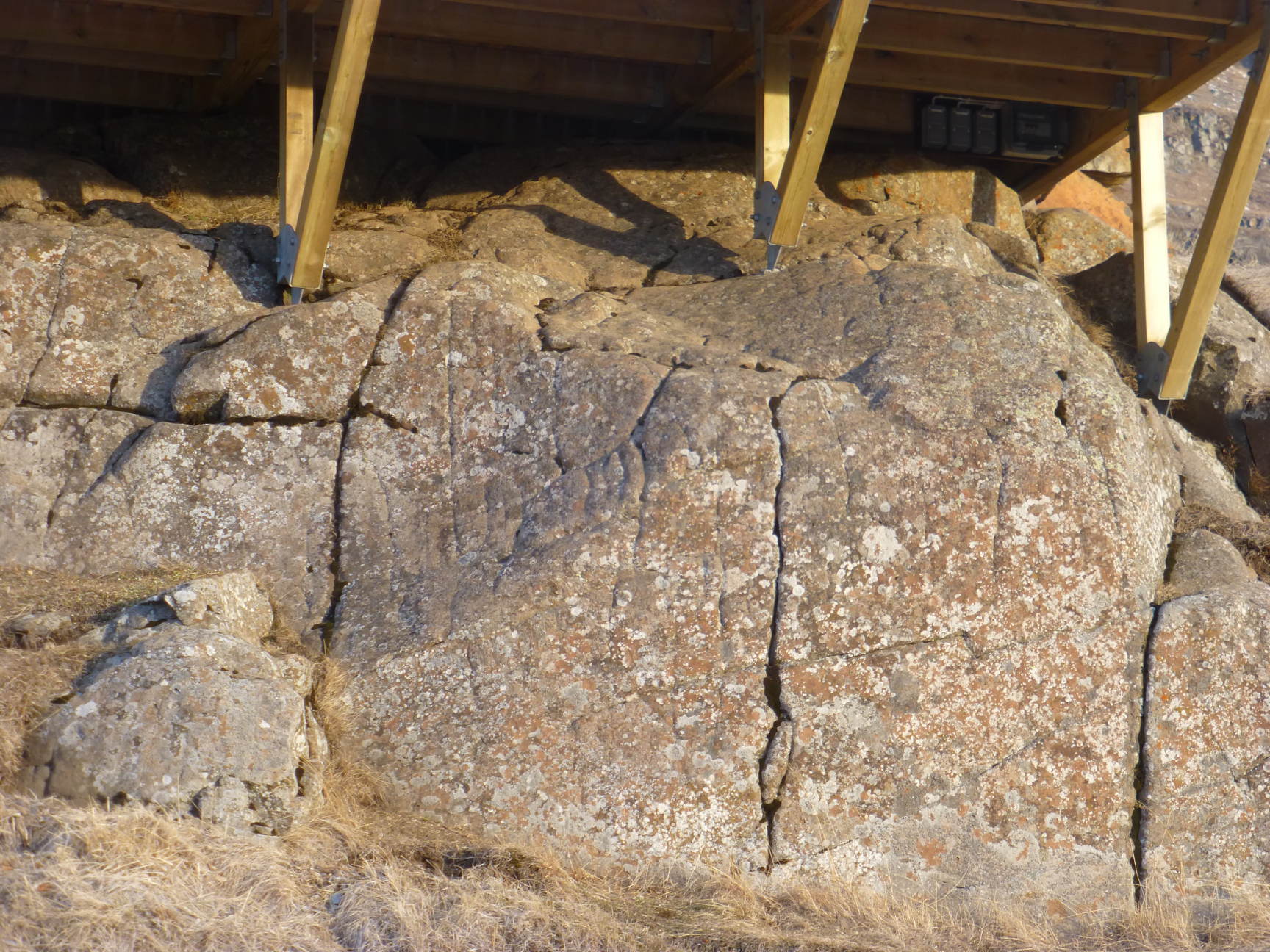
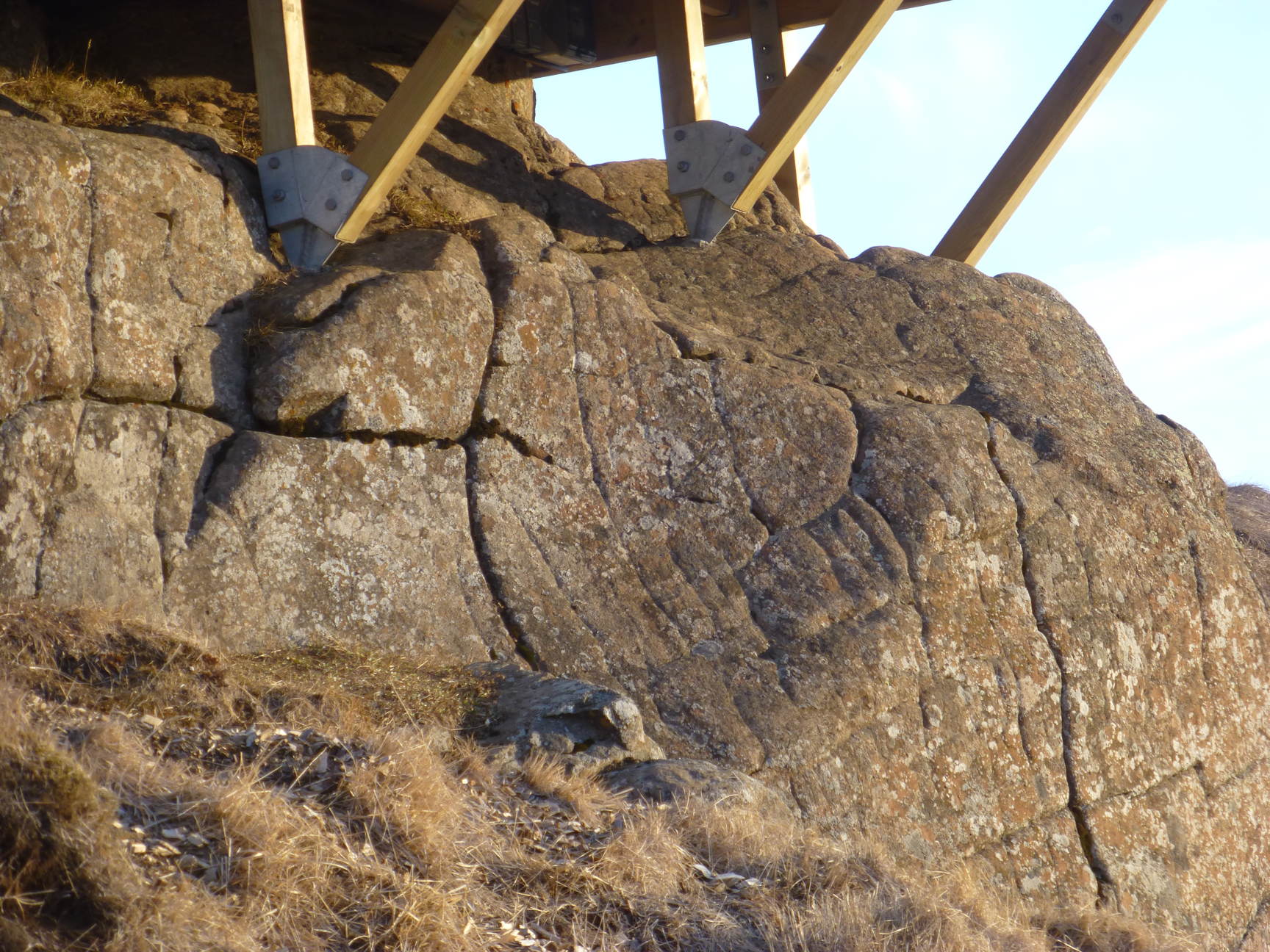
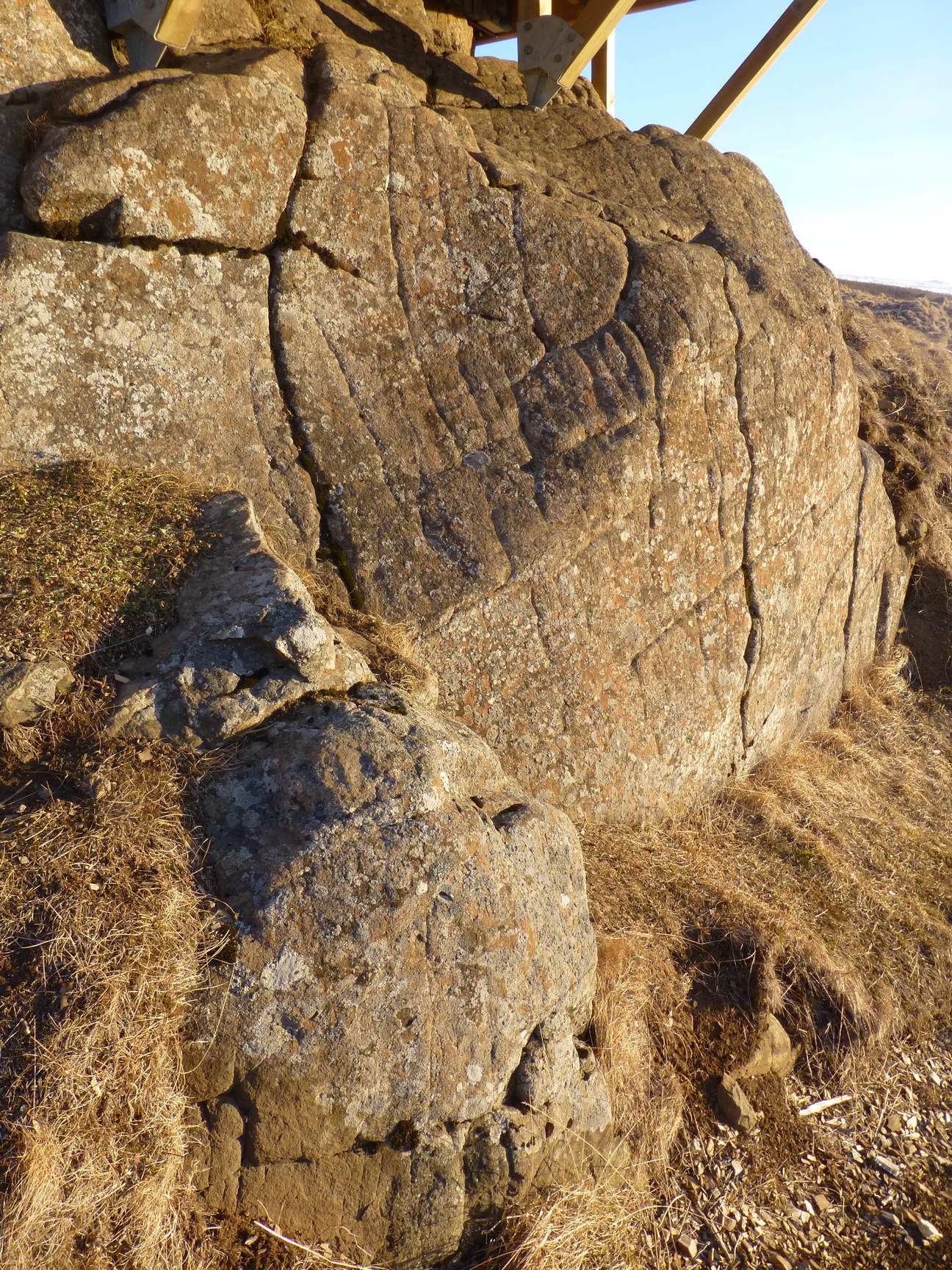
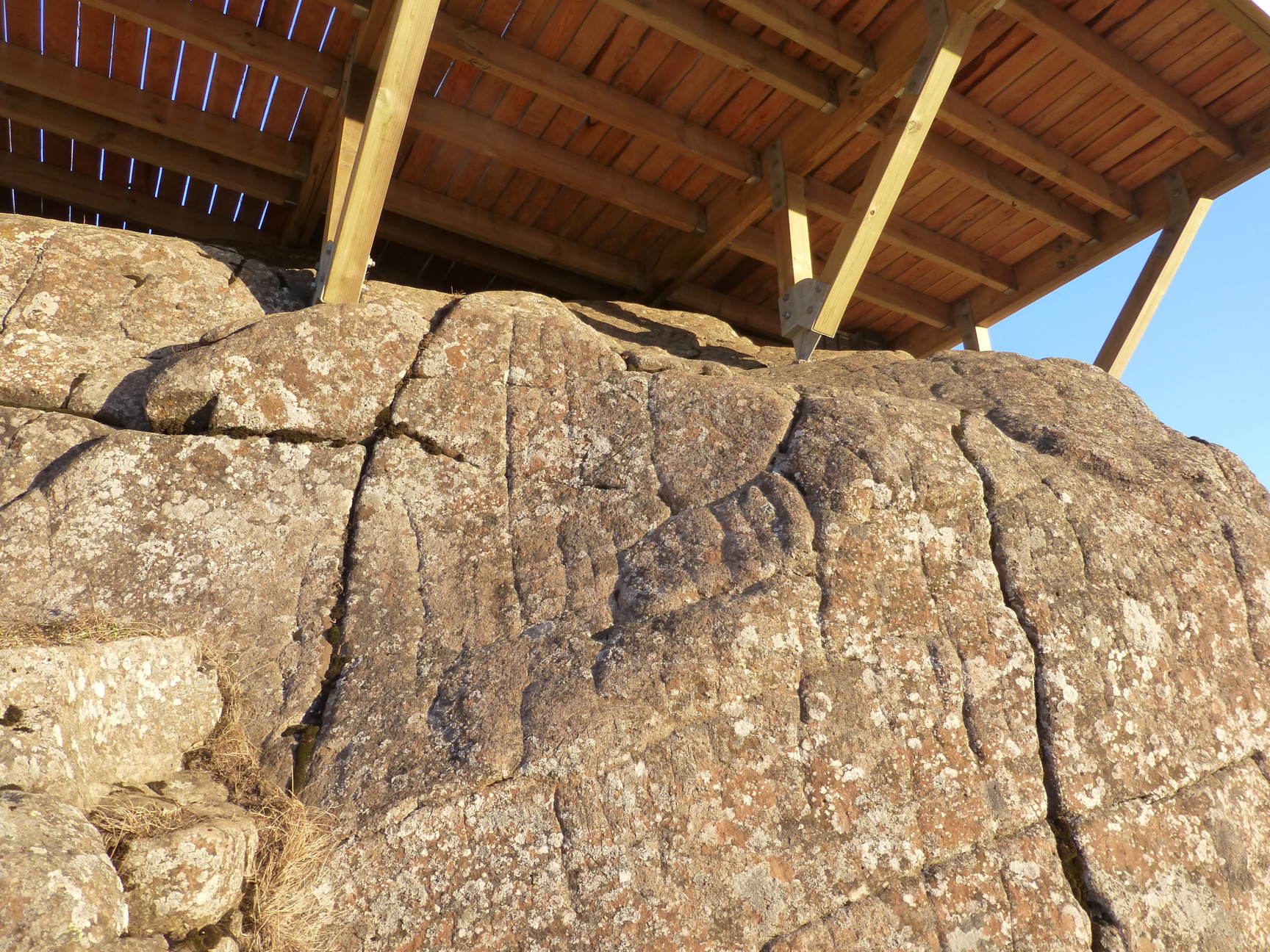
For four weeks, I studied this stone wall above the old monastery, trying to catch it in a light that revealed it. My gut told me that these rocks were culturally-altered, but nothing came clear that I could identify — nothing that couldn’t also be explained by geological processes of decaying, exposed basalt. The archaeological team came to the same conclusion, so used the rock as support for a viewing platform … while also protecting it from the weather. Clever.

So, what do you think?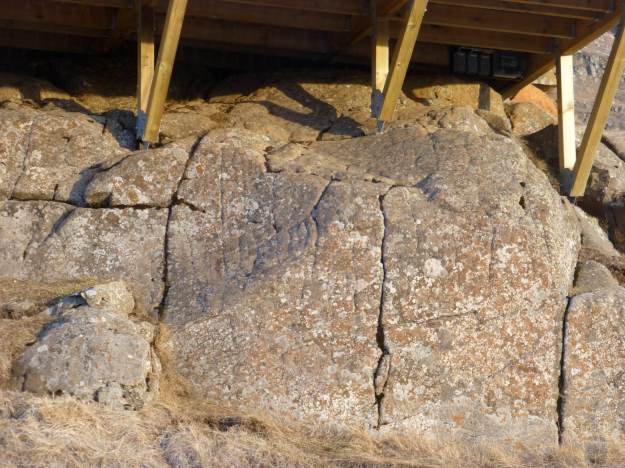
I was pretty sure that there was a raven in this sculpted gouge, worn out by some peri-glacial river long ago.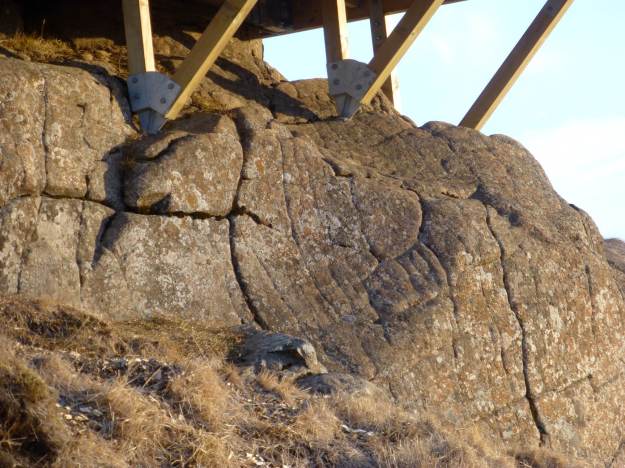
And ravens are important in Norse mythology, and, if you’ll look below the raven’s wing, the raven’s companion, the god Oðin, was known, like Christ, to hang on a cross from time to time.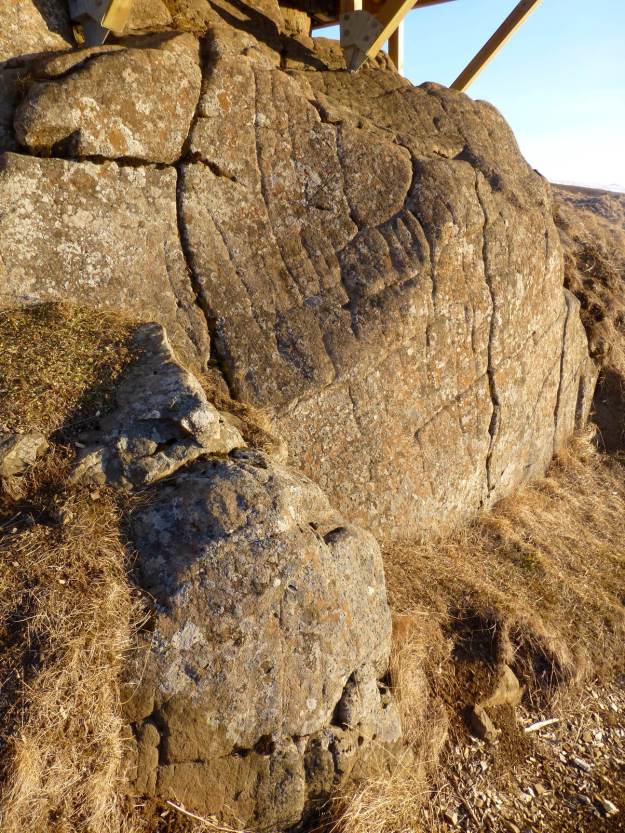
Was there a language here? It’s simply not possible to tell, although we do know that some of the patients at this hospital had come from Greenland — what kind of glyphing had they brought with them? Deep within the monastery, the rocks suggest some kind of talismanic scratching of simple crosses into the rock in the near-dark, but here, in the light?
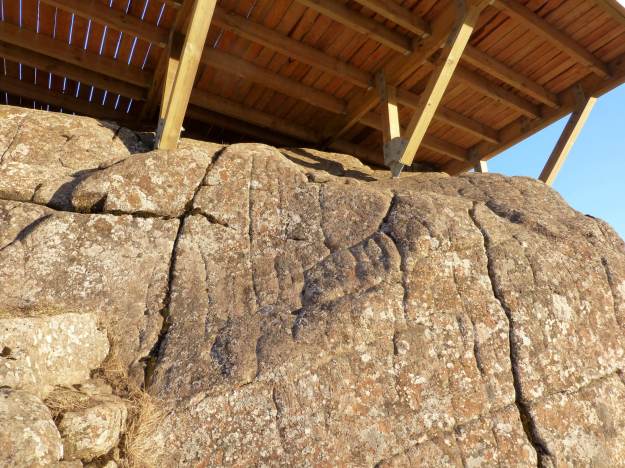 Was the old practice of tracing natural forms in the rock to gain their power. One wouldn’t have to carve. One would receive the energy, without any intermediary art. It is the reverse of normal pictograph-making, where a pattern is worn by a finger dipped in fish grease and sand and run thousands of times over the same groove, to transfer power that can then be picked up by the sea, but here, where is no sea, and no humanly-created shapes? Might they be, nonetheless, humanly-imagined and traced? Here, look again, later in the afternoon…

There was a ritual in the Monastery of Maulbronn in Germany (far older than this one), of pouring wine into a crack in the stone, so the simple monks could catch it in their fingers… so good, they said, it was “eleven finger wine.” The spirit of God in the wine, in other words, united with the spirit in the rock, a fine Christian symbol, and came to life through the hands of monks lifted to their mouths. Might the same thing have been happening here? We’ll never know, but we’ll never know if it didn’t, either.

 Sturluflöt, Villingadalur







 A Farm in Iceland