Category Archives: Enlightenment

Elves and Men in Iceland

In his Book Livet’s Strand (The Shore of Life), written in 1915 during the height of the Great War that destroyed Western Civilization and left us all trying to make sense of the ruins, Gunnar Gunnarsson explored the idea (to heartbreaking length) that the earth is a shore on which life crashes again and again and again. On this shore, life is rescued and lost, celebrated and lost again, and in the end only endured. Today, 98 years later, I’d like to rescue that earth from this apocalyptic image — without denying its truth and the very real anguish which gave birth to it. To set the scene, two posts ago I gave this image of the living sea in the Skaga Fjord, in which I suggested that the sea was life itself and all other life is only a replication of it …

aliveThe Greenland Sea

Very much alive in Skagafjörður

Today I’d like to modify Gunnar’s rather black and white statement with the observation that the land has its own life. For evidence of it, a journey to Skudustaðir on Myvatn (The Lake of the Midges), is well advised. There is life within the stone there — life intimately connected with human consciousness, too. Here, for example …
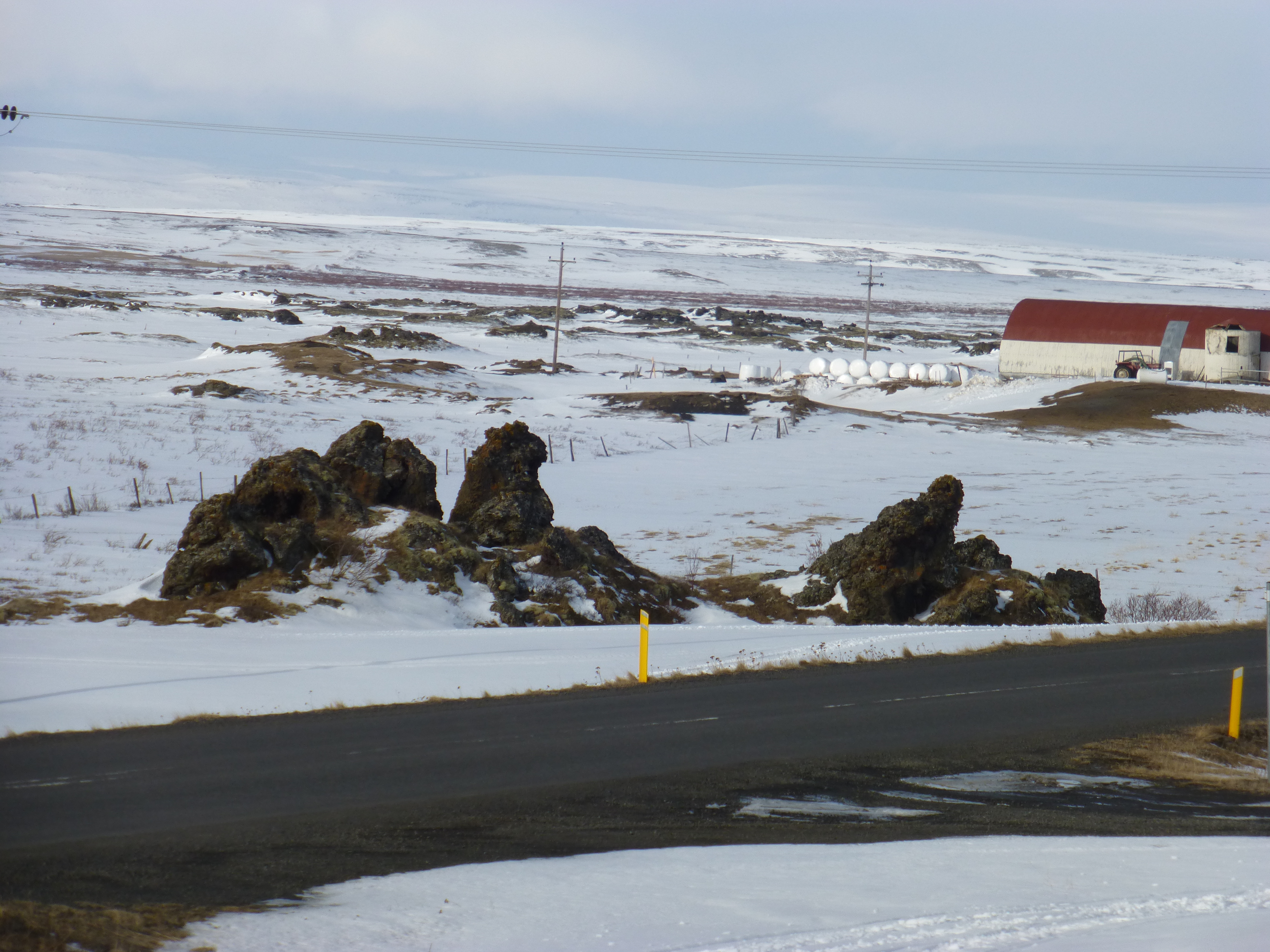
P1320873House and Barn

That’s Elf House and Human Barn, actually, and the road going north and south. Folk wisdom holds that elves are more beautiful than people and reveal themselves only when they wish. No argument there.

Sure, Tolkein dreamed of his elves and so did the Victorian fabulists, but these are not those elves. Those ones are social and linguistic constructs and physical animations rising from the literalism of Christian civilization. I have deep respect for Christian tradition, but would like to show that in the North it has a very specific and illuminating context. These “elves” or “other people” are bodily perceptions that humans brought here from older continental traditions stretching back into the deep stone age. Here’s some charmed rock …

innerelves

The Other World

Or, to give life to an old phrase that now is a name for bedrock: the living rock. It is not a metaphor, but neither is it one of Tolkein’s stories.

There is, for one thing, a world within the rock, with faces frozen into stone. Now, I will be following up on those faces in the next few days, but today I’m laying down words about the rock as the sculpture that it is …

elfin5

Rock Entrails in Skutustaðir

Open up a human body and you get much the same thing.

In the 18th Century, the German philosopher Johann Gottfried Herder wrote a vital book on aesthetics that shows light on this kind of art. It has been impeccably translated in a new edition from the University of Chicago.
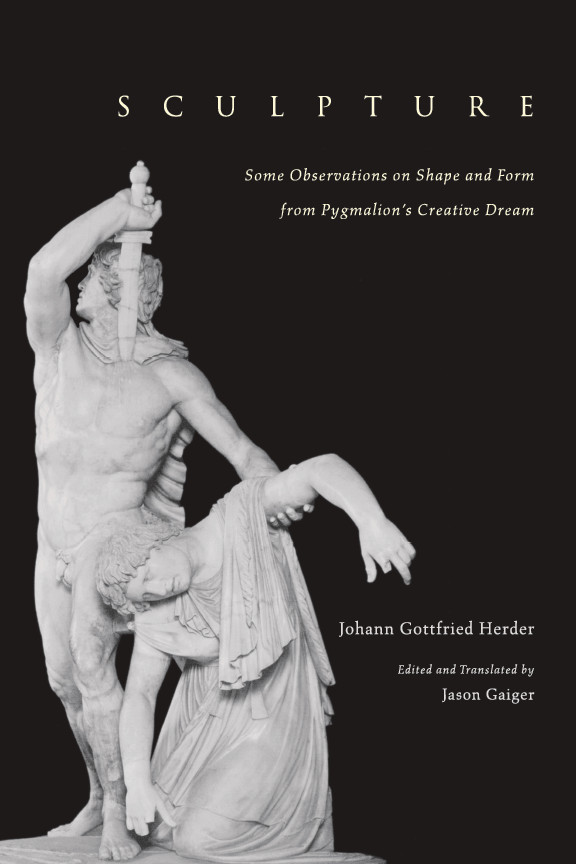
978-0-226-32755-6-frontcover

The Publisher’s Page on this Book is Here.

In this book, Herder argues that sculpture is a representation of the human body, seen at the intersection of time and space — that three-dimensionality is just this intersection. Intriguingly, to observe this form of mirror, a human must walk around the sculpture, to see it unfold in time. It is a way of movement that anyone knows who has gone walking in the hills and seen their story unfold with each footstep, and sensed them moving behind one’s back. And what does a human see when his or her body is glimpsed within the earth, rather than within the sea, or on Gunnar’s shore?

elfin4Elves in the Their Kingdom

One also sees their sheep…

elfinElvin Ram

These effects are not just observable in the intestines of the stone, mind you. Even the surface stone, it’s skin, the shape it takes on exposure to the sun and human sight, is alive …

elfin6Elvin Sheep Skull with A Halo of LIchen

What do I mean by “alive” in this context? I mean that the stone has the power to cast forth shapes within the observing mind. It is a kind of template. The mind I’m talking about is a point of intersection between humans, earth …
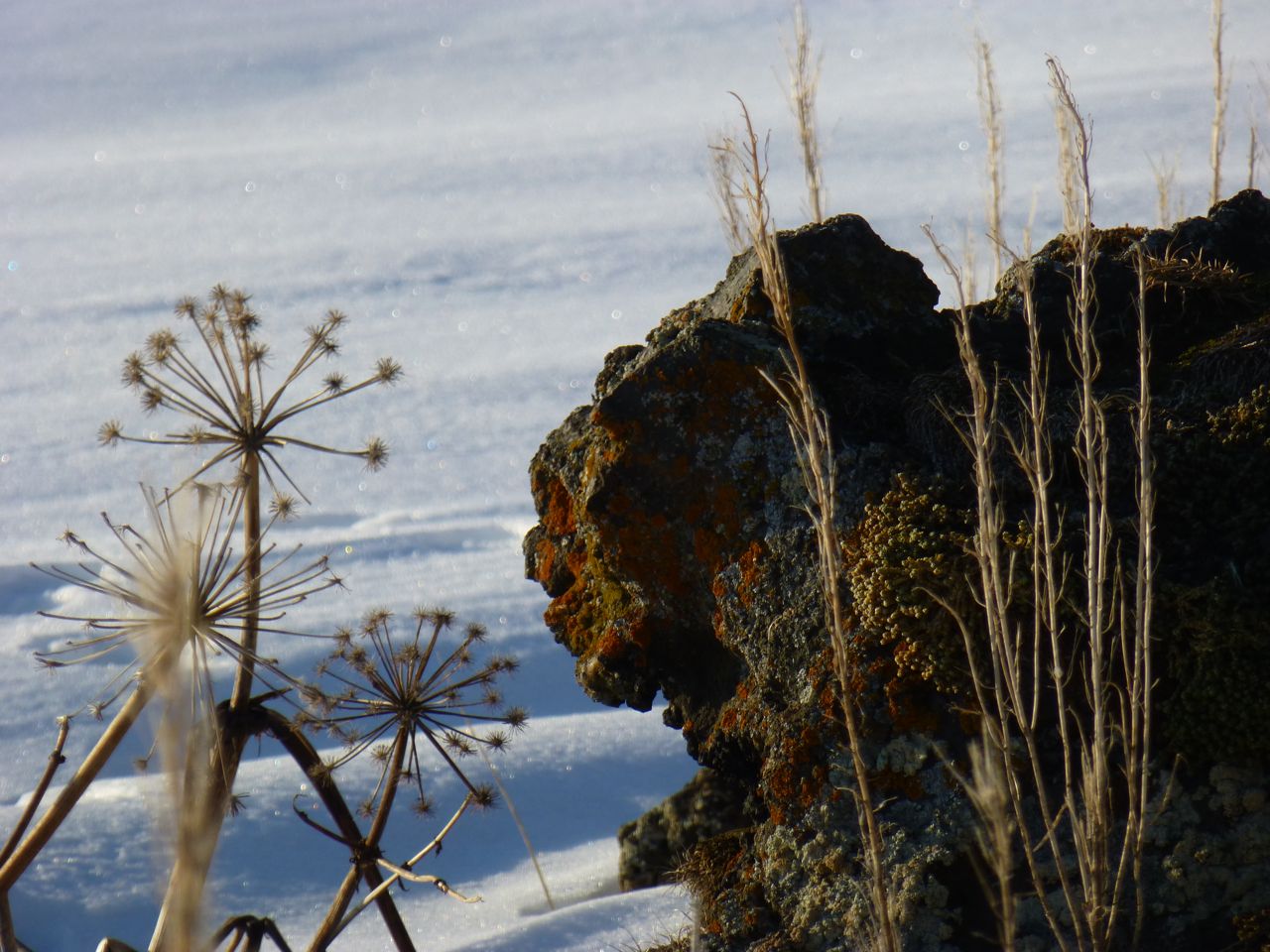
lakeelves1 Lake Elf in the Spring Sun

Skutustaðir, Iceland

 … and with other wanderers from the sea, like these lichens …

head2Lake Elf with Jewels of Lichen

The orange lichen blooms in the faeces of birds. Cool!

Even more dramatically …

elfsnow2Lake Elf Replicated in Lichen

Sometimes the patterns laid down by the stone allow for these type of human readings to rise directly from the lichens themselves, as the stone is read in time …

elflichen3Lichen Elf

Skutustaðir, Iceland

This is the way the human mind reads the earth. In contemporary terms, ‘reading’ refers to decoding marks on paper, which spell out words, which encapsulate ideas and signify the things of the world, all coloured by human “spells”, traditions, conventions, and cognitive biases. Reading the earth operates on the same principle, with the difference that it came long before spells and words, and is a way of “reading” or participating in the earth with the body, rather than with the mind. Gunnar’s anguish during the Great War was that the link to God had been lost, and that God cared nothing for his people, and was remorseless — as remorseless as nature. That is, in itself, a very modern reading, but in no way does it negate the physical context in which it stands, in which humans stand upon and within the earth, bring forth children upon it, and tell this most ancient story, not of earth as a shore of death on which life, or God, shall we say, crashes and breaks again and again like waves of untrained and disastrously led soldiers marching into the machine guns of the Somme, but is alive. Who are the other people? The question is absurd. They are our selves, built upon the forms of the earth, continually springing to life, indominatable, and enduring.

elfsnow

Tomorrow I will continue this discussion by extending it into the forms of human sight, the line, and the basics of art. Now, I’m going out to walk among the horses of Iceland. Bless bless!

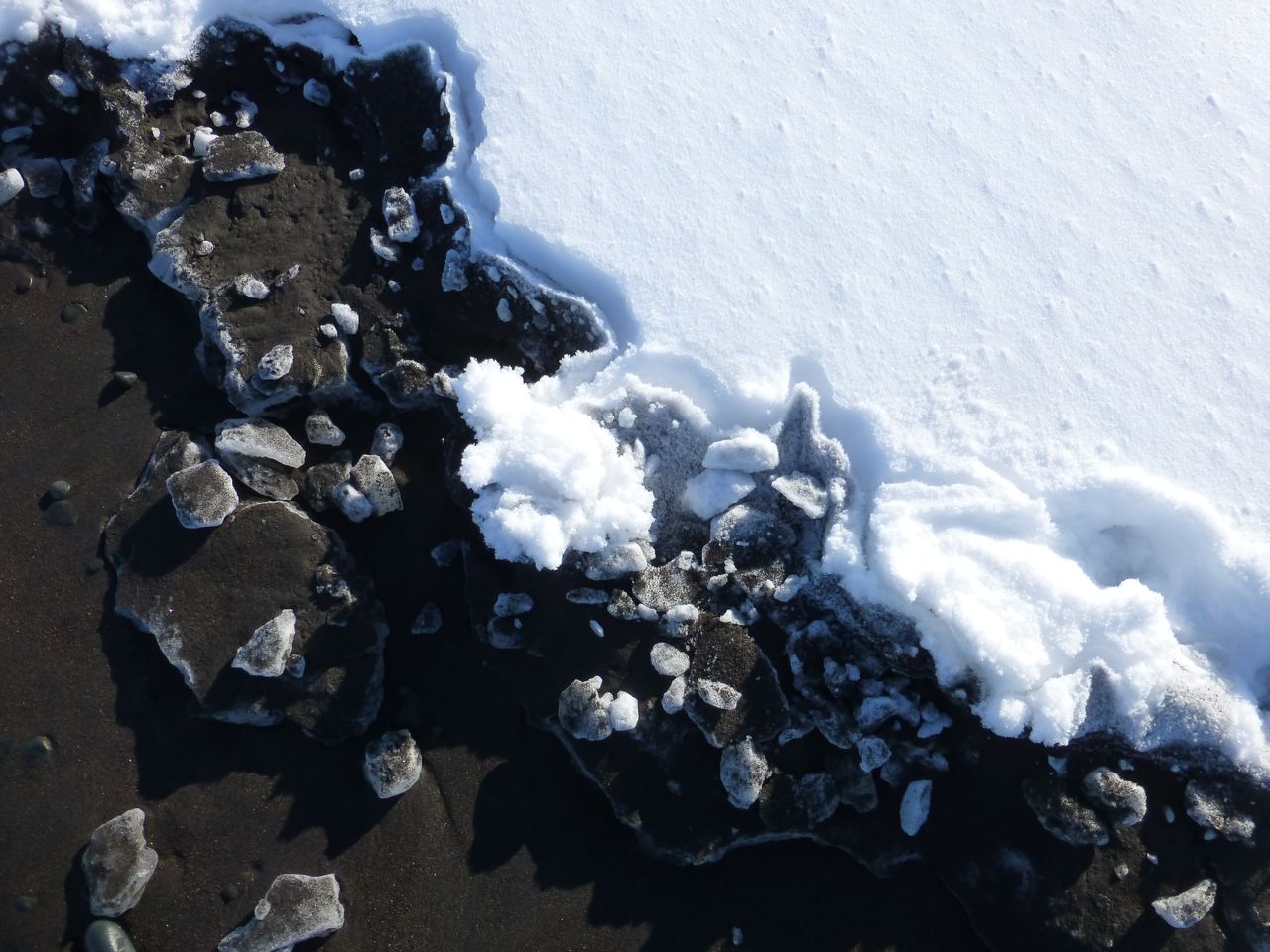
Salt Lithography

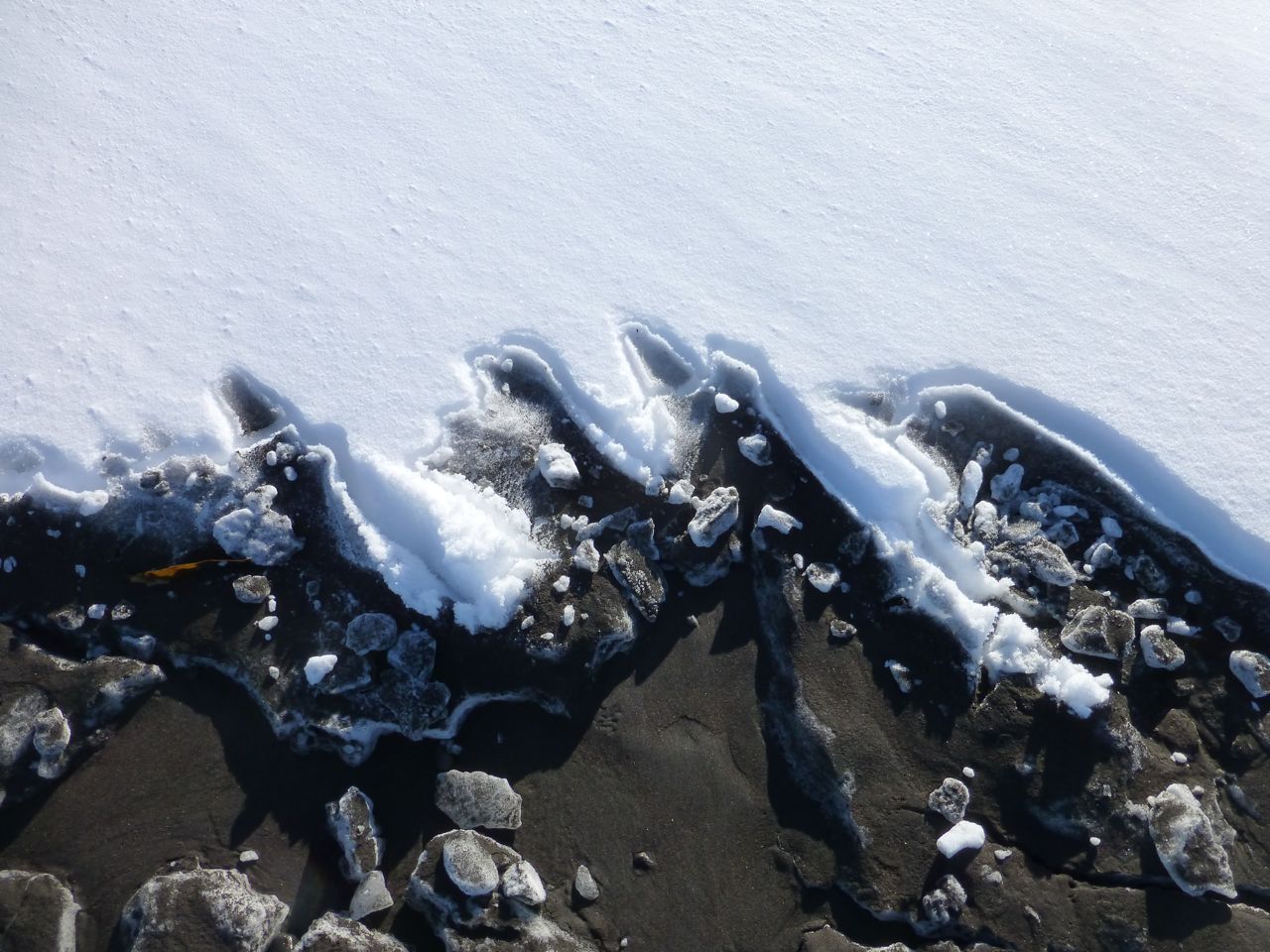
Here’s another variation on lithography from Iceland. This is one that the sea writes upon the snow, with the land (in this case ground volcanic basalt). I found these transitory prints written in a heavy spring snowfall as the tide was coming in at Sauðarkrokur in the Skaga Fjord.s3


I see the beginnings of a language here, and here …


s2


Contemporary artists search for the lack of signification, yet this is the universe …


s1


It’s just that it’s not a humanist meaning. Look at how the snow erupts in volcanoes when pressured from the sides! Stunning.

Next: A Language of Light and Shadow from Hofstaðir

Painting with Ice

The Icelandic artist Páll Guðmundsson of Húsafell does a lot of work with rock. Sometimes he makes faces on boulders and scatters them in streams, where they look a lot like the boulders with natural faces that are already scattered there. It is like adding extra cards to a deck, and makes life a worthwhile adventure. On December 1st, 2008, however, the Church of Reykholt, Iceland, put on a display of prints of St. Cecilia, which Páll created by painting ice with images with pigments made of ground local stone, then allowing the ice to print them onto paper as it melted. They are inscribed with poems by Thor Vilhjálmsson. Here is one…  

cecilia

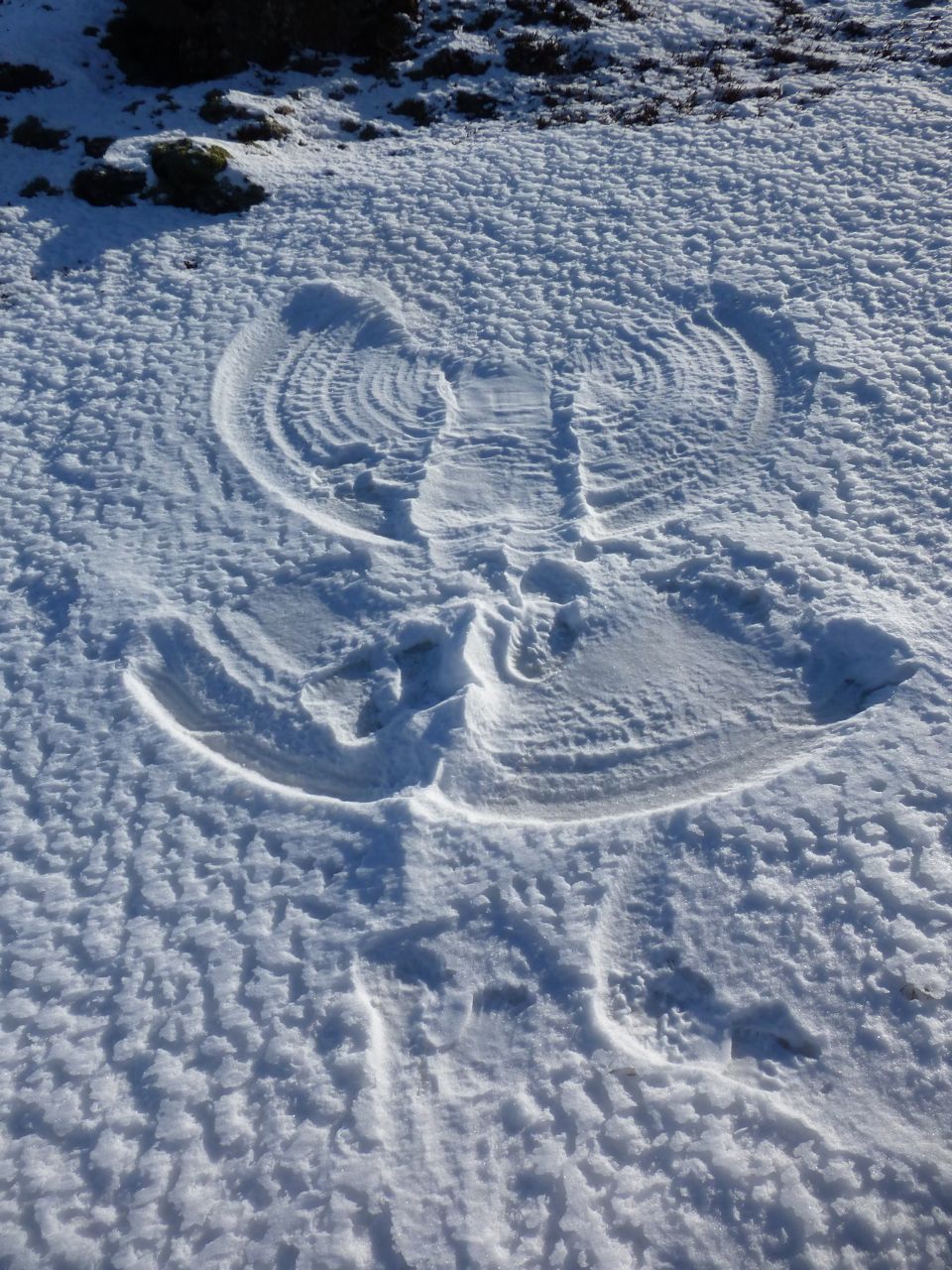
What an inspiring transformation of the art of lithography! Páll is not the only artist in Iceland playing around with the interface between faith, ice and stone. Here’s a spontaneous piece of folk art I found at the sheep fold on the cinder cone, Grabrok …P1280259The angels are among us. Good to know.

Next: snow meets the sea at Sauðarkrokur.

Elves, German Nationalism, and Gunnar Gunnarsson

Before Darwin, European culture had many ways of understanding the relationship between humans, land, and evolution. Scientifically, they withered under the evidence of Darwin’s theories, but culturally many of them have remained potent. One of them is the Huldafólk, or Other People, of Icelandic folk culture. The English translation is “elves”, but these aren’t Tolkein’s elves, nor are they the fairies of Irish folklore. These are human-sized people, just more beautiful than the humans themselves.

374px-Jumping_after_Hildur
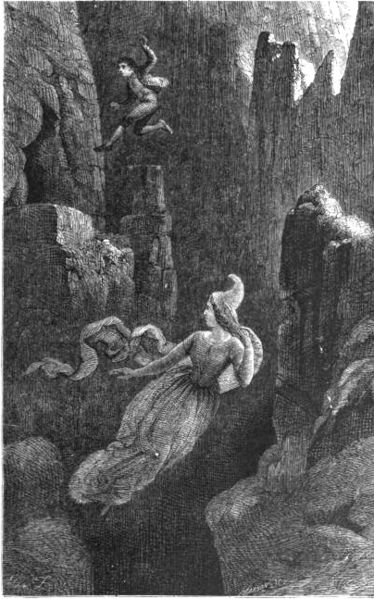
Jumping After Hildur
A man jumping after an elf (English Engraving, 1864)
Another set of alternate people are the dwarves of Norse (and occasionally Icelandic) legend…
P1020278Dvergasteinn, Seyðisfjörður

The dwarves, it is said, rowed this dwelling (rock) across the fjord, when the humans moved their church to this site, because they missed their company on Sundays. Eventually, the humans moved away and took their church with them. The stone (and its dwarves) is left.

Another alternate human is the Green Man, and his relative, the Old Man of the Woods. These people were said to be the original humans, who had risen from the earth and the trees.

greenThe Green Man, Görlitz, Germany

With his leafy beard, hair, and moustache.

The Green Man was an important nationalist symbol in the German struggle for independence in the mid-19th century. He was often said to be a representation of the first Christian, Judaic and Islamic human, Adam. Here those ideas kind of come together in one of the contemporary centres of German ultra-nationalism:

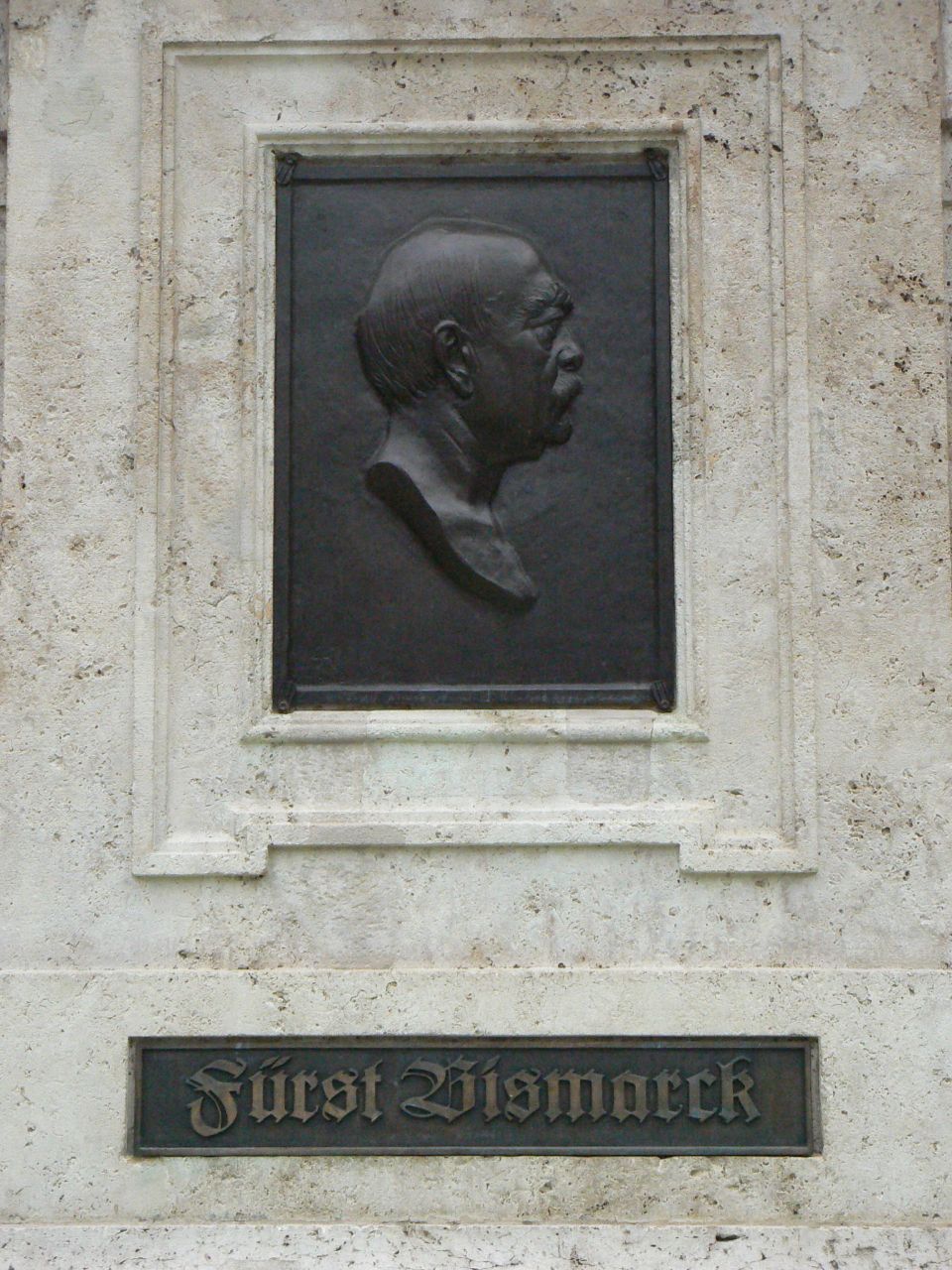
bismarckBismarck, the Iron Chancellor, Jena, Germany

The father of Germany, with his bushy Green Man Moustache. Now a fountain.

Here is an older image of these men coming together in one spot:

barbarossaBarbarossa, or Holy Roman Emperor Friedrich I, Kyffhäuser Monument, Germany

Friedrich’s Crusade to recapture the Holy Land came to an end on June 10, 1190, when he drowned in Northern Lebanon. The monument was erected to commemorate the founding of the modern German State.

Few of Barbarossa’s (Red Beard’s) 100,000 men made it home. Legend, though, has him return to the country as an old pilgrim dressed in grey, inspecting his kingdom, which had lapsed from true observance of Christianity and was a shambles, much like this figure…

wodin

Wodin, from the lost Hall of Sagas, in Silesia

Odin of Norse Belief, or Gandalf in the modern version, or Barbarossa, take your pick. Old legends just don’t die out. Barbarossa was the code name for Hitler’s Invasion of Russia in 1941.

Depressed at it all, Barbarossa retreated to the castle on Kyffhäuser Mountain, where he lived inside the mountain with his knights, served by the dwarves of the mountain. He drank a lot of beer with them and fell asleep, only to wake a century later, ask if it was time to wake up, and then drink another beer and fall asleep once more. His beard kept growing.

P1160220One of Barbarossa’s Dwarves

Dwarves show up continually in German folklore. Luther, the translator of the Bible and unwilling founder of Protestant Christianity, was raised in such legends, in the mountains east of Frankfurt, where his father was a coal miner and descended among them daily. Their power haunted their simple forest house.

Luther’s dwarves were the subconscious mind of the German people. They lived inside what was known as “the living rock”, or the deep rock of the mountains. Gunnar Gunnarsson, son of Iceland, descendent of men of Odin, born to a country of turf houses buried in the earth, also came from this story. So did this man:

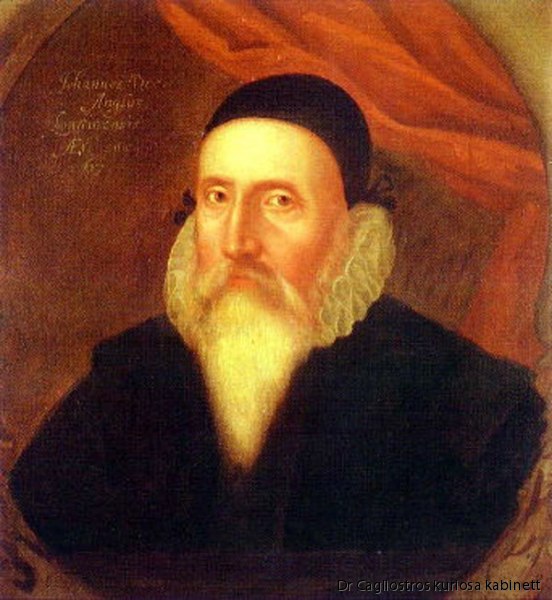
DeeJohn Dee, 1527-1609

Dee was an Englishman who served as Court Astrologer to Queen Elizabeth of England, created the navigational instruments used by early European explorers in the North, and spent many years writing down his conversations with the angels. He believed that if he could learn their language, and speak it correctly, he would be able to conjure up the spirits of the earth and the air, as God did in the Book of Genesis, restart Creation, heal all war and disease, and return earth to Eden. Legend has it that when the Spanish Armada, the most powerful state in the world, attacked England, John Dee wove a magic spell around the Island and conjured up a storm, which wrecked the Spanish fleet. This act formed the basis of Shakespeare’s play, The Tempest.

prosperoProspero, Duke of the Island, Banishing the Half-Human Creature Caliban

The tree spirit Caliban is not unlike the Green Man.

Return Earth to Eden? Cast a spell around an island alive with spirits of earth and air? Banish the half-humans? Retreat to a mountain stronghold (an old monastery)? Found a country? Invasion from the most powerful country in the world? The old gods walking the roads in disguise? This is the context in which Gunnar Gunnarsson was operating — the old European, pre-Darwin context, that was still very much alive in his time and is still alive today. In my next post, I’ll show how these ideas illuminate parts of the speech he gave while on tour in Germany in the spring of 1940.

The Novelist, Sod Roofs, and the Other People

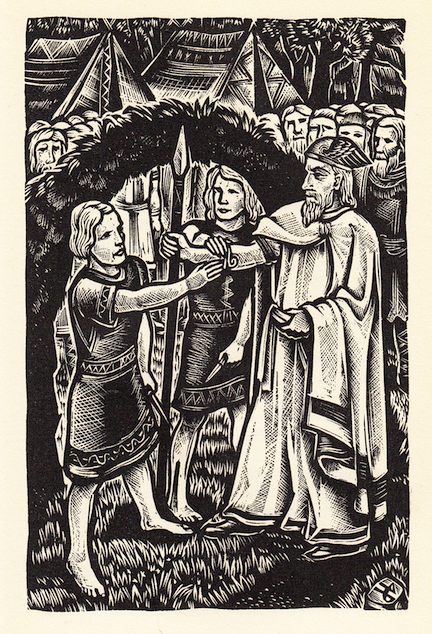
Today I’d like to walk some paths between sod houses, Iceland, and Gunnar Gunnarsson’s inner world. All paths link in a vast web, each link of which is a starting point. My starting point today is a passage from Gunnar Gunnarsson’s novel, The Sworn Brothers, written during the First World War and translated into an English that was archaic even in 1921, when it was published in New York. A better contemporary title might be The Blood Brothers, especially for the passage quoted below, which tells of the ceremony by which Ingolf and Leif, the heroes of the book, become brothers by oath.

eidbrueder2

The Oath

Note the turf arch. From the German Book Club Edition of 1933 (Hamburg).

Here’s the story illustrated by that image. First, the cutting of the turf …

Ingolf and Leif had now cut loose the piece of turf, and went together to lift it. They raised it carefully till it stood straight up and formed an arch. Then Atle Jarl stepped in and placed his spear in the middle of the arch to hold the turf up. He himself stood and supported the spear while Ingolf and Leif cut loose an oblong turf under the arch. Their blood was not to run on the greensward, but was to mingle on the bare earth.

… and then the drawing of blood …

Ingolf thrust his knife-point well in and cut a deep gash. Leif put his knife right through so that the point projected a couple of inches on the other side of his calf. He had difficulty in drawing it out again. The blood ran down in red streams. The spectators felt a strange shuddering thrill at seeing how it oozed out from under the naked soles of their feet.

… the mixing of it with the earth …

Leif watched the course of his blood attentively as it approached Ingolf’s on the brown scar of earth between them. As it seemed to him to go too slowly, he stooped down, directed the streams of blood with the point of his knife, and stirred the blood and earth round between him and Ingolf. A laugh then rang out in the air from hundreds of throats.

… the proclamation of brotherhood …

Atle Jarl now proclaimed that Ingolf Arnarson and Leif Rodmarsson had entered into legal brotherhood, and named the witnesses. With that the solemn ceremony was at an end.

… and the re-laying of the turf …

The grass-turfs were carefully laid down again in order that they might grow firm and be incorporated with the earth’s life. Ingolf and Leif were now joined together by the strongest bonds that exist the blood-tie between brothers, the most sacred and inviolable of all blood and family ties. The earth by which they had been formed in different mothers’ wombs had now drunk their blood mingled, and had at the same time given them new birth, since they had passed together under the turf arch, a part of earth’s living frame. The earth knew now, and had recognized their covenant a covenant no power could break.

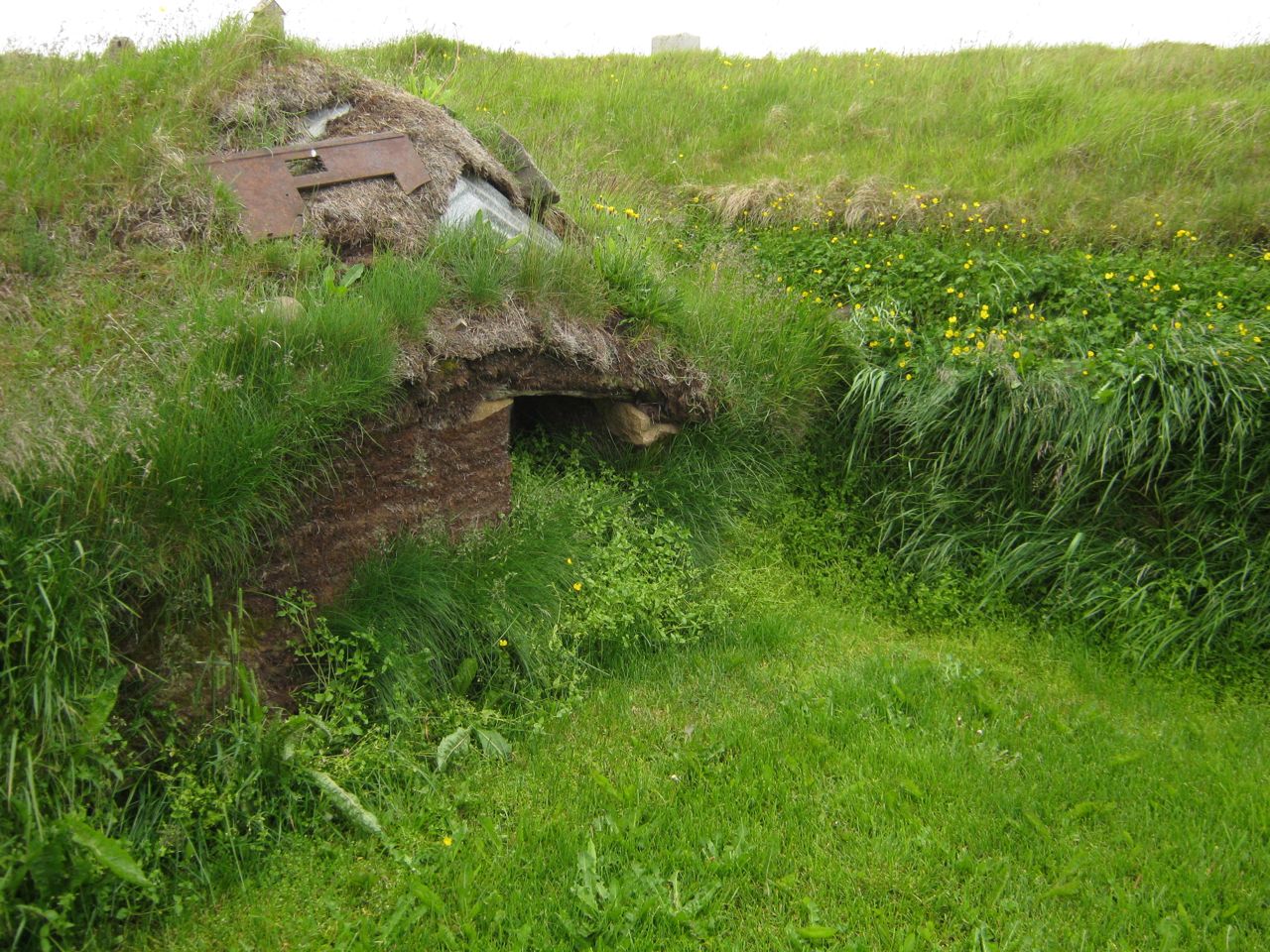
And now, from Iceland, a few observations. First, a turf arch …

Egilstadur to Ardalur 039Turf Doorway, Bustarfell

In Gunnar’s representation, the sacred, pre-Christian earth that lies beneath its cloak of sod, and which figures so powerfully in The Sworn Brothers, once lay at the heart of every Icelandic house. In fact, they were cut out of it.

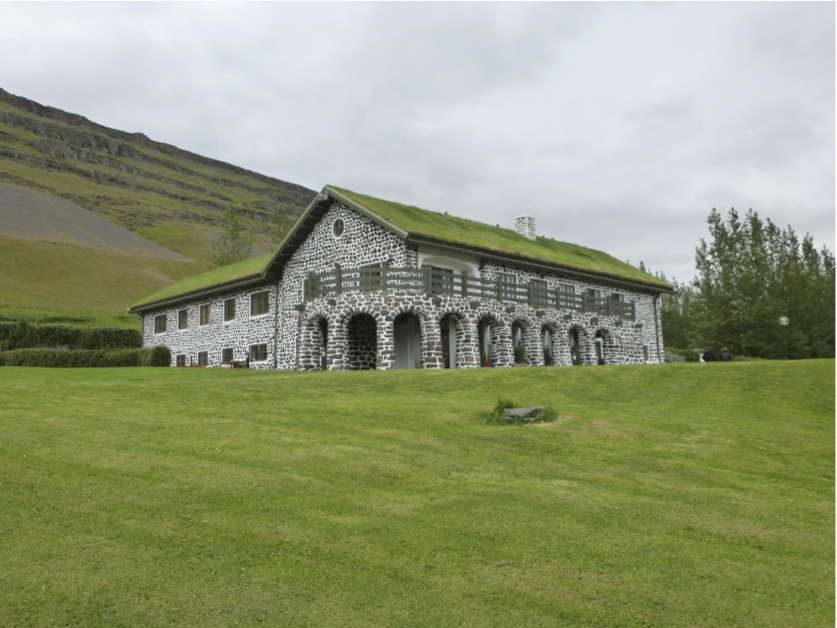
Next, Gunnar’s house at Skriðuklaustur, with its sod roof (designed by Fritz Höger, a German architect who shared Gunnarsson’s romance with pan-Nordic culture) …

P1020160

Skriðuklaustur

Note how the space of earth inside a traditional sod house (containing darkness) has been replaced by a space of air (containing light). The sacred grass covering remains, but as it is no longer connected to the living earth, it is only symbolic. In other words, this house is a poem. It is an act of human will. It is the space into which Ingolf and Leif shed their blood, as conceived of in Gunnar’s imagination.

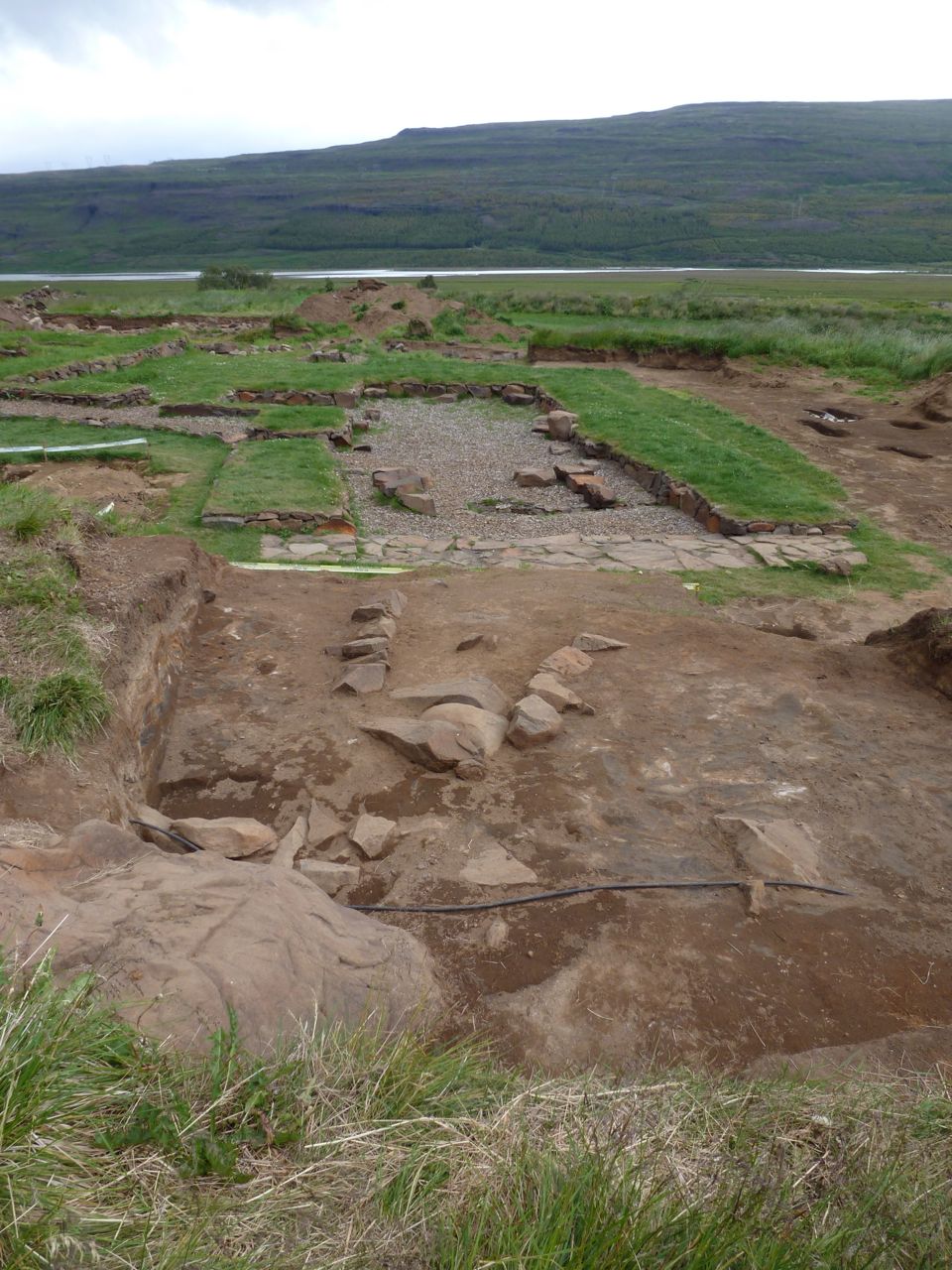
Below the house, the old cloister below the house is being excavated. It’s worth a look, too …

P1020175

The Red Earth of the Cloister Floor (Klaustrið að Skriðu)

For perspective on the theme, a little journey north to Husavik is recommended. Besides a beautiful Christ in the form of a polar bear in its graveyard, the harbour church also has this moving painting as an altar…

lazarus

Christ, Bringing Lazarus from the Dead

Right out of the mid-Atlantic Rift in Þingvellir, yet. The painting is the work of Sveinn Thorarinsson, an artist from Kilakot farm in the spreading estuary of Kelduhverfi county (1930-1931). 

This is a splendidly nationalistic work. So were Gunnar’s novels. So was Gunnar’s house. Poetically thinking, Gunnar, who had returned to Iceland to build his house, had returned from the dead (Exile in Denmark, the colonial power; exile from the land and farms of his childhood, and so on.). In keeping with his modern saga, “The Sworn Brothers,” to swear his oath, he needed a sod roof, to cover the earth upon which he swore it. Here’s another variation on the theme:

elfhill

Elf House

Like a human house, it is covered with sod — just a bit more dramatically. (Out of respect for the privacy of the elves, I will not give you the locations of their houses.)

Not all elf houses are the same. Here’s one with a chimney…

P1040294

… and here’s one without sod, and with its smoke hole plugged …

crossElf Fortress, with its Roof Plugged by a Cross

It has been like this since the day the settlers arrived. As the story goes, a Christianized chieftaness sailed up the fjord, spotted this volcanic plug, and dealt with it right then and there. Luckily for the elves, there is a whole complex of plugs in the area, but, still: ouch.

A house part elf city, part peasant hut, and part elf dwelling … that’s what Gunnar was making, both out of stone, wood, glass and sod, but also out of words, between the pages of his books and in the minds of his readers (he hoped.) Considering it all poetically, and leaving aside for now questions regarding the appropriateness or timeliness of the gesture, he was bringing his books to life, through the construction of a man, or a space for a man, out of the stuff of Iceland, energized by his will.

Next: Why Elves?

Icelandic Houses: Part 2 (Rock)

The Icelandic sod houses that largely vanished in the last half of the twentieth century reflected the interests of peoples’ lives and in turn moulded the way they thought. That’s another way of saying that they acted like poems.

sheep

Icelander, Looking Out of His Sod Poem

Long ago this was a seaside cliff. Now even the coastal plains are above sea level and covered with grass.

Another way to put that is to say that Icelandic houses were the subconscious mind of Icelanders. The house below shows the modern Icelandic method of keeping the imagination green and growing.

P1030716

Bishopric at Holar

A combined Norwegian-Icelandic restoration project, complete with rooftop sprinkler.

These houses varied in design, but were all built of some combination of stone, driftwood and birch wattles, but mostly out of earth and sod — a lot more sod than in the image above. That was some fancy house. For an indication of a broader range of variations, there’s a collection of photographs of a number of these houses here, showing regional and historic variations. Here’s a variation with a cat…

be

A Cat and Its House in Borgarfjörður Eystri

It’s been in the ownership of one human family since the heady days of the 1970s-era back-to-the-land movements.

Although such traditional houses were built largely of sod, it’s not really sod that defines them, but shelter. In Iceland, an island in the the middle of the North Atlantic, that means shelter from the sea. In complex ways, this architecture was fundamental to Gunnar Gunnarsson’s project at Skriðuklaustur, sheltered far inland in the northeast from both the sea and the deteriorating politics of Europe. To get closer to that thought, I’ll be talking about its components, one piece at a time. Today: rock.

churchfloor

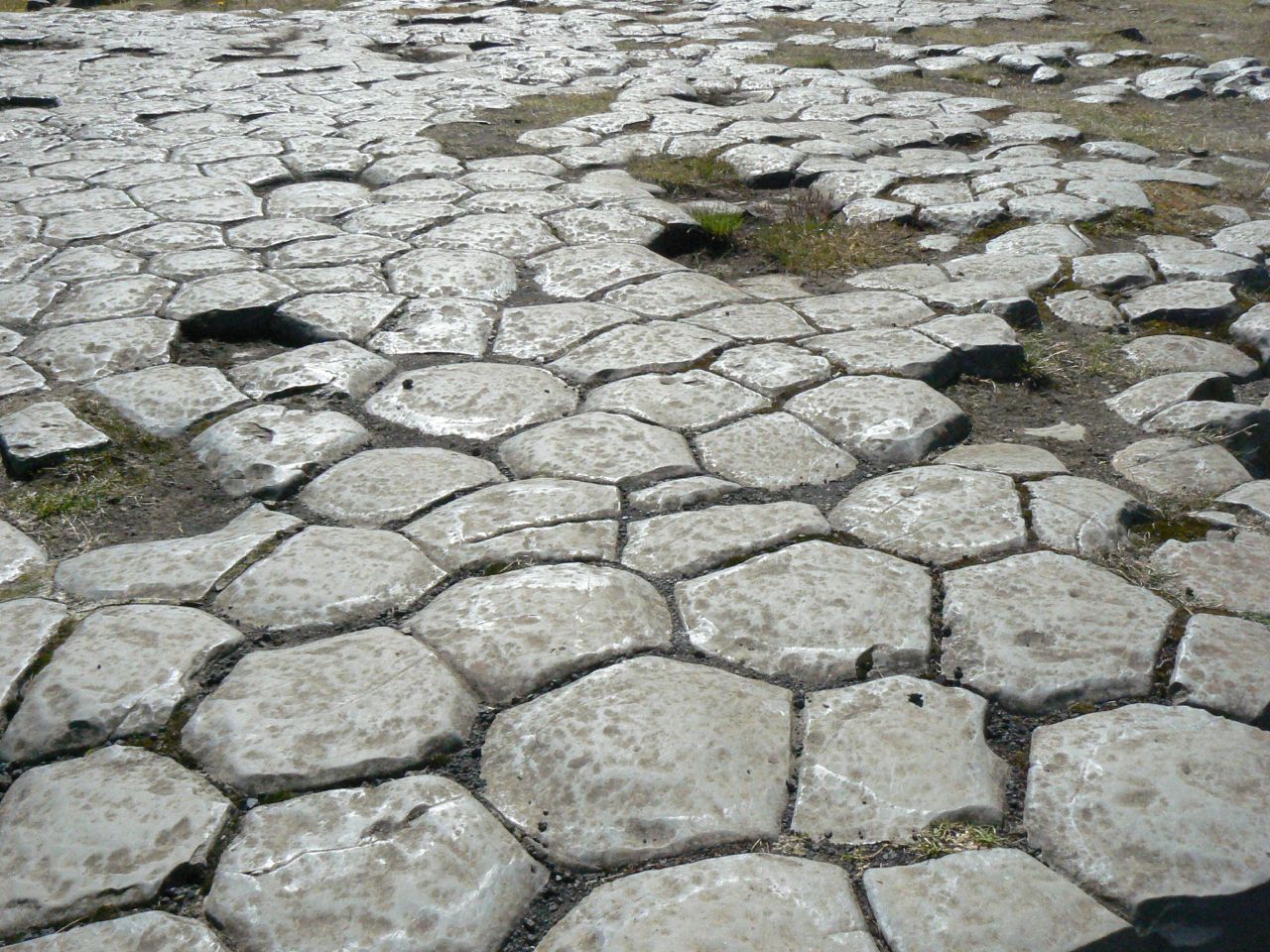
The “Church Floor” of Kirkjubæjarklaustur

Basalt Crystals Shaved Off by Ice

In terms of rock, near the core of the idea of Iceland and its houses being one, lies this thought of Gunnarsson’s on Iceland itself:

“The pillars of its cliffs are like the beams of a tightly-linked chain rhyme.”

from Our Land (1940)

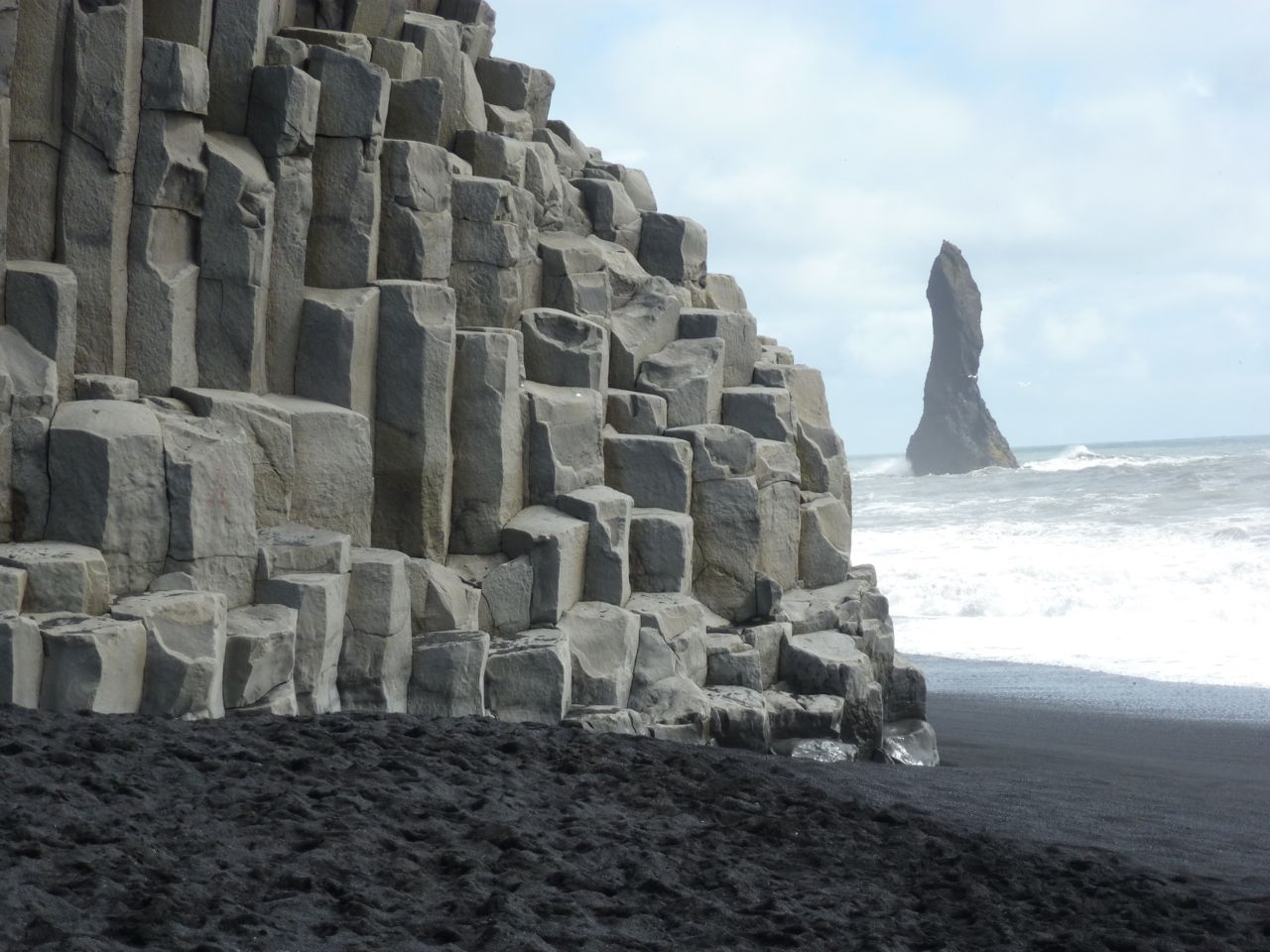
Gunnarsson had in mind something like this:

felsen

Basalt Crystals West of Vik

With a frozen troll out in the water. (I’ll be getting to those trolls in a couple days.)

The connection between sod and stone is strong — and an obvious connection to people who are used to living in the earth. After all, sod covers rock.

P1030019

Dettifoss: The Beginnings of Sod …

… over the poetry of the earth. Once the sod is skin deep, the poem is still there.

The kind of people who would intuitively see the connection between the earth and their bodies and the poems that speak to them are ones to whom a house is not a typical above-ground structure with four walls, a door, windows, and a roof but something that rises from the land and sinks back down into it again, like waves.

Egilstadur to Ardalur 039

Sod House, Bustarfell

People like that lived underground, in what were basically excavations into the poem that was the land. Such excavations drew underground space out into the light. Because of this simple, physical orientation to space, the poem was completed, and brought into the present, in the moment when a man, woman or child stepped out of the house. If you were one of those people, you carried time out with you. You were, in fact, the present of something very old and very dark.

door

Entering Present Time

 Here, the following series of images might show what I mean. First, a chain-linked poem …

cliff

Quickly Cooled Basalt Cap on Top of Slow-Cooled Pillars

Complete with a Door

And some Icelanders at home in in their poem …

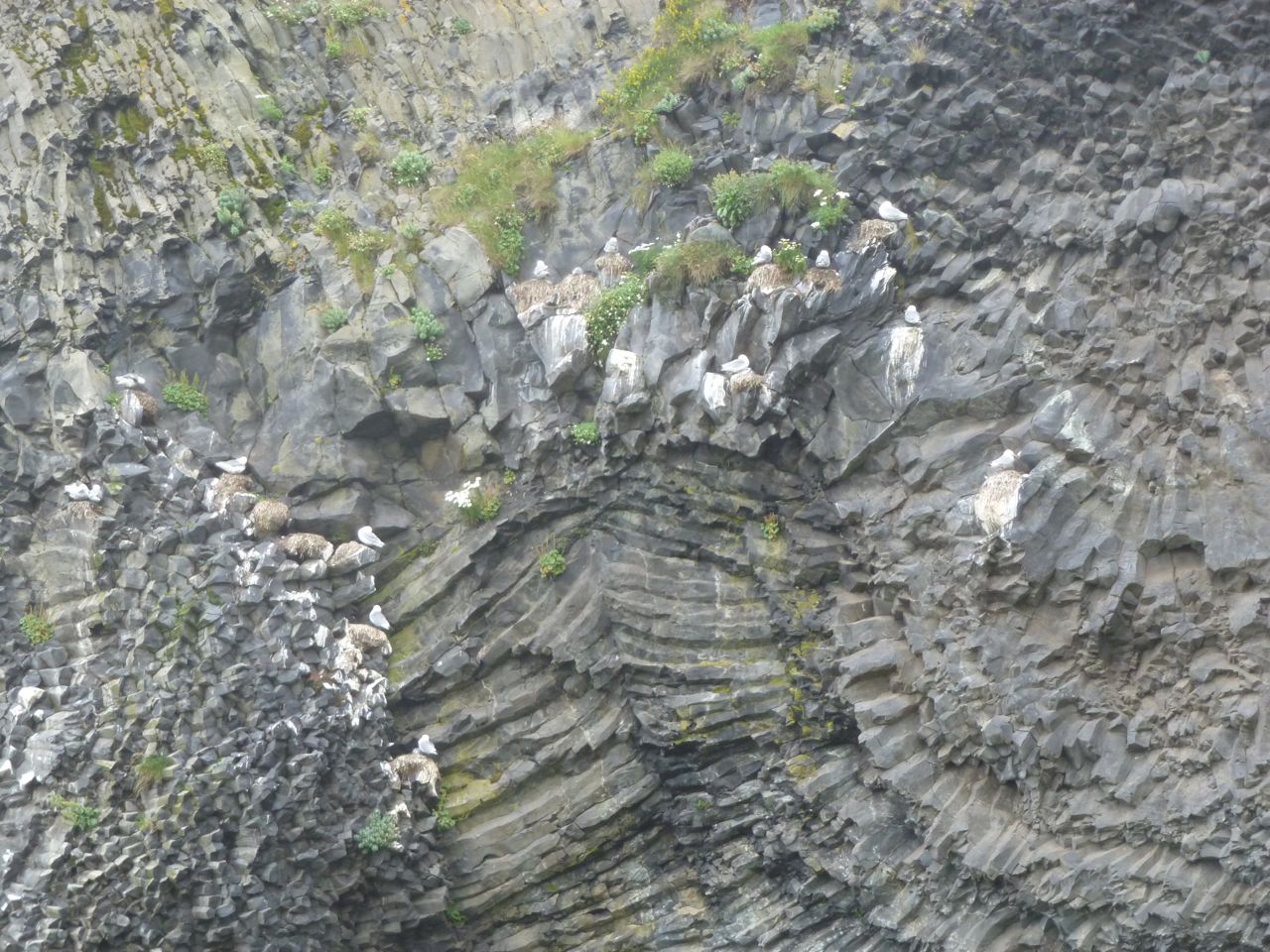
birds

Multiple Flows of Chain Rhyme Stopped by the Cold of the World

And a bunch of Icelanders, too, at home here on the boundary of the ocean and stone. Gunnarsson’s novel The Black Cliffs makes a clear connection between birds like these, on cliffs like these, and the dark recesses of human motivation. He intended it as a kind of Heart of Darkness.

I know. I’m thinking like a poet here, but so was Gunnarsson. At Skriðuklaustur he was trying to build an enlightenment, to bring, so to speak, the unconscious past into a conscious present. In mainland Europe, the Enlightenment was built out of the scientific and technical developments of the 18th and 19th centuries.

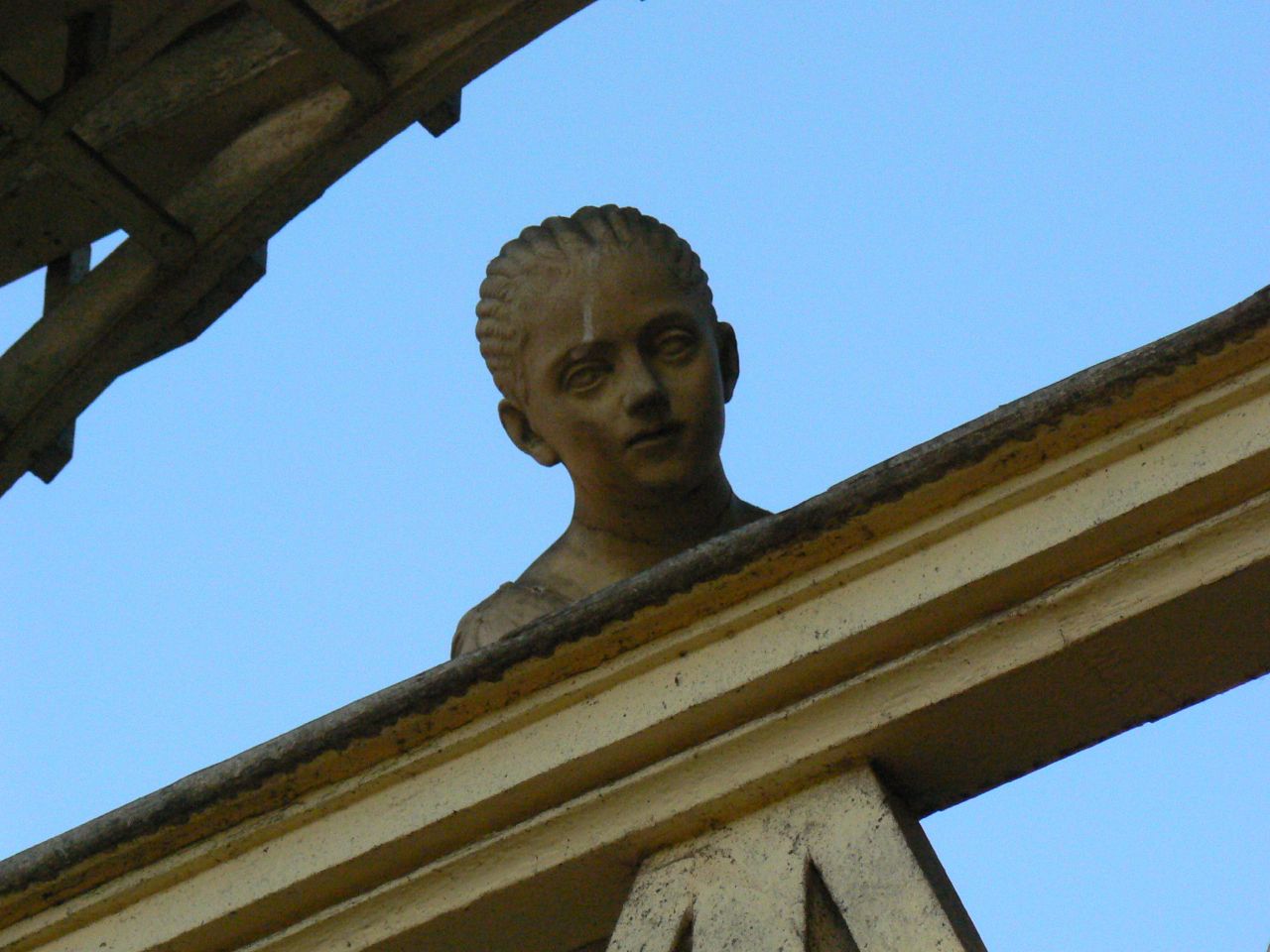
P1160057Enlightenment Era Cupid, Schloss Tiefurt, Germany

Gunnarsson was trying for a new Enlightenment, one built out of local patterns of belief rather than out of the imported classical models that were the rage in a National Socialist Germany that started out with dreams of becoming a Baltic, or Nordic, country, and became a Mediterranean one instead. Ironically, Gunnarsson’s house at Skriðuklaustur was profoundly German. (More on that soon.)

gg

Skriðuklaustur

One important way it was German was that it was above ground. In his piece, Our Land, written for a reading tour he gave in Germany during the first year of the Second World War, Gunnarsson seems to have been musing that if Icelanders were going to start building houses aboveground, in the light, they would need some guidance — and not guidance that came purely from continental ideas. He was trying to offer it. Typically, he also wanted it to remain hidden.

Next: Hidden houses and other people.