Category Archives: Architecture

The Bones of Petroleum as an Art Form in Iceland

Once there were fuel stations for travellers. They were built on farms and were the modern equivalent of a service economy that had sustained wealthy farms for many hundreds of years. Some even had garage and tire services and predated the Ring Road of Dutch Camper Company fame. Many of the country hotels in Iceland still follow this old model of serving travellers on farms. The fuel stations are gone now as working centres, though. The more remote of them have been replaced with a lone pump, an automatic card reader, a light, and the bright sign of a national chain in a corner of a field. Not at Starmyri, though!

This translation of a bustling service centre on a rich farm is a bitter story. Once on the gravel road north along the East Coast from Höfn, with valuable shore rights at the mouth of the Seal River…
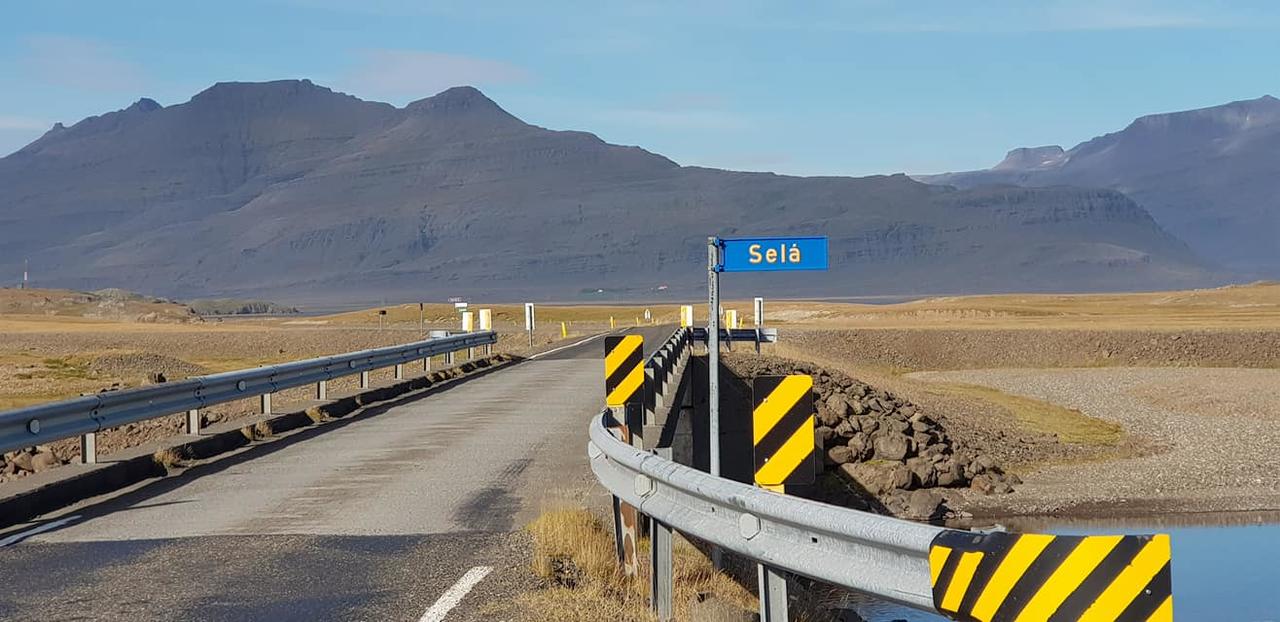
The Road of the Speeding Camper Vans Crosses the Seal River and Hurtles On

… and a good, sheltered landing, it was isolated by the sea by black sand drifting south by rivers re-engineered in the North during the diversion to create the hydroelectric power for the aluminum smelter in Reyðarfjörður.

Sómastaðir
The oldest stone house in Iceland, rebuilt by Alcoa, and now a National Historic Site, stranded from the sea by the smelter behind it.

The result was a new East Coast built from lagoons and long, black sand beaches…
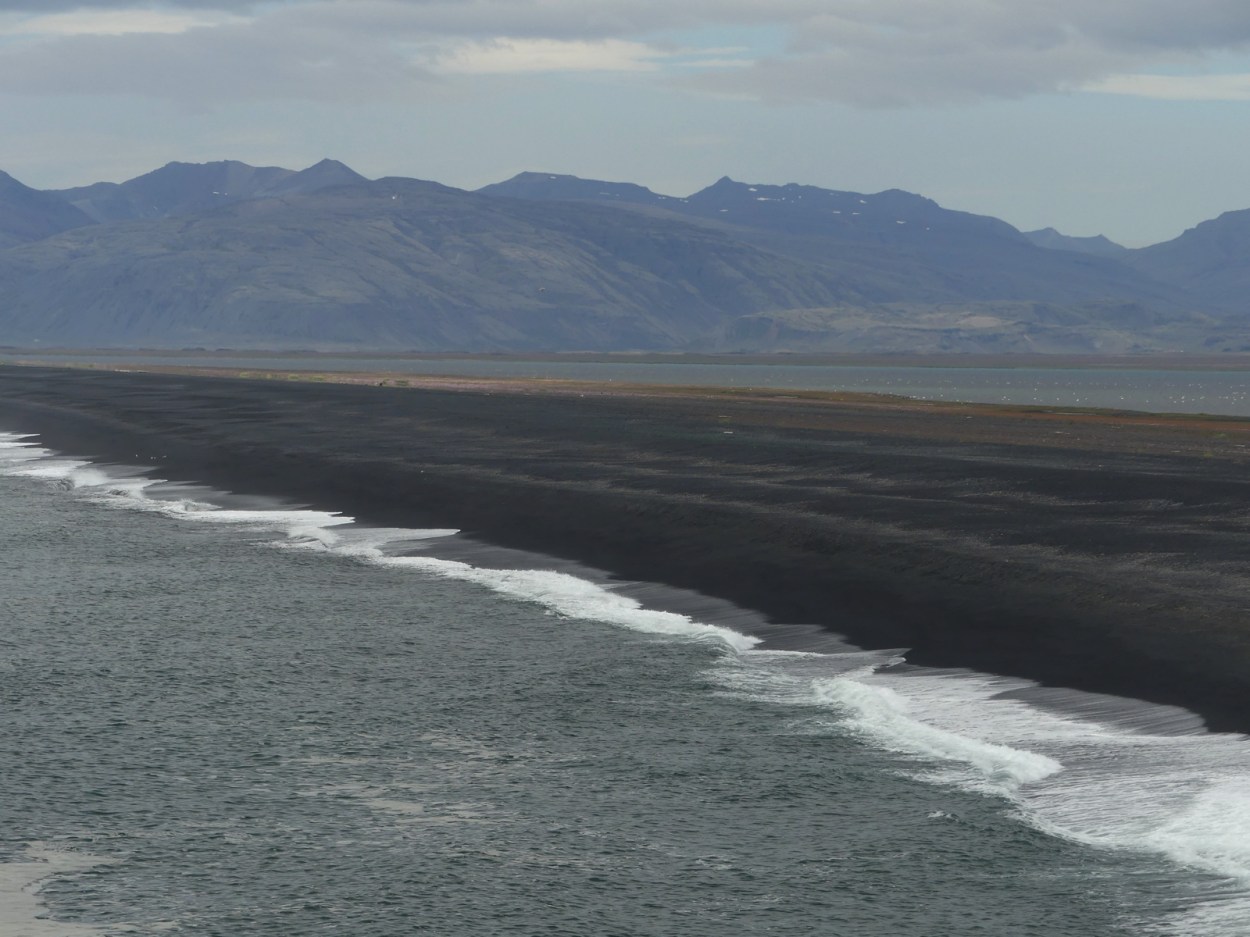
Your average coastal farm is a long way from the Atlantic now!

…beloved of tourists and useless for farms that live in 1100 years of time, not the continually re-occurring present and fictional pasts and futures of 21st century time.
Reykjavik after the economic crisis.

Still, as you can see…

… the whale bones of an older past keep it company now, as if they were the busts of roman senators on their plinths. This is beautiful art-making. You can see 1100 years of life at once.

Whatever Siberian forest this tree grew in before washing west and south and landing on the Starymyri shore, I bet it never expected to achieve eternity like this! And, yes, at Starmyri, where the sheep pastures have eroded away in the wind…

What passes for a sheep pasture today in Starmyrí, as the winds of a changing petroclimate take all the soil away.

… the shore is blocked by industrial sand, shore rights are extinguished and the road has been moved away from the farmyard, the farm still manages to draw sustenance from travellers.

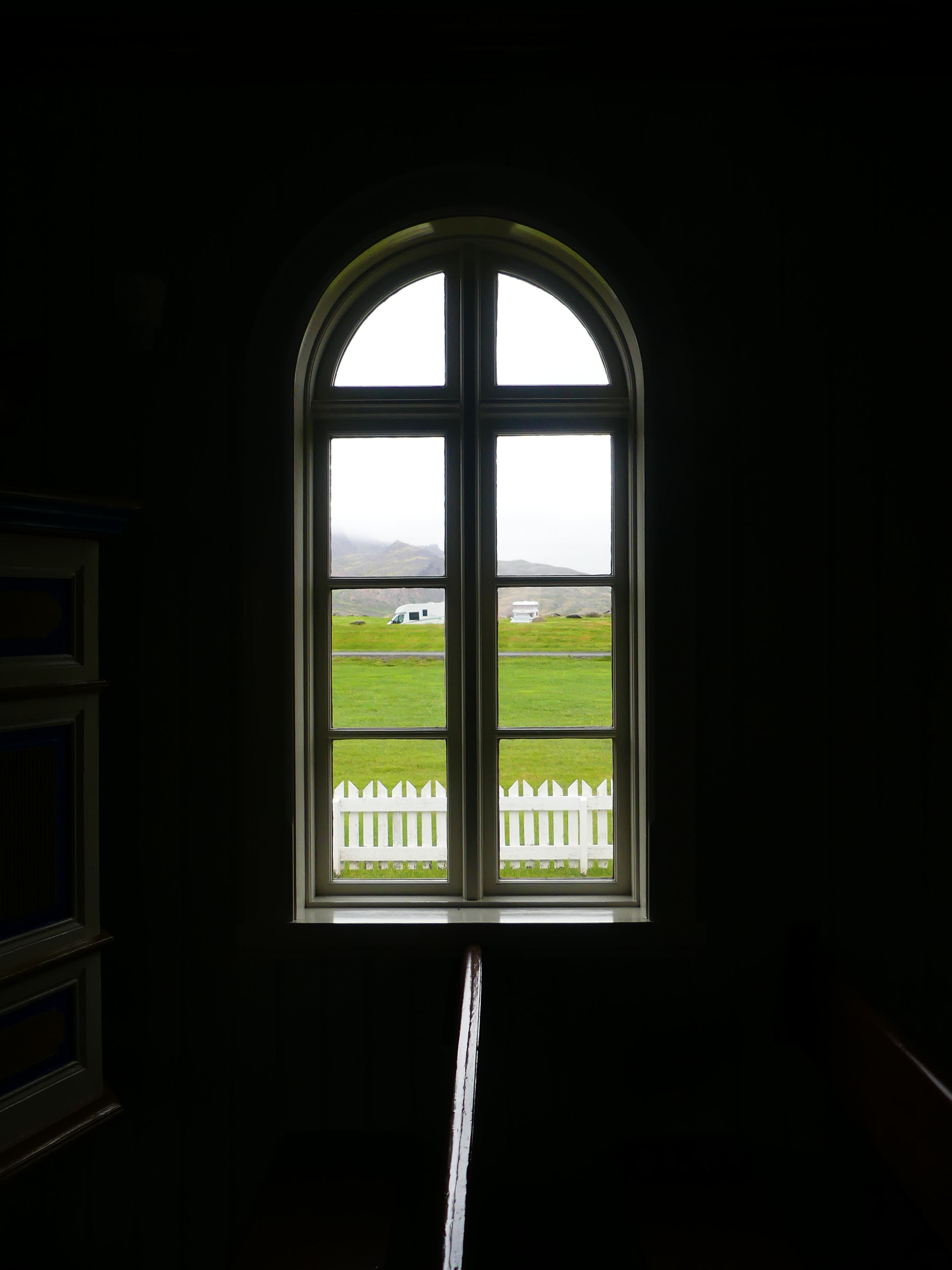
Each cabin offers an ideal Iceland, framed as a work of art.

Like many important things in Iceland, you have to find the history yourself, on the principle that you only need to know what you need to know and if you find something else, then you know and don’t need to be told, in this country that dresses up as pristine nature, her newest artistic dress.

An old farmer built this artwork in his retirement. The family keeps it in his memory. What a clever man!

Bakkagerðiskirkja in Black and White and Green

In 1914, local boy Johannes Kjarval was starving. Ladies in town asked him to paint an altar for the Bakkagerðiskirkja, the Bakkagerthi Church. He’d spent his childhood herding sheep on the mountain and dreaming of elves, so he painted Christ giving the Sermon on the Mount on the Alfaborg, the elf city behind the church, with all the townsfolk listening, elves and humans.

It has yet to be consecrated by any bishop! But if you go to visit it today, you can see his Iceland still. The elves have been replaced by tourists in campers, and the church remains in darkness, as all good Icelandic interiors are, with 1,000 years of turf houses in their memory.

The Icelandic subconscious lives in a darkness warmed by human presence and looks out through small windows into the light, which is the Earth and not the sun. It’s simply the way it is.

Oil Slick? Not in Iceland!

In Canada, this would be an oil slick, caused by a passing freighter illegally flushing out its tanks at sea.

Njardvik

Not so nice!

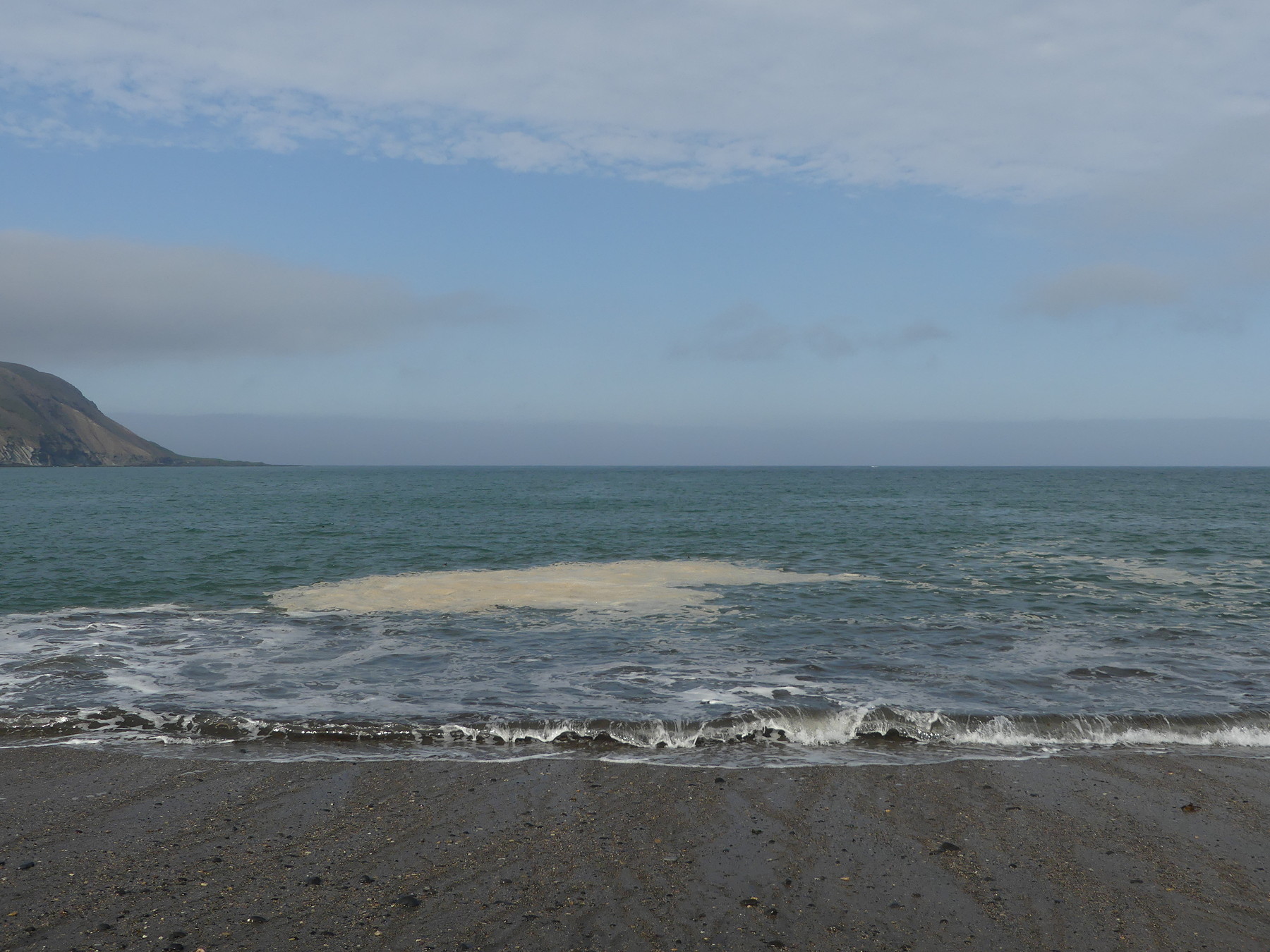
But in Iceland, it’s more like an Earth slick.

Njardvikura

It’s the confluence of a river that is taking an 1100-year-old farm away and the desire for a new road to prevent rural depopulation in Borgarfjördur Eystri.

The concept of “nature” is a balancing act here.

Art and Nature in a Quarry: It’s an Icelandic Thing

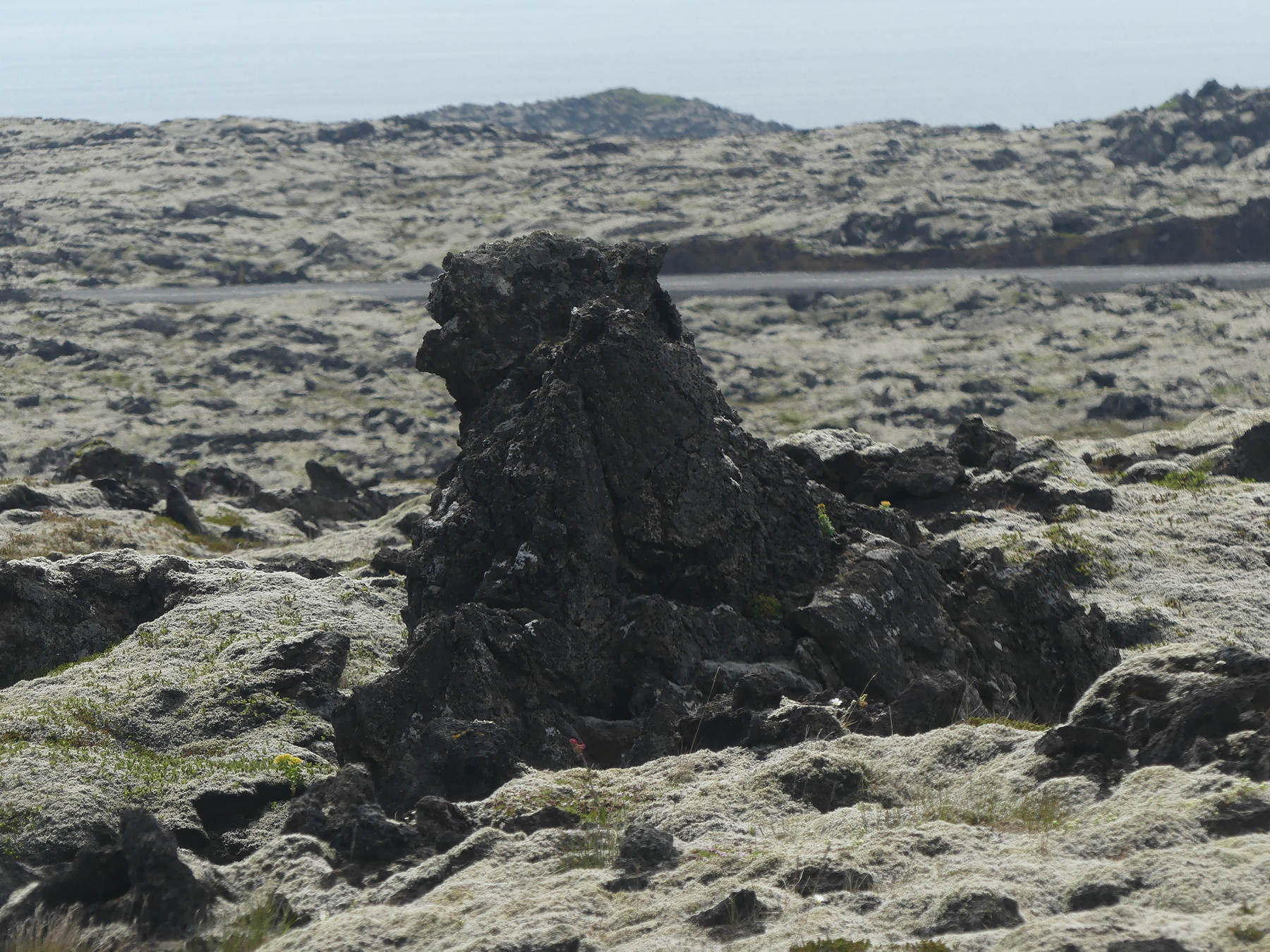
Eldborg, the Tephra Cone that translates as Fire Mountain, in Krysuvik…is a beautiful place, rarely visited….

… is a beautiful place…

You can get close to life there.

The road’s not even busy.

Two generations ago, when it looked out over an active quarry, …
… it was a major site for native Icelandic tourism. One of Iceland Air’s original jets is named after it.

Does this look like a jet to you? No? If you’re Icelandic, it might.

It was part of a network of walking paths, where Icelanders could celebrate all things Icelandic, including the beauty of Kjarval’s paintings, which a few aging Icelandic hikers still do by lunching in Kjarvalstaðir, his gallery in Reykjavik…

… but that’s about it. Icelandic artists are too worldly now to make much of his trolls and elves and such like.

Eldborg

They’re into environmental protection and other more modern mythologies, which they have embraced with great verve, but it’s good to remember that in Icelandic culture the capacity remains to see art, nature and a gravel quarry together, as one thing. The same can be said of rivers: quarries, all.

Bessastaðaá

Yes, a quarry.


The Irony of Laugavegur

Laugavegur, in Reykjavik, has always been the people’s street. It started as a public work project, a cobbled road to make the work of washerwomen more efficient. They could take their laundry down to the hot pools by the Old Harbour in a cart rather than in baskets while stomping through mud, rendering the act of washing moot. This project increased general Icelandic productivity many times over, and, what’s more, was done primarily for women. During the economic crisis, the storefronts abandoned when Iceland moved into its suburban mall were snatched up with people selling whatever they could, to make whatever money they could. It was a kind of flea market to attract tourists. Well that worked, even if now they’re full of chain souvenir shops and none any different than the rest. Even the kitchen shop has moved to the mall now, yet even though Icelanders no longer cruise the street in their Old Timer cars, and young Icelandic women don’t pass down the street so much in their party clothes, and old Icelandic men don’t hang around their drinking holes (those are for tourists now) construction continued, even last summer. In a country desperate for housing for the poor or even lower middle class, more hotels was the solution private money found.

June 2019

Now it’s Covid Times. Tourists aren’t rushing in. The old idea does seem best again. Not so much cobbles, maybe, for women to lug their laundry along, but a roof over their heads, so they don’t have to commute long distances in the dark and somehow care for their kids. I’m guessing, only the government can pull it off, but in a country in which men …

…spend the summer driving in circles on a tractor to make hay, while watched by their horses, so they can feed it to their horses in the winter while they watch them…

… and make an economy out of that solid relationship, a little help to the women seems wholly within their power and capacity. What do you think, guys?

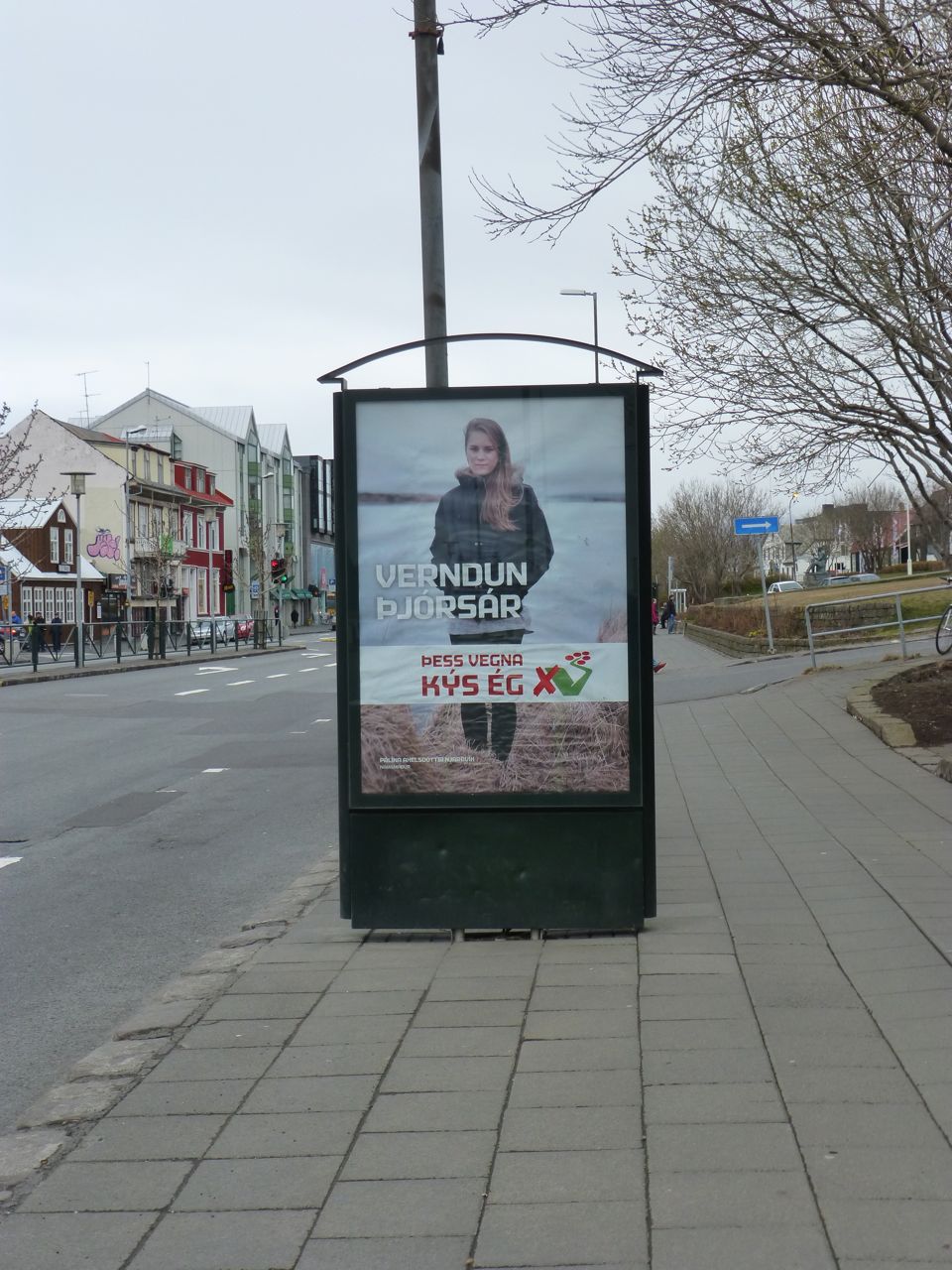
They’re asking for our vote.  And, like, more than a bus shelter.