Category Archives: Christian Iceland

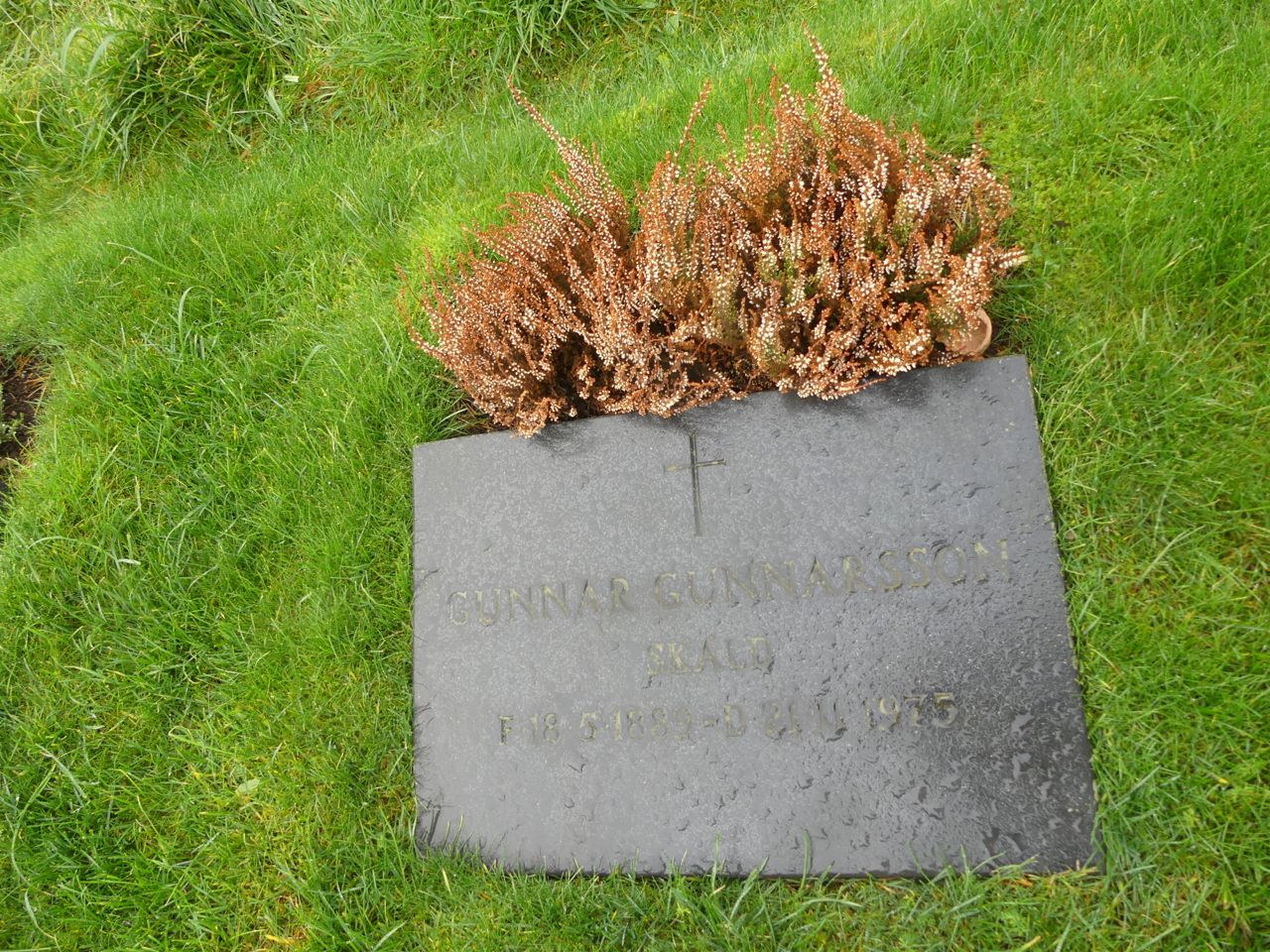
Gunnar’s Grave

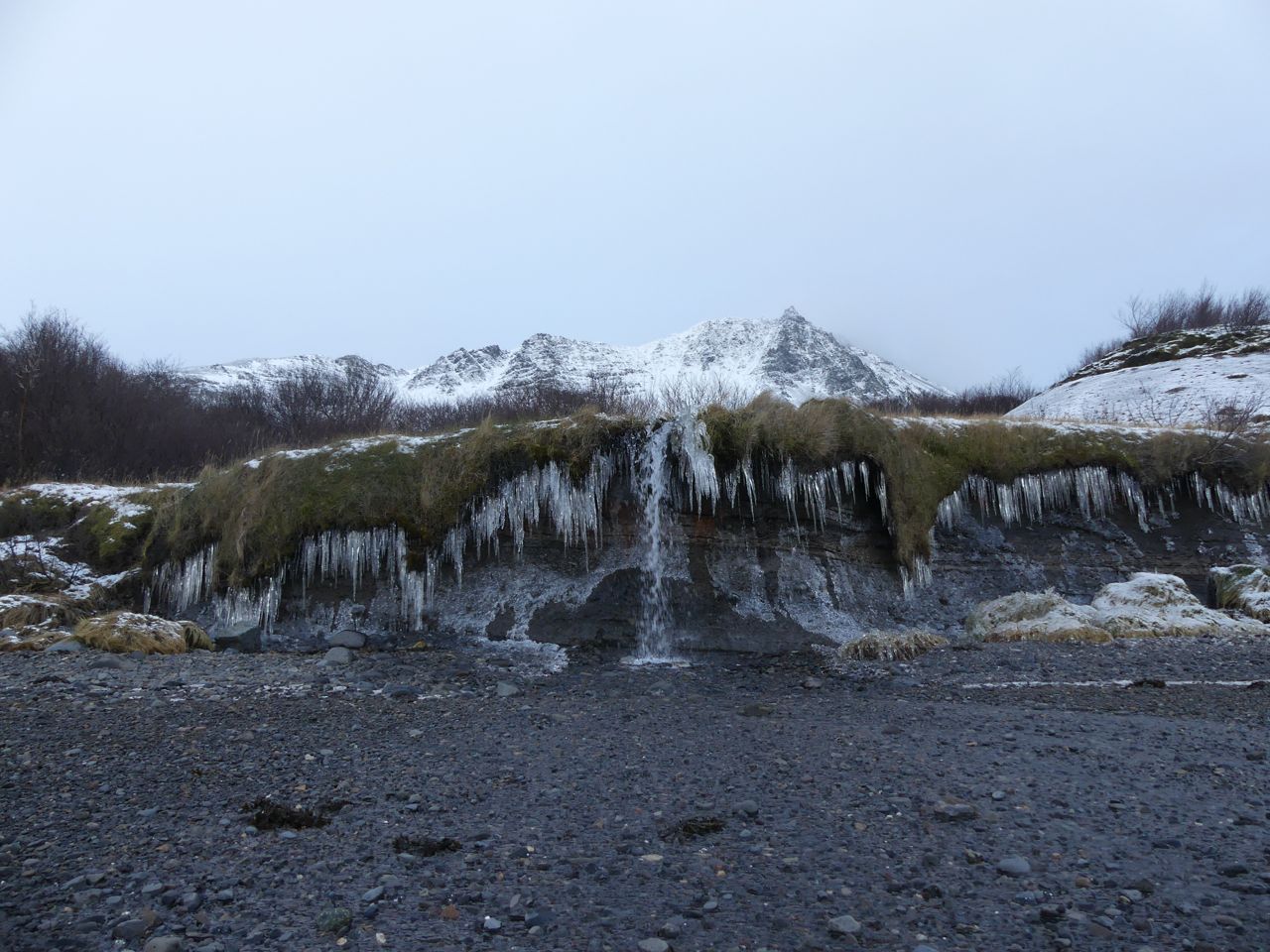
When Gunnar was a boy at ValÞfjösstaður Farm, he was given a walnut for Christmas: one walnut. It was an unimaginable gift of wealth. He ate the nut, and with the one half intact shell, he made a boat and set into the stream, the ValÞfjösstaðurá, that flowed off the Ogre’s Stairway above the farm, and chased along beside as it went. Out of that walnut, he dreamed of ships crossing the sea, and of leaving isolation to be a full citizen of the greater world. He did, and then he came home, and then he went to Reykjavik. He’s buried now on Viðey, the holy island in Old Reykjavik Harbour. I tried to bring him a stone from home four years ago, but it was late in the year and the ferry wasn’t running. I promised to come back. I did, just last fall. I brought him a gift from across the sea.skald

Do you see the walnut shell there, for his travels? Fare well, dear Gunnar, on whatever seas bear you.

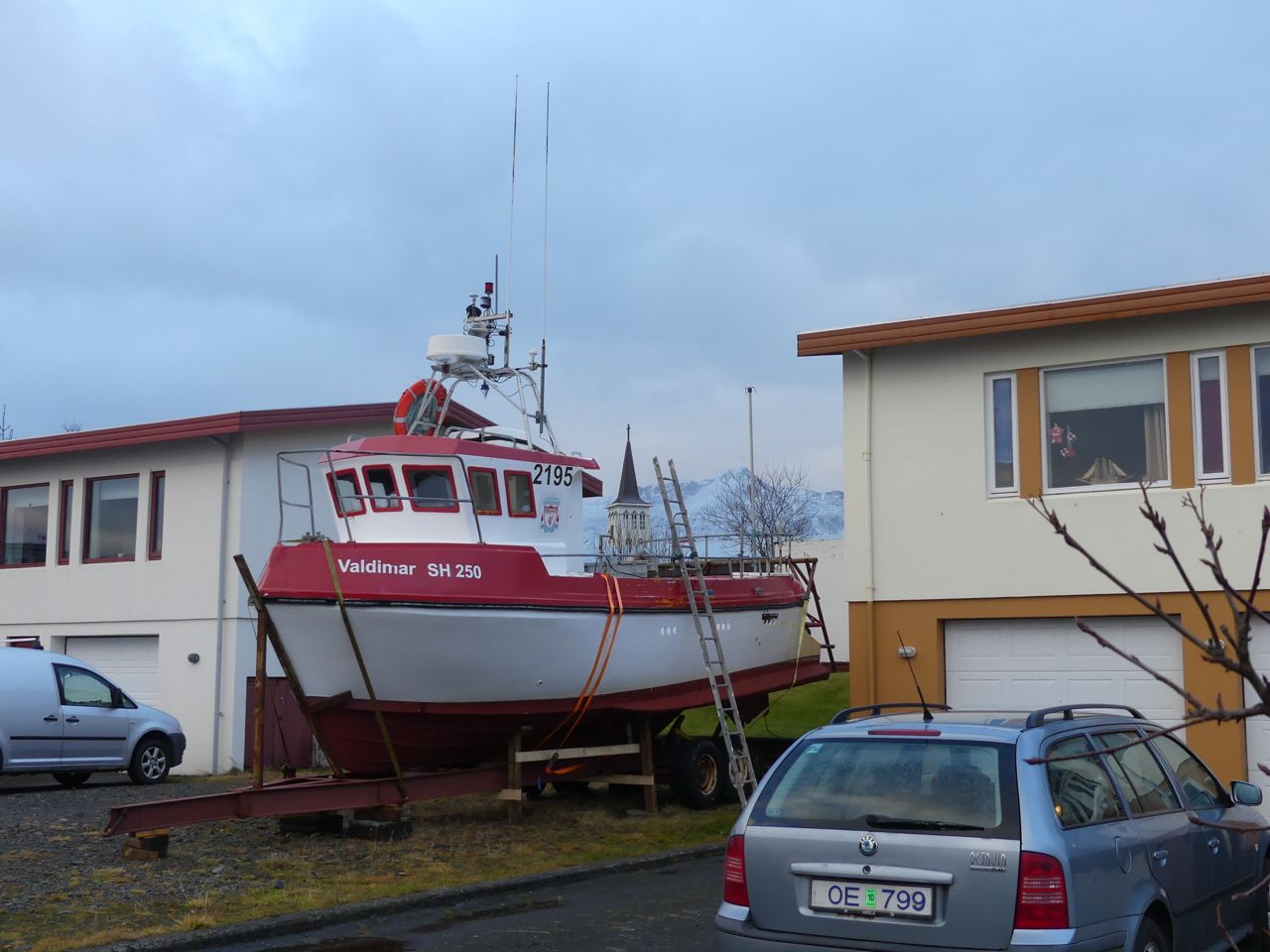
Valdimar Goes to Church

Note that he borrows Jacob’s Ladder, just like Gunnar did in Vikivaki.p1350310

Grundarfjörður

Now Jacob went out from Beersheba and went toward Haran. So he came to a certain place and stayed there all night, because the sun had set. And he took one of the stones of that place and put it at his head, and he lay down in that place to sleep.Then he dreamed, and behold, a ladder was set up on the earth, and its top reached to heaven; and there the angels of God were ascending and descending on it….

wenceslas_hollar_-_jacobs_ladder_state_2-weltenbaum-weltenachse-jakobsleiter

Then Jacob awoke from his sleep and said, “Surely the Lord is in this place, and I did not know it.” And he was afraid and said, “How dreadful is this place! This is none other than the house of God, and this is the gate of heaven!” Genesis 28

p1350312

At the end, you might have to jump. This is called “a leap of faith.” Good knot work to hold the ladder in place will make that easier for you.

33444621z

The White Christ

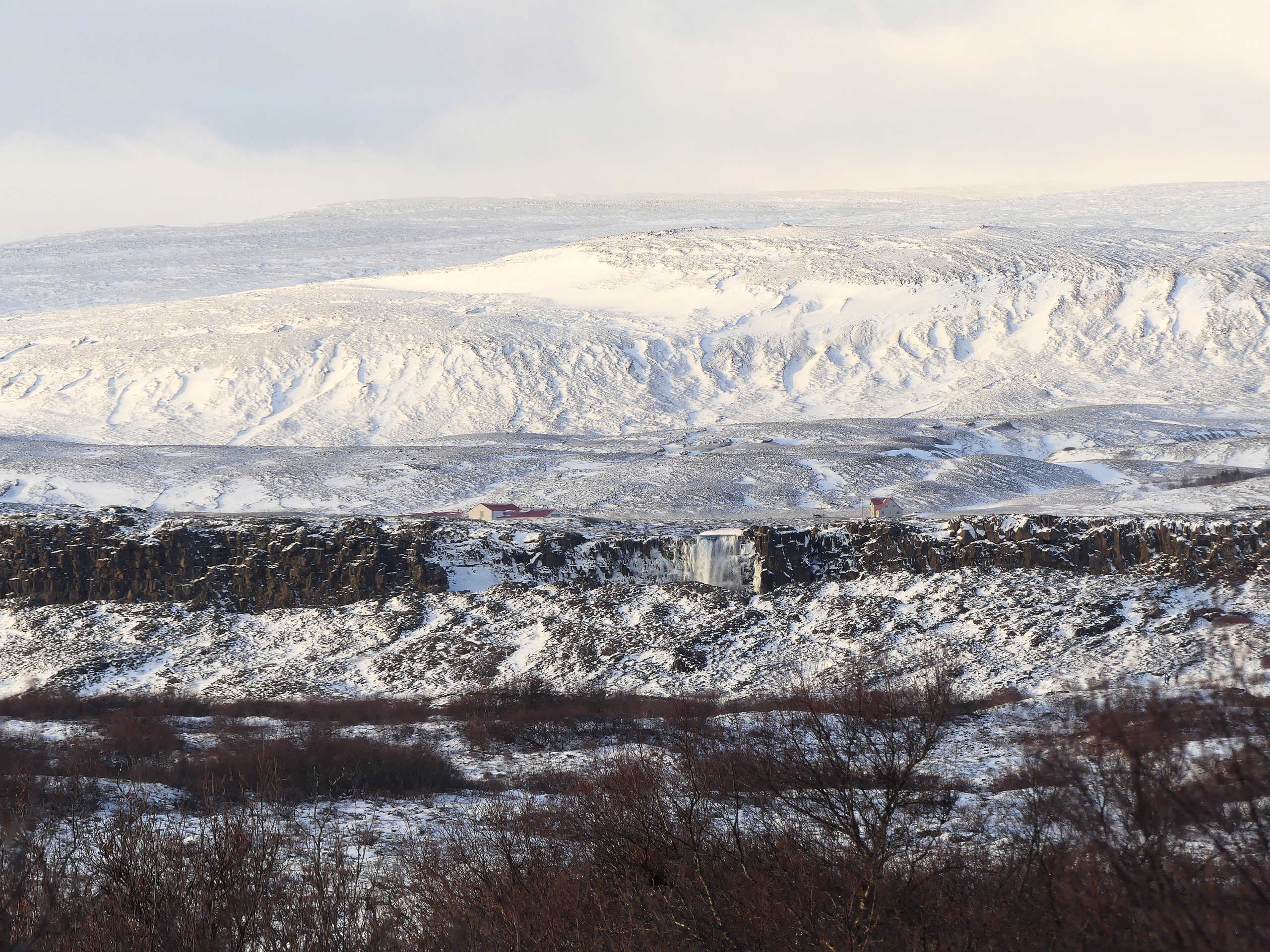
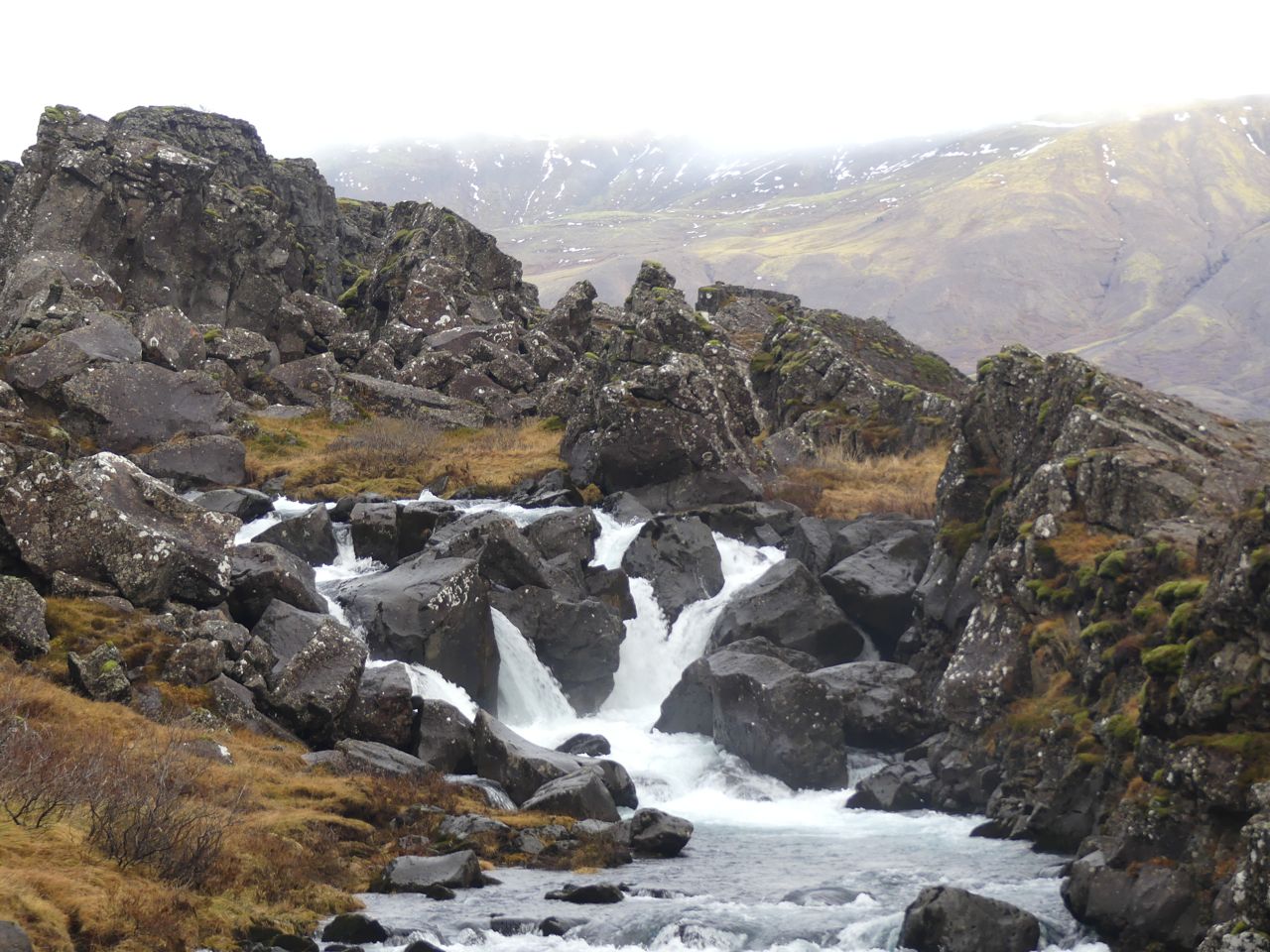
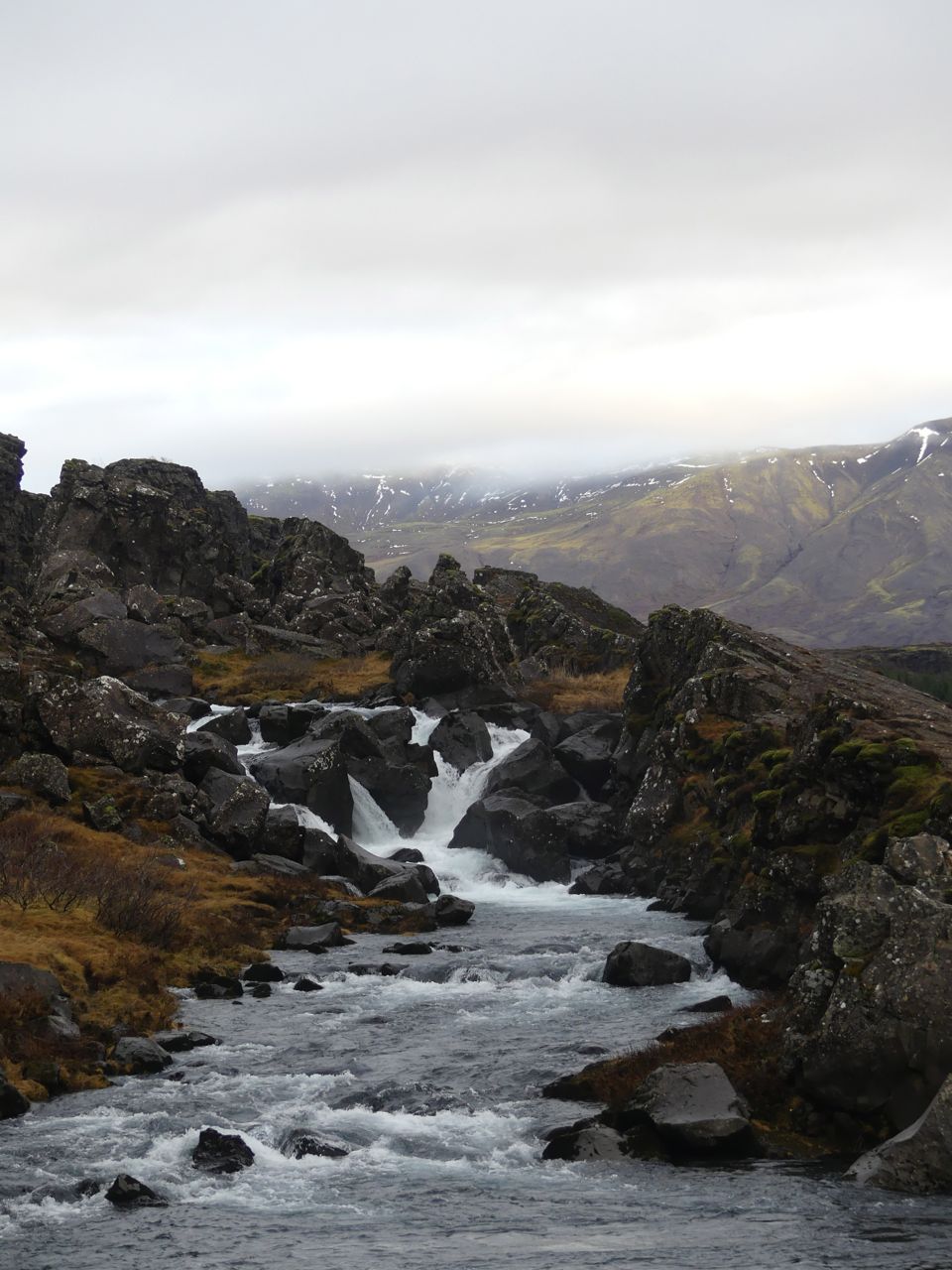
This is Öxarárfoss, diverted a thousand years ago off of  the Kerlingar Lava Field to bring water to the Alþing, or parliament, at þingvellir, the meeting wall.

p1400566

Here it is up close.

p1330577

Closer? Sure!

p1330570

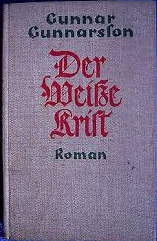
I mention these famous falls because of Gunnar’s book Hvide Krist, or The White Christ. It appeared in 1934.

5342f

In 1935, it appeared in German, as Der Weiße Krist.

wk

This term, “The White Christ” doesn’t mean “Racially-white Christ” in nordic culture, although I suspect it was read that way in 1935 Germany, which was attempting to convert the Christian church to its racial programs. It is, actually, obscure. Some theories are that it’s a reference to the white baptismal robes that initiates had to wear in early Icelandic Catholicism, that it’s a reference to submission, a perception of a lack of manliness in the insistence of priests not to father children, and that it’s a reference to Christ’s Origin in the Mediterranean, the White Sea of the ancient cultures at the middle of the earth (Turkey and the Caucasus), who wandered north to become the scandinavians and which the viking founders of Iceland would have known well. Here is the ancient Turkish compassflag

In this conception, the Red Sea is to the South, the Black Sea is to the North, the White Sea (the mediterranean) is to the West, and the blue waters of the Caspian Sea to the East. The map comes into even better focus when overlaid over Jerusalem:

seas

This is the compass. Christ is the eastern direction, towards the rising sun. Now, with that in mind, let’s look again at the Meeting Wall and its waterfall.

p1400566

From the blood of the birches, bleeding out of the earth, the landscape rises to white heights in the east. The falls are in balance, in the centre. The white mountains can also be viewed as purity, ascension to Heaven, wisdom, or the bald head of an old man, who also signifies wisdom, but that’s likely a stretch. The red blood …

p1340558

Hvalfjörður

…can be seen as both Christ’s sacrifice and the blood law of the pagans who shared early Iceland with its early Christians. A balance was found at the Alþing of 999-1000; Christianity was adopted, to end vicious, counter-productive blood feuds; paganism was permitted, but not in public. In other words, the Church became the public face of the state; what happened in a man’s house or his heart was his own affair. This dual nature of the country was rearranged violently over the centuries, but that’s another story. In this one, one more issue is important. It’s this:

p1330532

This is the Oxá, the Ox River, after it breaches the upper rift of the Alþing and enters the parliamentary centre proper. It was here that in the violent history of Iceland’s colonialization witches were drowned and criminals were beheaded, right here…p1330534

… right where the white blood of the glaciers enters Christian law before spilling out onto a plain of blood. An accident? I hardly think so. So, what was Gunnar up to in this book published by the Propaganda Ministry of the Third Reich?der-weise-krist-von-gunnar-gunnarsson-1935


Just telling a Christian story in early iceland? Giving a warning that could be read any way his readers wanted? As a parable of a populist Lutheran belief in a satanic pope at the head of a bloody church, the roman emperor himself and thus the man who threw Christians to lions for sport? As a warning about the dangers of assuming a messianic role, and the blood that would follow? All of them? None? Some for the Germans perhaps, even if not for Gunnar?

p1290495

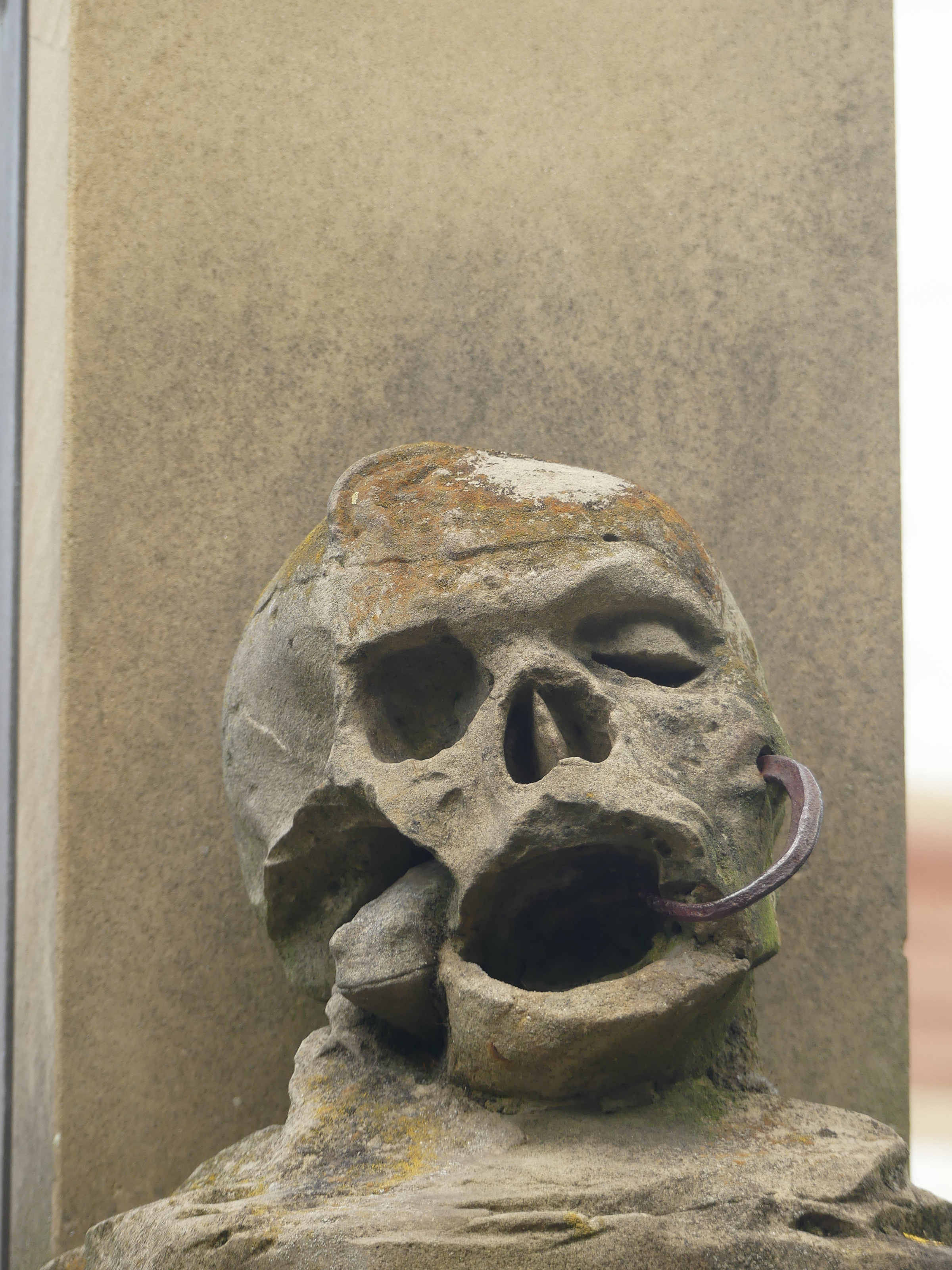
Grave Figure, Freiburg, Germany

The Christian Philosopher Martin Heidegger was running the ancient university of Freiburg for the Nazis in that year. He would have known this sculpture well. It wasn’t a year for staying on the sidelines.

1934 was the year that the Third Reich, under its ‘messiah’ Adolf Hitler, who believed in blood as a mystical force, attempted to unify Nazism and Christianity under a nationalist banner: truly a Western and not an Eastern anti-Christ. Only a close reading of Gunnar’s book will unpack Gunnar’s method. Until I get to that, here’s the Christ who glances to the east at death, and, just out the window behind me as I took this image, Gunnar’s grave on Viðey.

p1340064Has this figure been whitewashed? I leave you with this contemplation of the point at which Christianity and the land meet. Is this not, in a land-sense, the cross?

p1400566

Nationalism in Iceland

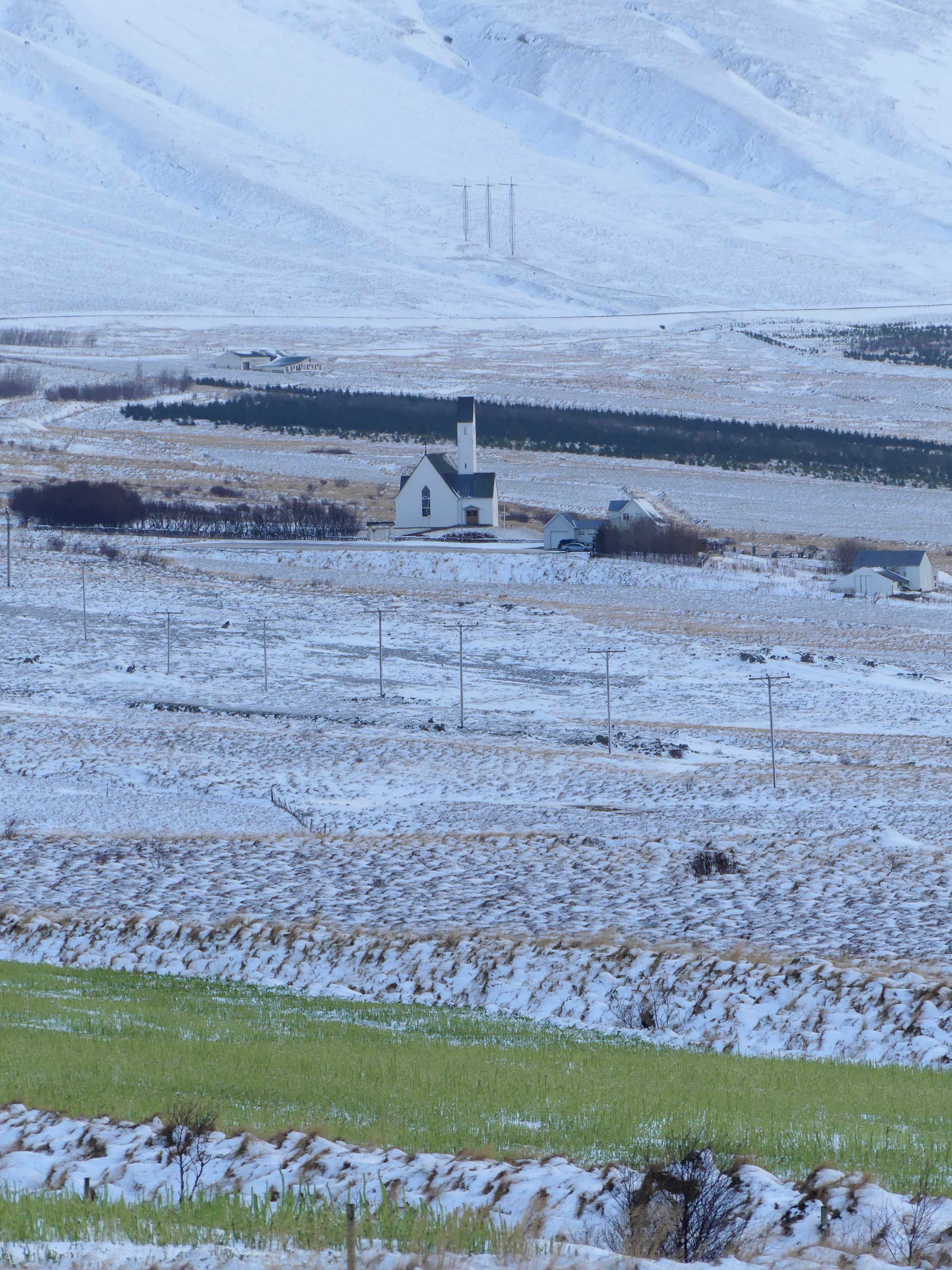
A pretty pastoral scene in Hvaljördur, right?

p1400354Saubæjarkirkja

The barren hills are caused by the sheep that make a nation possible here. The birches in the churchyard would have been all over them 1100 years ago. More trees would be desirable, but lamb is already $35 a kilo. That’s a hard practical choice. The church is a symbol of many things, including the parliament of 999-1000 that made Christianity the country’s public religion (without denying private paganism), the loss of nationalism to the Norwegian Crown a half millennium ago, the power of land-owners to collect church tithes, and the cementing of Christian values (and at times oppression) in communities of itinerant labourers, almost serfs, in continual movement around the country. The forest behind the church is part of the late 19th century and early 20th century movement to re-settle the land and reclaim nationalism from Denmark. The long distance transmission line is part of the support network for the American aluminum plant behind me when I made this image. The reservoir that supplies these lines with power drowned some of Iceland’s most beautiful wilderness, yet, arguably, provides the funds that allow Iceland to remain independent. The green field crop represents the heavy industrialization of agriculture which enables a people, in love with the power of American urban values and who have left to land, to eat off the labour of 4500 people. The ditches across the field, for drainage, allow for increased yields for this industrialized agriculture. Everything you see here is a technology for survival. Everything is a carefully calculated choice. Nothing is frivolous. So, yes, if you call that pastoral, this is. Gunnar Gunnarsson would have said it was. I do, too.

Skjald, Poet and Dichter: the Three Smiths

Poet: A smith who works with words and the spirit that attaches to them and flows through them between humans and the world. Often, poets approach this work from a book tradition. When they do, their real audience is either the book they write for and which readers read to see how the completion of this book is getting along or the readers who approach the intersection of the book and its society with the same reverence. Within such cultures, a poet is often seen romantically, as a worker with one of the decorative arts.

p1390640A Poetic Interpretation of Egil Writing His First Verses at Age Three

Borgarnes, Iceland

By book, I mean the book that duplicates the world. Some cultures call that the Bible. Some the Koran. Others the Periodic Table of the Elements. Some might call it a Doppelgänger, a mysterious double. It is so powerful, it can even look like these birch twigs. In this manner of thinking, they are considered to be natural and living in a state called “nature”. This state is the book.

p1390739Yes, You Too Can Read These Twigs

Dichter: a smith who works with Dicht, the thickening of the world into densities of intelligence, distinct from poet by a desire to create unified points of power rather than large tapestries. This is an art form in the German-speaking world, and represents the grammatical structure of the German language, which looks for unity where English looks for precise difference. Where a poet, in service of the Book, might look for a world of nature, that came before the book, and called it a (primary) world, with the emphasis on an abstract category, a dichter would look for an Urwelt, a root-world, which is distinct from a world but contains the time that opened up into a world. This slight difference is profound, and leads to the image below being seen complete in all the time in the world, and before language. It is a thickening, a dicht, out of which language evolves, right now, in all of its time:

p1390754Skjald: a smith who works with social relationships within the world that contains both poets and dichters, and for whom the world is one of the social players. This is a northern concept, from the old iron age cultures of Scandinavia. Typically, a skjald (as the name suggests) is a shield, a scold, a scalder (the contemporary expression is a roast-er, one who sends up a revered figure in an honouring ceremony that doesn’t hold its punches), a kind of Nordic court jester who praised a god, king or chieftain in rhymed, witty verses several layers deep in riddles or riddle-like tricks of language as ornate as the intertwined patterns of serpents on a viking shield or the infolded edges of language in a viking curse. The result: a scolded, or scalded, king, chieftain or god, as red in the face as a lobster or a berserker about to do battle — except with anger deflected by wit and turned instead to social good. The contemporary translation for skjald is “poet.”  I think it’s better to keep the triad of terms alive: poet, dichter, and skjald. They do similar but different work, and it’s useful to keep them clear. Neither the work of the poet or the dichter precisely describes the work of a skjald. The image below, however, is close. The image shows the spirits of a small waterfall in Iceland.

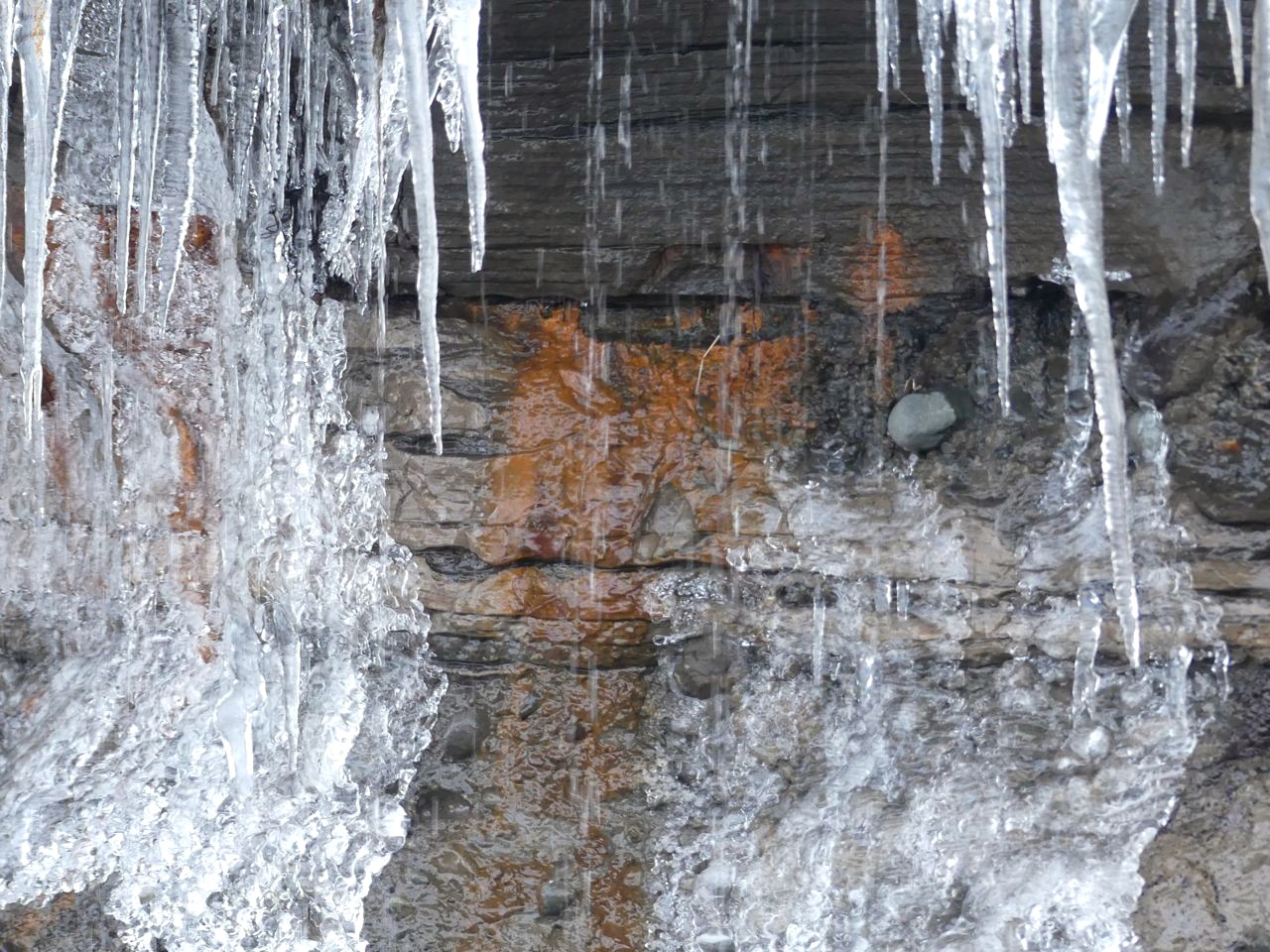
p1390972This is skjald work, because it is deeply layered, in ways which combine the world and the acts of men and gods into a tapestry of the mind, which can’t be unravelled, nor should be. Instead, the connections, especially the complexity, duplication and patterning of the connections, and the challenge it proposes to the human ego, is exactly the point: connections rather than distinctions. Is that a red demon in the centre?  Is it the god Oðin, with his missing eye wandering off to his left? Is the red figure behind the ice to the left of the image man or beast? Or the white ones in the ice? They are all imaginary, of course, but this imaginary projection, woven with history, society, science, the earth, psychology and spirit, and the challenge it proposes to dominant world views, is exactly the work of a skjald. Now, let me show you something a little closer to poetry, to help draw this discussion closer to its centre. In the first image below, the trinity is represented in some contemporary norse knotwork. Note the interwined, yet closed nature of the flowering of the pattern as it moves through the world. A skjald wrote verses as interlocked as this.

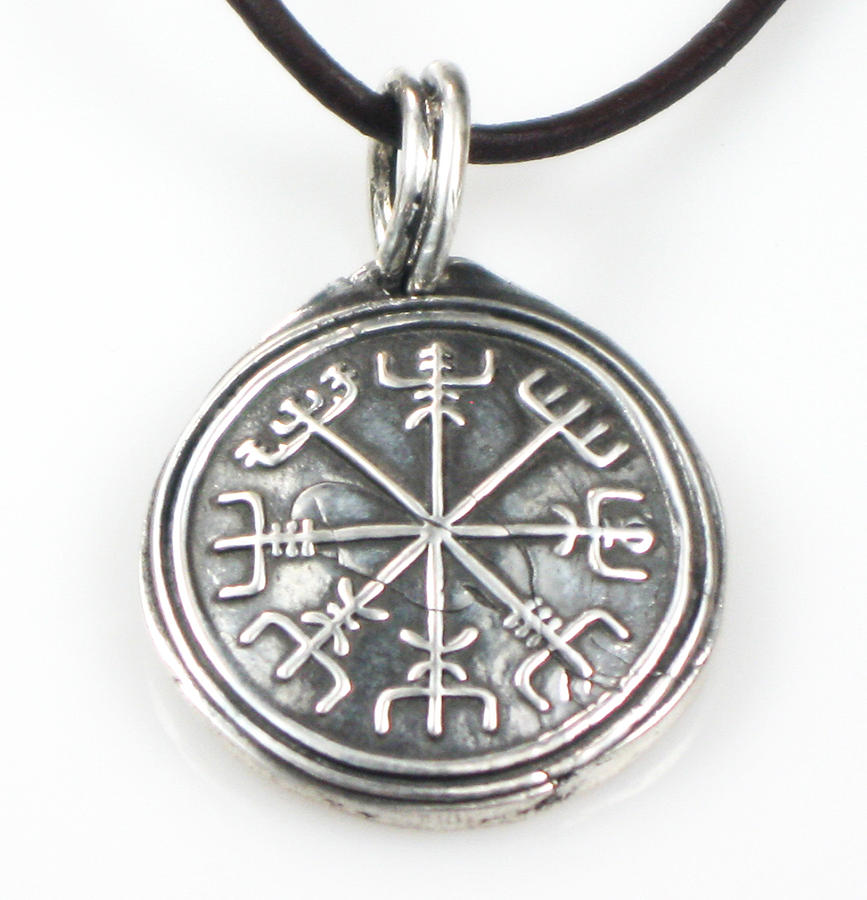
new-triquetra-trinity-a-knot-pagan-norse-viking-silver-pewter-pendant-amuletIn my second example (in the image below) a contemporary Icelandic charm or curse, based on a medieval model displays interwining ropes, knots and lines of energy tied to the world with many different lines of approach, all of which are closed off to entry from outside spirits by crosses, or curses. This is the other side of a skjald’s work: a skjald helped to direct the king’s policy, but he had to be sly about it.

norse-viking-nautical-compass-talisman-fine-silver-esprit-mystiqueTraditionally, a skjald could say things that would lead to the death of anyone else, and so guide a king, when he was not in the mood for counsel, or deflect the build-up of violence in a court disagreement by leading it into laughter or finding layers of pride within layers of shame, or any other complex, interwoven knot. All in all, a skjald was a shield for the king, and so had the rights of a shield: to be first in battle and to always be at the king’s side, with an honour matched only by the sword or the hammer, the weapons of the king’s other hand. Gunnar Gunnarsson, who wrote two early books of poems and many novels, made it clear that he was a skjald. Note his clenched lips. He’s not talking.

P1530057It would be a mistake to read him as an epic poet, or even a novelist, even though he wrote few poems and many novels. Those novels are strange, though, and that’s the thing: they are deeply layered, deeply entangled with history, and challenged standard ways of thinking about identity and politics by talking in the code we recognize today as poetry. What’s more, most of these novels were published in huge editions by the Propaganda Ministry of the Third Reich. Many, with their tales of idealized, heroic farmers in Iceland were sent to the Russian Front to stiffen up the resolve of young men to fight the Russians and to prepare them to bring Scandinavia into the Reich. As the war progressed and the Scandinavian program and victory became impossible, dissidents working in the Propaganda Ministry continued to publish these novels, to show young men how to come back home after violence. Those are pretty amazingly contradictory roles for any set of novels, or for any writer. Only a skjald could pull that off. Unfortunately, this story has largely been missed in Gunnar Gunnarsson’s work, because the literary culture that received these books read them as literary works. They’re not. Put it this way: in the spirit of Gunnar, the following image is neither art nor nature:

p1390934What it is, exactly, apart from grass, moss and birch twigs in the spray from a waterfall, is the question we must all answer as we work towards coming home. There is, however, one clue in the world:

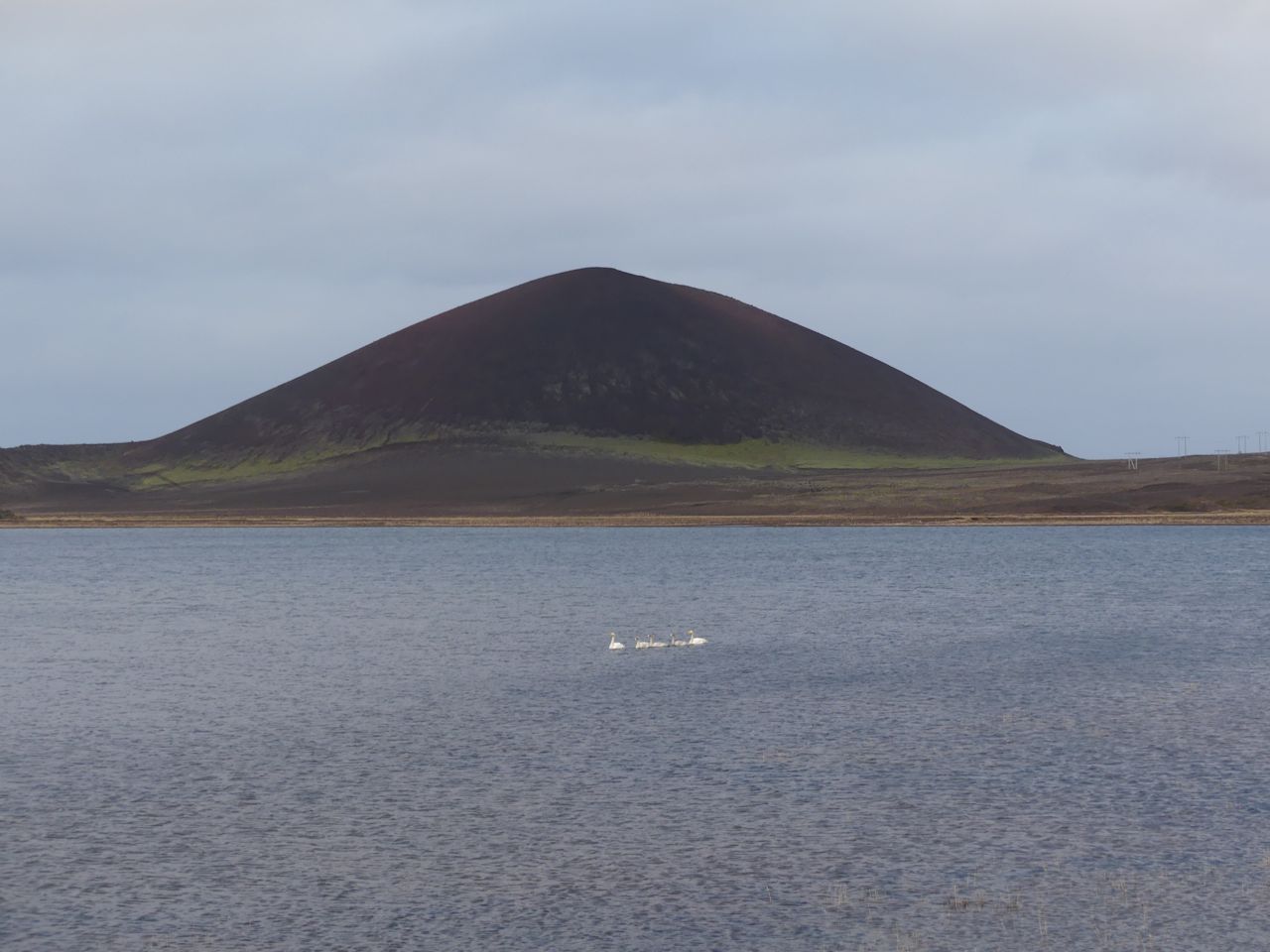
p1370751The world has pattern, it is physical, and it contains pairs of males and females, who come together to form something else: a family, as with the swans above, or, what this family expresses, a coming together that forms a centre to the world. When those young swans leave this birth family to form families of their own, it’s not the leaving that is central to them, but the reforming. In a culture with its roots in the iron age, this reforming is done in fire, heat and violence, beaten into linked shape by the skjald’s word-forge. In skjald work, that dynamism, and the relationship between its parts, is what it is to be human. Poetry and dicht come later to a skjald, just as dicht and skjald work come later to a poet and poetry and skjalding come later to a dichter. All three together, however, provide a full picture of the vital work they can do. Confusing the terms just muddies the waters.


An Icelander’s Secret Faith

In his speech “Our Land”, with which he tried to prevent a German invasion of Iceland in 1940, Gunnar Gunnarsson wrote that the long months of Icelandic winter darkness were as much a part of the Icelandic soul, in a positive way, as the long months of light, and that an Icelander, a person of the land, could not be removed from it. I read that as an attempt at planting the suggestion in Hitler’s head that an Icelander was a true person of the land, and a German was not — either in Germany or Iceland. Those were dangerous and courageous words, whether they were true or not. There is a report that after Gunnar gave this speech in forty cities in Germany and Occupied Europe, Hitler screamed at him and threatened him with … wedon’t know with what, but most writers threatened by Hitler and his inner circle were threatened with death should they ever write again. Gunnar scarcely did. Was it that he was frightened? Or was it that his work was over, because the British invaded within two weeks, denying any possible German foothold? The answers are lost to history, but the observations about the land remain. I have come in these months of darkness to try to understand. Look how dark it is here:

p1390341Looking South

What do you think? Is this darkness?

p1390340Looking North

In his book Advent, another of Gunnar’s psychological manipulations, Gunnar wrote about a man’s true friends, a dog, a ram and a horse, and how they gave their lives freely to a man who one day would have to take those lives.

p1390390Sheep Will Roam

Gates optional.

In Advent, Gunnar was writing about many things: Christ, writing, Gunnar, and the Germany of 1936. Was he telling his German readers that Hitler would ask for their death one day, in ways without the Christian mercy or poetic symbolism of his own faith? We will never know (although it seems likely), but the animals remain, as human companions in this vast space.

p1390142Is that darkness? Is that an empty space? Is it people who spring from this land, or something else? Faith perhaps? At any rate, people are not alone here.

p1390113And, let’s face it, with his lines about darkness, Gunnar was not talking about Iceland. He was talking about something symbolic, something psychological, something that did not come from a world of light but which was expressed, in Gunnar’s Iceland, in a world of light. It is not something which falls easily into non-Icelandic categoreis. The image below shows a place of human habitation in Gunnar’s world.

p1390399Notice how the house is not a dwelling. The land is the dwelling. The house is a small shelter to protect human weakness, but the dwelling place is out in the fields, between stone and sky. Even the water flows with primal force here: the sky made liquid.

borgarfjordurwater

Even the setting sun. This is Borgarfjördur, where Gunnar bought property from his book sales, before moving back to East Iceland from Denmark in 1939, shortly before his disastrous (or successful?) speaking tour in wartime Germany. This would be the land and darkness he was talking about, here in one of the seats of Christian Iceland, on the shoulders of its darkest pre-Christian sagas. Let this be a warning to all of us trained in post-Christian intellectual traditions: we do courageous men such as Gunnar wrong to read him outside of his faith.

p1390408

Walking Away from the Waterfall

Waterfalls collect travellers and then let them go.

p1340919Iceland lives off of this desire . Storms are an older form of commerce. They bring kelp, fish and sea wrack through the white ring of surf (or fate) that surround the black land. They also bring light.

stormI am learning to walk away from the waterfall. I am not disappointed.

curveEvery minute, the light changes. I’ve been watching that . By early evening (3 pm), the water flowing out of the land’s pastures is blood
fencepoolA gorgeous, non-human blood. Life is an art.

p1340934 p1340981 p1350339 p1350456 p1350494Nature is a drug that makes us walk past the dark, as if it were not telling us where we live and what is coming to us on the tide.

A Crown of Rowan’s for St. Brigid’s Day

Today, I praise the rowan tree. This is her season, as ice breaks to the season of water and birds.

ice1

Rowans with Elf Stone, Eyjafjörðursveit, Ísland

She’s a tree, yes, but look how she wants to lie on the ground. None of the towering heights for her.P1350817

Rowan, Skriðuklaustur, Ísland

And when the light comes, ah, then she is a torch.

P1360608

 Good Friday Rowan, Valpjofstaður, Ísland

The Rowan is sacred to Brigid, Saint of Holy Ireland, and to Bride (or Brigid), who came before her (and was no saint), and to Mary, Mother of Christ, and to Thor, god of lightning and thunder. The gender crossover is no big thing. Don’t give it a second’s thought. There was a time on earth when all things that signified the earth’s power most strongly were considered hermaphroditic, neither male nor female, and, after all, don’t humans, who come in several genders, tend to unite and make unions that are neither but are one?

wildfull

Male and Female Fruit From a Hermaphroditic Pacific Mountain Ash

Wells, British Columbia

Unlike those sly sumacs and gingkos, a rowan has neither male nor female trees.She knows where she is. Look at her, earth tree, reaching up for the spring moon, with her feet planted firmly on the ground.

P1310293

Skjaldarvik, Ísland

Wherever a rowan is found, it signifies the presence of her deities, who might have many names but are also one.

wild6

Thor, Brigid, Bride

For all of you who are of an empirical bent, don’t worry. Gods are just names for powers of the earth. The powers are present, even without the names, although perhaps not yet empirically defined. It’s just a kind of short hand. For those of you who follow the stories of the gods and goddesses, you know what I don’t have to say.

P1020767

 Rowan in the Birthplace of the Gods, Ásbyrgi, Ísland

Much of (nearly treeless) Iceland was one treed like this: a few rowans, and a lot of willows and birches. Then people got cold. 

There’s more to the story of the rowan than is written down in history books, but not more than meets the eye. A lot of it has to do with environmental sustainability. A lot of it has to do with her name: in English, rowan, for red; in German, Eberasche, or red ash, or, more precisely, “red spear”. More on the spears in a sec. First, here she is, surprising us and all.

IMG_1630

 Pacific Mountain Ash, Quesnel Forks, British Columbia

Mountain Ash, Rowan, Eberesche, Bird Berry, Thrush Berry, Sorbier, well, you get the idea: a rose all dressed up.

She is glorious in summer, but look at her in her winter time, just last week…

rowan1

Rowan has a profound story. Don’t look for it on Google, though. This is one you have to learn from the birds.

P1630109

 Yes, Today the Cedar Waxwings Have Come Back Home to the Rowans! Yay!

The story of rowans is a story of sacrifice, androgyny, magic, Christianity, nationalism, survival, life and hope — always hope. It is also one of the oldest stories of all. It begins with a Himalayan god of the air, Thor. He’s known today as a Nordic god, from Iceland, Sweden, Norway, Denmark and Germany at the north of the world, but he started out far to the east and south, and migrated with his believers across the continent. Thor has a hammer, that’s sometimes an axe, and, as you can see below, blood spatter, a phallic spear, and a weird right hand, and, yes, he’s been repainted with good old-fashioned wheelbarrow paint. Hällristningar_Lilla_Flyhov-1

Thor at Lilla Flyhov, Sweden (c. 1000 – 1500 BC) Source

That blood spatter? Well, look:

P1620825

Rowan Berries in the Snow

They don’t call these bird berries for nothing!

That weird right hand? Here:

P1620895

Rowan Berry Cluster After the Feast

And that axe? Well, Thor, remember, is a thunder god, from a time when thunder and lightning were the same thing. This is where he lives:

ertical

Dragon Tales in the Sky

People used to be able to read this language. It was a kind of writing not in words.

Thor used the axe to split that sky apart, so that out of its unity came lightning (on the one hand) and thunder (on the other). That is the moment in which consciousness is born. Into this air, that is all one (and out of which thunder and lightning come)…

sky

… a spear …

p1490467

Rowans Were Traditionally Used to Make Spear Shafts

… is thrust. It’s a curious kind of spear…

P1620936

You wouldn’t want to thrust something like that at a wild boar or something. I mean, how pointless (literally). Sure, if you’re thinking of weapons being physical things, with pointy sharp bits, ya, but weapons are also extensions of the mind, and for Thor, and people who believe in him, this is mind, given body in the world…

P1620918

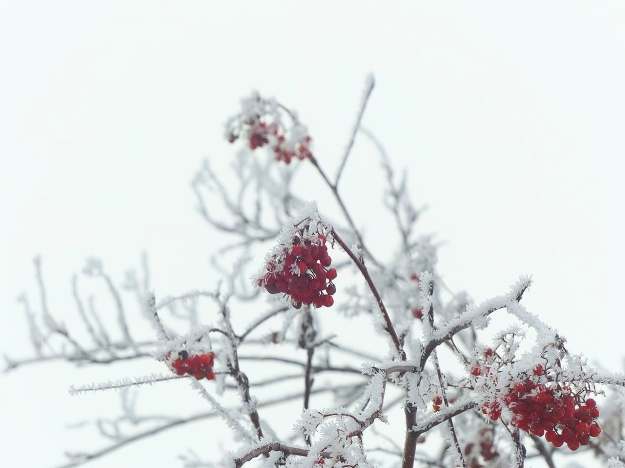
You might want to have that magic and balance on your side when you go out to stick a wild pig that’s intent on sticking you (especially if you have the other kind of spear from the other, straighter, kind of ash (spear) tree. The darned things grow in thickets, ready made. You just need an axe to cut one from the ground and you have a weapon that extends your range and does your will at a safe distance from your body. A rowan spear, though? It’s both the thrust and the moment of reception, which is to say that it is a kind of symbolism or visioning, which practitioners call magic. Look how the boar’s blood and the spear are both present at once, and how the weight of the blood lowers the spear.

P1620913


The tree is the embodiment of action. The mountain ash doesn’t make a great spear, but it certainly is a great way of focussing mind and body on the act of spearing.
spear

There is, however, another angle to this story (as there always is in the world of indigenous thought and the language that speaks it best, poetry.) The red blood is the blood of a victim, the blood of a virgin, menstrual blood, and both life and death in one. Thor of Lilla Flyhov said it perhaps as simply as it needs to be said: the spear and a phallus are one. It thrusts upward, pierces the belly of the sky, and rains bloodwild10


Wells, British Columbia

Sacrifice and birth, male and female, action and reaction, in one representation: this is Thor’s presence, the concept of creating action out of stillness and seeing in stillness the potential for action. It is consciousness, for sure, but it’s also the body. Look again at that weird right hand. rowan

It’s a placenta.rowant The tree has many of them. It bursts out into them all over. P1620927The rowan is drenched in the blood of life and death. It is Bride and Groom, or Thor, in one. He cleaves unity to bring it together in a different form. This is the ladder one climbs to the stars.P1620928I hope those of you reading this post for science aren’t scratching your heads at all this poetry and wondering when the science is coming. It’s coming. It’s just that this poetry thing, well, that was science once. I don’t mean bad science, full of childish explanations of the root of physical processes, the ones that science has done such an amazing job of parsing, or cutting part, after Thor. I mean, poetry’s way of finding correlations and moments of doubling, uniting seeming opposites or creating them out of thin air, applied to the world, is a powerful tool for understanding it and for manipulating it — not through manipulating its physical stuff, as contemporary applied science does, but through manipulating the minds of the people acting and living within it, and changing the earth through that energy. I know so many scientists with such deep concern for the earth, all looking for a way to bring their message across and effect meaningful change. Poetry, written out of the earth and with the language of the earth and human bodies, has always been able to do that. The other kind of poetry, the one written with words on a page, can do it among people highly trained to cast their selves within books and to bring back, so to speak, the fish of thought, but it’s not completely the same thing, and might just be the reaction to a passing technology. The thing about these sky gods, though, like Thor, is that they are embodiments of a central knot within hunting, butchering, and its ritual form, sacrifice: the act of killing in order to bring life. Thor’s not the only one. Christ stands in this tradition. The god Mithras, who also came from the East, and whose cult very nearly won Rome over in place of Christianity, was one. With his dagger, he slayed the sacred bull and created the universe. We are sprung from the drops of the bull’s blood.

P1620826And, like Thor, he had an axe (and a dagger, which is kind of a short spear, but does the trick.)

Mithrasrelief-NeuenheimMithras Killing and Creating

Relief from Heidelberg-Neuenheim, Germany, 2nd Century AD Sourcerowan8These placentas, though. That’s where Bride comes in, the Goddess. If the spear is androgynous, and holds in time both the fertilizing thrust of a phallus and the blood quickening in a placenta, then this is as much the goddess’s tree as the god’s. It has that power of transporting one from one state to another, like the Roman god Janus, who was a doorway, that went both ways equally and transported you from one state to another every time you passed through him (and who, dear scientists, wasn’t a god in a simplistic sense but a way of remembering that cognitive power, and focussing it, for what could come from its development), and, more than Janus, of being both states, male and female, killer and victim, at once. rowan1It is also, as you can see, drawn to the sky, and bowed down to the earth as a consequence of this grasping, which always ends in feminine fruitfulness. That is a good lesson. Another is how this tree’s lightning bolt shape …P1620839…ends in a flowing (quite the different thing), which is a hand, that has the capability of grasping. P1620843

 What does it grasp? The easy answer would be that the early church, needing to gain converts from celtic practitioners (the Celts, too, came from the East), simply replaced Bride (or Brigid) the goddess with Brigid, the Saint of Kildare.

329px-Saint_Non's_Chapel_-_Fenster_3_St-1.Bride

Brigid, Saint of Kildare Source

St. Non’s Chapel, St. Davids, Wales 

The better answer would be that the Christian shepherd’s staff, and the rowan were recognized as one …

P1360606 P1620953 P1620535


The crook is there, with Christ’s blood, at the intersection of Earth and Heaven, life and death, and Christ cleaves them with his presence and the axe of his love, so to speak. This is no distance at all. The movement to Christianity wasn’t a conversion but an enlightenment, like the scientific Enlightenment of the 17th and 18th centuries, a kind of purification, extension, or manifestation of what was already known.


rowansummer


For this reason as well, rowans were considered an effective charm against witches — not against practitioners of the old arts, but against practitioners who hadn’t moved over to the new understandings of them, finding flower and fruit in the Christian story.

ice10

Rowan, Hólar, Ísland

I’ve shown you all these images of Iceland for a reason here, beyond my love of rowans and the beauty of the place. In Iceland, where the trees were all eaten and grazed away, independence from centuries of exploitation and misery under a regime of Danish traders came about through poetry, and the replanting of lost birches and rowans in Iceland. The attempt was to make the country a poem again, to rebuild, so to speak, the first moment of settlement, and reclaim that creative potential and independence. It worked, or at least it helped. Today, Reykjavik is still rich with these nationalist trees …

ice6 … that are kind of in the way, but no-one wants to cut down such magic.ice5

They might try, but they just can’t go through with it. The trees have that much of a hold.

P1540852_2

Reykjavik

The churchyards are rich with rowans, too. They signify not only the transfer of energy from pagan to Christian understandings of Thor’s axe and Christ’s Word …

800px-Mårten_Eskil_Winge_-_Tor's_Fight_with_the_Giants_-_Google_Art_Project


Mårten Eskil Winge’s Thor (1872) Source

Note that cross that Thor is wielding there, the clever lad.

… but the balance struck between them …

ice12


Icelandic Stallion Grazing on an Elf Hill Under a Nationalist Agricultural School Churchyard Rowan (Laugar, Ísland)

In Iceland, you throw nothing away, because it is all alive in time. That is the balance, too. 

The result is a way of being in balance in the world we live in and the world to come.


p1550060The Rowans of the Reykjavik Graveyard

Graveyards aren’t for the dead. They’re for the living. They focus the mind and so change the world. Every rowan does that …

wild8


… not just to those who know its stories, but to all who know how to read its language in the wild. By bringing that into our social structures, we become the world. We become changed, and the world we imagine becomes changed in turn, and so it comes to pass by the action of our hands. The ancients knew this, and worked hard to protect these relationships. For young men, Thor’s axe might have been there to gain advantage by cutting through the wisdom of the world and recreating it as action, but there were large social structures to guide that strength into productive and ultimately feminine forms.

P1360606


In historical terms, it means that in the lands of the rowan, the Christian staff can be a magical one at the same time, with no contradiction. The rowan’s staff, or bloody spear, has led to such concrete social acts as the creation of states, science, and female power.

P1620912


I hope you will find a rowan on Brigid’s Day and find your balance by being in its presence —for personal development, if you need that, for spiritual purposes, certainly, and for social development and renewal of the principles embodied in this tree and in the powerful, earth-altering symbolic life to which it has been dedicated.

Gunnar and Luther (Gunnar’s Faith, Part 1)

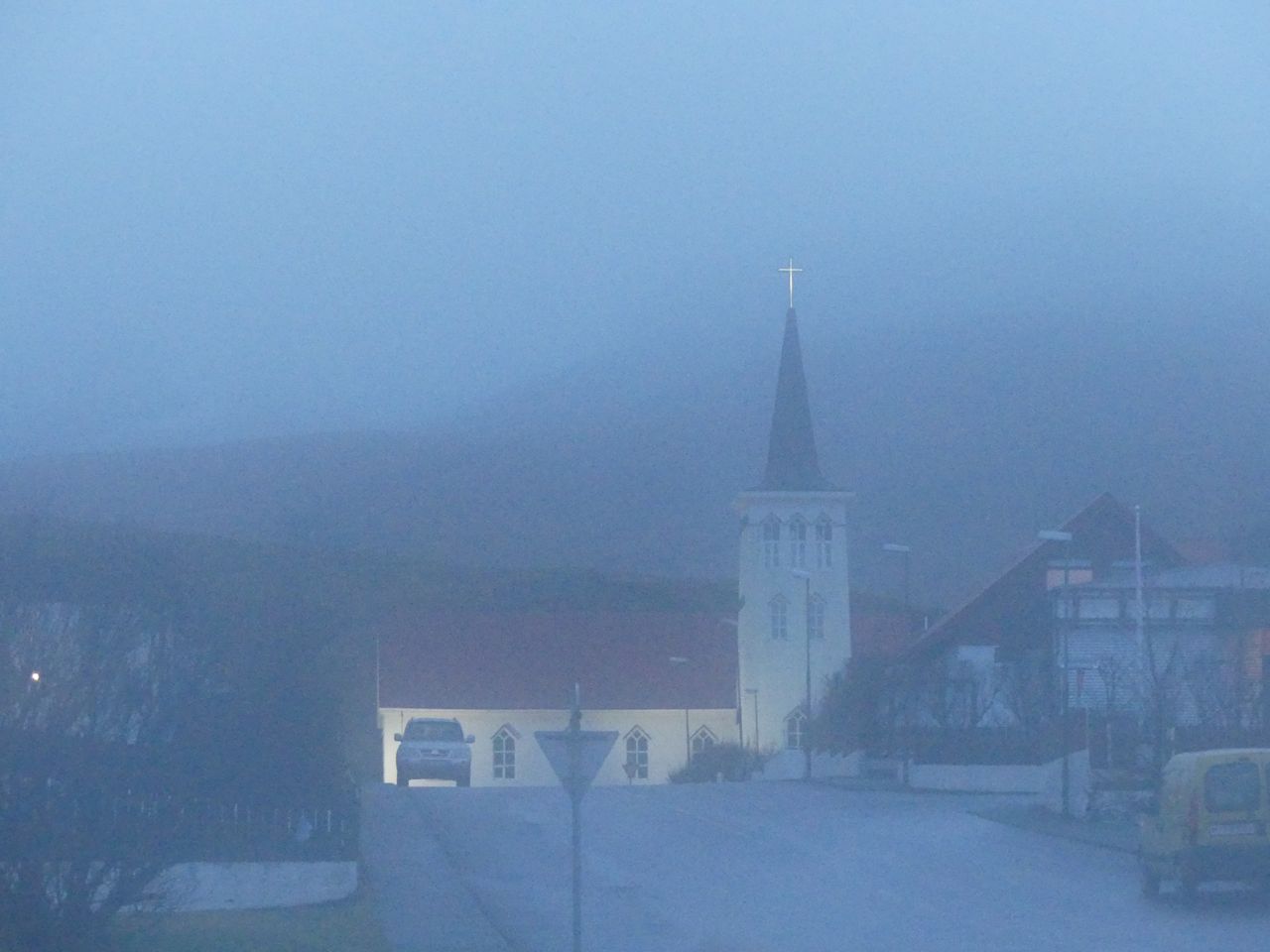
Gunnar Gunnarsson was Icelandic and a Christian. He was, in other words, an Icelandic Christian — a faith that saw few points of breakage between Nordic ethical norms and Christian ones. What it mostly found instead was a purification of them. That’s no real surprise. It is a faith which settled the Island at the same time as Norse belief, and came to accept a shared relationship with it, ratified at the Thing of 999/1000 and cemented by Thorgeir casting his house gods into the Goðafoss and letting the water carry them away into the spirit of the land.
foss2

Goðafoss

 With such a conjoined history behind him, Gunnar the Icelandic Christian felt that his calling as a Skjald, a shield poet in the old Nordic style, enabled him to speak truth, which his faith demanded, to power (Hitler, on March 28, 1940), and protected him from retribution — not as a Norse skald but as an Icelandic Christian one (the English word that comes from the skald tradition is scold). Cultural couplings abound. In Icelandic Christianity, for example, we see Eve giving birth to two groups of children: the hidden ones and the revealed ones. The hidden ones are the elves — usually a nordic element; certainly not a standard Christian one. The revealed ones are human — a more familiar Christian motif. Sure, this is a folk story and not part of canonical faith, but it’s one that comes from a country in which the Lutheran faith did not arise out of princely protest against the circumscription of regional and local power by a distant papal authority, couched in terms of a popular uprising against cynicism, as it did in the Holy Roman Empire German Nation (now Germany). Those were Luther’s stresses, and if he retreated into his faith, singing “Ein Fester Burg ist Unser Gott” (“A Mighty Fortress is Our God”) he can be forgiven for trying to find something solid in a world that treated faith as a weapon in the hands of power rather than a weapon against such abuses of power.
goethewartburg1777


The Poet Goethe Sketched The Wartburg in 1777

Because of this sketch, it became the romantic symbol of the call to a German State. Goethe and Luther could have had a lengthy discussion across the divide of their different centuries about being conscripted into being symbols of power.

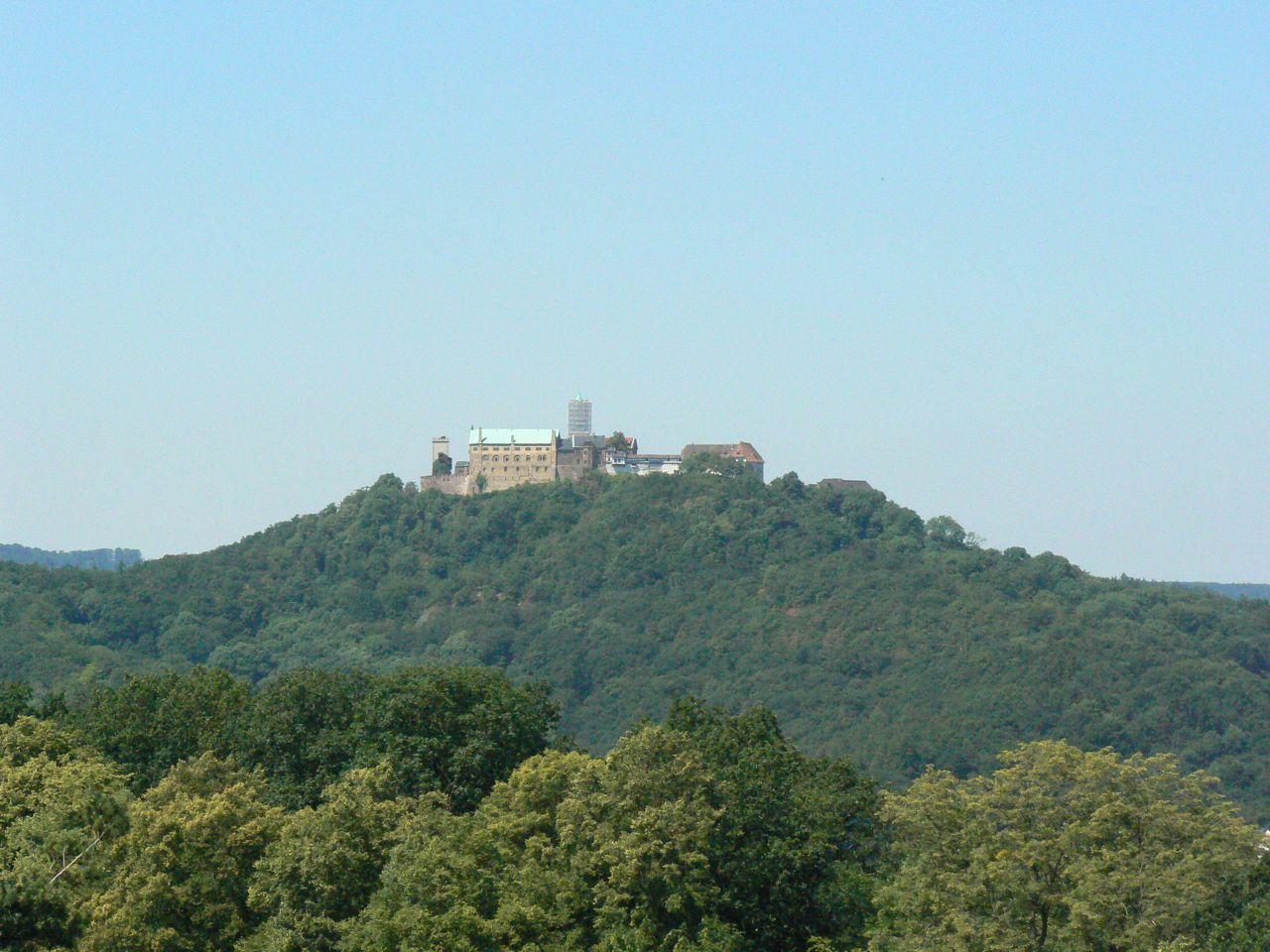
 There’s an old story in Wartburg Castle above Eisenach, Germany, of Luther sitting in his small room behind the guard room, translating the Bible into German, when he was interrupted by the devil and threw his ink bottle at him in frustration. The ink stain is still on the wall, the tour guides will happily show you, although they can be forgiven for leaving out the detail that it has been artfully repainted many times over the years. The thing is: Luther was not in the castle of his own free will. After being excommunicated from the Catholic Faith in Worms, on the Rhine, he made his way back along the ancient road, the via regia, to his home in the East as an outlaw. Luther was born just off the road in the forests and coal mines of Hessen and knew about the road and the forest. By day, the road belonged to the king. By night, it belonged to bandits likely as not to kill you for a button. He fully expected death, and then was kidnapped, brought up to the Wartburg, told he was being a fool, and entreated to translate the Bible instead of giving up his life.

wartburg

The Wartburg in 2010

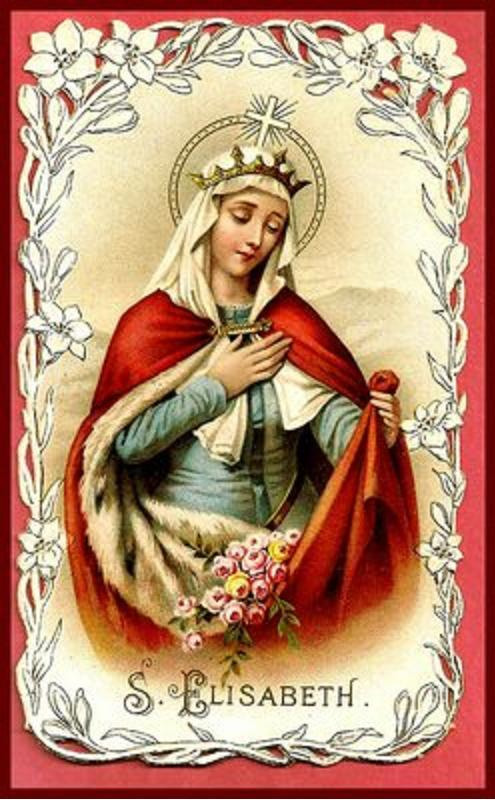
That little room behind the guard’s room? Come on. The castle had a lot of rooms. This one was a jail, where his warders could keep close watch on him and bring him bread and water from time to time until he agreed to hand over a fully translated work. The devil? The prince, of course, who demanded this text to strengthen the hand of German princes fighting for independence from Rome. The way to escape from imprisonment in the great Wartburg castle? Through faith. Hence the hymn about the Mighty (Mightier) Fortress. It was the way in which St. Elizabeth of Hungary escaped the Wartburg centuries before, as well: she gave the poor the bread and water given to her by her confessor for defying the king, and thereby starved herself to death. There were miracles along the way (forbidden bread for the poor transformed into roses by faith), which tell a story of a true heart overcoming all — a standard folk motif, and a standard Christian one.

eliz

In the next several days I am going to speak about Gunnar’s Christianity, within his books and within his contemporary context, but today I’d like to point out a parallel: Gunnar and Luther are spiritual brothers. Neither were true protestants: Luther never did want to dispose of allegiance to the Pope; Gunnar was buried in a Catholic graveyard in Iceland.

videy


Gunnar’s Resting Place, Viðey

Both Gunnar and Luther spoke truth to power, Luther to papal power and Gunnar to Hitler. Both were feverish writers and polemicists. Both attempted to influence power and were used by it for its own ends: Luther became the spokesperson for a break with papal power; Gunnar, who wanted to assert Nordic independence, was given fame, wealth and readership by being published by the German propaganda ministry, to further the annexation of Scandinavia to Germany. Both were imprisoned for their principals, left in the end with nothing but their faith: Luther in the Wartburg and a new faith imposed on him by political circumstances and machinations, that did not always fit him well; Gunnar in Skriðuklaustur, banished there and told not to say another word, on pain of physical and spiritual annihilation. That’s a guess about Gunnar, but not a wild one. It is precisely what the German writer Ernst Wiechert was told after he spoke publicly against Hitler — twice. After six weeks in the Buchenwald concentration camp, which nearly killed him, Wiechert was sent home under house arrest, which lasted from 1937 to 1945; after returning home in 1940, Gunnar hardly wrote at all. He had become an Icelandic protestant, protesting the very notion of restrictions to his power as a skjald. His form of protest? Silence. An exact representation of his place in the world of power and of Iceland itself, and an exact embodiment of the power of his rather individual faith.

Tomorrow: Gunnar and Dürrenmatt. Soon: Gunnar and silence.