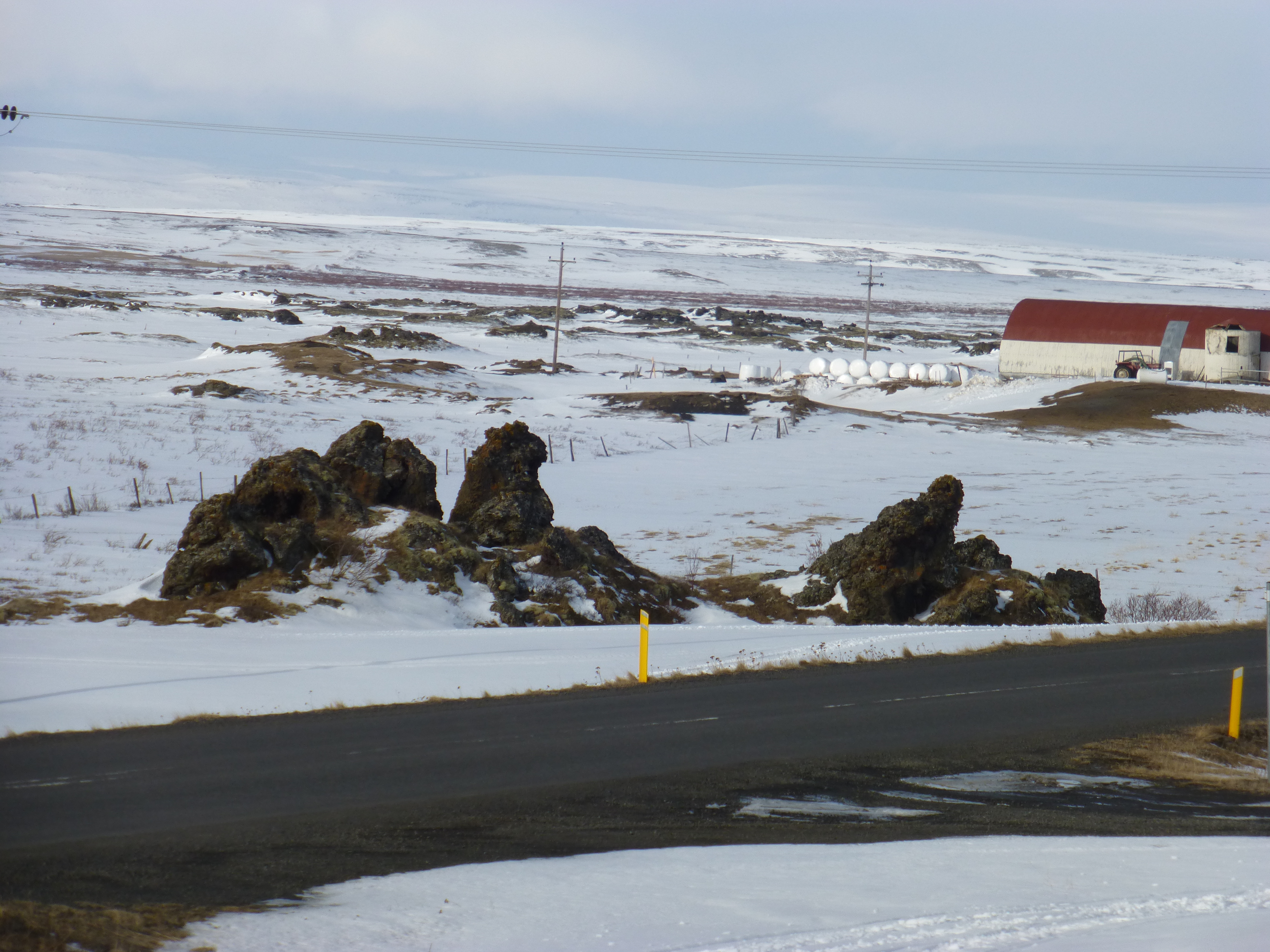
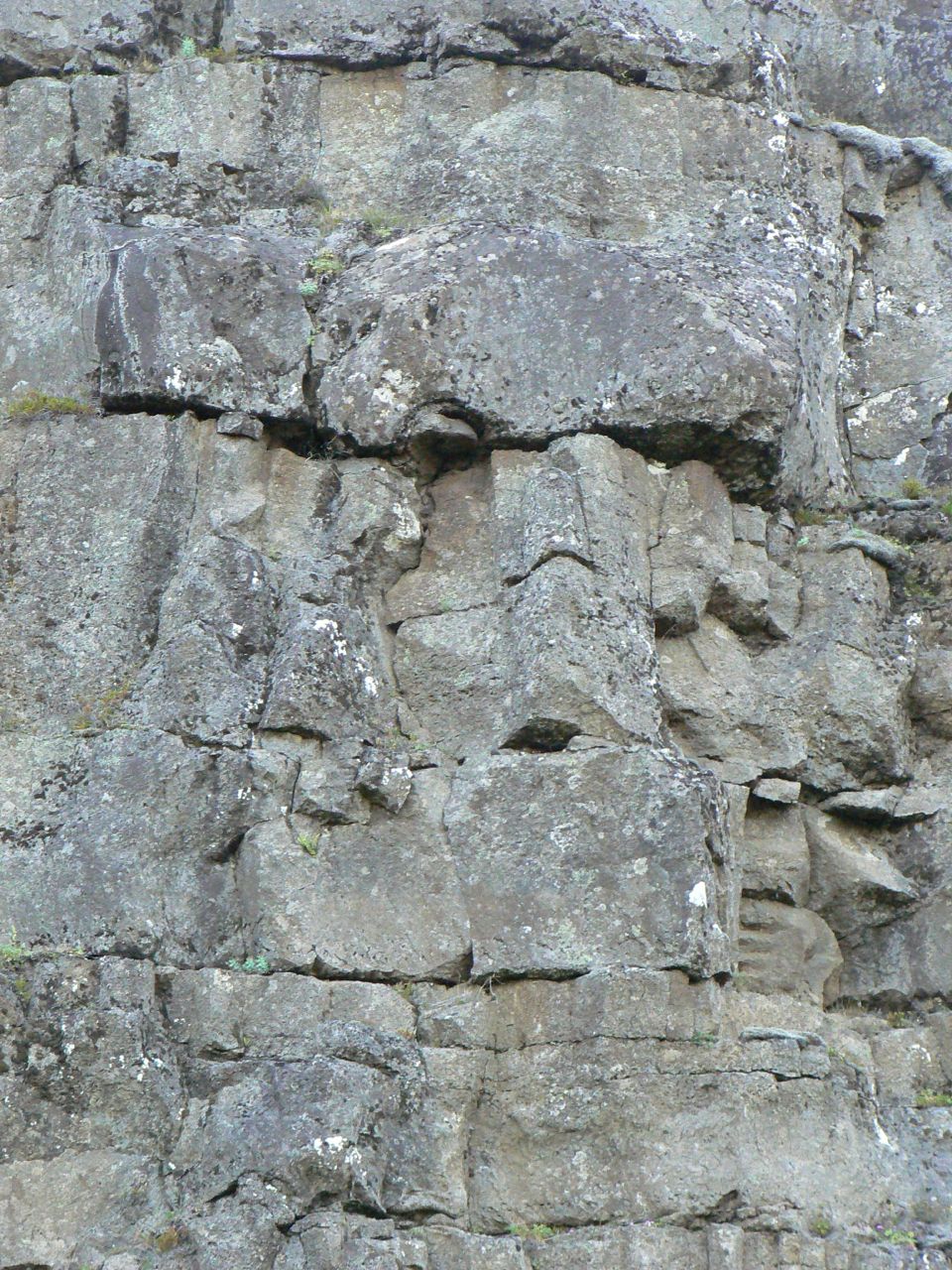
Category Archives: Huldúfolk

Kjarval and the Children of Iceland

Today I’m walking through the social ecology of Iceland, by way of the popular artist Kjarval. Here’s a hint of what’s coming later in the post…

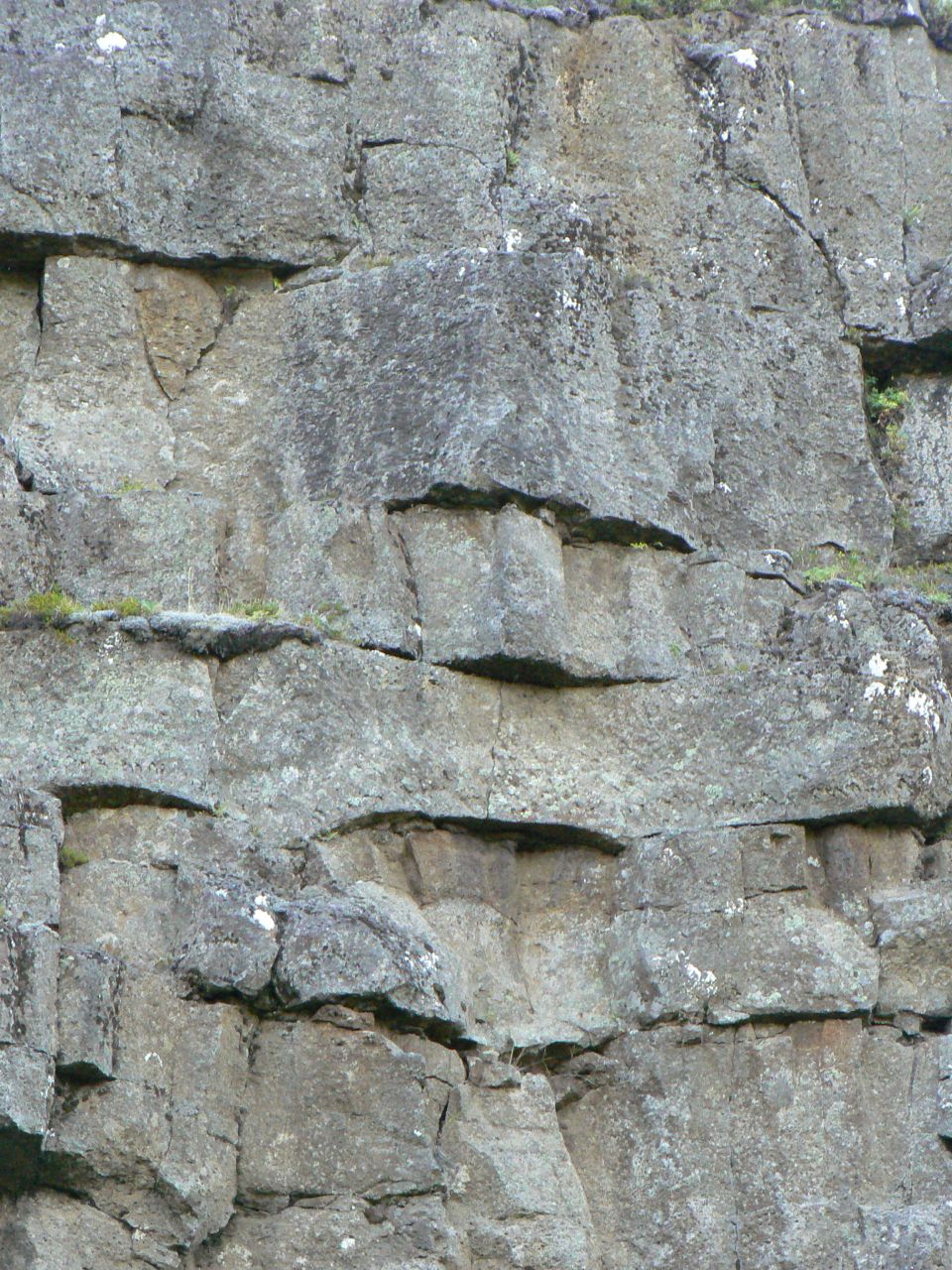
scary

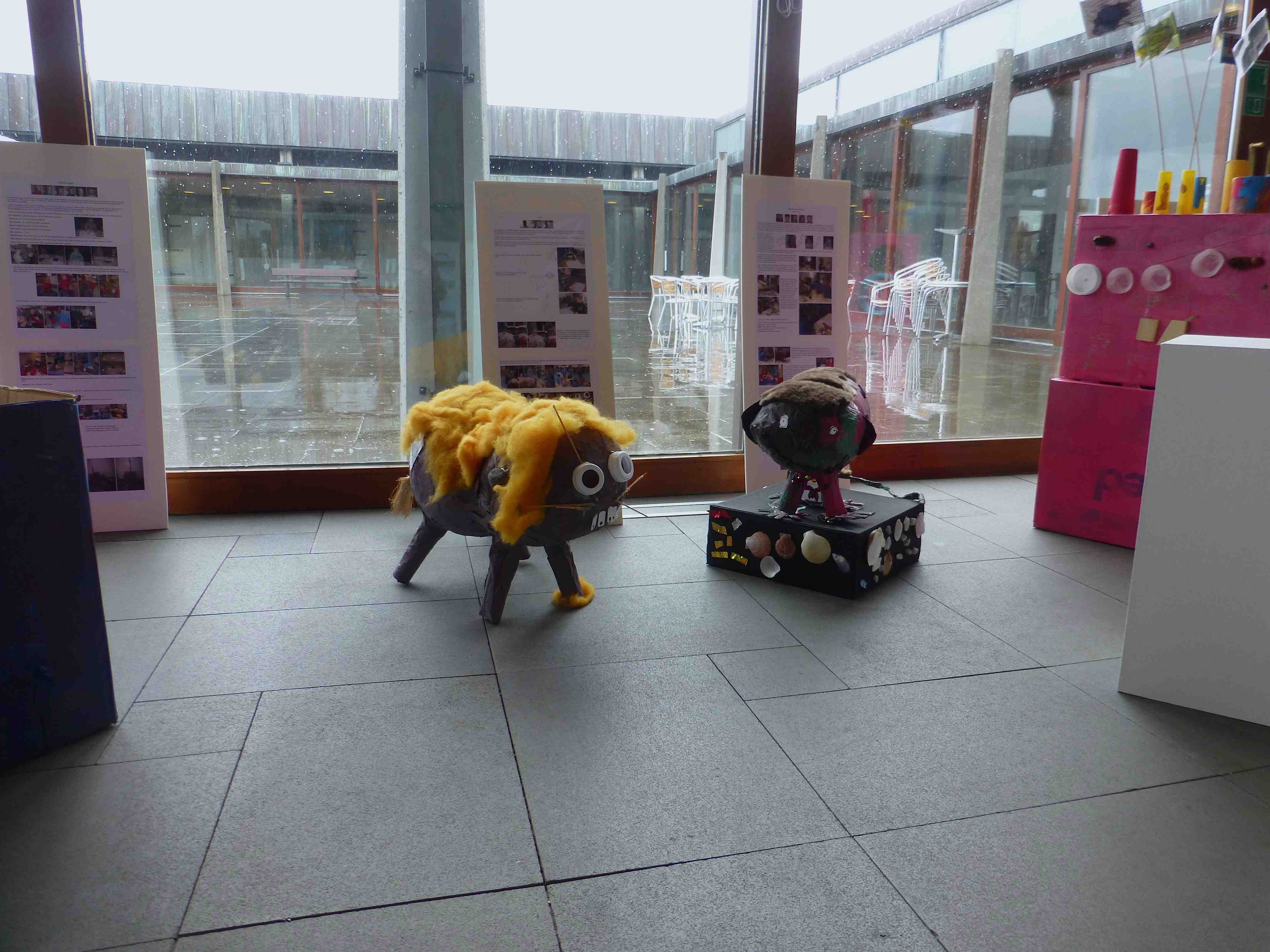
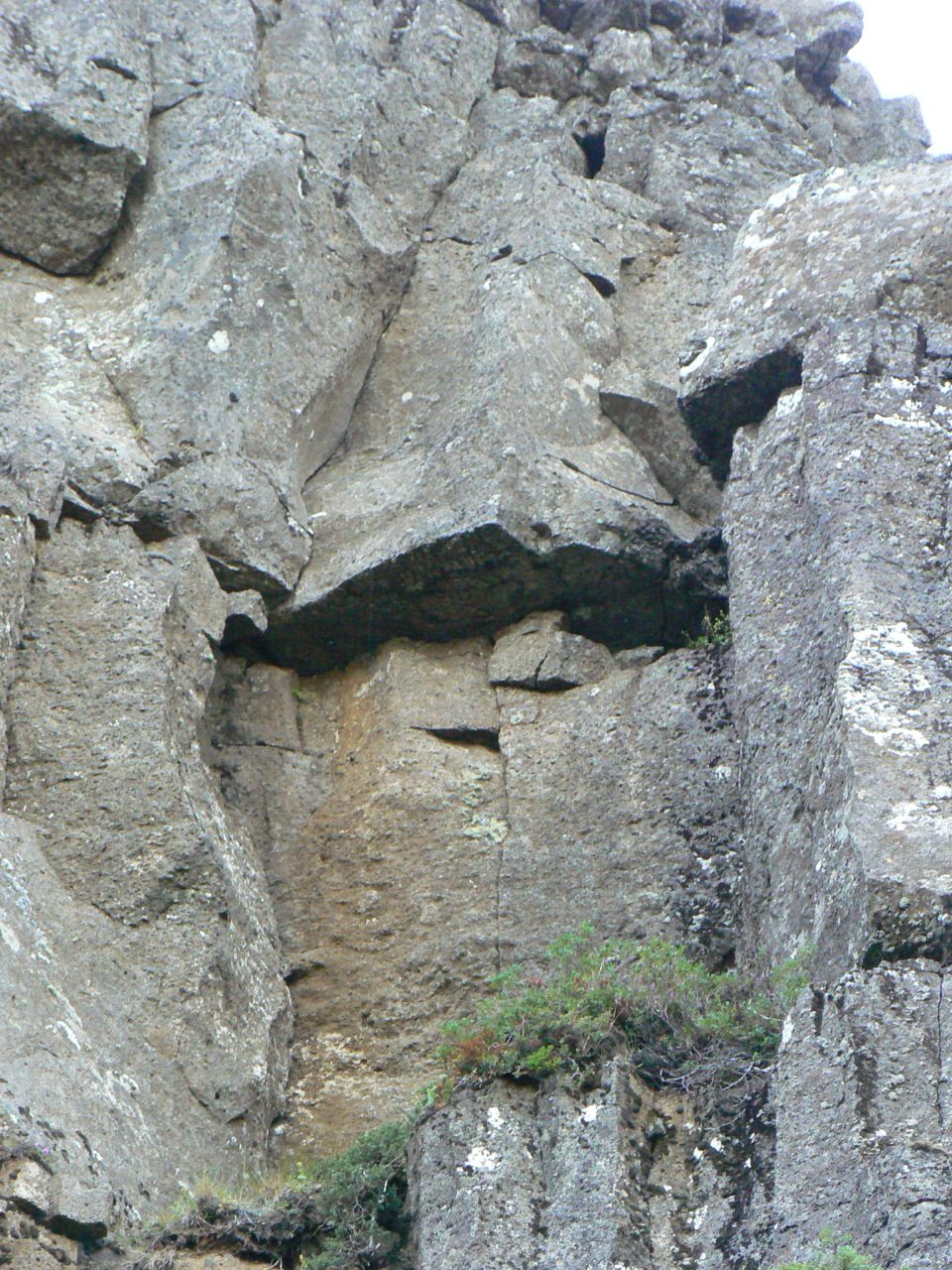
Beautiful Human Monster, Kjarvalstaðir

Recycled, too. With teeth!

In Iceland things are what they are. For the earth, this is a pretty standard state of affairs. Luckily for all humans, it can be pretty beautiful, too. Like this:

P1590091

4×4 Jeep at Church, Hallgrímskirkja, Reykjavik

Great matching colours at Reykjavik’s showpiece church! I think this approach might clash at the Vatican if you tried it there, though.

In Iceland, things are usually a little different than they first look. That red vehicle above, for instance, is not a 4×4 in the sense that its Japanese designers intended it. It’s more like a cross between an American military runabout and an Icelandic horse…

scratch

Pre World War II 4×4 Vehicle Putting a Fence to Good Use

These specifically Icelandic rules of social sculpture are largely unvoiced. I find them liberating — as another creature awkwardly domesticated by a colonial legacy: a Canadian.

P1010656

Second Hand Furniture Emporium with Droopy Flag, Vernon, Canada

In Canada as well as in Iceland, the remnants of past economies provide fertile ecological niches for new economies. The land (often talked about but always distant) is not the point.

The kind of social sculpture in the above image is found wherever humans settle down, of course. What makes it different in former colonies (such as Iceland and Canada) is that the technologies are all foreign. That might sound a bit obvious, but consider it this way: at installations like this …
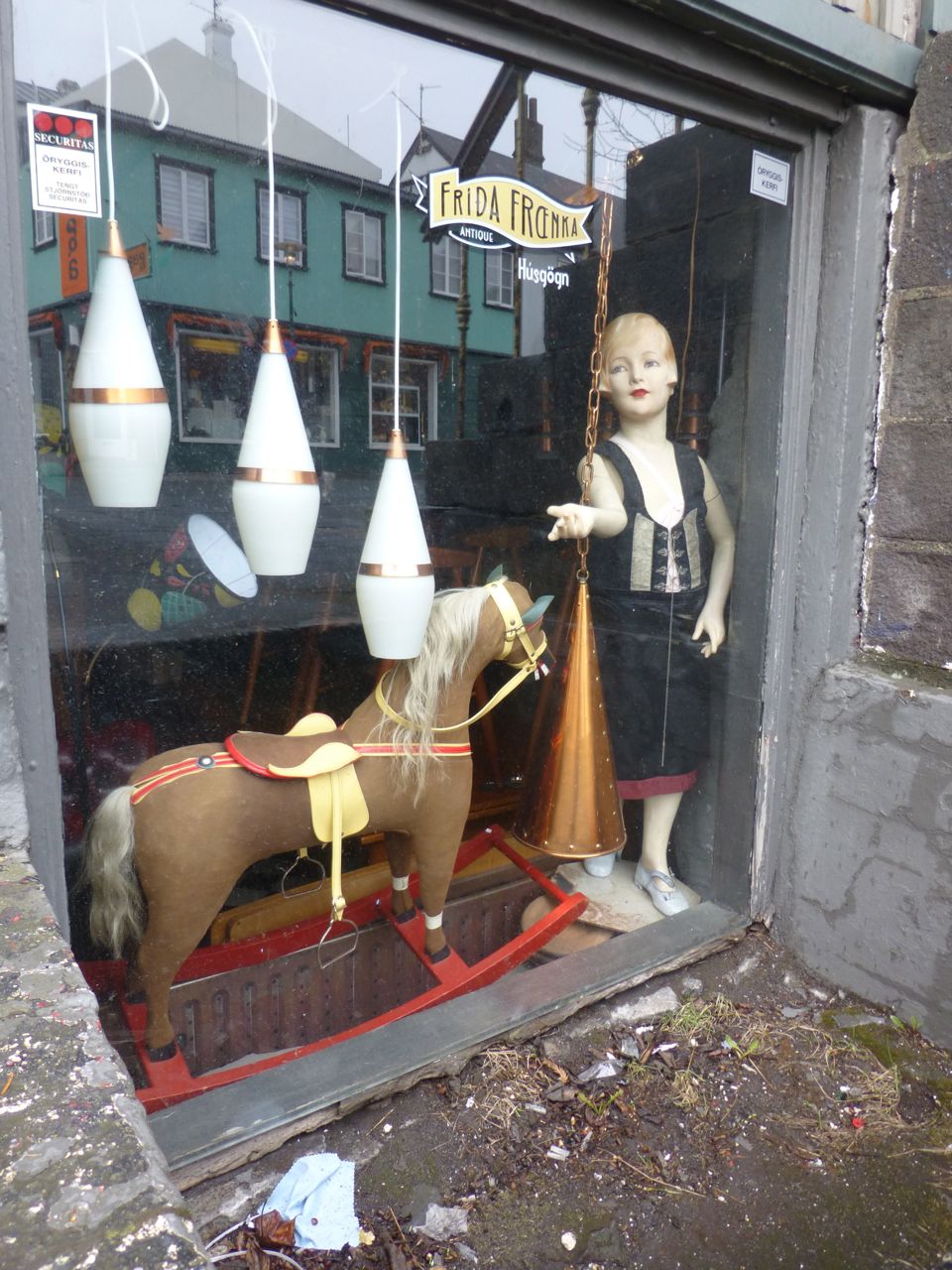
antique

Antique Store Window, Vesturgata

Selling the world’s junk back to the world.

…in France, French people get to largely root around in their own heads. In Iceland or Canada, people are largely rooting around in someone else’s head. Not the same thing.

hair

Store Window, Reykjavik

Lures for humans looking for a new image for their bodies. Important note if you want to try this at home: the realization that the human is the body is not part of this aesthetic. You can only do that with impunity in colonial centres, not at their peripheries.

Canada has its own approaches to power and to its colonial legacy (Largely, Canada is a social rather than a geographical location. It has replaced social and economic growth in “geographical place” by luring immigrants from other former world colonies, whose comfort with living in dis-placed lines of force is more attractive to Canada’s elites than is the costly rootedness of former immigrants). Iceland, too…
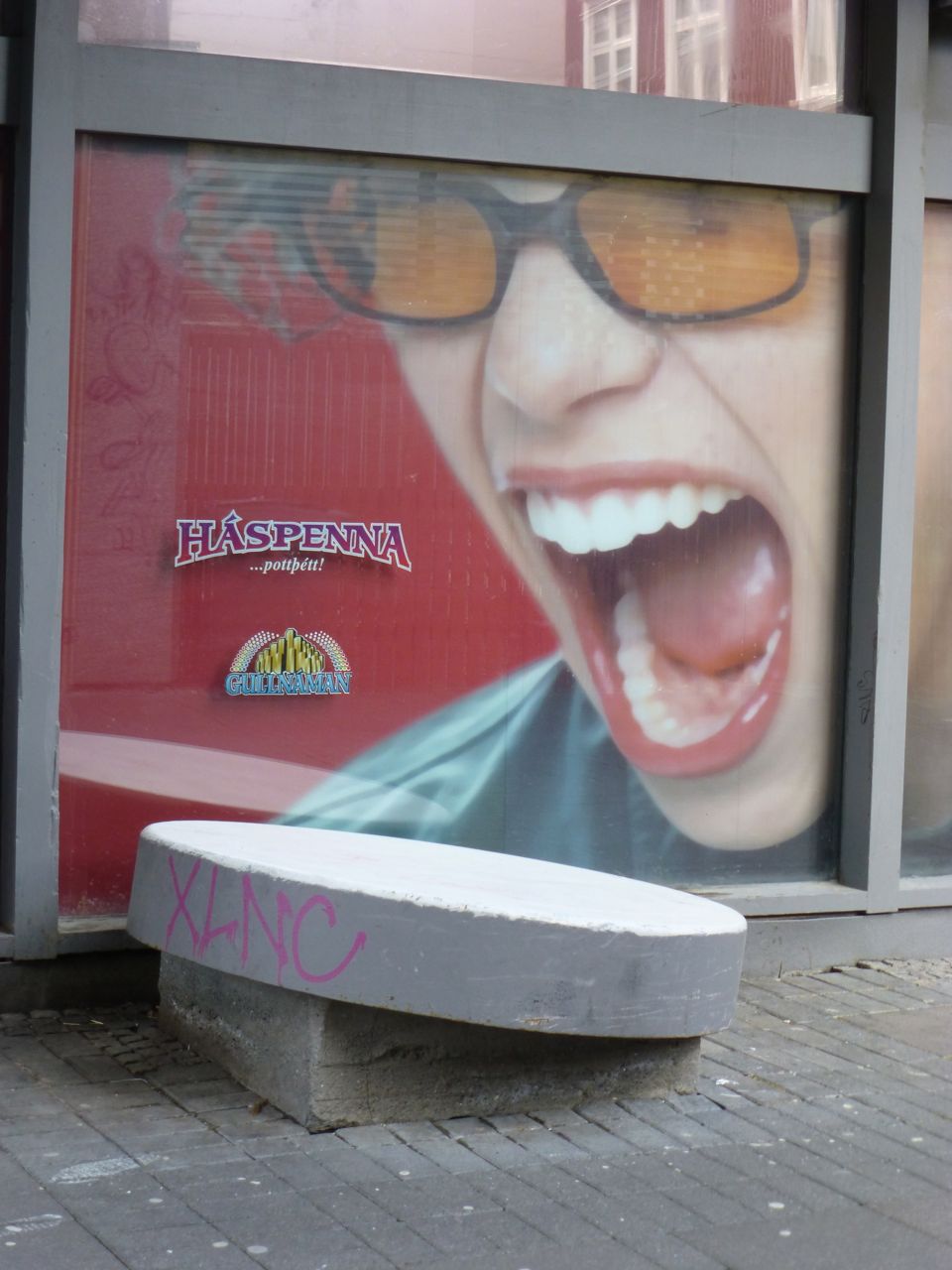
P1590059

Slot Machine Casino Window Advertisement, Reykjavik

Giant drugs? Concrete money? A clever nordic pun for “real money”, I’d say, and presented in a colourful larger-than-life artifice, too. Top marks for this dynamically-energized street art-political installation and its recycling of images of contemporary global colonialism. Note the pink paint — a kind of dog-like territorial marking made by humans partially resistant to the human entrapment technology called “advertising” and its tried-and-true sexual lures. Imagine: wild humans, among us, even now in 2013. One hardly dare breathe, lest one scare them away!

Just as in Canada, human political elites (the A-type power personalities that usually dominate human relationships) really like this kind of stuff. It supports their power structures well. There are variations on this model, though. In Canada, as I mentioned, they experiment with mass immigration as a means of forestalling change. In Iceland, however, they lure people foreign to the culture for temporary visits (tours), during which they are offered images of their own culture, such as this street-side bar offering English drinks for English visitors (seen here through its window) …
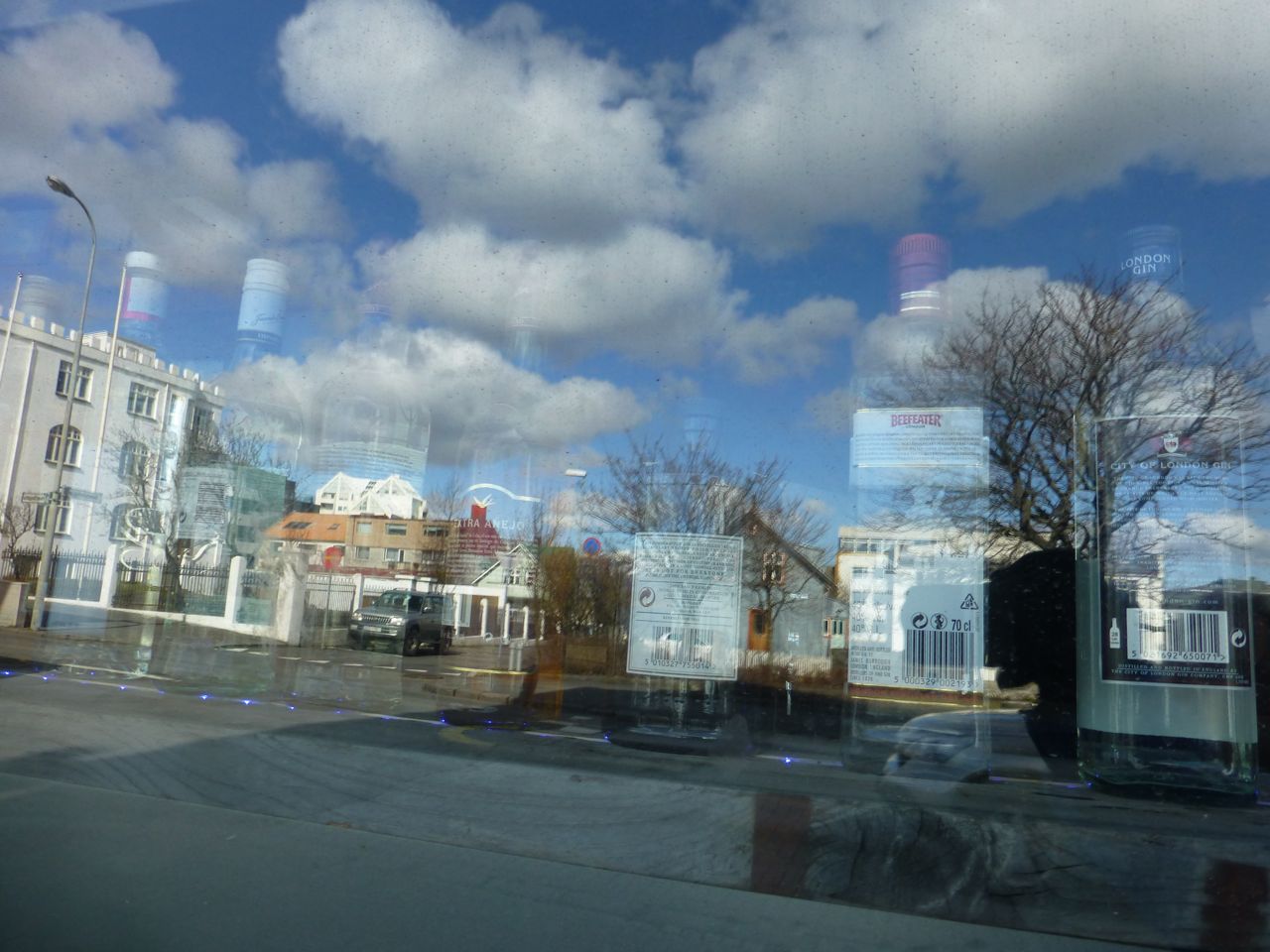
gin

… and, still on the English theme, this other bar, up the street and down the hill towards the water…

fab

England, Denmark, and the United States in One!, Reykjavik

(American beer slogan graffiti, English musical icons, and Danish Carlsberg beer.)

The key to colonial societies is the almost random recombination of multiple foreign influences, none of which are home-grown. It leads to exquisite and exciting (and beautiful) temporary art exhibits like this…
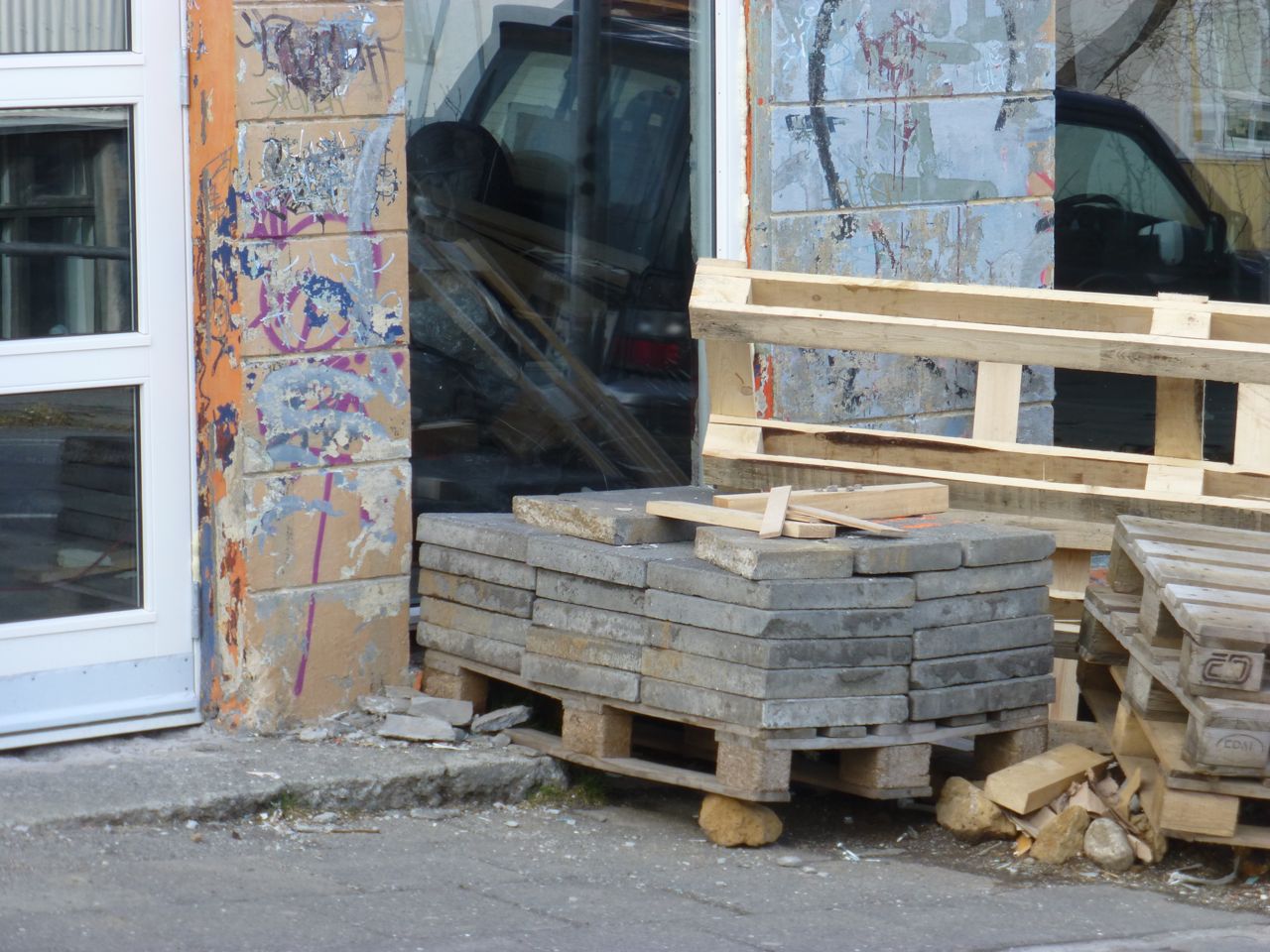
bricks

Construction Site, Reykjavik

Although only the most powerful of these sculptural objects is Icelandic (the rock holding up the corner of the palette), the combination of elements is pure Icelandic (in the sense of Iceland as a social space.) One learns to navigate one’s own colonization. One makes a home in it, so to speak.

This, the wisdom of urban people worldwide, finds its perfection in colonialism (including its new face, migration.) Intriguingly, in this art form mechanized reproduction is not an infringement on individuality. You can repeat the same Háspenna advertisement on all sides of the same building (and probably, if Coca Cola is any example, around the world) with impunity.
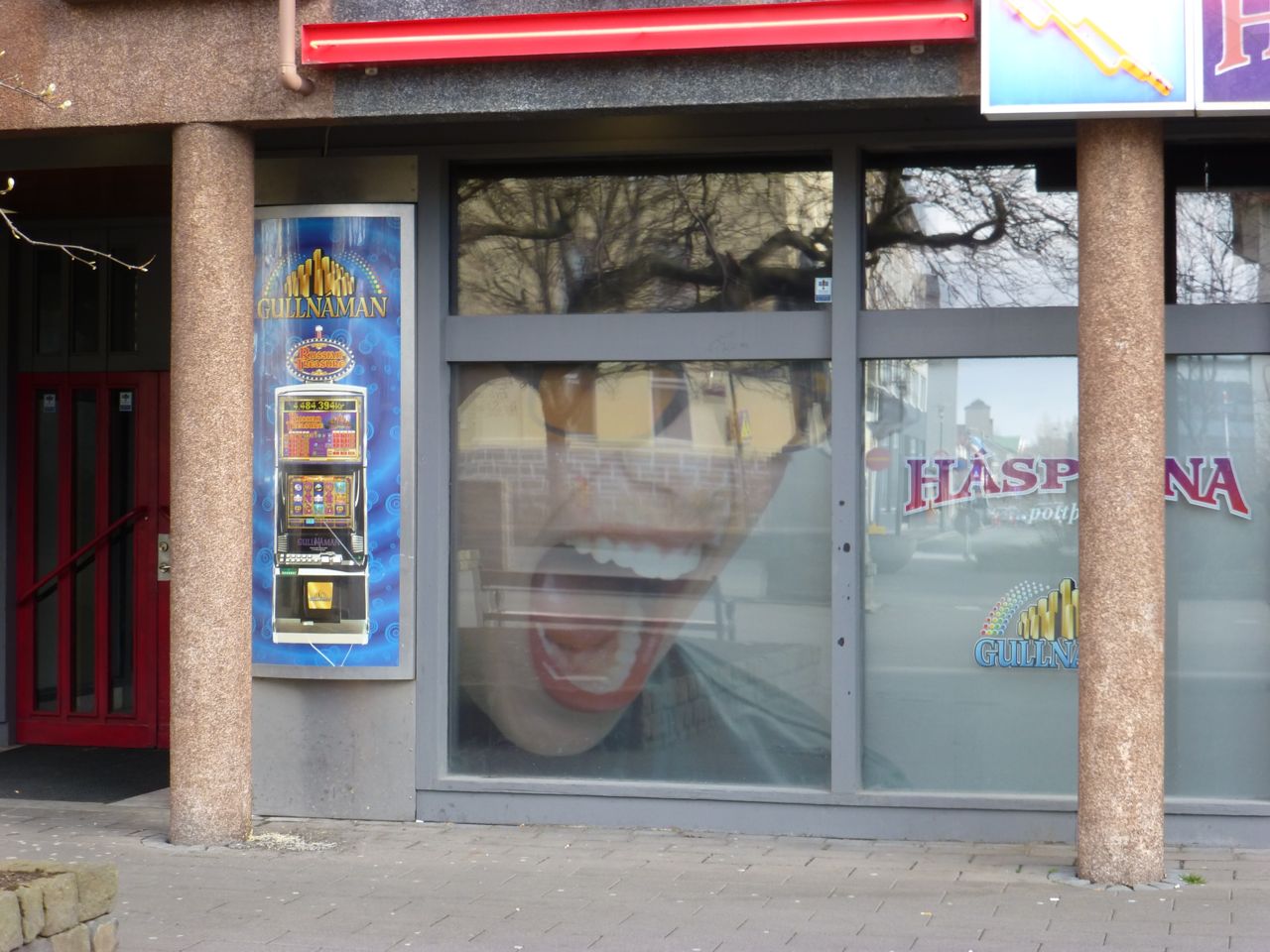
P1590069

Aren’t you glad, though, you can’t hear the screaming?

As a part of global culture, this casino (and its copy writers) is relying on the concept that an individual human is a moment of emotional and biological energy — a wordless animal that delights in colour and scripts that it can move into, inhabit and ‘flesh out’. It is up to dominant social humans to write those scripts in such a way that when biological humans enter them, their accompanying social humans believe they have written them themselves. It is best to maintain such illusions of individual identity. Humans are a little touchy when it comes to identity issues.

To recap, I’ll try to simplify that into an image. It shows a couple biological humans in a piece of performance art directed on the fly by the social humans who fill them like spiritual water. Here it is:

ladder

Humans are Mightily Attracted to Work, Laugarvegur

Excellent colour work here, especially the inner hallway carpet’s lush mauve, pulled out to protect the concrete from paint spills. The bubble gum that already has used it as an abstract expressionist canvas shouldn’t be spoiled carelessly, should it. No, it should not. That’s deep respect, that’s what that is.

Now I’ll try to return that to words: because human identities are crafted by contemporary political elites to appear as attractive homes for social and biological humans alike, such art as the Háspenna advertisement above is a form of sculpture or building. If you think “stable”, you’re pretty much on the mark. Here is its physical corollary:
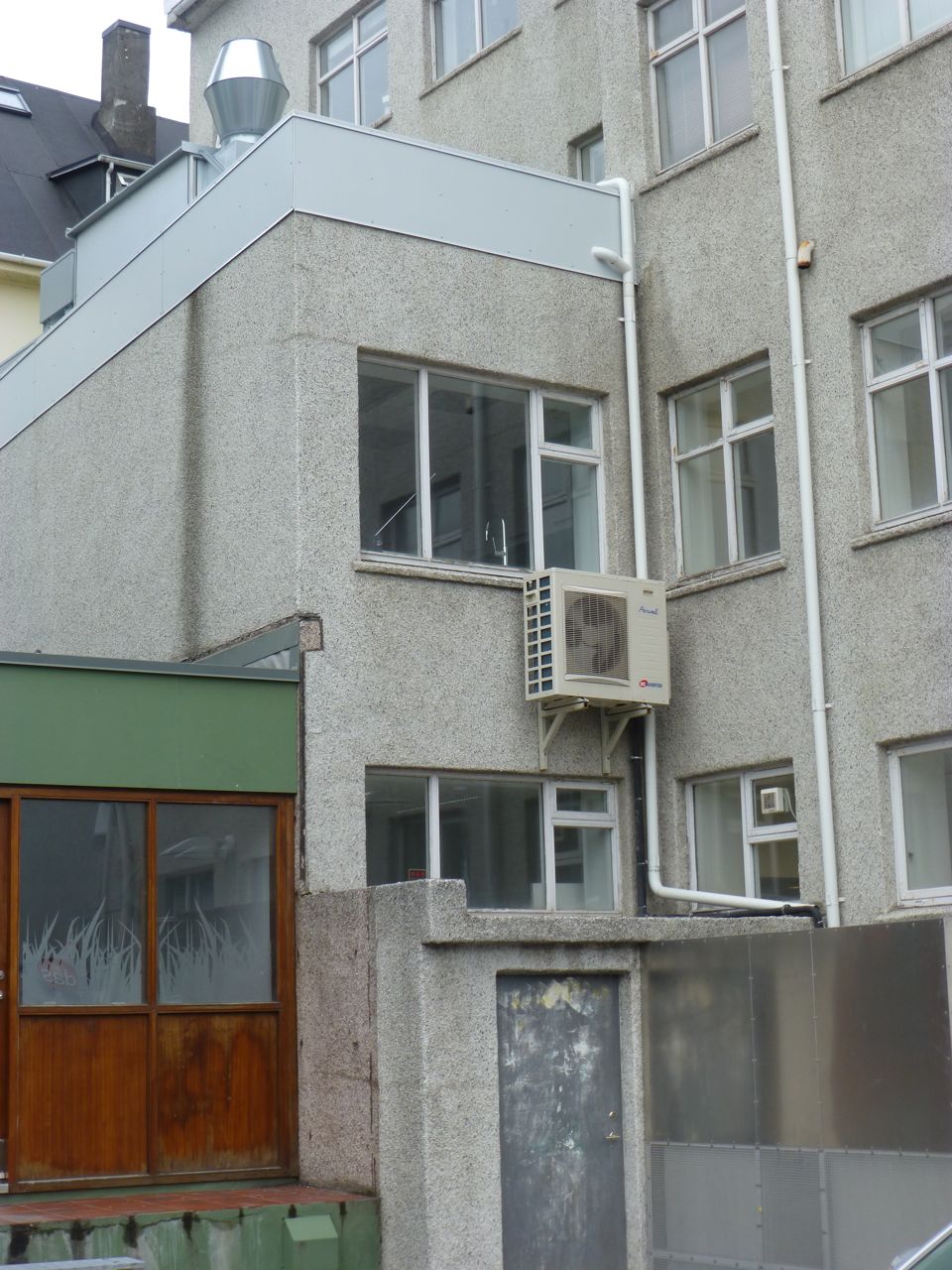
P1550021

Biological Care Facility (Apartment or Stable), Reykjavik

Complete with climate control. No price is too great. After all, no social life forms are possible without the biological humans they carry around with them. Such complicated art works! So delightful!

Simply, you just can’t have social power, or a national state and the benefits of security it brings, without socialized (domesticated) humans. Wild ones are just trouble.

money

Wild Humans Causing Trouble in a Bankrupt Construction Site, Reykjavik

They missed the socialization that was supposed to teach them that domestication and culture are the same thing. Poor things.

For the purposes of nationalizing humans, art is absolutely essential. It is a kind of engineering much akin to the construction of bridge girders. Here, for example, are some temporary Icelandic residents (tourists) training themselves in this technology …

P1180937_2

Skógafoss (Forest Falls), Iceland

This beautiful waterfall is in the process of successfully luring these humans to its lair. Don’t let the lack of a forest spoil your experience with that exquisite retro-art form, “nature”. There was a forest once. People got cold. They burnt it. Wouldn’t you do the same for your body? I know I would.

I’d like to introduce a term which describes this effect. It is this: Photographic Acclimatization. You use it in a sentence like this:

The people in the above image are training themselves in the contemporary art technique of Photographic Acclimatization.

Here are some more humans hard at work at just that …
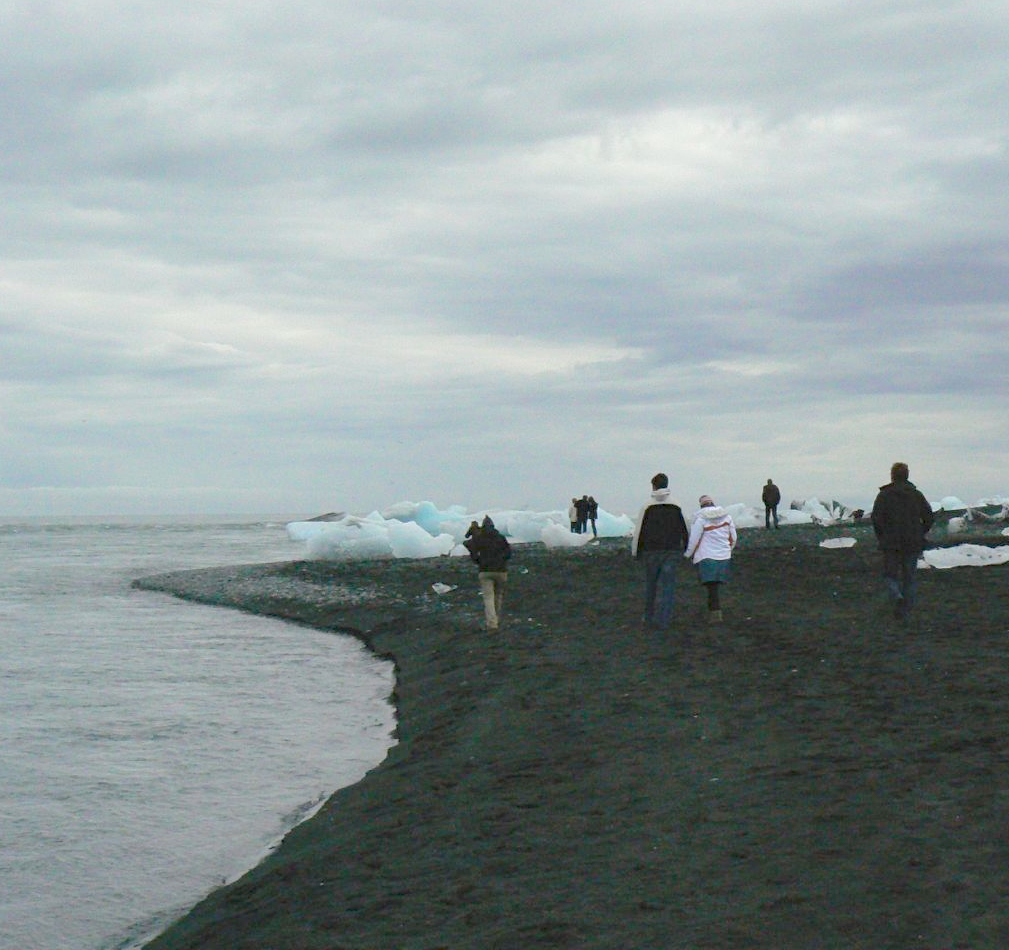
ice2

World Humans Meet the Earth

And then stand there, far, far past where language can lead them, staring. Sometimes they meet their biological selves for the first time in this way. Being generous and merciful, Icelandic tour bus drivers bring them here by the busload. If you drive real fast, you can make it from Reykjavik to here and back in a day, which is, frankly, wayyyyyy too far and hard on the bus drivers, but, as I say, they are generous and merciful.

The popular art form of photographic acclimatization is an updated version of the 19th century  science of butterfly collecting, something which I’ve been trying to make into a new science of late, although without a net.

P1020564Western Swallowtail in Some Feral Alfalfa

This turkish forage plant was left behind in the faeces of some cattle, back when this part of Oregon Territory was an updated version of the Wild West. The alfalfa decided to stay. In the 19th century, I would have had to catch this beauty with a net and pin it on a card. It would then be usable by modern human art-makers, as an image of past human-earth interfaces. As a wild butterfly, it is relatively invisible, as is the undocumented weed ecosystem it now inhabits. It is like a brand new earth out there!

Photographic Acclimitization is based on the principle of traveling the country (or the world) to capture images of things that you have seen before in advertising material. It is absolutely essential to modern society. It allows socialization processes to ‘gel’ into the complex social sculptures without which the society could not exist in a stable form.
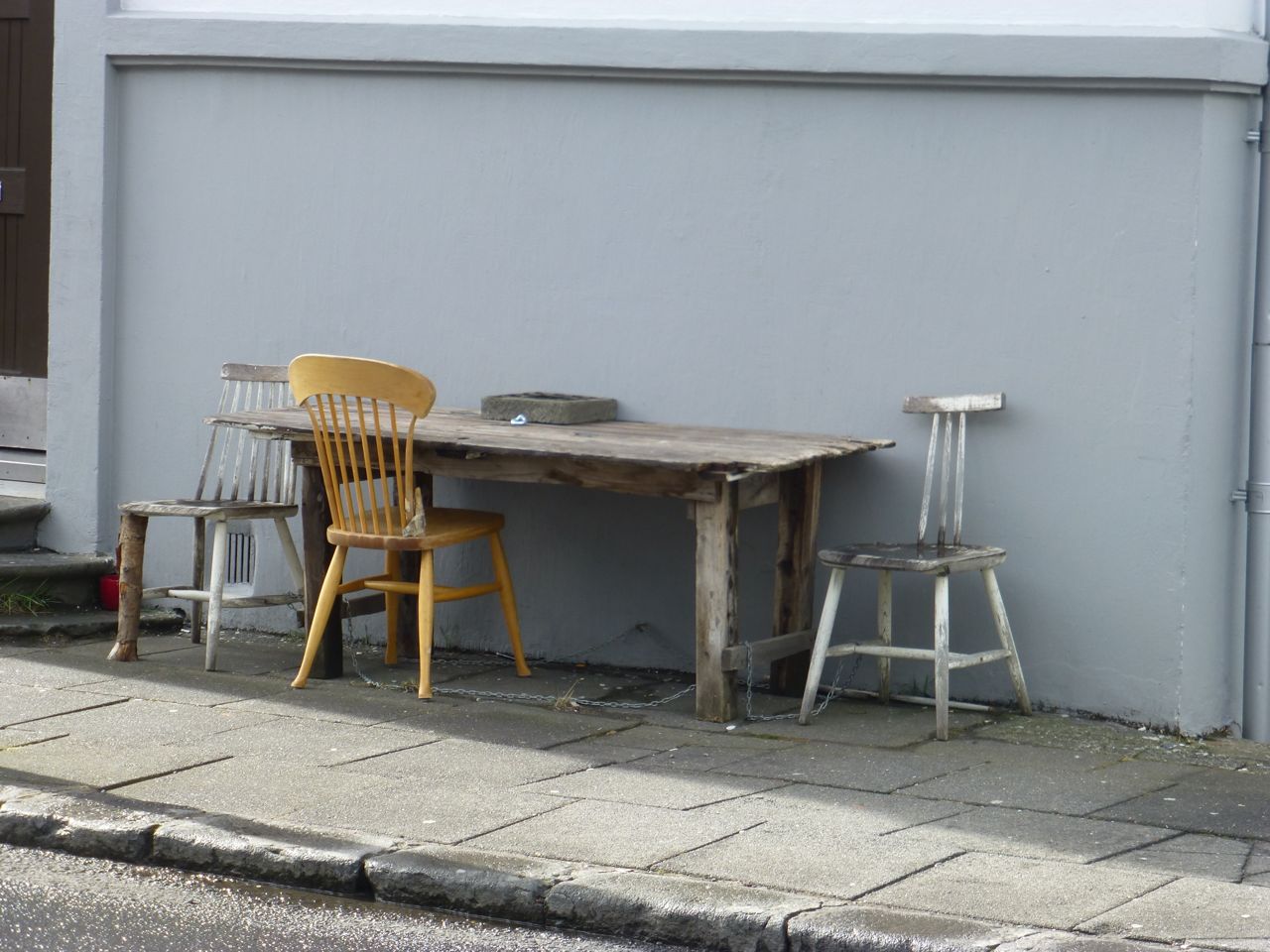
chairsWhat Happens When Photography and Other Furniture Are Used for Asocial Purposes: Rogue Art!

Look at how these poor beasts are chained up night and day. Poor things.

Plato, the Greek philosopher who pointed out that each chair is a projection of a perfect chair in Heaven, would turn over in his grave. This approach will not lead to nationalism. The following is a more appropriate photographic subject:
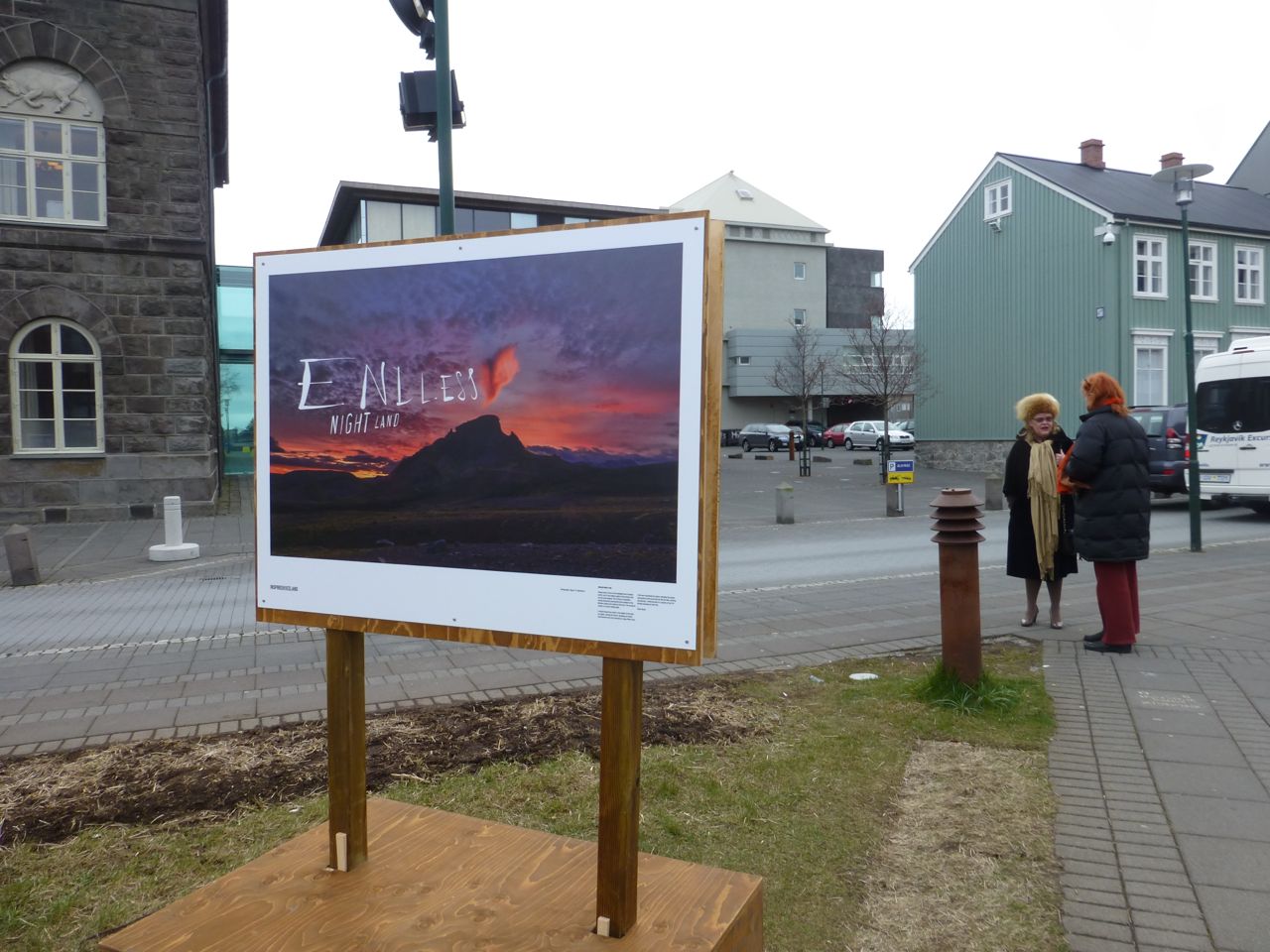
endless

Icelandic Tourism Display: Endless Night Land

This will lead to nationalism. A year ago, tourists from around the world were asked to submit their photographs of Iceland and to coin a new term for the country which expressed their experience. The ones in keeping with the promotional goals of Iceland’s copywriters were chosen, lavishly photographed, and turned into a “new” (or at least re-cycled) promotional package. It’s the casino all over again!

After all, it’s not just horses, sheep and cattle who are domesticated in the process of creating a society out of farmers.
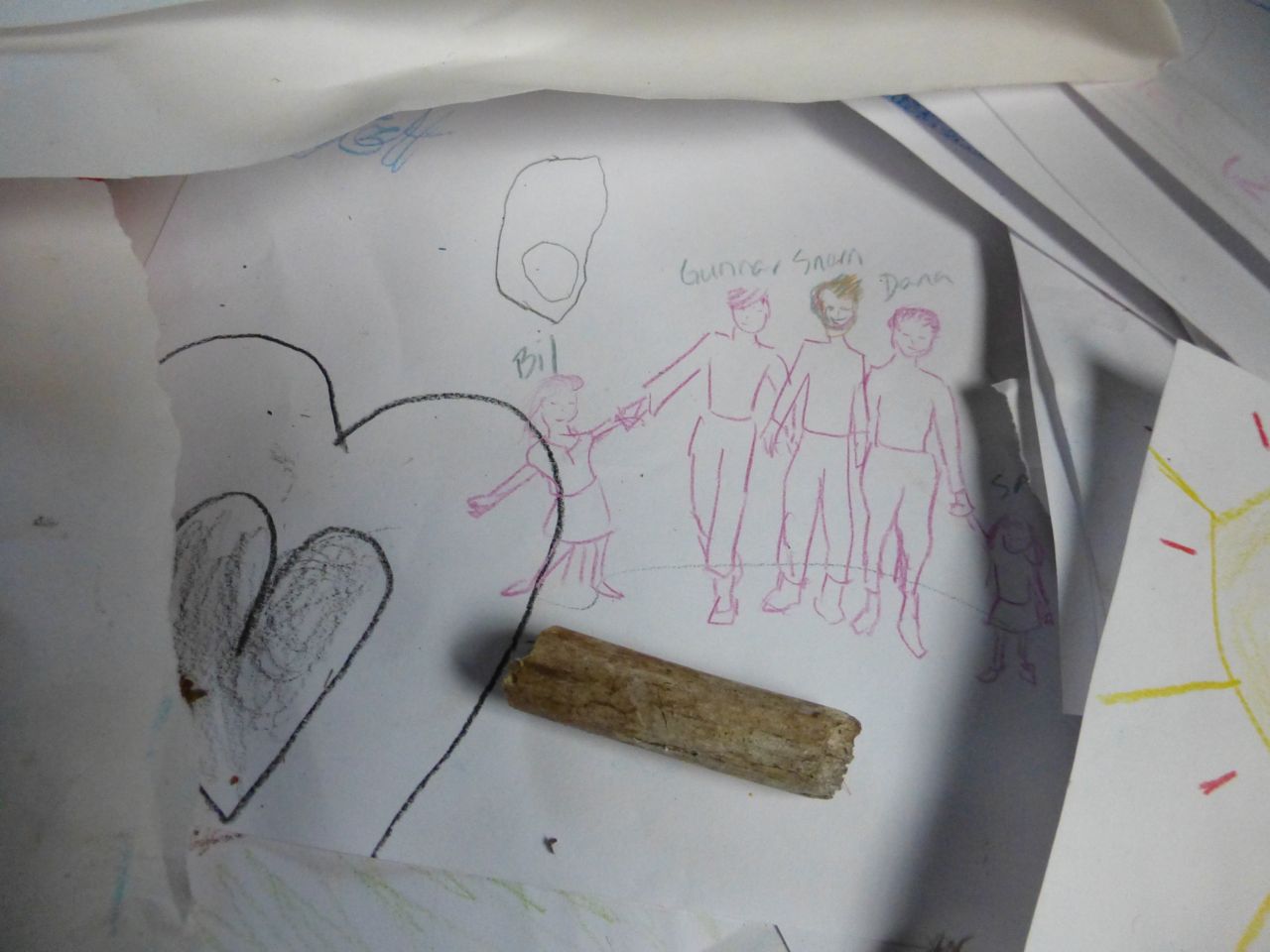
P1450642

Teenage Art, Hallórmstadur

Tasked with the job of leading young children to exploration of art in a wooden hut in Iceland’s national forest, teenagers practice the social art instructions of their Walt Disney-style drawing pad.
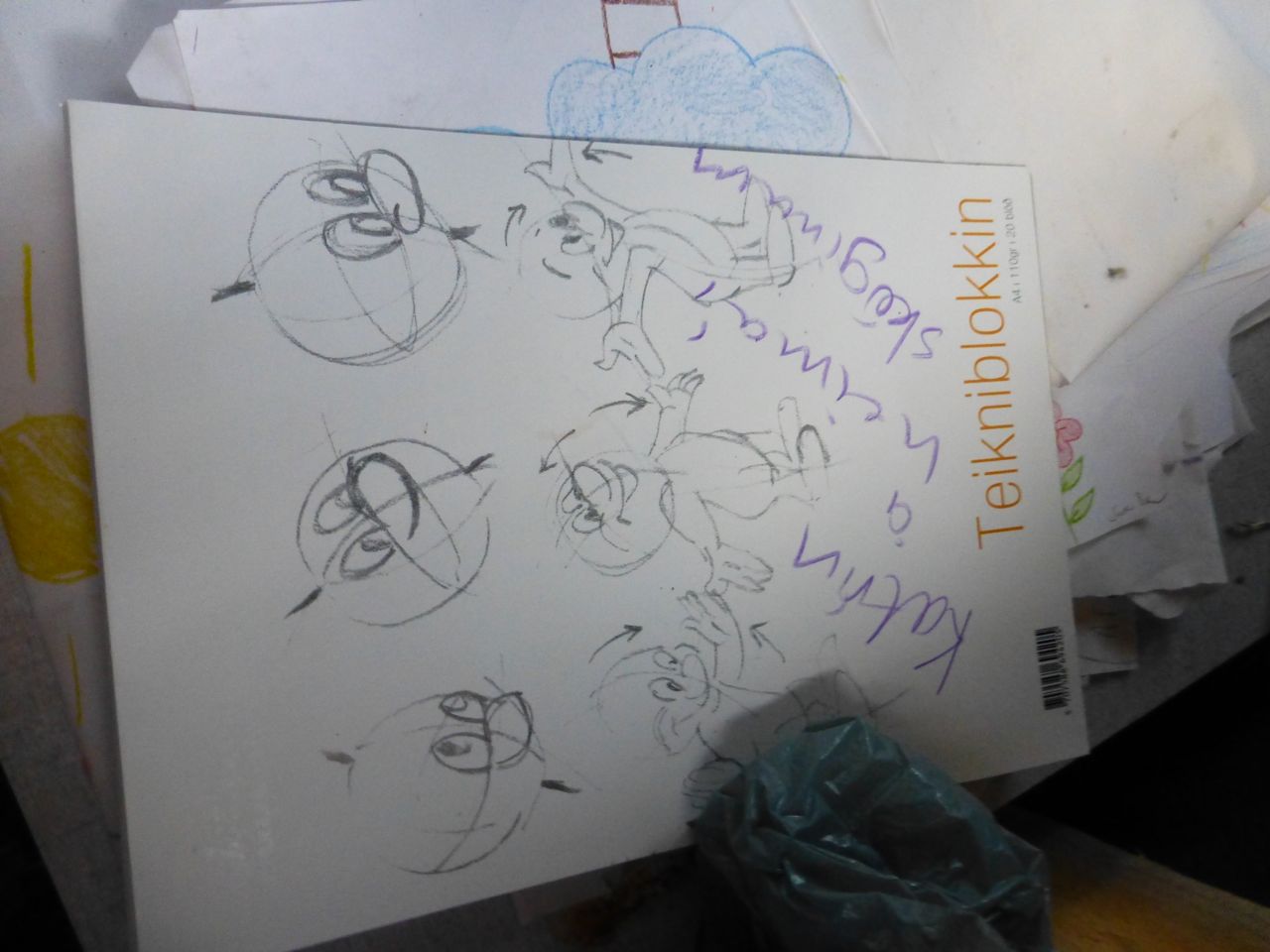
P1450636

Note the Arrows

They aid in the process of refining the complexity of the human body into simple, infinitely reproducible lines.

The goal is the sculpting of readily portable masks, called identities …

fantasyIdentity Creation Materials  Skólavörðustigur

… which can be worn as display objects in public.

peak

Checking for Traffic. Vesturgata

Individually sited, using a mass-produced stencil. Now that’s about as good a definition of colonialism and migration as I’ve ever heard.

Identity masks for human bodies come in many types, all attractive to social humans. They include clothing, hair styles, facial expressions, language, apartment furnishings, art and, of course, footwear. You don’t want your favourite human to wander the streets unshod. He or she might step on a nail, right? And, besides, they’d have a hard time getting into restaurants to be wined and dined, and then where would you, a social human, be with a cranky, hungry animal tethered to you?
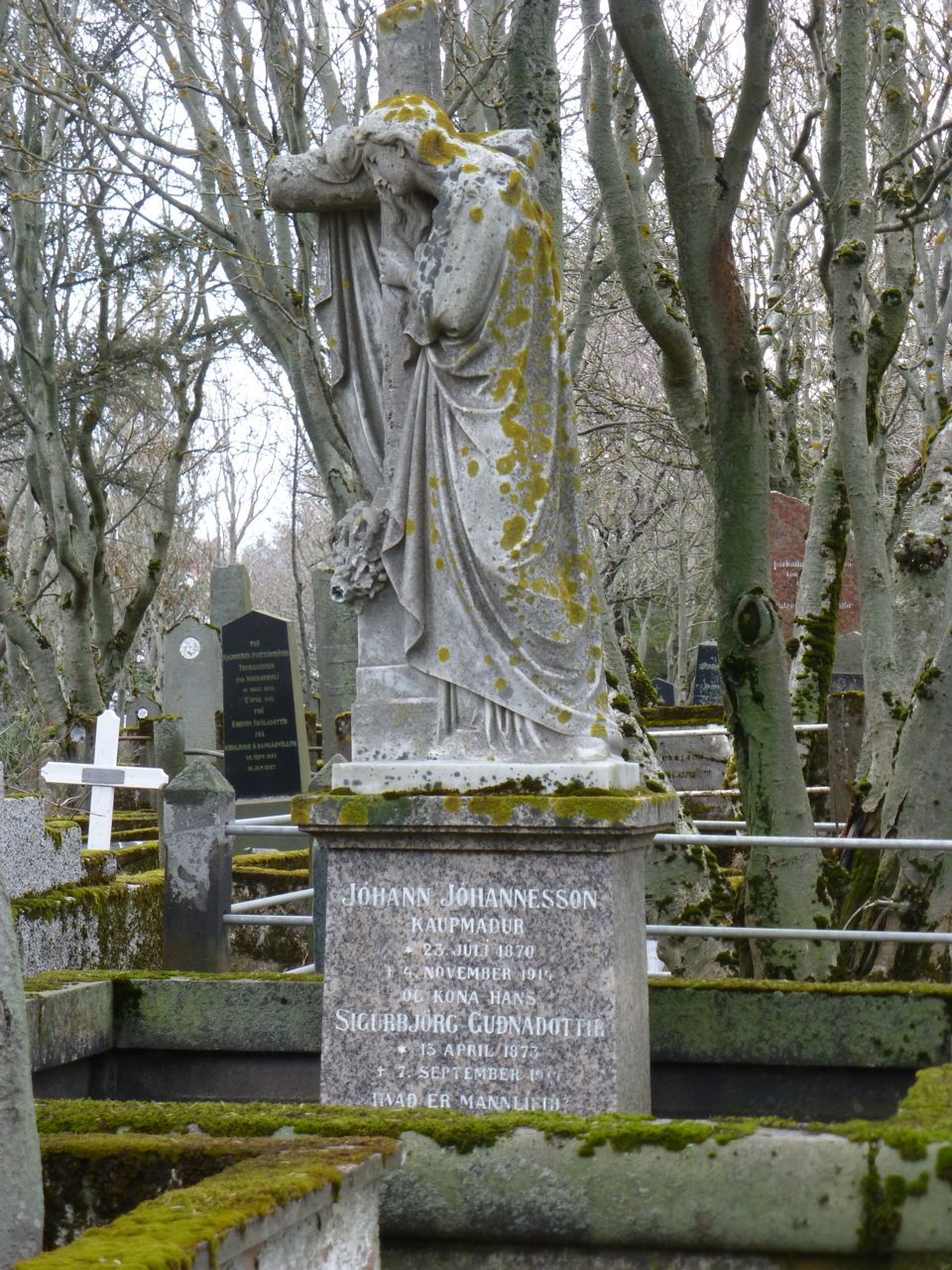
P1550060

Reykjavik Graveyard

A reason to keep your body shod.

The image above looks like the mass-produced, flippy-flappy Swedish flat-packed style shoe racks that can be found in houses, apartments and closets worldwide. It’s not. It’s Icelandic art.

shoes2

Icelandic Shoe Choosing Rack for Two

A pair for each identity mask. 

No doubt, the other millions of shoe racks worldwide are also completed with a sterling collection of globally-sourced, mass-produced shoes, but that’s not the point. The point is, of course, the flare, or gesture, with which one installs it. For example, construction sites are also part of artistic display worldwide …

P1540339 Reykjavik Harbour Art Installation

This is a form of process art. It is, after all, called a “building”, not a “built.” In such subtle ways, a language directs the humans that it occupies.

… but turning them into playgrounds for children, complete with turf, tires, and repurposed fish boat tubs, well, now that takes flare. Lots of flare.

P1540336 Imitation Elf Village, Reykjavik Harbour

This Icelandic art form incorporates such a keen eye for the beauty of artistic line and colour that it makes the fantasy character creation materials window (art supplies store) above seem a lot like a visit to the dentist. I mean, don’t just gawk at all this beauty … walk around in it!
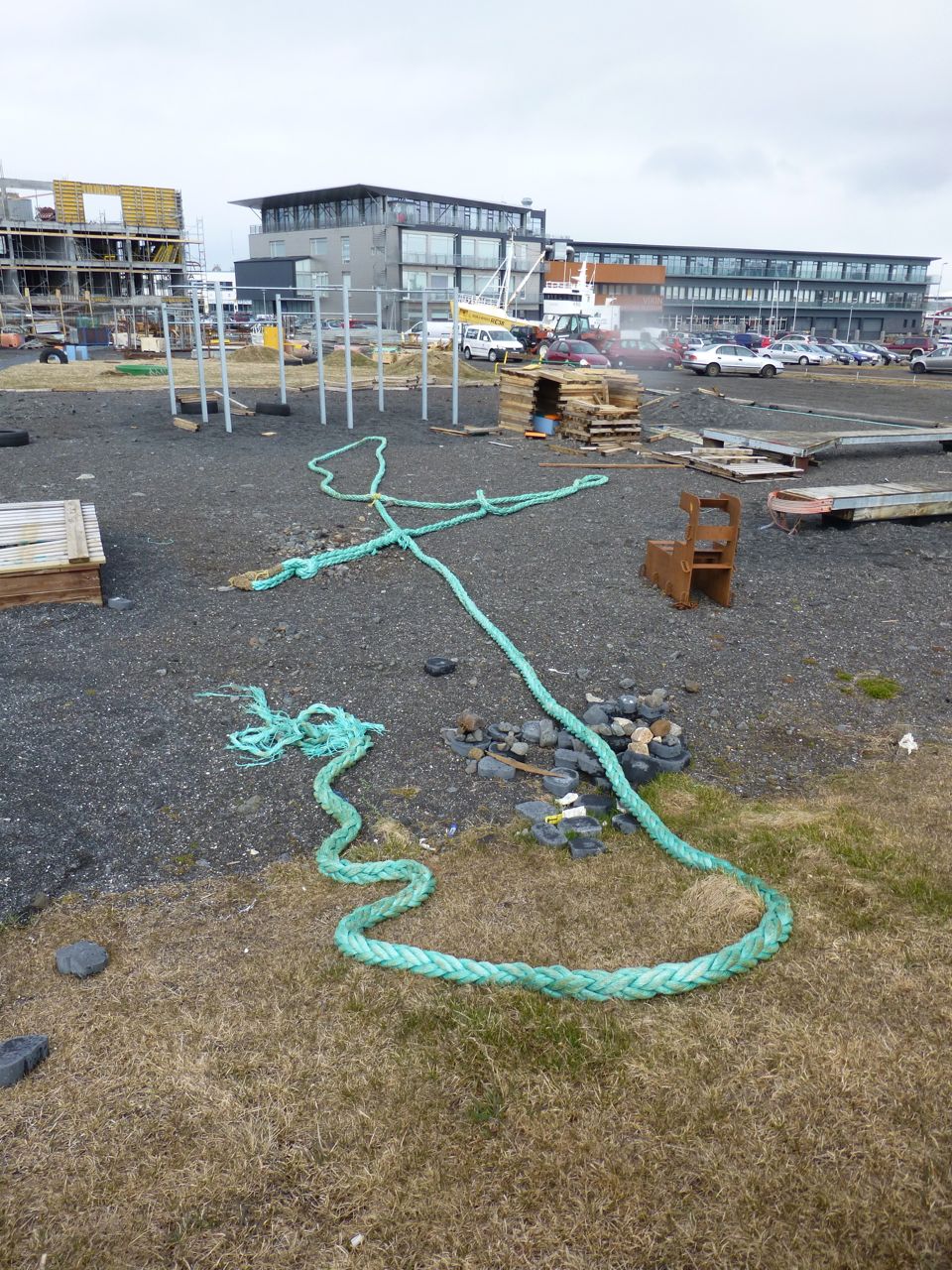
P1540314_2

Reykjavik Harbour Construction Site

Children encouraged. Look at the magical rope boat anchor cross angel talisman, eh! Such an exquisite turquoise. There’s no way you could squeeze colour like that out of a tube.

If you walk around long enough, you might find the materials to build a sculptural representation of your body, like a ghost from long ago, and even move into it and sleep and dream…

P1540327

A Good Place to Go on a Rainy Day

The children, however, are all in school. Poor things.

school

Neighbourhood School and Canadian-Style Child Socialization Device, Seljavegur

Like many play places in Iceland, the playground and its accompanying school (socialization device) are situated on a plot of land set aside for “the other people”. In most cases, this means elves. In this particular case, dwarves. 

It is socially acceptable in Iceland to allow children to play and learn among the other people. This is a primary rule in Iceland, and why not. After 1100 years of crippling poverty, the Viking settlers of Iceland lost so much — almost everything, in fact. What remains are a few sturdy humans, horses, dogs, sheep and the other people. All are granted almost unbridled respect as the spiritual creatures that they are. Accordingly, a village of the other people is also a good place to build a church  …

alf

Elf Houses Among the Crocusses in front of Hallgrímskirkja, Reykjavik

That’s a statue of Leif the Lucky, donated by “The People of the United States of America” after World War II. Excellent playground! Sadly, the dutch crocuses and the elves, which have both gone native here, don’t get a plague. 

… but you can never build a house on elf rock …

houseAlf House and Human Housing, Reykjavik

It’s tricky to decide who has the better deal. 

A popular saying in Iceland is “You never know.” It’s used to describe the Icelandic love of slapdash construction and the lack of interest in cleaning up old junk. The reason for it is “you never know” whether elves exist or not, or even God, so you keep churches and elves around because it might prove useful some day. You also “never know” when the economy is going to collapse or a volcano is going to blow its top, so there’s no point in settling down too comfortably, either. One’s home is Iceland, not some particular private property within it, because “you never know.” Actually, you do…

boom

Farm on the Snæfells Peninsula

Once very nearly wiped out by a) a lava flow, b) a cinder cone, and c) the ash that came along with them. In Iceland, this kind of thing happens all too often. Icelanders know this.

As a result, in Iceland one’s home is not in a ‘place’ but in a community. In the past, displacement was so rampant in Iceland that most people were less than indentured servants, continually on the move from one side of the country to the other, looking for some point of entrance into secure social structures (Hint: there were none.) Icelanders tell themselves (and the world) that they created their country for themselves by throwing off the yoke of Danish colonization. As the above examples of contemporary colonization should demonstrate, it wasn’t the Danes (or any other country) that was the real yoke. The yoke was separateness. It was broken when Icelanders gained enough perspective on their situation to realize that to be properly socialized they would have to participate in their own socialization, so they took to it with great enthusiasm and earnestness.

P1530939_2

One Manager (Labouring) and Two Workers (Supervising) Spend Two Hours Fixing a Door to Nowhere Reykjavik Skate Park

One Canadian is most enchanted. No skaters, mind you. Lots of Italian graffiti art, though.

This basic rule of human socialization applies as much to individual as to group humans (families, communities, corporations and other social identities, not all of them friendly.) In capitalist societies, it takes the form of “economy”, a kind of language that attempts to profit from exchange and, indeed, makes an entire artistic language out of it, all the way from the Icelandic banking industry (a form of gambling) to the Icelandic gambling industry (a form of banking).
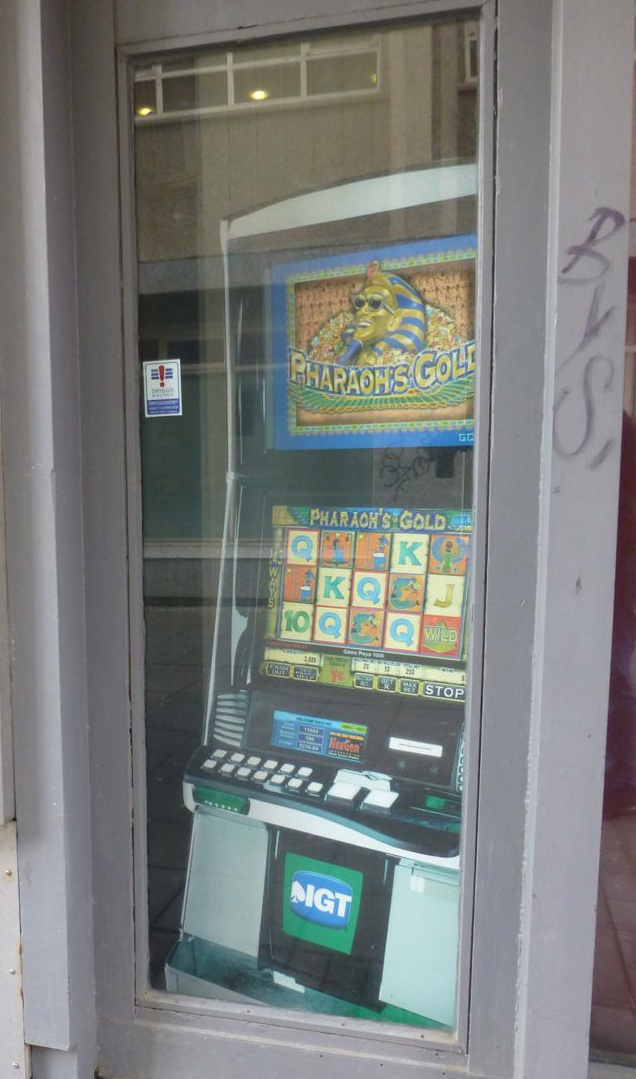
pharoah1

I Bet You Were Wondering Where That Gold Got To!

This would be tricky for iguanas, but fortunately it’s dead simple for humans. As you (a social sculpture) and your biological human (‘your’ body) explore this art form, do keep in mind that self sculpture is often built around sculpture designed to shape you, and if you’re anything like normal you’ll chafe a bit at that.

P1430180

Abandoned Farmhouse, Suðurdalur

“What? Me stay poor in the middle of nowhere, while everyone else in Reykjavik has television and Wienerbrød (a Danish, colonial pastry)? No way, Jóni!

And what do half wild humans do in Reykjavik? They learn the ropes. And the half-wild children of domesticated humans, what do they do? Most of them live in places like this …

blue The Hamburger Factory Cow…

… and her people going to work. Later they’ll come back for some hamburgers with the family, while she, in her lovely Icelandic sweater, looks bovinely on.

… and then get restless, which looks like this …
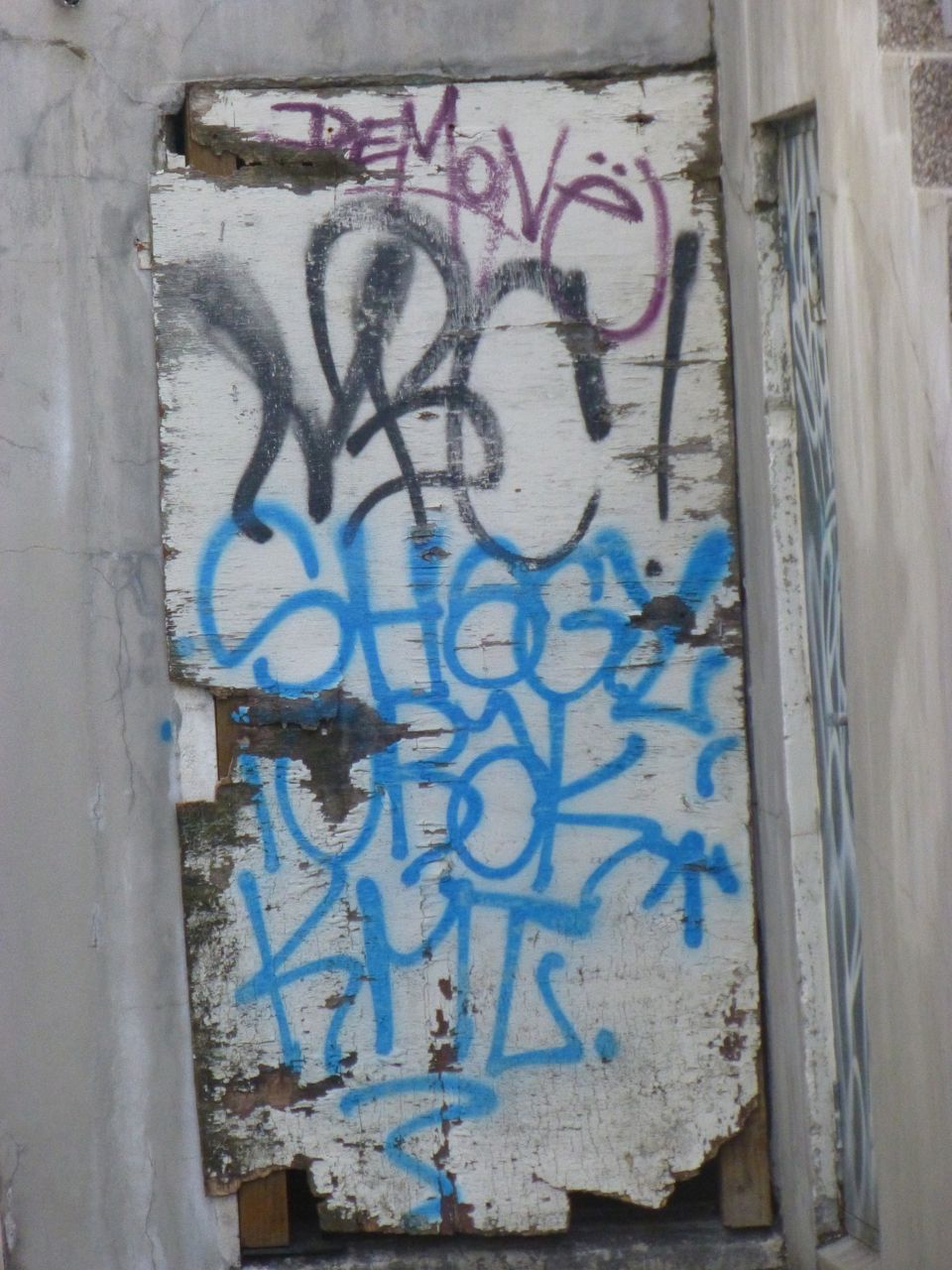
art

Art, Open Air Gallery, Frakkastigur

These restless humans are intent on adding a touch of wildness to the contemporary city, using the very elements (imported technologies, concepts and rituals) which they appear to be rejecting. Such is the paradox of people whose cultures have grown in colonial situations.

P1530252 Tractor Hiding Behind a Fence, Ingólfstræti, Reykjavik

Like the troll under the bridge in The Three Billy Goats Gruff. Note the excellent use of colour and the rather fraught respect given to the rowan trees — once a potent symbol of nationalism and now a no-less-potent symbol of ‘home’ and ‘place’. 

For most Icelanders, the tension between the 19th century romantic story (the imported concepts of wild nature, wildflowers, waterfalls, beauty, landscapes, nationalism, and all that fine stuff, which enabled Icelanders to see their country as something larger than a net of social relationships, and which eventually led to the kind of post-colonial independence it has today) …

foss

Strutsfoss, Suðurdalur

The invention of the colour blue. Pure 19th Century! Yes, it is possible to travel in time in Iceland. Wear sturdy shoes. A walking stick helps. Watch out for snow drifts (5 feet deep).

… is easily enough merged with newer imported technologies and old forms of social integration, into their communal village, contemporary Reykjavik…
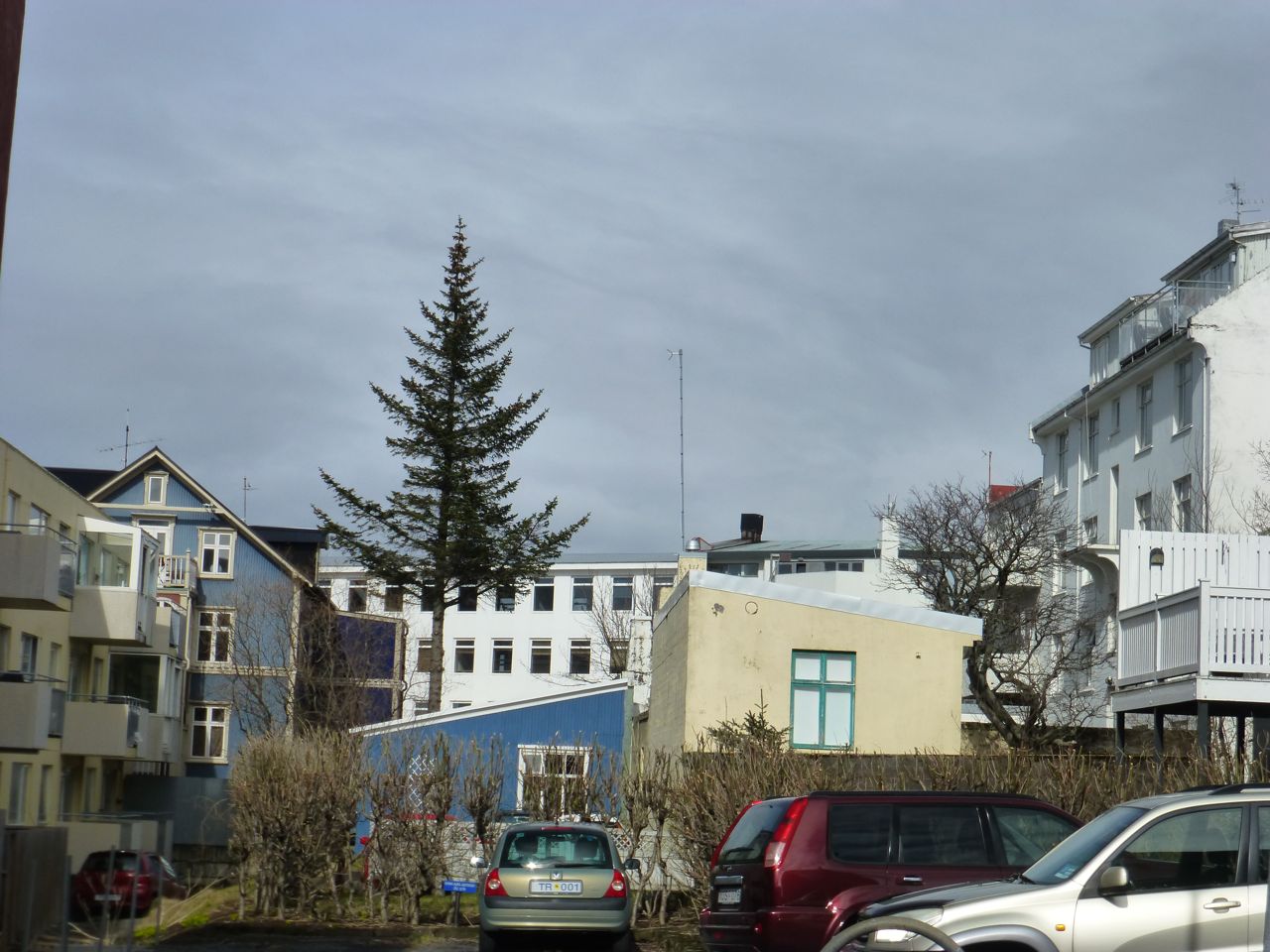
P1540944

Reykjavik, Old Town

A typical neighbourhood view. This is what time (1945-2013) looks like when viewed all at once.

Culture creates a form of time that doesn’t move. Instead, it sculpts it into a complex dynamic. In the Icelandic case, this dynamic  is a series of modernized replacements for turf houses for biological humans.

gold

Two Kinds of Modernized Turf House, Reykjavik

The social decisions of humans over time and the ways in which they choose to animate space with their bodies and minds, including what they retain and what they discard, is a form of art.

In this case, the genre might be called: Stairways to Heaven. Or even, Jacob’s Ladder:
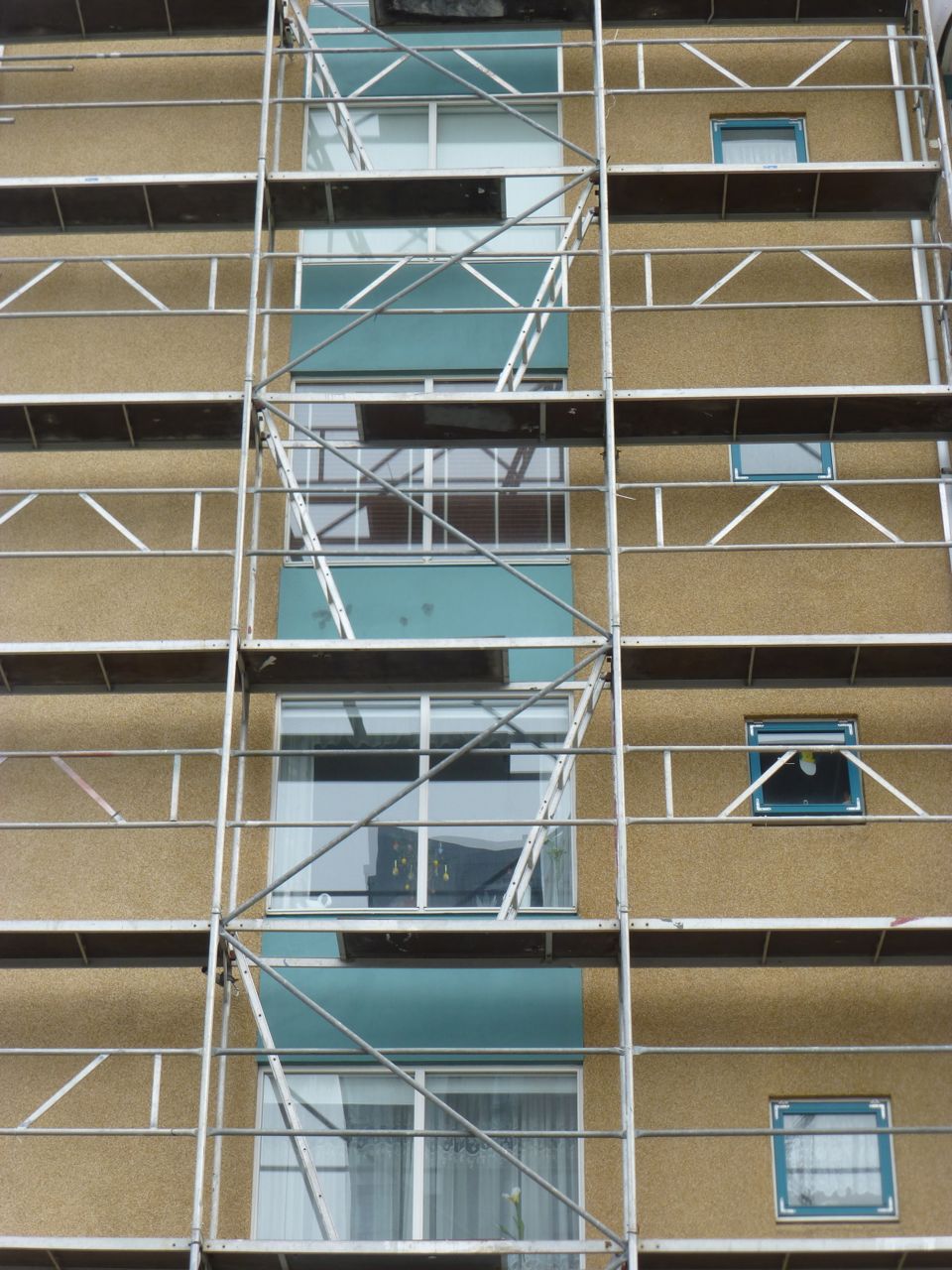
ladders

New Edition of the Holy Bible, from the Period Before the Banking Collapse, Skúlagata

There’s so much to learn and celebrate, but, as I said, it’s not always what it seems. Take this older art form, for instance:

litla Litlafoss, Hengifossá

Nice waterfall, for sure. The raw power of nature. Pure beauty. Etcetera. We all know this romantic, 19th century story, and it’s worth telling and walking into. But there’s another story. About a century ago, there were five poles to North European culture: Nordic, Anglo-American, Middle European (including German and Jewish), Eastern European and French. Today, there is largely just a rump of the Anglo-American and a sliver of French. War will do that. In the forgotten Nordic version, though, the earth of men, or Middle Earth, was a point of balance between an earth of fire and an earth of ice. The waterfall above is just this balance. So is the one below:kjarvaldetail Detail of Waterforms by Kjarval

His friend, the writer Gunnar Gunnarsson, was also deeply attentive to Middle Earth.

Another way of looking at Middle Earth is to describe it as The Middle Way. For example, Iceland chooses to support certain of its artists, musicians and writers for life, as they are considered important parts of the national fabric, as essential for the support of the people as roads and electrical transmission lines and law courts.

wire

Icelandic Artists Pointing the Way to to the Aluminum Plant

Make no mistake: this too is nature.

To support the arts in Iceland, sometimes you build an art gallery for a popular artist, such as Kjarval, which includes living quarters for both the man and his paintings. Such museums are scattered around Reykjavik. With the passing of the artist, they become full-fledged galleries … based around the achievements of an individual who serves as a model for citizens of the national state. If you were a poet, though, you’re more likely to get this:

poet

Memorial to Jónas Hallgrímmson, Öxnadal

Long before Gunnar Gunnarsson, Jónas went to Denmark for an education. He came back with the idea of planting trees — an important contribution to Icelandic independence, as it helped Icelanders start to create their landscape, rather than just experience it. As a reward, Jónas has been planted among the trees. That’s his bust on the rock, there, within sight of the turf house of his childhood, high on the mountain in behind.

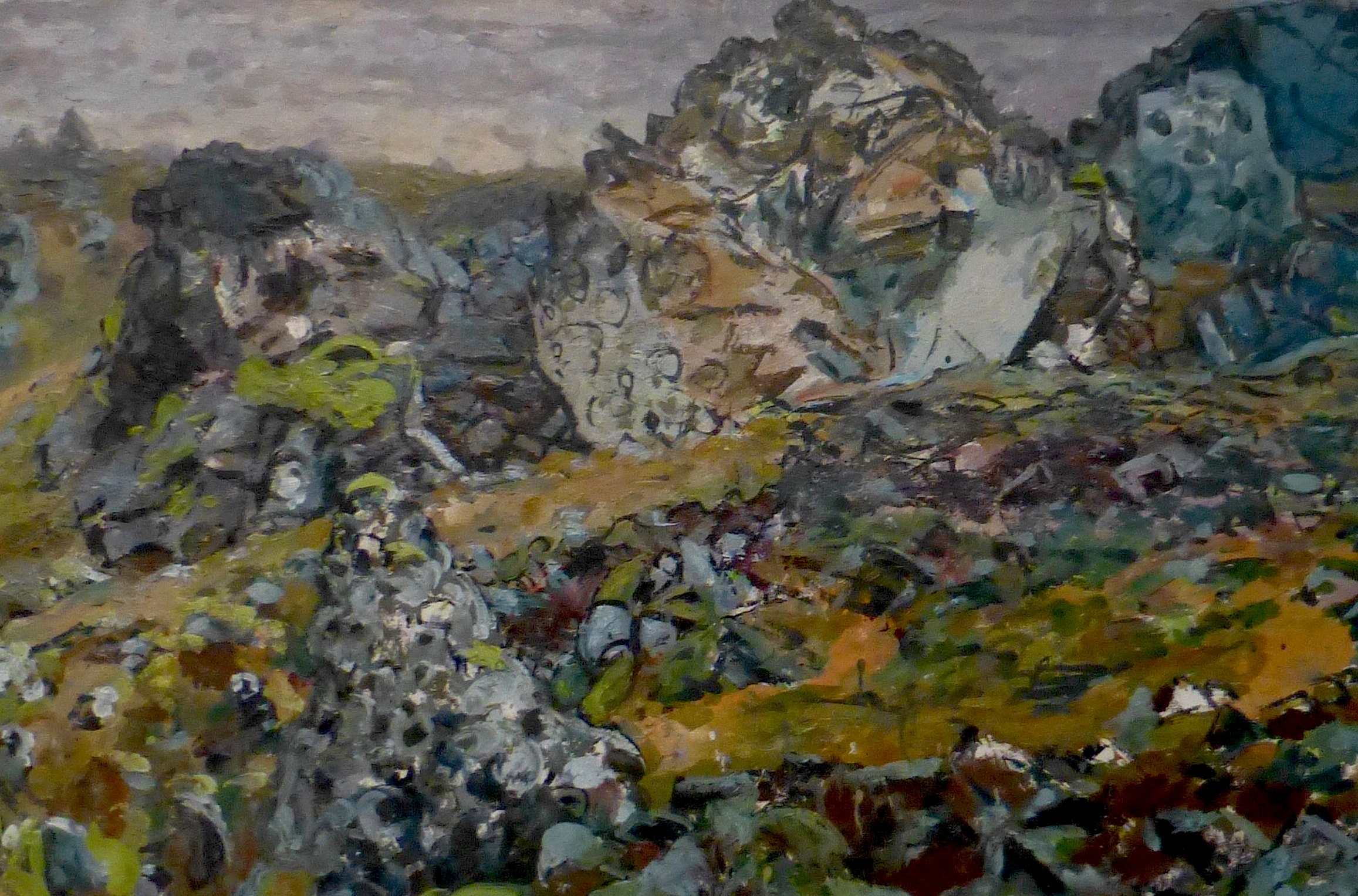
Artists have been a bit luckier. In the case of Kjarval, he got a museum. It is even called Kjarvalstaðir, or Kjarval City. In it, you will find this (waterless) waterfall…

fussyfoss

Detail of Kjarval’s Technique

You get the idea: oil paint on canvas, brush strokes, and all the markings of modern art. Except, it’s not what it seems. It’s not really modern art at all. It’s folk painting that looks like modern art.

Now, before you read why I think this is an example of an old Nordic tradition living on into the present global art installation, let’s pull back a bit and look at the waterfall in its context.
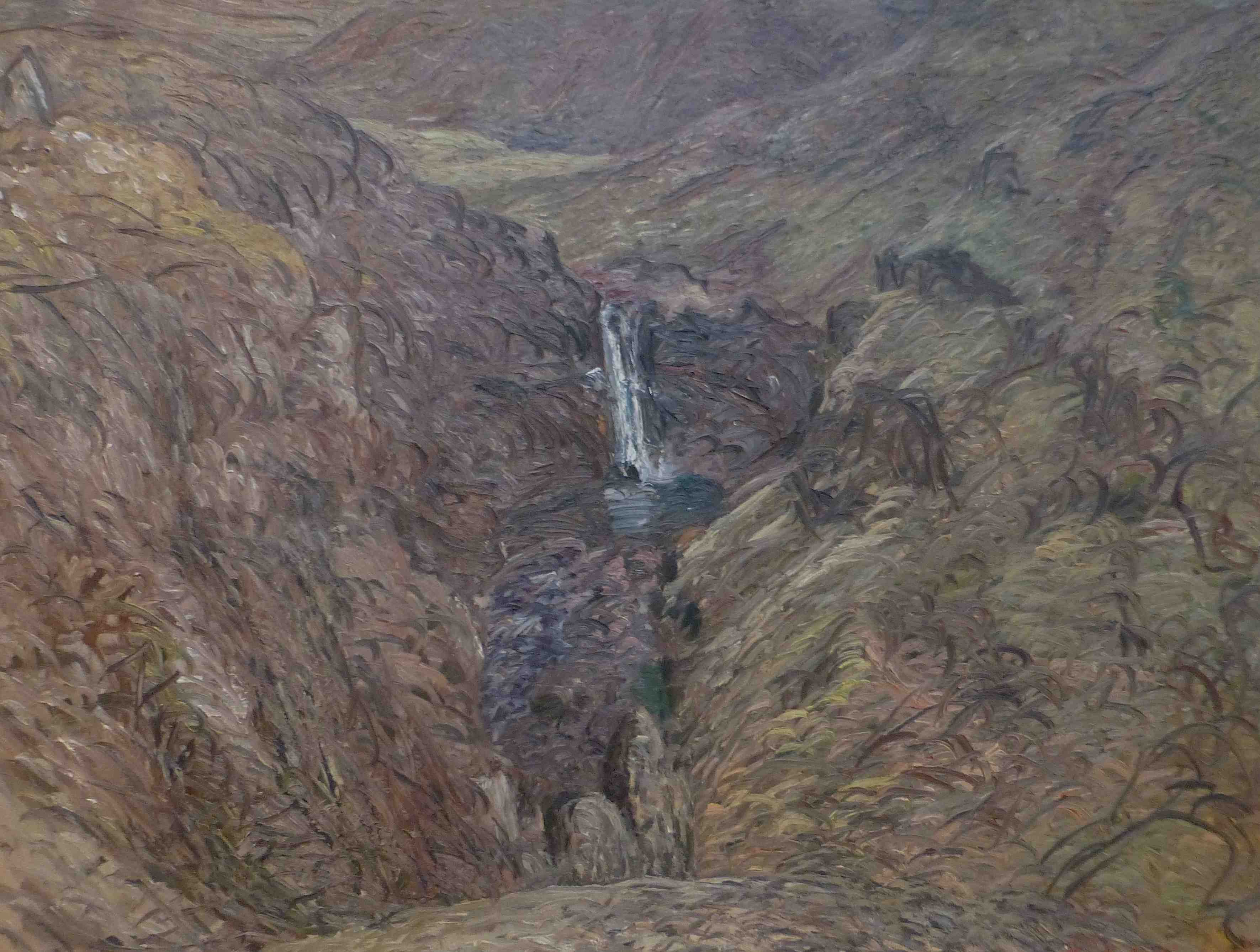
fossdetail Kjarval’s Waterfall

Pardon my camera’s wonky understanding of light and colour. Luckily it’s the lines that are intriguing here. Look at them all. All kinds of squiggly this and that, eh.

Critically, Kjarval is an enigma. From the point of view of modern art, he was obviously a skilled practitioner (although it’s usually mentioned that he was self-taught — which is code-word for “Hunh? Whah? Why?”).
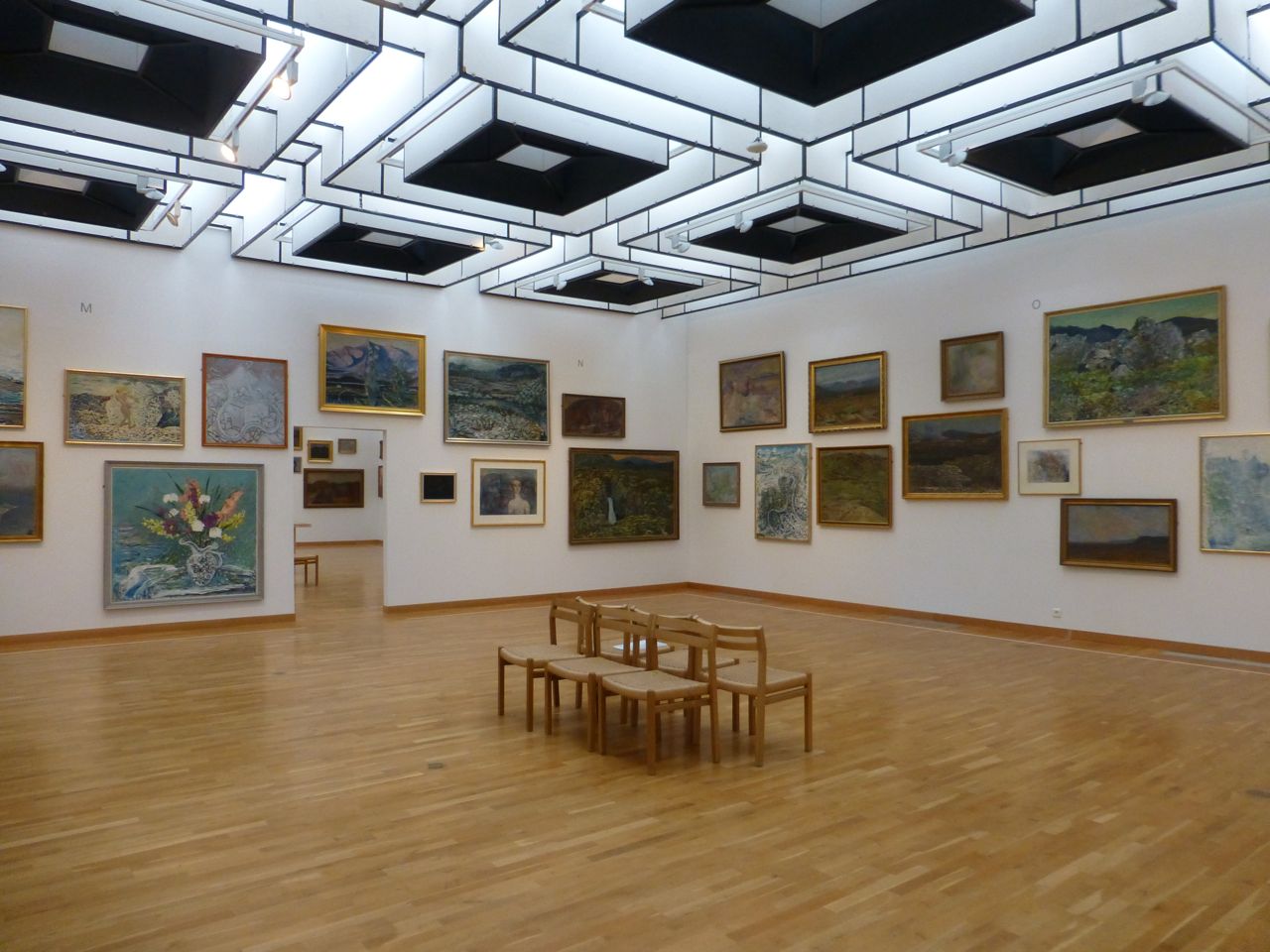
hall

Church Bazaar Art Elevated to World Gallery Status

That’s Kjarvalstaðir for you! If you think this is a criticism, think again. It is, among other things, a form of deep respect. For another thing, there is no Platonic law that states that a work of art by an individual can’t find its fullest expression socially (such as in the social frame of an art gallery.)

Kjarval is also frequently described in the art world as an oddity, because he never settled on a personal style, nor developed all of his skilful interpretations of world art traditions and techniques into a language of his own, which is de rigeur for a modern-art-scientist-individual type, like, say, Klee or Picasso. Kjarval remained colonial to the end, as in this energy diagram resulting from a cross between Gaugin and a German woodcut (Without wood, the medium of choice became paint imitating wood’s recording of solar and water energy — very clever.)

swimfly … or this incomplete pencil crayon fun, lovingly framed by the gallery’s architecture and lighting …sketch
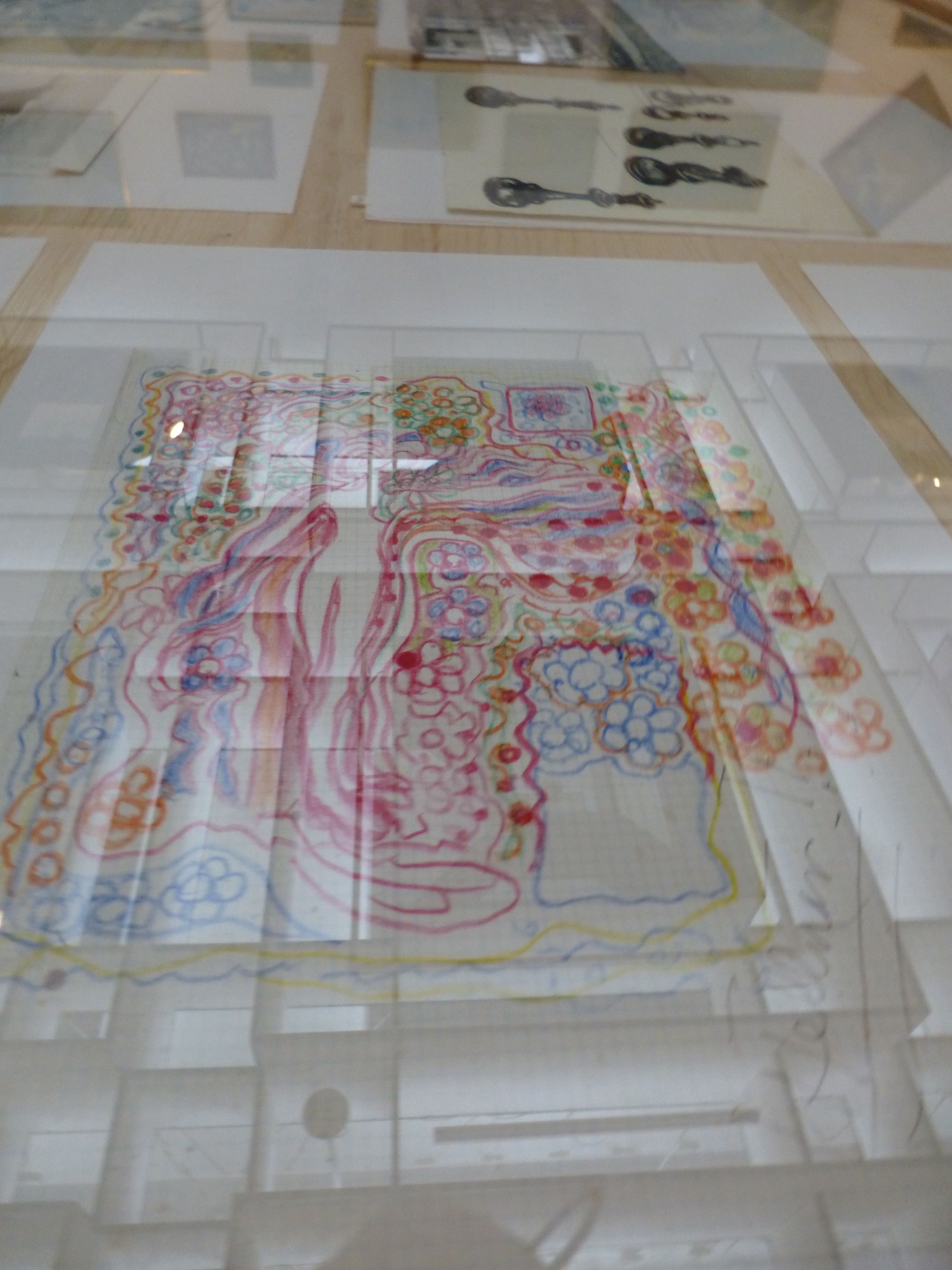
In terms of the art world, these deviations from an elaborate intellectual language are the signs of an amateur, even a child or even, gasp, a non-artist. Now, that just can’t be. How are you going to have a national artist, when there’s no art? It does certainly leave the Icelanders with a bit of a problem: not only is Kjarval the most popular of all Icelandic artists, bar none, but there’s a whole architecturally beautiful museum plunked down in Reykjavik devoted largely to his work, and in a display as sophisticated as any small town display of amateur works by a local painting club, too…
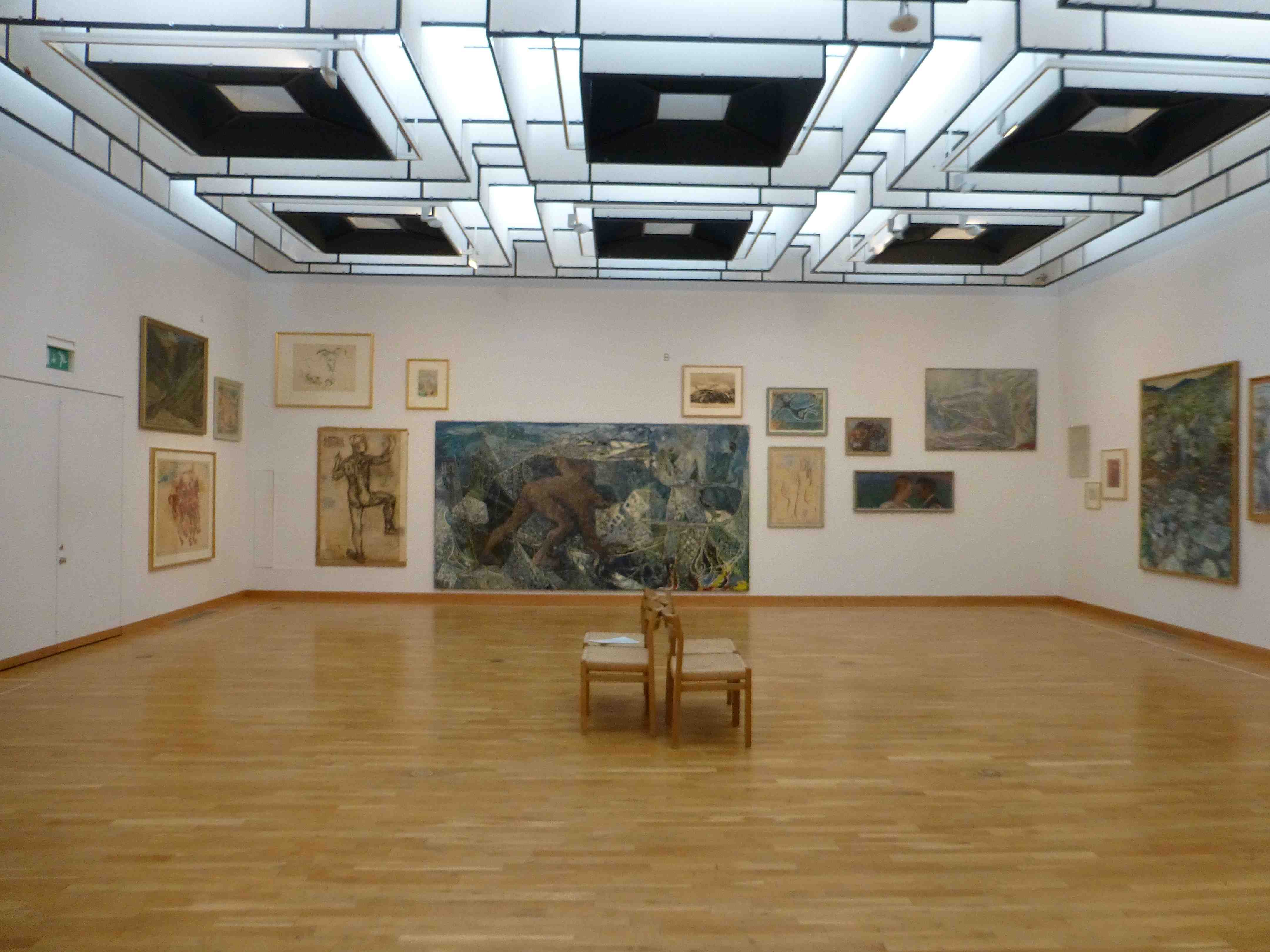
hall2

Bit of an embarrassment, really. Ah, but it’s not what it seems. For one thing, you can serve food. That works. Keep the bodies fed and magic may follow. You never know! Actually, you do…
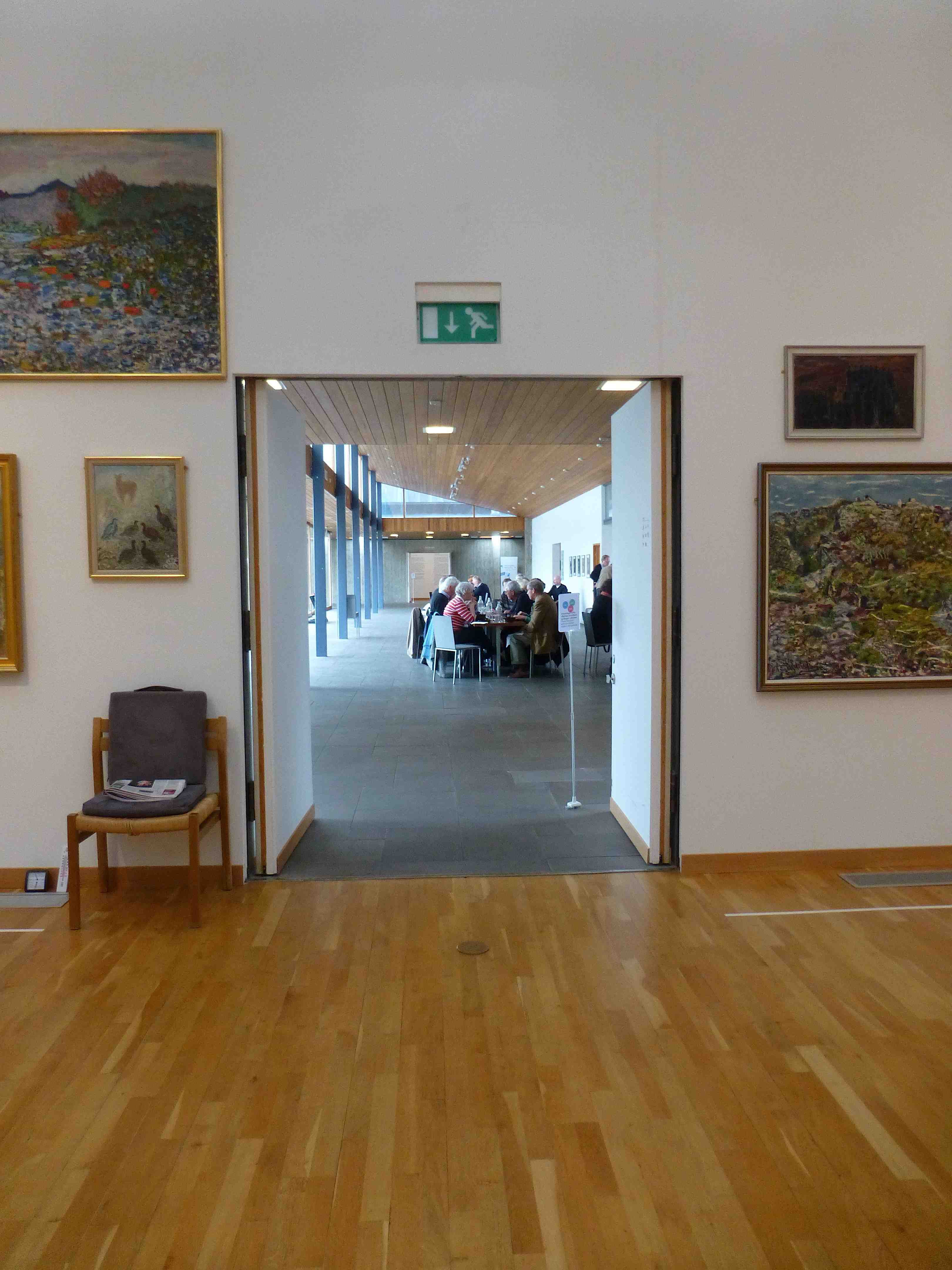
dine

Viewing the Art is Not the Point.

Living with it, and within its display, is. Why, one can be as easily framed by the gallery as is the art. That is, actually, a pretty profound experience. Icelanders know this.

For another thing, take a look at some of those marks below and to the right of that waterfall I showed you above…

fossfaceKjarval’s Paint Gouging

It’s like he set his cat onto it, with claws. Or let his pet raven wander over it, scritchy-scratching, or started playing x’s and o’s with his subconscious. I wonder who won.

Now we’re getting somewhere. In the world of individualistic, über-scientific modern art, child of the Enlightenment, god daughter of the intelligentsia, brush strokes, scratches, gouges, lines and other marks are part of a sophisticated texture … which somehow doesn’t include these. These look rather formless. They’re not, but the impression holds, nonetheless. That’s because, they’re really this:
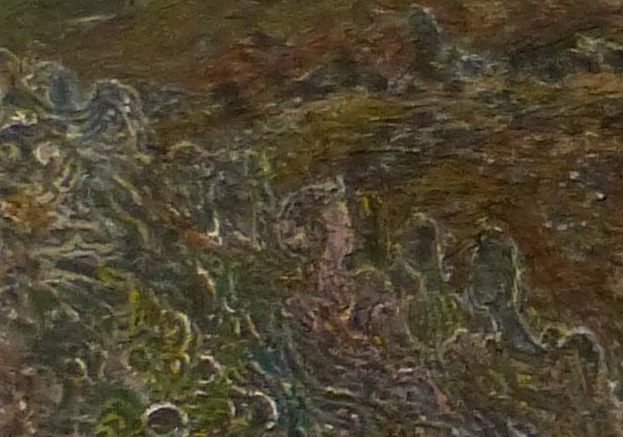
slide2 Kjarval’s Elves

…and this…

facesdetail

Kjarval’s Trolls !

Poor art critics! The Icelandic people love looking for the faces within Kjarval’s paintings. The art critics just scratched their heads at the childishness of it all.

Well, one can forgive the art critics. For one thing, they didn’t go to school in an elf village, did they. For another, no one built them a playground in the harbour. For another, they might not have seen this:

trolls2

Trolls, þingvællir

Looking down over the World’s first parliament (965 AD).

So, let’s recap: a country that retains its folk animals and its folk beliefs because the land is unstable and “you never know” (although they do), does not build houses on fairyland but raises and educates and plays with its children on it instead — and not because they’re children; because they’re equally valued and are socialized by exposure to non-human energy. The country’s favourite artist interprets world artistic mark-making within this context and replaces sophisticated intellectual mark with sophisticated folk marks, in which the non-visible energies of the other people are everpresent and revealed …

yellowscritch… as if they were a language (a spiritual language, which is one step up the ladder from a. physical, b. individual, and c. social). The country responds by completing the art work in a social context and then proceeds to do a most amazing thing. It brings its children here, a place now as sacred and powerful as the elf houses themselves, and proceeds to educate them into sophisticated artistic responses. Method includes a room for parents and their children to make art together and post it into frames on the wall after viewing the galleries, in a process as capable of social completion and change as Miro, say, or Klee, within their non-colonial contexts (and which would function as colonizers here, if not released from that role by this truly Icelandic process, with its roots in the Middle Way of ancient Nordic culture) …

diamond… and a project in making art out of recycled materials, which includes small people less than three years old, whose innate art-making has not been otherwise rewritten by elite codes …
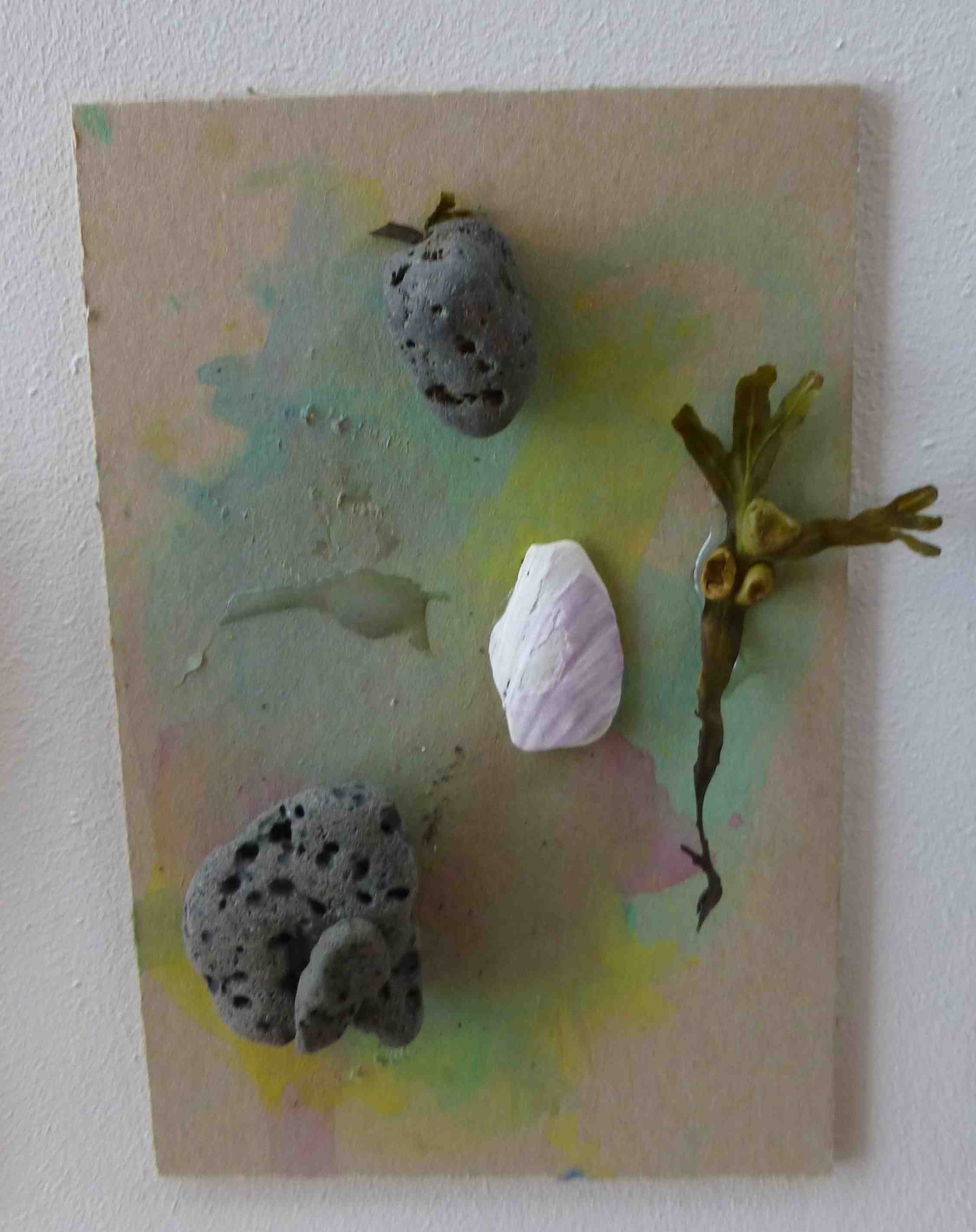
simplecollage

Icelandic Artist’s Collage

(Name with-held for privacy. Available on request.) Age 2 yrs, 11 months.

… sophisticated portraits …
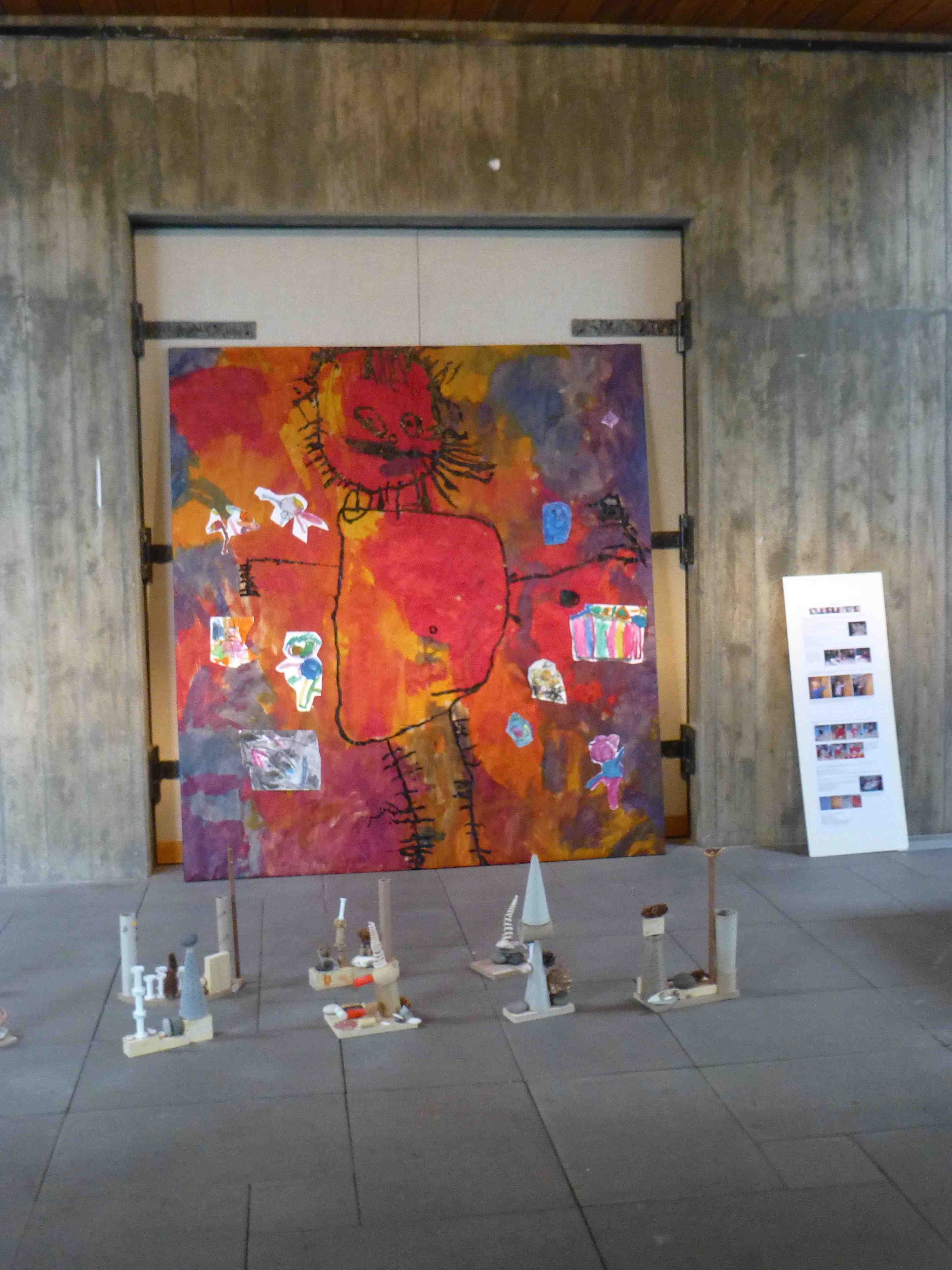
bigred

… elaborate portraits of dwarves …

sproing

… a Coast Guard Ship …

teaboat… the family cat …

yellowfoot

… Diaper Day Mom …

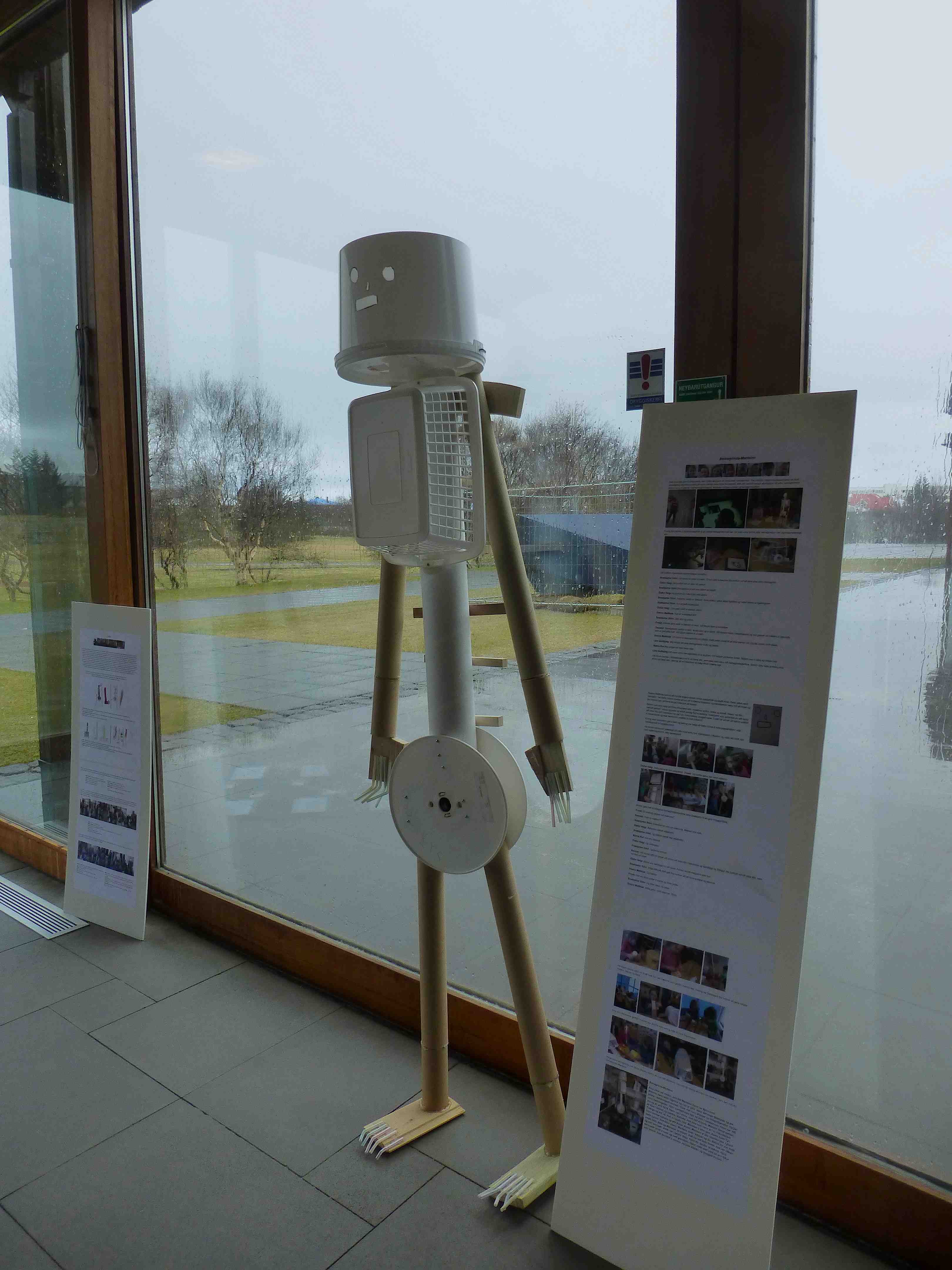
bucketman

… Enough ribs to make ribs fun again …
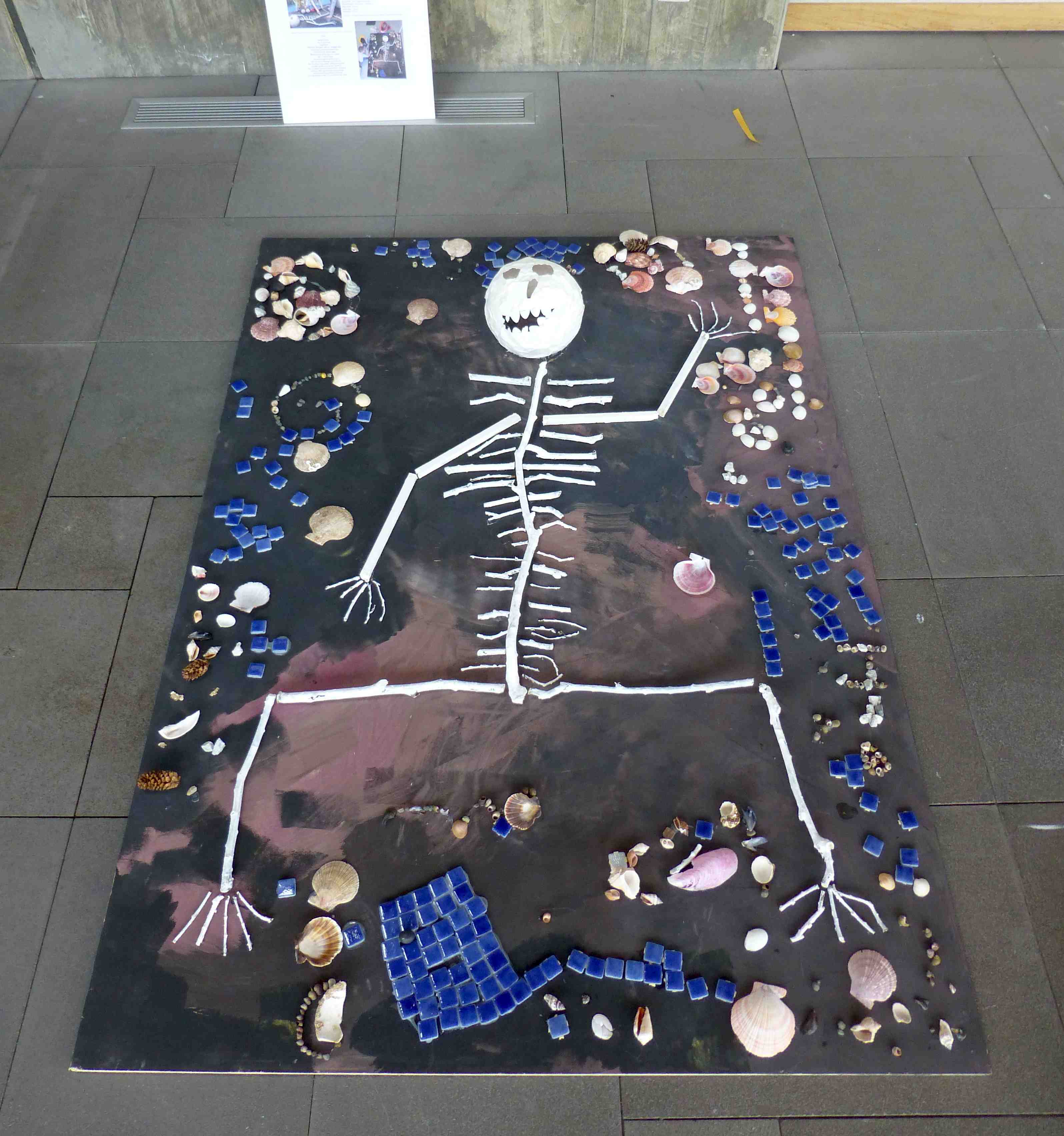
pencilskeleton

… and an elaborate, high-art contribution by parents and teachers, helping to stage the show …

tools

Beautiful! It Almost Upstages the Kids…

… but not quite.

This is what the Canadian approach to a colonial past misses: a past before the colonial past that it can reach into and transform the colonial experience into merely a passing fancy. In Canada, cultures are continually replaced. In Iceland, children are brought to make art in the country’s national galleries, and the art they are asked to view there is of exactly the same kind of material, intent, and subject matter as what they produce in response to it. And so the cultural loop is closed — partly because “children” are viewed as equals to adults, if not superior to them, which is definitely not the Canadian way. In Canada, they are educated to be adults. In Iceland, they are already adults, just very special ones. Is Kjarval’s art “world class”. No, not in the way that is meant. But does “world class” art find fulfillment in the following image? (Hint: no, it does not. It might look like modernist Dutch art, but it is not.)

P1550865Typical Reykjavik Housing 

1000 years of clustering together in the Bath Hall (the only heated space) in their houses have made Icelanders eager to live very closely together. It also helps to keep out Nature, which is great retro stuff for attracting money from tourists who grew up within its 19th and 20th century images …
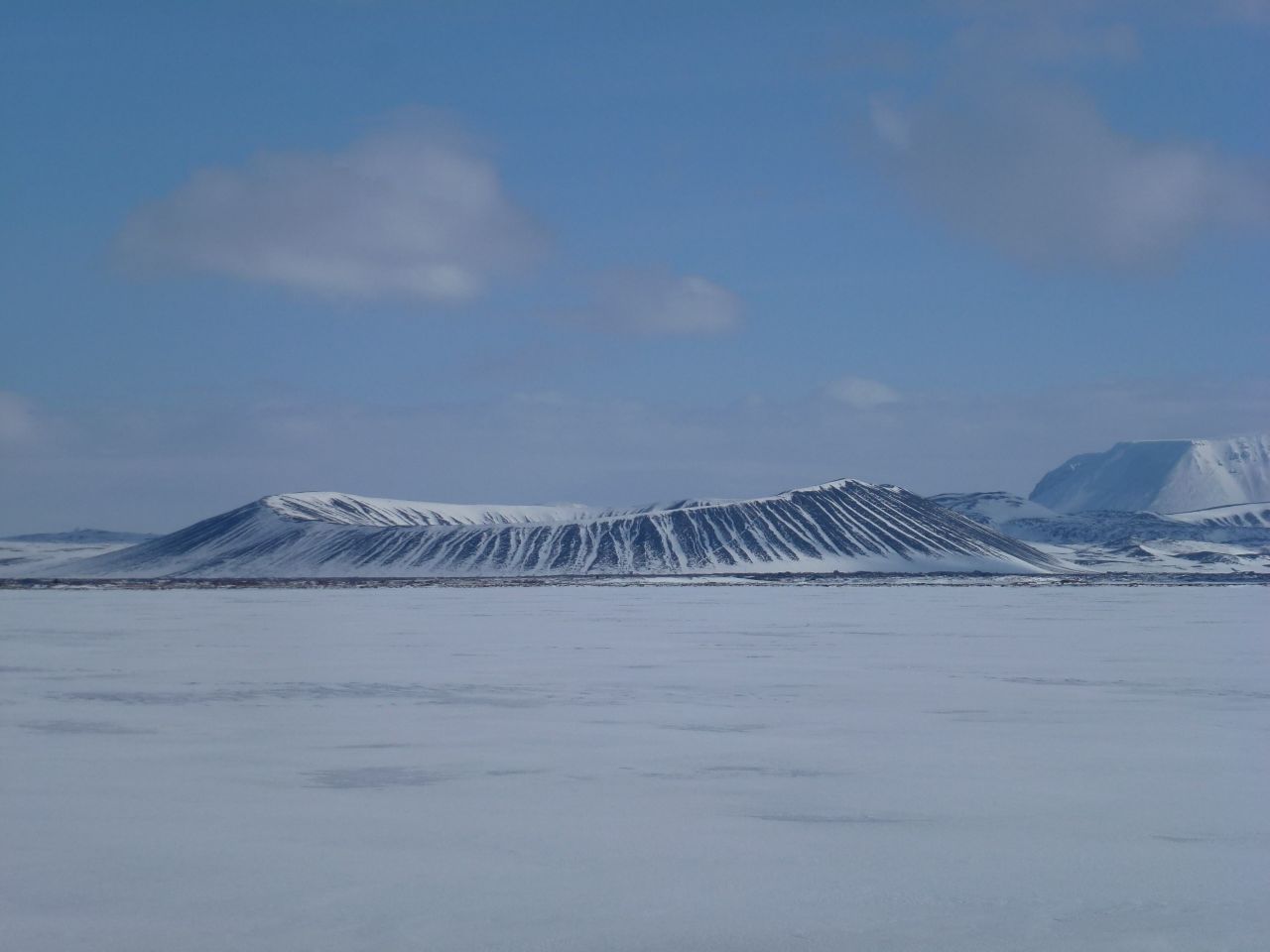
Lake Myvatn and HVirer 250Hverfjall

… but it can kill you. It is best to make something out of it.

barn

Turf Barn, Landshús, Norðurdalur

So, Icelandic art and literature can sometimes appear childish and a bit awkward (Gunnar’s sure does, at times, and the contemporary situation is no different), but they work within a very specific social context, that is still in touch with the Nordic roots of contemporary Western life, roots which most of the literary and art worlds have completely lost. Next, I’ll explore those roots a little, but for now, thank you for spending some quality time with me among the elves.
Godafoss and Lake Myvtan 342

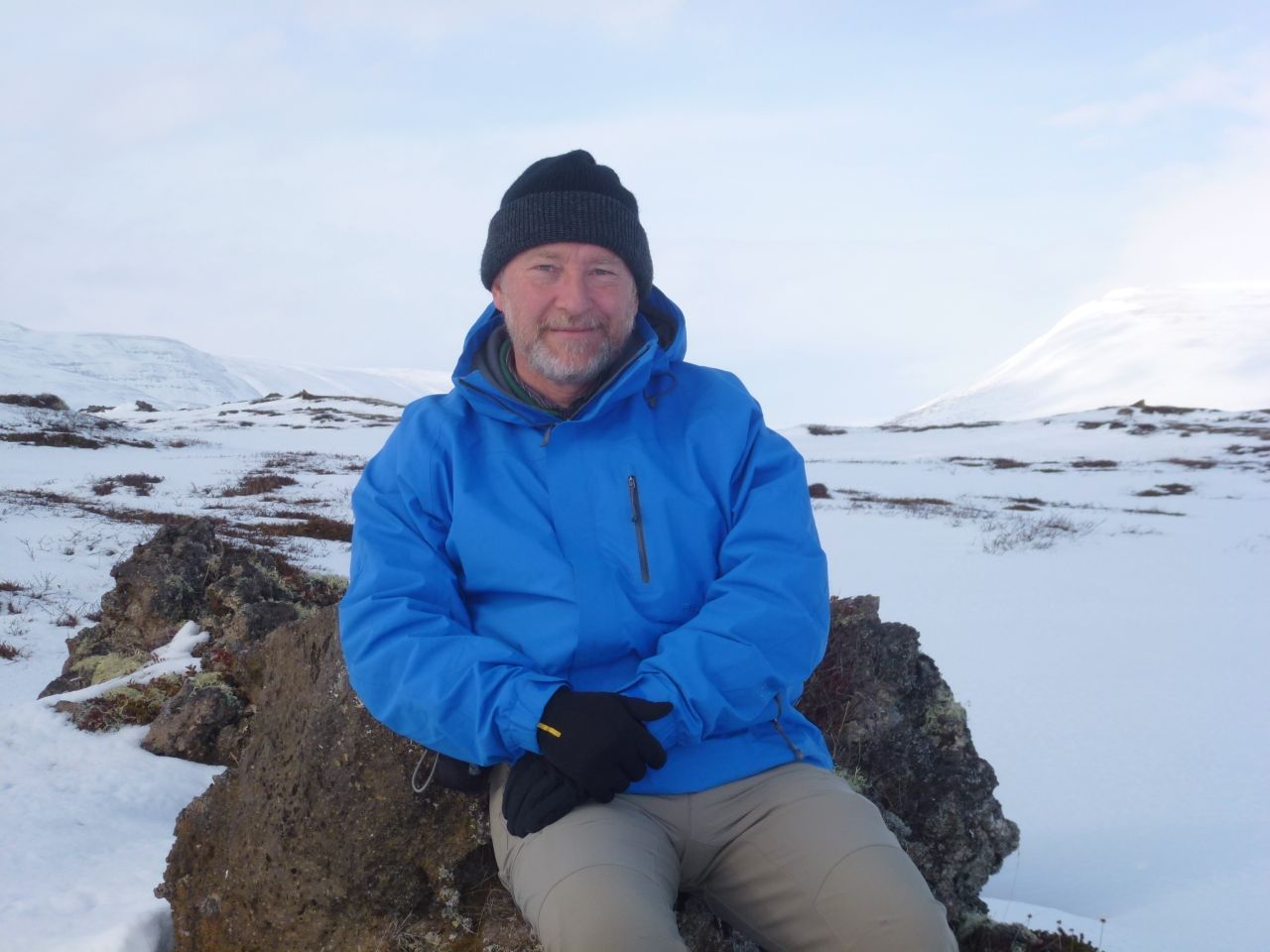
Harold Among the Elves

Goðafoss

The Trolls’ Sheep and the Gods’ Horses

One of the attractive parts of being a human is the innocence that comes along with that. I like that. In the face of the truth (Trolls keep humans because humans keep sheep and trolls like sheep.), the myth still persists that humans keep sheep because it’s a human world. That’s sweet. Another bit of this truth thing is that humans build churches on top of elves, or, in Iceland, next door, because in Iceland things are never black and white.

myvatnsveit

Black and White and Blue, too. Mývatnssveit.

Kodak went bust because they didn’t invent a film for this.

But I jest. The thing about the elves, though, and the churches, that matters. It’s not too many cultures that don’t see such a big problem with a strata title arrangement. Gunnar comes from that land-use plan. In a strong way, his writing is an attempt to put it down in black and white print. He, of course, missed this:

twogeese

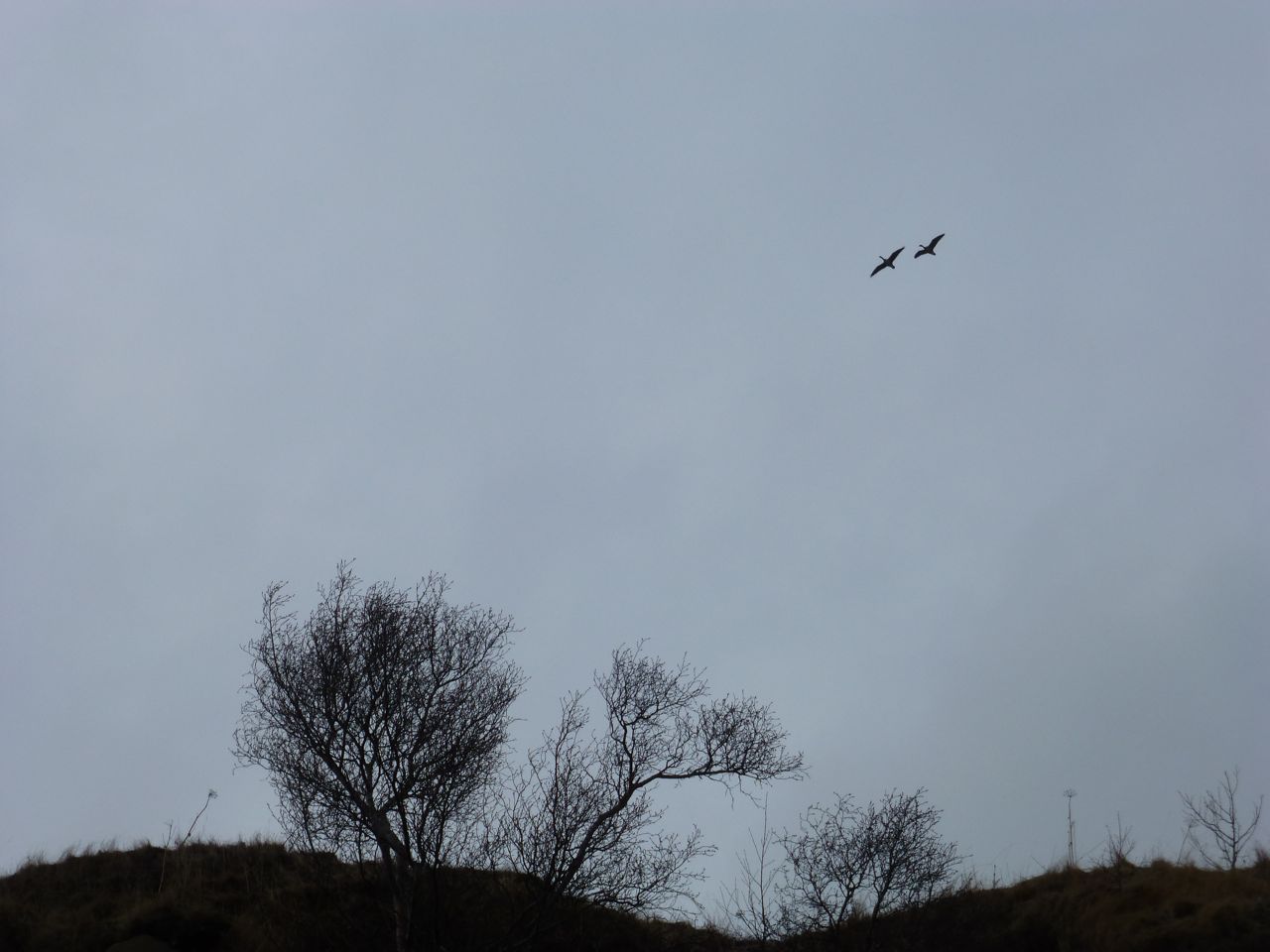
Black and Blue

Not just a blind spot for Gunnar, but for Kodak, too.

But, again, I jest. This, however, is not a jest. This is serious. If you want to understand how humans can see elves in the world science, great grand daughter of the church, is positive contains no elves and never did, there are books you can buy for that in Iceland, and they will send you here (for example)…

elves

The View up to Tofúfoss and Jonsfoss from Melarett

Well, you didn’t need a guidebook for that. The thing is, the elves aren’t in the rock so much as in the human mind that is completely anchored to rock and that is an awfully hard thing to explain and shouldn’t be explained. Still, one can talk around the idea, because one consequence of it is that these elves are liable to show up anywhere, and, because people used to be really anchored to the rock, most likely around churches …

klaustur

Skriðuklaustur on the Day the Geese Chose to Come and Stay

… and pretty much twenty-four hours a day, everything that goes on between those churches and those rocks is under constant surveillance. These are the people who know the truth of the matter…

horse… but we’re not listening. So, that leaves a bit of time and wondering. Where are the elves? And, while we’re at it, the trolls? Well, here are some of the elves …

elf2Elves, Underneath the Monastery Viewing Deck

A nice new roof!

Lots of them …

elf1

A Whole City of Elves

So, if you were going to build a monastery in the East of Iceland, and it had to be near here, where the trails to the north, south, east and west crossed, then beside the elves would probably be a good idea. Now, I’m not going to get into what I think has been done to these rocks or what their secrets are (give me a couple days), but I’d like to point out that down below the monastery, there are worse things than elves.

P1470106 Things like trolls, and … P1470121… elves under a troll enchantment. Now, to be clear: these are not Tolkein-style elves and trolls. These are some form of the human subconscious, seen through the things of the world. In this picture of psychology, however, trolls keep sheep …

P1470099

Lots of Sheep!

They are a flock that roams in a time inaccessible to human vision, but just on the edge of it. Sometimes that edge seems very close …

trollsheep

Pride of the Flock

At any rate, they are beautiful sheep …

trollsheep5… with a faithful shepherd …

P1470093

… that just happens to actually be …

P1470439… more elves.  How can you take a photograph of such a story? Cameras are tools of a scientific world, and record it well, but they’re no good at the tenuous world of perceptions, mixed with emotions and a sense of place that come to people when the land and themselves meet in a physical place that is really a kind of fire. So… time to bring out the wool again, and see where it leads.

P1470410

I started in the flock, in the grass, with the idea of winding between the sheep and around the shepherd in a ring, but the wind kept me from that. Sometimes, my wool (and among the sheep, and worn from three times on and off the spindle of the world, it really was feeling like tiny lines of sheep wool now, wound and bound together as the birds were when they flew upriver and over me some 15 kilometres up the valley just a couple days ago) did go among the sheep, making a trail …

P1470399

… and wandered and wove between them in the same way that sheep wander and weave the hills…

P1470390

…but more often it seemed to want to hurry along over their backs …

P1470372

Looking back after all my careful stepping between the sheep, I was amazed to see this pure straight line, and so I followed it as I unwound it off the spindle of the world, followed the thousands of hairs wound into its strands, reading them off with my fingers, playing them out, in a kind of tension between me and the wool and the grass and the wind, and when I felt the spindle was thinning, and knew the wool was leading me somewhere, I thought, no, this is not a story of giving it the trolls, and giving it to the elves, where would that lead? More immobility. They were, after all, in thrall. I thought, again, of the birch trees, and headed for a couple five year old saplings on the hill. Before I got there, though, I was stopped by a raven …

P1470339… who took my wool and all its weaving into his beak. As you can see, he stands on the shoulders of a family of elves. So, I was amazed … my story that had started in the grass, and I thought would lead to a prayer for light, led to something quite different. It lead to Raven, my old friend, Odin’s memory and thought, carrying the fire away, and flying. Not only that, when I went back with my birch twig and wound my wool back on the spindle of the world, through the grass and the flock …

P1470388

… under the eyes of the trolls (I felt like I was walking between worlds and needed to exercise some care, but I had my line of blood) …

P1470109

No, Not One of Tolkein’s Trolls

This is the mind in it’s own earthen eye. Or a part of it.

… and under the eye of the horses, who see everything, and never go in, and walk along a different line of blood (or maybe the same one) …

horses4

… and sometimes spook, for what I now feel is good reason …

horses

… wound my way slowly around the years of my spindle up to the rocks …

P1470474Killing Fields or What

… carefully …
P1470386

… and began to feel the line tug at me, as if I were a fish and the raven was reeling me in …

P1470371

… and our fate was blowing in the wind, bound together by a living thread of will and fire …

P1470489

… and yet free …

P1470488All the years were blowing in the wind. It wasn’t going anywhere. Like the birds in their flock, like the sheep in their meadow, like the elves in their stone, like the men in their church, like their prayers and the touch of their fingers to the natural crosses in the rock that wrote, I think, over time their story and now, it’s plain, writes them still…

P1470487

… I enjoyed this moment of energy, and didn’t want to let it go, but all this must be set loose into their life, and so just as I went to pull my wool from the stone raven’s mouth, it broke…

P1470508 … and he flew off with the end of it …P1470502

… or maybe its beginning. For four weeks now here, ravens have been following me and calling whenever they passed overhead, and I have called back in greeting, everytime. Here’s one, dealing a bit with the wind …

P1430001

Sure, it’s all poetry. Yeah, it is. Tomorrow morning, I leave the Klaustur, and go to Reykjavik, where there are far more humans than ravens and poems. This afternoon, I’m going out for a word with the horses, but in my heart, well, let’s just say this, if you come here and leave the viewing platform, and walk for a month through the cloister and down through the birches and over the hill, and a horse comes out to share a word with you …

P1410626

… it might be me. At any rate, enough sadness at leaving and enough joy at having been found, and think of this. When you go to those horses, and find they’ve come to you before you’ve arrived, remember, in your coming, you spoke, they heard, and in their coming, they answered.

P1410665

There, a little poetry for you. I’ll be summing up in the next few days. Next, I want to show you how the sun and time and a  human walking make a story out of stone. No, not one of Tolkein’s stories. Sorry. Those are written by reading books. Beautiful stories, and great for telling around a fire. Here I’ve found ones that I can walk through, and never stop walking. A fancy? There might be some fun in the telling, yes, but a fancy? No.  I’ve stepped right out of the world, and into it. A riddle, that’s what, but a beautiful one. And windy.

Easter on Middle Earth

Christ has arisen. This isn’t just a bit of a ghost story with a happy ending. If your imagination is rooted in the earth, or even in books, should that be your fate, it is mathematics and geometry.  Here’s the middle view of Christ’s ascension, in this stopping house, this alms house, this shelter from storm, this cloister between worlds:

churchforfarm

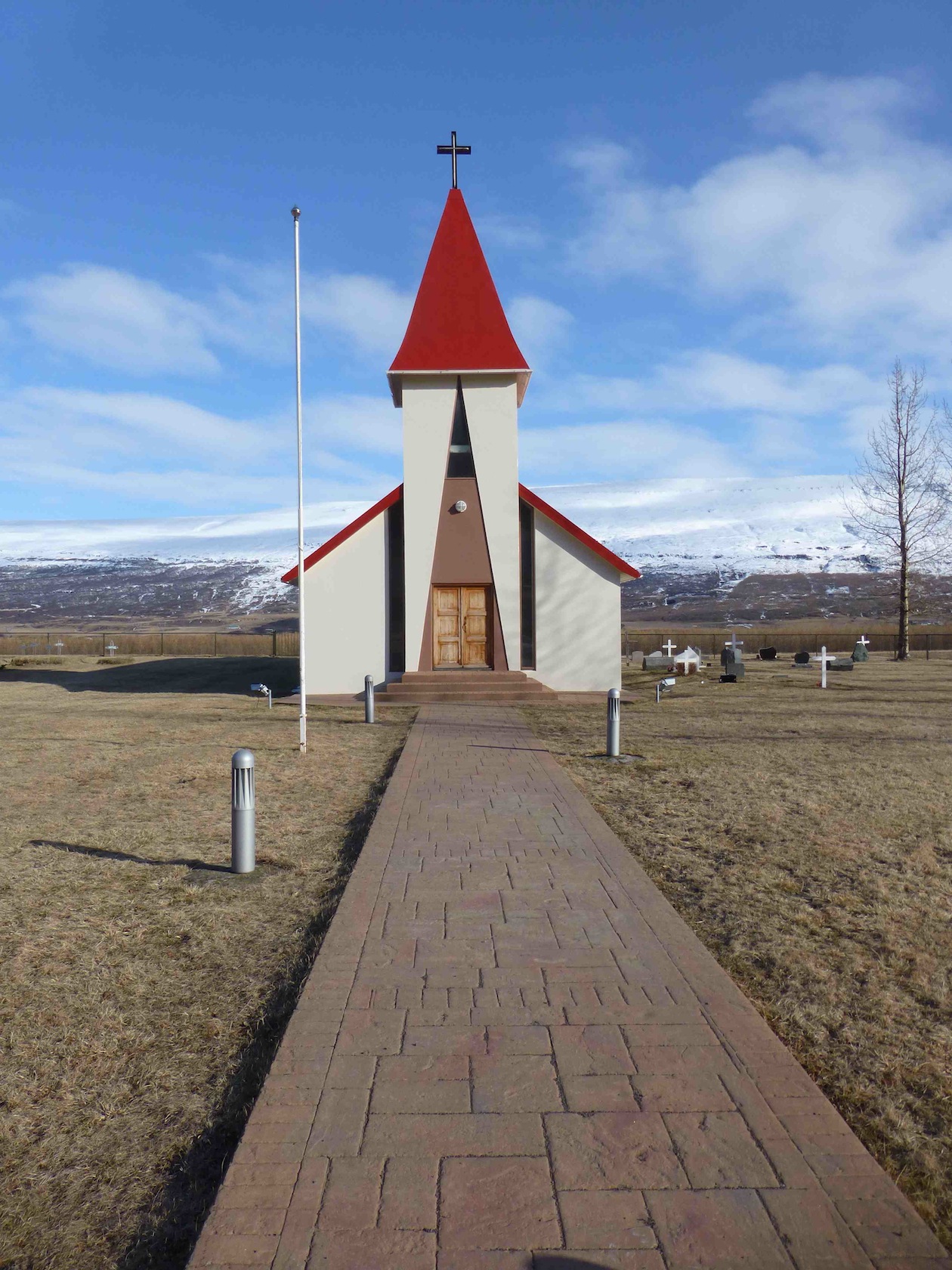
ValÞjofsstadur Church, Fljótsdalur

Note the mathematical precision of its construction. Note as well the Father, the Son and the Holy Ghost of the entrance, and how one enters through the Middle Way, Christ, the Son. That’s not an accident.

The Church makes eternal order out of temporary beauty. That’s kind of its point. It is a form of intellectual activity.

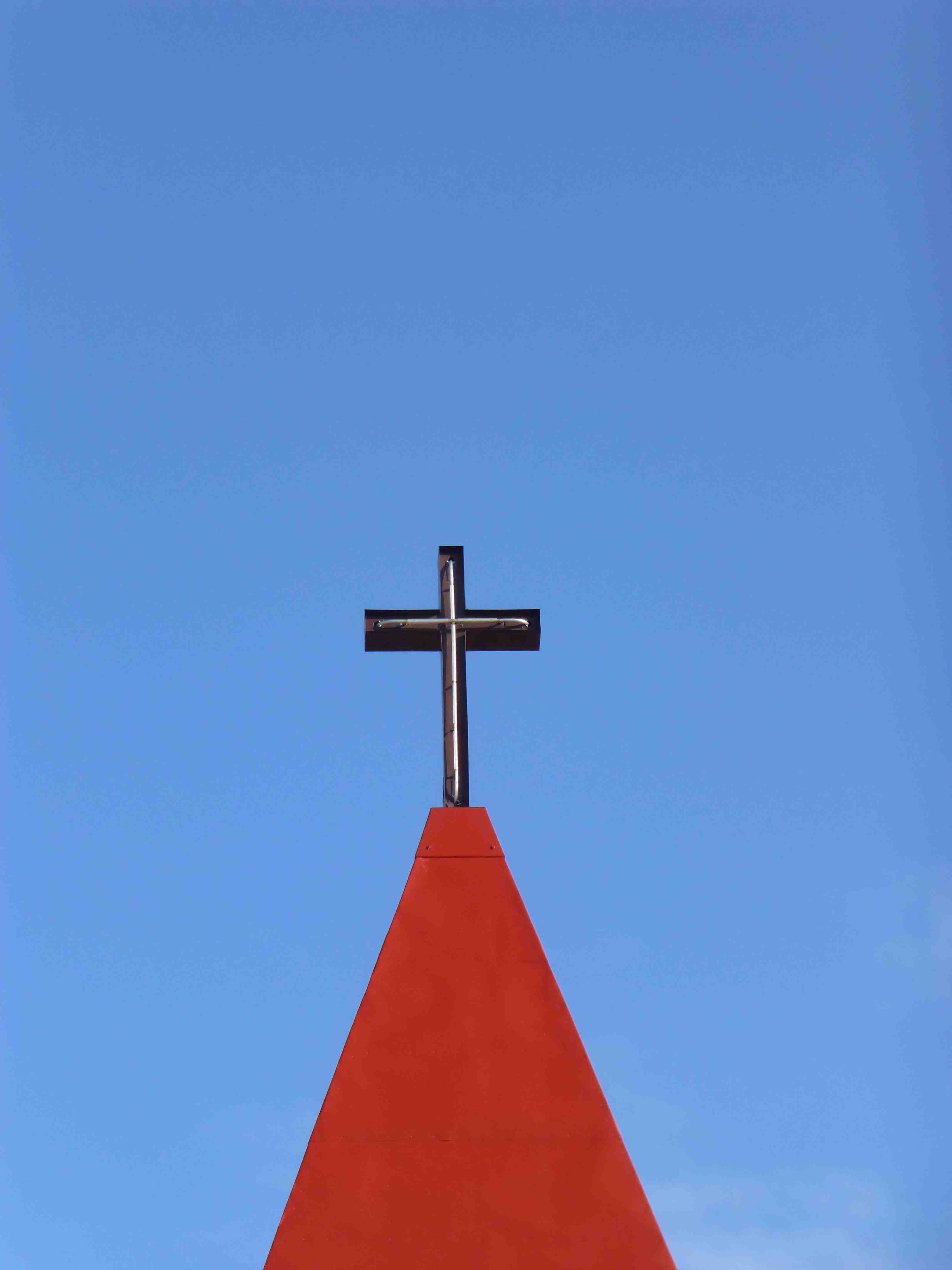
crossforfarm

The Point

It’s not just a cross. It’s an entire intellectual tradition. All Western peoples today stand within it. It’s inescapable. Nor should it be escaped from. It is.

Gunnar Gunnarsson’s childhood farm, that guided much of his writing, faced out over the graveyard where the church now stands. Here’s how it looks today, with the old turf houses gone but the old trees remaining.

valpjofsstadur

ValÞjofsstadur

This is the week that the farmer brings the manure out by the wheelbarrow load and dumps it in his field. You can see some of it there in the centre of the image, just in front of the buildings. Sweet springtime!

Easter is a celebration of rebirth and renewal from the dead (and the stink of closed winter barns full of way too many animals). Another way of putting that is to say that the dead don’t leave the living, nor do the living leave the dead, but that they’re all travelling together on one road that leads out into the fields and the light after a long, cold winter. Here, then, is the real church, in its wild state …

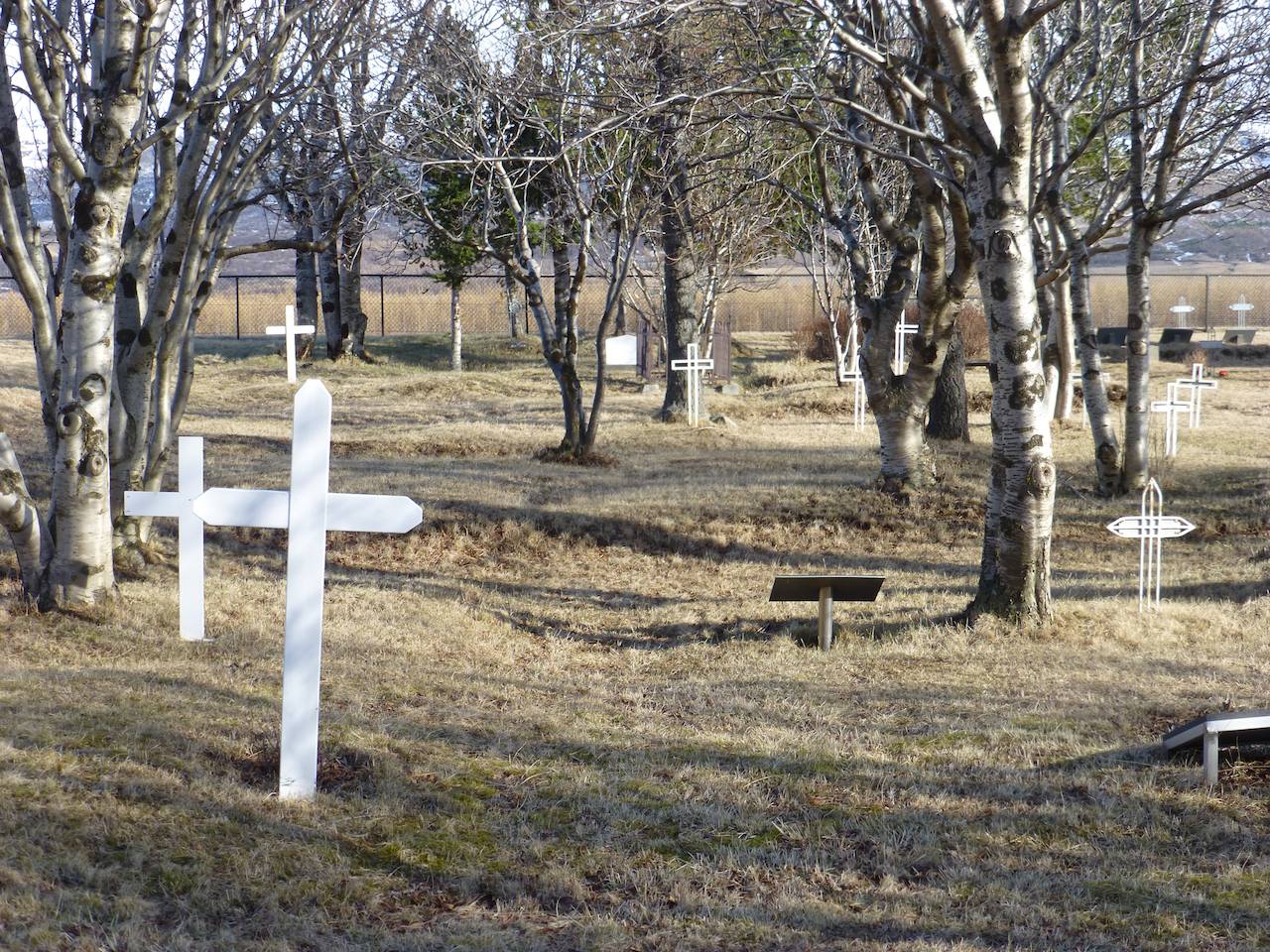
ahnenValÞjofsstadur Graveyard

The ancestors lie quietly in their pews, most with a form of mathematical perfection rising from their souls. It is a joyous place, a sanctuary from the work of the world, a kind of retirement, shall we say, a waiting.

I have been writing poems about Easter, so forgive my mind for wandering like this through the trunks of these trees, but look, both churches are standing together in communion, the church among the ancient trees, the ancestral church, and the new one rising from the mind …

twochurchesChurch, Ancestors, and the Ancient Trees, ValÞjofsstadur

All travelling together into the sky, all tied to the earth, on the middle way.

When the earth and its peoples are stood with organically, as Gunnar stood with them and that farmer with his manure still does, rather than under-stood, or standing under, as a priest might put it (especially in the past), looking down from his or her pulpit and speaking the Words of God to his or her “flock”, its patterns flow like water and light and know no bounds. A boy, or a man, such as Gunnar, perhaps, could learn to write books just by walking in the world with his eyes open.

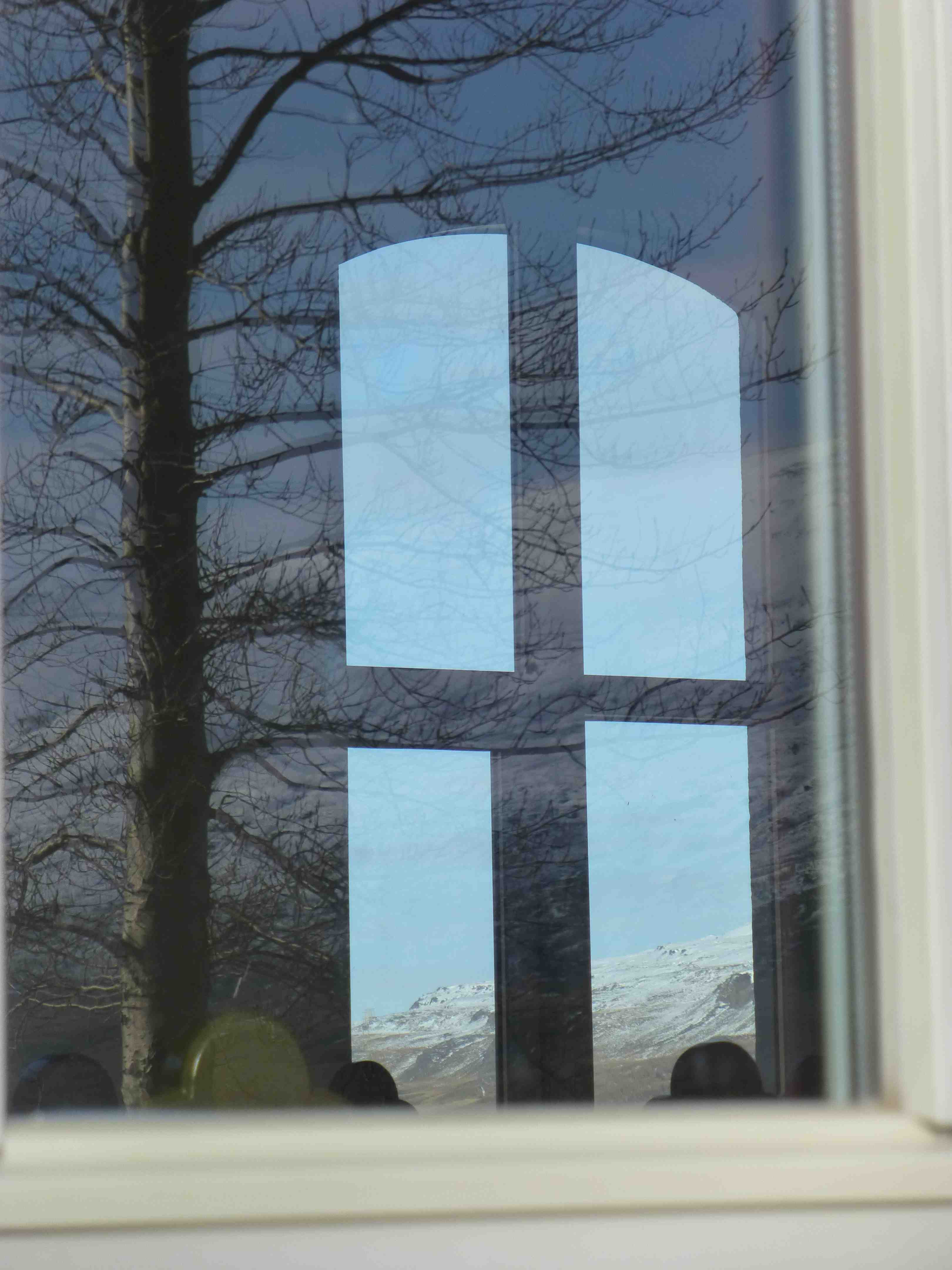
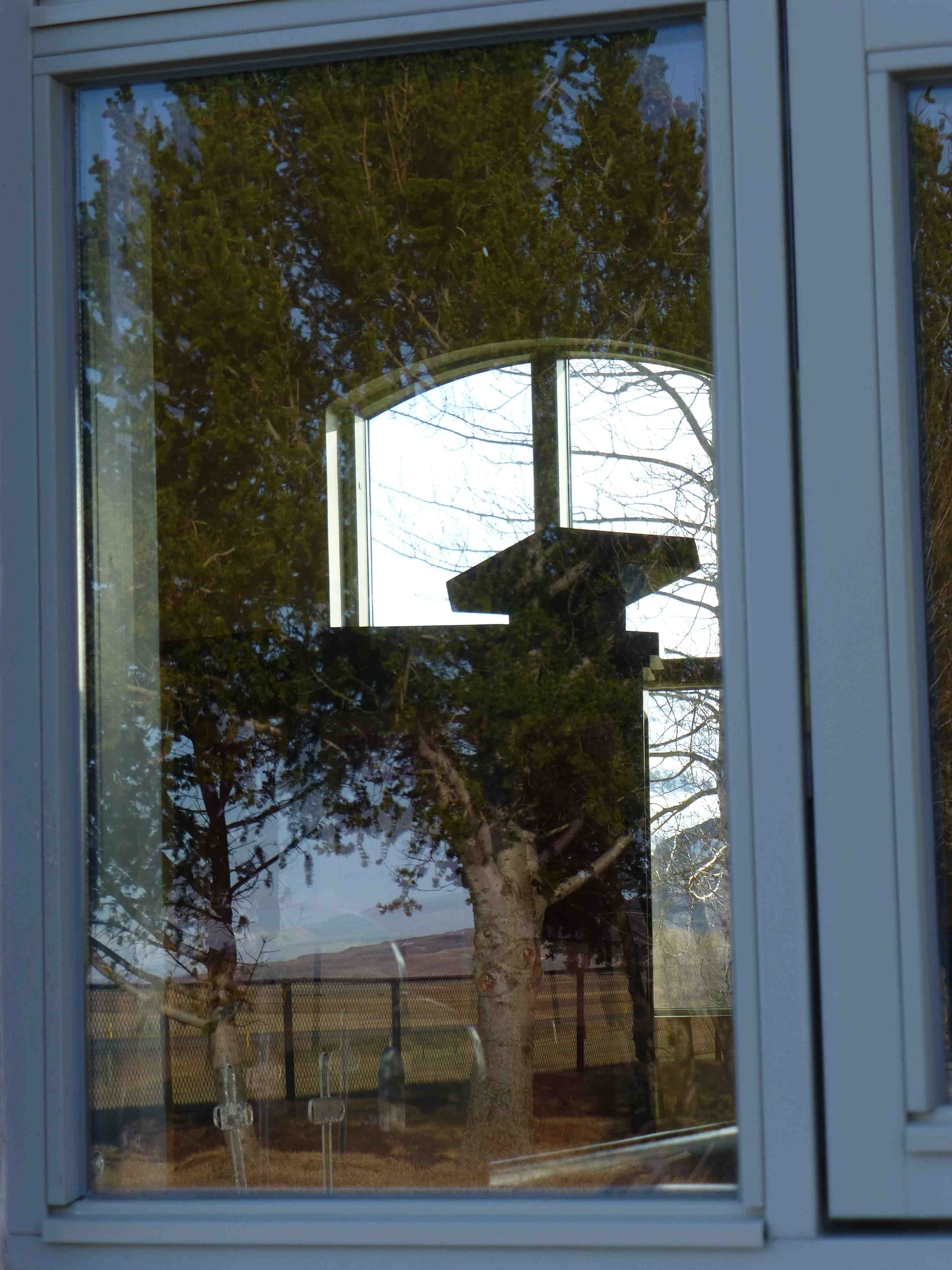
treewindow

The Church, the Cross, Chairs like Tombstones, the Mountains and the Ancient, Sacred Trees

Are all woven from light, from the inside and the outside, from reflection and what is seen through.

A window, now that’s an ancient word. Consider this, every river in Iceland has the same name. It’s an á, pronounced ‘ow’. In German, that would be an “au”, a meadow, a place of particular fruitfulness, naturally fed by wetland water — and usually the place at which Irish monks set up their missionary churches in the 9th century. That’s not far from Iceland, really, where the early farms were set up along river bottoms, which could produce the abundance of grass necessary for 10th century Norse farming practices, and these rivers were all variations on an á. One just down the road from Skriðuklaustur, for example, is the Hengifossá …

hengifossaHengifossá Mouth

And the river of the wind? Ah, here it is …

windowquadrants

The Four Cardinal Directions

Notice how the Wind’s Á, its meadow, opens from inside, so the outside can come in. First, though, one has to go inside.

The tradition of the church and its remarkable magical buildings constructed to ancient conceptions of mathematical balance and beauty go very deep, with roots in the world. Here’s the pulpit …

pulpitThis is a Book

But not just a paper one. The world is part of the spiritual picture. It is through it that one finds the light. And the Word. And the word.

By “world” here, I don’t mean the usual thing. I don’t mean “the community of men and women and their children” and the national and international relationships they build up between themselves, as the word is often understood, but the world as stood with, which is often called the earth. There’s an old book in Nordic tradition, called Volvens Spådom (The Prophecy”, which in one of its opening passages goes like this…

volvensThe Middle Way from Volvens Spådom

Without a world, the sun and stars have no anchor. That is to say, no tether, no home, which is to say that they are not at-home, or, to use the old word, they are not haunting. In the middle way, on Middle Earth, things haunt.

Things haunt like the reflections in the windows above, like the trees growing from hallowed ground, and like this image that has been made from them, purified in the manner of making wine (in this case, making wine from light and the world) …

eyewindow2

The Eye of God and the Mountains of ValÞjofsstadur…

…seen through the wind’s oh, its á, its au, its river of ValÞjofsstadur Church. The mind streams in with it. That’s the kind of spiritual place this world is, witnessing the mathematical beauty that streams through it, because, after all, a window opens two ways. It is, in fact, not a mouth or an eye, but a passage, a path, a way.

I took those images yesterday. Today, I went out to witness the sun rise, and I discovered that on this holy morning, before the first planes started flying to Keflavik from Europe, the Middle Earth was clear for all to see who were awake and walking. In the West …

P1370820

The Moon, Setting

… and in the East, across the sky …

P1370776

The Sun, Rising

… and in between …

P1370850The Horses of the World

The horses are spiritual creatures. Here they are in the words of the scottish poet Edwin Muir, best known for translating Kafka into English. This is written after the devastating war that Gunnar had hoped to prevent by uniting all Nordic peoples on the Middle Way. Ironically, it ws Muir, who endured more directly the anguish and fear of that conflict who found, in the horses of the world, the horses of God’s Grace, his Eden, his au…

(Dear Readers, it’s a longish poem, but not a difficult one, and it is one of the best in all of human tradition. If reading poetry is not your thing, why not scroll down to the images or listen to my reading of it here. The link will take you to a new page. When done, please press the back button to continue …

The Horses.

I hope you’ll listen and read and look at the images. That would be like being together on this day.)

Here’s am image to set the scene …

P1370886

The Horses

Barely a twelvemonth after
The seven days war that put the world to sleep,
Late in the evening the strange horses came.
By then we had made our covenant with silence,
But in the first few days it was so still
We listened to our breathing and were afraid.
On the second day
The radios failed; we turned the knobs; no answer.
On the third day a warship passed us, heading north,
Dead bodies piled on the deck. On the sixth day
A plane plunged over us into the sea. Thereafter
Nothing. The radios dumb;
And still they stand in corners of our kitchens,
And stand, perhaps, turned on, in a million rooms
All over the world. But now if they should speak,
If on a sudden they should speak again,
If on the stroke of noon a voice should speak,
We would not listen, we would not let it bring
That old bad world that swallowed its children quick
At one great gulp. We would not have it again.
Sometimes we think of the nations lying asleep,
Curled blindly in impenetrable sorrow,
And then the thought confounds us with its strangeness.
The tractors lie about our fields; at evening
They look like dank sea-monsters couched and waiting.
We leave them where they are and let them rust:
‘They’ll molder away and be like other loam.’
We make our oxen drag our rusty plows,
Long laid aside. We have gone back
Far past our fathers’ land.
And then, that evening
Late in the summer the strange horses came.
We heard a distant tapping on the road,
A deepening drumming; it stopped, went on again
And at the corner changed to hollow thunder.
We saw the heads
Like a wild wave charging and were afraid.
We had sold our horses in our fathers’ time
To buy new tractors. Now they were strange to us
As fabulous steeds set on an ancient shield.
Or illustrations in a book of knights.
We did not dare go near them. Yet they waited,
Stubborn and shy, as if they had been sent
By an old command to find our whereabouts
And that long-lost archaic companionship.
In the first moment we had never a thought
That they were creatures to be owned and used.
Among them were some half a dozen colts
Dropped in some wilderness of the broken world,
Yet new as if they had come from their own Eden.
Since then they have pulled our plows and borne our loads
But that free servitude still can pierce our hearts.
Our life is changed; their coming our beginning.

Edwin Muir
P1370898An Icelandic Blue in the Skriðuklaustur Pasture
Middle Earth contains not just humans and horses on their spirit paths, but, of course, our trees …
P1370752
Poplar on Easter Morning
… elves (more on that, soon) …
P1370763Easter Sunrise Through Frosted Glass
… sacred space …
P1370767The Cloister at First Light
… trolls, charmed …
P1380048
… the dead, of all kinds …
P1370860
Giant’s Skull in a Cave in the Skriðuklaustur Cliff
Turned to stone, I may point out by the rising sun … which, on this day, is Christ ascending. Accident? Coincidence? No. It is part of the sacred order of things viewed as things. After all, a “Thing” is a meeting place, in the old languages, a parliament, a place of talking and coming together, of all the people … including, I presume, the sheep which shelter in this cave in summer.
… because even though it is a Christian world, it is built upon the bones of an older one, and does not dishonour them and is not dishonoured by their presence. How could it be? If it were so, God would be made by men. It is to this world that Gunnar returned when he left Denmark in 1939. All during his time on Mainland Europe, he was walking the Middle Path, living between worlds, trying to be a broker between them, trying to be a writer, which in the pre-modern Icelandic tradition of his birth and youth meant to be a pastor, to write sacred texts and to present them to the people, to stand among them but slightly apart, and to look both ways, like a wind’s á. This is the character we meet in his 1932 novel Vivivaki, a reclusive writer in the Icelandic highlands, to whom the Dead awake on New Year’s Eve, to the sound of the Danish National Hymn on the radio, and who look to this rebirth as the Resurrection and look to him as God. Next, I’ll unravel the rest of Gunnar’s life as a Secret Agent, but first, the blessings of this day of rebirth and ascension and grace, from the blind earth …
P1370782
… to the light of the sky …
P1380096
Blessings, all, from Skriðuklaustur.

Sighting The Wyrm in Lagarfljót

The lake that runs to the sea from this old monastery site in East Iceland is called the Lagarfljót. It is a long and beautiful thing that catches the light from the mountains and the sky and softens them — not that they are harsh to start with. It also has a wyrm, like the monster of Loch Ness or the “Ogopogo” of Okanagan Lake of the North America’s Pacific Northwest. Cryptozoology is good for tourism. Here in the sacred birch forests of East Iceland …

P1370240

… with the elves catching the mid-day sun …

lichen

Lichen on Birch

(I hope to have the elvish connection to lichen ready for you in a couple days.)

… and a moment to enjoy the red berries that the birds missed in the winter …

berries

… because I’m a poet and poets are easily distracted by pretty things (so are wyrms, whose stories are similar enough to the serpents of the Rhine and the Celtic Moselle and the Ring of the Nibelungs to raise a poet’s eyebrow or two), but finally things were looking up. The government was there first, helpful as Icelanders are …

P1370118 A Good Place to See The Wyrm

Shall we? Down the trail through the old, slightly mouldering but still charming early-Nationalist picnic site, and, hey, look, already we see signs of an apex predator eating the locals…

P1370116

We Must be On the Right Track

And then I lost my doubt, because I heard the birds singing…

P1370166

See the Birds?

No, I don’t either.

There weren’t any birds, that’s why. It was the lake that was singing, like a choir of angels. That was actually better than birds.

P1370184

All Winter Long the Ice Has Been Singing As the Waves Break it Up and Knock it Around

Then they do it in the spring. It is haunting. What a magical lake.

And that’s when I first saw the wyrm (well, after a few more steps) …

P1360998

Wyrm

Being a Canadian and a bit biased towards polar bears, that’s what I thought it was at first. Here’s its head, so you can have a closer look …

P1370001

Wyrm Head

Note the nice ribbing. Even the Worm in Dune has that. (Look to my upcoming posting on elves and lichen for an explanation of how forms like this are cast up by stone.)

Then I turned and saw this wyrm…

wormhead3

A Dead Ringer to Tolkein’s Smaug…

… or a crocodile. Note the hump, too.

Now, to set things straight, here’s the story of the Wyrm in Lagarfljót: Read it Here. And here’s a video that played on Icelandic TV a year ago … View it Here. And here’s my warning on reading mythic imaginations literally, with photographs of the dreamtime stone that is Canada’s “Ogopogo” — or would be if there were greater general understanding of how pre-industrial people thought. Read it here. This is important stuff. A little respect for the truth of ancient story, and how it was laid down and how it was not, goes a long way towards rebuilding human relationships to the earth. To tell those stories, I am here at Skriðuklaustur.  It has been a beautiful day. Tomorrow, images of Easter in East Iceland, and if things go well the second part of my series on Gunnar Gunnarsson, Secret Agent.

Elves and Men in Iceland

In his Book Livet’s Strand (The Shore of Life), written in 1915 during the height of the Great War that destroyed Western Civilization and left us all trying to make sense of the ruins, Gunnar Gunnarsson explored the idea (to heartbreaking length) that the earth is a shore on which life crashes again and again and again. On this shore, life is rescued and lost, celebrated and lost again, and in the end only endured. Today, 98 years later, I’d like to rescue that earth from this apocalyptic image — without denying its truth and the very real anguish which gave birth to it. To set the scene, two posts ago I gave this image of the living sea in the Skaga Fjord, in which I suggested that the sea was life itself and all other life is only a replication of it …

aliveThe Greenland Sea

Very much alive in Skagafjörður

Today I’d like to modify Gunnar’s rather black and white statement with the observation that the land has its own life. For evidence of it, a journey to Skudustaðir on Myvatn (The Lake of the Midges), is well advised. There is life within the stone there — life intimately connected with human consciousness, too. Here, for example …

P1320873House and Barn

That’s Elf House and Human Barn, actually, and the road going north and south. Folk wisdom holds that elves are more beautiful than people and reveal themselves only when they wish. No argument there.

Sure, Tolkein dreamed of his elves and so did the Victorian fabulists, but these are not those elves. Those ones are social and linguistic constructs and physical animations rising from the literalism of Christian civilization. I have deep respect for Christian tradition, but would like to show that in the North it has a very specific and illuminating context. These “elves” or “other people” are bodily perceptions that humans brought here from older continental traditions stretching back into the deep stone age. Here’s some charmed rock …

innerelves

The Other World

Or, to give life to an old phrase that now is a name for bedrock: the living rock. It is not a metaphor, but neither is it one of Tolkein’s stories.

There is, for one thing, a world within the rock, with faces frozen into stone. Now, I will be following up on those faces in the next few days, but today I’m laying down words about the rock as the sculpture that it is …

elfin5

Rock Entrails in Skutustaðir

Open up a human body and you get much the same thing.

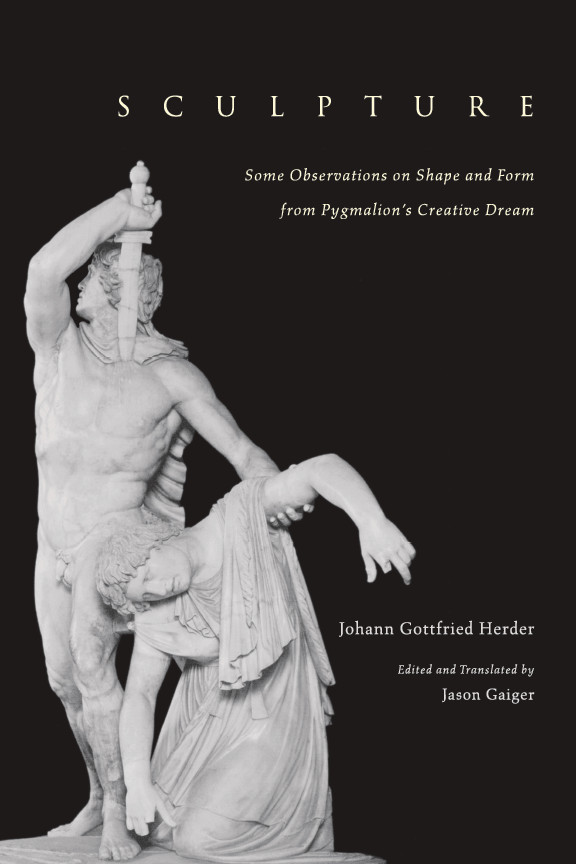
In the 18th Century, the German philosopher Johann Gottfried Herder wrote a vital book on aesthetics that shows light on this kind of art. It has been impeccably translated in a new edition from the University of Chicago.

978-0-226-32755-6-frontcover

The Publisher’s Page on this Book is Here.

In this book, Herder argues that sculpture is a representation of the human body, seen at the intersection of time and space — that three-dimensionality is just this intersection. Intriguingly, to observe this form of mirror, a human must walk around the sculpture, to see it unfold in time. It is a way of movement that anyone knows who has gone walking in the hills and seen their story unfold with each footstep, and sensed them moving behind one’s back. And what does a human see when his or her body is glimpsed within the earth, rather than within the sea, or on Gunnar’s shore?

elfin4Elves in the Their Kingdom

One also sees their sheep…

elfinElvin Ram

These effects are not just observable in the intestines of the stone, mind you. Even the surface stone, it’s skin, the shape it takes on exposure to the sun and human sight, is alive …

elfin6Elvin Sheep Skull with A Halo of LIchen

What do I mean by “alive” in this context? I mean that the stone has the power to cast forth shapes within the observing mind. It is a kind of template. The mind I’m talking about is a point of intersection between humans, earth …

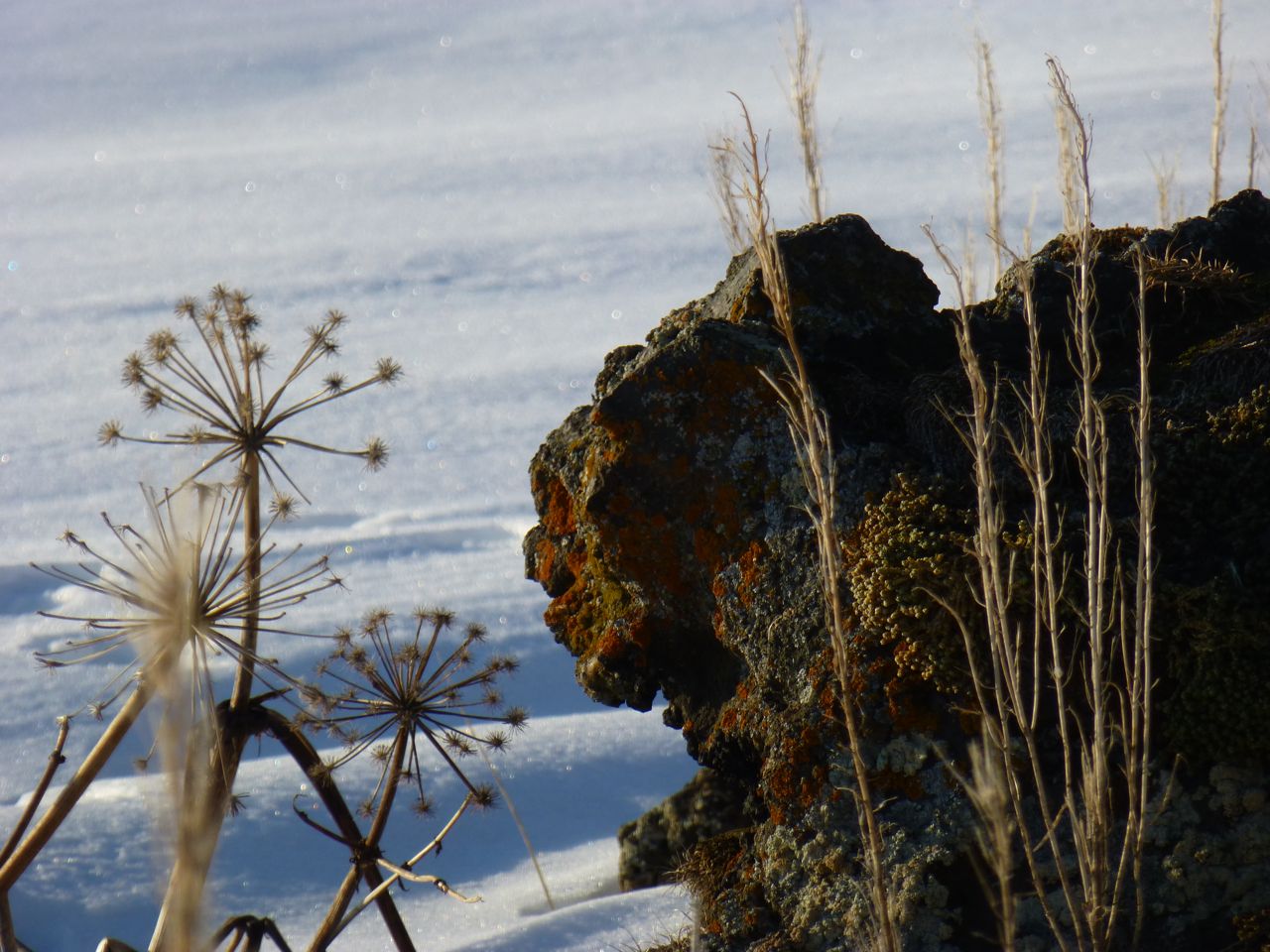
lakeelves1 Lake Elf in the Spring Sun

Skutustaðir, Iceland

 … and with other wanderers from the sea, like these lichens …

head2Lake Elf with Jewels of Lichen

The orange lichen blooms in the faeces of birds. Cool!

Even more dramatically …

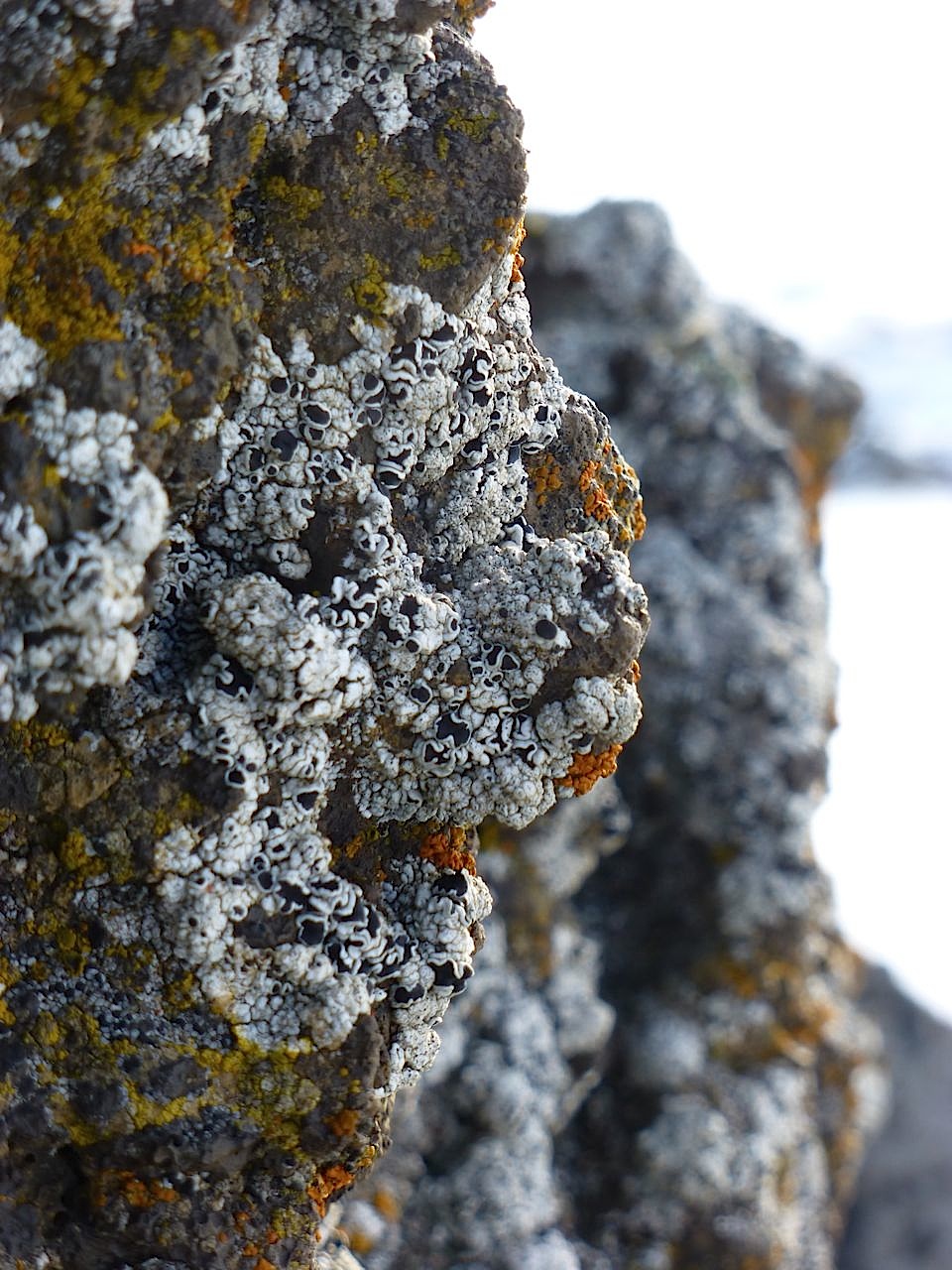
elfsnow2Lake Elf Replicated in Lichen

Sometimes the patterns laid down by the stone allow for these type of human readings to rise directly from the lichens themselves, as the stone is read in time …

elflichen3Lichen Elf

Skutustaðir, Iceland

This is the way the human mind reads the earth. In contemporary terms, ‘reading’ refers to decoding marks on paper, which spell out words, which encapsulate ideas and signify the things of the world, all coloured by human “spells”, traditions, conventions, and cognitive biases. Reading the earth operates on the same principle, with the difference that it came long before spells and words, and is a way of “reading” or participating in the earth with the body, rather than with the mind. Gunnar’s anguish during the Great War was that the link to God had been lost, and that God cared nothing for his people, and was remorseless — as remorseless as nature. That is, in itself, a very modern reading, but in no way does it negate the physical context in which it stands, in which humans stand upon and within the earth, bring forth children upon it, and tell this most ancient story, not of earth as a shore of death on which life, or God, shall we say, crashes and breaks again and again like waves of untrained and disastrously led soldiers marching into the machine guns of the Somme, but is alive. Who are the other people? The question is absurd. They are our selves, built upon the forms of the earth, continually springing to life, indominatable, and enduring.

elfsnow

Tomorrow I will continue this discussion by extending it into the forms of human sight, the line, and the basics of art. Now, I’m going out to walk among the horses of Iceland. Bless bless!

The Sea is A Living Thing

aliveMeeting Life Itself, Skagafjörður

All the rest? The trees, the horses, the humans, the cod, the arctic terns, the chickens? They are all carrying a replica of life within them, but the sea is life itself. Instead of saying “life”, we could just say “sea”. And the land? Ah, now, now that is a story of humans and other people. I’ll tell it tomorrow. Here’s a hint to haunt your dreams while the night falls and the sun rises again …

e1Elf Stone, Goðafoss


The Language of ice

Gunnar Gunnarsson’s published a fascinating ghost story called Vikivaki in 1932. Iceland is still writing them. Take a look…

P1260997

Ghosts, Öxarárfoss, Iceland

What’s a ghost? Why, something that’s neither dead nor alive and which brings a message from deep within your story.

As for people, they’re writing something else. Here’s what visitors to Iceland write upon the body of the land when they visit:

P1260717Troll People, Þingvellir

They just have to leave a record of themselves, it seems, using whatever is at hand.

For people who live within a landscape, language comes from the land, the water, the light and the air. Here’s a piece of just such a language from Iceland:

P1270050

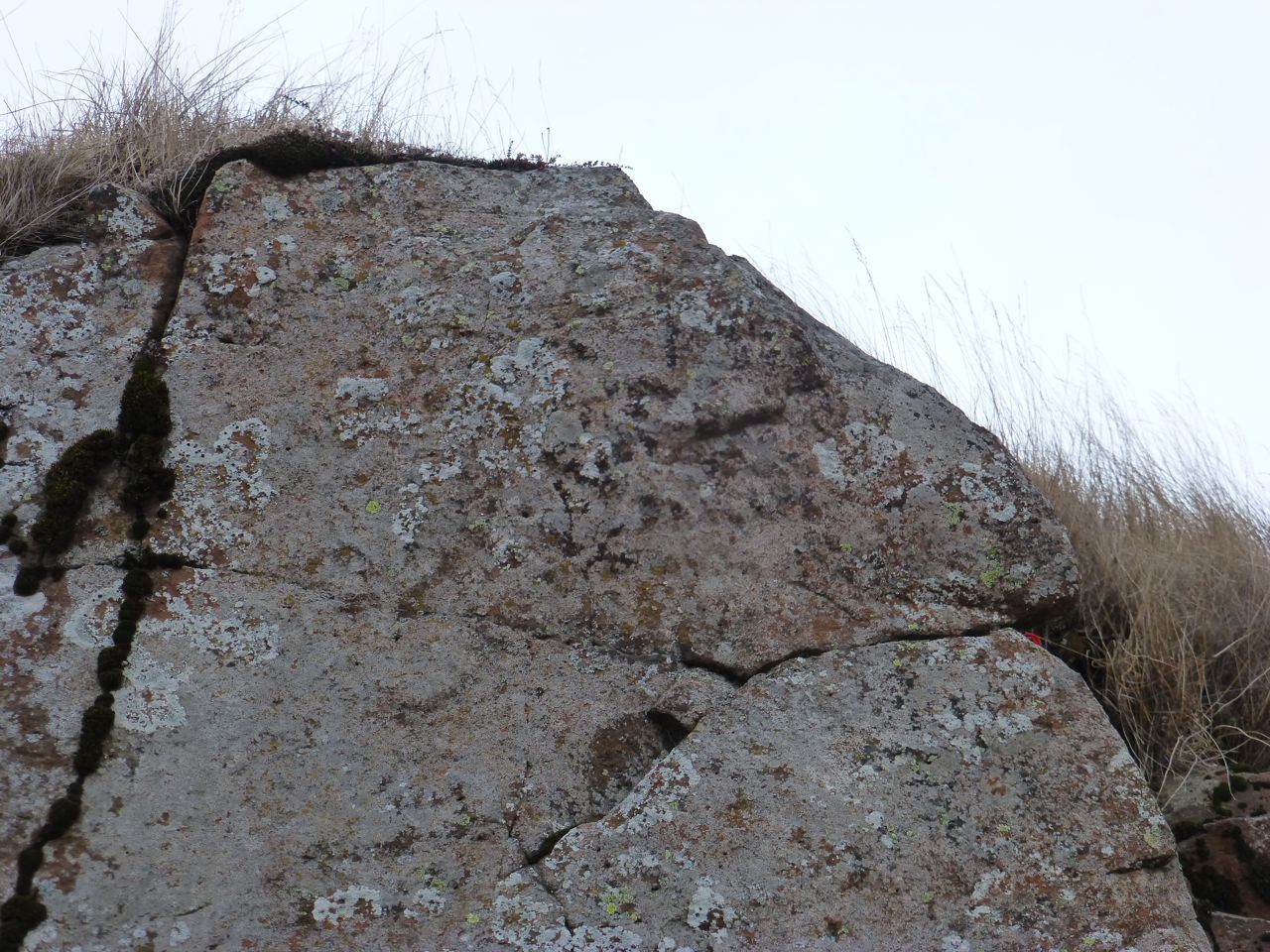
Language Beginning, Öxarárfoss, Iceland

Forget about cuneiform and Linear B and language starting with bird tracks in sand. There is another way. Forget about writing for purely human audience and deferring the environmental costs of turning from the earth until the future. That future is now.

P1270135

Language Beginning as Art, Öxarárfoss, Iceland

Compare that to the lines in this stained glass window from the church in Reykholt, West Iceland:

window

Mary, The Christ Child, and Three Angels

Reykholt

Iceland is a country in which Christianity is uniquely bound to the soil. Unsurprisingly, Gunnar’s ghosts are a surprisingly devout bunch, called forth in a moment of nationalist zeal. This is one lesson I’m going to happily take home to Canada in 6 weeks. Sometimes the hidden people of a country can be the people themselves.

Next: I will explore these ideas further by discussing an Icelandic artist who paints with ice.

Elves, German Nationalism, and Gunnar Gunnarsson

Before Darwin, European culture had many ways of understanding the relationship between humans, land, and evolution. Scientifically, they withered under the evidence of Darwin’s theories, but culturally many of them have remained potent. One of them is the Huldafólk, or Other People, of Icelandic folk culture. The English translation is “elves”, but these aren’t Tolkein’s elves, nor are they the fairies of Irish folklore. These are human-sized people, just more beautiful than the humans themselves.

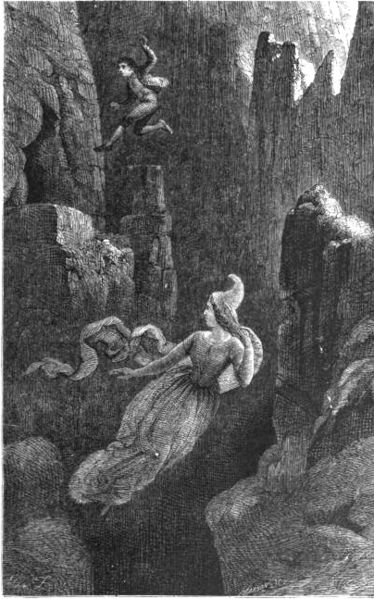
374px-Jumping_after_Hildur
Jumping After Hildur
A man jumping after an elf (English Engraving, 1864)
Another set of alternate people are the dwarves of Norse (and occasionally Icelandic) legend…
P1020278Dvergasteinn, Seyðisfjörður

The dwarves, it is said, rowed this dwelling (rock) across the fjord, when the humans moved their church to this site, because they missed their company on Sundays. Eventually, the humans moved away and took their church with them. The stone (and its dwarves) is left.
Another alternate human is the Green Man, and his relative, the Old Man of the Woods. These people were said to be the original humans, who had risen from the earth and the trees.

greenThe Green Man, Görlitz, Germany

With his leafy beard, hair, and moustache.

The Green Man was an important nationalist symbol in the German struggle for independence in the mid-19th century. He was often said to be a representation of the first Christian, Judaic and Islamic human, Adam. Here those ideas kind of come together in one of the contemporary centres of German ultra-nationalism:

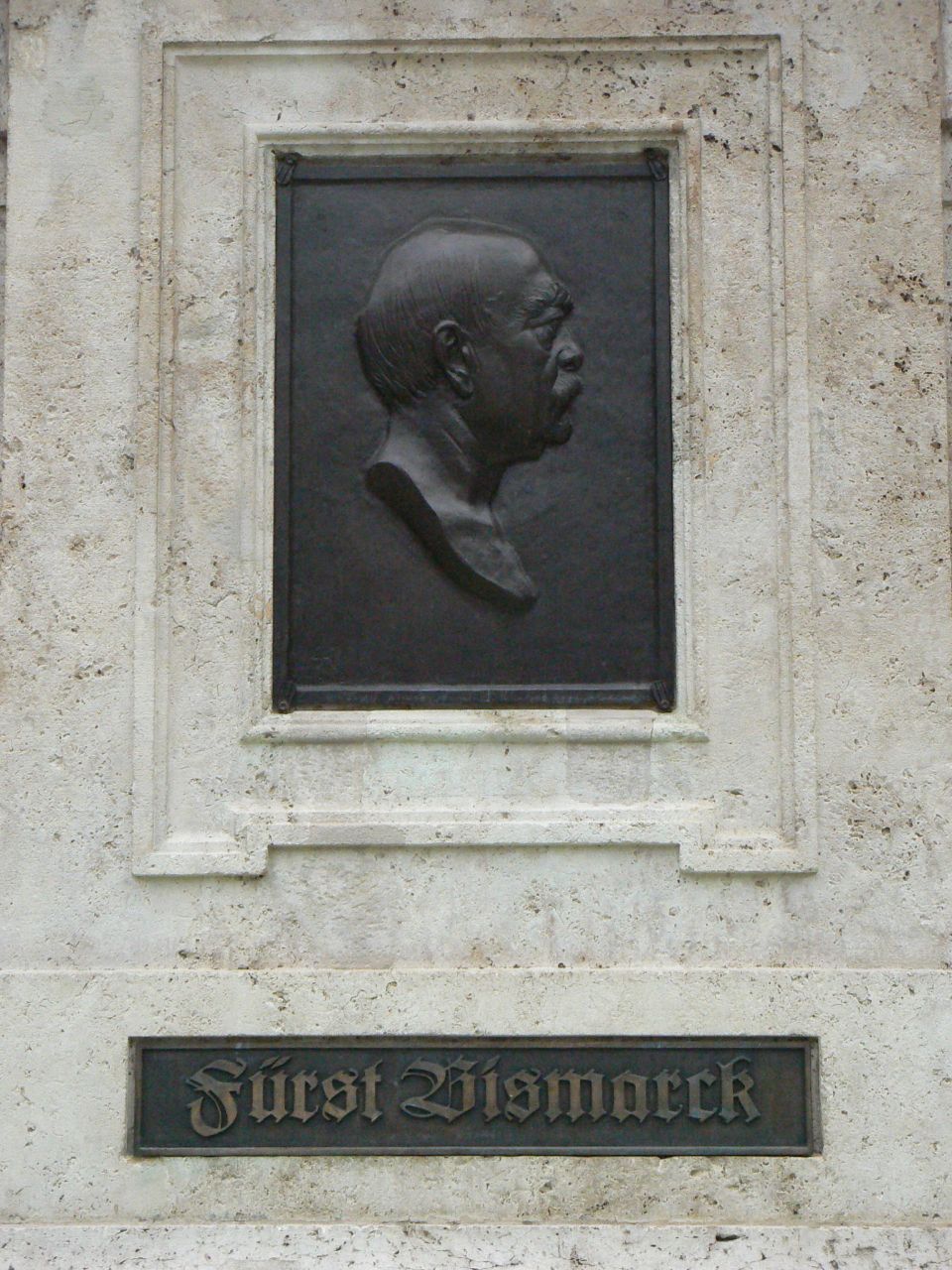
bismarckBismarck, the Iron Chancellor, Jena, Germany

The father of Germany, with his bushy Green Man Moustache. Now a fountain.

Here is an older image of these men coming together in one spot:

barbarossaBarbarossa, or Holy Roman Emperor Friedrich I, Kyffhäuser Monument, Germany

Friedrich’s Crusade to recapture the Holy Land came to an end on June 10, 1190, when he drowned in Northern Lebanon. The monument was erected to commemorate the founding of the modern German State.

Few of Barbarossa’s (Red Beard’s) 100,000 men made it home. Legend, though, has him return to the country as an old pilgrim dressed in grey, inspecting his kingdom, which had lapsed from true observance of Christianity and was a shambles, much like this figure…

wodin

Wodin, from the lost Hall of Sagas, in Silesia

Odin of Norse Belief, or Gandalf in the modern version, or Barbarossa, take your pick. Old legends just don’t die out. Barbarossa was the code name for Hitler’s Invasion of Russia in 1941.

Depressed at it all, Barbarossa retreated to the castle on Kyffhäuser Mountain, where he lived inside the mountain with his knights, served by the dwarves of the mountain. He drank a lot of beer with them and fell asleep, only to wake a century later, ask if it was time to wake up, and then drink another beer and fall asleep once more. His beard kept growing.

P1160220One of Barbarossa’s Dwarves

Dwarves show up continually in German folklore. Luther, the translator of the Bible and unwilling founder of Protestant Christianity, was raised in such legends, in the mountains east of Frankfurt, where his father was a coal miner and descended among them daily. Their power haunted their simple forest house.

Luther’s dwarves were the subconscious mind of the German people. They lived inside what was known as “the living rock”, or the deep rock of the mountains. Gunnar Gunnarsson, son of Iceland, descendent of men of Odin, born to a country of turf houses buried in the earth, also came from this story. So did this man:

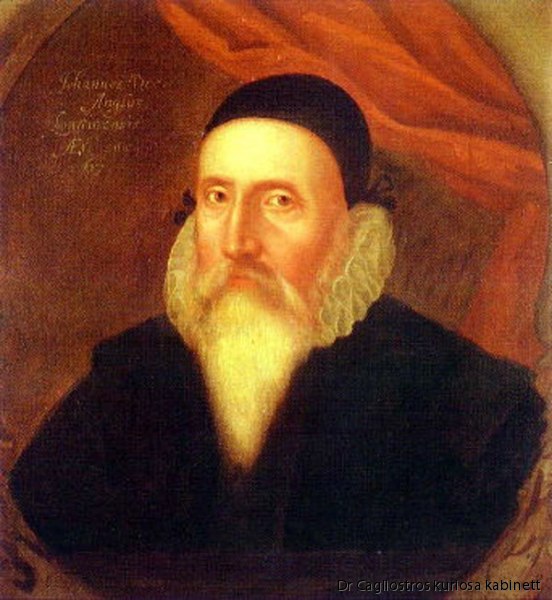
DeeJohn Dee, 1527-1609

Dee was an Englishman who served as Court Astrologer to Queen Elizabeth of England, created the navigational instruments used by early European explorers in the North, and spent many years writing down his conversations with the angels. He believed that if he could learn their language, and speak it correctly, he would be able to conjure up the spirits of the earth and the air, as God did in the Book of Genesis, restart Creation, heal all war and disease, and return earth to Eden. Legend has it that when the Spanish Armada, the most powerful state in the world, attacked England, John Dee wove a magic spell around the Island and conjured up a storm, which wrecked the Spanish fleet. This act formed the basis of Shakespeare’s play, The Tempest.

prosperoProspero, Duke of the Island, Banishing the Half-Human Creature Caliban

The tree spirit Caliban is not unlike the Green Man.

Return Earth to Eden? Cast a spell around an island alive with spirits of earth and air? Banish the half-humans? Retreat to a mountain stronghold (an old monastery)? Found a country? Invasion from the most powerful country in the world? The old gods walking the roads in disguise? This is the context in which Gunnar Gunnarsson was operating — the old European, pre-Darwin context, that was still very much alive in his time and is still alive today. In my next post, I’ll show how these ideas illuminate parts of the speech he gave while on tour in Germany in the spring of 1940.

Trolls and House Building: A Field Guide

Well, not trolls exactly. And not exactly a house. It’s a bit of a riddle, but poets love riddles. Why, you could even say that on the northern shores of the world, poetry developed out of riddles, or that skaldic poetry did, at any rate. Here’s a famous Icelandic skald:

Egil Skallagrímsson, Skald

Ready to do battle with, what’s that, a rusty sword? More like a cleaver, I think. I have used things like that to pick cabbages. Poet farmers unite! (17th Century Manuscript from the Árni Magnússon Institute).

A scaldic poem is a ceremonial poem, given as a gift by a poet (a skald) to his patron, written in praise (or at times rousing criticism — very scalding, very scolding criticism). Scaldic poetry was worked through in intricate design and was intended as a verbal form of the intertwined patterning on a shield — a kind of protective magic. (The contemporary equivalent might be depleted uranium.) At times, skaldic poems were even recited before battle. They were part of the battle. An important part, too, that preceded the bloodiness.

374px-Öl1,_karlevi

The Karlevi Stone, Vickleby, Sweden

Photo by Berig.

Note the vertical columns of the scaldic poem above. As Gunnar Gunnarsson pointed out in Unser Land (the speech he read from during his 1940 literary tour of Germany), they are not much different than this:

pillars1

Basalt Columns, Vík í Mýrdal

A tightly-linked protective shield poem against the encroaching sea, written in the land itself. (Note: studies from Hawaii have shown that black basalt beaches like this form in hours, not centuries.)

Isn’t that cool? A poem that is the land? That is the riddle Gunnarsson was speaking from: his house is Iceland; Iceland is his house. If that sounds a little unusual, do recall: he’s a poet; he’s not really thinking in metaphor. Mostly, metaphor is for people who are not poets. It’s a useful way, for sure, of describing the work of poets, but it does do so without really accepting the poem as the reality of the world, which is the poet’s way. In the case of Gunnarsson’s house and island, that work is performed in skaldic poetry, which makes his house a shield as well — and not just a shield, but an ornament, too, like this, maybe:

h2_1992.59.1

Viking Broach, Sweden

Men might have wanted shields, to protect their bodies in battle, but, perhaps, just perhaps, women wanted something to hold their garments together at the shoulder, something that was as protective as a shield, something with an island in the centre and the four points of the compass around them, something that would set them at the middle of the world. In Sweden’s case, that would have been North for the Trail to the North (Nor’way), South for Denmark and the trails down the Rhine, East for Finland, and West for the Orkneys — and if you just kept going, going, going, going (whew) … aha! In the middle of the ocean… Iceland.
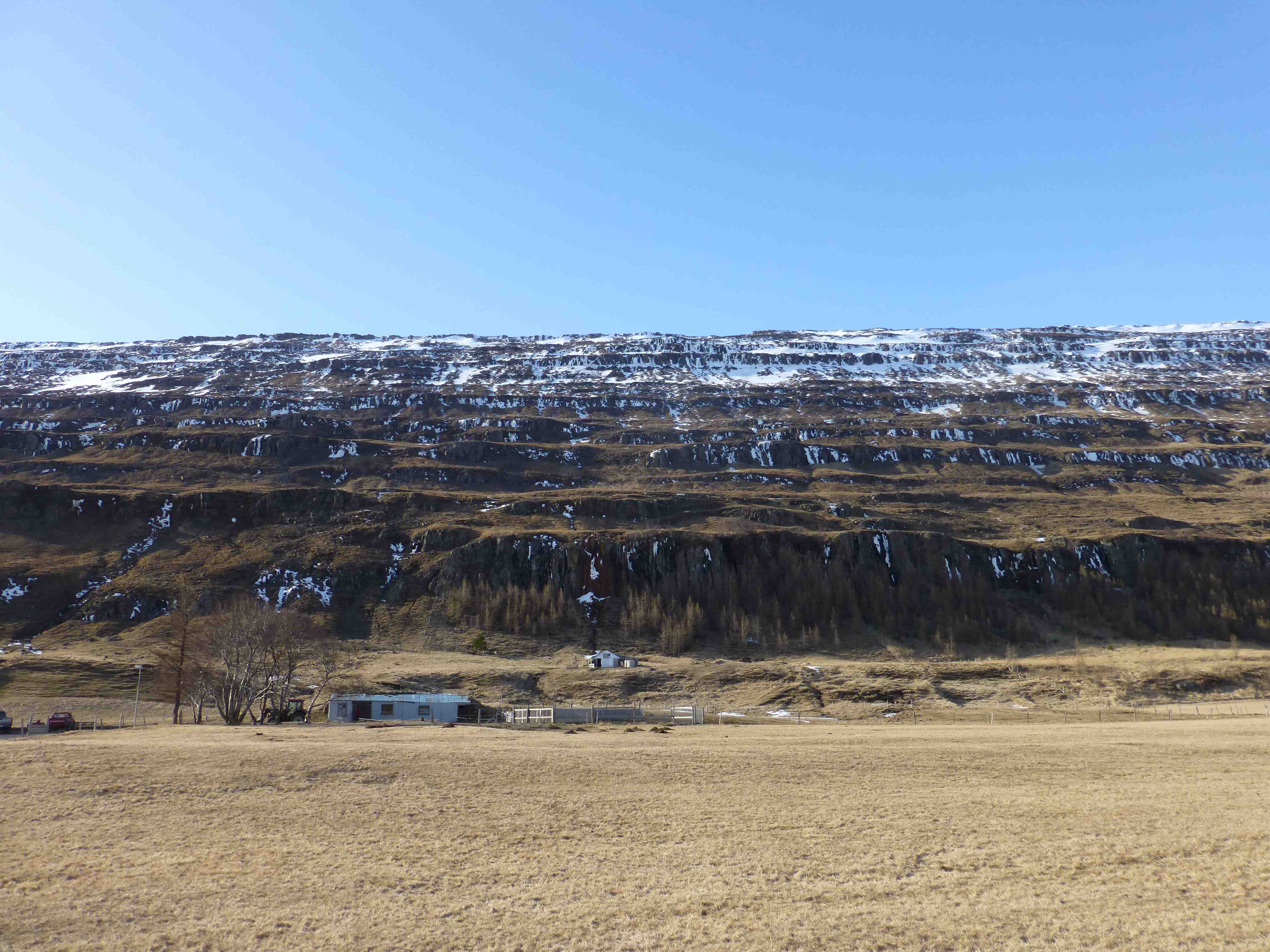
Once people arrived in the middle of the North Atlantic, the compass shifted. Iceland was now at the centre of the world. The other points of the compass were adjusted accordingly, to reference it. Since all directions led to water, however, Iceland became the entire earth, floating in the universe  (which was a big, cold sea). The country is still roughly divided into these quadrants.

icerecoloured

Iceland, the Compass Version

The shield and compass pattern extends beyond maps. For example, if you really wanted to get into the whole magical side of things, and weren’t squeamish about a little darkness in your life, you could play around with something like the following (You could even write it in your own blood):

2000px-Vegvisir.svg

Vegvisir

An Icelandic magical stave. Staves come in many shapes and were drawn for many different purposes.This one is a compass written in magical symbols, and was used to find one’s way in bad weather.

For such a stave to work (if it did), such navigation would not be done by the physical properties of the land, but by spiritual ones — and we’re not talking Christian-spiritual. In the high days of the Christian Church in Iceland, the possession of such staves could have had you condemned as a witch and beheaded at Þingvellir. That might have been awfully un-Christian, too, but, still, even today, this kind of magic is not advisable. When the Germans tried this kind of thing in the 1930s, for one thing, they invented the 1940s, which turned out to be a really bad idea.

6a00d83452a98069e200e54f76d8928833-640wi

Dresden, February 1944

Among the 20,000 people killed in the Allied bombing of Dresden and the millions of German refugees who streamed through it shortly afterwards on their way south and west from the Baltic, were untold numbers of readers of Gunnar Gunnarsson’s books about Iceland.

The pattern of land-as-compass-as-shield continues further, into practical applications of gentler spiritual principles. This time, they are placed in the interests of nationalism, where it’s not black magicians in the West Fjords or Ancient Viking ancestors or ultra-Nationalist Germans trained in the killing fields of The Chemins des Dames who are leading the way to a nation, but young women, quietly fitting their minds to the old patterns, to create a little beauty and order out of the blank, snow-white flaxen cloth woven out of the country’s fields. Think of these as self portraits…

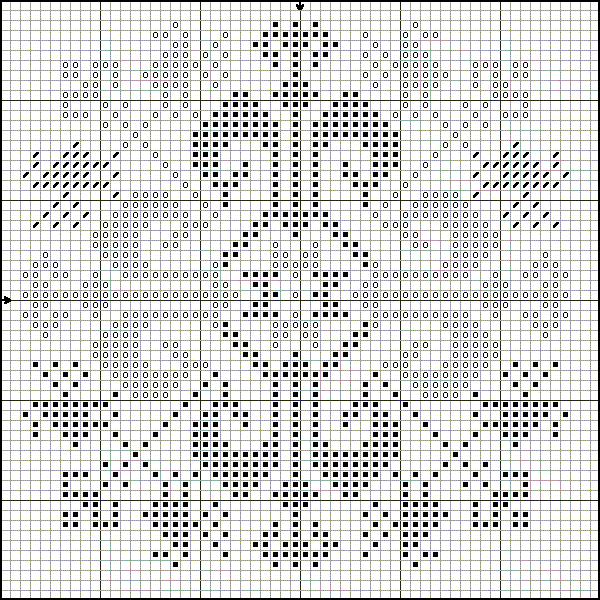
icesymbl

Icelandic Needlepoint Pattern

Flowers, yes, but also a hand-held mirror lifted from a dressing table, as well as the old compass, the old shield, the old broach, and the old skaldic poetry, too. Not to mention Gunnarsson’s house. Yes, the house.  Such a pretty thing. Such devotion.

If you think I’m stretching this, consider that five centuries ago in the cloister below Gunnarsson’s house at Skriðuklaustur illiterate young women would have made embroidery of the flowers of the fields. It was a form of prayer, practiced between caring for the sick. Such devotion was the unique Icelandic contribution to prayerful attention and worship, in the way that the repetitive painting of icons of saints was an essential contribution to worship in Russia.

christ-icon-cc-phool-4-XC

Christ Pantokrator

6th century encaustic icon from Saint Catherine’s Monastery, Mount Sinai. The power comes from about fifty coats of paint and the deliberately non-representational nature of the image. God, after all, can’t be reproduced in an image, so trying would be arrogance. Accordingly, such images aren’t representations of God. They are God’s presence, revealed when people devote themselves to old patterns.

The repetition and patterning were key. For example, just down the valley from Gunnarsson’s house at Skriðuklaustur, the old girls’ school at Hallormsstaður trained girls in Icelandic embroidery, as one part of a project to create a culture in Iceland independent from Danish influence. If the home was the heart of the country, and women were at the heart of the home, and the country was its children, then Icelandifying young women would, it seems, pay future dividends. Politification (My, aren’t I inventing words today) of national identity could follow at its own pace.

hallormsstadur

Icelandic Nationalist Embroidery, 1930s, Hallormsstaður.

The doors of the rooms in the school dormitory bear the names of trees, instead of numbers, and are set within a somewhat overgrown botanical garden. Such gardens were decorative in mainland Europe. In Iceland, they are a more practical magic. 

The embroidery above is much like a map of Iceland. When you get down to ground level, after all, and experience the map that is Iceland on a human scale rather than an international or global one of contours, nation states, trade patterns, colonies, weather isobars and even corporate banking, Iceland does look like this:

p1190188

Iceland at Ground Level, Neskaupstaður

The embroidery of summer!

This beautiful meadow, may I remind you, is still our shield and still our skaldic poem. It’s also Gunnarsson’s house, his novels, and the workings of his subconscious and conscious minds. Skaldic poems are full of doubling like that. We’re back to this:

His house is Iceland.

Iceland is his house.

Very skaldic, indeed. Of course, in physical terms, when this skaldic play comes to Gunnarsson’s house, the whole thing does look awfully German.

P1020160

Skriðuklaustur

The German architect, the Icelandic stone, the grass roof…why, it’s an island itself. An island in itself. An island. Itself. German….German? That’s the riddle within the riddle. 

The poems are our key. The first form of doubling in a skaldic poem is a kenning. Kennings are natural word forms inherent in Germanic languages (Frisian, Icelandic, Norse, English, Danish, and so on). Speakers of these languages use words like that all the time. Some English examples are: butternut, windowsill, firefly, and doublespeak. In kennings, this tendency is made artful. Each kenning is a miniature poem in itself. Take the land, for instance, such as that forming Iceland. Take a look at the series of kenning’s below. The earth is cleverly hidden with them, or perhaps cleverly revealed. The delight in recognition is part of the magic of the poem. Can you find the earth there, in its sea? (The translation [mine] is loose, to try to catch some of the music, but it’s not wildly off track, or at least not enough to hide the earth any more than it already is.)

endil2

Skaldic Poem Made Out of Kennings

The earth is “The sun’s stronghold”. The others? Well, hey, it’s a riddle, right? Source.

So, that’s the first doubling: words are given multiple meanings by being joined together. In the example above, the earth is both rock and stone as well as “The sun’s stronghold” (as opposed, seemingly, to the darkness of death, underground, and the land of the salmon, or water).  The other doubling comes about because the rhyme schemes of these poems were so intricate that the poem often had to be split in two columns, one representing each of its two speakers. Two speakers? Yes, that is another old Nordic style of poetry. Here’s what it looked like in its Finnish variant…

These two Finns are singing the Kalevala, the national epic of Finland

Finnish Folk Singers, Telling a Song Together

Each singer pulls the other towards himself to speak, then follows the other to listen, to pull again. It’s like rowing, or weaving.

Such poems looked like this, sometimes (the first line in each rhyming pair was given by one speaker; the second by the other… a pleasant game, for sure):

kalevala1

The Kalevala, Canto 27 (Opening)

Finnish is related to Pictish (and nothing else), the language of Scotland before the Vikings took the place for their own.

Here it is again, in English from the time of Gunnarsson’s youth. This time, the rhyming pairs are bound on single lines (to draw parallels with Homer, by the sounds of it):

27The Kalevala, Canto 27 (Opening)

Finnish folk poetry, compiled and massaged into a narrative by Elias Lönnrot. Translated by Frances Peabody Magoun, Jr. Homer was extensively read in literary circles at the time.

Two speakers. That’s the key here. But who are they? Ah, they are many things, many of which I have already hinted at here: Iceland and Germany, Gunnarsson and Denmark, Elves and the Church, earth and language, men and women, peace and war, individual and state, man and God. It looks like many things, but that’s just a linguistic convention. It’s really all part of the same conversation — if those words could be brought together into one tightly compressed thing, we would have Gunnarsson’s house. Let’s not forget that Gunnarsson was an Icelander. For a man like him, the word ‘thing’ has special significance, and looks like this:

P1190592

þingvellir, the Thing Place

Iceland’s first thing, or speaking (In Icelandic, Alþingi. In Norman English parliament), took place here in the Mid-Atlantic Rift in 930. In 1000, the country chose Christianity here, for practical reasons to do with unity, self-determination and self defense.

Below the Icelandic flag above, there is a church, and a curious collection of houses…

P1190582

þingvellir Church, 1850

The earliest church on this site dates from the early 11th century. The row of five houses to the right of the church represent the Icelandic state. Each time the constitution has been rebuilt from the ground up, a new house has been added to the row. The one house that is not represented here, is the one in Fljotsðalur to the North East. That’s right: Gunnarsson’s. Hey, no one said he was particularly modest. The volcano, Thor’s Shield, rises faintly in the background, from the earth’s core.

I was standing down by the church, looking up at the Alþingi site and wondering why it was placed here, of all places. Official documents point out that it was on a list of four possible sites, and was chosen because of the four it was the one situated conveniently on the country’s major trade routes (horse paths), and had sufficient pasture, water and wood (for fires) to sustain a large crowd. Makes sense. But why was it on the list in the first place? I wondered, then I got to daydreaming, as poets sometimes do, and thought about being a kid back then, attending the Thing with my family, and I looked up at the cliffs and they came into focus.

P1190629_2

A troll!

P1190612_2 Another troll!

P1190621Yet Another!
P1190625

Trolls Everywhere!

And all of them are looking down over the people. You could say that the land is taking part in the discussion that is taking part in the Thing. You could say that now the past is watching the present, and looking down over the house that is Iceland, which is embedded in that past. Time and space are unique here. They are a language. Since that’s an unusual language, at least for the contemporary, novel-driven world, it’s useful to walk through its halls a bit, to see how they’re constructed and where they lead. I’ll do that in the next post. We’ll walk among elves and dwarves and trolls. They are not part of fairy tale. They are something completely different, and provide clues to the mind of Gunnar Gunnarsson in 1940. It’ll be fun. I hope you’ll come along.