Category Archives: Land

The View from Canada

This is a post from my Okanagan, Canada blog. It shows some of the lessons I have drawn from my recent stay in East Iceland, and explores what Gunnar Gunnarsson meant by poverty and wealth.
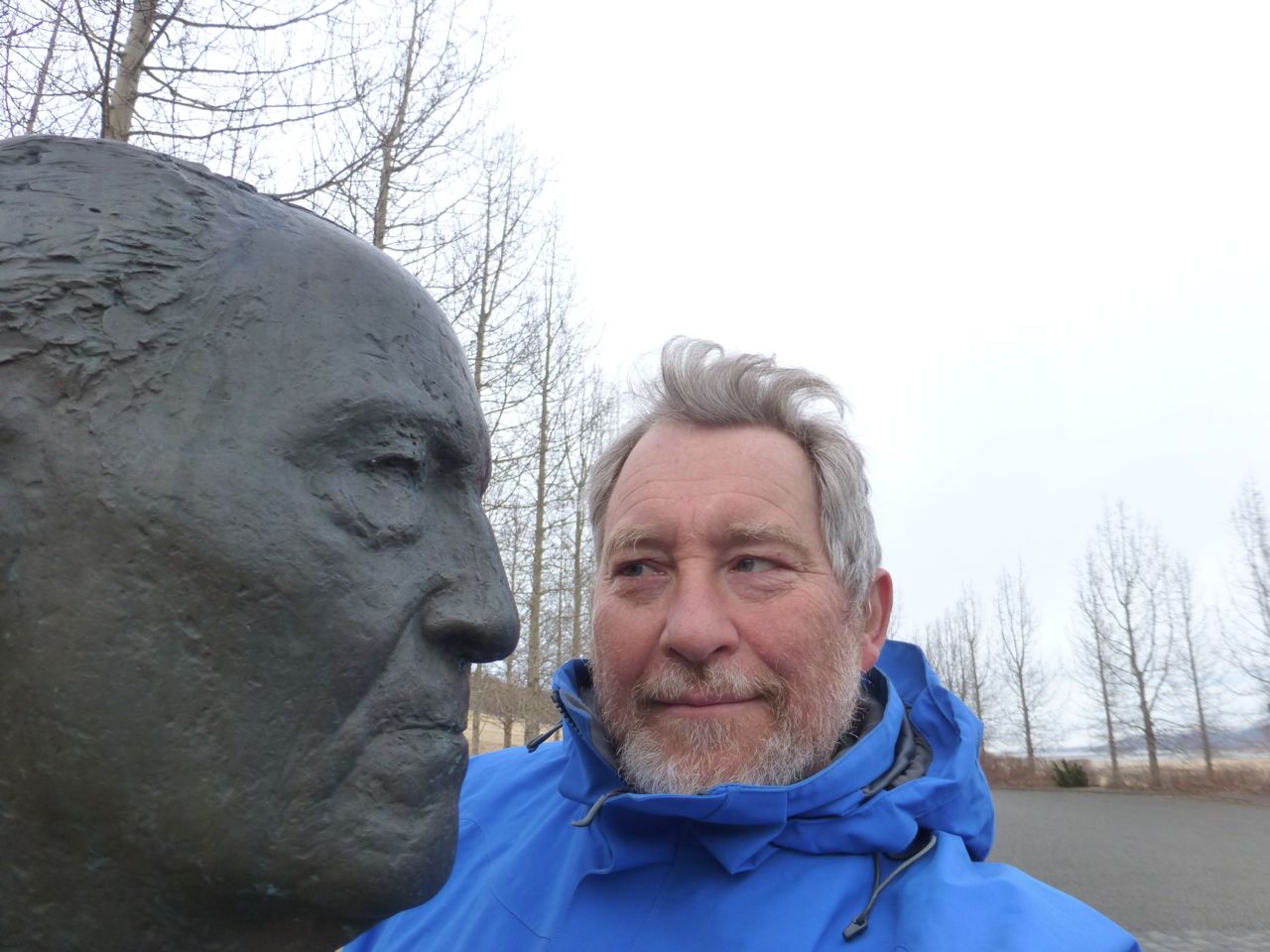
P1530046Harold and Gunnar

Sharing a last windy debate in the East.

What passes for environmentally sound practices today are deep reflections of an economic system, but they’re not green, and they’re not going to ensure either the survival of the earth or of our children. Right now, the City of Vernon, British Columbia is debating whether to keep spraying treated sewage water over indigenous grasslands, golf courses and soccer fields in infilled wetlands or to just pour it into Okanagan Lake. The issue is cost. The reason for that is that “land” and “water” are considered “raw materials”, which are “capital” in an economic system that mines the earth’s creative potential, without ever replenishing it. What I learned in Iceland over the last two months is that “land” and “water” are not raw materials, and creative potential is the only potential there is. An economic system that is complacent about wasting that potential has no future. The one green option in Vernon, to rebuild the grasslands so that the water is moved by the sun and gravity again, at reduced cost and leading eventually to no cost at all, or true wealth, is not part of the debate, although it should be leading it. Here, let me show you. Below is an image of Okanagan Landing, taken this morning, looking Southwest from the Bella Vista Hills.

P1590773

Now, let me show you the image again in an annotated version, so you can see clearly the story it tells.

annotate

A Story of a Lost Environment

The indigenous grassland in the foreground has retained at least some of its capacity to move and store water and to process it into food. The vineyard to the right has mined this environment for three raw materials: “sun”, “land” and “water”, in order to increase the sale prices of the houses on the subdivision above them. The water in the lake is fossil water, left over from the melting of the glaciers 10,000 years ago. It regulates the climate, and ensures that life can live on the hills. It is not for use. The infilled wetlands and the lost grasslands above them are irrigated with water removed from the system that feeds the lake through its forests, grasslands and wetlands. It costs millions of dollars to do, against the millions of dollars of free profit from the land that the earth would otherwise have provided. What’s more, almost all of this earth has been alienated from public use, for now and forever in the future. Now, let me show you a different economic model. This one’s from Iceland.

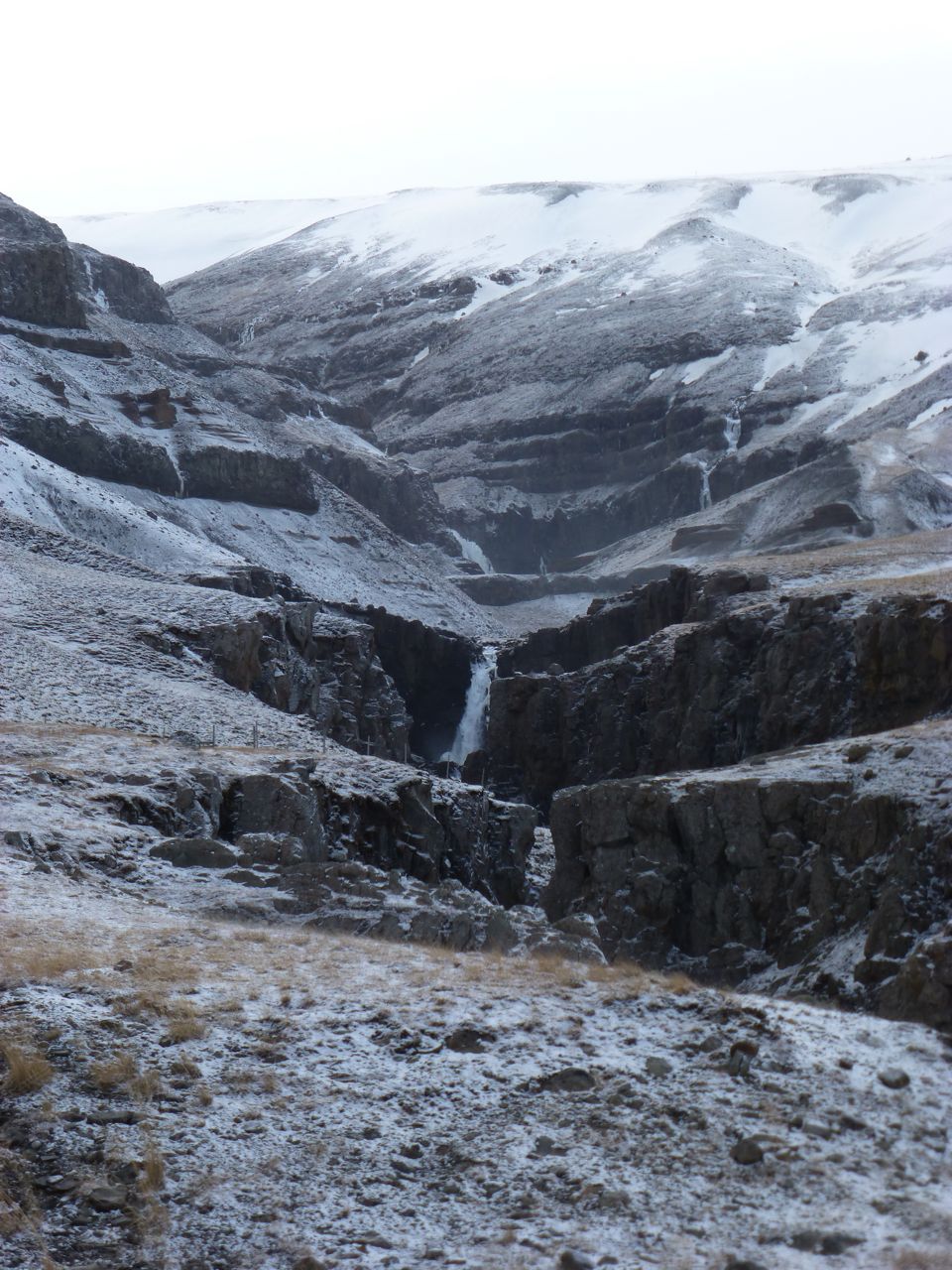
waterfallhut

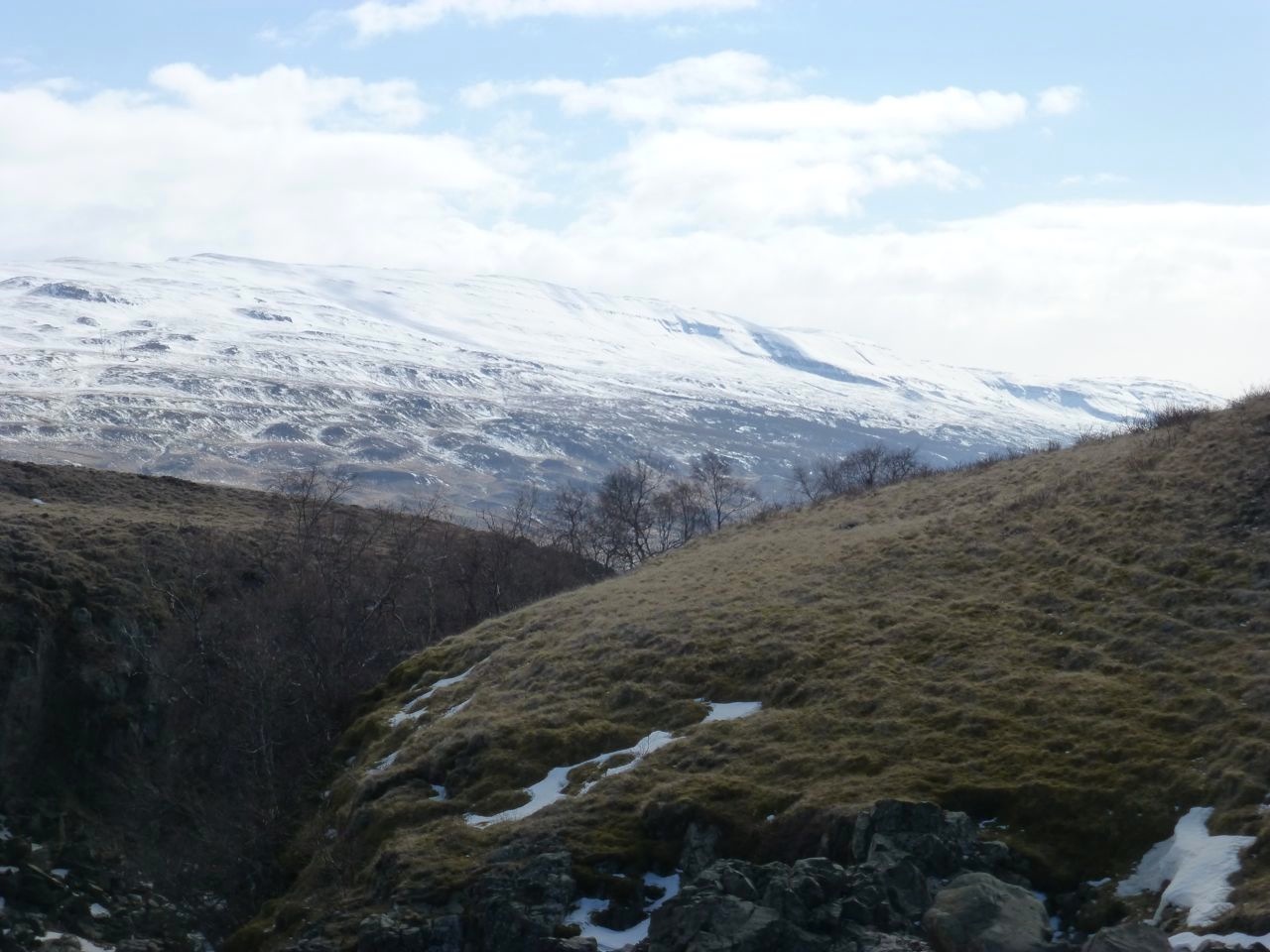
Just one of the Kazillion Un-named Waterfalls in Iceland, Suðurdalur

Now, take a look at the annotated version below, to see the story this piece of earth tells.

annotatedturf

This was once home. Although the over-grazing induced by poverty led to the depletion of the original birch forests here, the Icelandic system of retaining the creative capital of the environment has allowed for reforestation, without impacting future creative uses of the land, including such public uses as tourism or recreation. Future wealth has been created. What wealth was there in the past has been retained. This isn’t always quite what it seems. Here’s what that waterfall above looks like from the current road below …

junkEvery bit of wealth that has been removed from the cycle of this piece of earth, in the form of capitalized equipment of one form or another, has been used until it is out-dated, in the fashion of such products, and then is banked, so that the creative potential within it can continue to benefit the farm. It was never the product that was important, but what went into the product. The shape of a piece of metal is more valuable than the metal itself. Here’s that reservoir of creativity again, this time with my little rented Yaris. Someday, it will retire to a farmyard like this — where it will be no less valuable than it is today, ready for its creative energy to be mined for new purposes.
lotsajunk

None of this is junk. In a fully capitalized system, such as the one in Vernon, this material would be melted down and recapitalized as new material, and all of the human ingenuity it contains would be lost, as would the original investment, which came from sheep grazing these hills. As such, the above image is actually an image of environmental sustainability and green thinking. So is this…

hut

Ruined Farm, Reyðarfjörður, Iceland

Notice that the old turf-wall system has been incorporated into the new Post-World-War II system of using discarded American military materials. Ingenuity is something that Icelanders are loathe to waste, and which Canadians discard readily because in Canada’s economic system that ingenuity and the creative potential of the land it draws upon has long ago been mined, capitalized, and replaced. That all costs money. Not only that, it costs earth. I’m not romanticizing here. I mean, there are ruins in Iceland. For example, here’s a ruined turf house in Reyðarfjörður…

turfhouse And here’s the ruin of the post-War concrete house it was replaced with …

window Like the turf house, it was not built to last, because it was not removed from a natural process. It spent no creative energy. It only gave it form for a time. The thinking that went into the construction of this house utilized old scraps, such as the iron bar that used to tie the wall together above this window that looked out from the kitchen, next to the stove.P1440496

Over and over and over, the Icelandic writer Gunnar Gunnarsson pointed out that poverty is the greatest wealth. Those are the words of a man whose mother died of poverty when he was eight and who had so little economic wealth when he was young that it wasn’t a part of life at all. What then did Gunnar mean? Among other things, he meant this:

ropeBeach Wrack, Reyðarfjörður, Iceland

To any man who lived on what he could scrounge from land or sea, this rope would have been great wealth. It is now garbage, because it has no capital potential and thus, in a capitalized system cannot be exchanged for wealth. The seaweed that would have once fed the man’s sheep, is also now waste upon the shore — although it is as fully wealth as it was once in the past, and perhaps will be some day again. Gunnar meant more than that, though. He also meant this:

wallhouseMultiple Generations 

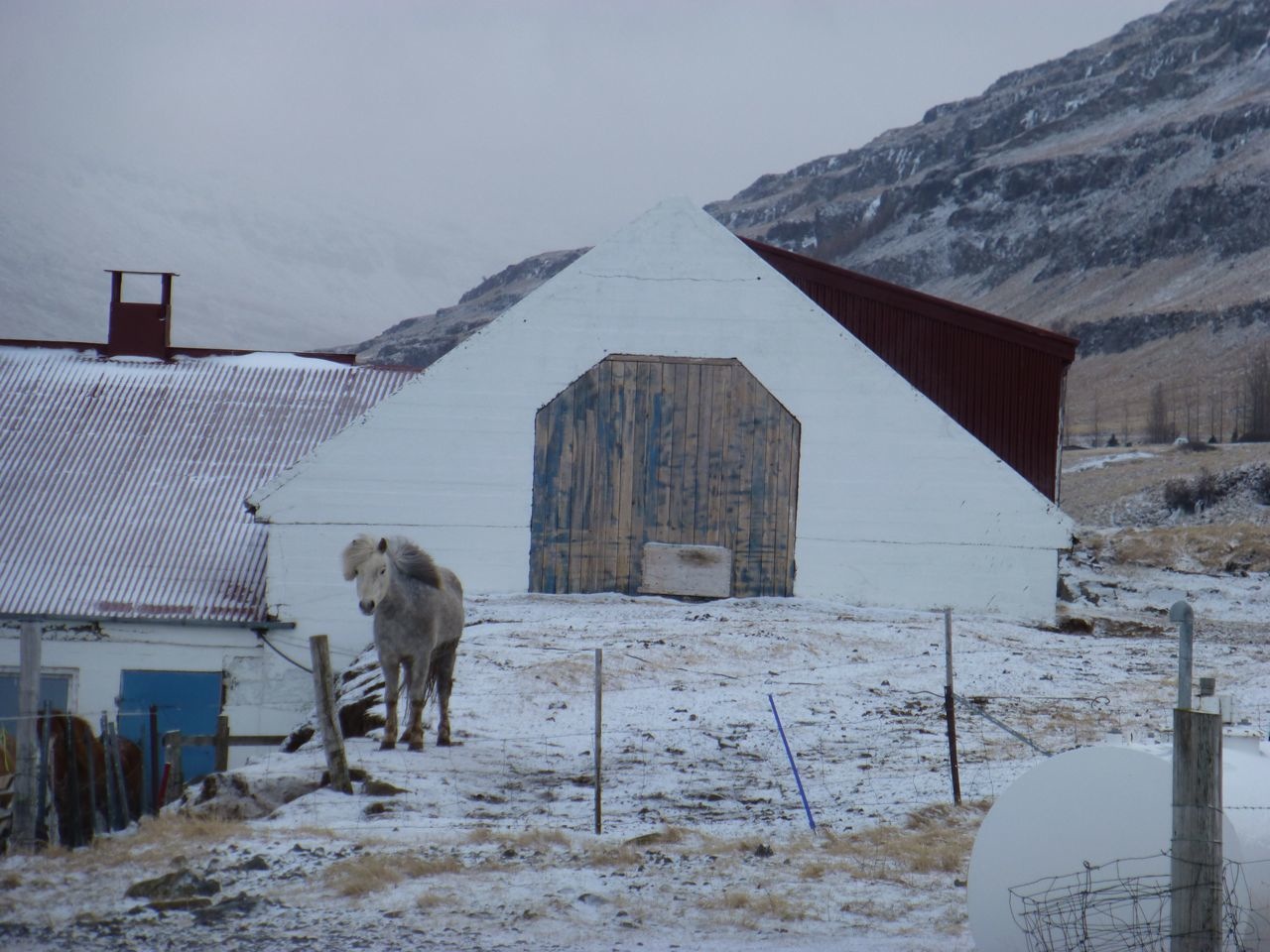
Stock buildings (foreground), fence, turf house, and boat shed by the water … this was Gunnar’s Iceland: a country where wealth that came from human creative energy meeting the creative energy of the land was built up over time. Its products (wool, lambs, children and so forth), were created directly out of this energy. In other words, they were creative products, not the physical ones that capitalization demands. As such, they could be sold without diminishing the land’s capacity to provide more creative energy — something impossible in a capitalized system, in which the wealth follows them, extracted continually from the earth, which is compensated only with money that can only be spent on products that lie outside of the land’s cycles and which must be continually replaced, generation by generation. This is what the Vernon model has done by removing water from the earth’s own economy and placing it in a technical framework, which must nonetheless be paid for by the land. These price includes a social cost, as real as any other economic input. Not only is the transformation of water into a utility economically unviable in the long term, but it costs this:

iceClose up of the Water Fall I Showed You Above, Suðurdalur

Without beauty and mystery, there is only enslavement and poverty. Let me put that another way: once the creative potential of earth has been spent, it loses all beauty and mystery and ceases to be earth. It becomes a product, and the people who live upon it become products as well. In the economic system in Vernon, British Columbia, every piece of earth gets removed at a certain point in history and “developed” — usually into subdivisions, and is no longer a part of the earth’s economy. Building that economy, however, is the goal of environmental sustainability. As the Icelandic model shows, it can be done in a couple ways, at least: one is to maintain an economy built on creative physical energy rather than on capitalization; another, perhaps more practical in our present age, is maintain that creative physical energy within the products already paid for and developed, such as this:

silhouetteHorse-Drawn Manure Spreader, Skriðuklaustur, Iceland

This piece of antiquated machinery represents the lives of hundreds of sheep and many men and women and horses who lived and worked here. It also represents the energy of its designers and creators, and of the men who mined the ore and the others that smelted it into the iron that made it, and the others that shipped it here. Withdrawals can be made from this bank of energy in the form of useful pieces of fabricated steel, which represent the social and creative energy that went into them, and which can be recombined into articles of new cleverness, not new machines, per se. Withdrawals can also be made more directly on the social capital of this machine, by turning it into art, or history, or tourism, or a deep sense of belonging, or respect, or a connection with one’s ancestors. That is what it is to be a human on this earth and of this earth. It is not a world of things. It is not a world of raw materials. It is a world of creative potentials, in which the economy is creation. The earth keeps giving us chances. It’s time to run with some of them. Here’s one…

yellowNot Green but Yellow and Blue

The photo doesn’t show it, but that’s a wild bee with a neon blue abdomen, on a dandelion growing in an overflow beach parking lot near Okanagan Lake. The bee lives on wild land, while domesticated bees are dying out. The dandelion has colonized land that humans have thrown away from their capital plans. It has, in other words, brought creation to it, and holds within it the potential for several new industrial ventures, which will enrich the creative potential of the land in the same way that the flower has by growing here, rather than than making withdrawals from it that it never intends to repay. Well, the earth is telling us that it is time to repay our debts. It doesn’t want our money. It wants us to create within its own economy. Rebuilding the earth would be a use of economic capital that would show a tremendous return on investment. Here, for instance:

sask3 Saskatoons in Full Flower

Another industry in potential. These lush, fruiting bushes live on free water.

… and here …

P1590753

Remains of Indigenous Gardens, Bella Vista

Yet more industry in potential.

And what are our politicians talking about? Sewage and money.

Home on Earth

I made it! I went to a farm near the end of a valley in a remote part of Iceland, and found my way home. I now have two homes on this earth. Just look at them both in this spring full of light. First, my home in the middle of the North Atlantic …
P1450760

Spring in East Iceland (Skriðuklaustur)

And then my home in the volcanic sea inland from the North Eastern Pacific …

biggreenhillSpring in the Okanagan (Bella Vista & the Commonage)

Same sun, such different light. It’s so good to be home on this Earth. In celebration, I am posting this today as well on my blog about my volcanic sea, www.okanaganokanogan.com. Bless bless!

Spring is in the Air

Yes, literally. It’s in the air. Is this is it?

5am


No, That’s an Aluminum Boat at 5 a.m.

Pointed at the Smelter over the Hills and Not-So-Far-Away. Home is where the heart is. Reykjavik

This is spring.

8 am

8 a.m. in Reykjavik

See? Spring is in the air.

But, what’s this? Old friends!

8 am 2

Well Met, Travellers!

See that spring stuff? Yeah, in the air.

Fortunately, there are remedies for spring …

815am


Your Blog at 8:15 a.m., about to fall over to the right.

Note the sad look. That’s because the remedy is CLOSED. Brennivin, by the way, is Akavit made with Icelandic moss and stuff, and with half the kick of the Danish stuff, which is liable to make an existentialist out of you, but really boots the German stuff (Aquavit) all the way back to Hamburg.

Everyone, when you see the sun, cheer, bang pots, call out Hae! or something. It needs a little encouragement.

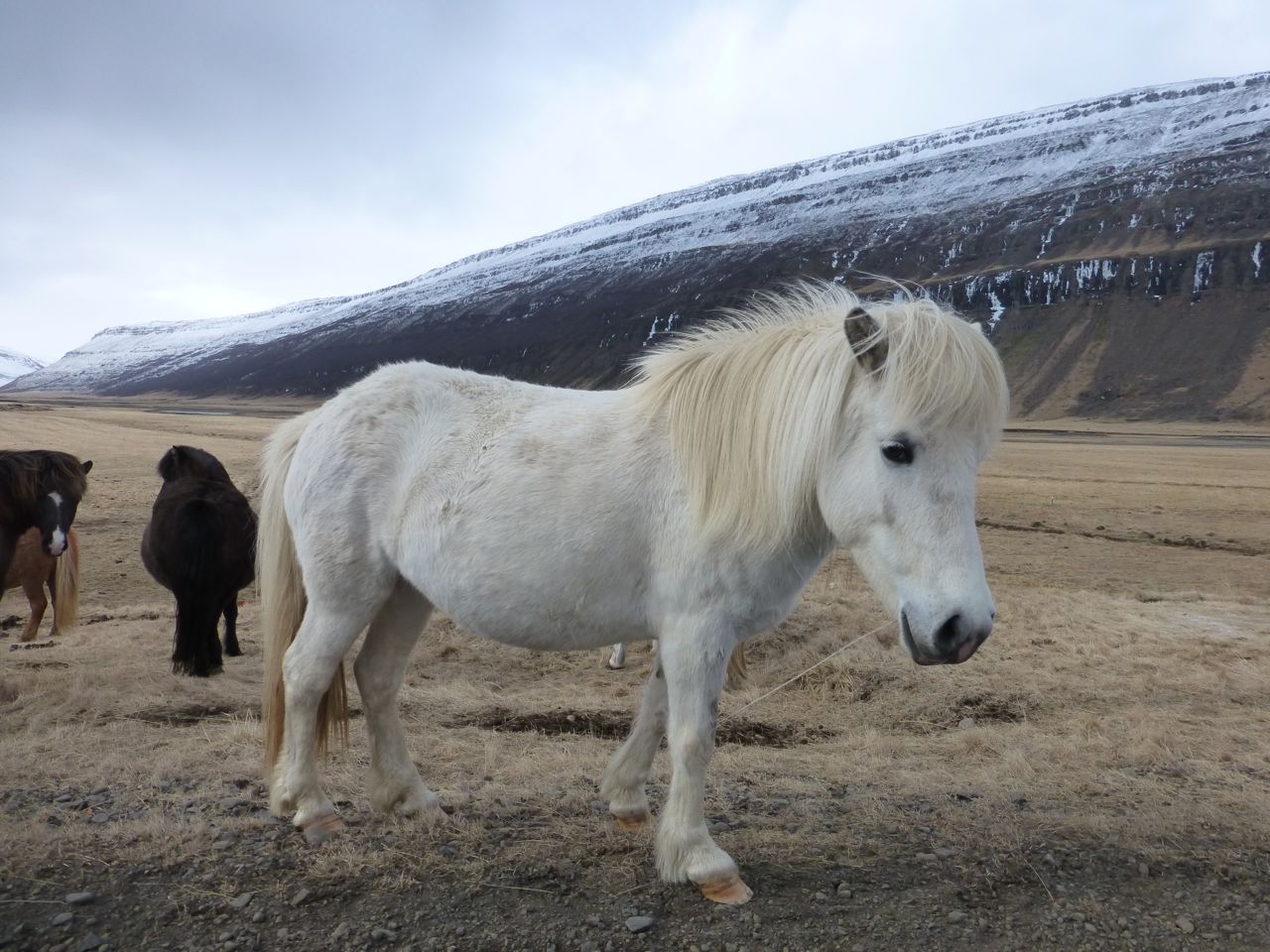
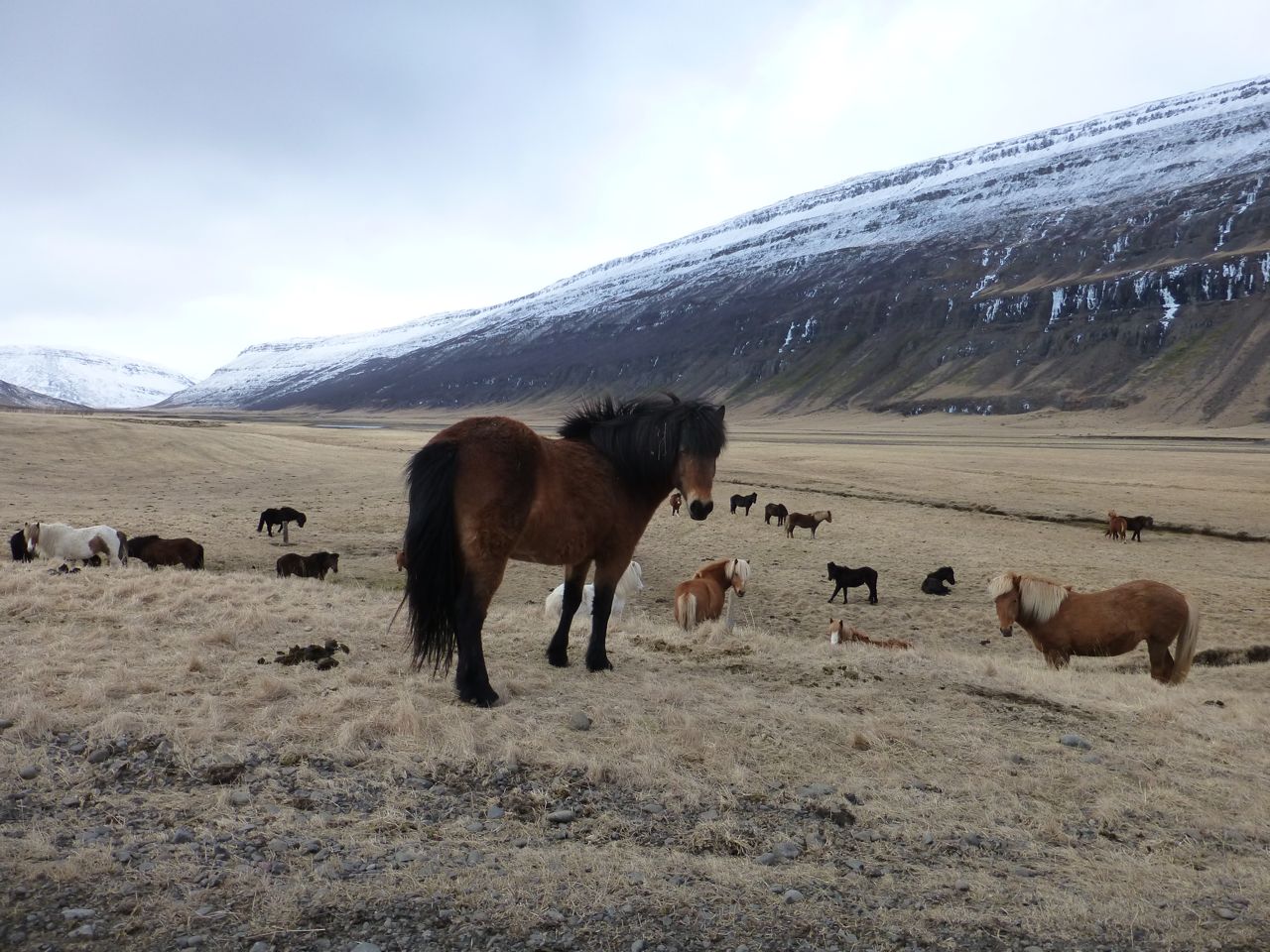
The Trolls’ Sheep and the Gods’ Horses

One of the attractive parts of being a human is the innocence that comes along with that. I like that. In the face of the truth (Trolls keep humans because humans keep sheep and trolls like sheep.), the myth still persists that humans keep sheep because it’s a human world. That’s sweet. Another bit of this truth thing is that humans build churches on top of elves, or, in Iceland, next door, because in Iceland things are never black and white.

myvatnsveit

Black and White and Blue, too. Mývatnssveit.

Kodak went bust because they didn’t invent a film for this.

But I jest. The thing about the elves, though, and the churches, that matters. It’s not too many cultures that don’t see such a big problem with a strata title arrangement. Gunnar comes from that land-use plan. In a strong way, his writing is an attempt to put it down in black and white print. He, of course, missed this:

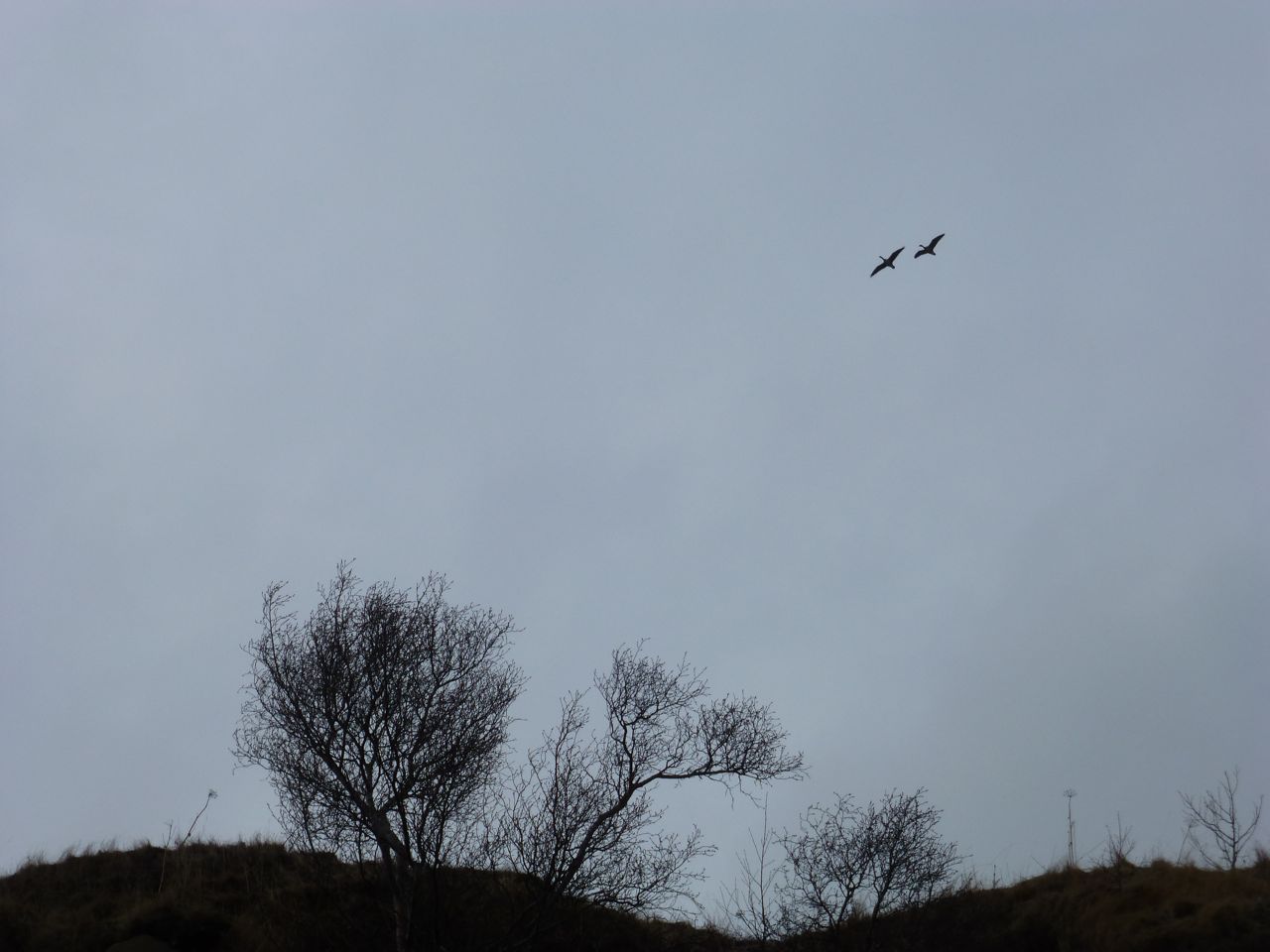
twogeese

Black and Blue

Not just a blind spot for Gunnar, but for Kodak, too.

But, again, I jest. This, however, is not a jest. This is serious. If you want to understand how humans can see elves in the world science, great grand daughter of the church, is positive contains no elves and never did, there are books you can buy for that in Iceland, and they will send you here (for example)…

elves

The View up to Tofúfoss and Jonsfoss from Melarett

Well, you didn’t need a guidebook for that. The thing is, the elves aren’t in the rock so much as in the human mind that is completely anchored to rock and that is an awfully hard thing to explain and shouldn’t be explained. Still, one can talk around the idea, because one consequence of it is that these elves are liable to show up anywhere, and, because people used to be really anchored to the rock, most likely around churches …

klaustur

Skriðuklaustur on the Day the Geese Chose to Come and Stay

… and pretty much twenty-four hours a day, everything that goes on between those churches and those rocks is under constant surveillance. These are the people who know the truth of the matter…

horse… but we’re not listening. So, that leaves a bit of time and wondering. Where are the elves? And, while we’re at it, the trolls? Well, here are some of the elves …

elf2Elves, Underneath the Monastery Viewing Deck

A nice new roof!

Lots of them …

elf1

A Whole City of Elves

So, if you were going to build a monastery in the East of Iceland, and it had to be near here, where the trails to the north, south, east and west crossed, then beside the elves would probably be a good idea. Now, I’m not going to get into what I think has been done to these rocks or what their secrets are (give me a couple days), but I’d like to point out that down below the monastery, there are worse things than elves.

P1470106 Things like trolls, and … P1470121… elves under a troll enchantment. Now, to be clear: these are not Tolkein-style elves and trolls. These are some form of the human subconscious, seen through the things of the world. In this picture of psychology, however, trolls keep sheep …

P1470099

Lots of Sheep!

They are a flock that roams in a time inaccessible to human vision, but just on the edge of it. Sometimes that edge seems very close …

trollsheep

Pride of the Flock

At any rate, they are beautiful sheep …

trollsheep5… with a faithful shepherd …

P1470093

… that just happens to actually be …

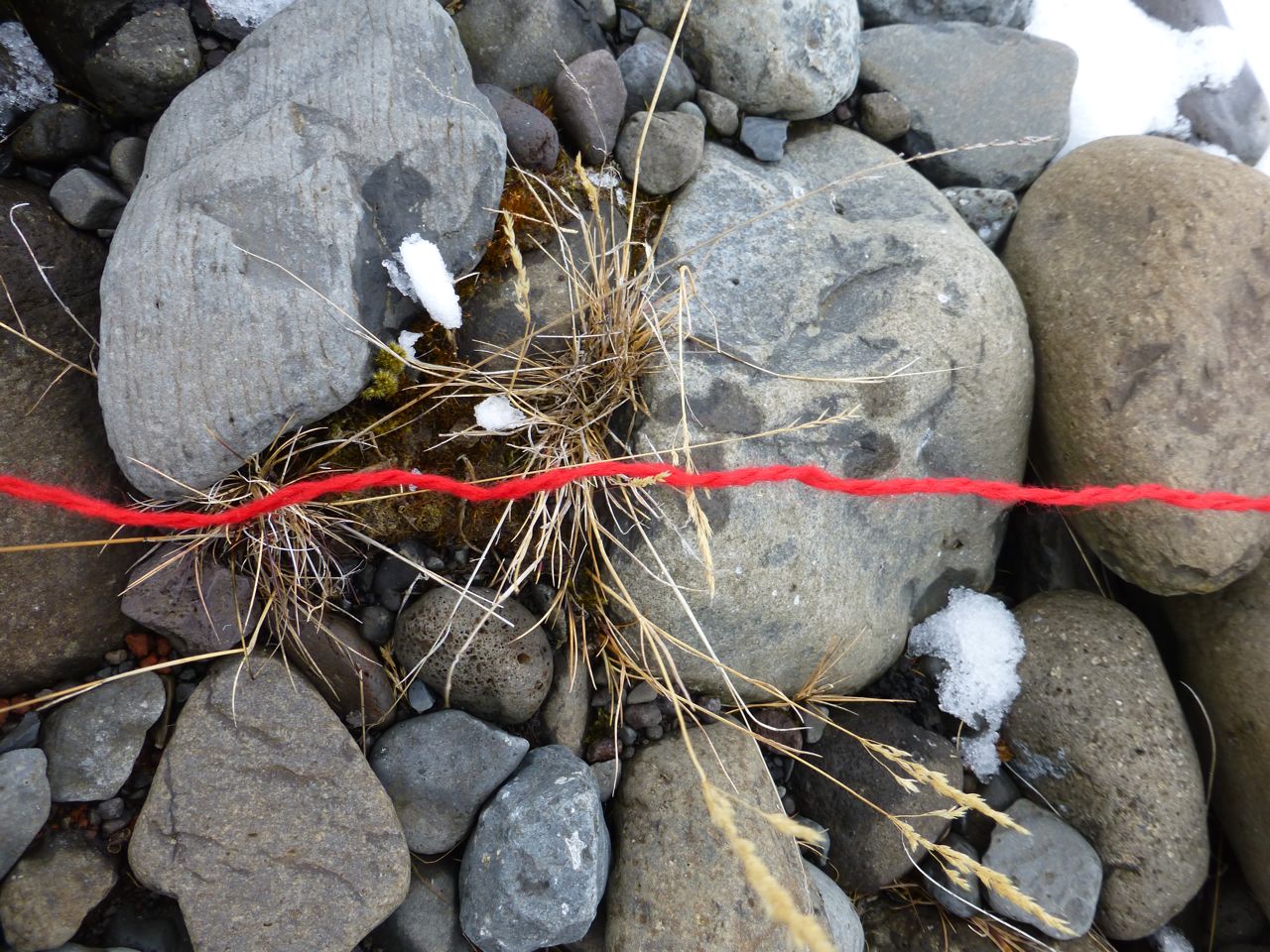
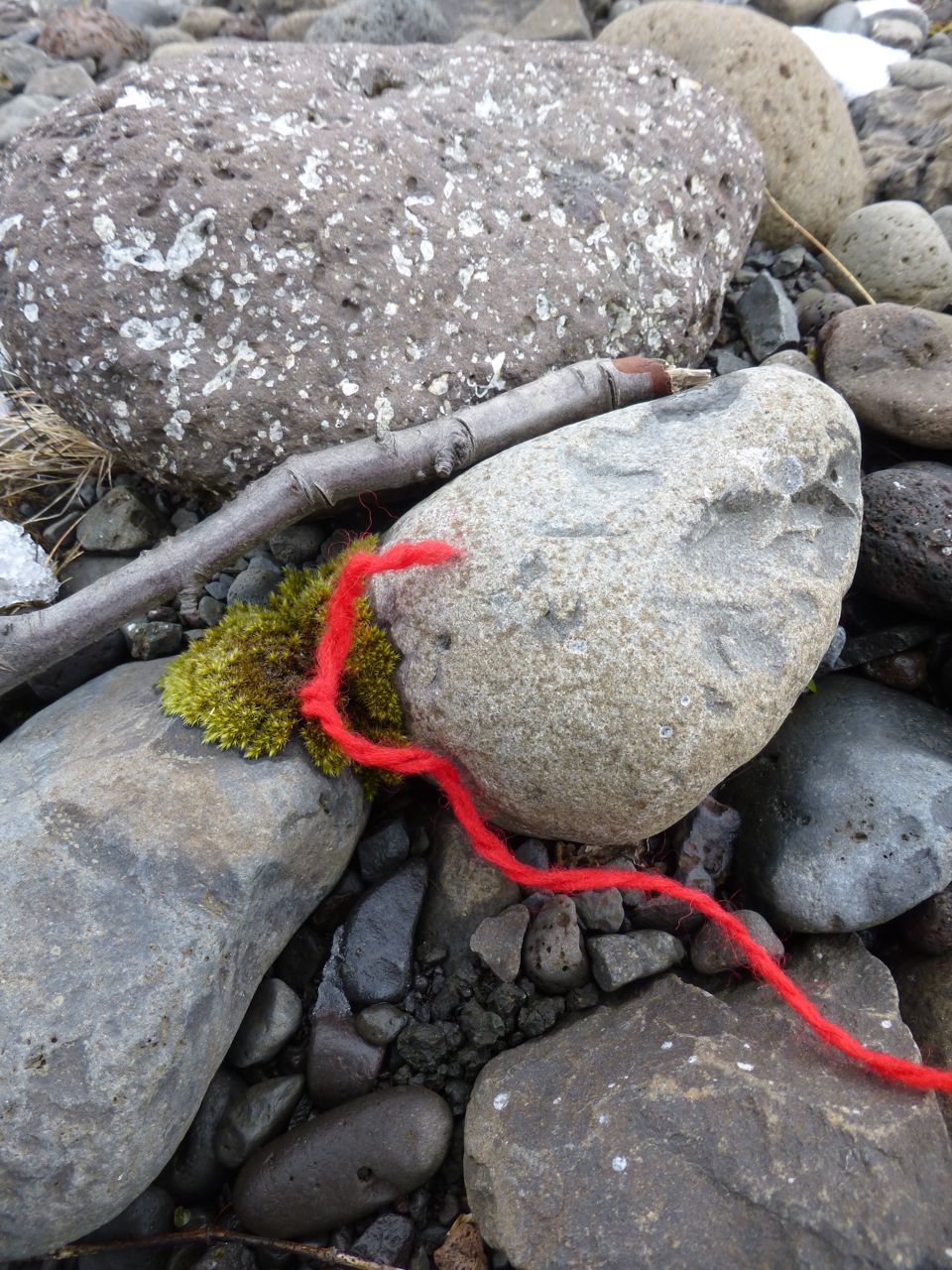
P1470439… more elves.  How can you take a photograph of such a story? Cameras are tools of a scientific world, and record it well, but they’re no good at the tenuous world of perceptions, mixed with emotions and a sense of place that come to people when the land and themselves meet in a physical place that is really a kind of fire. So… time to bring out the wool again, and see where it leads.

P1470410

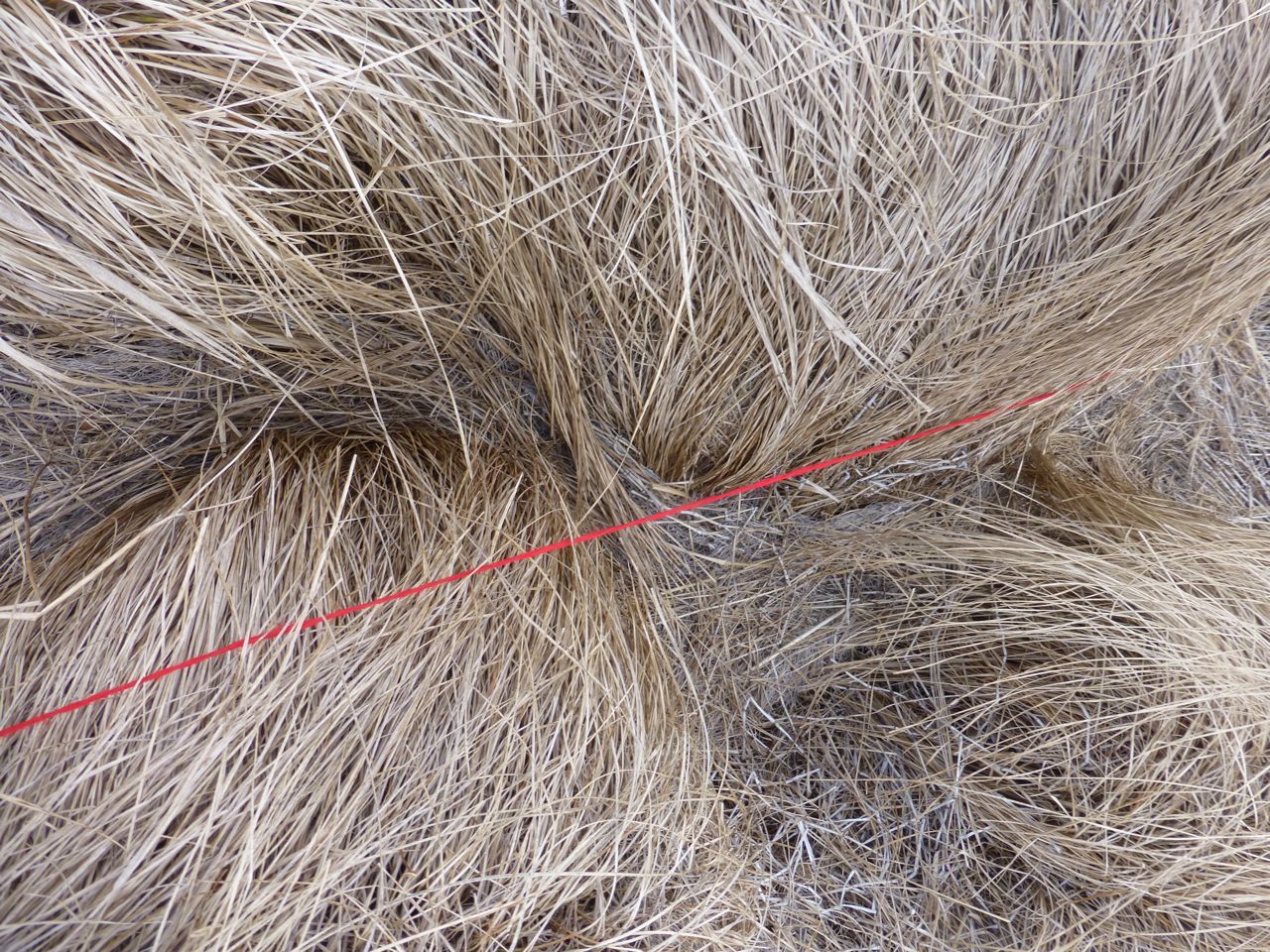
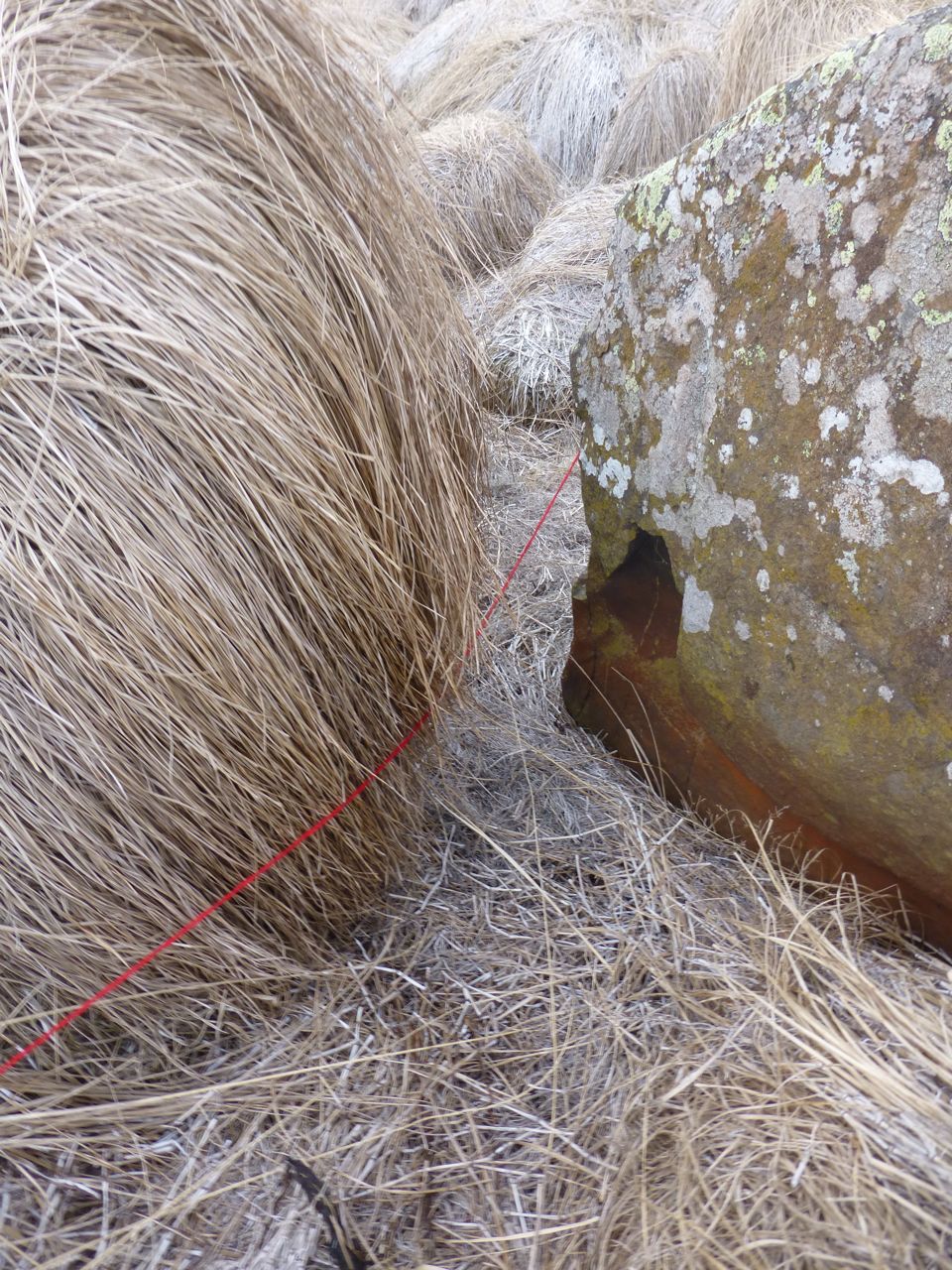
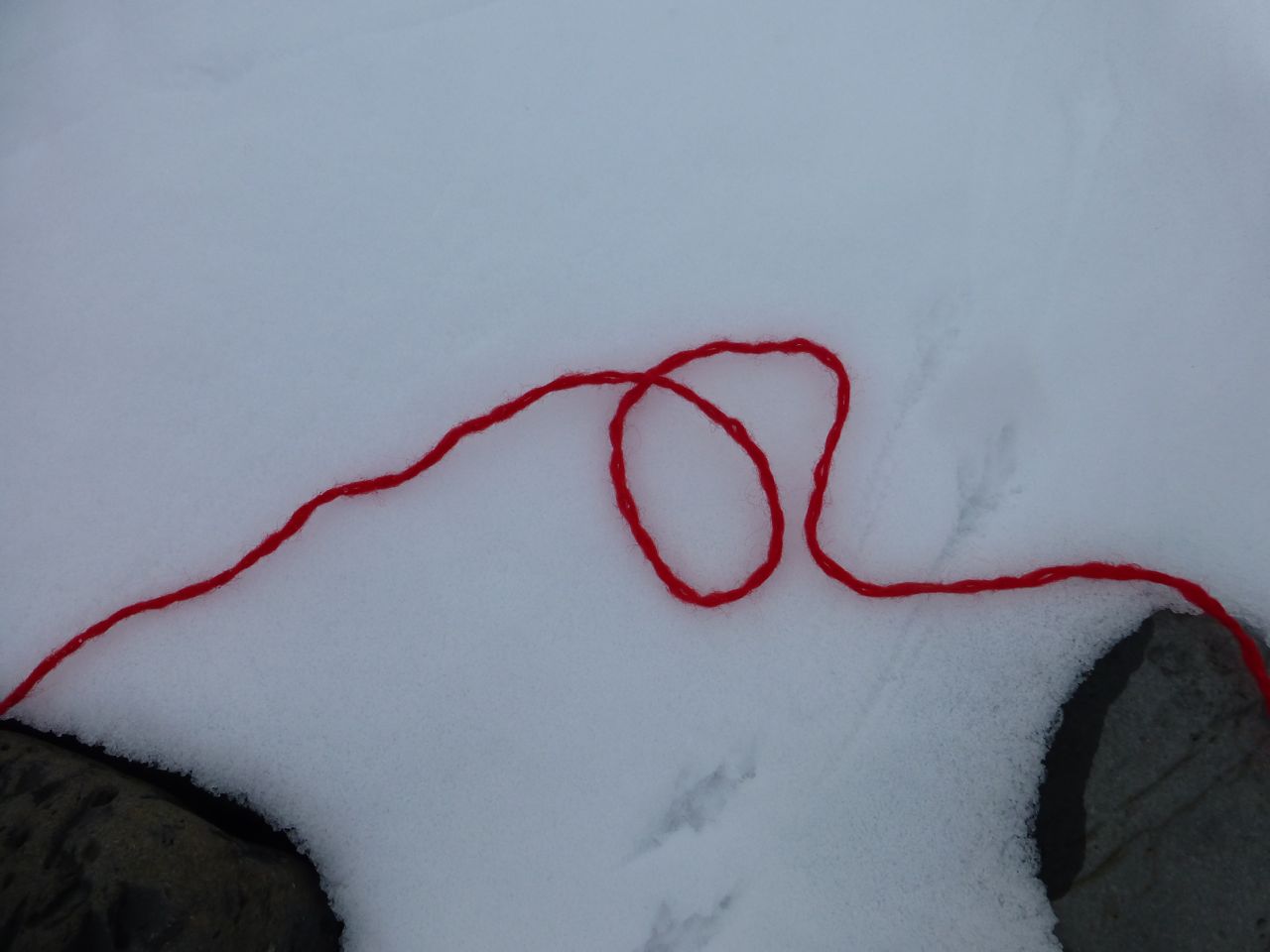
I started in the flock, in the grass, with the idea of winding between the sheep and around the shepherd in a ring, but the wind kept me from that. Sometimes, my wool (and among the sheep, and worn from three times on and off the spindle of the world, it really was feeling like tiny lines of sheep wool now, wound and bound together as the birds were when they flew upriver and over me some 15 kilometres up the valley just a couple days ago) did go among the sheep, making a trail …

P1470399

… and wandered and wove between them in the same way that sheep wander and weave the hills…

P1470390

…but more often it seemed to want to hurry along over their backs …

P1470372

Looking back after all my careful stepping between the sheep, I was amazed to see this pure straight line, and so I followed it as I unwound it off the spindle of the world, followed the thousands of hairs wound into its strands, reading them off with my fingers, playing them out, in a kind of tension between me and the wool and the grass and the wind, and when I felt the spindle was thinning, and knew the wool was leading me somewhere, I thought, no, this is not a story of giving it the trolls, and giving it to the elves, where would that lead? More immobility. They were, after all, in thrall. I thought, again, of the birch trees, and headed for a couple five year old saplings on the hill. Before I got there, though, I was stopped by a raven …

P1470339… who took my wool and all its weaving into his beak. As you can see, he stands on the shoulders of a family of elves. So, I was amazed … my story that had started in the grass, and I thought would lead to a prayer for light, led to something quite different. It lead to Raven, my old friend, Odin’s memory and thought, carrying the fire away, and flying. Not only that, when I went back with my birch twig and wound my wool back on the spindle of the world, through the grass and the flock …

P1470388

… under the eyes of the trolls (I felt like I was walking between worlds and needed to exercise some care, but I had my line of blood) …

P1470109

No, Not One of Tolkein’s Trolls

This is the mind in it’s own earthen eye. Or a part of it.

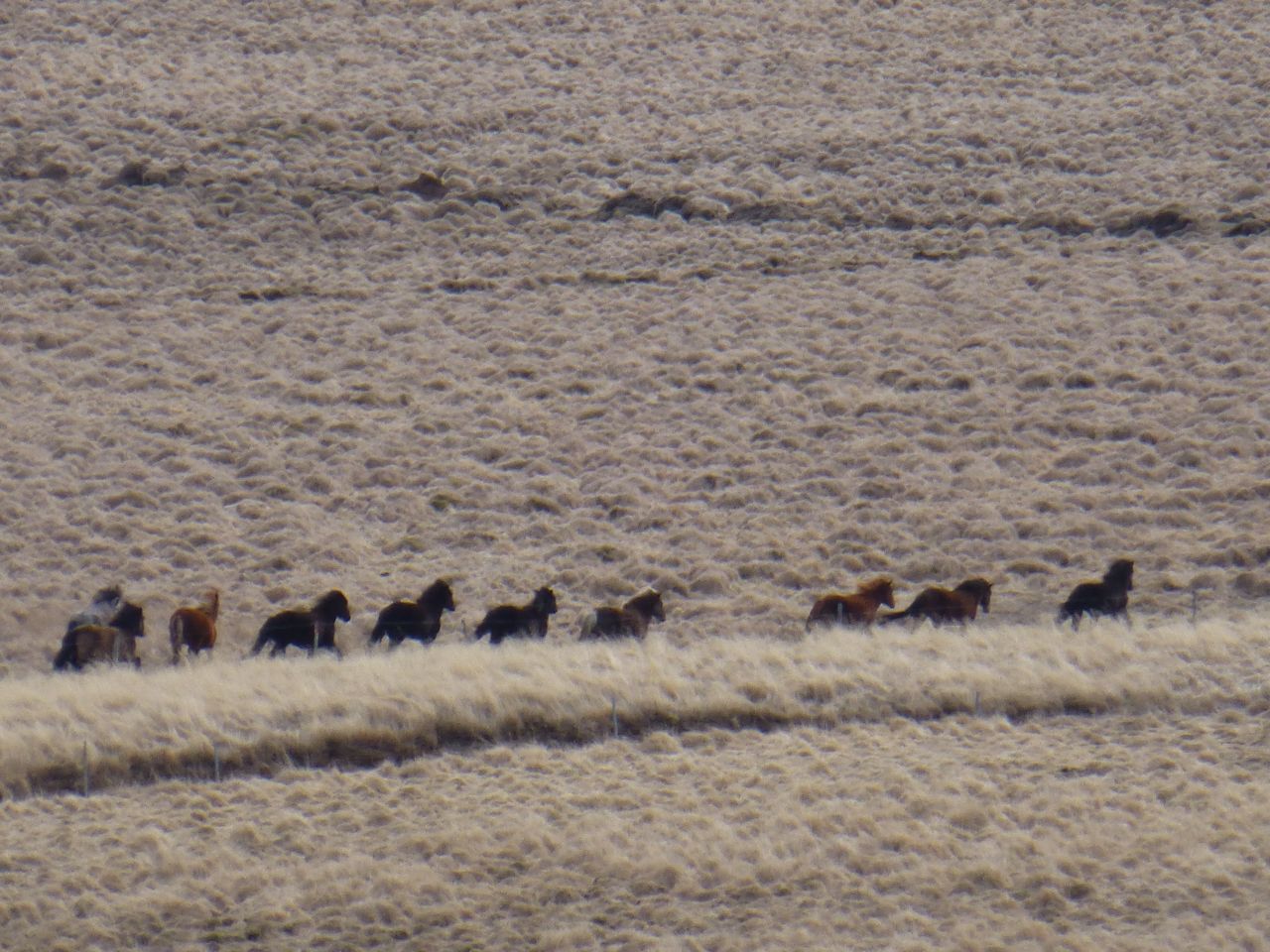
… and under the eye of the horses, who see everything, and never go in, and walk along a different line of blood (or maybe the same one) …

horses4

… and sometimes spook, for what I now feel is good reason …

horses

… wound my way slowly around the years of my spindle up to the rocks …

P1470474Killing Fields or What

… carefully …
P1470386

… and began to feel the line tug at me, as if I were a fish and the raven was reeling me in …

P1470371

… and our fate was blowing in the wind, bound together by a living thread of will and fire …

P1470489

… and yet free …

P1470488All the years were blowing in the wind. It wasn’t going anywhere. Like the birds in their flock, like the sheep in their meadow, like the elves in their stone, like the men in their church, like their prayers and the touch of their fingers to the natural crosses in the rock that wrote, I think, over time their story and now, it’s plain, writes them still…

P1470487

… I enjoyed this moment of energy, and didn’t want to let it go, but all this must be set loose into their life, and so just as I went to pull my wool from the stone raven’s mouth, it broke…

P1470508 … and he flew off with the end of it …P1470502

… or maybe its beginning. For four weeks now here, ravens have been following me and calling whenever they passed overhead, and I have called back in greeting, everytime. Here’s one, dealing a bit with the wind …

P1430001

Sure, it’s all poetry. Yeah, it is. Tomorrow morning, I leave the Klaustur, and go to Reykjavik, where there are far more humans than ravens and poems. This afternoon, I’m going out for a word with the horses, but in my heart, well, let’s just say this, if you come here and leave the viewing platform, and walk for a month through the cloister and down through the birches and over the hill, and a horse comes out to share a word with you …

P1410626

… it might be me. At any rate, enough sadness at leaving and enough joy at having been found, and think of this. When you go to those horses, and find they’ve come to you before you’ve arrived, remember, in your coming, you spoke, they heard, and in their coming, they answered.

P1410665

There, a little poetry for you. I’ll be summing up in the next few days. Next, I want to show you how the sun and time and a  human walking make a story out of stone. No, not one of Tolkein’s stories. Sorry. Those are written by reading books. Beautiful stories, and great for telling around a fire. Here I’ve found ones that I can walk through, and never stop walking. A fancy? There might be some fun in the telling, yes, but a fancy? No.  I’ve stepped right out of the world, and into it. A riddle, that’s what, but a beautiful one. And windy.

The Language of Birds

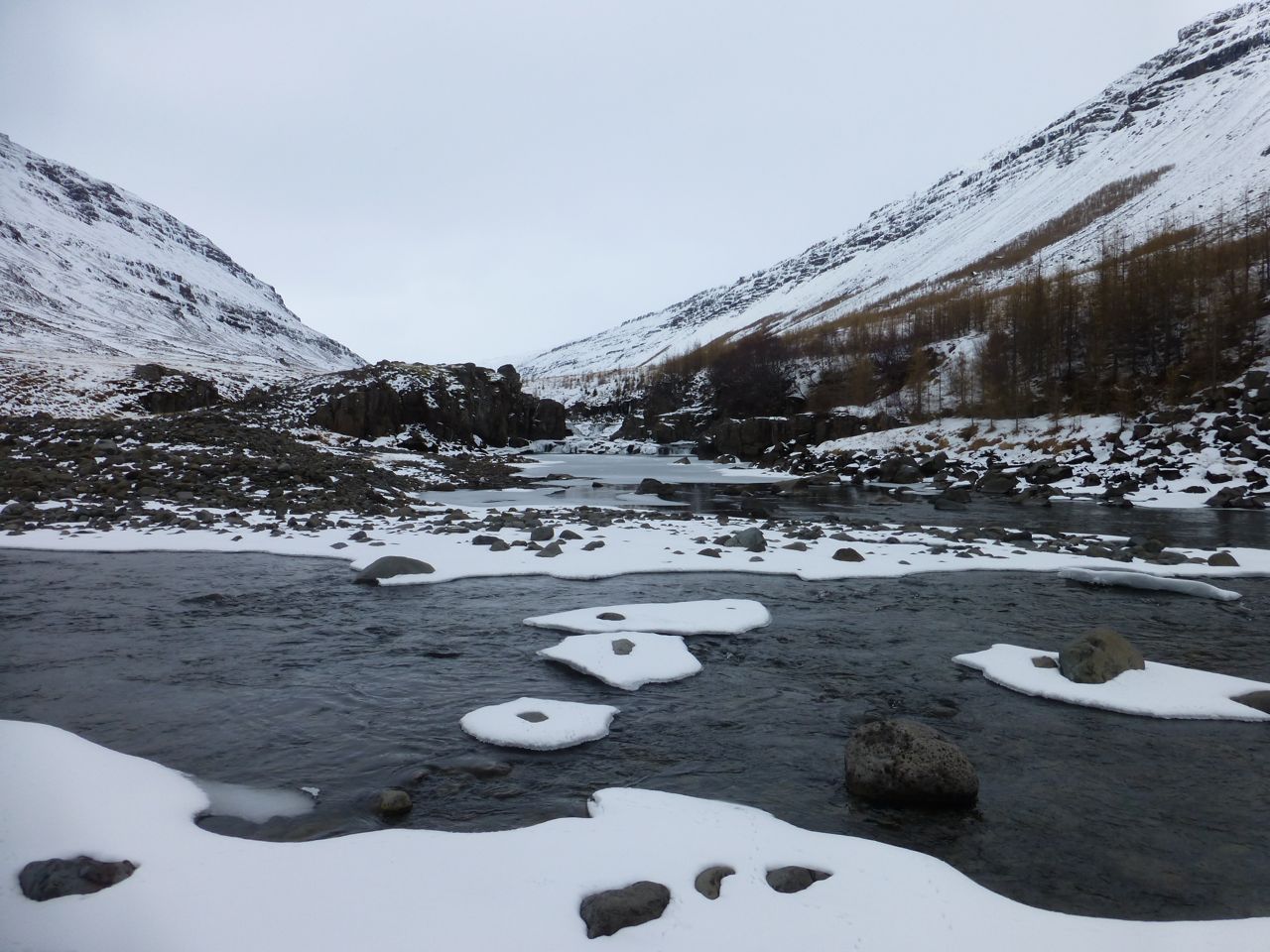
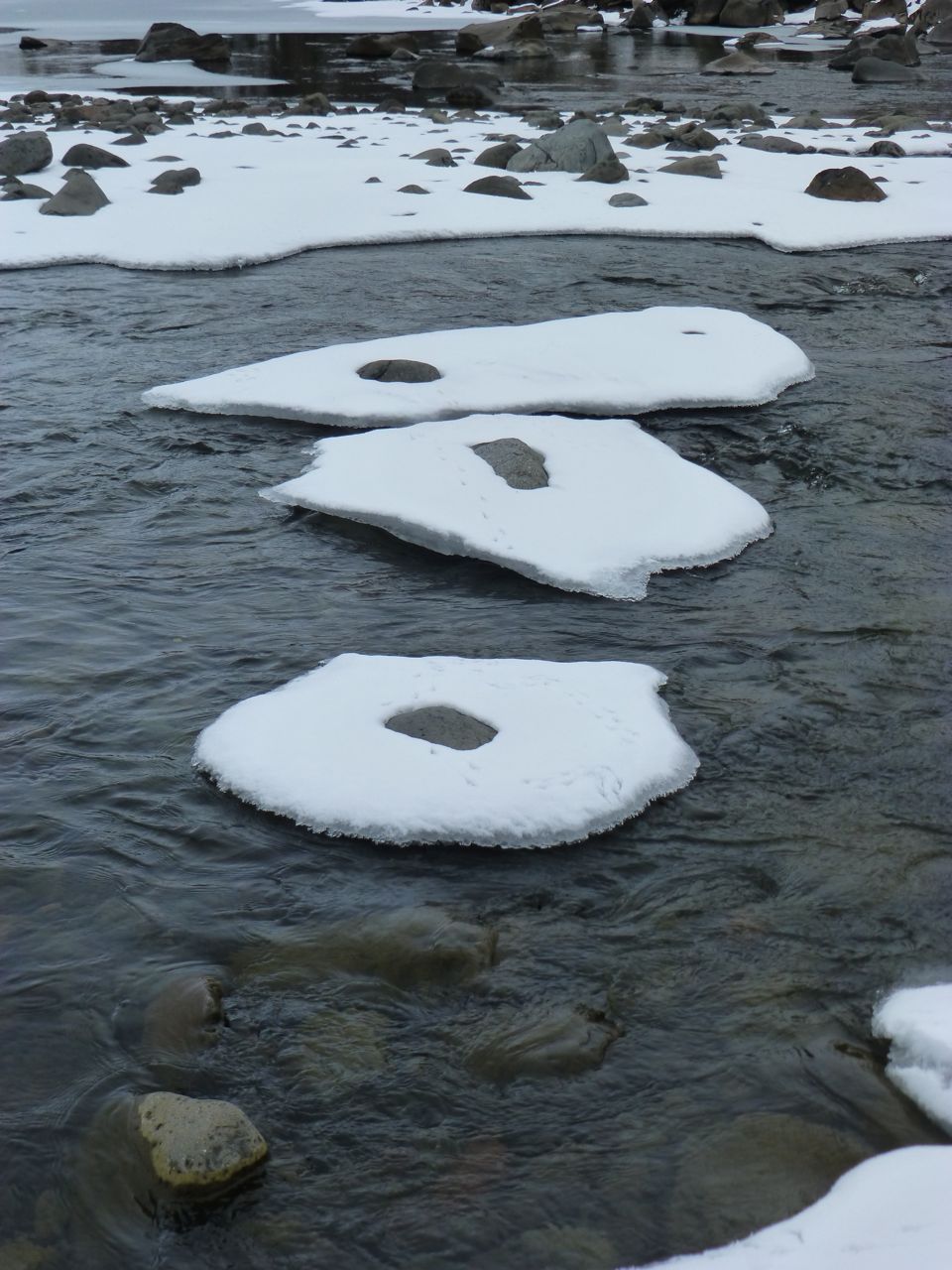
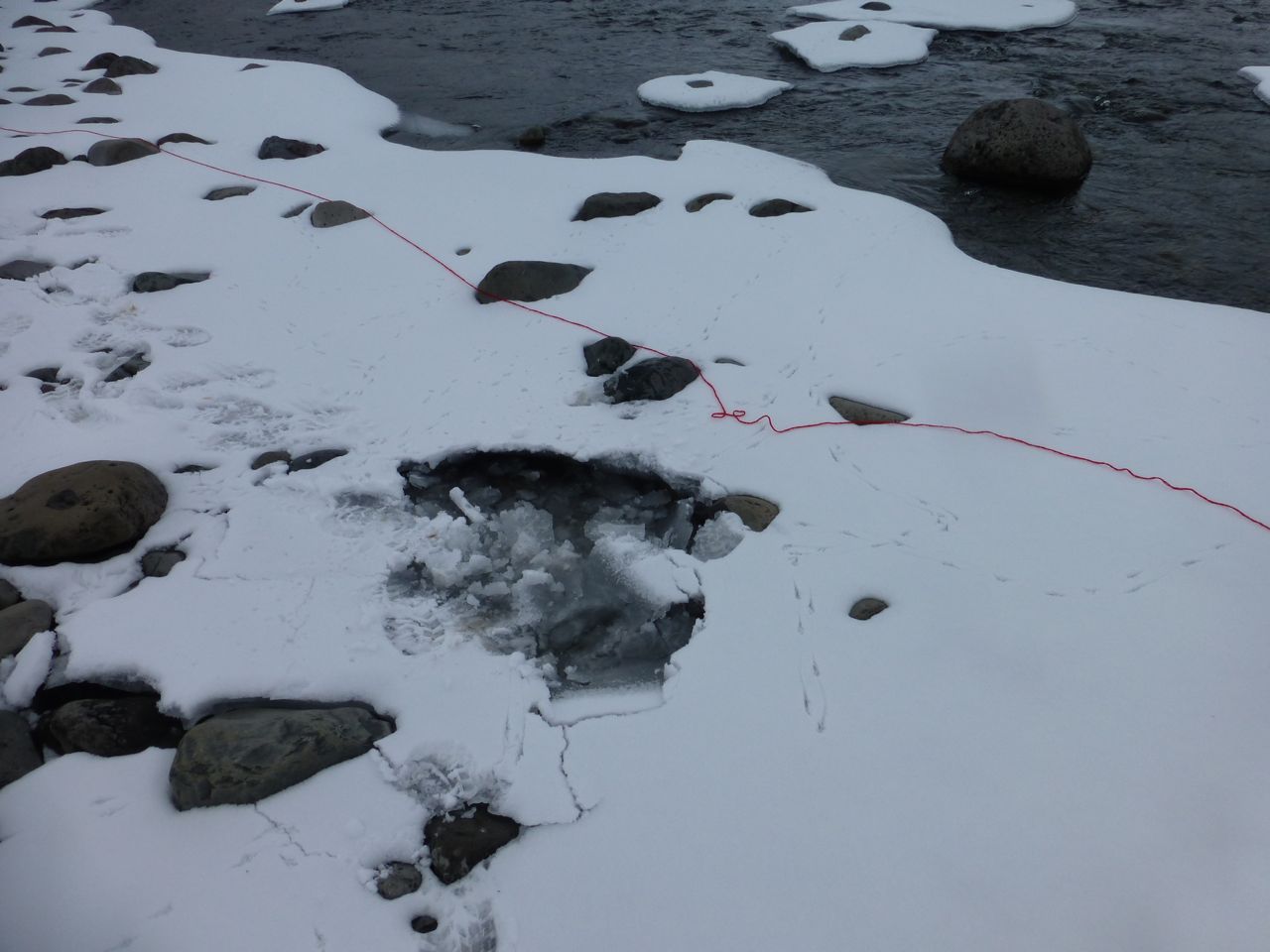
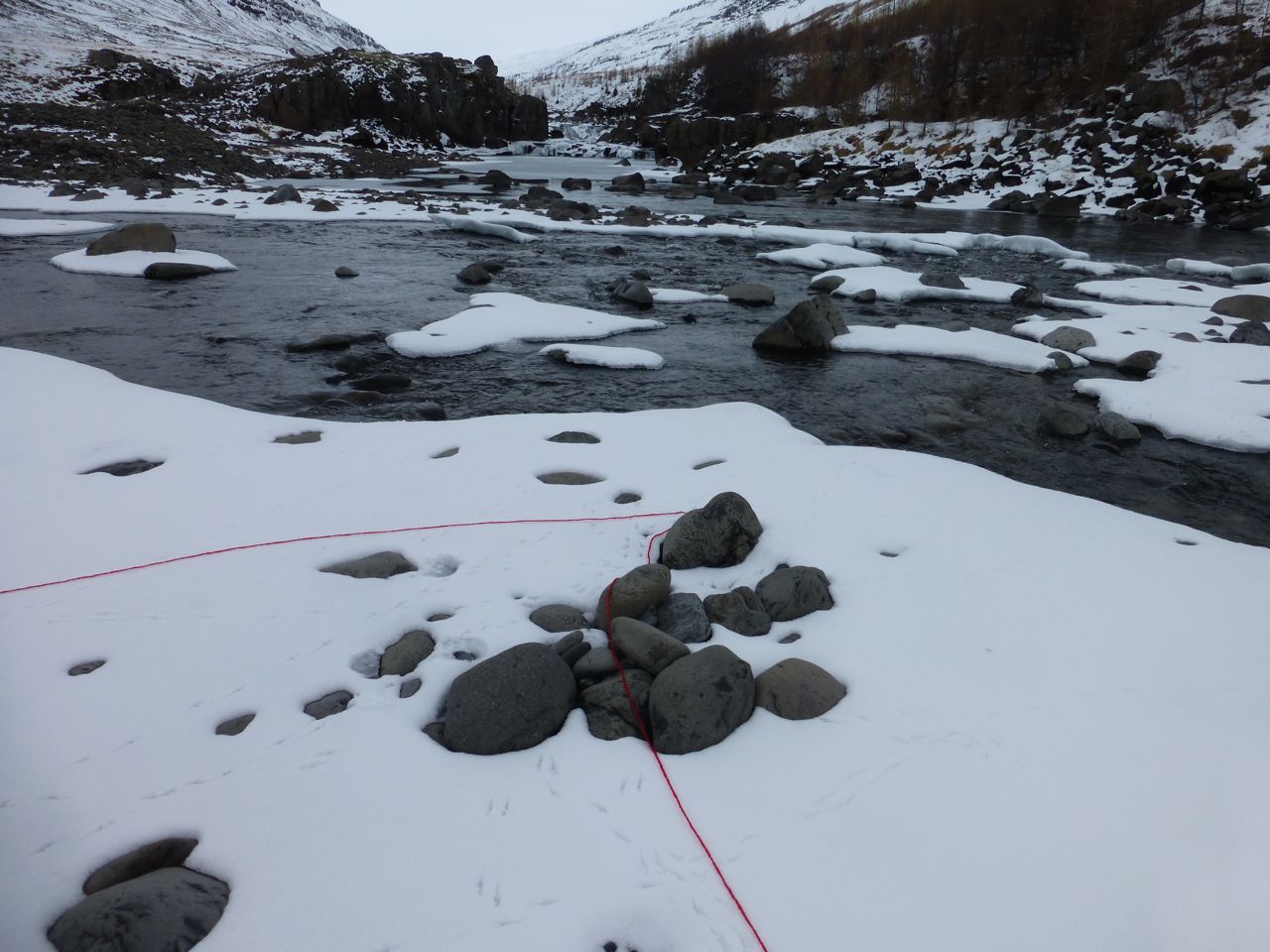
I was thinking of lines and circles and how all stories start there, when I noticed these circles of ice, each with a yolk, leading in a line to this little fall below a long-abandoned turf house at the end of the valley. Next stop the glacier.P1430219
 

I thought they were very nice indeed and stopped all my rushing around for a moment just to breathe in the same place as them, and then the whole world kind of stopped and fell into focus …

P1430247

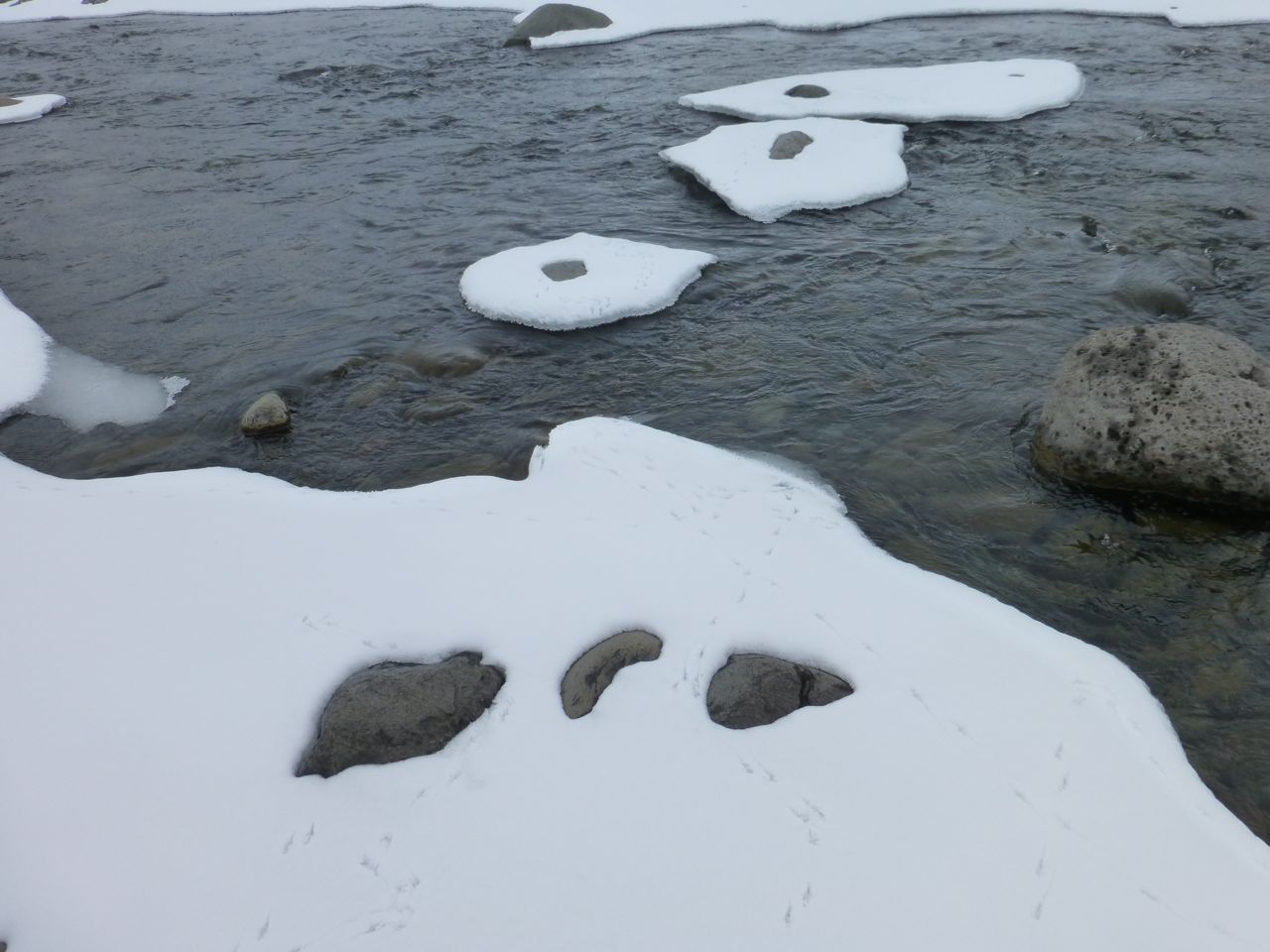
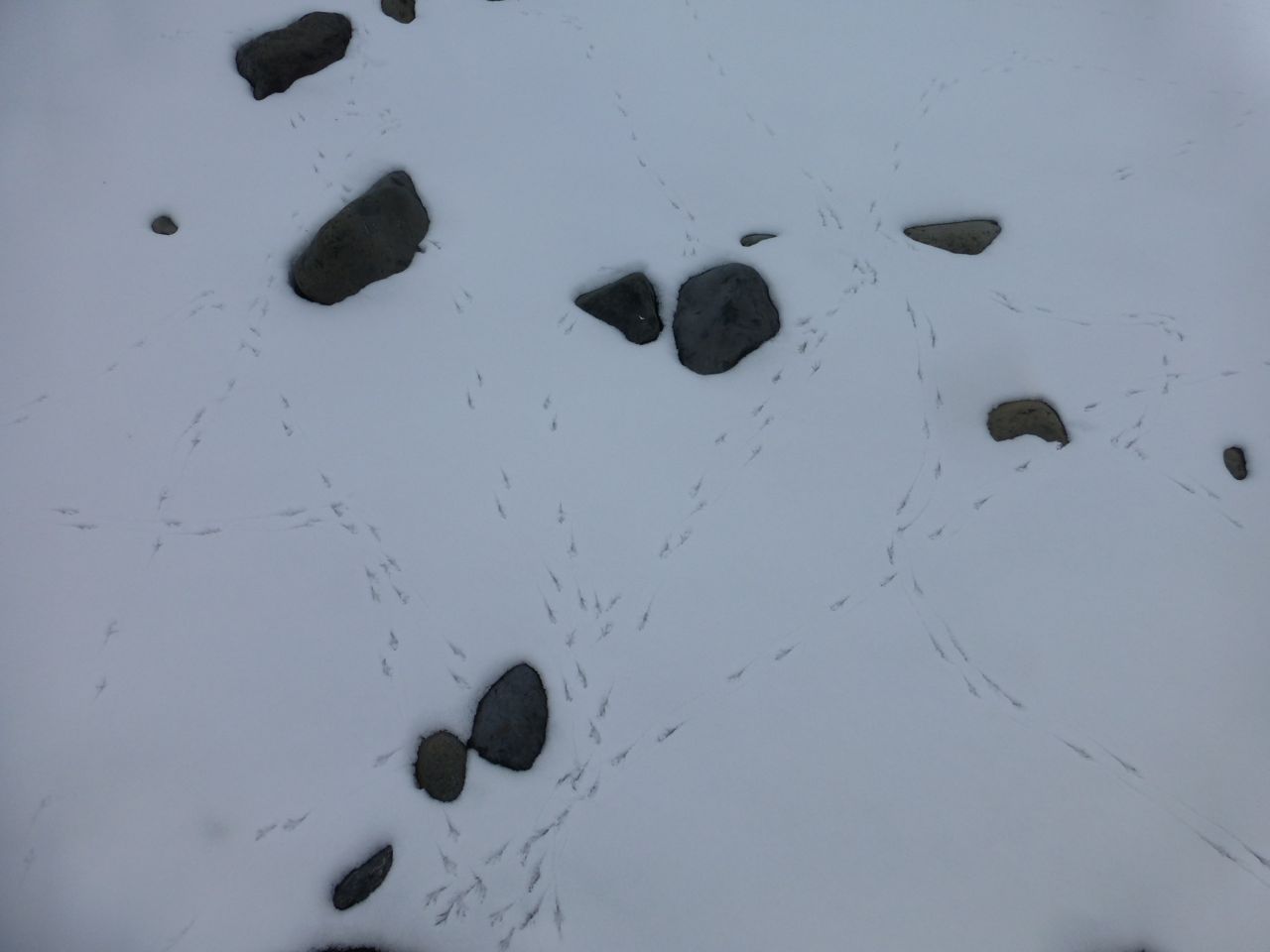
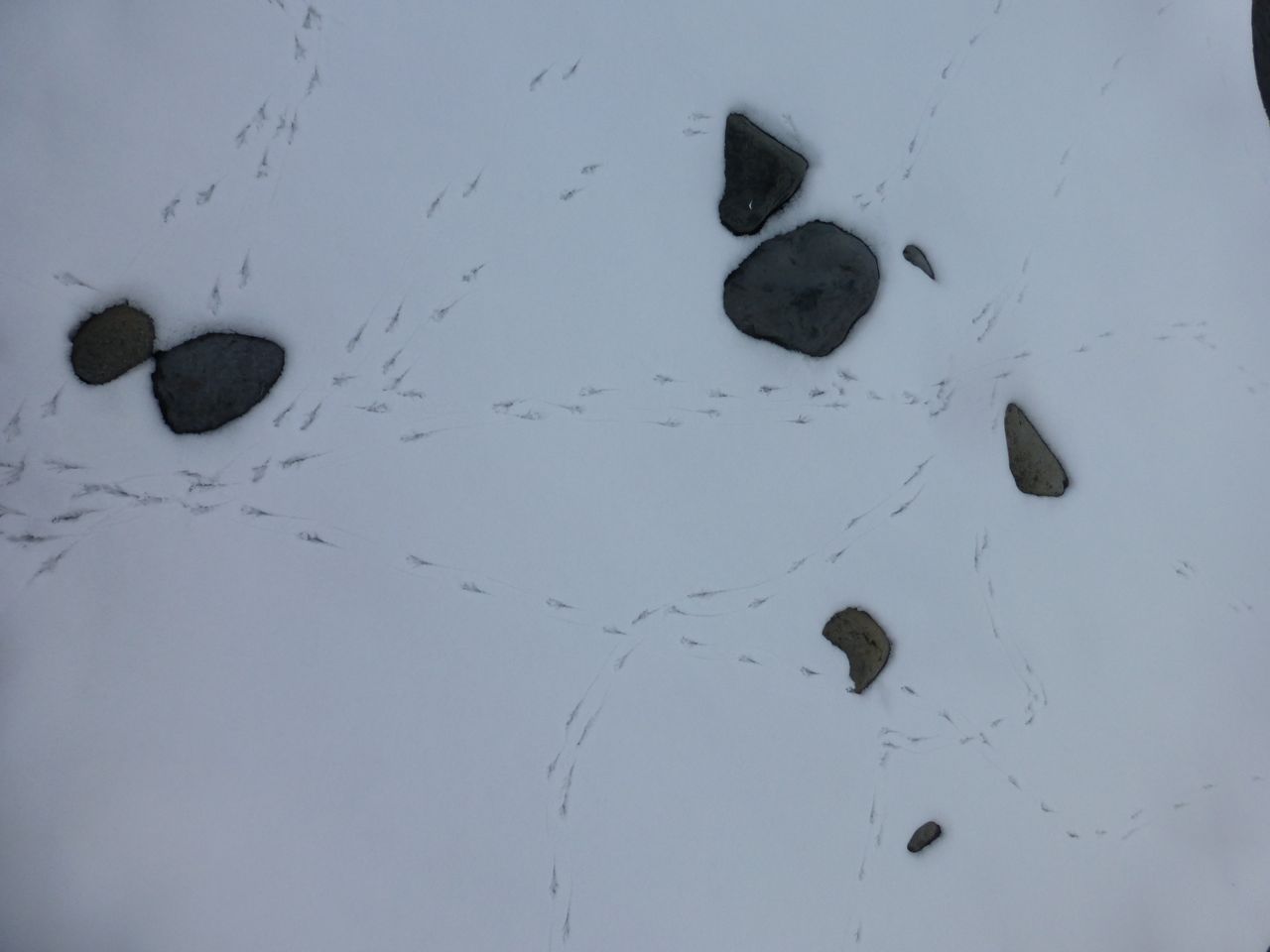
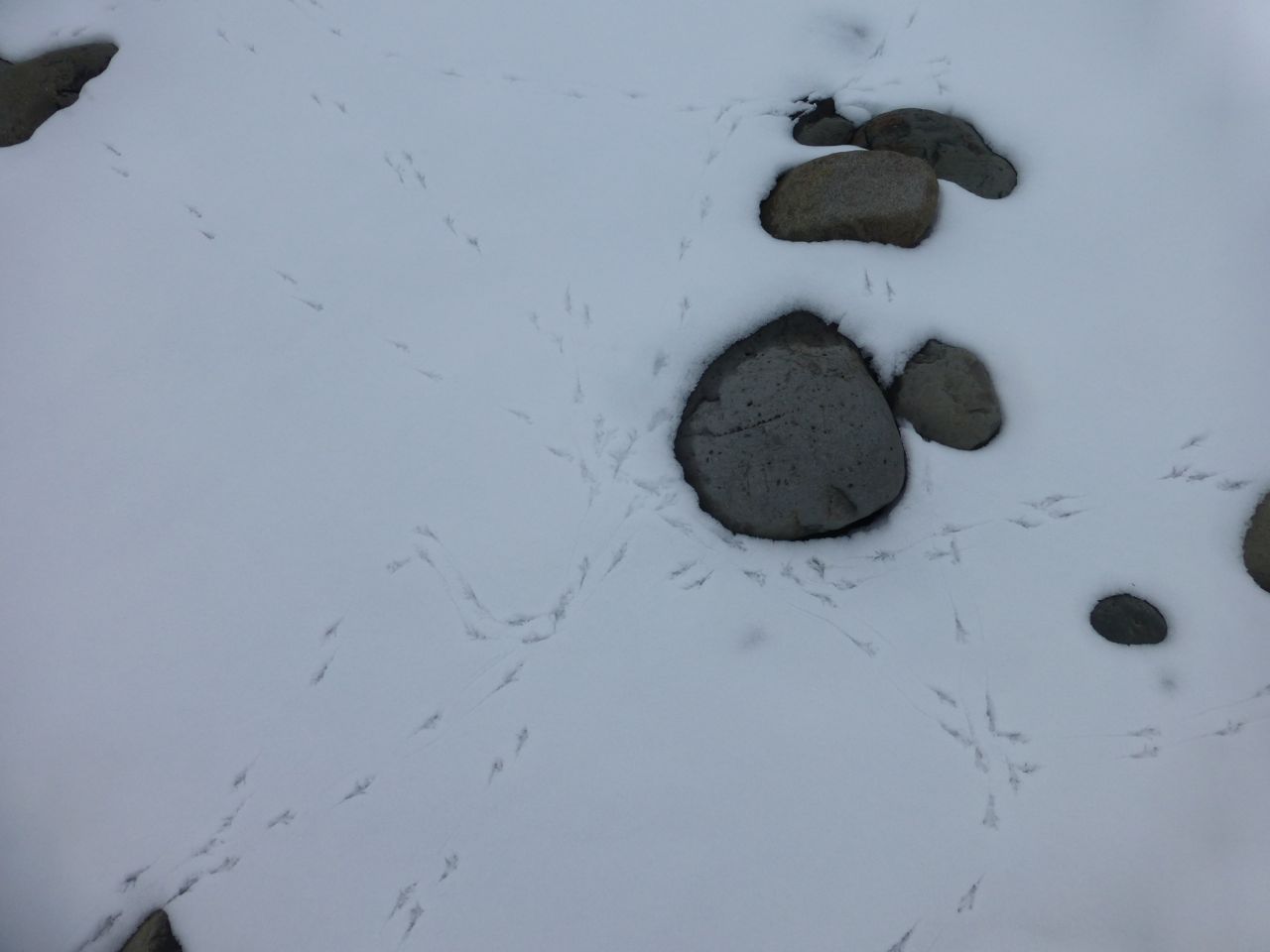
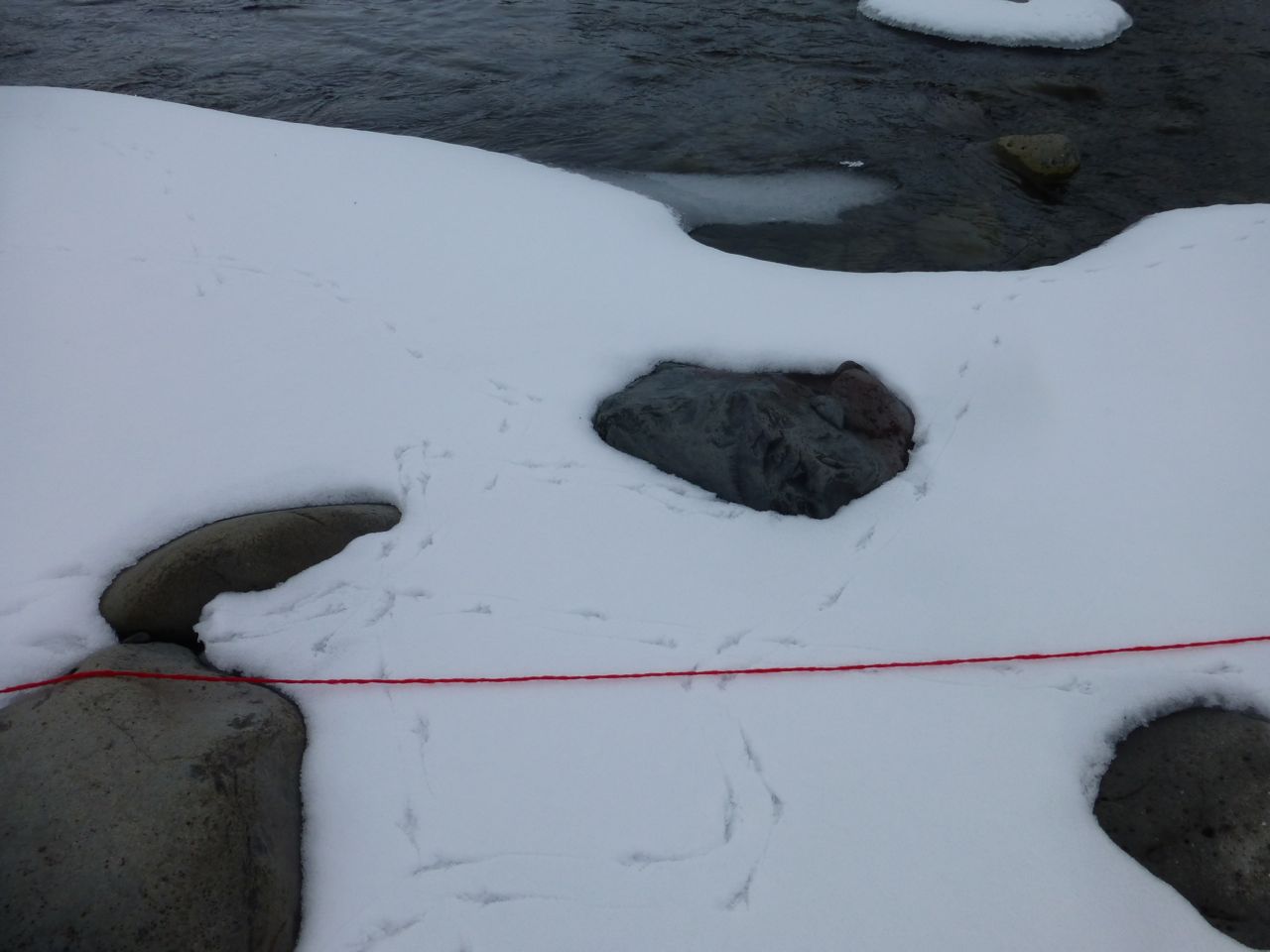
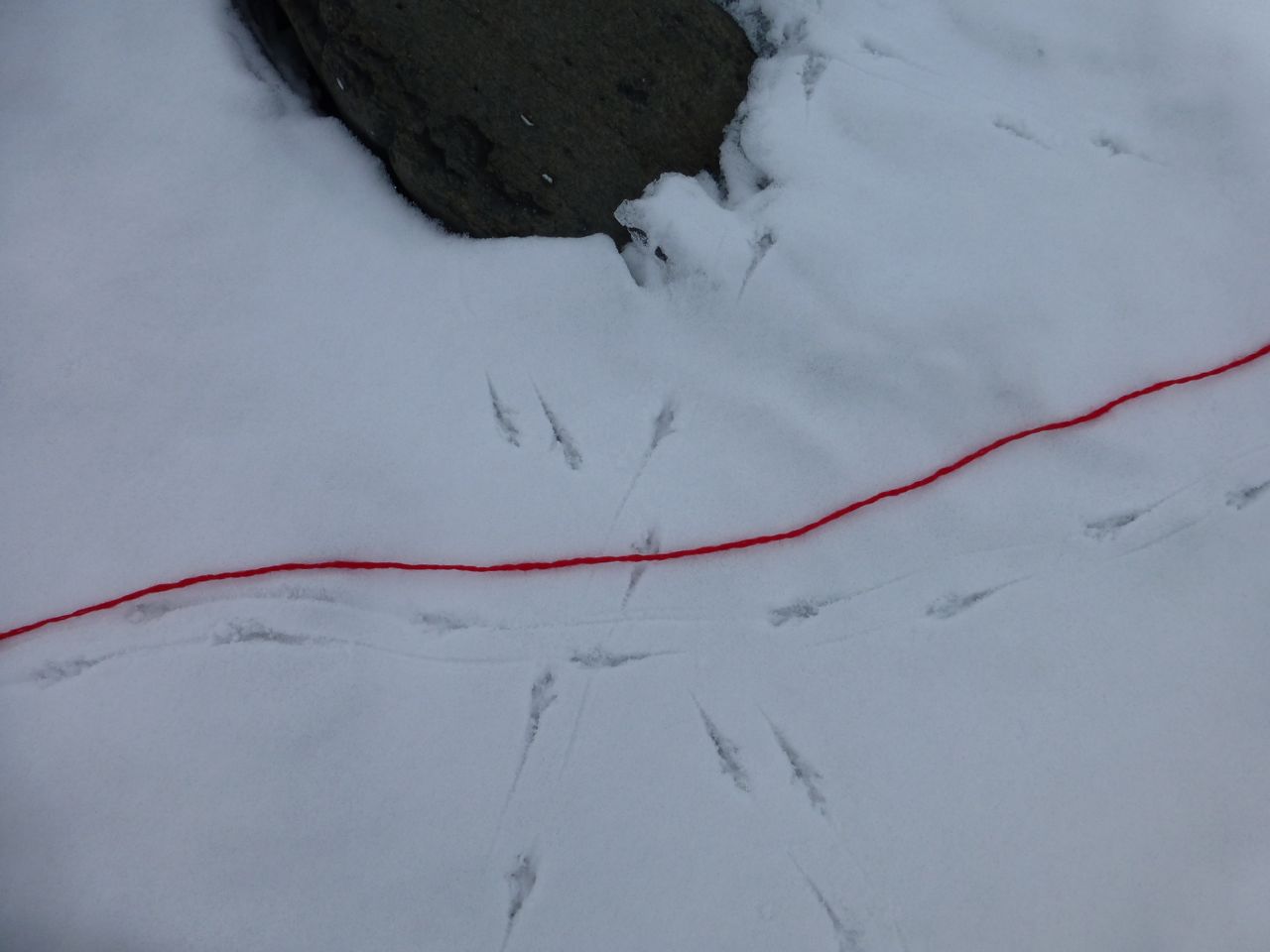
Long stories of birds tracks, leading everywhere, even …

P1430251

… onto the ice floes! In this kind of talking, birds definitely have the advantage. For a while I followed the lines and sentences and song lines and line dancs of this story…

P1430228

The birds were writing a beautiful music. I felt I could almost read it …

P1430231

… and I knew it wasn’t random. There were too many stanzas and too much fine drawing work centred on stones, and I thought, well, isn’t that a beautiful thing: the delicate footsteps and the cold, hard stone …

P1430240

Somehow, it made the stone a lot more like air… really fascinating air. All this time, I was meditating on lines, of course, because Ken Blackburn, sculptor, put me up to that, and circles, so I thought, in my human way, that it would be a fine thing to follow those lines and learn the dance steps, so to speak. Who needed a mind. Let the body do the dancing, I thought. Well …

P1430234

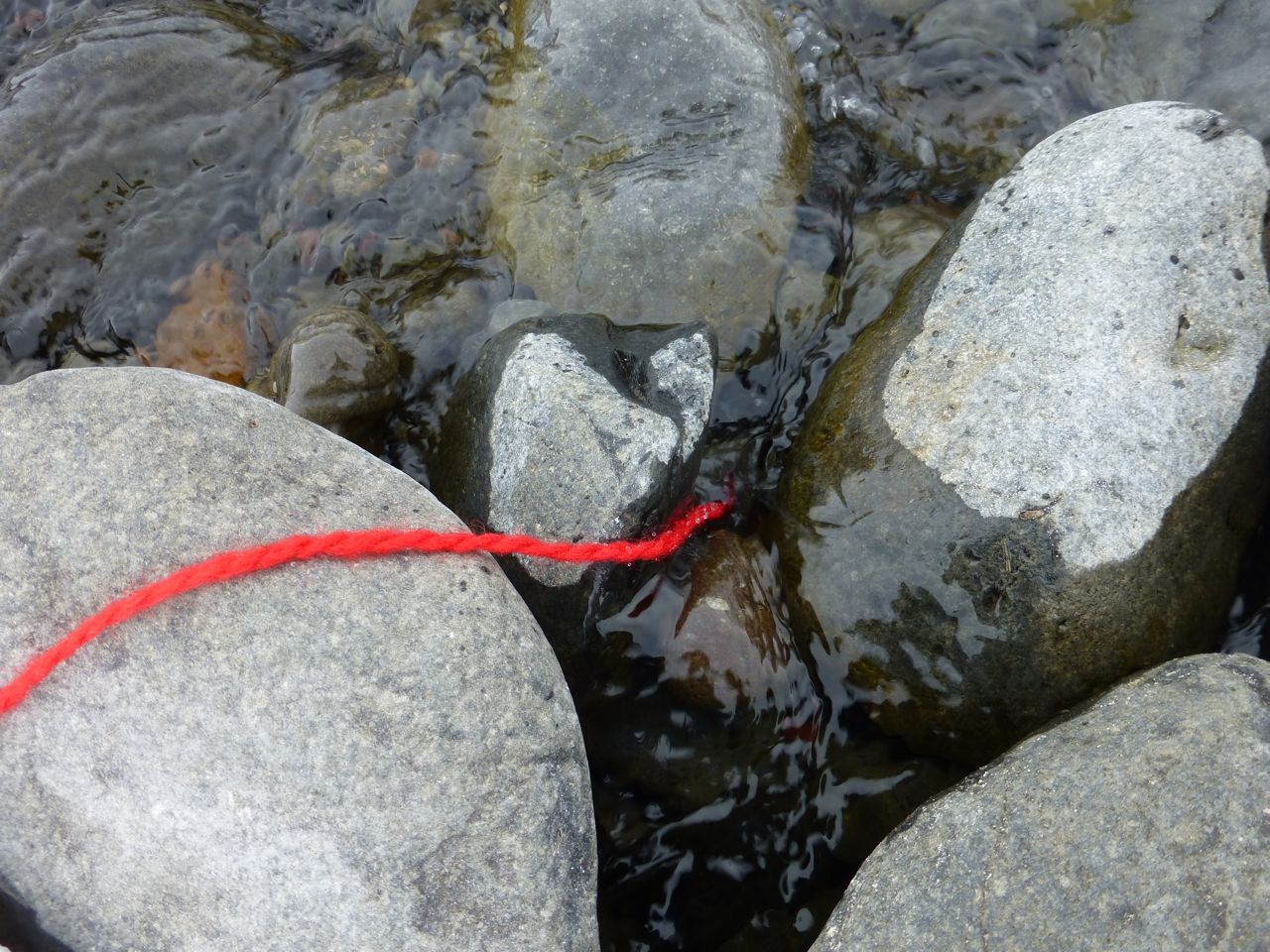
… I could have paid more attention to this, I guess. But I was happy and out by the falls, with the water singing away, so I pulled my ball of wool out of my pocket, that I have been using as a very slow walking image-making tool — not a camera; something more physical and human than that, and I dipped it into the water …

P1430372

… and starting unwinding off of its bobbin. If you’ll remember, when I wound it there, I pulled the energy out of the Skriðuklaustur well, through the monastery garden, around and around the axle of the earth, through the church, and up to the carving of Mary (?) on the hill. Now I was unwinding that energy among the birds …

P1430309

… ah, yes, as you can see, the spiral of the first winding stayed with the wool. That made me realize I knew close to nothing. Then …

P1430273

… the wind demonstrated that I wasn’t going to follow the birds, no how, no when. The birds, for all their, I dunno, 90 grams of weight, could outgust the wind better than I. Maybe that randomness …

P1430271

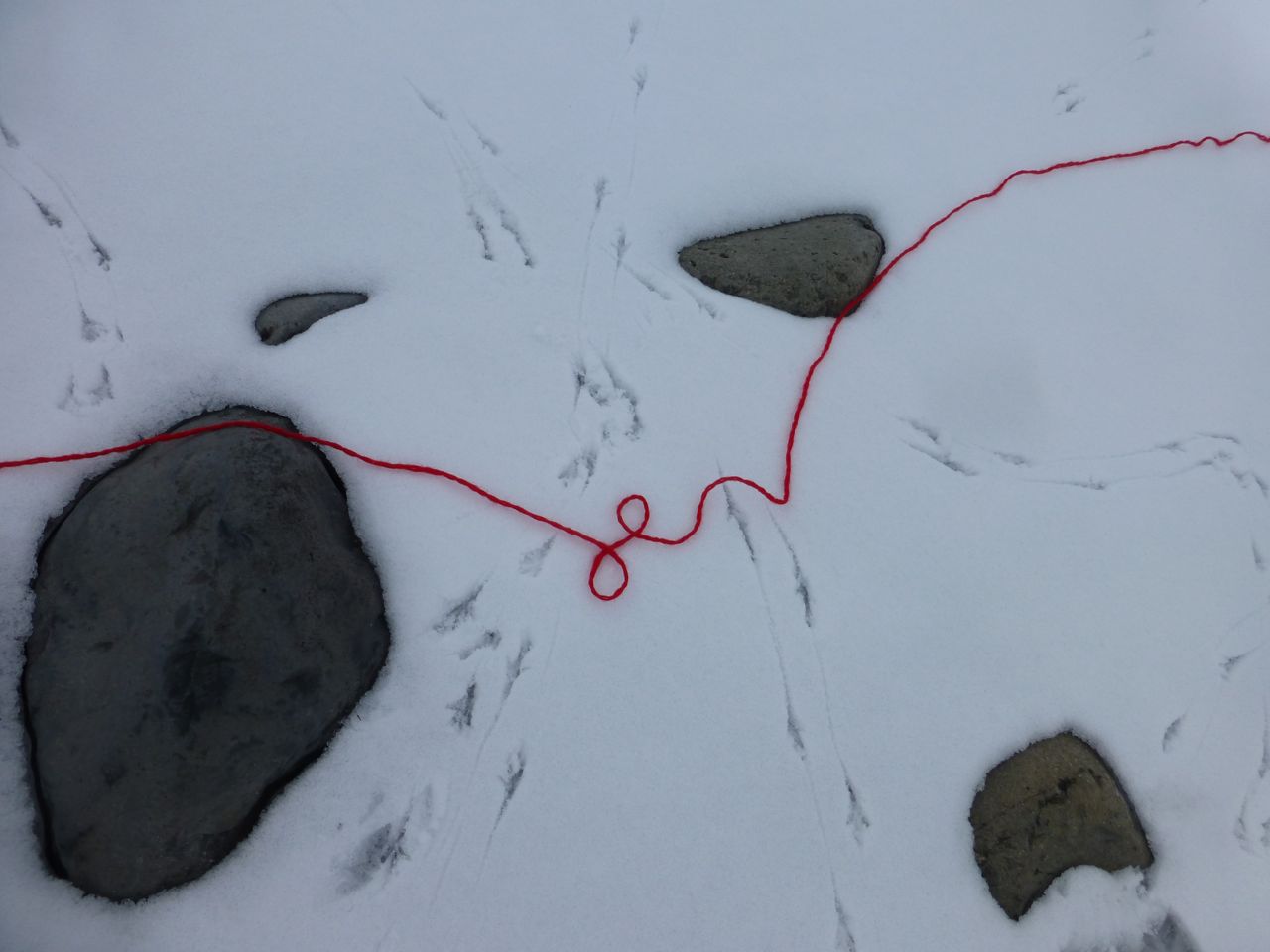
… was a way of harnessing the wind. So, I thought, OK, I’ll be the human here, and let whatever lines I can make by pulling on the string, and whatever lines the wind teases out of it, lie against the lines of the birds and see what that’s all about. Well,

P1430316

… my line was awfully straight at times …

P1430321

… and retained a lot of memory at other times, and …

P1430324

… ooops!. But eventually my rather straight but colourful line seemed to frame the bird tracks nicely enough …

P1430330

… and sometimes even followed the birds …

P1430344

… even improvised …

P1430342

… and soared on flights of fancy …

P1430362

… in its own conversation with the rocks. Up into the rocks I led the string as it led me …

P1430300

… and when I looked back, I thought, well, I’m going quiet all over again, and I thought I had gone quiet before…

P1430311

Onward, up onto the sand …

P1430296

… and the grasses …

P1430291

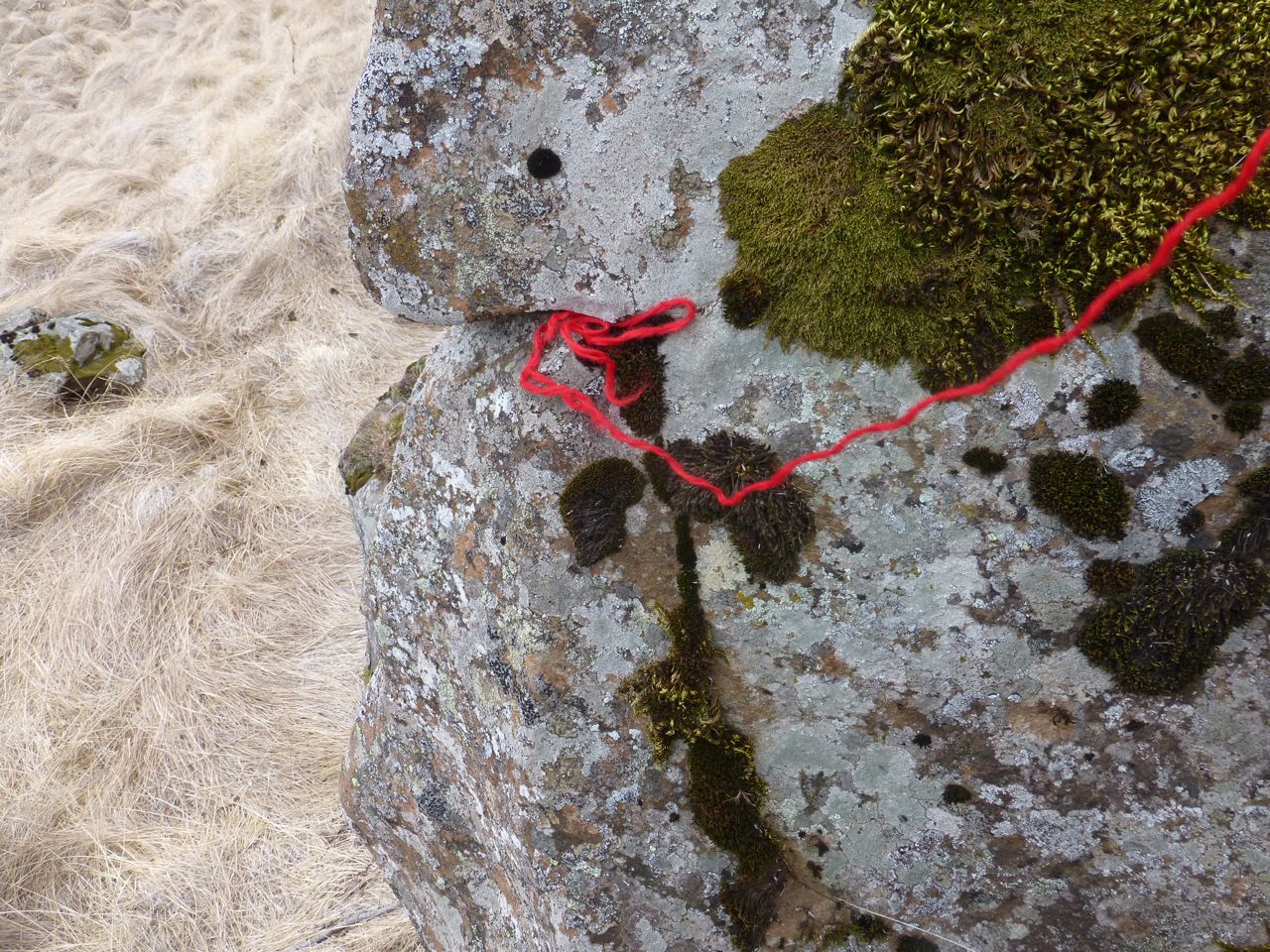
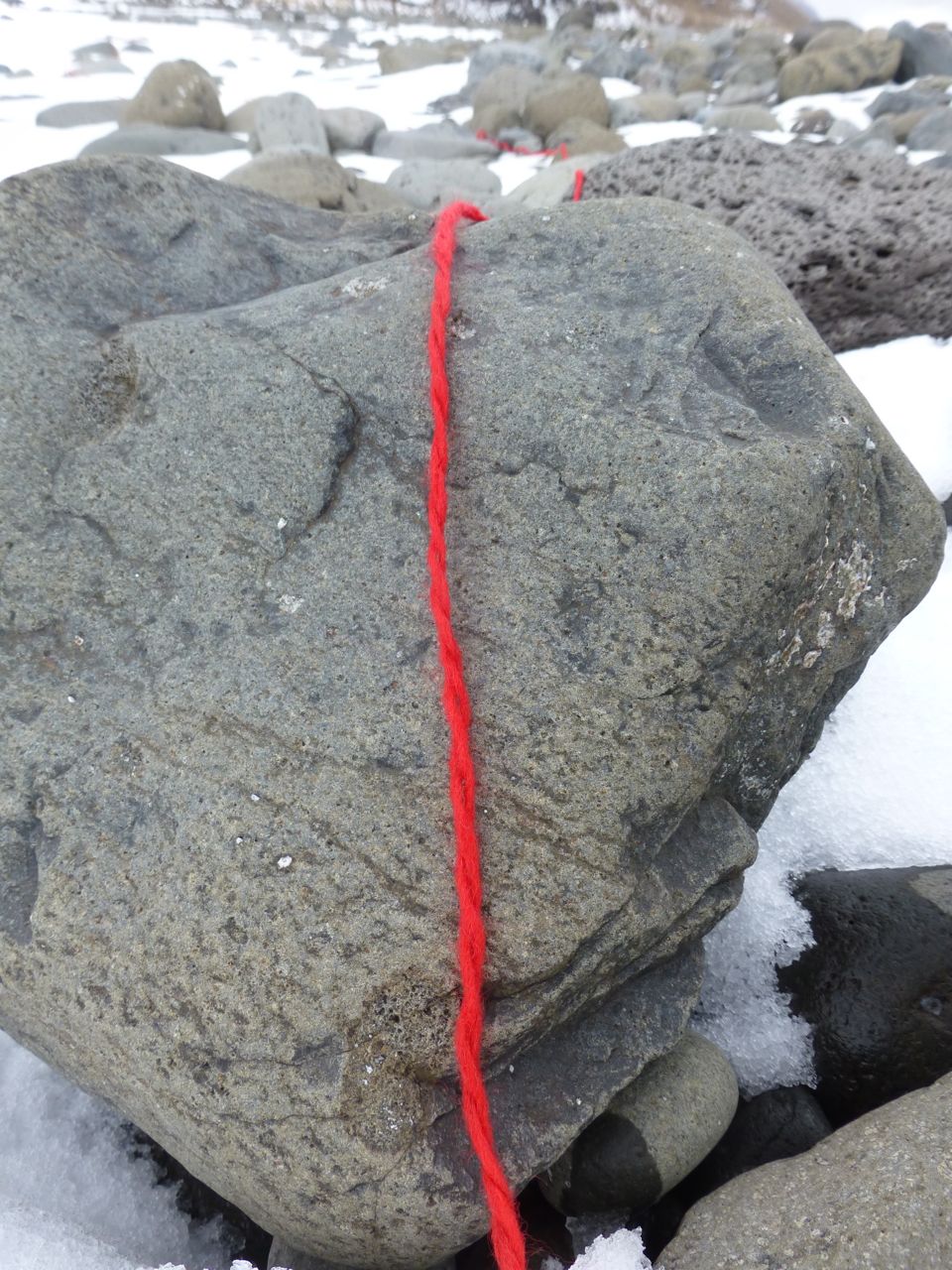
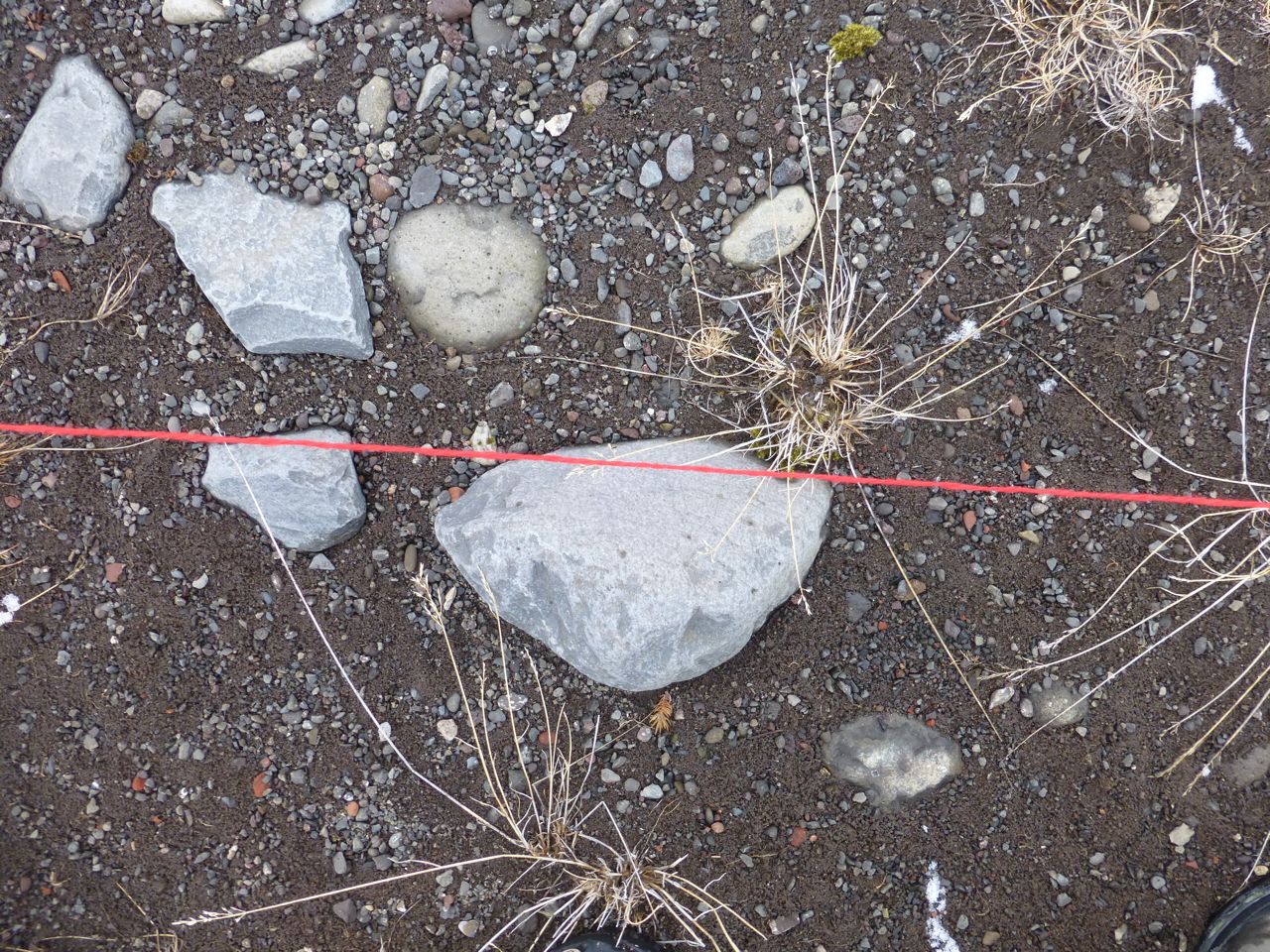
… I went. Now, the thing about having 70 metres of Norwegian wool is that it has an end, and when you’re unwinding it off of the axle of the earth and get near that end, you start looking for a place to land, a place that has some physical meaning. The little birch trees, I thought, just like the spindle, but living, not dead! Well, I thought it, but the string ended here …

P1430290Wool, Spindle and Moss

at the end … or the beginning … of the line of blood and fire?

Yeah, which? Should I wind the spindle back from the water to the sky, or from the sky to the water, I wondered? Should I bring the well, through Mary, to the mountain stream, or the mountain stream, with Mary and the well, up to new life? Well, that was a no-brainer: to life! This story, I felt was not one that repeated itself three times to make a tight spell. It was going somewhere, although I did not know where. I had to trust it. So, I did, and I rolled that yarn up, slowly walking the path of the birds among the stones, over the thin ice, with the thinner creek below, and this time, I noticed this …

P1430386

… I didn’t make the first line in this place.

P1430388Or the second! Well, not counting the lines of the birds, but I think they were making more than a line, or a series of lines, but that’s skipping ahead in the story. For the moment…
P1430395Life! Richer than it was before.

The well in the Garden of Eden, the Monastery Church, the Baptismal Font, the Axle of the World, Mary (?) and now a flock of unseen birds, all right there, burning. 

The physicality of this method of slow photography charmed me: the wet wool on my fingers, the feel of the sheep’s hair on my fingertips, the cold, and the repetitive, meditative motion of winding it, and matching my footsteps to the winding had helped me to see this valley, and my place in it, intensely. And then, just when I thought I had been as quiet as I could be …

P1430418 … the birds came!

P1430423

They came by the hundreds, on and on, in a fast river, winding with the river upstream, weaving in the air, landing briefly, lifting, an tumbling on…

P1430425… and I went so silent that I just put my camera down and raised my arms into the stream of birds, as they came at me, materializing out of the water and the light, and laughed out loud. And then, as quickly as they came …
flyaway… they flew away over the fields. And that’s why it took me two days to get to the falls.

blue4

Strutafoss, Iceland

And that’s partly why they left me wordless with wonder.

~

The story of the wool comes to a powerful climax tomorrow. 


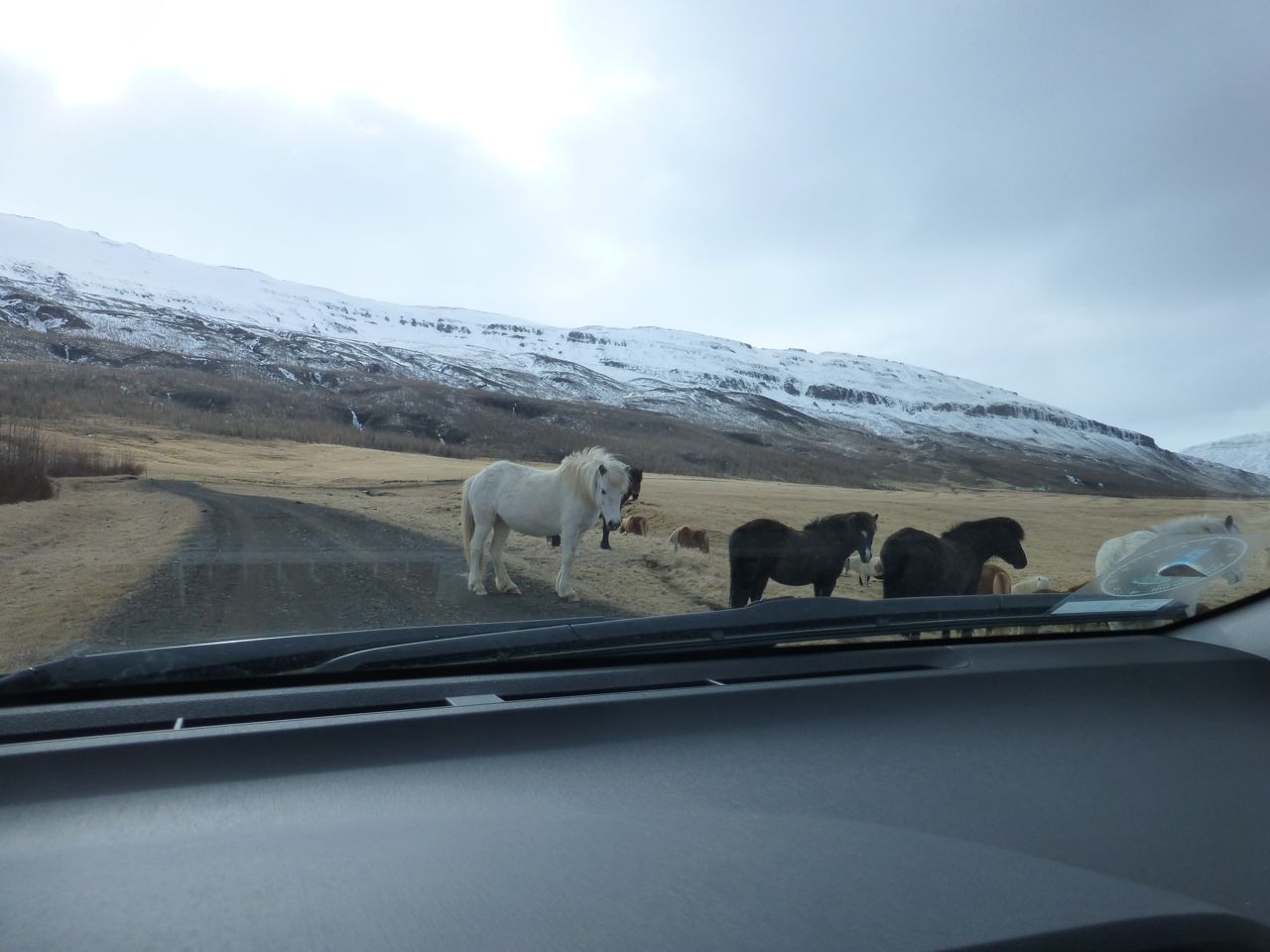
Rush Hour in Iceland

Finally the weather clears, and everyone is out on the road. Sheesh!

P1430160


Begrudgingly, they shift aside to let you go wherever you think you’re going to…

P1430161 … and keep their eye on you, because you’re not from around these parts. It takes a while to get through the traffic jam. Easy does it…P1430162


And the road is free…

P1430164… just in time to think about getting rid of the car. I mean, if traffic is going to be that heavy, what use is a car?

~

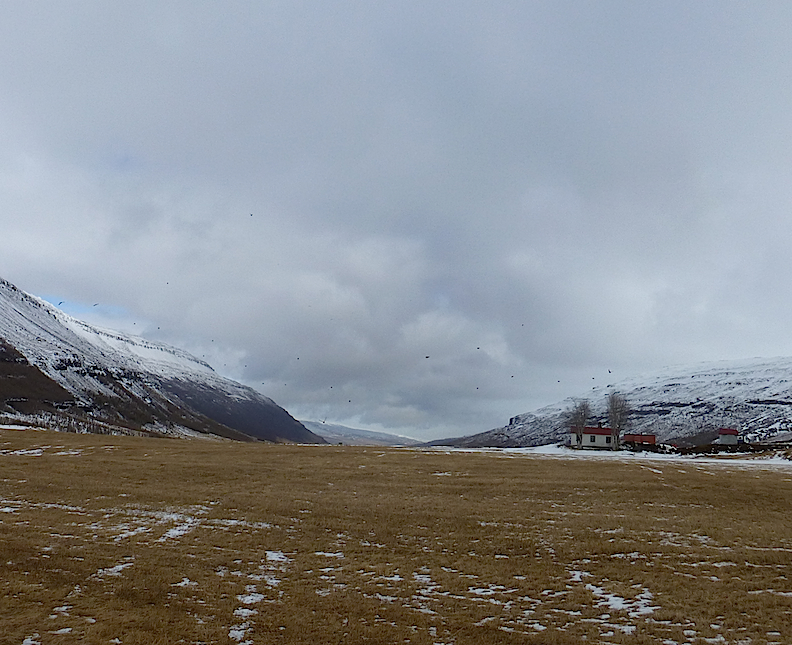
Suðurdalur, Iceland


Gunnar Gunnarsson Secret Agent: the Transcripts

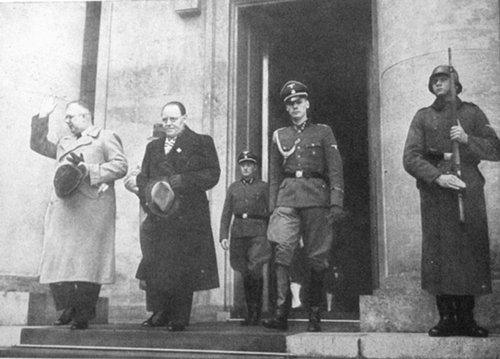
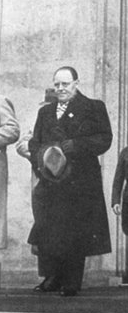
In 1940, the writer Gunnarsson went to Germany on a book tour, for which, among other things, he has been called a Nazi. I’ve been giving you photography that will be the heart of the book I’m writing about him, but there is a point at which his story as a man of the land clashes with the affairs of the world, and it was here, in the moment just before this photograph was taken …

gunnar_hittir_hitler_1a_lille_1172715

Iceland-Danish Author Gunnar Leaving his March 1940 Meeting with Hitler 3 Weeks Before the  Invasion of Denmark and Norway Source: http://fornleifur.blog.is/blog/fornleifur/entry/1257968/

From left, Hinrich Lohse, Gauleiter of Schleswig-Holstein, Head of the Nazified Nordic League Literary and Film Club of Lübeck, of which Gunnar was a member and under whose auspices he was on this tour (Lohse was soon to become Kommissar of the Baltic States as well), a hidden man in civilian clothes, Gunnar, two SS Officers (likely Werner Best, later the Nazi administrator of Denmark, and Otto Baum, later head of the Das Reich Division of the Waffen SS), and an SS guard.

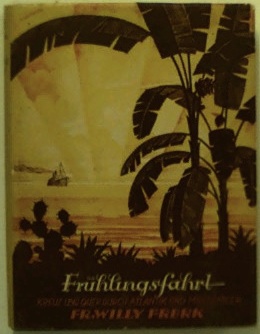
What was said inside that building that could make Gunnar so upset? I have been working on this for a few days now. Here’s my theory: in 1928, Gunnar went on a cruise to Atlantis (Ireland, Madeira, Teneriffe, Lisbon, Morocco, Seville, Mallorcca) along with, I believe, this soon-to-be-prominent Nazi-era photographer and photographic pioneer …

frerk

Frerk’s 1928 Book About a Cruise to Madeira, Tenerife, Lisbon, Morocco, Seville, Mallorcca…

There’s a big story about the Atlantis idea, but let’s just say that it was a huge fad at the time in many circles, including Nazi ones, that the continent of Atlantis (and its ‘advanced spiritual civilization’) had sunk into the mid-Atlantic in a volcanic explosion, leaving only the islands and cities mentioned above, plus Iceland. This isn’t that story. It is, however, the story of Gunnar’s decision to become a spy, without mentioning it to anyone, and to do so by writing cables back to Denmark that used literary language that could easily double as criticisms of the Third Reich’s racial policy. I believe that  Herman Wirth, one of the architects of that policy, may have been on the cruise, and I believe it was that voyage that the “non-existent” Luftwaffe installed and tested a prototype ship-launched fighter plane, disguised as a mail-delivery plane. At any rate, read Gunnar:

 “It’s good for one’s health to get off the ship. From the cool of the ship and the shadows of the quay, one rises on smooth, wave-beaten steps of stone into the deafening sunshine. The humming of the sun and the murmuring of the sea boil together in one’s head; one becomes dizzy. Out of the boiling light, a pair of heavy palms suddenly cut themselves; there they stand, with their blank green, sharply drawn against a blinding white wall.”

Gunnar, Islands in a Great Big Sea, 1936 (originally published in Copenhagen’s Politikken, 1928)

Sure, it could just be the words of a man on a romantic cruise with a woman who was not his wife, enchanted with the landscape, in love, and catching a glimpse of exotic green trees in a stunning landscape, not the need to escape from the odd, racist environment of the ship’s dining room conversation, or the security personnel in plain clothes (or not). Still, the book doesn’t really read like that, and his next books, Vikivaki (1932) and “The Good Shepherd” (1936) read as parables, which can be read anyway you want, depending on your prejudices. “The Good Shepherd” certainly was. It was used as propaganda by the Germans, the British and the Americans, and then at the close of the war was among the books that suddenly read as secret condemnations of the Nazis, published from within the Nazi Propaganda Ministry. At any rate, more on that story later. There is a third text, even less widely distributed, and that’s the speech Gunnar gave in 44 Third Reich Cities before meeting Hitler, whose support of Gunnar’s books [albeit as propaganda material for a Scandinavian annexation] had made Gunnar very rich. I believe this speech, called “Our Land”, was a correction to the message in “The Good Shepherd”, and was intended to correct the propaganda aims to which that book had been put despite Gunnar’s efforts to keep it as a message of peace extended to all men, regardless of their politics. A passage from this text is just below. When you read it, remember that Gunnar’s friend from the pre-Nazi Nordic League, Fritz Höger, who had wanted to be the Reich’s leading architect and redesign its buildings along North German (ie Danish) lines, had lost out to Albert Speer, who was responsible for the monumental, kitschy architecture that came to represent the Reich (including the building in the image above). Here goes:

“What is necessary is to open the eyes of Icelandic youth to Icelandic nature and its beauty. Not as if they don’t see it; but do they know what they see? Have our youth been lead to understand clearly for themselves, what goes well within our Icelandic landscape and what less so? At the very least one sees no sign of it in the newest of Icelandic buildings and the way people carry on through the country and even, at times, in the villages themselves. It pains one to see the way the land is mishandled and alienated through tastelessness, through kitsch, which will lead only to a a weight on the people themselves and bring disrepute to our land and our people. It is far better to view the inner life of people in the way it views itself, without outside direction, than to do so with words and discipline. To see the right path from these roots is more important than one might think from a distance. And, at any rate, one sacrifices little if one holds to taste and good manners. And if it ever should be time to talk of sacrifice, our land has already earned it completely, and our joy at its beauty will never be complete, so long as these things are not put into an order that no longer give any cause for rebuke.”

I believe that Hitler heard that exactly as he was meant to, behind his tiny desk in its huge room like a concert hall in the Chancery in Berlin, where he usually greeted heads of state. He would have heard this…

“What is necessary is to open the eyes of German youth to German nature and its beauty. Not as if they don’t see it; but do they know what they see? Have your youth been lead to understand clearly for themselves, what goes well within their German landscape and what less so? At the very least one sees no sign of it in the newest of German buildings, built by that idiot Speer, with his head in Italian clouds, and the way people carry on through the country and even, at times, in the villages themselves. It pains one to see the way the land is mishandled and alienated through tastelessness, through kitsch, which will lead only to a weight on the people themselves and bring disrepute to our land and your people. It is far better to view the inner life of people in the way it views itself, without outside direction, than to do so with words and discipline. To see the right path from these roots is more important than one might think from a distance. And, at any rate, one sacrifices little if one holds to taste and good manners. And if it ever should be time to talk of sacrifice, your land has already earned it completely, and Höger’s and my joy at its beauty will never be complete, so long as these things are not put into an order that no longer give any cause for rebuke.”

After all, both Gunnar and Hitler shared a believe in the identity of Iceland and Germany as Nordic states united in brotherhood — they just understood that differently. Here’s Gunnar a little later in the speech (Remember, at this time the British and the Americans hadn’t invaded Iceland and there were no appreciable building projects of any kind, but there were in Germany)…

Few lands that can call themselves populated are so little touched by the traces of time. Here it’s not, as it is in richer territories, buildings and the works of man that make a land appear all-powerful. On the contrary. In the past, the houses stood so simply and artlessly in the land that they were hardly to be reckoned as houses, and human habitation snuggled into the landscape and passed well with it. In recent times, a massive change has stepped in to this relationship, and sadly not for the best. It is sad to see how foreign so many of the new houses appear above their home meadows and how ugly and gauche they clash with the Icelandic valleys, among its rivers and against the strata of its mountains. Regrettably, out of tastelessness, which they are also anchored within, springs only decline and bad fortune.

Again, neither of these two men were stupid (That Hitler was evil is another matter), they shared a symbolic language, and I believe that what Hitler heard went much like this:

Few lands that can call themselves populated are so little touched by the traces of time as Germany. Here it’s not, as it is in France and Italy, buildings and the works of men [the Nazi Party] that make a land appear all-powerful. On the contrary. In the past, the houses stood so simply and artlessly in the land that they were hardly to be reckoned as houses, and human habitation snuggled into the landscape and passed well with it. In recent times, a massive change has stepped in to this relationship, and sadly not for the best. It is sad to see how foreign so many of Speer’s Greek palaces and your new Autobahn bridges appear above their home meadows and how ugly and gauche they clash with the German valleys, among its rivers and against the strata of its mountains. Regrettably, out of tastelessness, which they are also anchored within, springs only decline and complete and utter defeat and destruction.

In both of these speeches, a tiny change, well within the compass of the title “Our Land” and Gunnar’s relationship with the audience to which he was speaking, bring out an amazing subtext. Gunnar’s 1930 novel “The Black Cliffs” demonstrate that he had the depth of writing skill and the depth of psychological understanding to attempt to pull this off. Can any of this be proven? No, hardly. It does, however, make absolute sense. If it is in any way true, however, Gunnar’s reputation as a early-to-mid-twentieth century writer needs to be reassessed. If this is what Hitler got out of those speeches, the conversation inside that building, of which Gunnar never mentioned a word, would not have gone well. Any other writer who had tried to use his authority as a writer (and none were more famous or sold better or were more beloved than Gunnar) to trump Hitler’s had wound up in Buchenwald, even Ernst Wiechert, whose Baltic folktale novels were very similar to Gunnar’s nordic  ones. If such a half-veiled threat had been made, and was accepted bluntly and openly rather than as the psychological suggestion I think it was intended as, Gunnar’s expression would have been understandable, especially given the company he has on those steps. Here is that photo again:

gunnargrimaceGunnar Gunnarsson: A Man Trying to Broker Peace?


A Vision for Writers from a Sculptor

There is a line that makes a story. It’s the path any person can walk along to get from one place to another, or the one my dog used to always find in the weeds, because the edges of the gravel are where everything happens, or maybe it’s just because it’s just where someone has passed by. This is a problem that doesn’t even bother sheep.

P1420751

Sheep Tracks, Hengifossá Canyon

If you leave enough tracks they don’t make a trail. They make a net. A net’s a great thing, but if you catch the world with one, what then? Where are you going to drag your catch? 

Maybe it’s not so hard. Maybe sometimes writers just need to be dragged out of their words and given a new pasture to run in.

blue2

Icelandic Writer Staying Close to Home at Feeding Time

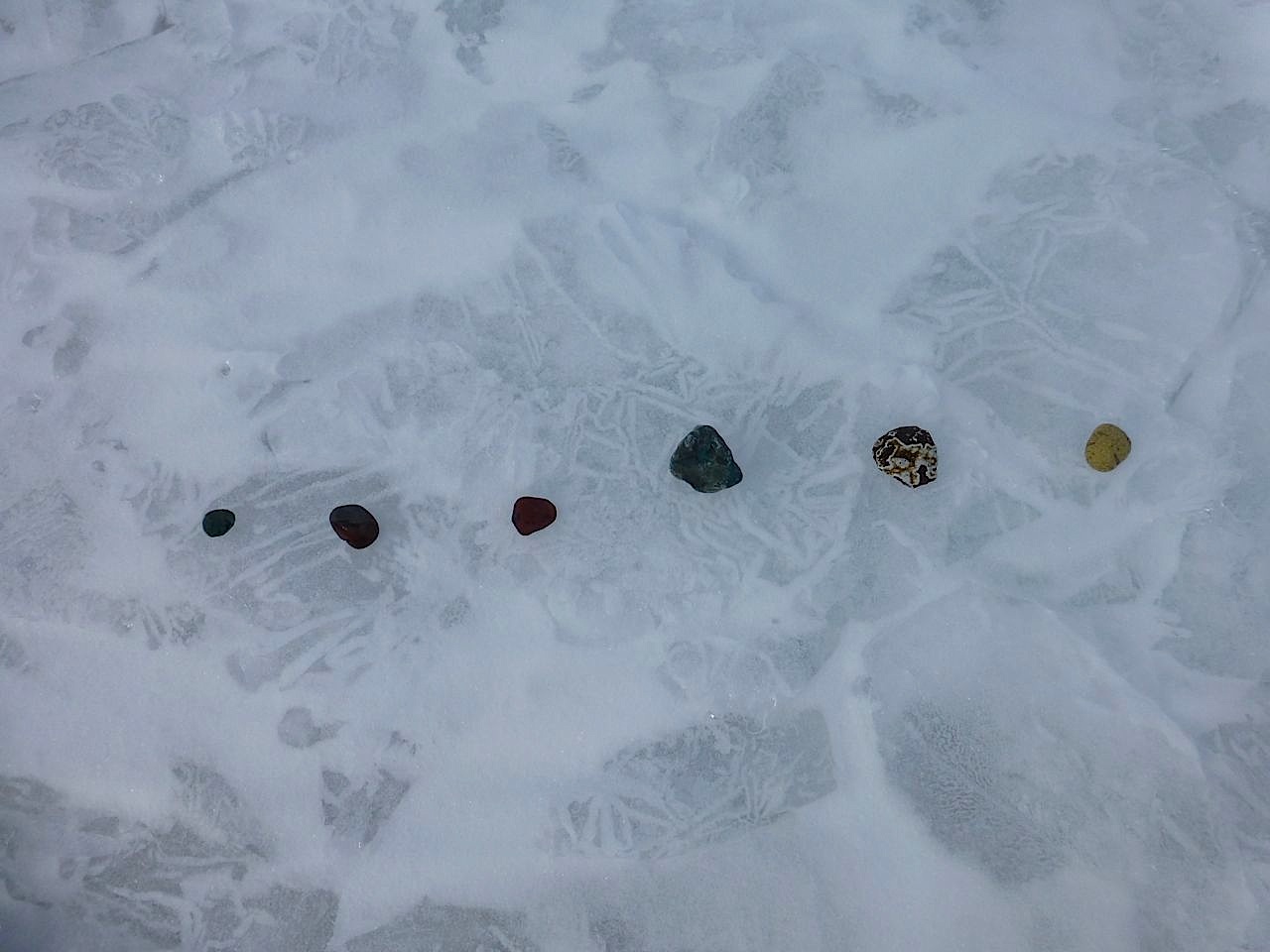
Or maybe not. Maybe it depends. A couple days ago the sculptor Ken Blackburn asked me to go out and make a line in Iceland. Everything in the world, he said, starts with a line. So, I made a line. I liked this idea. I could feel what the very beginning of something looked like, and not a story already made which I stub my toe against, which is usually the case. Gunnar’s story (whose house I haunt here) is certainly like that. And would you just look at what found me in its first moment, as I set it into the world …

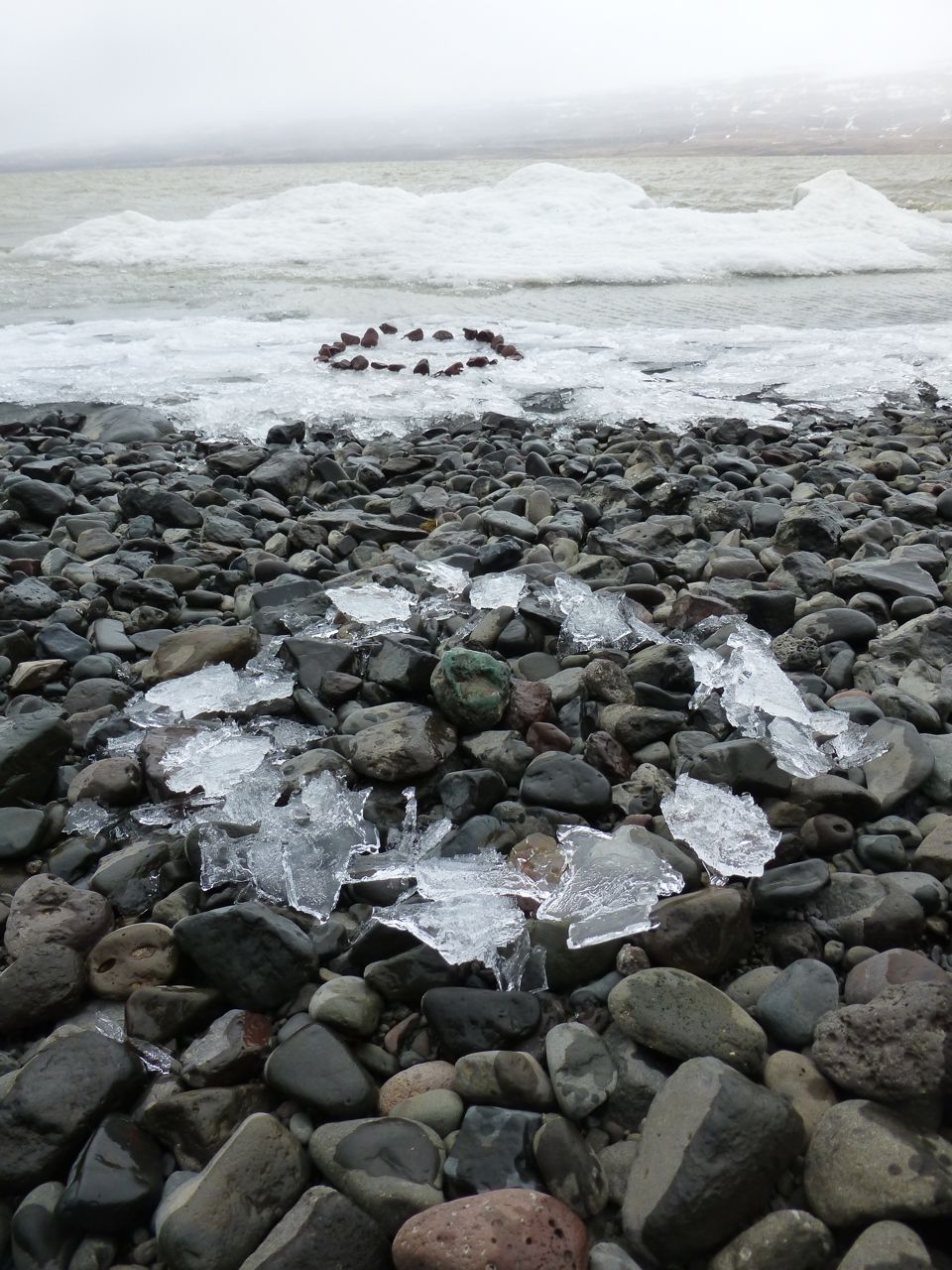
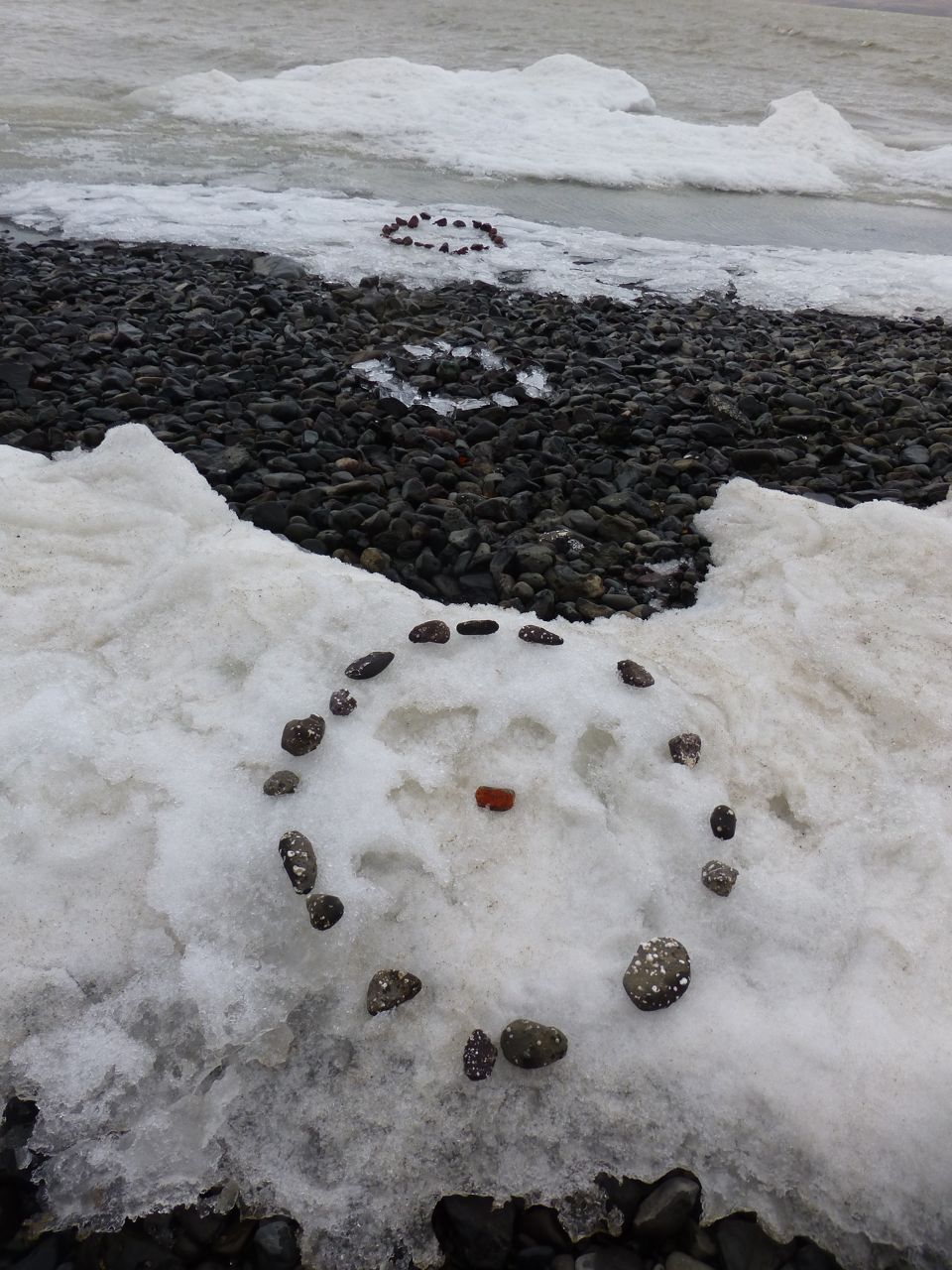
littlelinecloserA Line of Volcanic Stones

In this case, the edge is in the midst of the ice. It leads from itself to itself, and quivers there, while the ice could just as well extend to the edges of the universe. Maybe it does. Maybe it’s only humans who say, “Look! There’s an edge to this stuff.”

Imagine what a story would look like if it were written like that. The beginning and end would lie side to side, cuddling up close in the centre, and all the rest of the story would stretch out in folds of sheets and kicked off blankets to the sides. You might have to pick up the book, and read it any way you wanted. The edge would always find you. Maybe I didn’t stub my toe against Gunnar’s story. Maybe, as a man largely of the 20th century (so far), I was always in it and by walking far enough stubbed into the line that was always there — maybe at the centre, maybe way off to the side … who’s to know in a spherical world? But you see, that’s a writer thinking. What did Ken say? Make a circle, he said. A sculpture, he said, is just a line, too. A circle! Aha!

P1430091Well, Sort of a Circle

And, this right on the sight of that original line, too, which looked like this when I showed up today …

P1430070

Gone!

A most unwriterly art form. Writers are always thinking about making a mark that stays. This one, though, is gone … it’s finished. 

Still, a circle, eh. A story that was a circle and not a line, that might have a swan feather in its belly, that might at any time be blown off by the wind … what a book that would make: a book that would mean anything at all, depending on who you are. But wait… I know some books like that. They were the books that Gunnar wrote in the 1930s, especially his “Advent in the Highlands.”

51jjvzSMACL._SL500_SS500_

Advent in the Highlands

The Approved by the 1936 German Propaganda Ministry Version

Don’t jump to straight lines. That book, that Gunnar wrote to promote peace, was used to send German boys to Czechoslovakia, but 4 years later it was used to generate an American desire to go to war, in this edition:

0A36.3L

Advent for Americans

A message of peace for both sides — that circle was Gunnar’s intention. That it was used for other purposes was not. 

So, circles. I thought, well, what if a circle is not alone? What then? So I tried to find out …

P1430110

Two Circles

 Well, that felt good, you know. Look how they turn the space between them into a … well, not a line exactly, but a space that could be a line, or anything… a space of possibility. Not a No-Man’s Land, but an All-Man’s Land. So, I wanted to see how far this would go…

P1430114Three Circles!

Now there’s a line and no line, and the middle circle is within the position of possibility.

What would a story put together like that look like? It wouldn’t be a story, for one thing, so much as a bunch of stones and ice on a beach that the writer and readers could all walk around in together and stub their toes against … but would that be a bad thing? Is that what Gunnar was missing? A third circle? I mean, his stories were all about this…

iceringThe Shore of Life

It separates the island from the sea, or the colony from the colonizer, in Iceland’s case, and is deadly and life giving at the same time. Death and life are inseparable in Gunnar’s world. He does not means this as an easy sentiment.

But what if in all his haste to tell a story, to try to save Iceland from colonization and other invasion, through the admittedly ridiculous medium of words, he missed this?

P1430151They Float on Light!

Maybe novels and their traditional structures were the net that caught Gunnar. Maybe that’s an important lesson in literary form, learned from sculpture. I think it is.

Missing Your Camera Lens? I Found It.

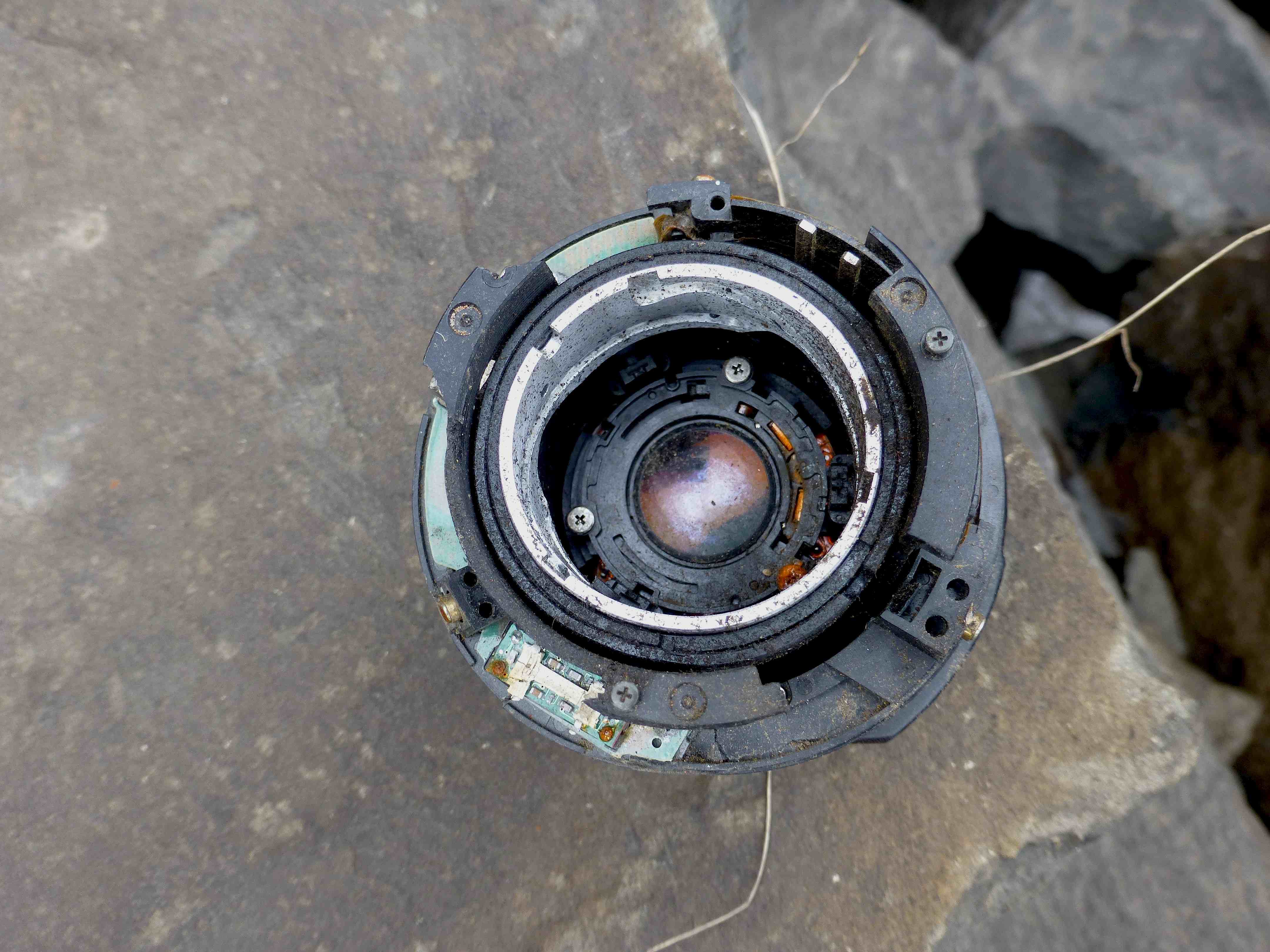
Dear Photographers! Did you go to Hengifoss in Iceland and stop at Littlafoss halfway up and … drop this intricate, beautiful and very expensive thing?

lens

Canon 28-135 mm Lens

I hate to be the bearer of bad news: it rattles now. I don’t think that’s good.

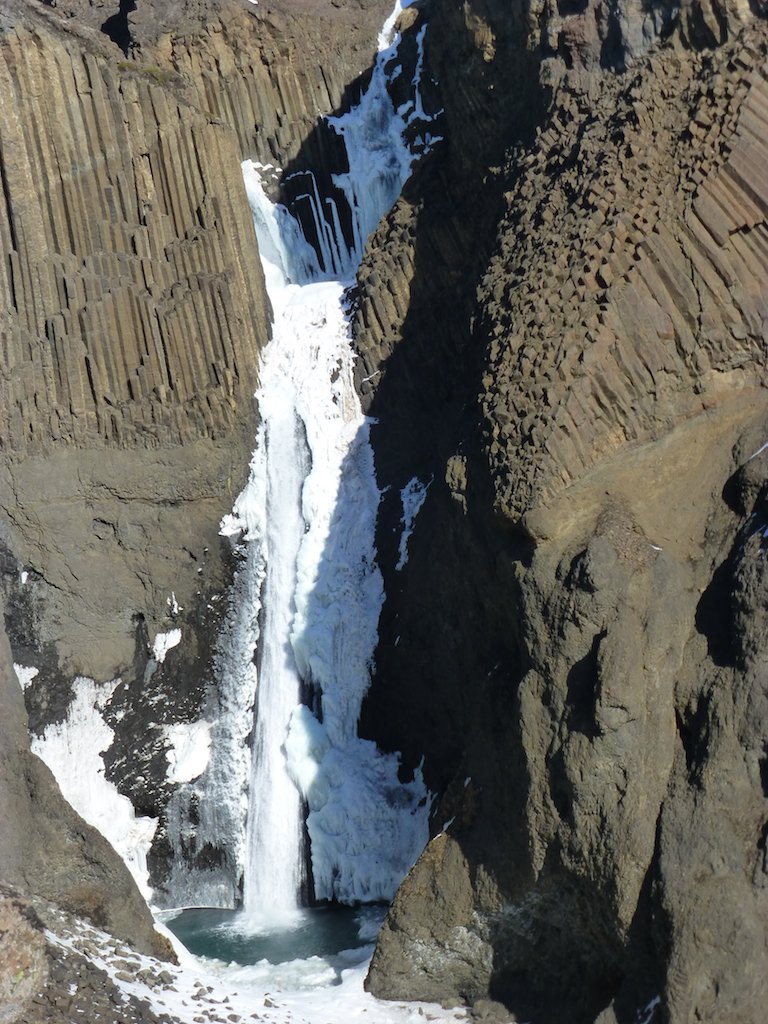
I found it when I clambered down a long path into the canyon to get a closeup view of this…

bottom2

I guess you were trying to get there, too. I don’t blame you. Yesterday, I tried from the other side of the canyon, and got this instead …

close

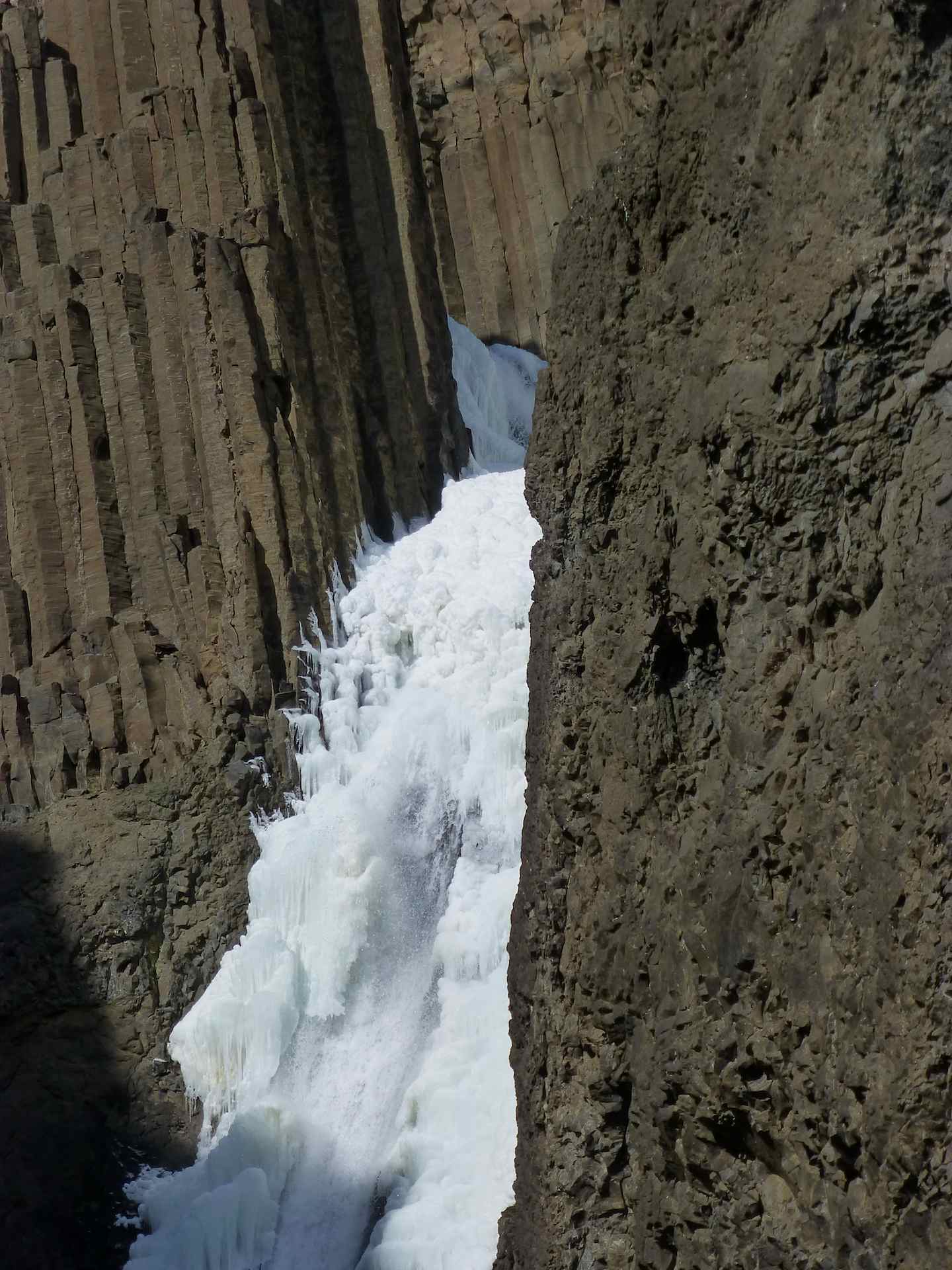
Littlafoss

Squeeeeeeeeeeezing around the edge of the cliff to have  a peak.

I tell you, this slow move-the-human-around zoom method takes a bit of puffing, but it sure changes one’s perspective. Still, I’m sorry about your lens. Here’s where I found it, if that helps, seen from yesterday, on what I thought was the wrong side of the stream, but which now seems just as interesting as the right side, if it is that, if not quite as dramatic… but your lens! First the setting …

littlaness

… and now, X marks the spot …

littlanessx

I could send it to you, if you like. Lemme know. Next time, though, I recommend the human movement method, cuz I’ve become quite smitten by it. It takes some time, well, heck, days, really, but it’s not bad, you know. It kind of focusses the mind. Here’s the focussing apparatus (kind of big, yeah, I know — won’t fit in my camera case) …

path

Bring walking sticks. Now, it’s a mighty beautiful fall, which is why I keep going back, and why you were so taken by it too, I bet. Here it is from the viewpoint, as I’m sure you remember …

littlaup

Easter Afternoon

If I’m right, you dropped the lens from about here (see the x in the upper right?) …

littlaupx

And I would have, too. That’s way too close. Man, those basalt chunks fall down. There’s a dam in the stream down there five feet high of stuff that came down this winter alone! The wind blows there something fierce, too, so I understand: hard to hold onto a lens with half-frozen fingers when that wind blows. Man, I am so sorry about your lens. If it’s any help, this is the best closeup I could do with my little Lumix …

littla

Not glossy photo magazine worthy, I’m sorry, but it gets me out and about exploring what the world looks like when a human looks at it from all kinds of different ways. I find it fascinating, but, hey, it’s a bigger relief that you didn’t fall, thank God for that, although I bet that when that thing went you felt like you were falling with it. I hate that feeling. I’m glad you hung on. Drop me a line. Harold