Monthly Archives: April 2013

Day to Day Life at the Cloister Farmhouse

Right now, Skriðuklaustur is haunted  by a Canadian who spends his days hiking and meditating. Fantastic! But what does that look like on the day-to-day level, which was so important to farmers and monks? Here, for the first time, an inside view of everyday monastic life at Skriðuklaustur, Iceland — not the hiking, the meditation, the research, but the caring for the body, the Skriðuklaustur way! In the morning we can talk about the fantastical technical arrangements and clever (well, you be the judge) solutions for making a kind of alchemical coffee, but right now, dinner! Here’s the flowery decoration that brightened up Easter so, gone a little long in the tooth …

P1430811

The Blossoms Have Grown Roots

Hey, that’s cool. Easter is about springing forth and all. Those are rocks I borrowed from the lake, so I could talk to them. Oh, wait … no talk about meditations!

And here are the spices, also, ahem, a little long in the tooth …

P1430813Sweet (?) Basil Ready for the Pan

There is a 2 page set of instructions for sorting and recycling everything that passes through the kitchen, and it seems to mean business, so when my basil when, ahem, a little, well, let’s say “old”, in its really poorly-sealable but  oh-so-recyclable tray in the fridge, I let it keep the willow company, and now look at it! All grown up and ready to crumble into the pan. Um… the plastic goes in … yeah, tub 3, that’s it. Done.

And now that your mouth is watering, here is the main course, the famous aðalréttir of all Icelandic menus, ta da!

P1430815

Chicken and Pork Gunnar

When the store is 45 kilometres away, creativity is more in what you do with the fridge rather than what the store has to offer.

Recipe:

•Come back from hiking at 5 pm, think about dinner. Remove pork chop and slip into the 1000 year old Viking-era microwave, which has one setting: grill. Grill to thaw. People, when it’s your turn to stay here, try 30 seconds.

• Salvage what one can of the pork chop, mourn, and add a frozen chicken breast. Do not even think of touching that microwave. Put the chicken on top of the nearly-smoking pork chop, to thaw that way.

• Make tea. Drink the tea while congratulating yourself on your resourcefulness. Return. Slice the slightly-thawed chicken, mix with the pork scraps.

• Dice an onion (you bought too many, so use the whole thing), dice 3 garlic cloves (the previous writer bought too many, and there’ll be some for you, too, enjoy), melt some Icelandic butter, sautée the onions and garlic on super duper low on the big burner of the stove. Do not rush this step. Go read a chapter of a book. You get a knack for this after the first time, when you had to open some windows quickly, and you can smell the exact moment on the air when everything is just perfect. Saunter in.

• Add some chopped up parsley, because, well, it’s not enjoying the fridge anymore, and some mushrooms, because mushrooms are really cheap and high quality in Iceland, who knew, and that basil, yes, this is her time!!!! Then add the chicken pork mixture. Stir a bit. Add some cream (this is Scandinavia, and a former Danish colony, to boot, so… without cream, it’s not considered a foodstuff. Simple as that.) Add some frozen peas. Put a lid on all this. Go off and answer ALL your emails, and download and sort the pictures you took today.

The Side Dish

Here are some of the amazing arctic potatoes from Akureyri. The smaller they get, the better. No sense trying to cut off the warts and little blackened frost-got-at-them bits … they don’t appear to affect the flavour, and they are all otherwise as clean as if they had been pressure-washed by a fishing boat scouring apparatus… which, given the Icelandic respect for re-use and re-cycling, is probably the case. But what beauties they are…

P1430817

Potatoes All Dressed Up

They taste a bit sweet when boiled (last fall was tough on potatoes in Iceland), so I hit upon this method: when the feta cheese in oil and herbs you can pick up beside the smjör in the grocery store is all gone and you have to find something else to dress your salad with, well, there’s oil left, right, with spices in it?  That’s the Skriðuklaustur way! Into the oven for 40 minutes they go!

A little freshly-grated sea salt helps, because this is Iceland and here salt is a spice much like cream is in Denmark, and we want to be good guests. And there you have it…fridge hygiene restored, staying on top of the recycling, and when you come back all leisurely and what not, with your pictures sorted and your email mailed or deleted and a chapter of a book read, dinner is delicious. In fact, just between you and me, one could serve this in Reykjavik for about 4400 kronur, but only if you had fresh flowers.

Rush Hour in Iceland

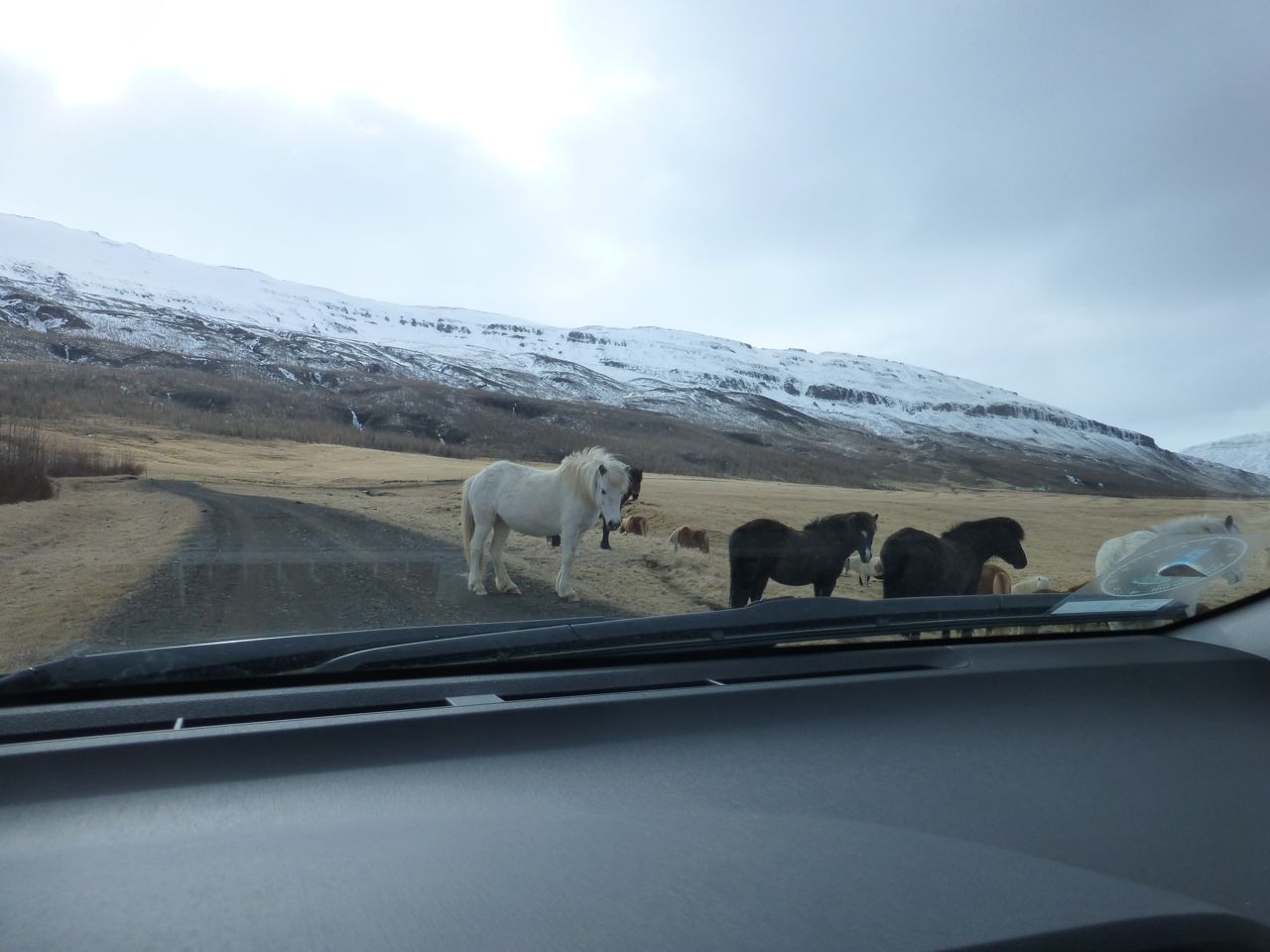
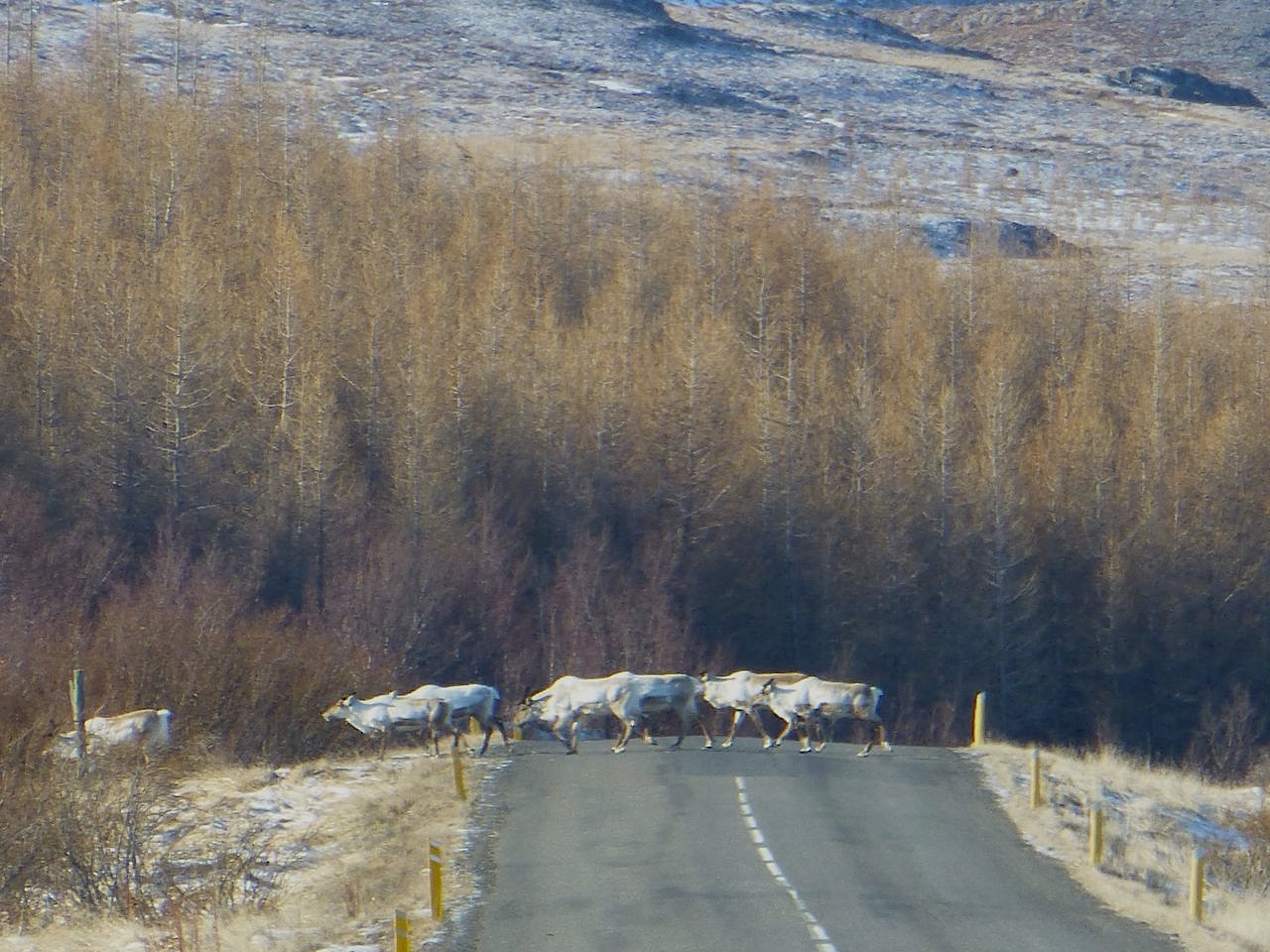
Finally the weather clears, and everyone is out on the road. Sheesh!

P1430160


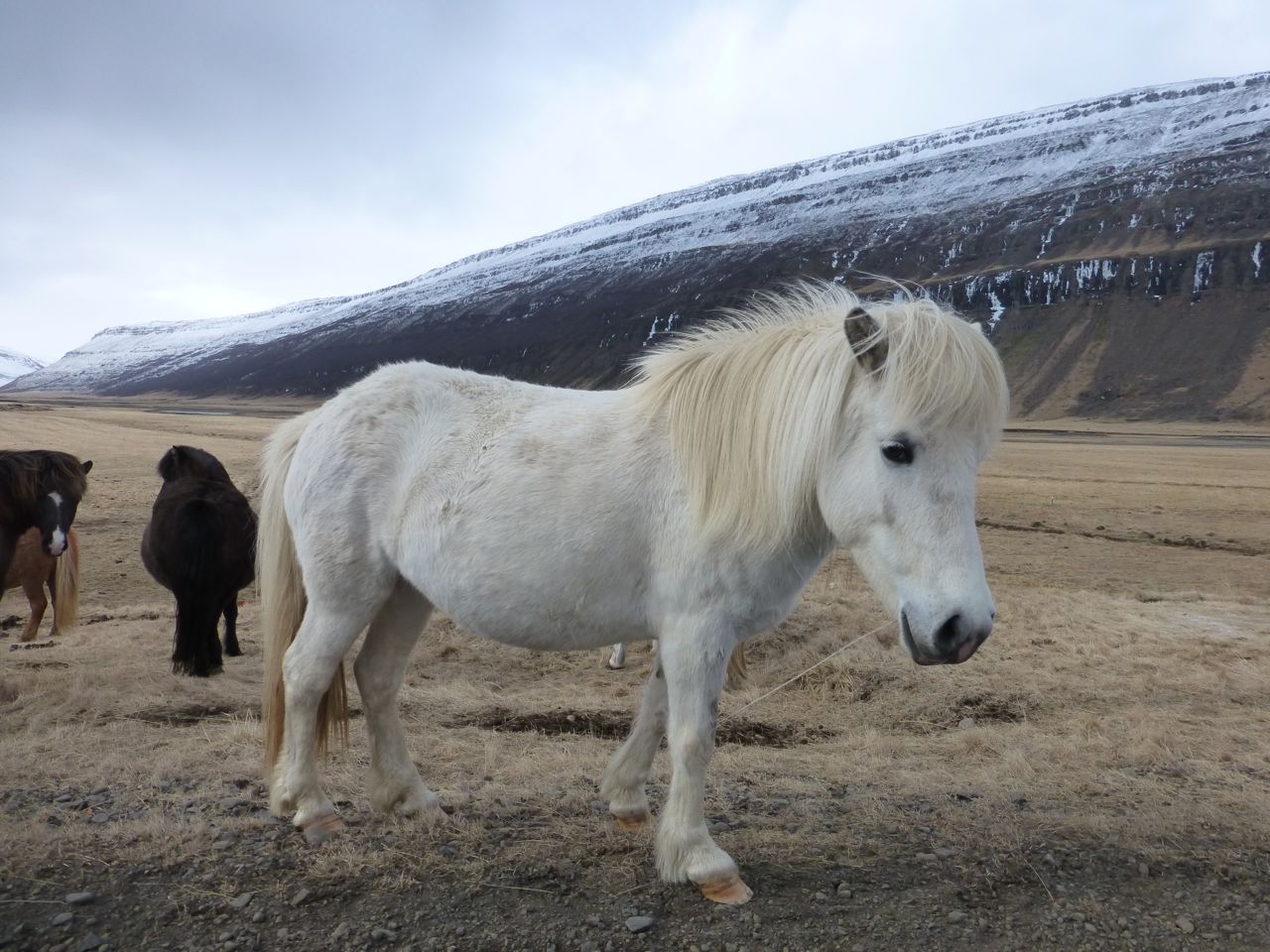
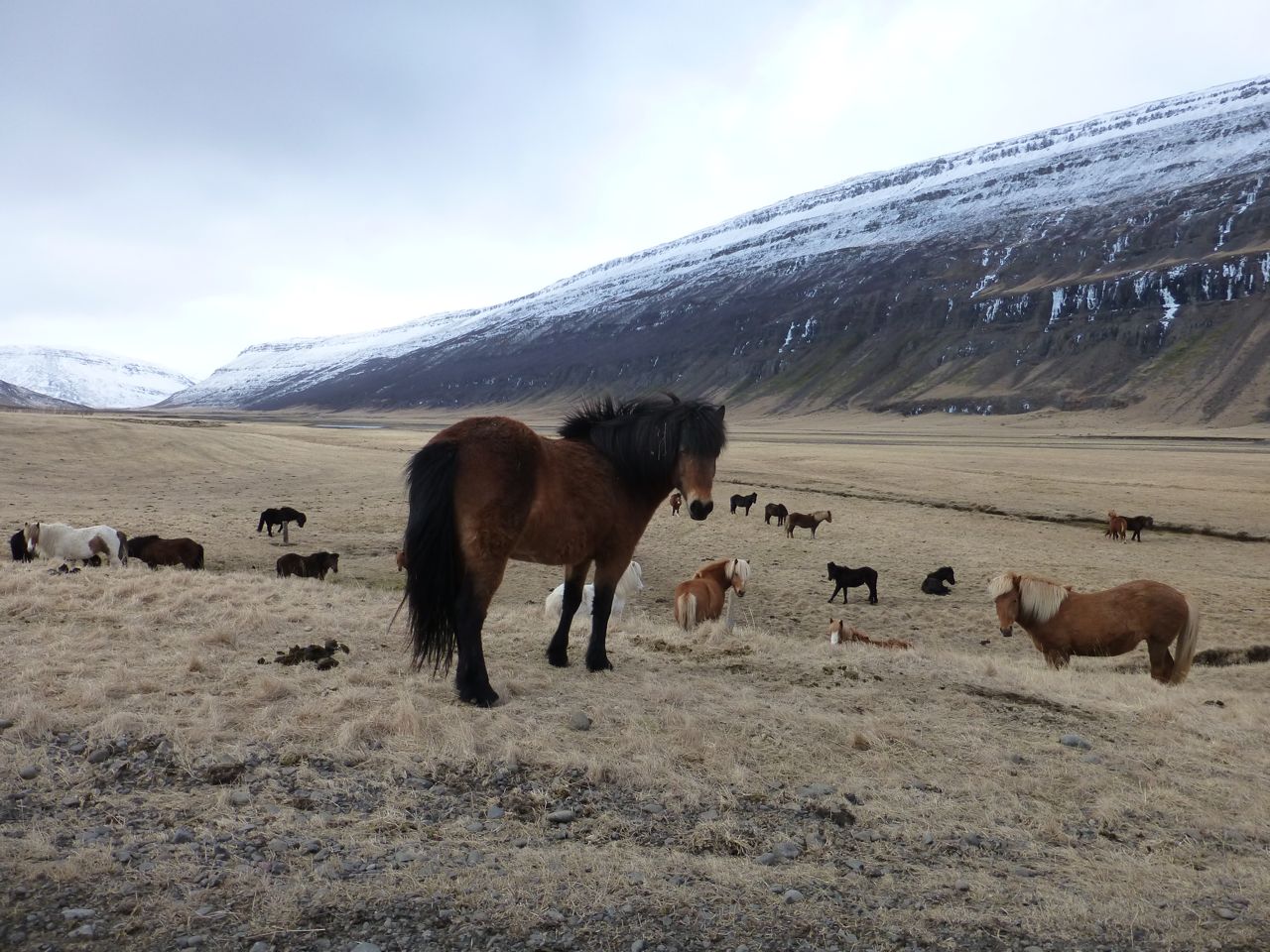
Begrudgingly, they shift aside to let you go wherever you think you’re going to…

P1430161 … and keep their eye on you, because you’re not from around these parts. It takes a while to get through the traffic jam. Easy does it…P1430162


And the road is free…

P1430164… just in time to think about getting rid of the car. I mean, if traffic is going to be that heavy, what use is a car?

~

Suðurdalur, Iceland


Gunnar Gunnarsson Secret Agent: the Transcripts

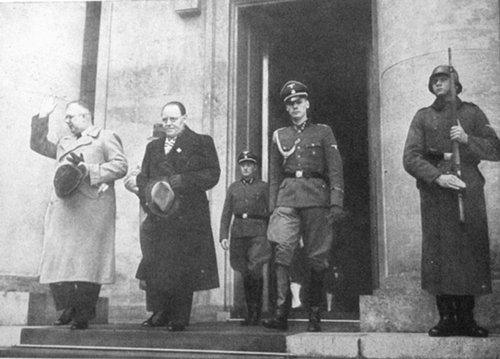
In 1940, the writer Gunnarsson went to Germany on a book tour, for which, among other things, he has been called a Nazi. I’ve been giving you photography that will be the heart of the book I’m writing about him, but there is a point at which his story as a man of the land clashes with the affairs of the world, and it was here, in the moment just before this photograph was taken …

gunnar_hittir_hitler_1a_lille_1172715

Iceland-Danish Author Gunnar Leaving his March 1940 Meeting with Hitler 3 Weeks Before the  Invasion of Denmark and Norway Source: http://fornleifur.blog.is/blog/fornleifur/entry/1257968/

From left, Hinrich Lohse, Gauleiter of Schleswig-Holstein, Head of the Nazified Nordic League Literary and Film Club of Lübeck, of which Gunnar was a member and under whose auspices he was on this tour (Lohse was soon to become Kommissar of the Baltic States as well), a hidden man in civilian clothes, Gunnar, two SS Officers (likely Werner Best, later the Nazi administrator of Denmark, and Otto Baum, later head of the Das Reich Division of the Waffen SS), and an SS guard.

What was said inside that building that could make Gunnar so upset? I have been working on this for a few days now. Here’s my theory: in 1928, Gunnar went on a cruise to Atlantis (Ireland, Madeira, Teneriffe, Lisbon, Morocco, Seville, Mallorcca) along with, I believe, this soon-to-be-prominent Nazi-era photographer and photographic pioneer …
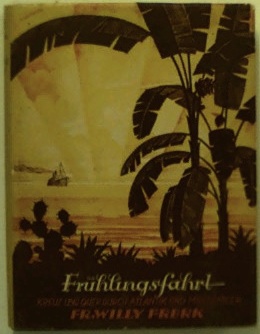
frerk

Frerk’s 1928 Book About a Cruise to Madeira, Tenerife, Lisbon, Morocco, Seville, Mallorcca…

There’s a big story about the Atlantis idea, but let’s just say that it was a huge fad at the time in many circles, including Nazi ones, that the continent of Atlantis (and its ‘advanced spiritual civilization’) had sunk into the mid-Atlantic in a volcanic explosion, leaving only the islands and cities mentioned above, plus Iceland. This isn’t that story. It is, however, the story of Gunnar’s decision to become a spy, without mentioning it to anyone, and to do so by writing cables back to Denmark that used literary language that could easily double as criticisms of the Third Reich’s racial policy. I believe that  Herman Wirth, one of the architects of that policy, may have been on the cruise, and I believe it was that voyage that the “non-existent” Luftwaffe installed and tested a prototype ship-launched fighter plane, disguised as a mail-delivery plane. At any rate, read Gunnar:

 “It’s good for one’s health to get off the ship. From the cool of the ship and the shadows of the quay, one rises on smooth, wave-beaten steps of stone into the deafening sunshine. The humming of the sun and the murmuring of the sea boil together in one’s head; one becomes dizzy. Out of the boiling light, a pair of heavy palms suddenly cut themselves; there they stand, with their blank green, sharply drawn against a blinding white wall.”

Gunnar, Islands in a Great Big Sea, 1936 (originally published in Copenhagen’s Politikken, 1928)

Sure, it could just be the words of a man on a romantic cruise with a woman who was not his wife, enchanted with the landscape, in love, and catching a glimpse of exotic green trees in a stunning landscape, not the need to escape from the odd, racist environment of the ship’s dining room conversation, or the security personnel in plain clothes (or not). Still, the book doesn’t really read like that, and his next books, Vikivaki (1932) and “The Good Shepherd” (1936) read as parables, which can be read anyway you want, depending on your prejudices. “The Good Shepherd” certainly was. It was used as propaganda by the Germans, the British and the Americans, and then at the close of the war was among the books that suddenly read as secret condemnations of the Nazis, published from within the Nazi Propaganda Ministry. At any rate, more on that story later. There is a third text, even less widely distributed, and that’s the speech Gunnar gave in 44 Third Reich Cities before meeting Hitler, whose support of Gunnar’s books [albeit as propaganda material for a Scandinavian annexation] had made Gunnar very rich. I believe this speech, called “Our Land”, was a correction to the message in “The Good Shepherd”, and was intended to correct the propaganda aims to which that book had been put despite Gunnar’s efforts to keep it as a message of peace extended to all men, regardless of their politics. A passage from this text is just below. When you read it, remember that Gunnar’s friend from the pre-Nazi Nordic League, Fritz Höger, who had wanted to be the Reich’s leading architect and redesign its buildings along North German (ie Danish) lines, had lost out to Albert Speer, who was responsible for the monumental, kitschy architecture that came to represent the Reich (including the building in the image above). Here goes:

“What is necessary is to open the eyes of Icelandic youth to Icelandic nature and its beauty. Not as if they don’t see it; but do they know what they see? Have our youth been lead to understand clearly for themselves, what goes well within our Icelandic landscape and what less so? At the very least one sees no sign of it in the newest of Icelandic buildings and the way people carry on through the country and even, at times, in the villages themselves. It pains one to see the way the land is mishandled and alienated through tastelessness, through kitsch, which will lead only to a a weight on the people themselves and bring disrepute to our land and our people. It is far better to view the inner life of people in the way it views itself, without outside direction, than to do so with words and discipline. To see the right path from these roots is more important than one might think from a distance. And, at any rate, one sacrifices little if one holds to taste and good manners. And if it ever should be time to talk of sacrifice, our land has already earned it completely, and our joy at its beauty will never be complete, so long as these things are not put into an order that no longer give any cause for rebuke.”

I believe that Hitler heard that exactly as he was meant to, behind his tiny desk in its huge room like a concert hall in the Chancery in Berlin, where he usually greeted heads of state. He would have heard this…

“What is necessary is to open the eyes of German youth to German nature and its beauty. Not as if they don’t see it; but do they know what they see? Have your youth been lead to understand clearly for themselves, what goes well within their German landscape and what less so? At the very least one sees no sign of it in the newest of German buildings, built by that idiot Speer, with his head in Italian clouds, and the way people carry on through the country and even, at times, in the villages themselves. It pains one to see the way the land is mishandled and alienated through tastelessness, through kitsch, which will lead only to a weight on the people themselves and bring disrepute to our land and your people. It is far better to view the inner life of people in the way it views itself, without outside direction, than to do so with words and discipline. To see the right path from these roots is more important than one might think from a distance. And, at any rate, one sacrifices little if one holds to taste and good manners. And if it ever should be time to talk of sacrifice, your land has already earned it completely, and Höger’s and my joy at its beauty will never be complete, so long as these things are not put into an order that no longer give any cause for rebuke.”

After all, both Gunnar and Hitler shared a believe in the identity of Iceland and Germany as Nordic states united in brotherhood — they just understood that differently. Here’s Gunnar a little later in the speech (Remember, at this time the British and the Americans hadn’t invaded Iceland and there were no appreciable building projects of any kind, but there were in Germany)…

Few lands that can call themselves populated are so little touched by the traces of time. Here it’s not, as it is in richer territories, buildings and the works of man that make a land appear all-powerful. On the contrary. In the past, the houses stood so simply and artlessly in the land that they were hardly to be reckoned as houses, and human habitation snuggled into the landscape and passed well with it. In recent times, a massive change has stepped in to this relationship, and sadly not for the best. It is sad to see how foreign so many of the new houses appear above their home meadows and how ugly and gauche they clash with the Icelandic valleys, among its rivers and against the strata of its mountains. Regrettably, out of tastelessness, which they are also anchored within, springs only decline and bad fortune.

Again, neither of these two men were stupid (That Hitler was evil is another matter), they shared a symbolic language, and I believe that what Hitler heard went much like this:

Few lands that can call themselves populated are so little touched by the traces of time as Germany. Here it’s not, as it is in France and Italy, buildings and the works of men [the Nazi Party] that make a land appear all-powerful. On the contrary. In the past, the houses stood so simply and artlessly in the land that they were hardly to be reckoned as houses, and human habitation snuggled into the landscape and passed well with it. In recent times, a massive change has stepped in to this relationship, and sadly not for the best. It is sad to see how foreign so many of Speer’s Greek palaces and your new Autobahn bridges appear above their home meadows and how ugly and gauche they clash with the German valleys, among its rivers and against the strata of its mountains. Regrettably, out of tastelessness, which they are also anchored within, springs only decline and complete and utter defeat and destruction.

In both of these speeches, a tiny change, well within the compass of the title “Our Land” and Gunnar’s relationship with the audience to which he was speaking, bring out an amazing subtext. Gunnar’s 1930 novel “The Black Cliffs” demonstrate that he had the depth of writing skill and the depth of psychological understanding to attempt to pull this off. Can any of this be proven? No, hardly. It does, however, make absolute sense. If it is in any way true, however, Gunnar’s reputation as a early-to-mid-twentieth century writer needs to be reassessed. If this is what Hitler got out of those speeches, the conversation inside that building, of which Gunnar never mentioned a word, would not have gone well. Any other writer who had tried to use his authority as a writer (and none were more famous or sold better or were more beloved than Gunnar) to trump Hitler’s had wound up in Buchenwald, even Ernst Wiechert, whose Baltic folktale novels were very similar to Gunnar’s nordic  ones. If such a half-veiled threat had been made, and was accepted bluntly and openly rather than as the psychological suggestion I think it was intended as, Gunnar’s expression would have been understandable, especially given the company he has on those steps. Here is that photo again:
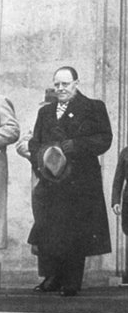
gunnargrimaceGunnar Gunnarsson: A Man Trying to Broker Peace?


A Vision for Writers from a Sculptor

There is a line that makes a story. It’s the path any person can walk along to get from one place to another, or the one my dog used to always find in the weeds, because the edges of the gravel are where everything happens, or maybe it’s just because it’s just where someone has passed by. This is a problem that doesn’t even bother sheep.

P1420751

Sheep Tracks, Hengifossá Canyon

If you leave enough tracks they don’t make a trail. They make a net. A net’s a great thing, but if you catch the world with one, what then? Where are you going to drag your catch? 

Maybe it’s not so hard. Maybe sometimes writers just need to be dragged out of their words and given a new pasture to run in.

blue2

Icelandic Writer Staying Close to Home at Feeding Time

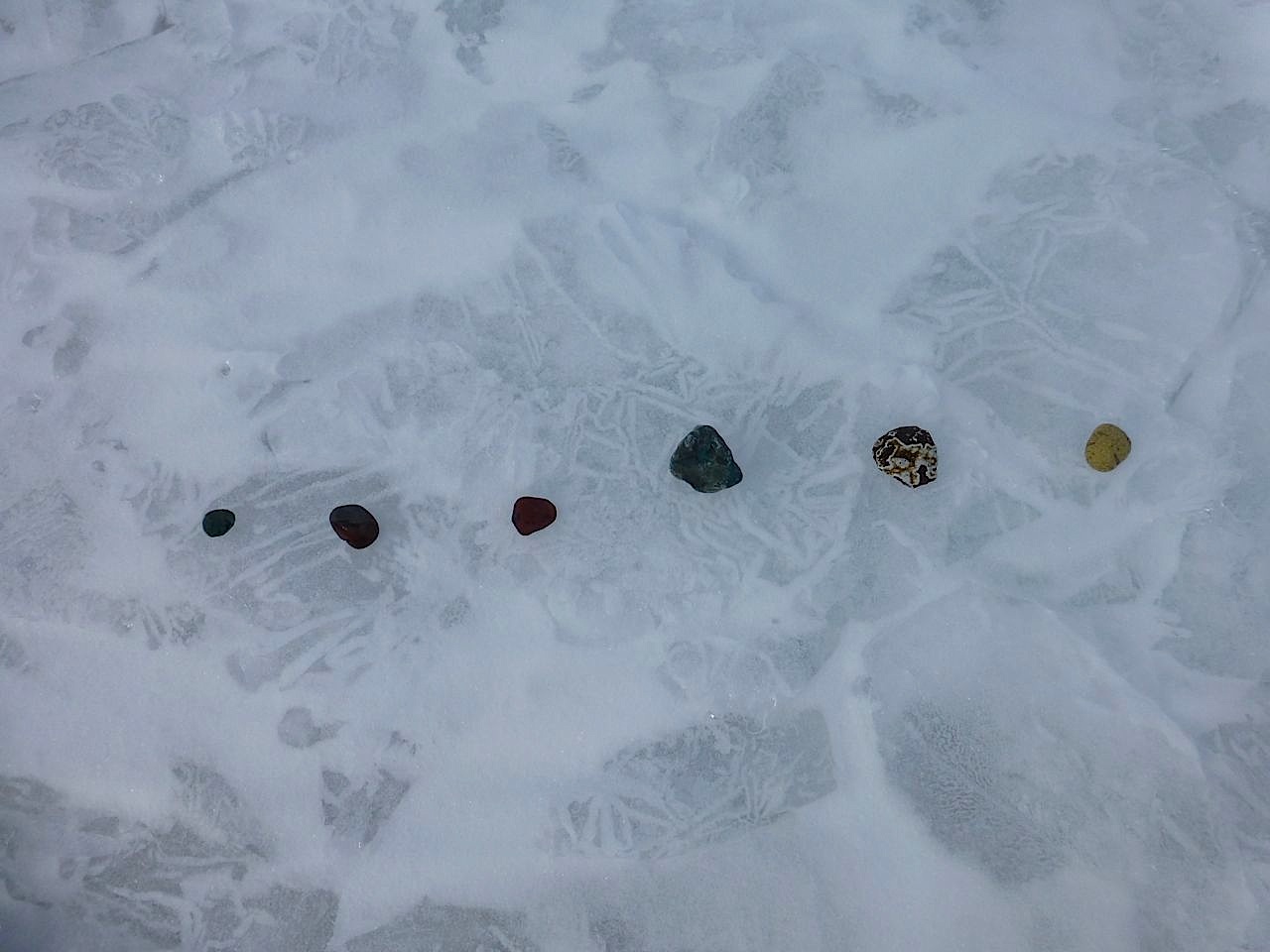
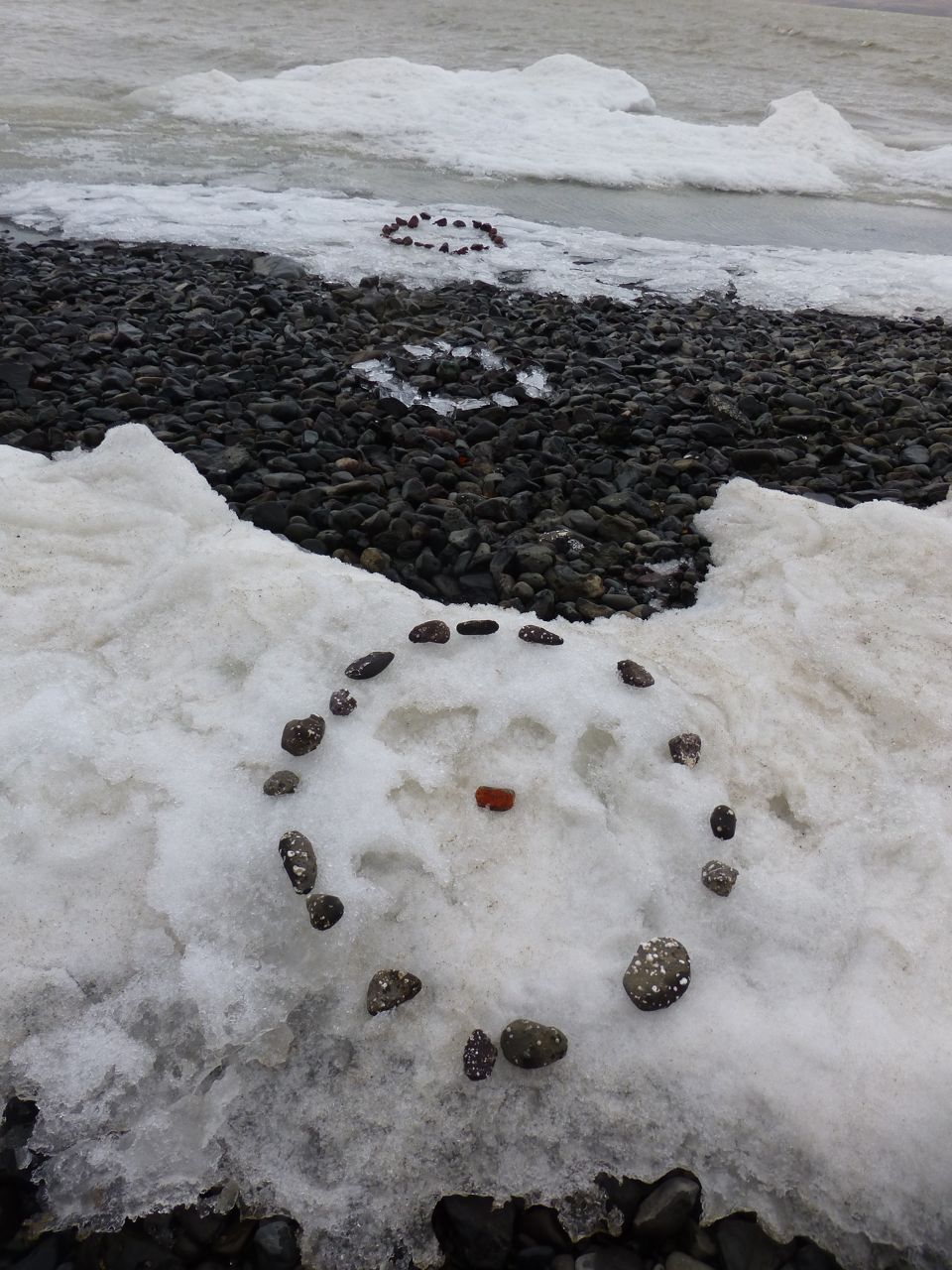
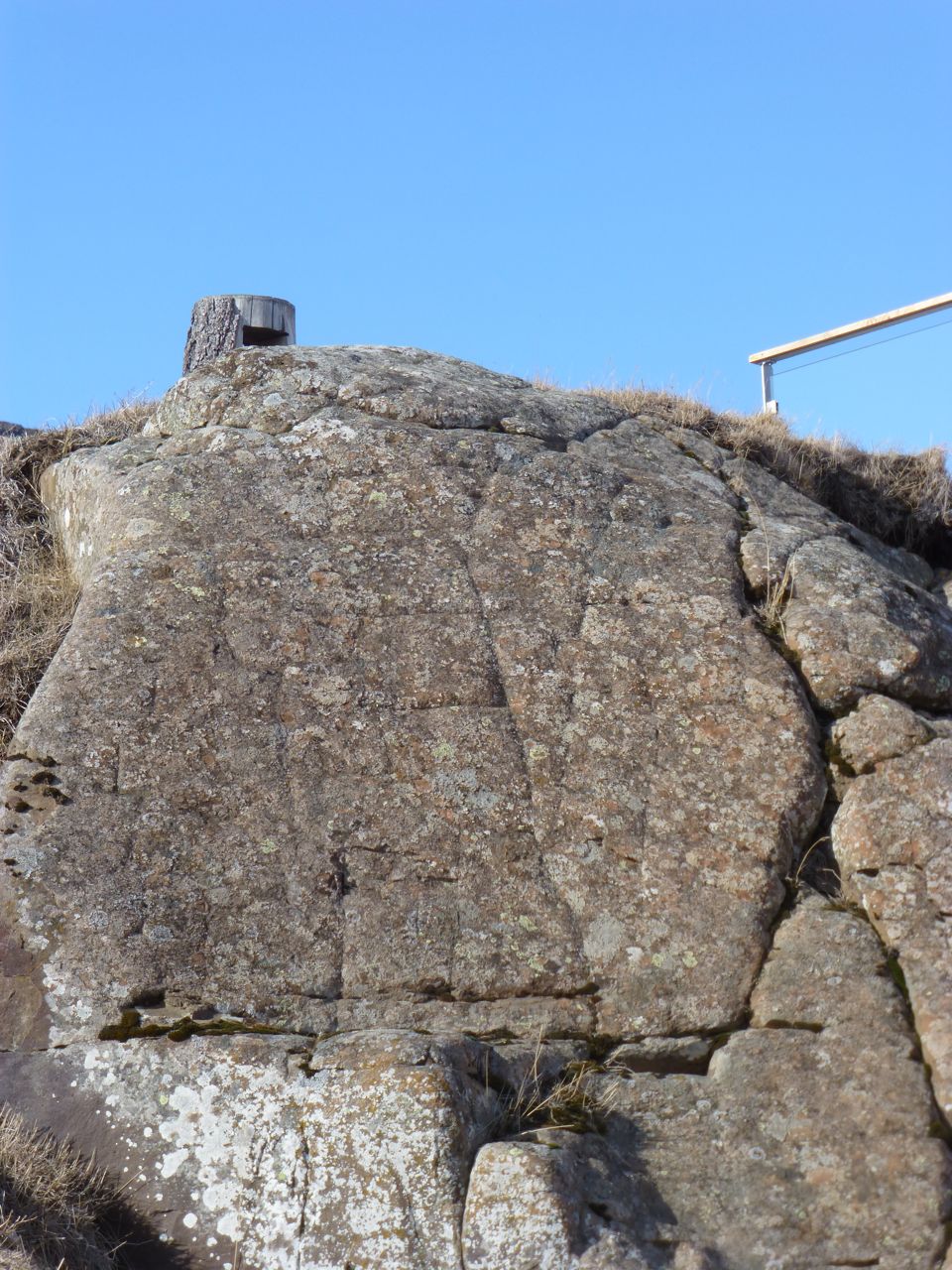
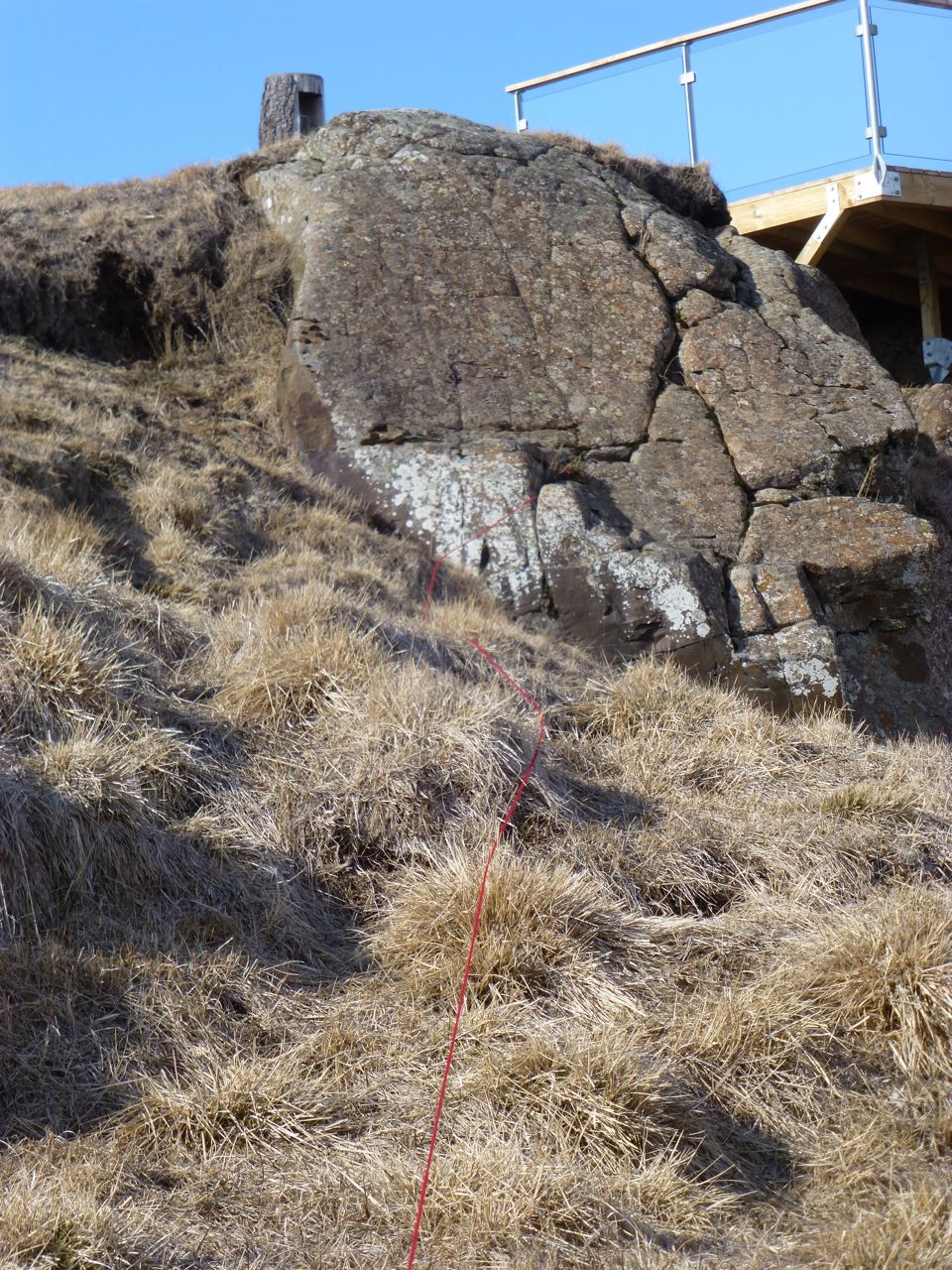
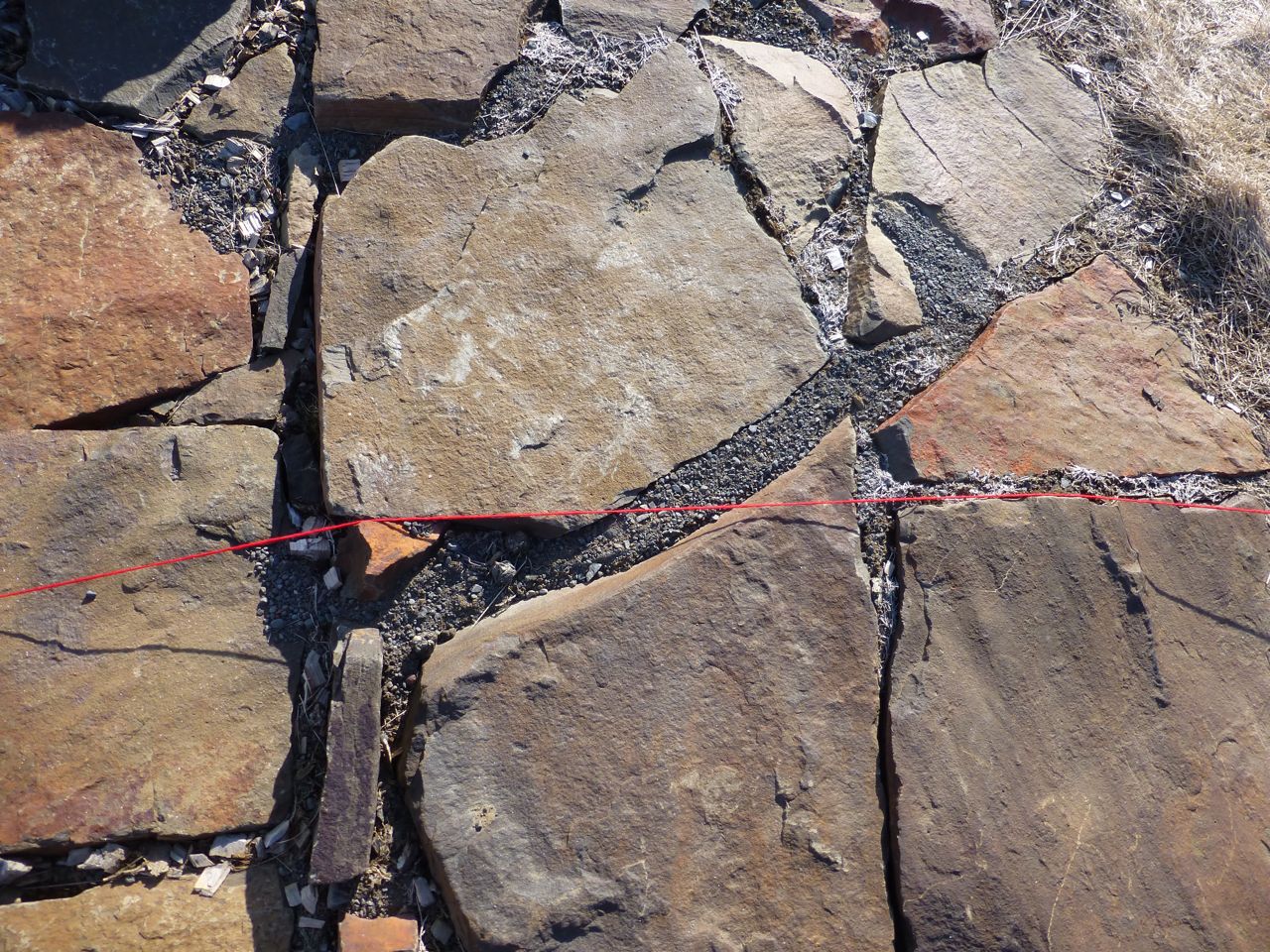
Or maybe not. Maybe it depends. A couple days ago the sculptor Ken Blackburn asked me to go out and make a line in Iceland. Everything in the world, he said, starts with a line. So, I made a line. I liked this idea. I could feel what the very beginning of something looked like, and not a story already made which I stub my toe against, which is usually the case. Gunnar’s story (whose house I haunt here) is certainly like that. And would you just look at what found me in its first moment, as I set it into the world …

littlelinecloserA Line of Volcanic Stones

In this case, the edge is in the midst of the ice. It leads from itself to itself, and quivers there, while the ice could just as well extend to the edges of the universe. Maybe it does. Maybe it’s only humans who say, “Look! There’s an edge to this stuff.”

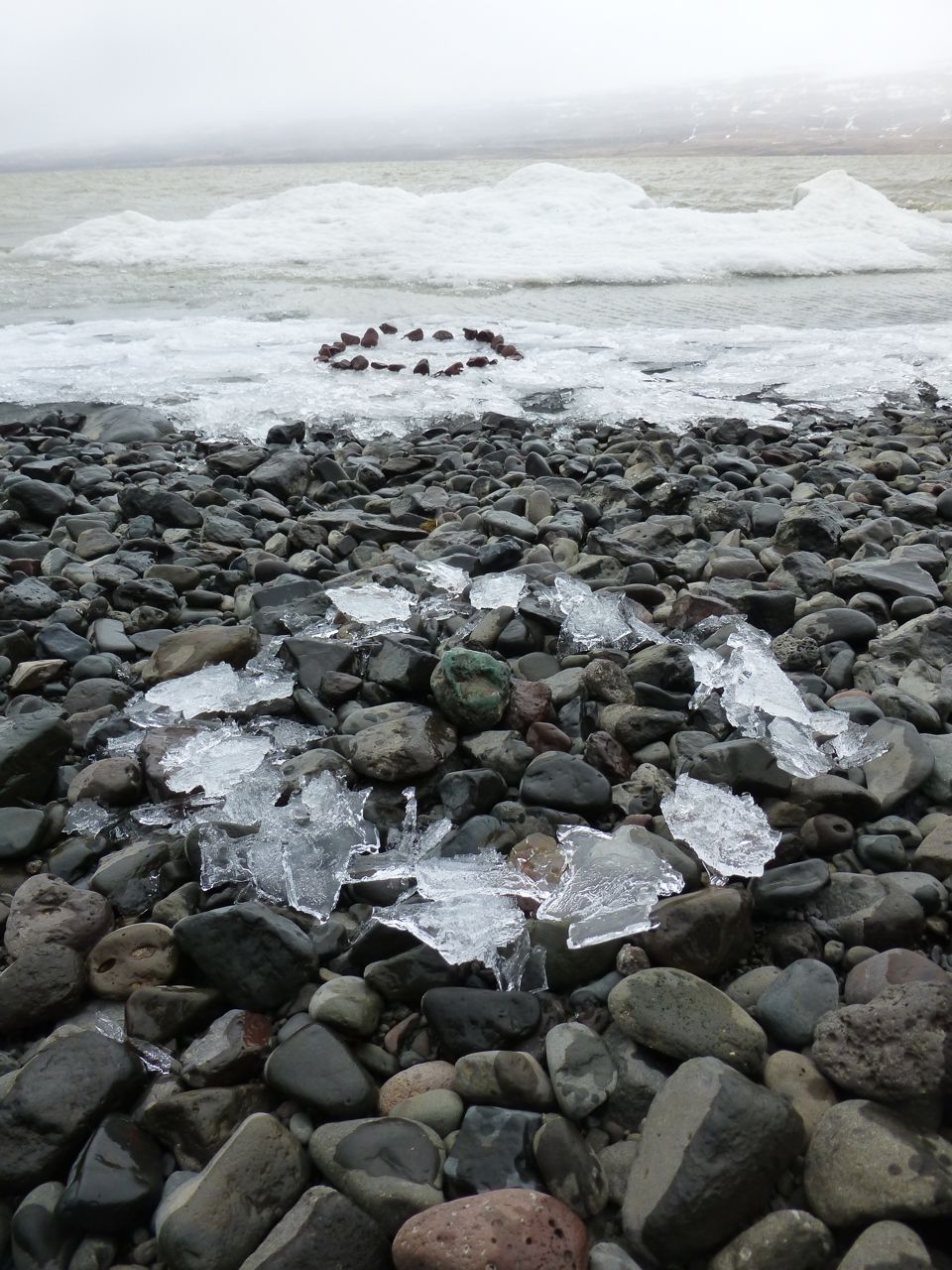
Imagine what a story would look like if it were written like that. The beginning and end would lie side to side, cuddling up close in the centre, and all the rest of the story would stretch out in folds of sheets and kicked off blankets to the sides. You might have to pick up the book, and read it any way you wanted. The edge would always find you. Maybe I didn’t stub my toe against Gunnar’s story. Maybe, as a man largely of the 20th century (so far), I was always in it and by walking far enough stubbed into the line that was always there — maybe at the centre, maybe way off to the side … who’s to know in a spherical world? But you see, that’s a writer thinking. What did Ken say? Make a circle, he said. A sculpture, he said, is just a line, too. A circle! Aha!

P1430091Well, Sort of a Circle

And, this right on the sight of that original line, too, which looked like this when I showed up today …

P1430070

Gone!

A most unwriterly art form. Writers are always thinking about making a mark that stays. This one, though, is gone … it’s finished. 

Still, a circle, eh. A story that was a circle and not a line, that might have a swan feather in its belly, that might at any time be blown off by the wind … what a book that would make: a book that would mean anything at all, depending on who you are. But wait… I know some books like that. They were the books that Gunnar wrote in the 1930s, especially his “Advent in the Highlands.”

51jjvzSMACL._SL500_SS500_

Advent in the Highlands

The Approved by the 1936 German Propaganda Ministry Version

Don’t jump to straight lines. That book, that Gunnar wrote to promote peace, was used to send German boys to Czechoslovakia, but 4 years later it was used to generate an American desire to go to war, in this edition:

0A36.3L

Advent for Americans

A message of peace for both sides — that circle was Gunnar’s intention. That it was used for other purposes was not. 

So, circles. I thought, well, what if a circle is not alone? What then? So I tried to find out …

P1430110

Two Circles

 Well, that felt good, you know. Look how they turn the space between them into a … well, not a line exactly, but a space that could be a line, or anything… a space of possibility. Not a No-Man’s Land, but an All-Man’s Land. So, I wanted to see how far this would go…

P1430114Three Circles!

Now there’s a line and no line, and the middle circle is within the position of possibility.

What would a story put together like that look like? It wouldn’t be a story, for one thing, so much as a bunch of stones and ice on a beach that the writer and readers could all walk around in together and stub their toes against … but would that be a bad thing? Is that what Gunnar was missing? A third circle? I mean, his stories were all about this…

iceringThe Shore of Life

It separates the island from the sea, or the colony from the colonizer, in Iceland’s case, and is deadly and life giving at the same time. Death and life are inseparable in Gunnar’s world. He does not means this as an easy sentiment.

But what if in all his haste to tell a story, to try to save Iceland from colonization and other invasion, through the admittedly ridiculous medium of words, he missed this?

P1430151They Float on Light!

Maybe novels and their traditional structures were the net that caught Gunnar. Maybe that’s an important lesson in literary form, learned from sculpture. I think it is.

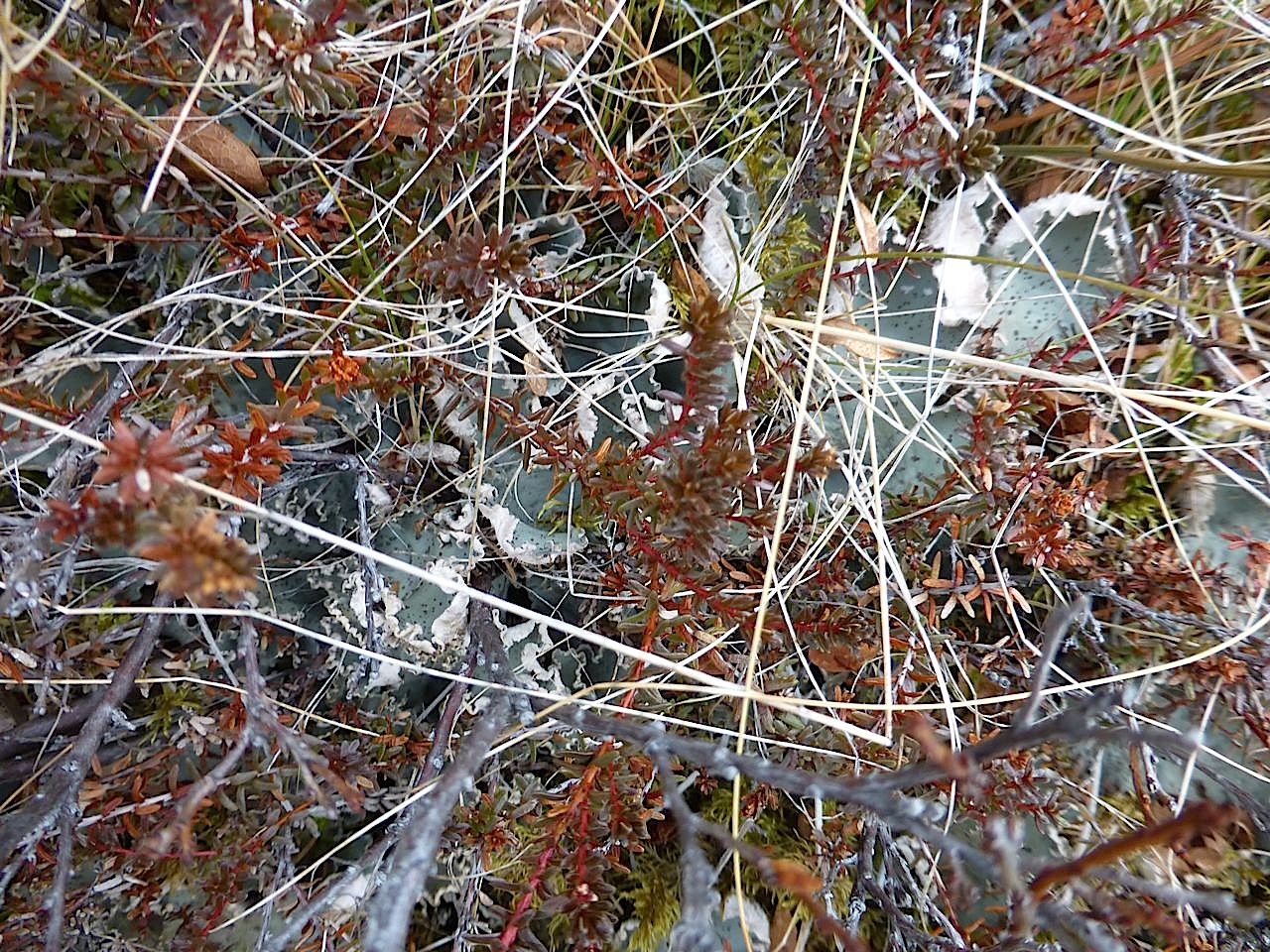
Missing Your Camera Lens? I Found It.

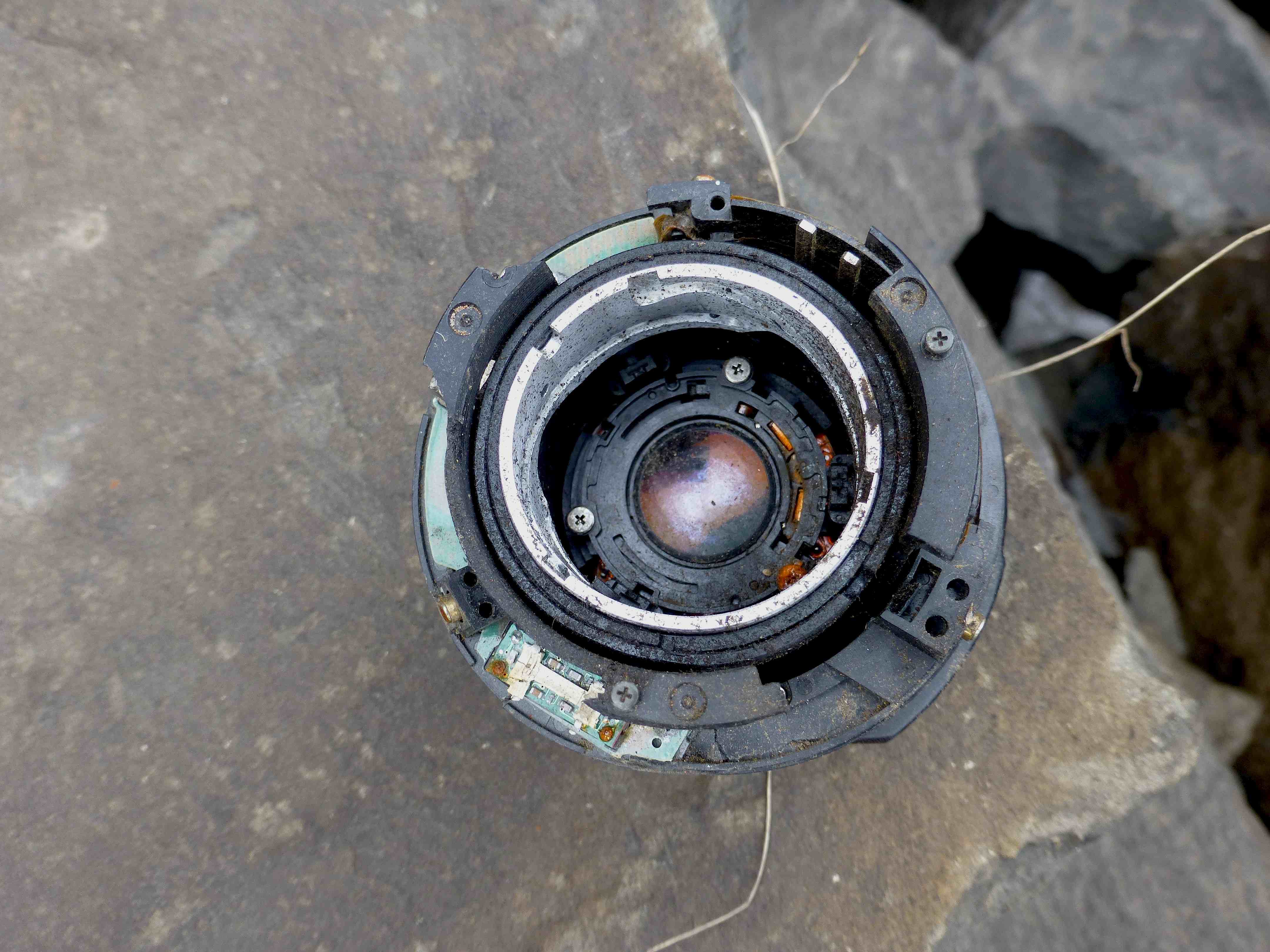
Dear Photographers! Did you go to Hengifoss in Iceland and stop at Littlafoss halfway up and … drop this intricate, beautiful and very expensive thing?

lens

Canon 28-135 mm Lens

I hate to be the bearer of bad news: it rattles now. I don’t think that’s good.

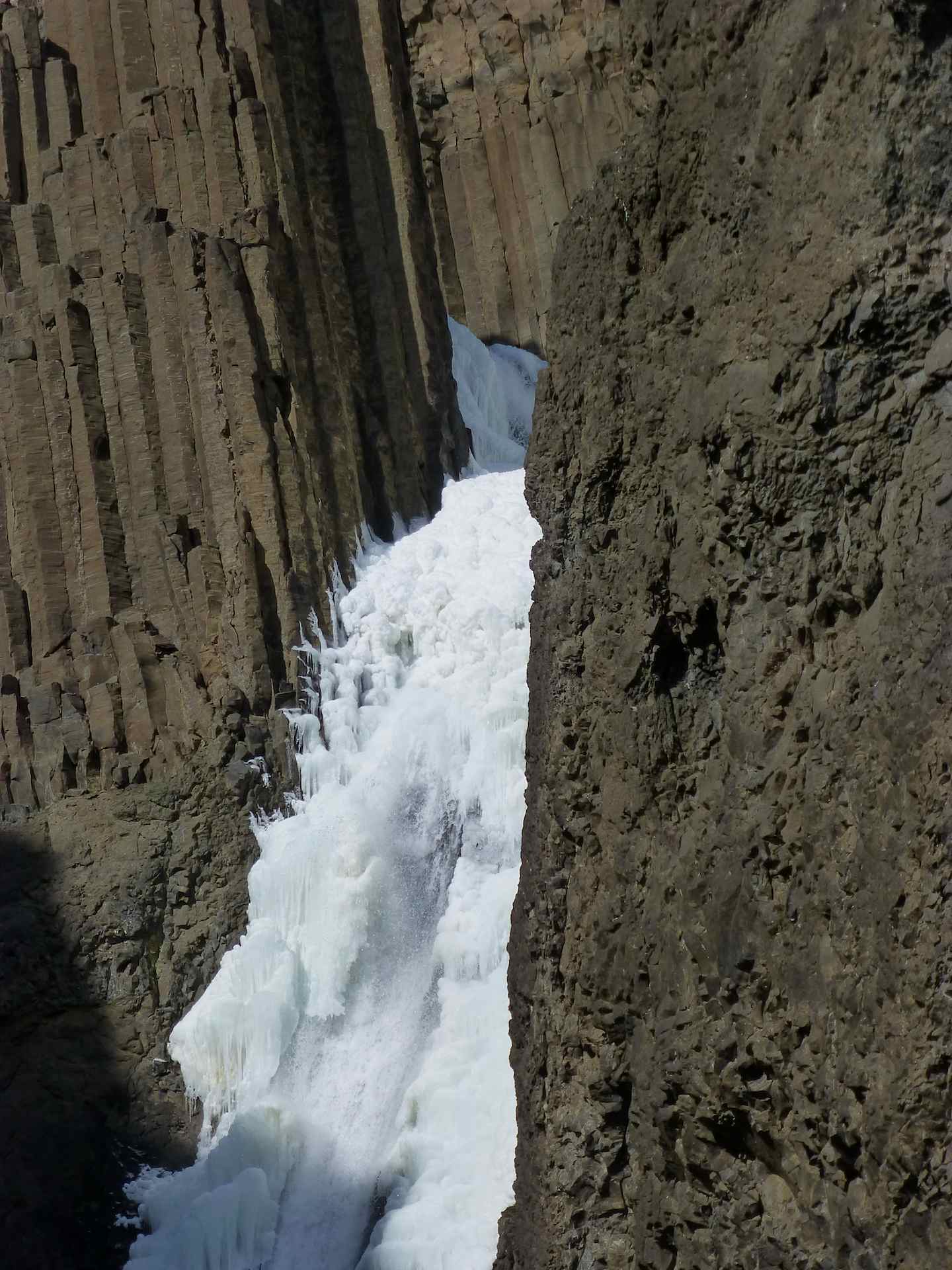
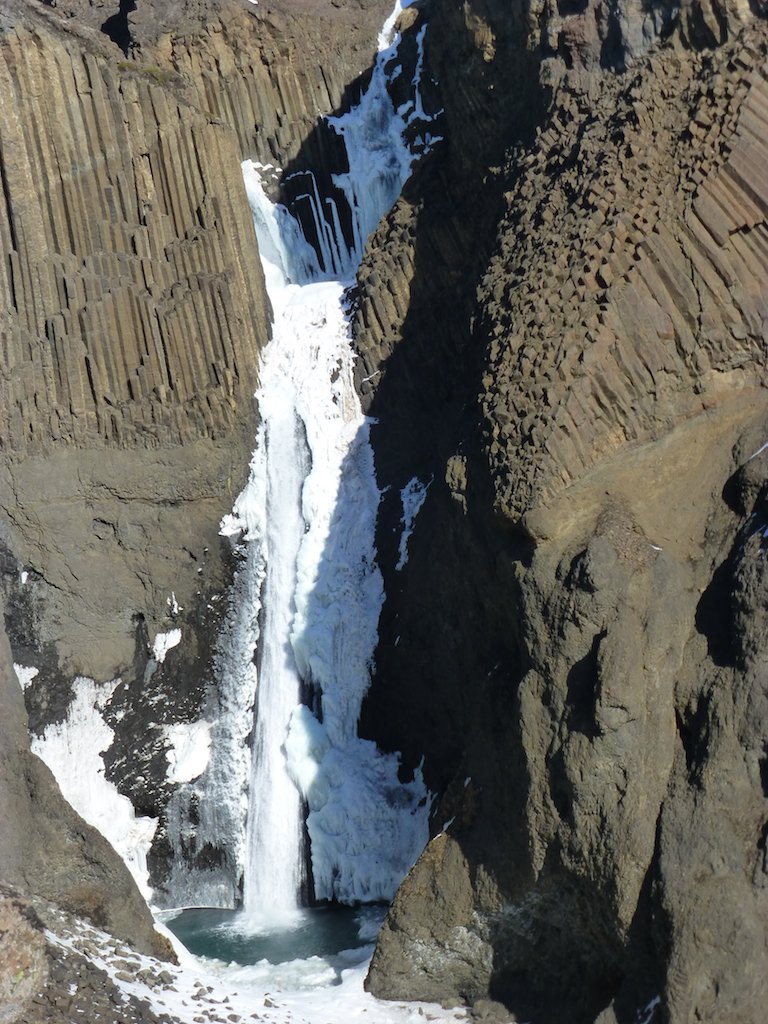
I found it when I clambered down a long path into the canyon to get a closeup view of this…

bottom2

I guess you were trying to get there, too. I don’t blame you. Yesterday, I tried from the other side of the canyon, and got this instead …

close

Littlafoss

Squeeeeeeeeeeezing around the edge of the cliff to have  a peak.

I tell you, this slow move-the-human-around zoom method takes a bit of puffing, but it sure changes one’s perspective. Still, I’m sorry about your lens. Here’s where I found it, if that helps, seen from yesterday, on what I thought was the wrong side of the stream, but which now seems just as interesting as the right side, if it is that, if not quite as dramatic… but your lens! First the setting …

littlaness

… and now, X marks the spot …

littlanessx

I could send it to you, if you like. Lemme know. Next time, though, I recommend the human movement method, cuz I’ve become quite smitten by it. It takes some time, well, heck, days, really, but it’s not bad, you know. It kind of focusses the mind. Here’s the focussing apparatus (kind of big, yeah, I know — won’t fit in my camera case) …

path

Bring walking sticks. Now, it’s a mighty beautiful fall, which is why I keep going back, and why you were so taken by it too, I bet. Here it is from the viewpoint, as I’m sure you remember …

littlaup

Easter Afternoon

If I’m right, you dropped the lens from about here (see the x in the upper right?) …

littlaupx

And I would have, too. That’s way too close. Man, those basalt chunks fall down. There’s a dam in the stream down there five feet high of stuff that came down this winter alone! The wind blows there something fierce, too, so I understand: hard to hold onto a lens with half-frozen fingers when that wind blows. Man, I am so sorry about your lens. If it’s any help, this is the best closeup I could do with my little Lumix …

littla

Not glossy photo magazine worthy, I’m sorry, but it gets me out and about exploring what the world looks like when a human looks at it from all kinds of different ways. I find it fascinating, but, hey, it’s a bigger relief that you didn’t fall, thank God for that, although I bet that when that thing went you felt like you were falling with it. I hate that feeling. I’m glad you hung on. Drop me a line. Harold

A Line of Prayer and Poetry Made with Norwegian Wool

The geologists came and declared all rock forms here at this East Icelandic cloister site to be naturally occurring. I believe them. Still, were the natural shapes enhanced 500 years ago? Was the cloister built here because something was recognized in the stone? I think that’s quite likely. Is there a lost art of stonework that is built on the premise of deepening natural forms until they take on meaning? It would make sense: if one were to rub a natural cross over and over again, that would be an intense, and physical, act of prayer. Still, scientists can’t answer questions like that. Likely, no one can. One can, however, enter the spirit of stone with an open mind. That much every human has, if he or she wishes it. So, what do you think: is the image below a group of eroded basalt crystals (certainly) or is it an image of Mary and the Infant Jesus?

P1420857Skriðuklaustur Monolith

Fljótsdalur, Iceland

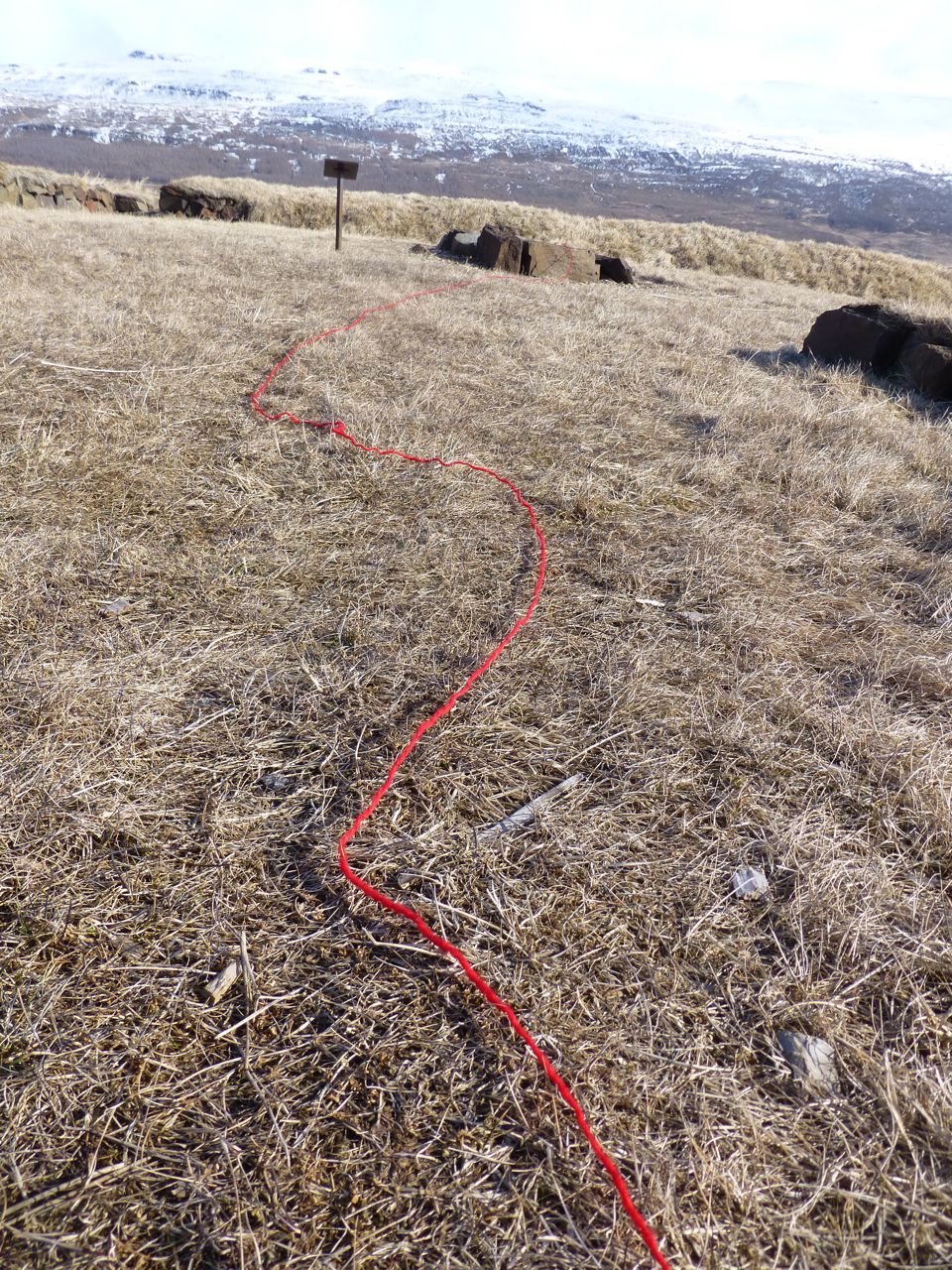
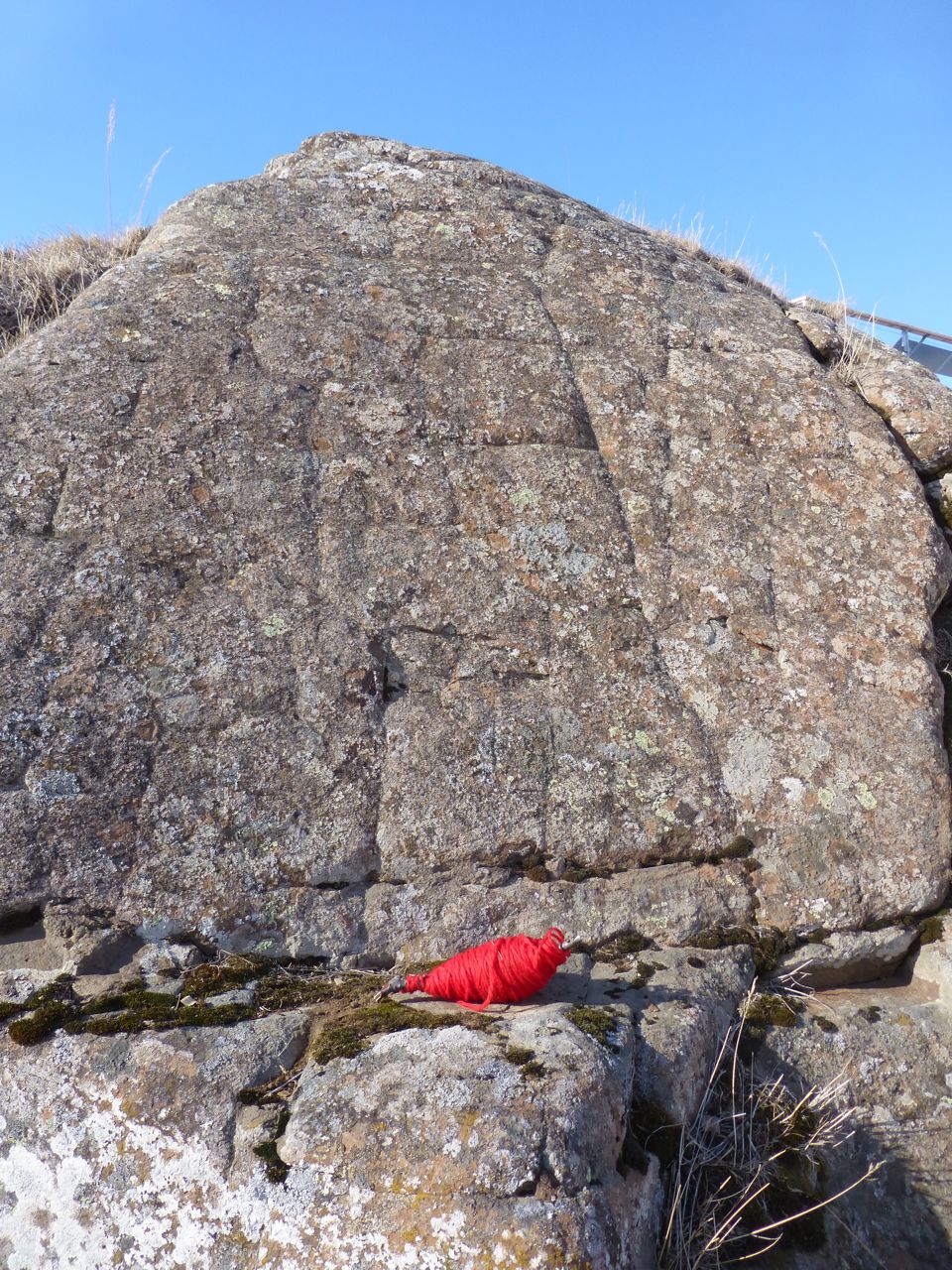
Or something else that the monks tried to rub off? Or a painting of light that only showed up when the light was at certain angles (true)? Or St. Barbara (possibly the patron saint here)? Or nothing? Maybe it doesn’t matter. This was, however, the stone that the monks saw directly in front of them when they left the entrance to the cloister church and looked, as the landscape directs one here, uphill. That, I thought, was worth thinking on. What I did to help me think on it, not being a geologist or an archaelogist but being a poet (which is an honourable thing, with deep roots of its own) was to go 40 kilometres into town in a snowstorm to buy a ball of wool and to make a line with my hands, to help me think. As a farmer (long ago, and in my heart, still), I know that the hands are a powerful tool for thinking. So, I anchored the line in a crack at Mary’s (?) feet …

angelclose
… kind of following it where I felt it was leading me…

angel

… which was, downhill, and into the church (it’s a natural flow) …

flag

… past the baptismal font and into the nave, where I discovered that I didn’t want to walk through the walls …

church

… so back again to the font (I was lost on this spiritual journey for a moment and thought about circling the font, and even tried to walk back up to Mary (?) and link her with a ribbon of life blood blowing around in the wind (ah, it was hard to keep this stuff on earth, did I mention that?), but that felt wrong, and suddenly I saw where I needed to go, drew my line of life back past the font …

font

… and through the monk’s doorway into the church (instead of the public doorway I had entered before) …

step

… and through the adjoining doorway into the cloister garden (I’ve always liked gardens, especially church ones and their Edens) …

well3

… and as you can see, to the garden well …

well

My 70 metres of Norwegian darning wool, purchased for 460 Icelandic Crowns (around $4) was just the right length to drop to the bottom. I thought that was a good sign. I then took these images, so you could walk with me and share the moment of my thinking with my hands. At this point, my Mary was joined to the well in the Garden by passing through the church and the monk’s residence… a beautiful path, I thought. Next, I went to the hillside, picked a birch twig from the grass as a spindle (among the earliest images we have of men and women are made from birch twigs, and in German the word for bone and the word for birch are the same, and my family is German, so, hey) and, starting at the well, rolled the now-charged string back up, and as I wound that 70 metres around a tiny axle, over the wood chips …

floor

… past the stones that once supported the church walls …

stone2… and through the grass …

grass… I felt that I was winding life on the axle of the universe or the pole of the earth, day by day by day, that with each twist of the birch twig to accept the string, a year passed, and I felt life in that string, not just the life the wind gave it, but energy from the universe; I felt that I was weaving with an ancient craft, in a small physical prayer, from the well up to … well, let’s just say Mary, who after all, was a spiritual fire in a human form, until all that energy was there, wound up on its spindle, at her feet …

wound

… and that was my prayer. Not an approved Christian prayer, but, then, I am not a Christian, only a man who walks in a world of spirit, with the sense to know that if you stay at a monastery, do the work. Did I learn anything about the material reality of that stone? No. That’s for geologists and archaeologists. But I did learn this: when I carried that bobbin of yarn back up to my roomI felt that I was carrying a living heart, and carried it with the reverence and care that seemed fitting to that, next to my own, and I realized that if I unwound this thread, anywhere, let’s say tomorrow, or the day after that, or a year after that even, the energy that I had wound with the motion of my body onto that birch twig, would be there and join the points of that new story back to that stone (and my questions of it) and the church and the well. The line was a journey, that I could now carry anywhere, and have to unwind and walk. Whatever that stone is at the cloister, it’s power came from a sense of devotion not far from that. Is poetry anything else? Well, I don’t think so anymore. Now the bobbin sits on my kitchen windowsill (I thought Mary might like the warmth of the hearth) …

woolwindow… (and the steam from my potatoes), waiting for me to think some more, in this fashion of thinking that is not done with words but with the body and in the world. Poetry had its roots there. I have learned here that it has not left them. For me, that stone is not the same.

The Lesson of Spring Snow

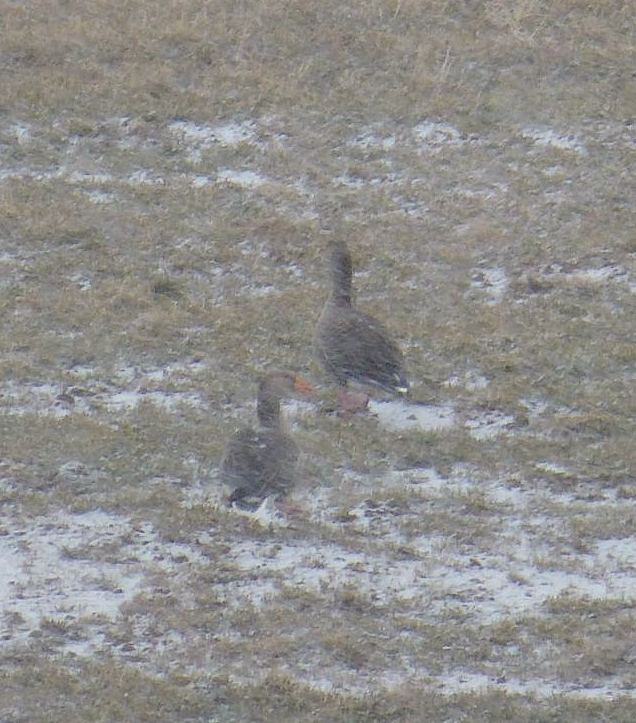
All day I’ve been having enormous fun with books and making a book dance out of nothingness, about things that are among the most important to me in the world, things like the world, and how words are a very old magic given from people who lived with the earth and knew some things about it. By the time I was ready to go out a-walking, a spring snow had hit, although there was no shortage of light.

twogeeseinsnow

Migrating Geese Sitting it Out in a Pasture Field

I thought I had a found a bit of nature. Ah, such a naive Canadian fellow. You must be smiling — if you’re not shaking your head. The geese, mind you, had a clear idea about things…

P1420252

Don’t Worry. When I Walked Away They Came Back

Still, a rickety little camera and a lot of zoom in the snow, boring, right, so I walked on, and on and on, enjoying the snow. I tell you, things looked pretty good in the light. I thought that was the story. New snow acts like a lens for light, which brings up contrast, which makes things look, well, fantastic, like this…

snowcanyon

Nature. The Canadian is at It Again

And waterfalls. And ones that no one goes to, yet. Secret waterfalls. Oh, Canada, or what!

And true Canadian that I am, raised on the Canadian myth that things start best with nothing, thought, well, nature, eh, and photography, whoa, and working together yet, huh, and that was pretty inarticulate, wasn’t it. Sheesh. The wind was nice, though, and it was good to feel cold after so many days of sun. So, horses, right. Always friendly and ready to pose…

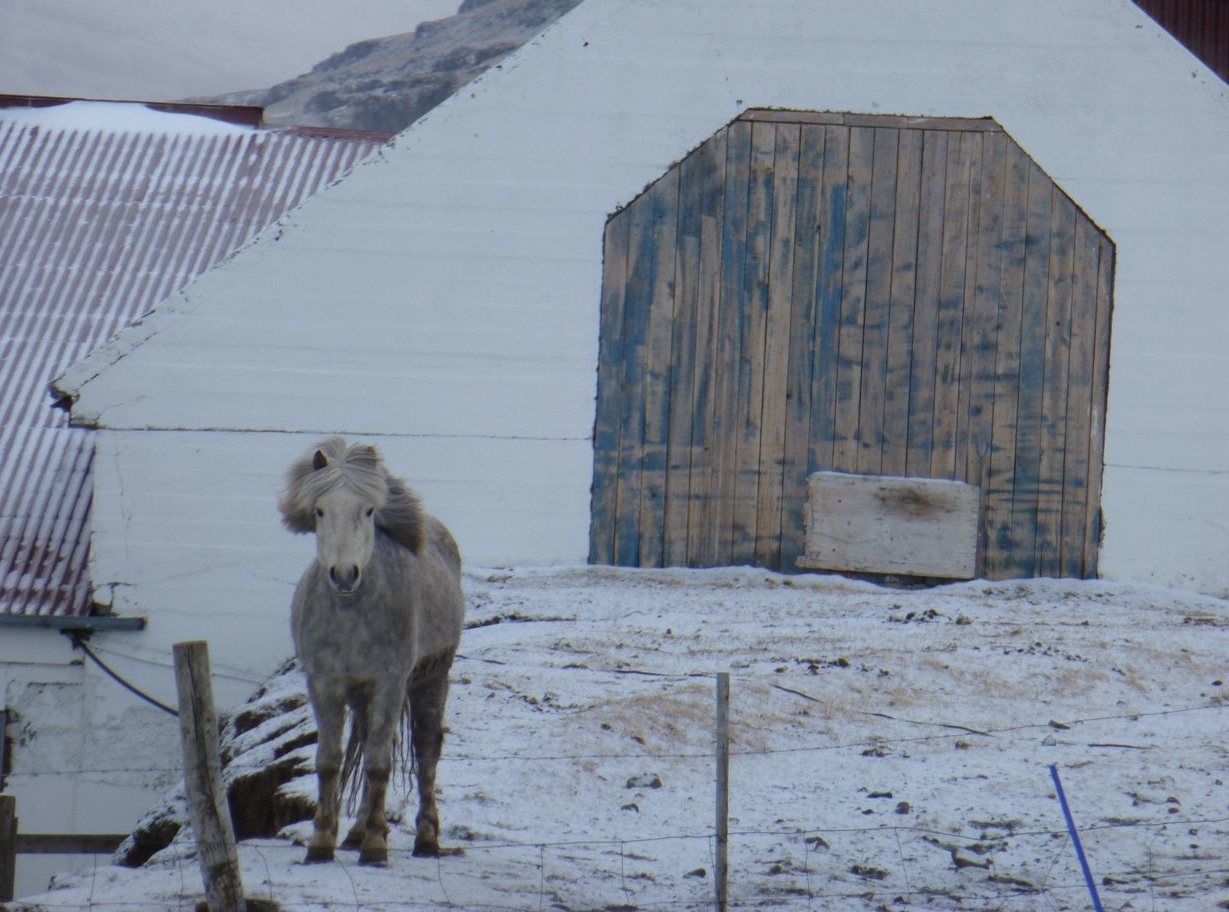
P1420260

Well, Actually, Telling Me That It’s Time for Hay

But I thought, you know, the fence, ugh. We want the wild land, the earth, her own face, and what do we have? A fence. What a bust. But then the walking started doing its magic and I started to see, not because of the light, or the camera focussing my mind, but because the world was starting to sink into me after 5000 words of some pretty crazy writing, and this is what I remembered looking at just a minute before when I took a picture by reflex …

P1420257

Horses at Home

There are no prettily arranged farms in iceland, because they’re not farms. They’re cities. 

And I got to thinking, what if I stopped looking for the earth, would I find it? So I looked around …

road

A Fence, a Crop of Larches, a 4×4 Track

In Canada, this would be considered a portrait of intrusion on a landscape. Here, it doesn’t feel like that.

What is going on? I wondered. So I looked around some more…

flat

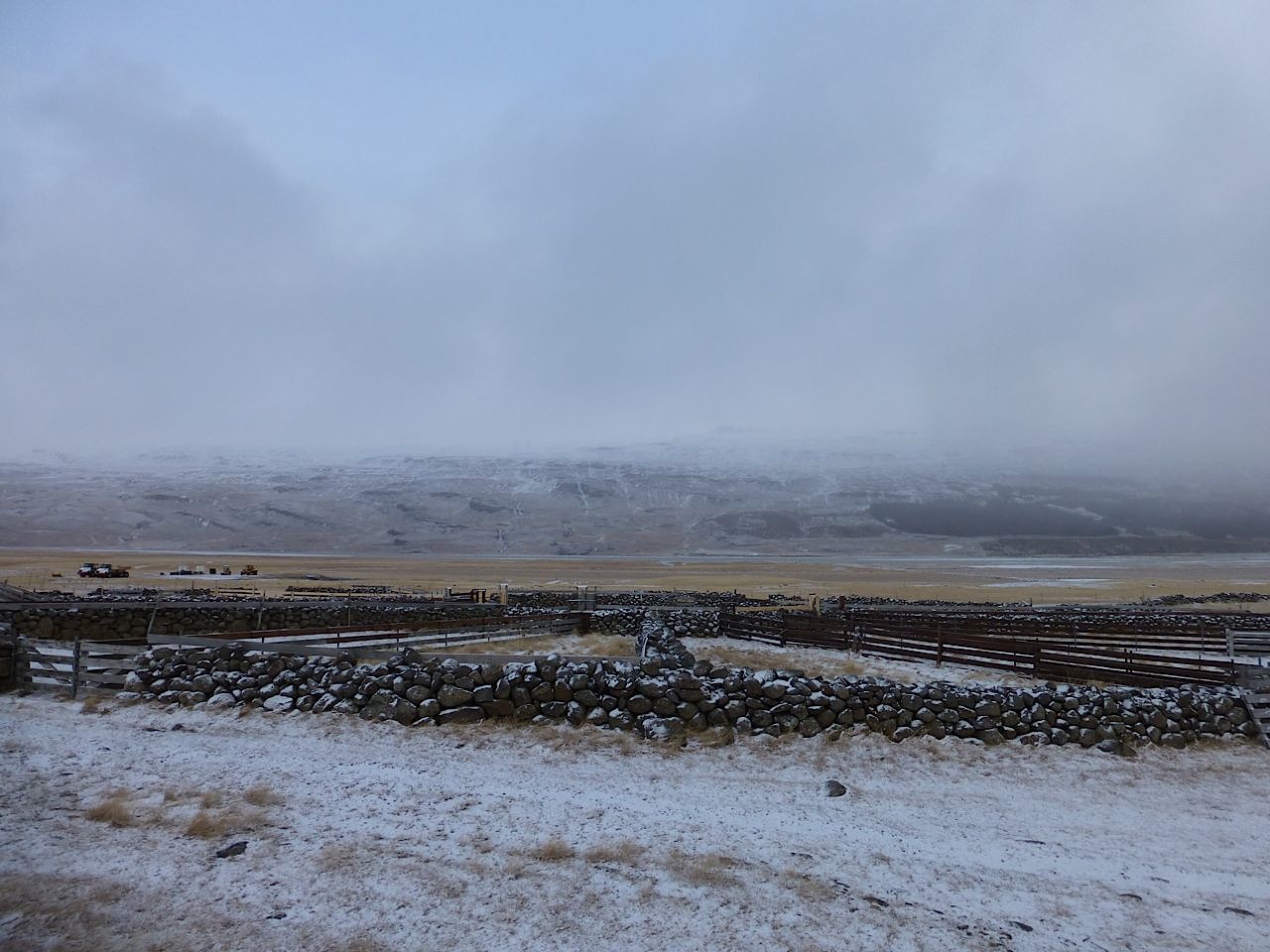
The Neighbourhood Sheep Fold

Of course, by this time I was being observed, because it was still hay time …

bluehorse

The world is physical, and humans are among its recorders. So are horses. 

The idea of nature, as a universal quality, spread across the earth and observable by all humans equally, especially through photography, is just not true. The word ‘Nature’ might be a word whose meaning has been twisted and lost.

P1420274

Nature? 

Nature is not the wild world? Then what is it?

That horse seems to know, doesn’t it.

An Icelandic Forest

If the trees you’re used to seeing are willows scooting down behind rocks the size of golf balls for a bit of shelter from sheep and wind, or maybe the occasional lone birch in a canyon somewhere, like this …


treerock


Hengifoss Canyon

Flótsðalur, Iceland

… imagine what trees must look like when a valley of stone and grass is turned into a forest. Would they not look like the most exotic things?

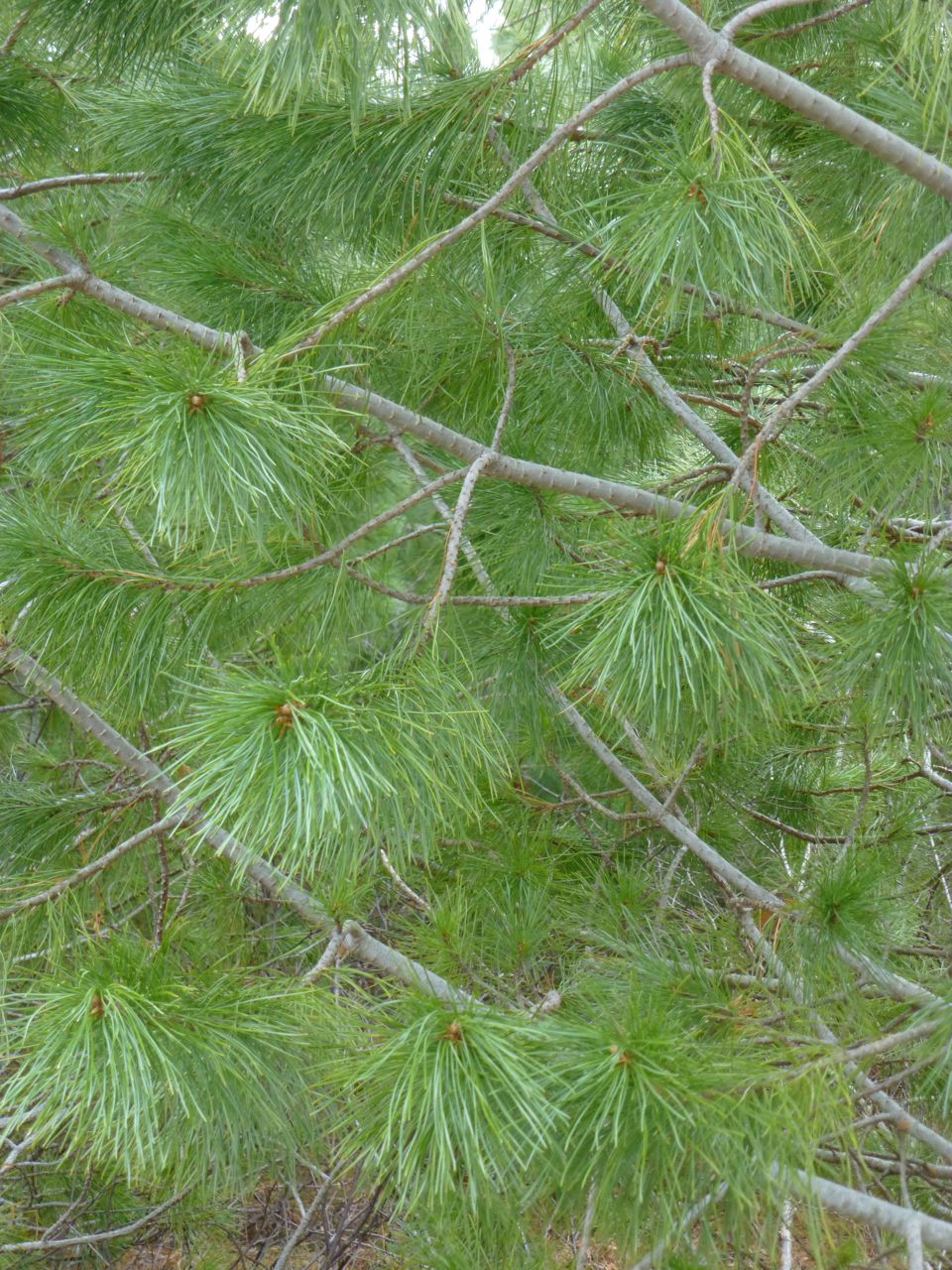
pinePines from Alaska…

…planted in the 1960s.

Now, in Canada, trees are so everyday that it often seems like a good idea to cut some down to get a view of something other than their gloomy shadows, but in Iceland, where there’s a view everywhere, from every house, farm or corner in the road or path or even just some lonesome straight length of road across a volcanic wasteland that looks like the face of a planet circling a star in space, it’s not like that. In Canada this would be, well, a nice bit of a tree plantation starting to come in nicely…

P1420236The Forest of Hallórmstaður

… but in Iceland, where the next size of tree is often like this …

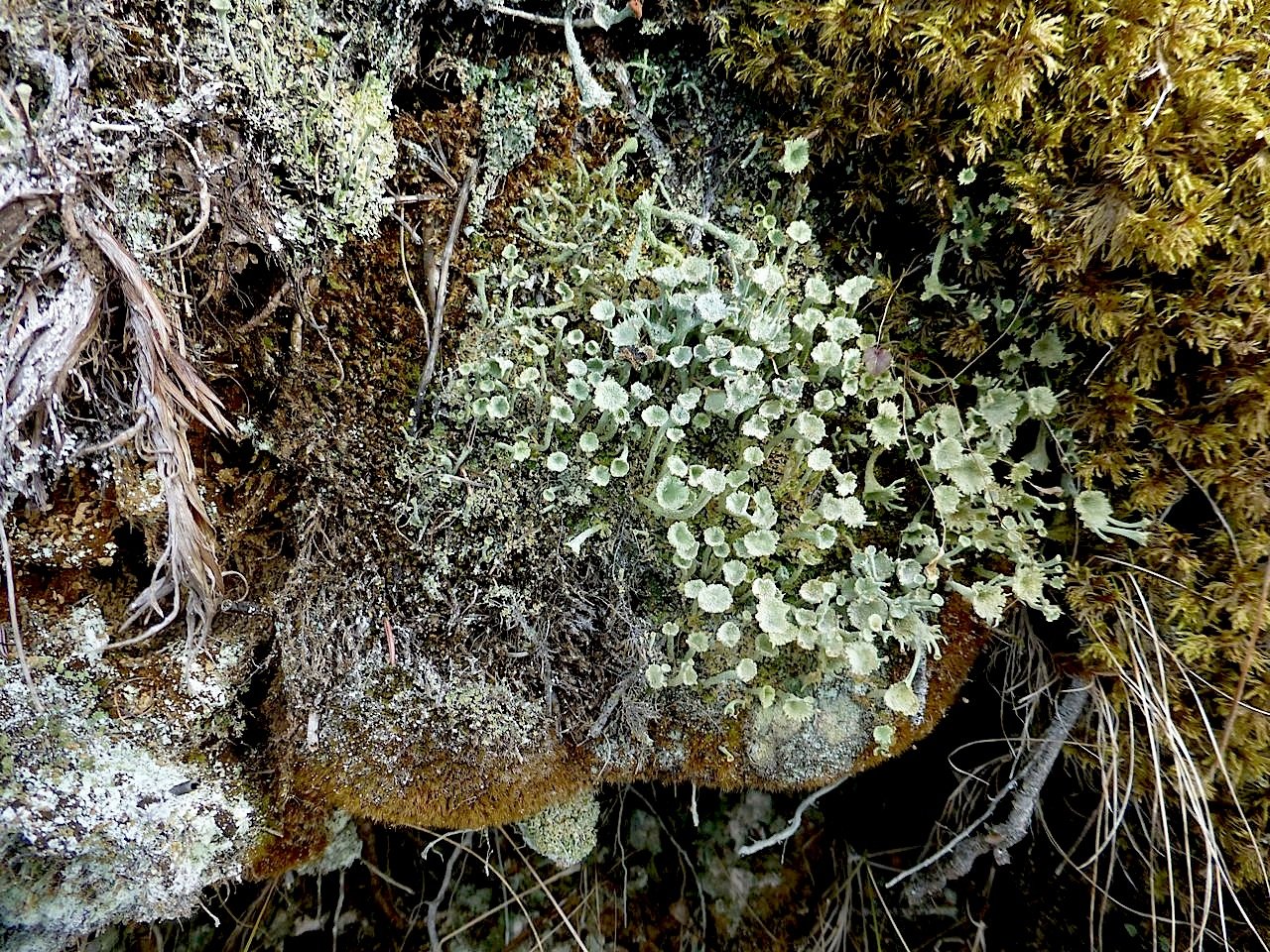
fungus1The Old Ones of the Grasslands

There before the grass, and still there after it, blooming under the trees.

… a forest is a magical place, planted by human hand in a pasture, in a way like any other agricultural crop (forestry is under the aegis of the Ministry of Agriculture in Iceland), and in a way like pure poetry.

P1410975Seeing Pines for the First Time, Ever

It doesn’t matter if they’re alive or dead, because either way they are among the most exotic creatures going, ancient ones compared to the grasses …

twignet… that never cease to astound …

P1420033… and never cease to delight …

starcones2Larches from Archangelsk

When all you’ve seen in the sky are birds and stars, then that’s what you see in the trees.

And if you should ever, somehow, get tired of looking up and seeing the delight of art that people have made out of the pastures of a country they clearcut a long, long time ago, look down …

funguslargeThen, hey, look around a bit …

fungus6

…and a bit more …

fungus13

Why, you might almost forget the waterfall you hiked uphill through the snow to find …

P1420072Ljósárfoss

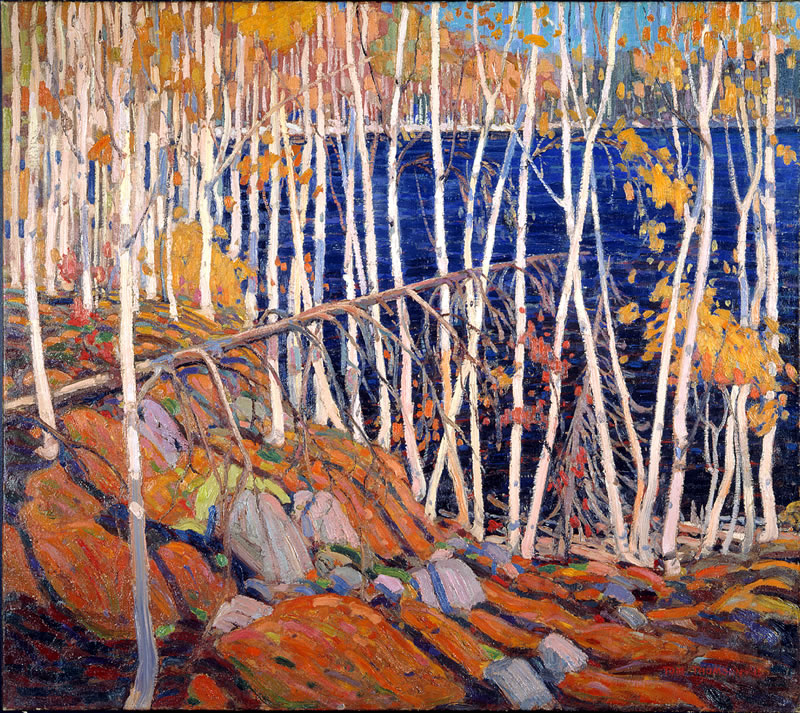
I love those Icelandic birches. Here are some Canadian aspens, in contrast…

tom-thomson-in-the-northland1Tom Thomson’s In the Northland

It was the years when Thomson was making paintings like this in Northern Ontario that Icelanders started planting trees in the Fljótsðalur. Canada and Iceland were very similar then. Both legacies remain, a century on, to haunt.


How to Say Hello in Icelandic

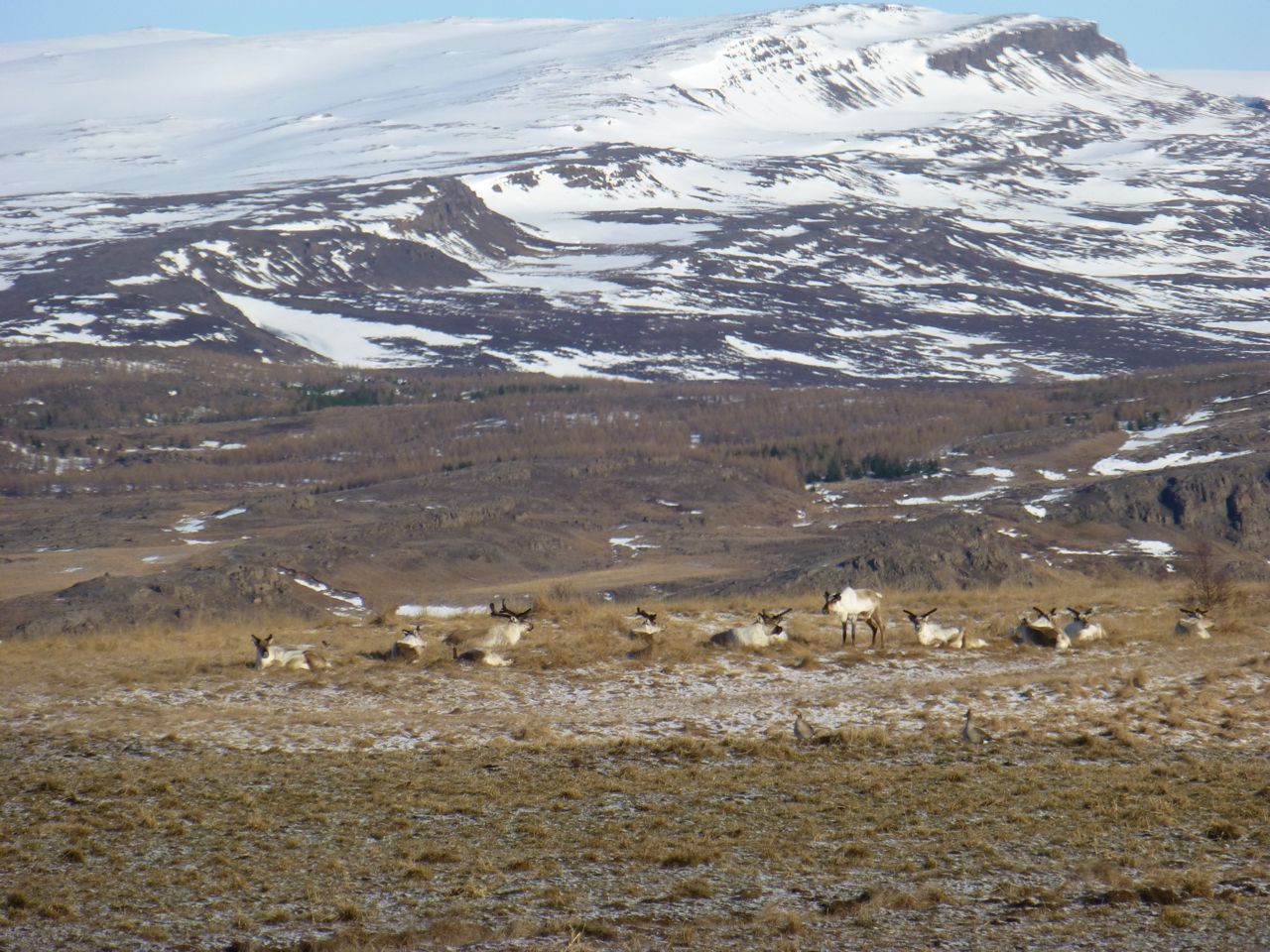
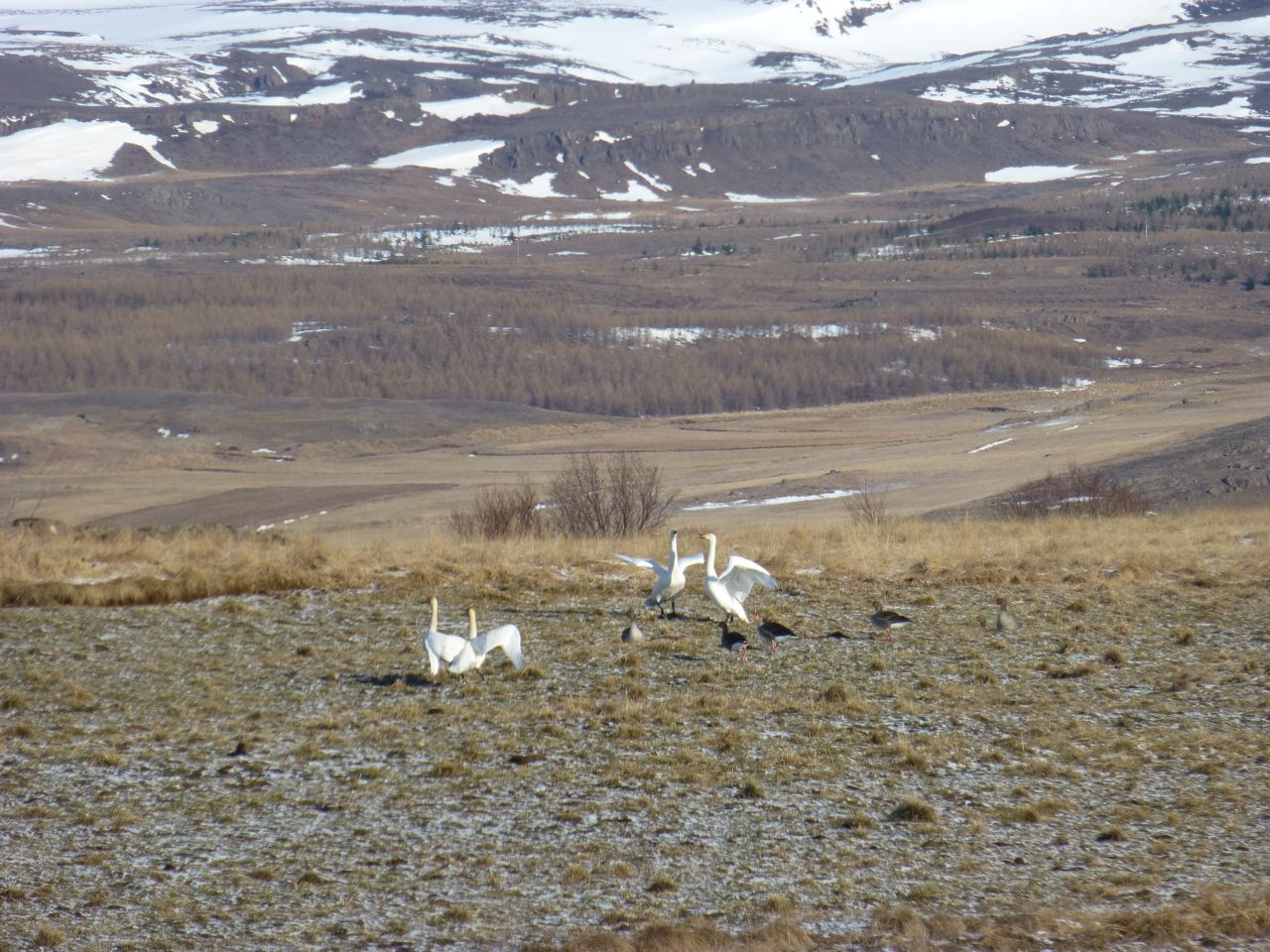
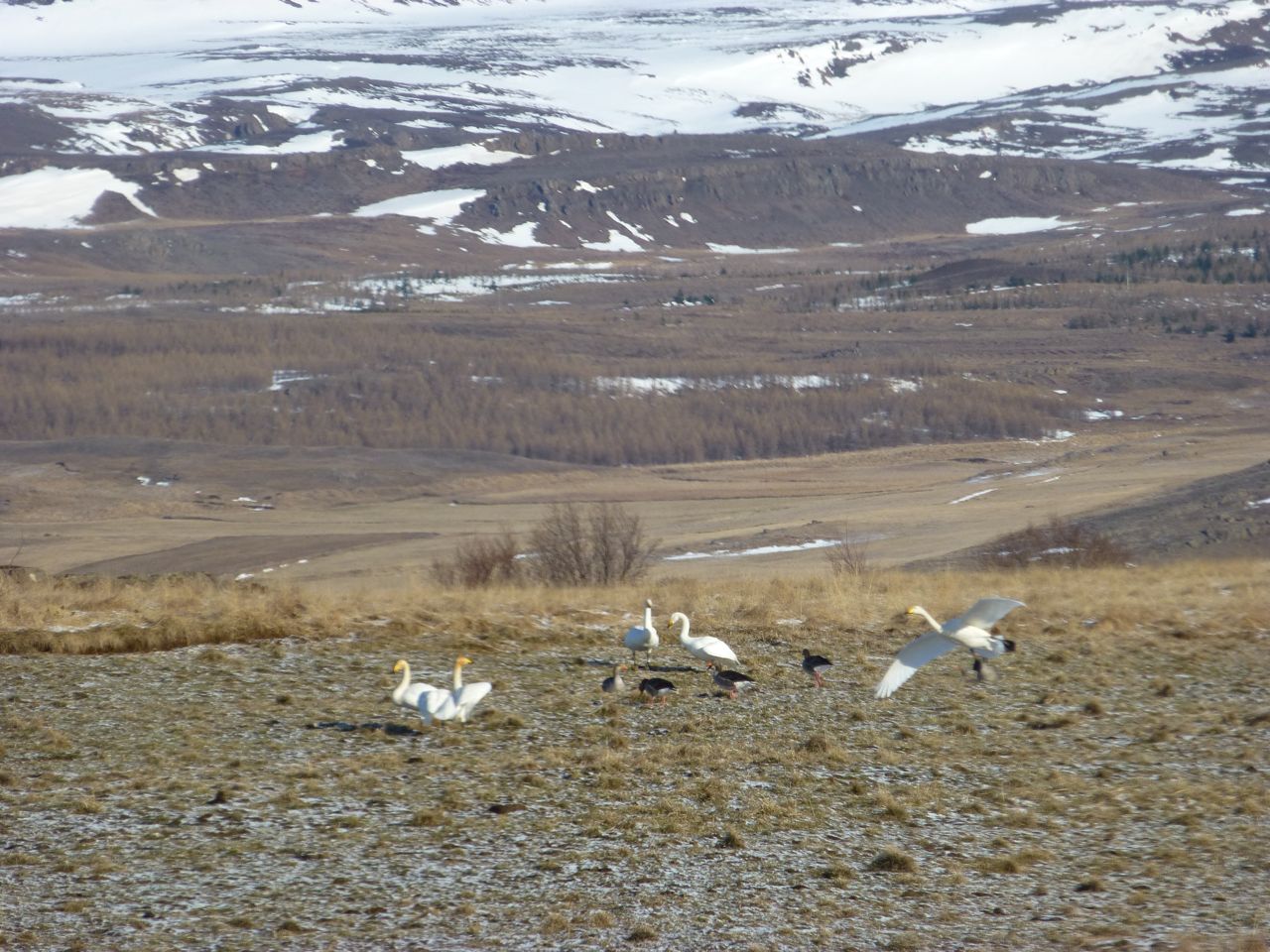
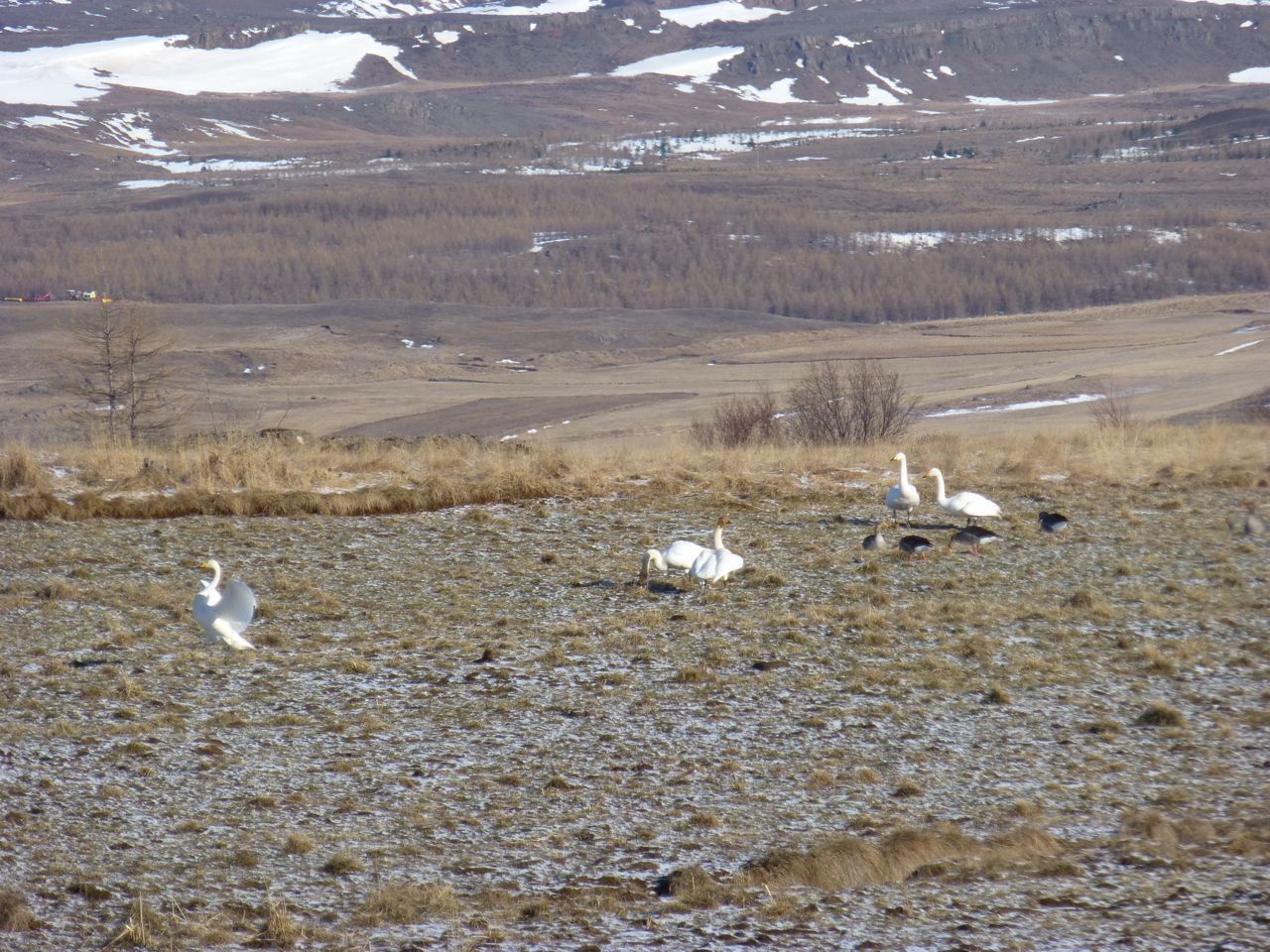
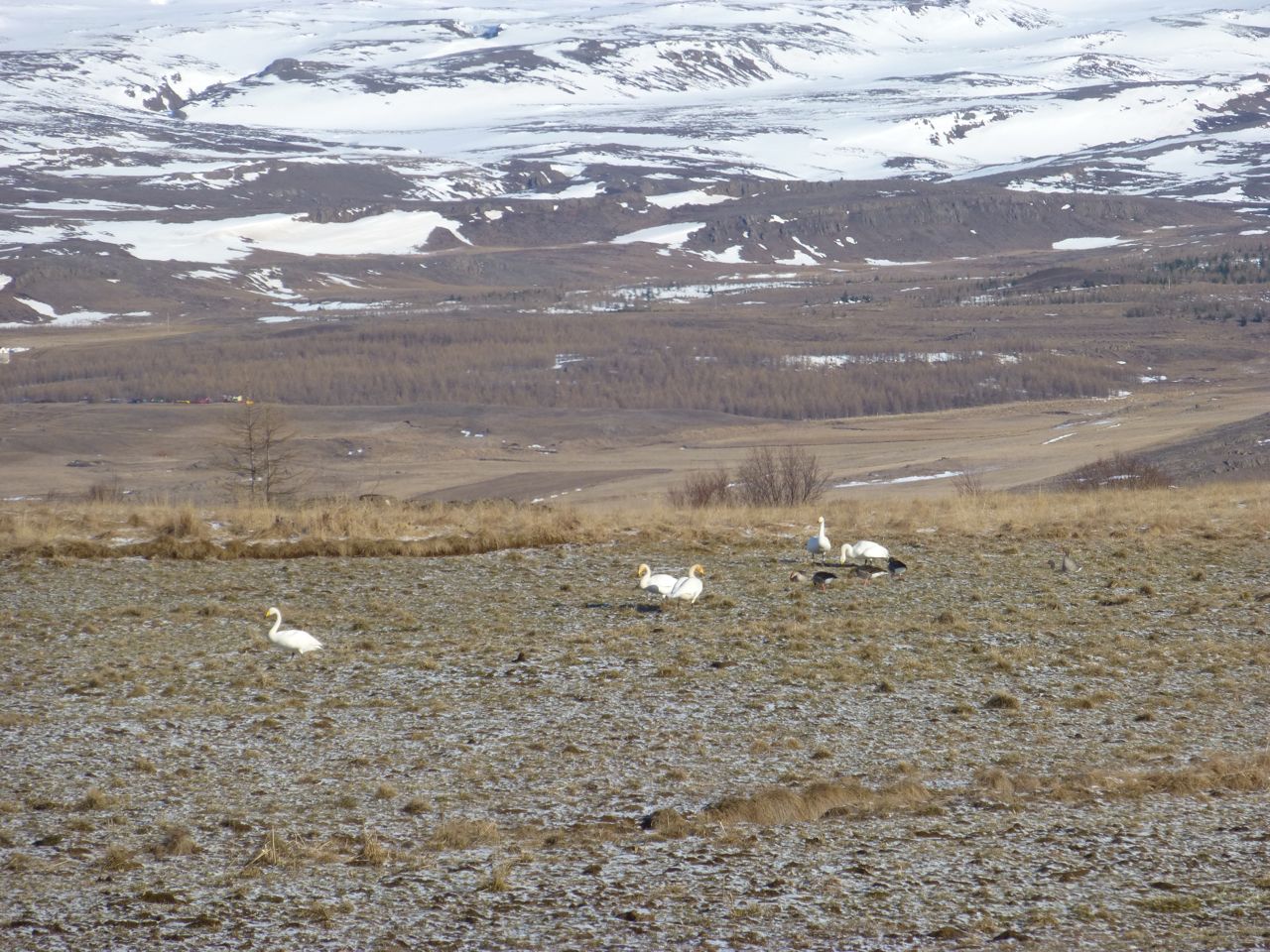
Sometimes travellers haven’t quite managed the Hae! or the Góðan daginn!, and for them Icelanders have a secret welcoming code, revealed here for the first time, ever. Here’s how it goes, step by step. At first, everyone is snoozing with their buddies…

P1400905

Sweet Morning Dreaming in Fljótsdalur

Sleeping in at 8:30 a.m.

If you didn’t get that, it’s the reindeer people …

P1400911

and the swan people (and their goose comrades) …

P1400906

all zonked out together in the same quilt. But will it last? No, it will not. A traveller has come, and needs a proper greeting …

P1400913 At first, a little face to face and then …P1400914…some tra la la and then some honking ….

P1400919 … and then a little bit of confusion because the hosts don’t know if everyone is going out for a nature safari or settling in for breakfast …P1400920

… and then a bit of a gangly entrance (with honking) …

P1400921

… getting more coordinated (more honking) …

P1400922

… and, oh, nicely done (Honk! Honk! Honk!) …

P1400923

… and everyone settles down in the lovely quiet of the morning to pick at the frozen ground, together, that’s the thing, to – ge – ther…

P1400924

… well, except …

P1400983

… Oh, rats, all that woke the neighbours up. The neighbours have some thoughts about that …

xingGóða ferð!

(And that does not mean hello.)