Some mountains are so powerful, their names are primal forces from a land of giants.
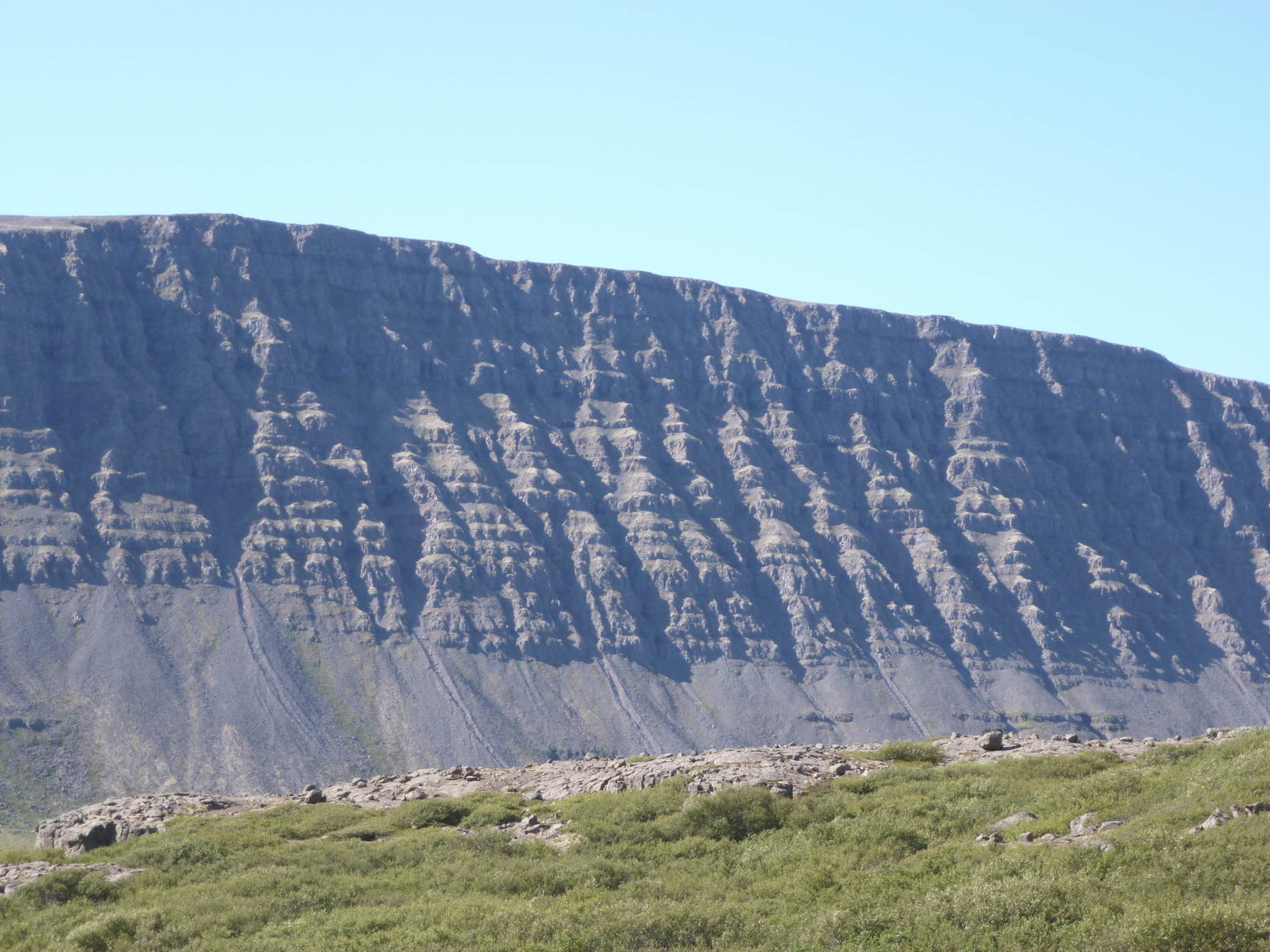
Urðahlið: The Broken Mountain, or even The Broken Gate.
Borgarfjördur in Arnarfjörður
It is good that we are small. It is good to know.

Some mountains are so powerful, their names are primal forces from a land of giants.
Urðahlið: The Broken Mountain, or even The Broken Gate.
Borgarfjördur in Arnarfjörður
It is good that we are small. It is good to know.
The rock is full of air.
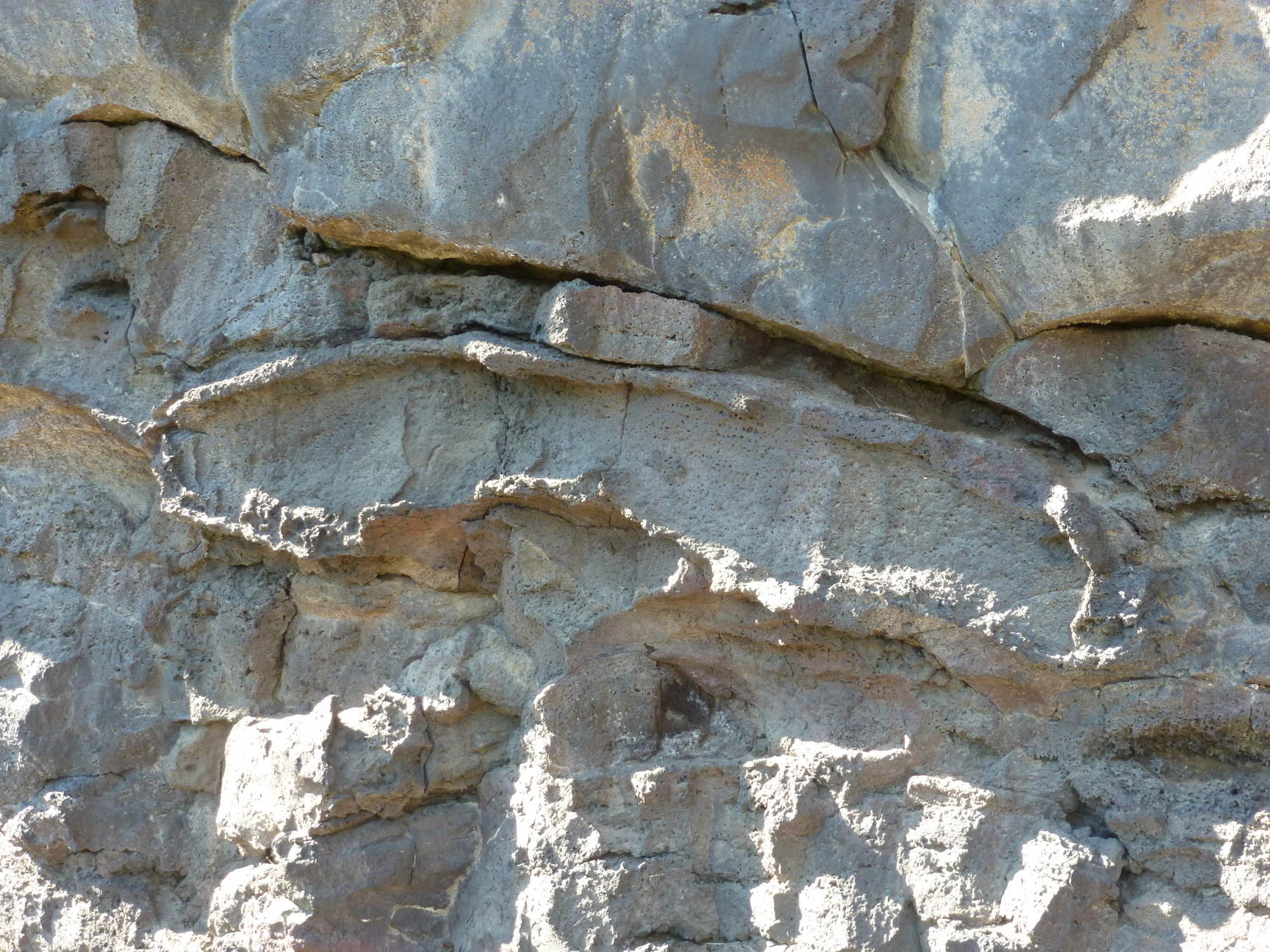
Here it is up-close:

Kind of like styrofoam, really. Every bubble chamber in the rock is a time capsule of a wee bit of a volcanic eruption. Grass even roots in it and sucks that old gas in.
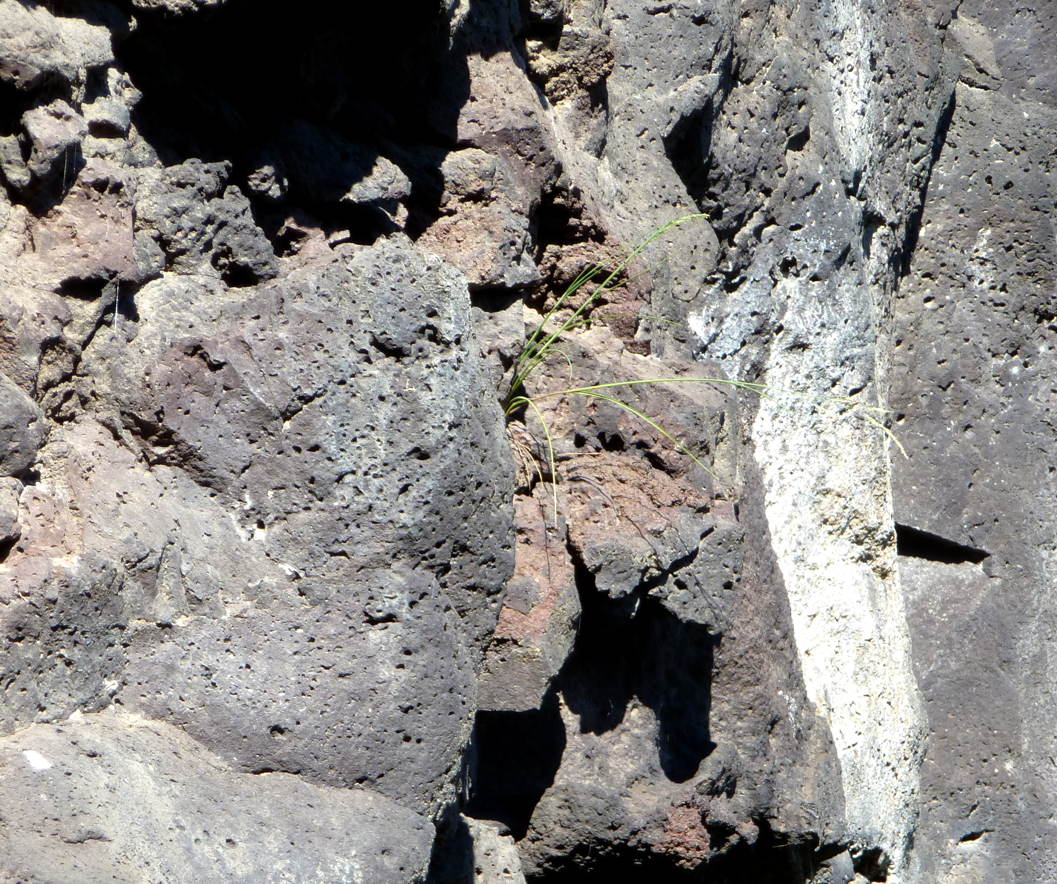
How cool is that!
~
Ásbyrgi
You can be of two minds, at once. They are not in conflict. A forest full of quick life to take you there, through the web of your thoughts?

Or a forest of slow, enduring life, the cliff of ghosts that awaits and towers above you, your body given face as memory?

At Botnstjörn, the windless pond sheltered by birches deep in Ásbyrgi, you can be both at once. They are not in conflict.

Surrender, and feel yourself lose all weight.
Well, the very first blade of the very first grass to ever grow on a steep, eroding slope, that’s what. Mmmm.
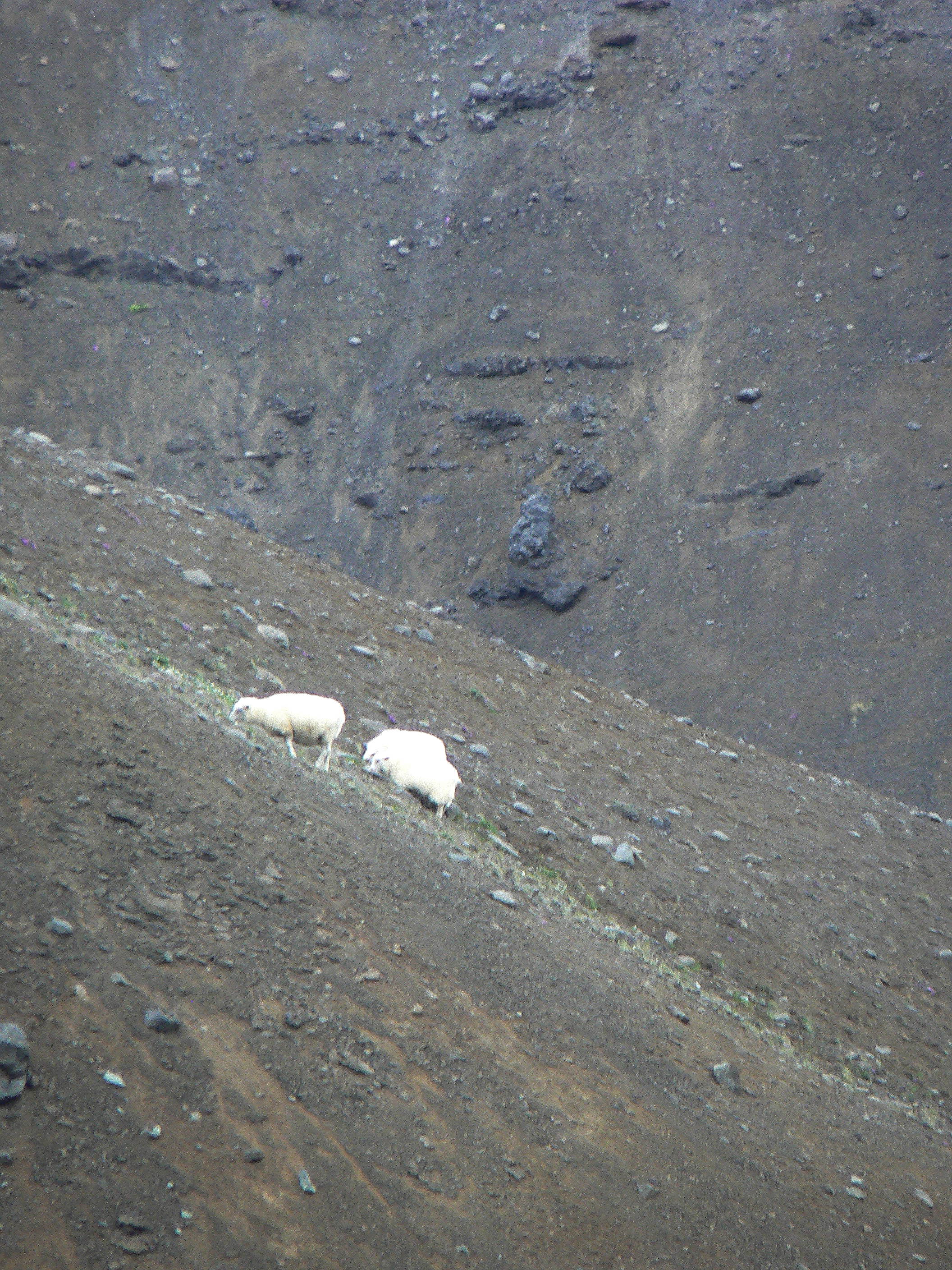
It’s self-defeating, but, oh my, it tastes so good.
Rock.

Moss eats rock.
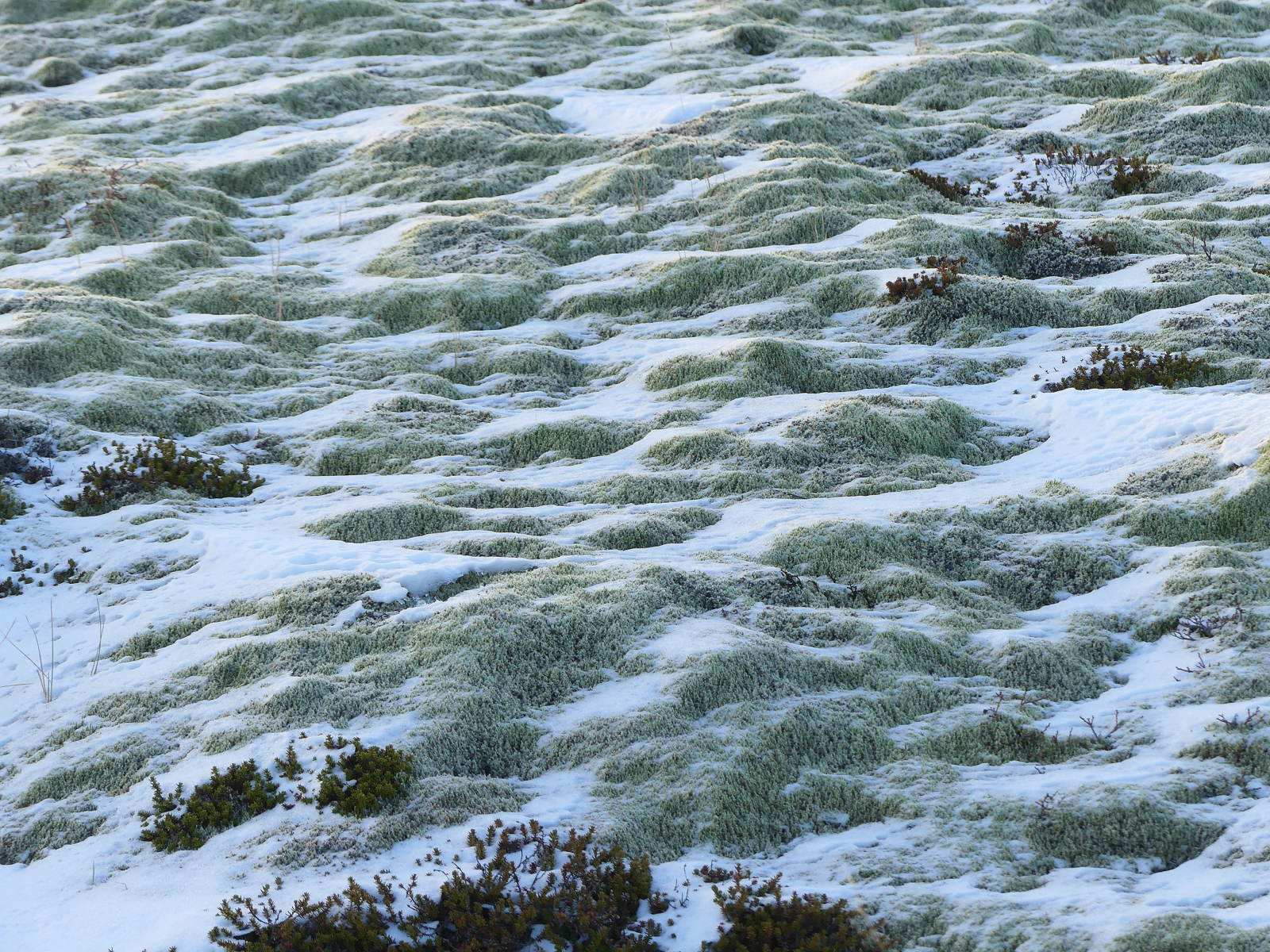
Sheep hooves cut moss.
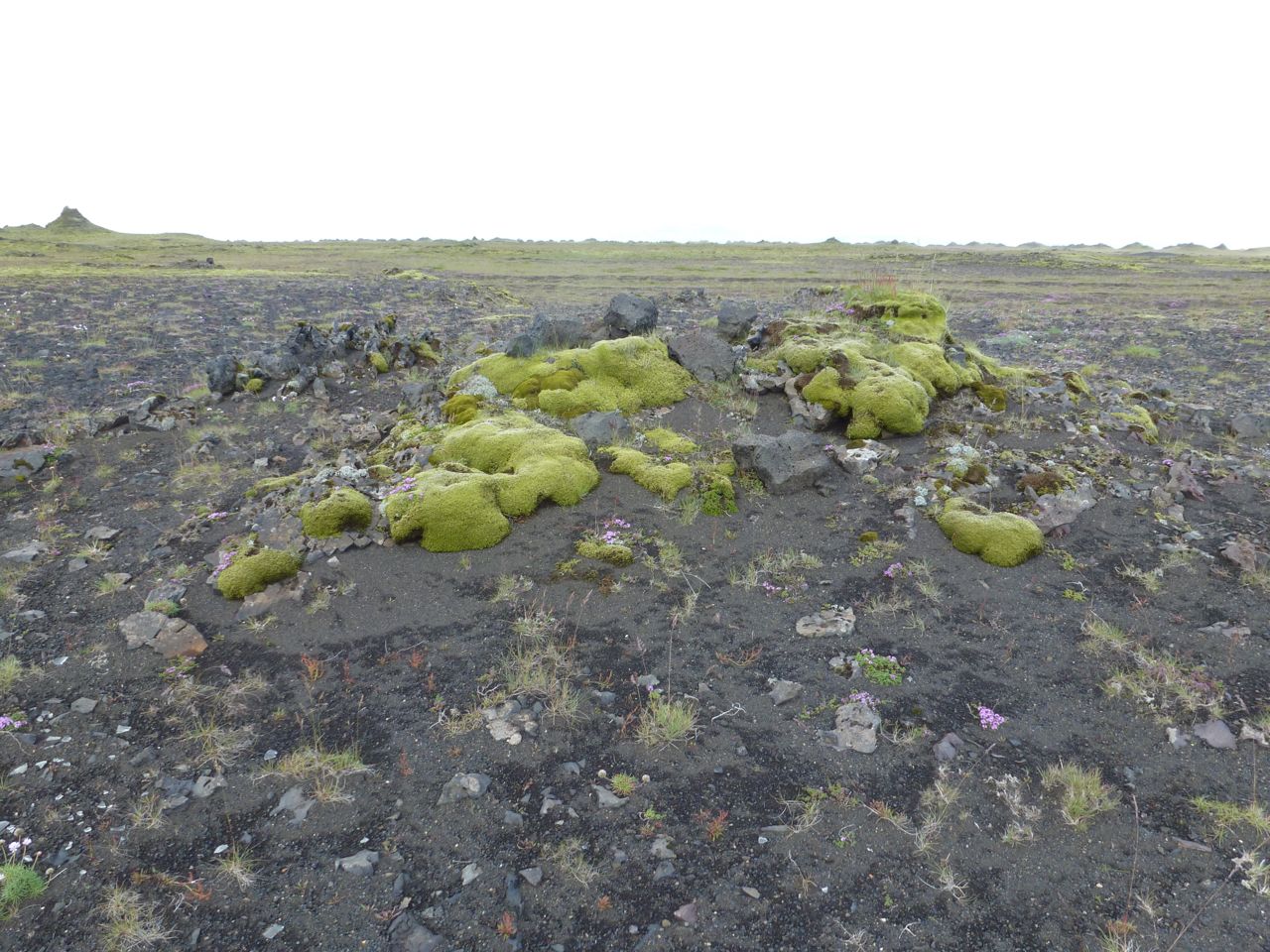
That’s right, look the other way.
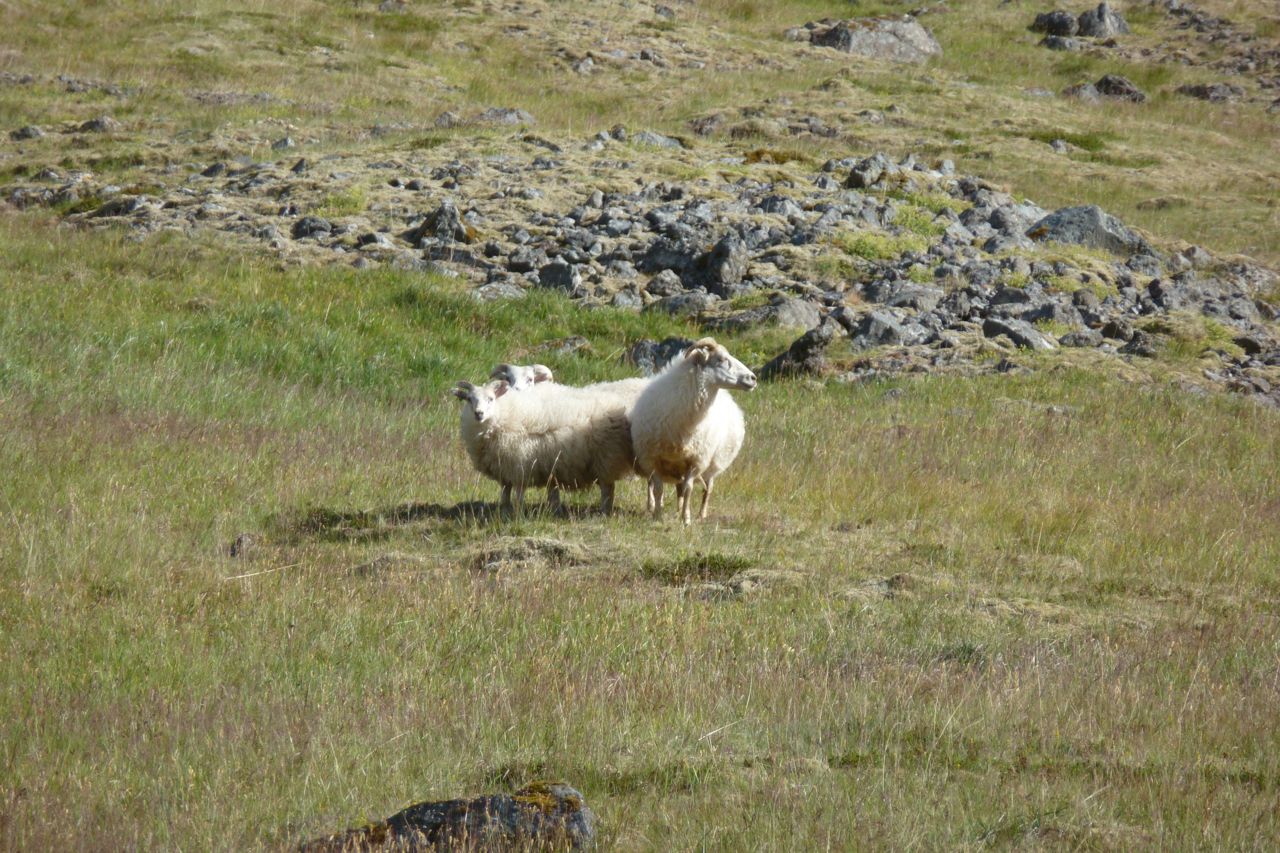
Busted.
I’ve heard that my Christmas Ptarmigan was hard to find. Can you see it now?

Here’s the original pic again:

Happy birding. Bonus, even if you can’t find a bird, you can find pretty rocks upstream:
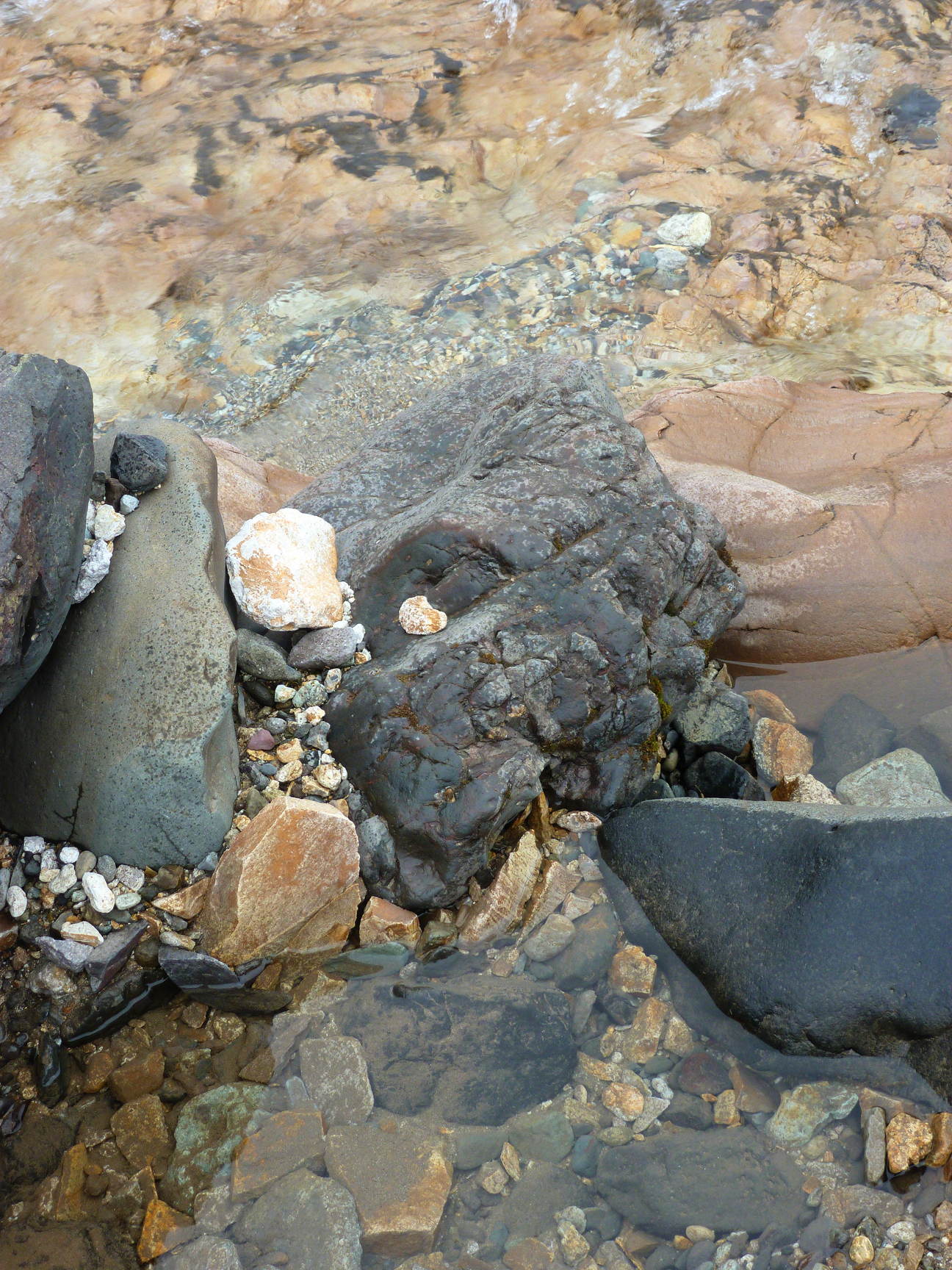
Yes, Seydisfjörður rocks!
Your Christmas depends on it.

Saubæjarkirkja
Inside a church are people. Outside of a church are dark cliffs. The church is maintained by the government, because it is on this distinction, this between space, however narrow, that it draws its legitimacy, in a long history of living under colonization. Gunnar Gunnarsson turned it on its head, in his book Svartfugl, or “The Black Birds,” meaning dark-souled people (including but not limited to priests) stealing the light from others, under the influence of a bleak landscape. The English translation is The Black Cliffs — the human oppression, and its intimate relationship with the land, has been wiped clean for an American audience. That relationship, though, is vital, as it represents exactly what one sees in the church above: a portal into the self. The result was a complex book, perhaps the best book of 1932:
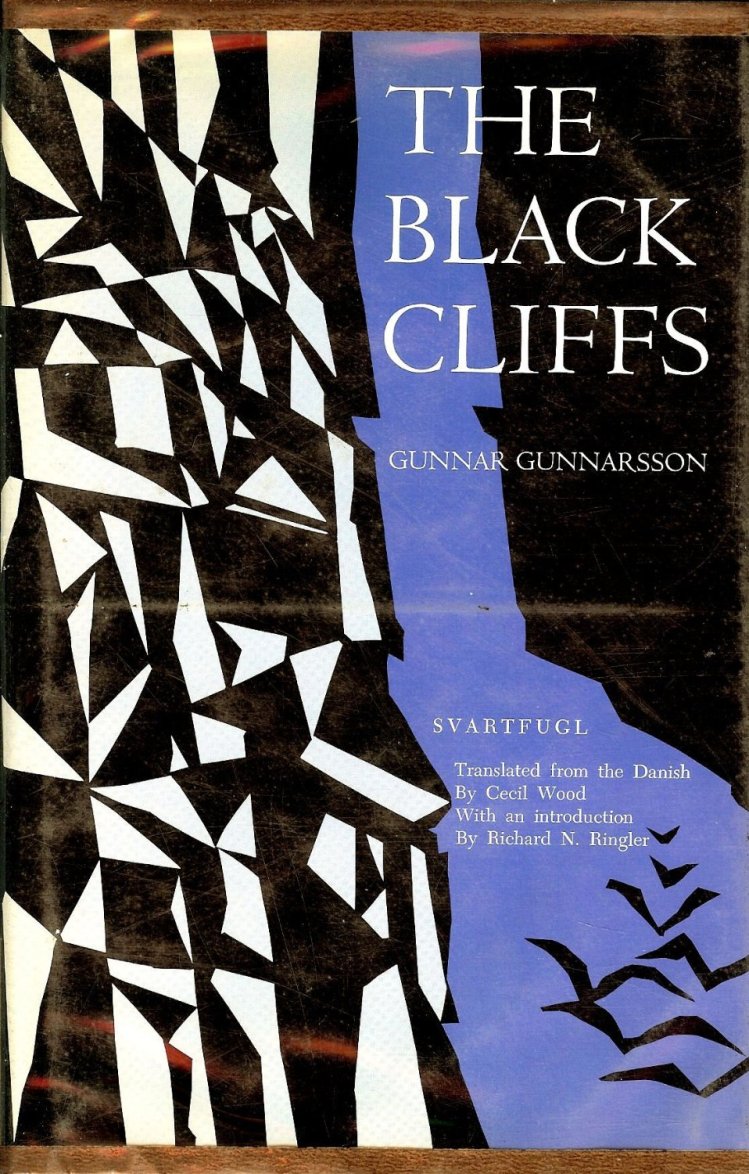
So, a self and a book, and a whole lot more.
For four weeks, I studied this stone wall above the old monastery, trying to catch it in a light that revealed it. My gut told me that these rocks were culturally-altered, but nothing came clear that I could identify — nothing that couldn’t also be explained by geological processes of decaying, exposed basalt. The archaeological team came to the same conclusion, so used the rock as support for a viewing platform … while also protecting it from the weather. Clever.

So, what do you think?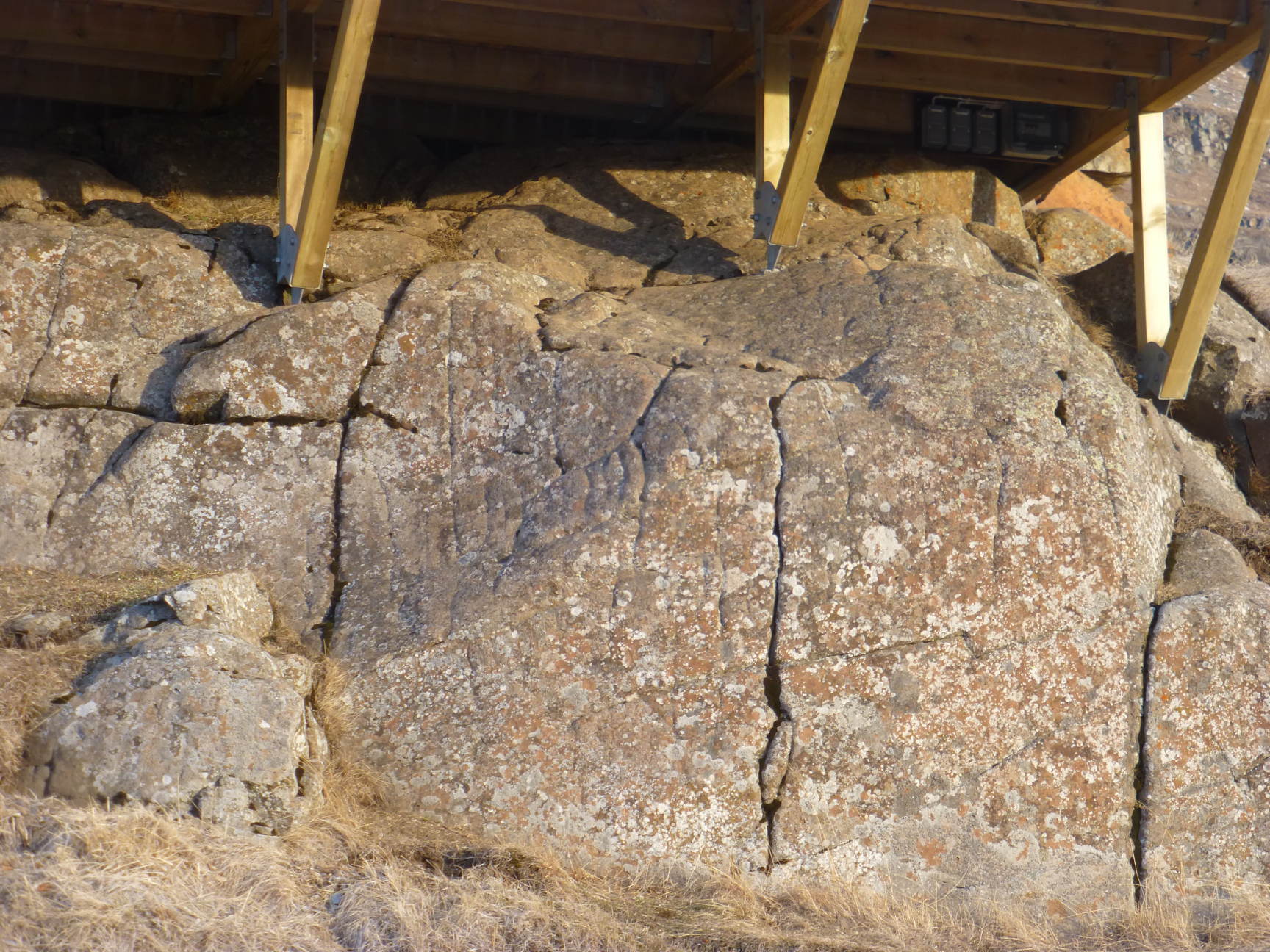
I was pretty sure that there was a raven in this sculpted gouge, worn out by some peri-glacial river long ago.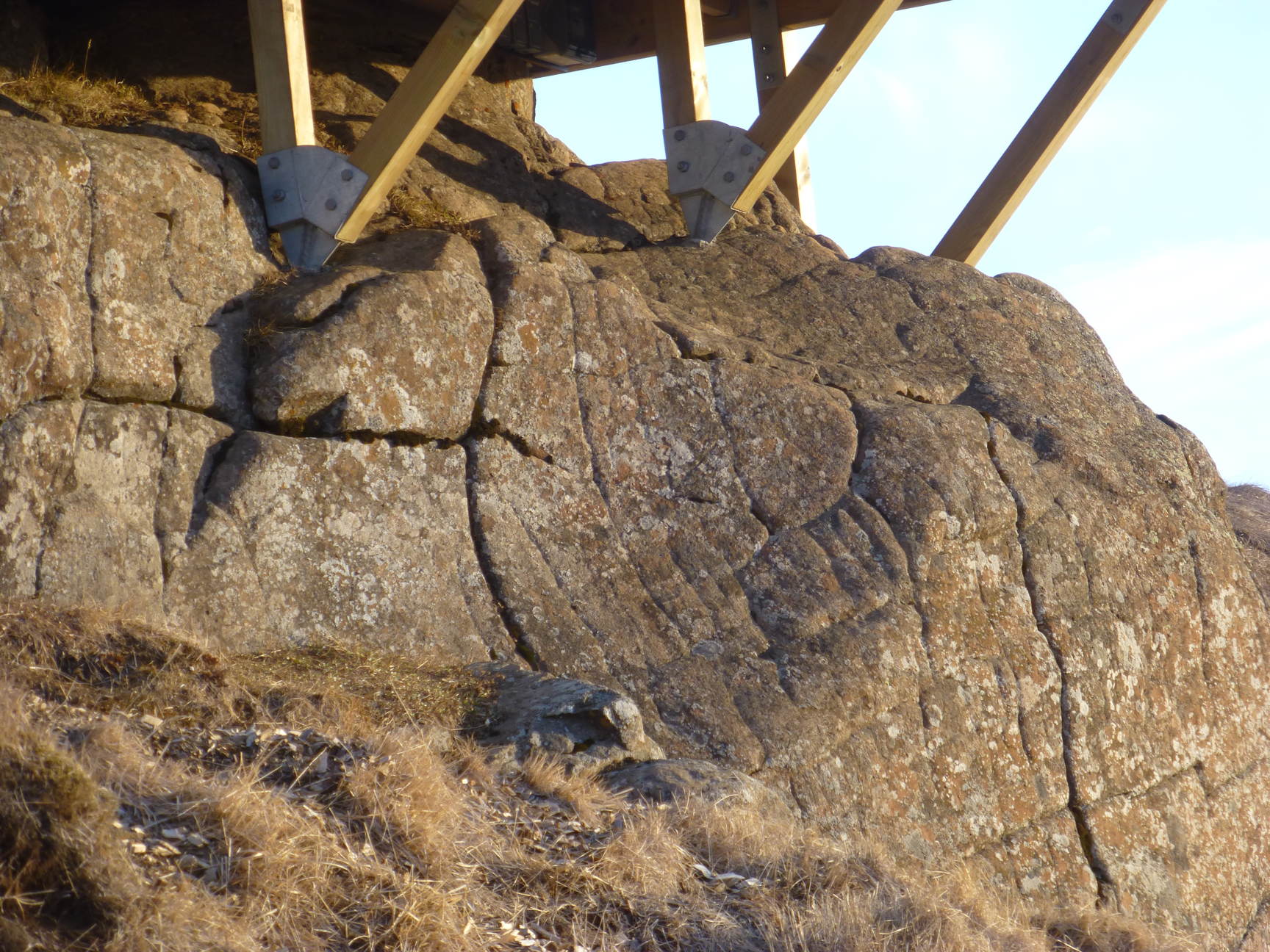
And ravens are important in Norse mythology, and, if you’ll look below the raven’s wing, the raven’s companion, the god Oðin, was known, like Christ, to hang on a cross from time to time.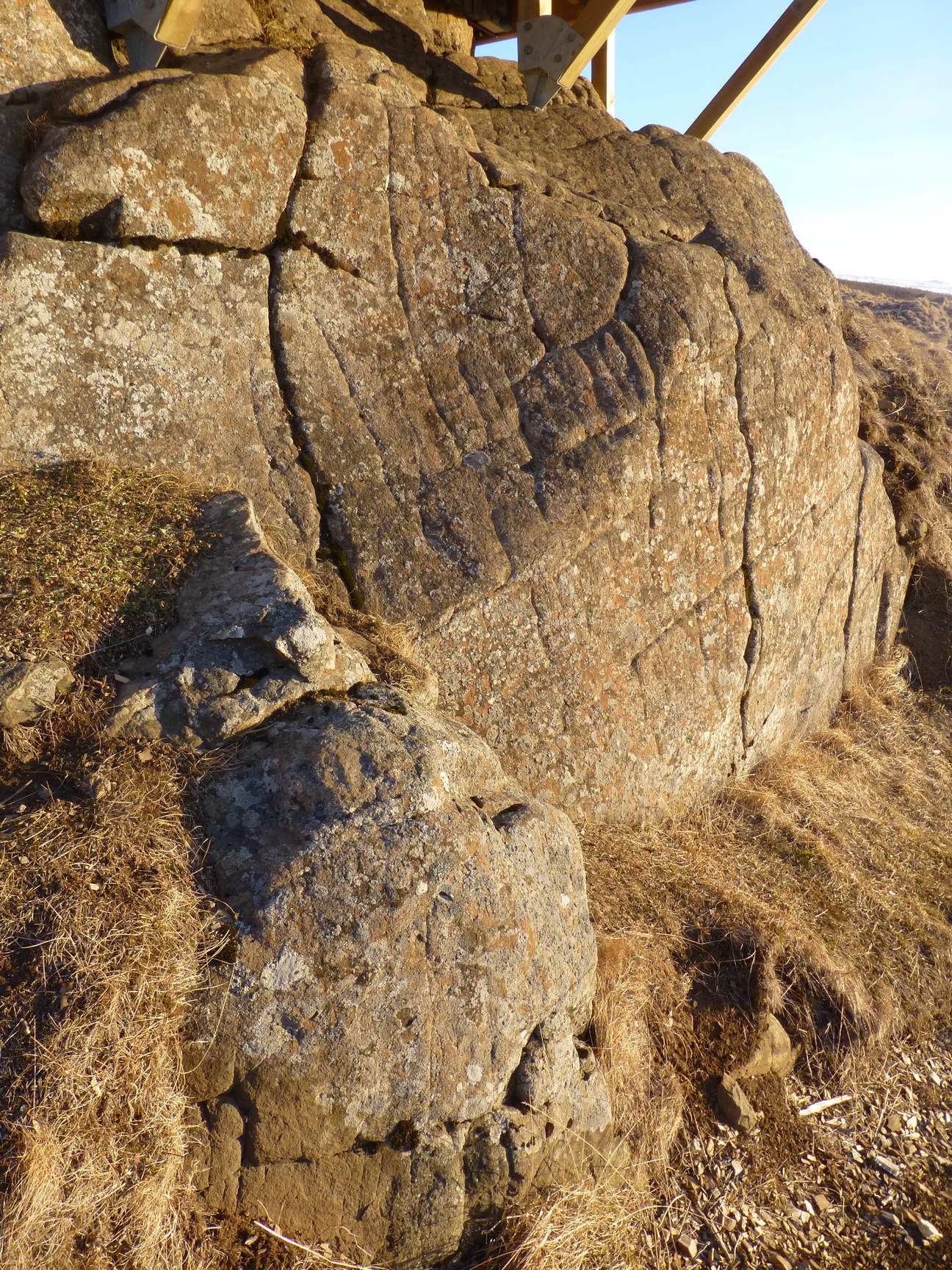
Was there a language here? It’s simply not possible to tell, although we do know that some of the patients at this hospital had come from Greenland — what kind of glyphing had they brought with them? Deep within the monastery, the rocks suggest some kind of talismanic scratching of simple crosses into the rock in the near-dark, but here, in the light?
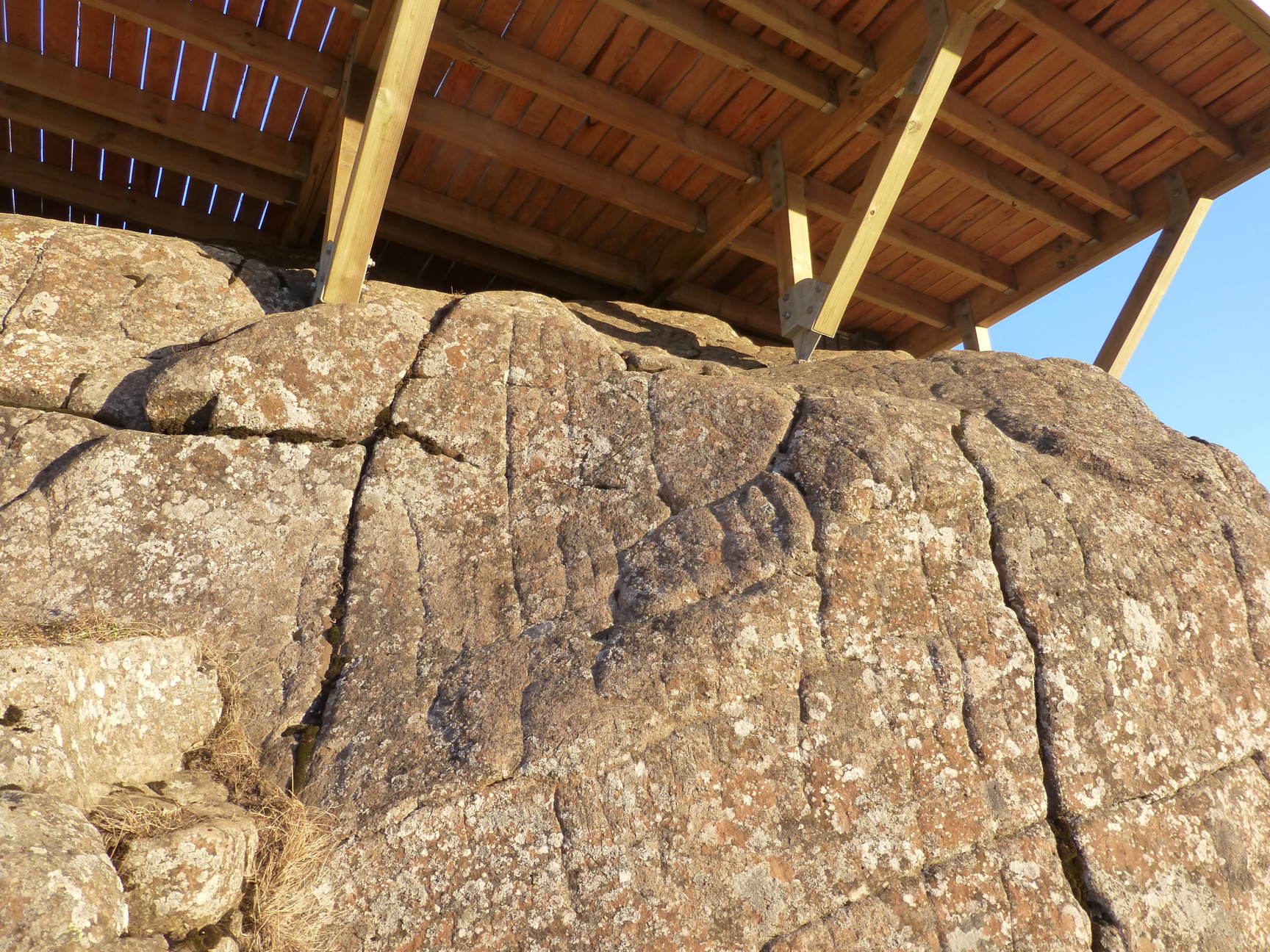 Was the old practice of tracing natural forms in the rock to gain their power. One wouldn’t have to carve. One would receive the energy, without any intermediary art. It is the reverse of normal pictograph-making, where a pattern is worn by a finger dipped in fish grease and sand and run thousands of times over the same groove, to transfer power that can then be picked up by the sea, but here, where is no sea, and no humanly-created shapes? Might they be, nonetheless, humanly-imagined and traced? Here, look again, later in the afternoon…

There was a ritual in the Monastery of Maulbronn in Germany (far older than this one), of pouring wine into a crack in the stone, so the simple monks could catch it in their fingers… so good, they said, it was “eleven finger wine.” The spirit of God in the wine, in other words, united with the spirit in the rock, a fine Christian symbol, and came to life through the hands of monks lifted to their mouths. Might the same thing have been happening here? We’ll never know, but we’ll never know if it didn’t, either.
So many Icelandic men of my father’s generation thought they could stay on the land if they built a nice concrete house to keep their families out of the wind, but they did it the Icelandic way, with salt beach sand, and it fell apart.

Women still come, as the snagged necklet of clear glass beads and fishing line below shows, but, as the snag shows, they leave without these baubles, too.

And that is one of the forces that powers the world.
~
Selstaðir
 A Farm in Iceland