Siðu-Hollar settled the farm Þvolté on the East Coast around the year 1000. He was unpopular, as he was a Christian. Check out his farm:
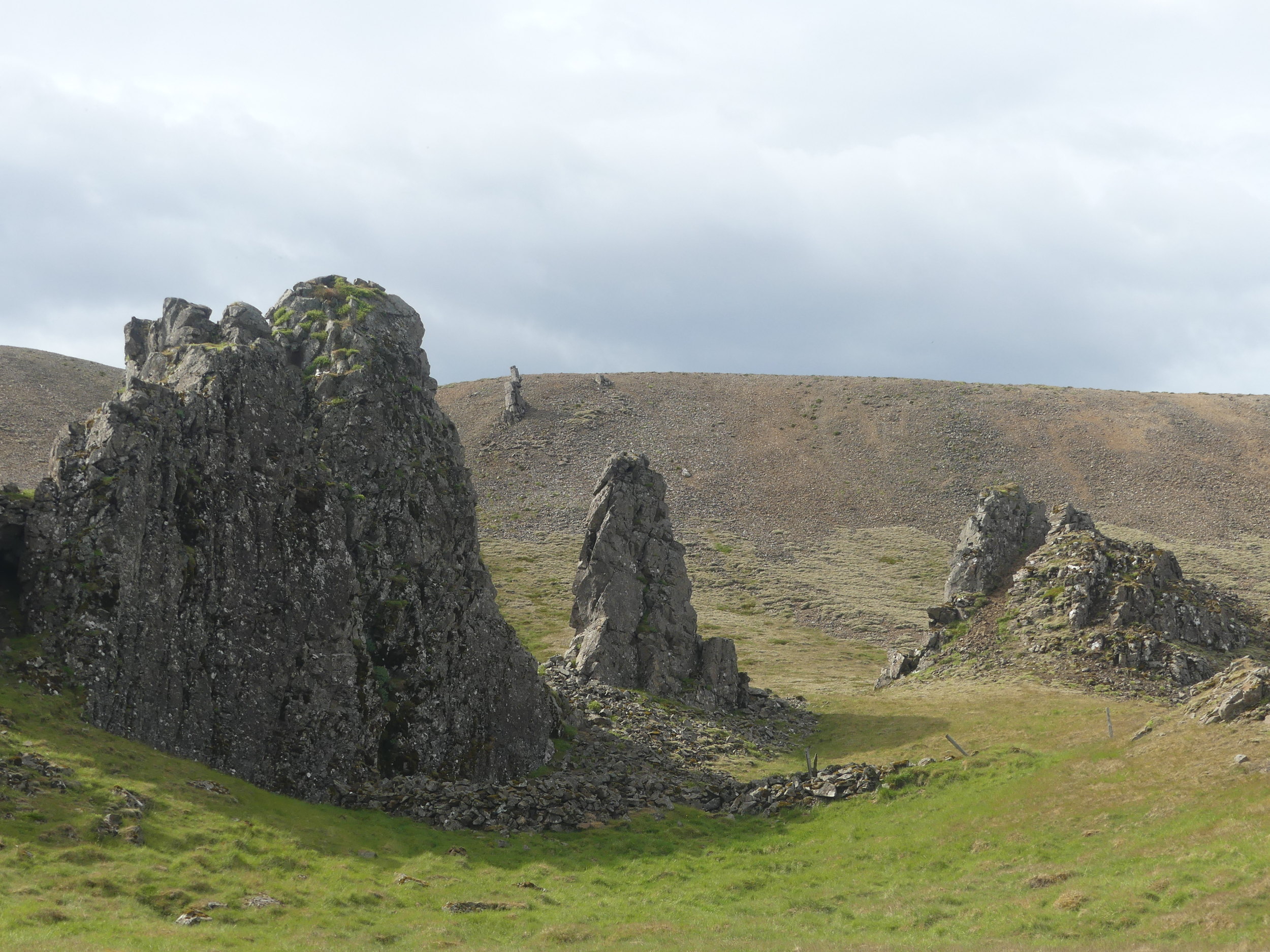
Trolls and ogres everywhere! What a flock!

Siðu-Hollar settled the farm Þvolté on the East Coast around the year 1000. He was unpopular, as he was a Christian. Check out his farm:
Trolls and ogres everywhere! What a flock!
To my ancestors, blue, white and gold were one indistinguishable colour.

The Road to Rettarskard
If they had come to Iceland, they would have only seen a pink glow of the sun in the snow, so faint they might just not have found Iceland at all. And they didn’t! The colours had to be invented first. I’m glad they did, though!
One thing that makes Iceland dramatically beautiful is that its culture and landscape look like they were just plunked there recently and haven’t really taken yet.

That’s what you get after 1100 years of cultural replacement in response to environmental erosion. With very few exceptions, the buildings are less than a century old. With very few exceptions, the living landscapes are far younger. A century ago, the scrub above would have looked much like the outwash plain below it. The people, whose memory is longer, are in a constant state of change, unsettlement and resettlement, just as it was when they first arrived, a little over 1100 years ago. Settlement was the originating impulse, but it was driven by men, who felt unsettled in Norway. These tensions are still written in every moment of the land.
One of the seductive things about Iceland (for outsiders) is that the possibility of being completely alone with the Earth, in a completely simplified life, seems to be promised.

Here on the Skagafjörður in mid-December it seems so accessible, too. It’s just an illusion. Sure, you could achieve it, but you would have to change your life, and if you did it would no longer be simple. Do you dare? Do you dare stop and stay there forever, and let everything else go? Well, Icelanders made that choice 1100 years ago, and look how simple their life is, making you feel at home:

Will you walk into the dark?
The foundational principle of Iceland is “settlement.” after 1100 years of it, we see that nothing has changed. In Olafsfjörður (for example), everything still comes from away.

And buildings are larger than they need to be. They too are settlements.

Even the driftwood, even the art, even the temporary housing made from shipping containers, comes from away.

Or so it seems to someone from away. However, to an Icelander, I think it comes from the world, which is synonymous with the sea.

And you can’t see it.
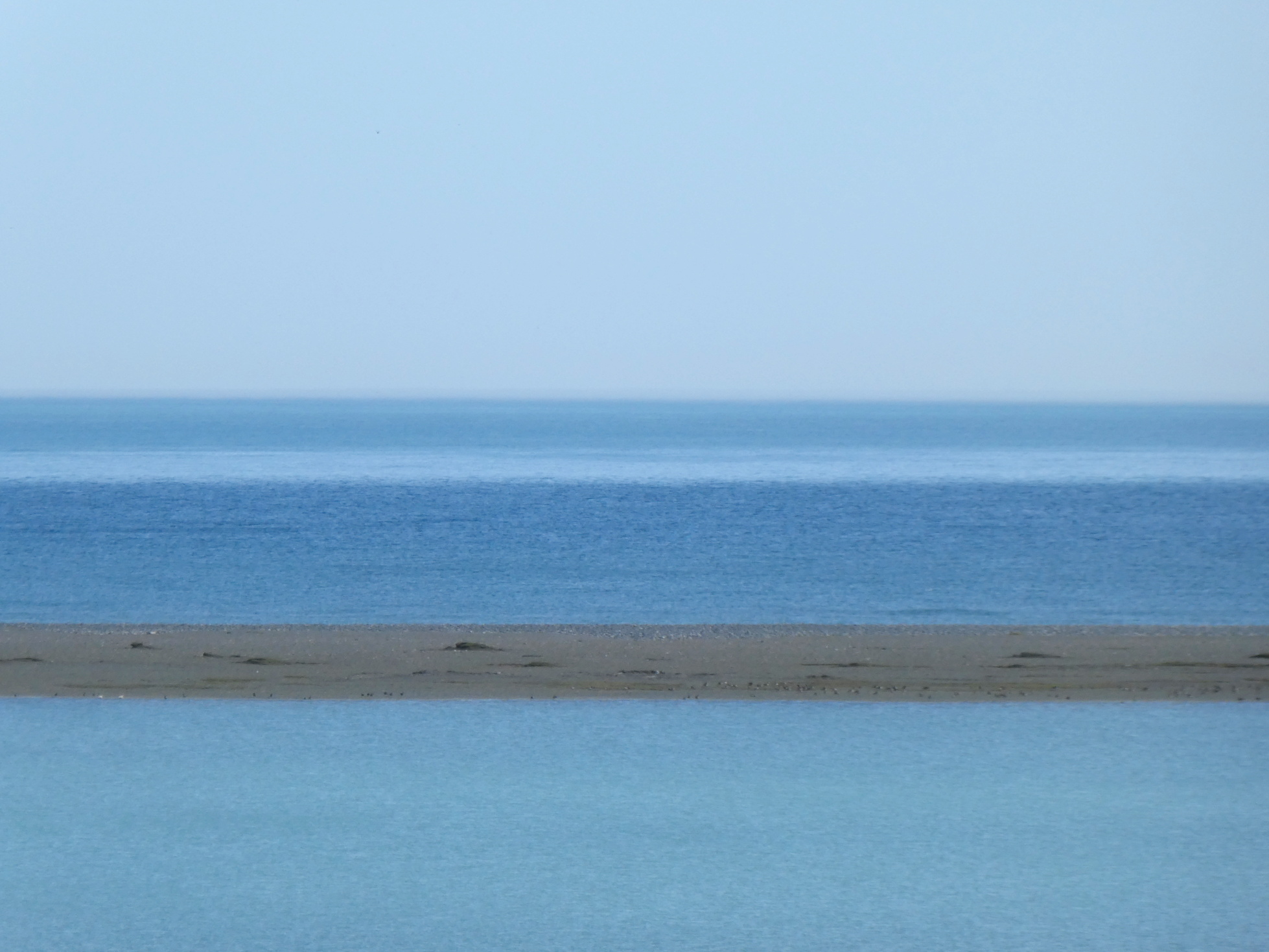
The result is Reykjavik.

The road along the coast behind the farm Borg races on past the Cross on the cape that keeps the ogre at bay, on to the puffins in Borgarfjörður Eystri, and back.

Few stop anymore to walk in this emerald, or to see the path this water makes as it hides itself, as all creatures from the other world do, on to test the walls of the houses of men. It is the greenest fjord in Iceland. This image is made from the old Stapavik trail, the right way to come upon it, unless you come by boat, of course. Imagine the first long boat that touched this beach, and the people that stepped ashore in wonder. They are your ancestors as soon as you get out of the car. And then what? Well, friend, then you are lost. And then you are found.
Iceland was settled by people of the North Atlantic. If you got there early, you got one of the choicest spots. Here on the Skagaströnd in the far north, that is abundantly clear. 
Even the sheep, grazing at the foot of an old elf fortress, know as much.
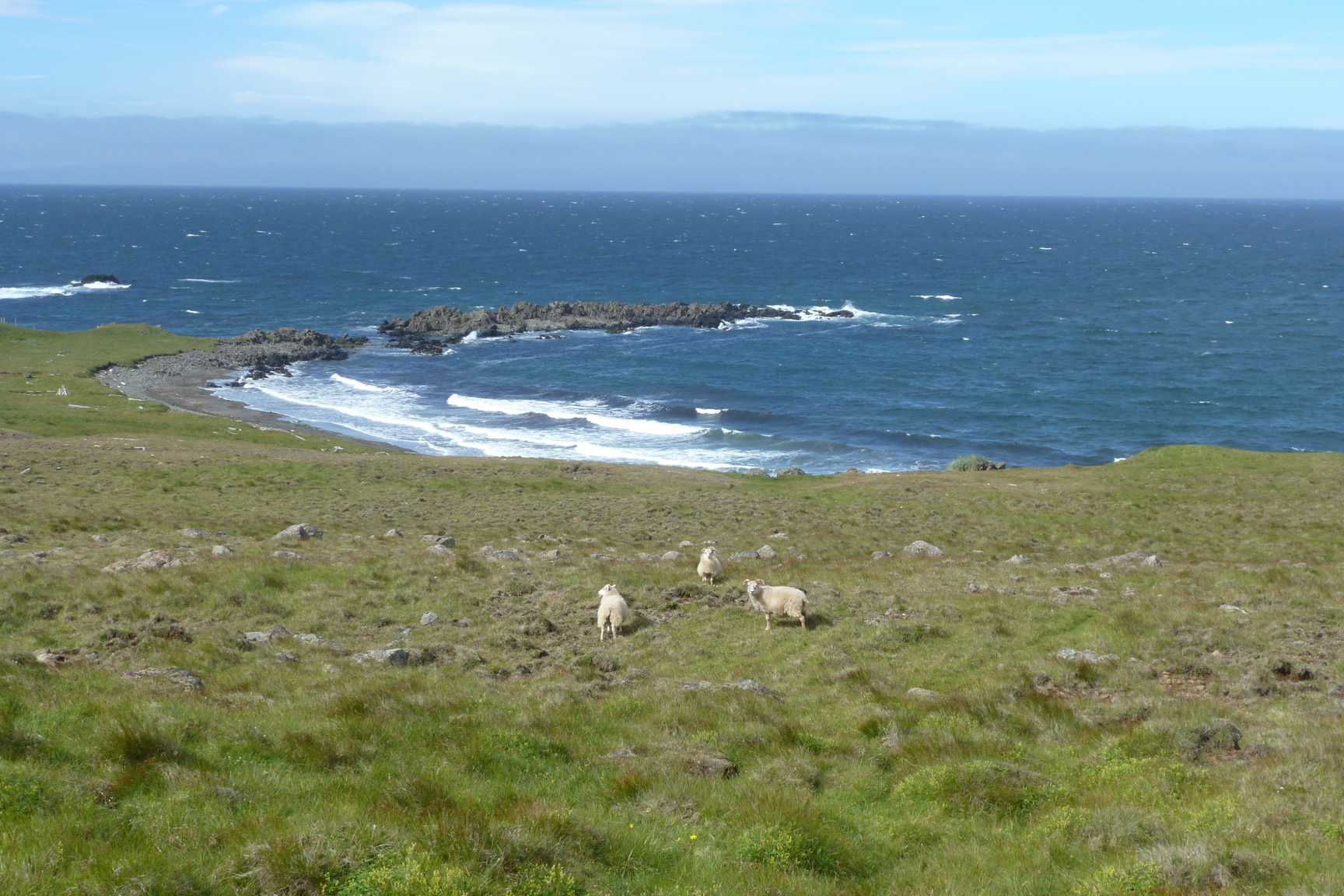
And a good place for landing the longboat, too.

The Icelandic sagas tell the stories of the country’s settlers 1100 years ago, and mostly the stories that Snorri Sturluson, who lived at a volcanic hill called, simply, Borg (the German “Burg” for castle and “Berg” for mountain have the same root). The Icelandic town Borgarnes, or Borg Point, is just up the bay, at the mouth of the Breiðafjörd, or Broad Fjord. The view from Borg at sundown at 3 pm in November is really worth a saga in itself.
The story of these sagas and their importance to literature, Iceland and memory, are being told this week on CBC Radio. You can listen in. Here’s Part One, which played on January 1…
https://www.cbc.ca/radio/ideas/map-of-the-heart-the-icelandic-sagas-part-1-1.4702465
… and part 2 which is playing tonight:
https://www.cbc.ca/radio/ideas/a-map-of-the-heart-part-2-the-icelandic-sagas-1.4712468
Well worth a couple hours of your time. The light disappears quickly here.
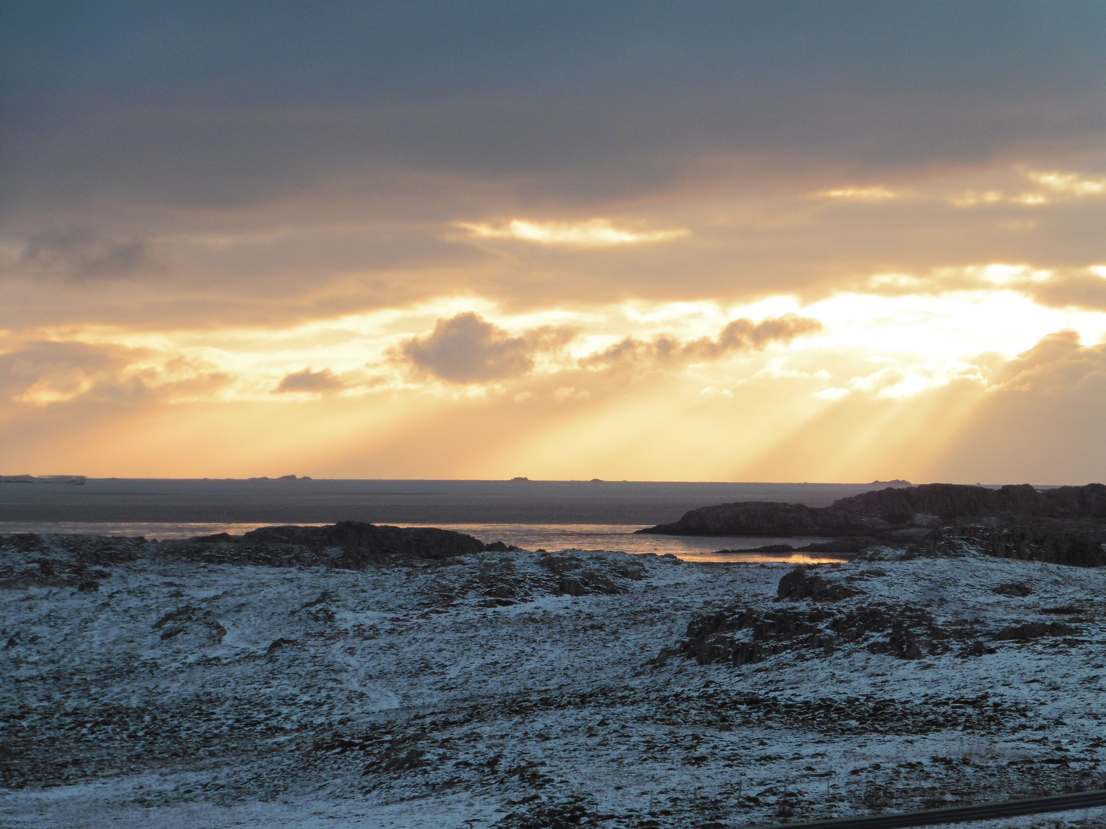
It’s always good to warm yourself by a good story.

And even the ice tells stories at Borg!
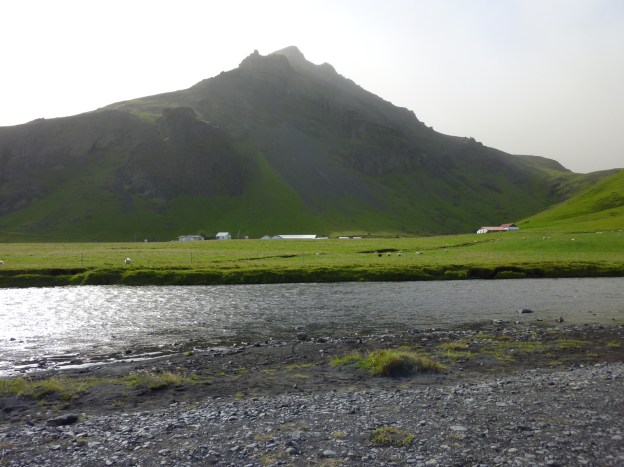
You want to stick close to it. What you want to avoid is water and ice.
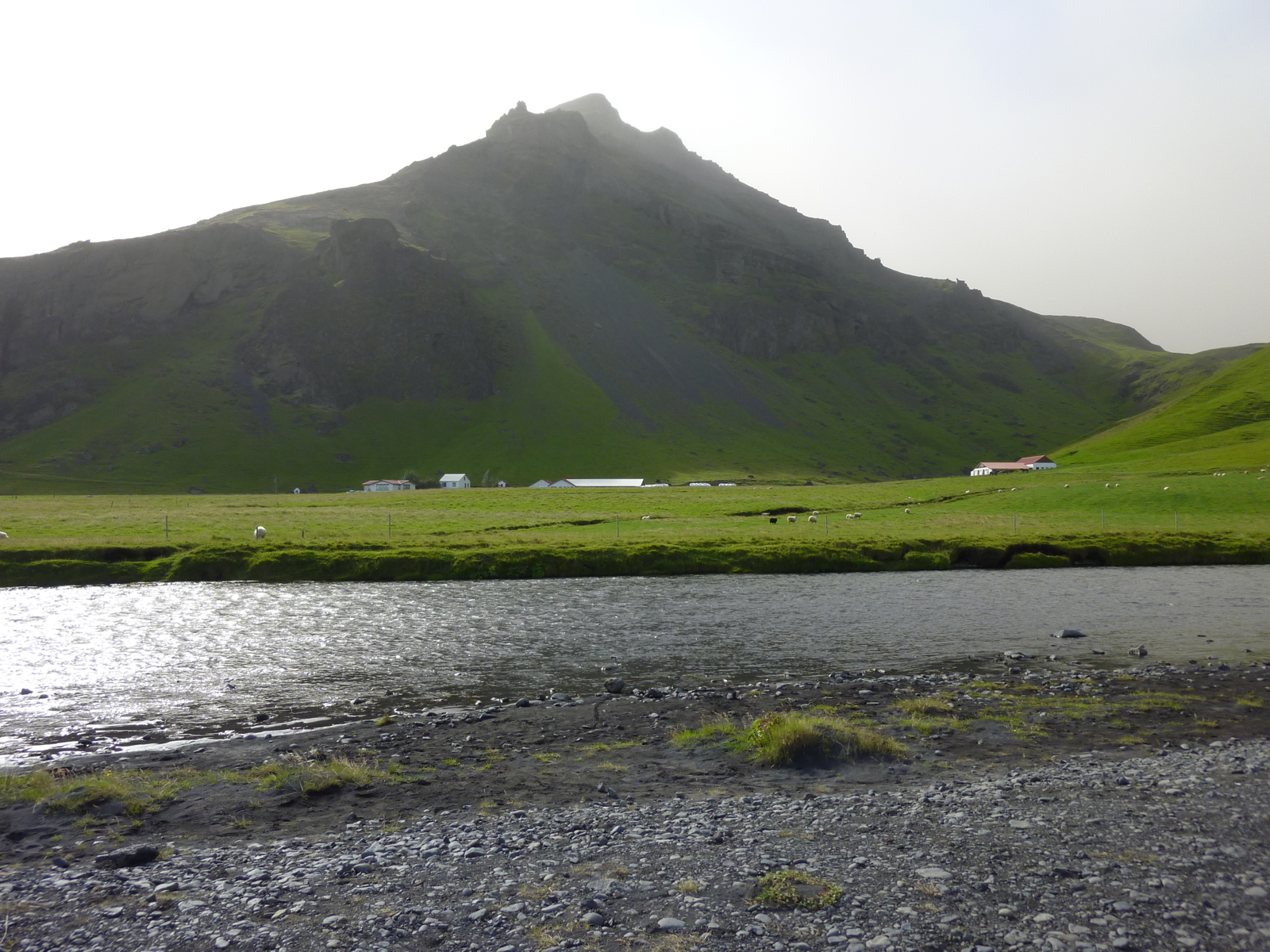
Southeast
Let the sheep risk that stuff. Such is the knowledge of a people whose origins are in “settlement” and not colonization — a people for whom “land” is a “landing”, a being lifted out of the sea. You don’t forget a thing like that. The darned thing keeps coming back.
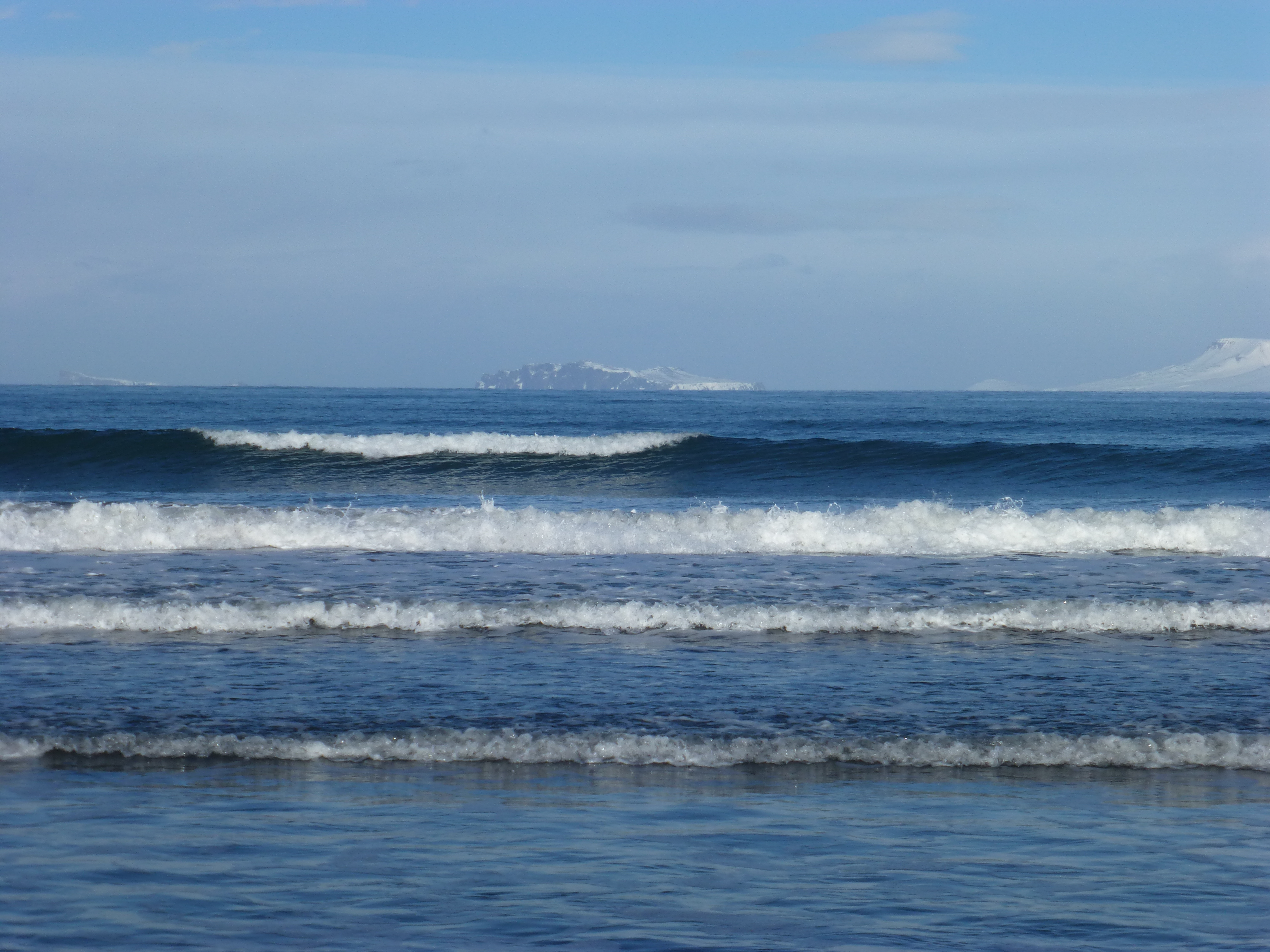
North

An Old Story Telling its Knot on the Road West of Sælingsdal
Over eleven hundred years, men can cut down all the trees, keep their horses for memory, erode the soil with sheep, battle frost heaves, put in a jeep track, buy a German tractor and some good American haying equipment, and strew nitrogen fertilizer around to stay alive, but the Cross that a woman ordered hammered into a stone to hold back the elves who lived inside it remains, and you will likely think of it as a children’s story. Still, your tractor can’t do a thing with it, nor your sheep, nor your beautiful horses.
 A Farm in Iceland