Never say there isn’t humour, art and beauty in Iceland.
 Reykjavik
Iceland: an island of glass and mirrors in the North Atlantic.

Never say there isn’t humour, art and beauty in Iceland.
Reykjavik
Iceland: an island of glass and mirrors in the North Atlantic.
Then…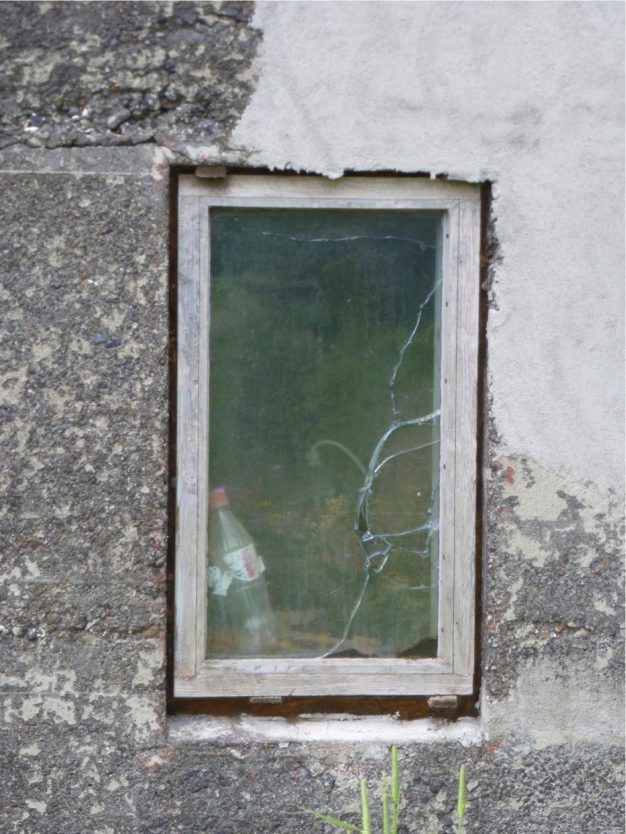
Kirkjubærjarklaustur
…and now. Leikminjasafn Íslands
Progress is ongoing but steady.
The sheep of Iceland, bless them, have eaten the place down to rock.
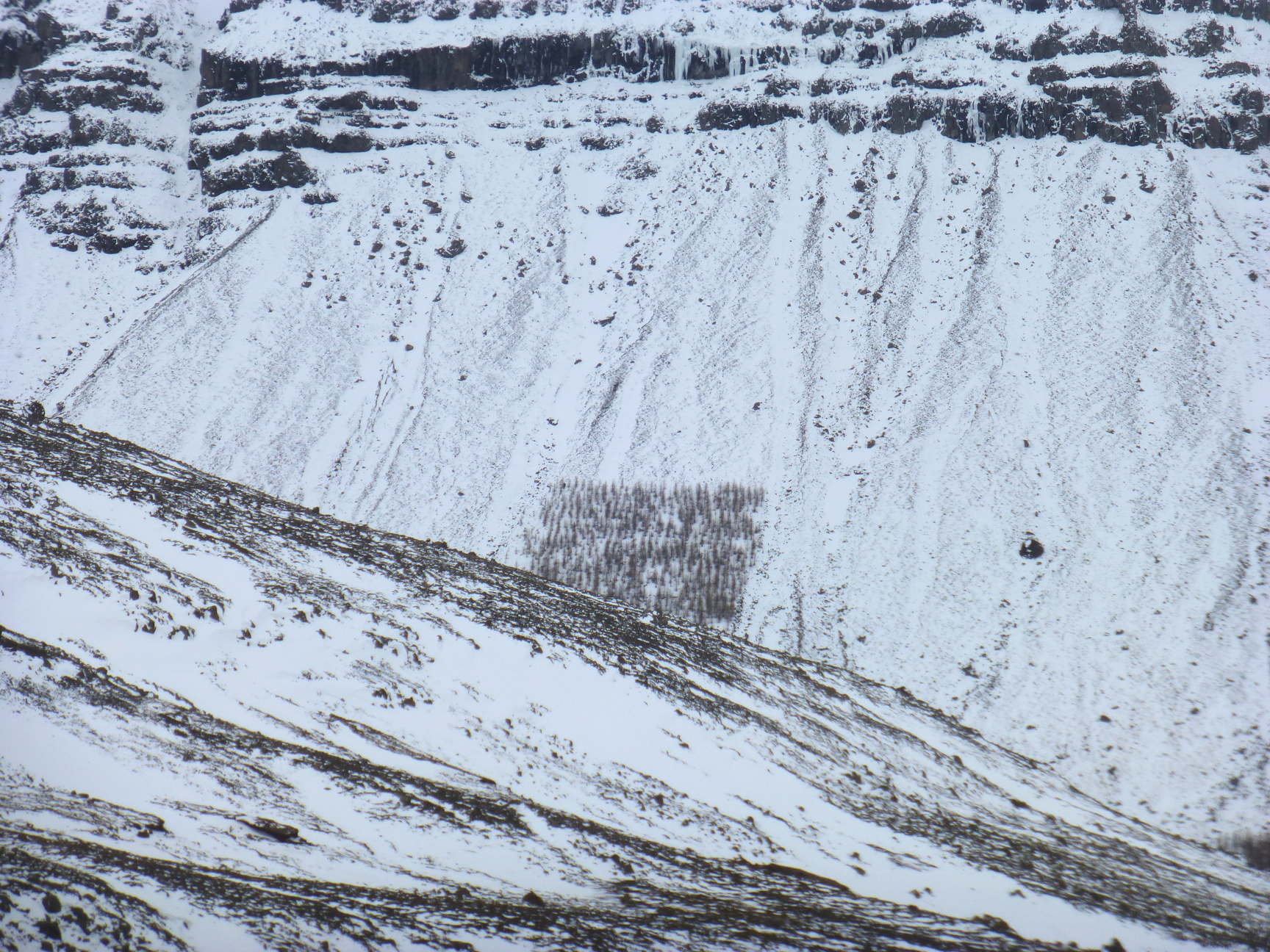
The Icelandic government pays farmers to plant trees. On farms no-one lives on anymore. Along a river diverted to a hydroelectric dam one valley over.
  Sturluflöt
This was the old road to the south. That was a farm to the left. Below the stone. It would support the trees growing on the scree in the back, but farmers are farmers the world over. 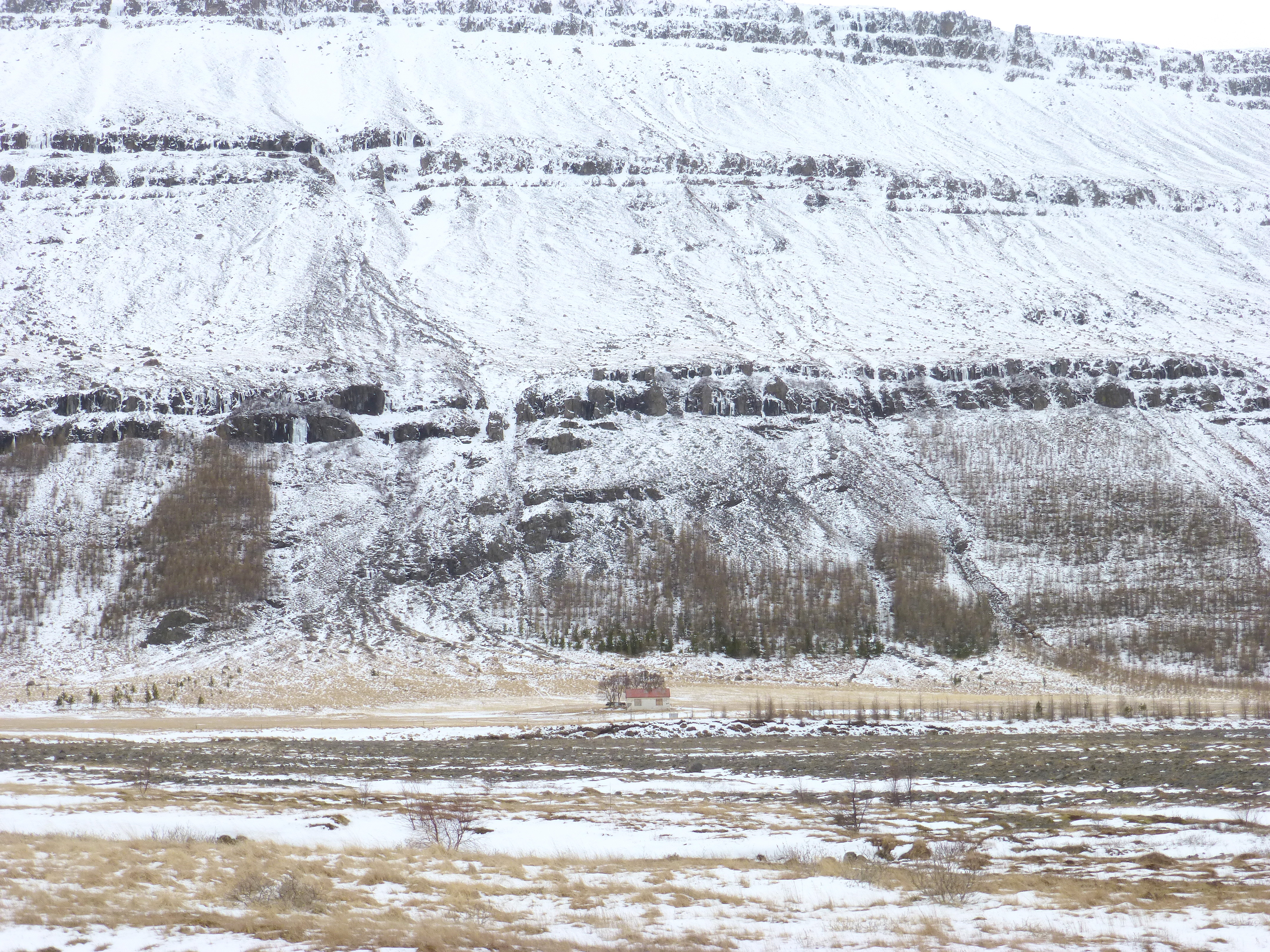
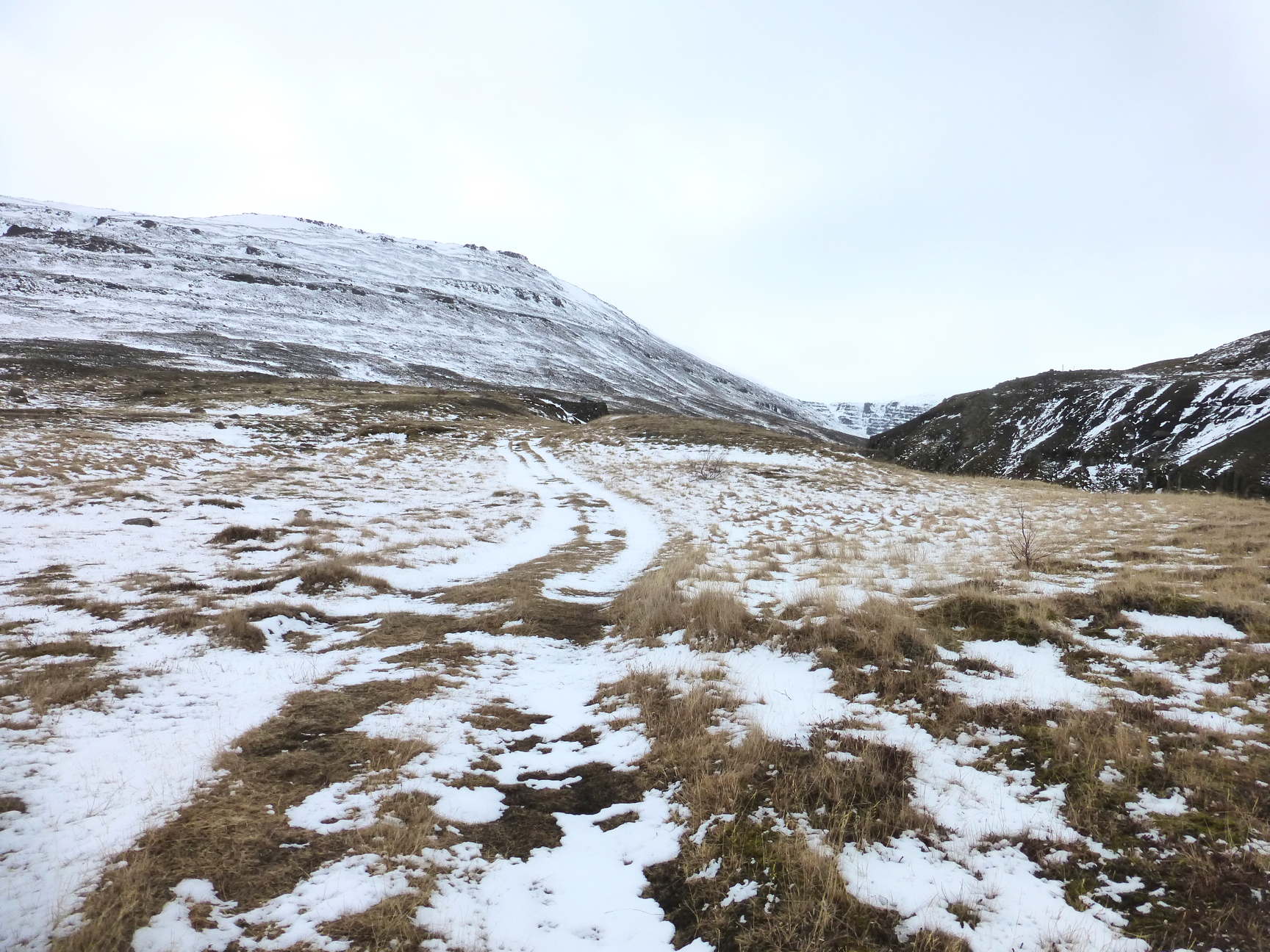 þorgerðarstaðir
They just don’t trust trees. Or rivers. Sheep, they like sheep. So they herd trees, They put them out to pasture.And that’s nature in Iceland: a project made out of sheep, government subsidy and resistance, often all at once. Oh, and depopulation. Iceland is an urban country. 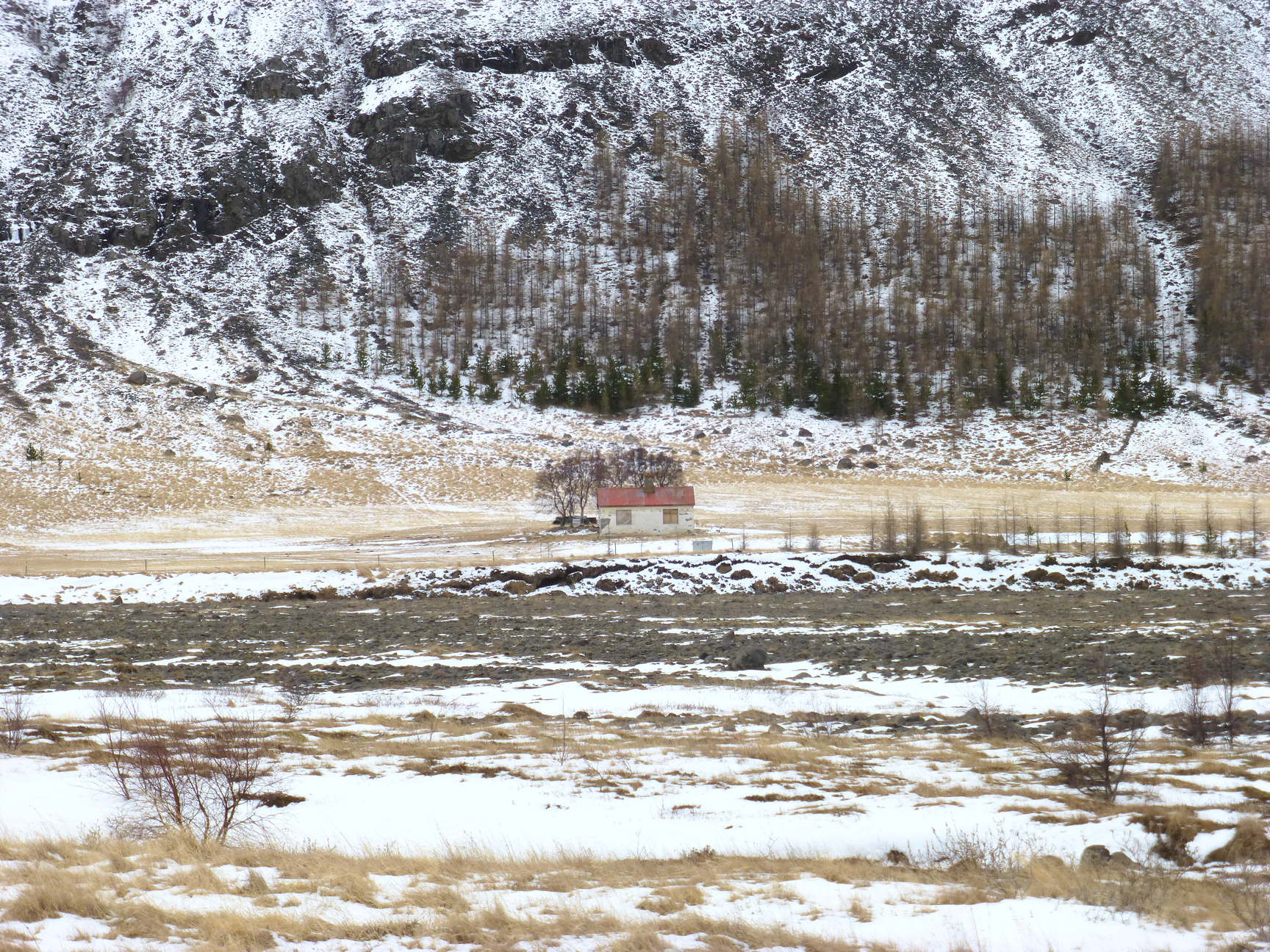 Rather than being nature, the land is a kind of ruin.
 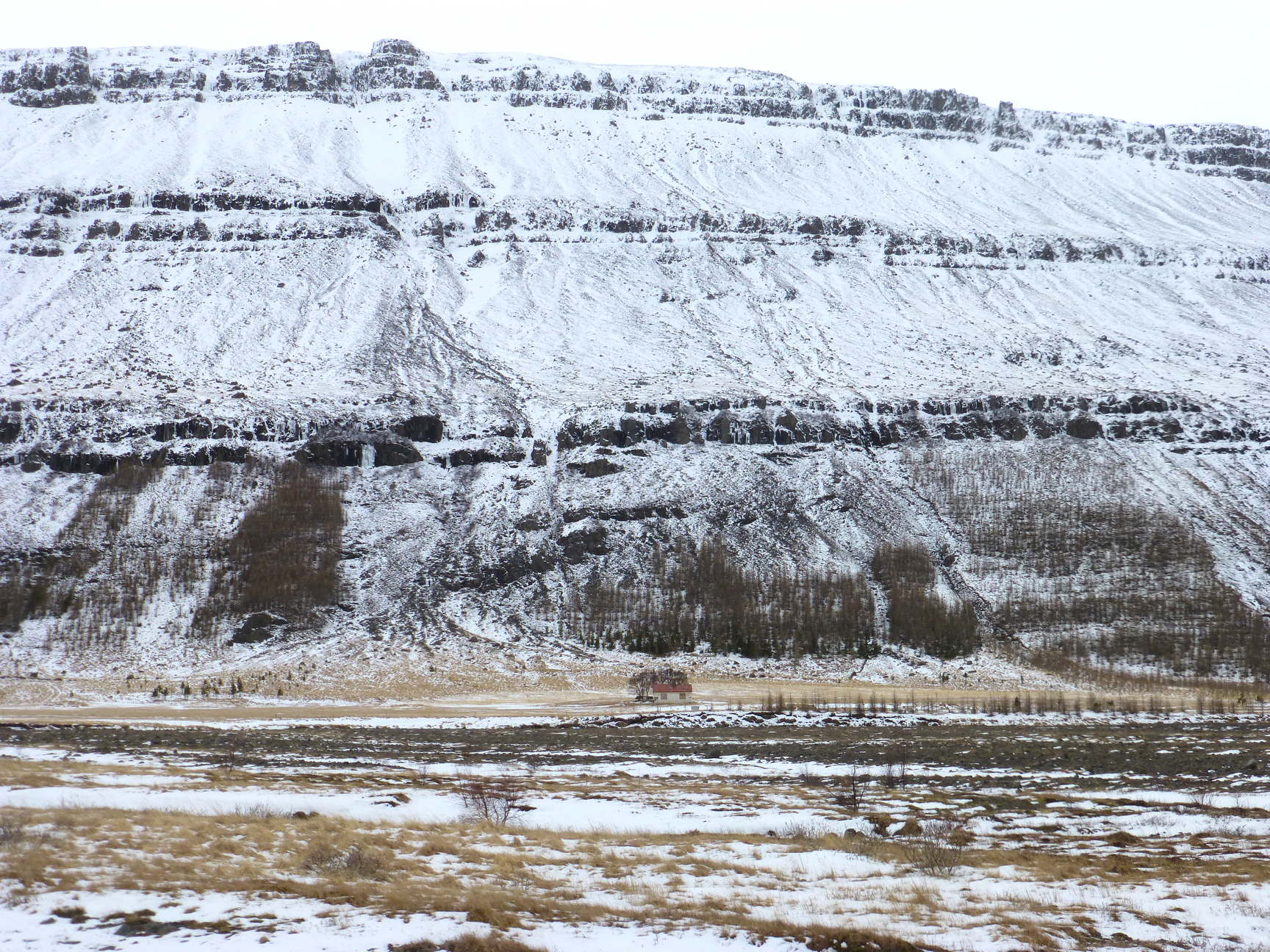 Brrr.Everyone, time to go home. You can so farm a city, just not on work days.
That nature stuff is for tourists.
I like to think of this monolith in Reykjavik’s old harbour, near the Viðey Ferry and the industrial docks, as the mother of the city. Look at the sand she has drawn out of the sea’s currents and sheltered here…
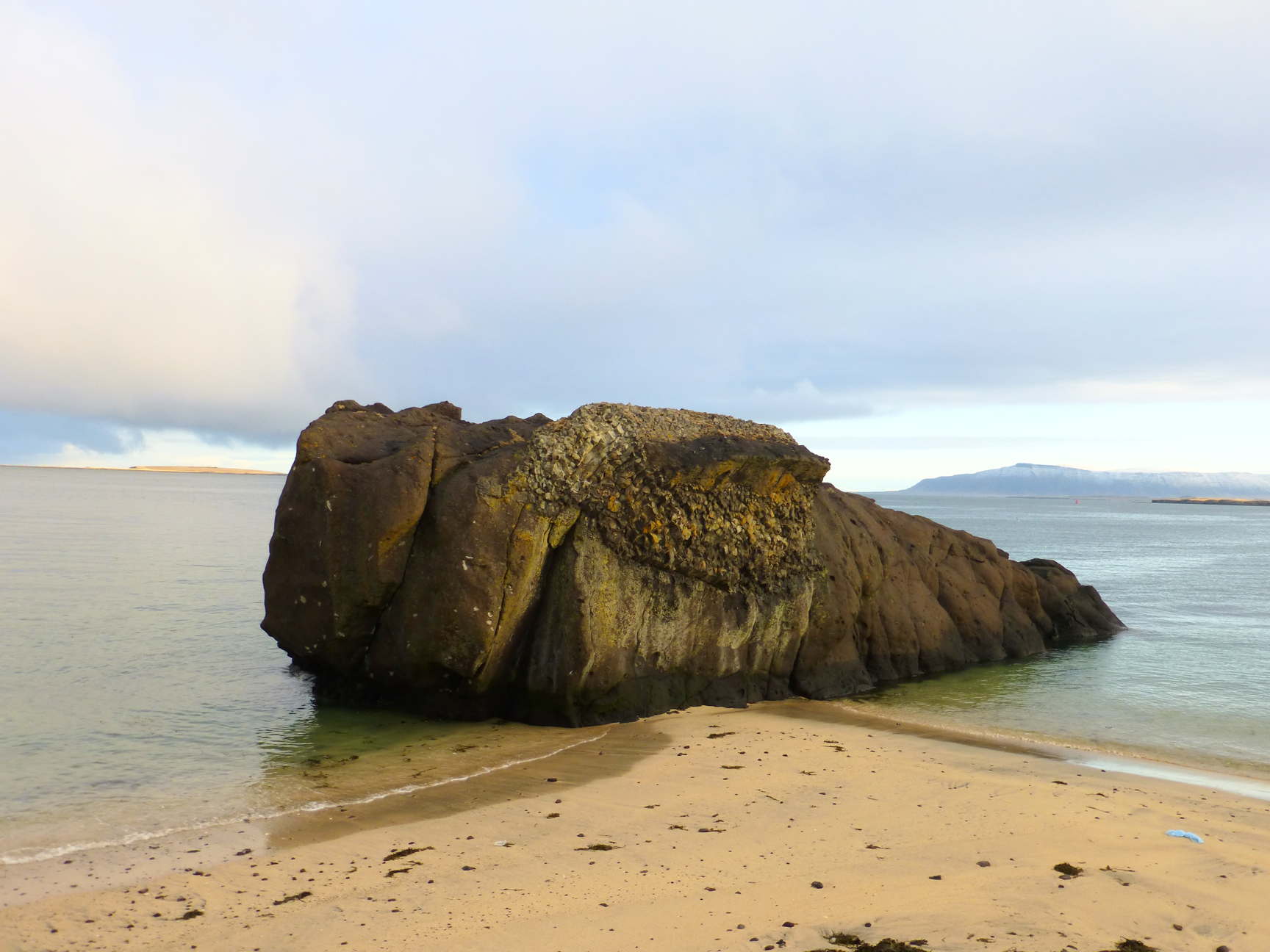 … sand perfect for Ingólfur’s long boat in 870. In a country in which most beaches are stretches of surf or keel-ripping rock, that is no small thing. Here is the mother of the city. And look at her, isn’t she gorgeous? Wouldn’t you put into shore for her?
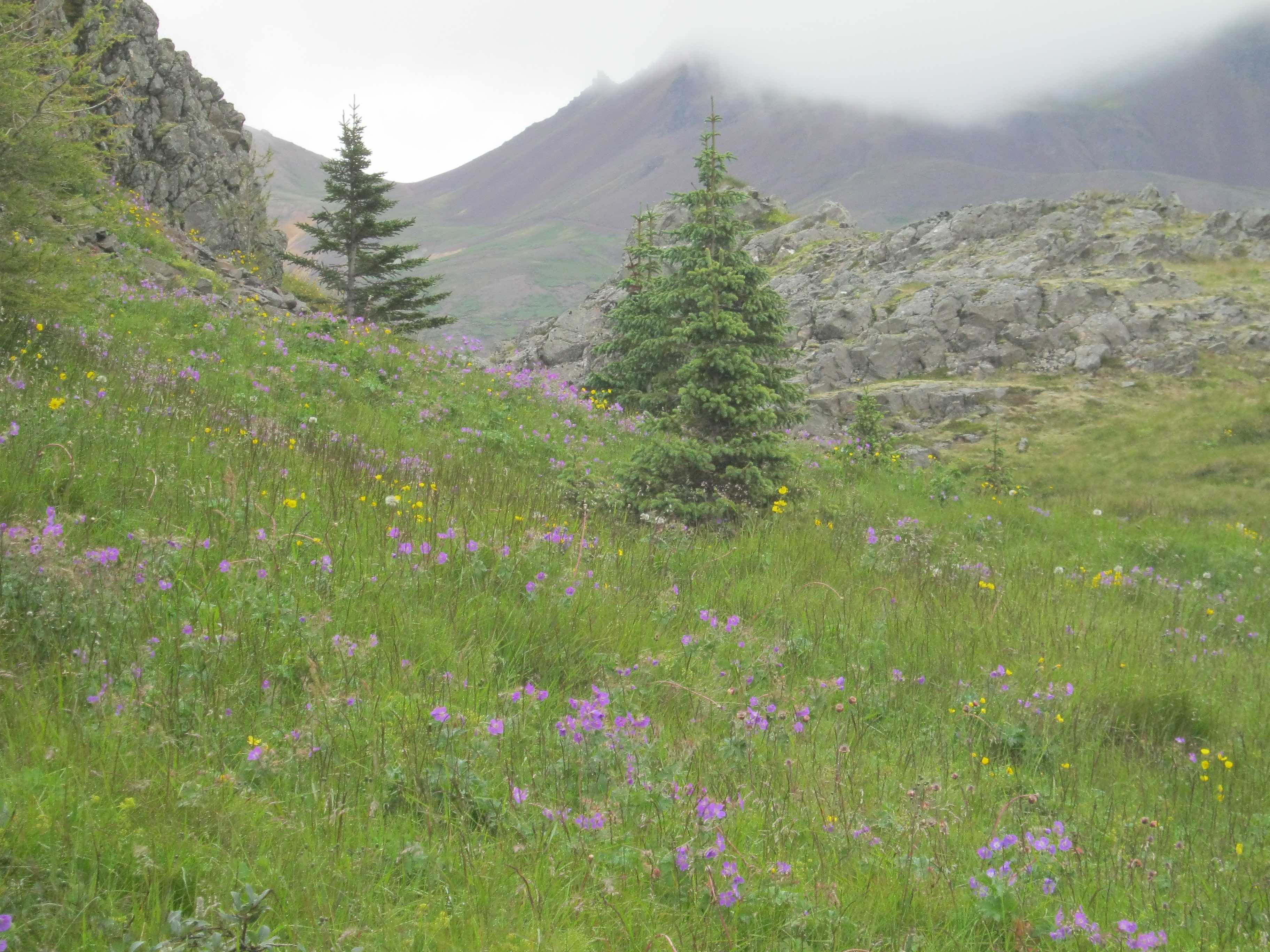
Hey, welcome to Alfaborg, the mystical city of the elves in Borgarfjörðar Estri. The Borg in the west, was the city of men. Here, completely across the country, live the elves, in their own Borg.
 East
East
Except, until the twelfth century, there were no álfar, or elves. That was an idea imported from France, which was laid on folk experience of all the varied people who came to Iceland and made up its founding lines. This would have been home to the bergbúar, the rock dwellers. 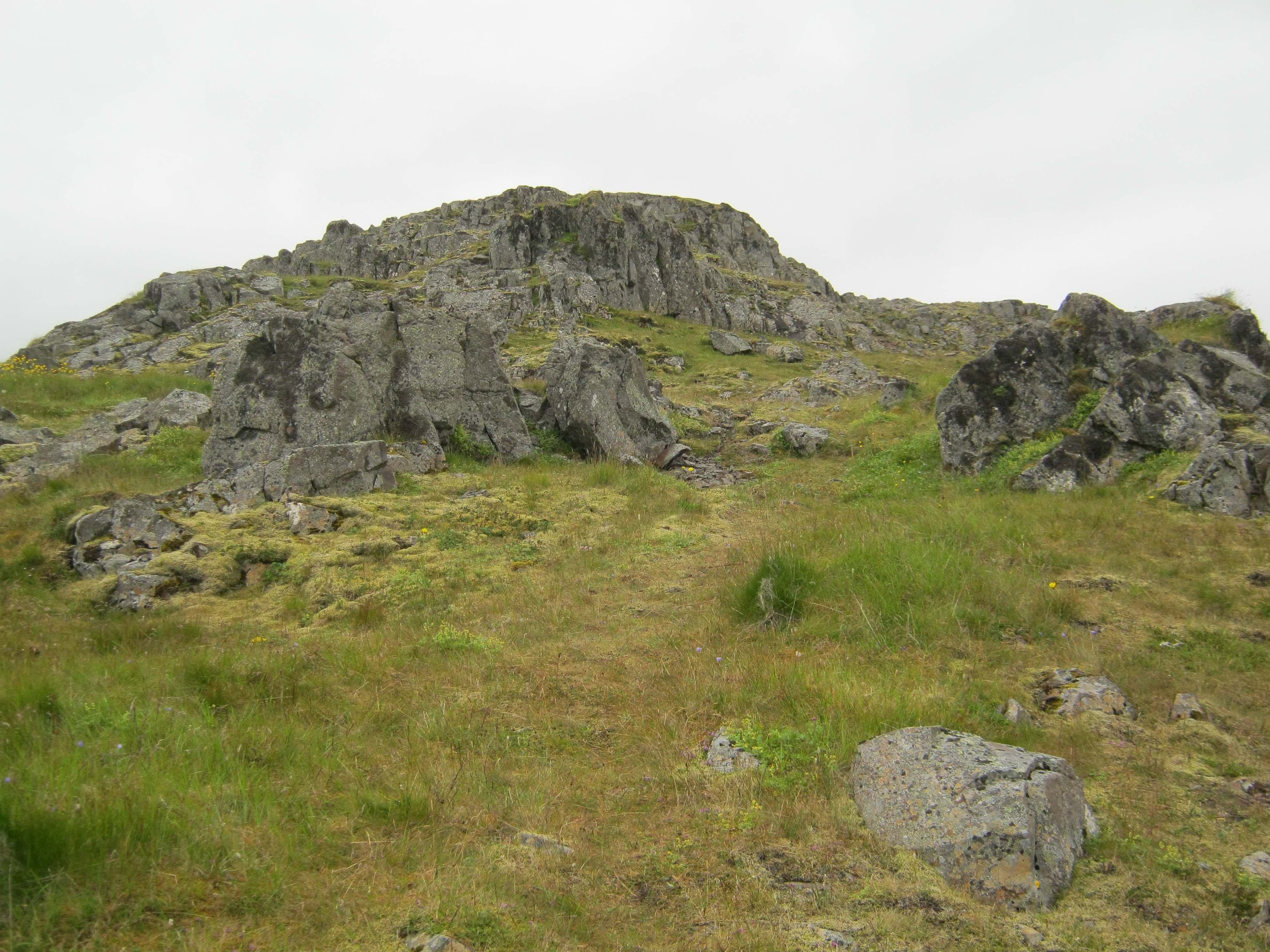 East
East
Not dwarves, exactly. That is a different folk lineage, into which several lines were folded over time, under the effects of European modernization and a half millenium of the consolidation of folk tale into unified stories onto which national narratives could be written. What became known as elves, in a process of consolidation, also originally held the landvættir, or nature spirits. They lived on the land itself. So, this is likely a home of rock dwellers.
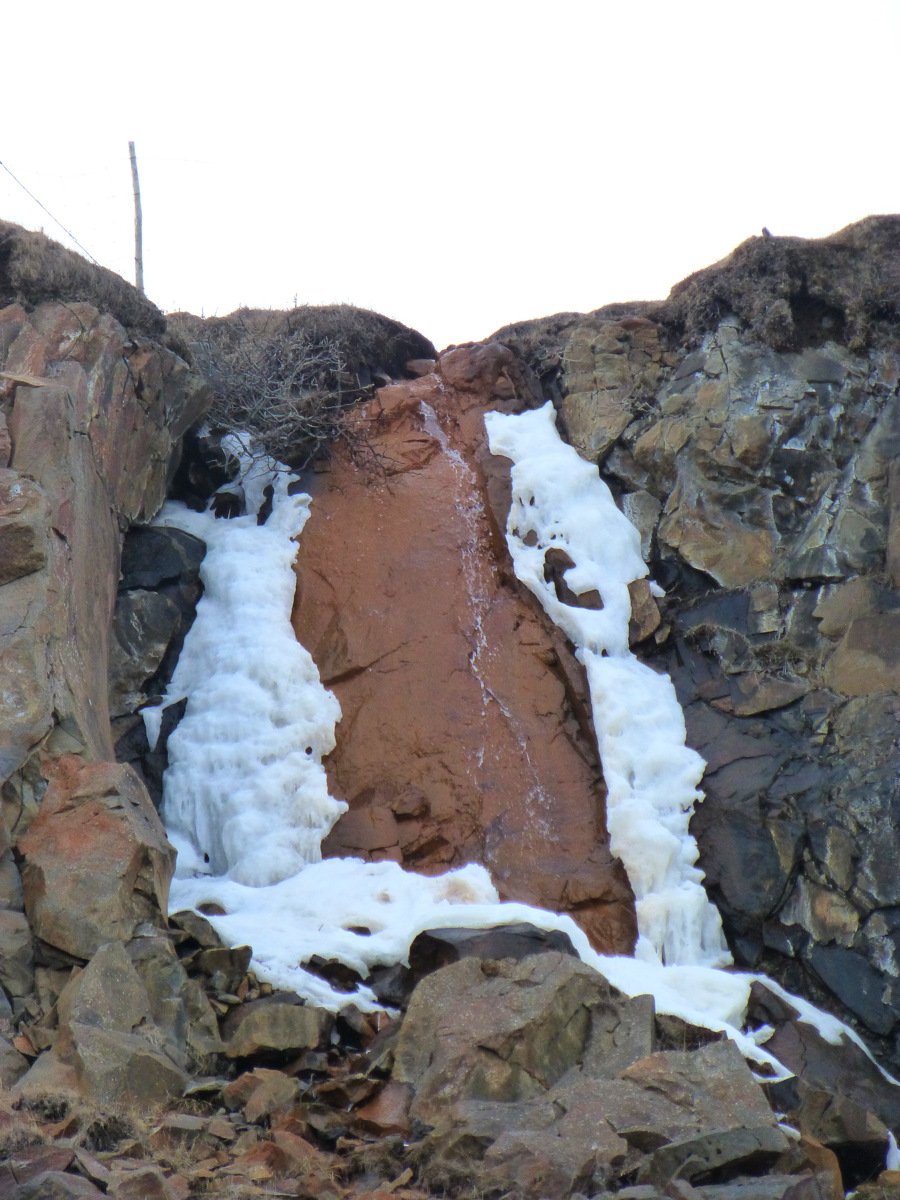 East
East
This too, most likely.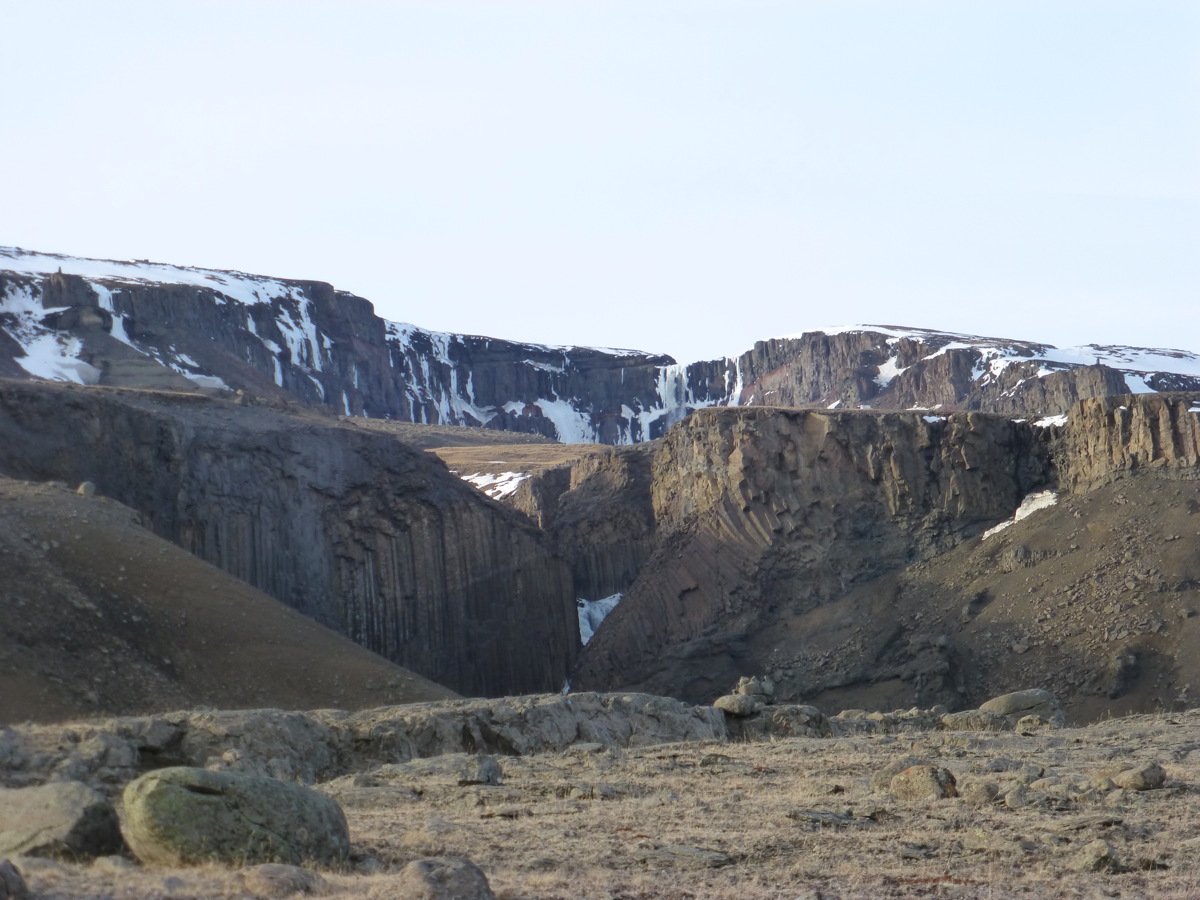 East
East
And this. 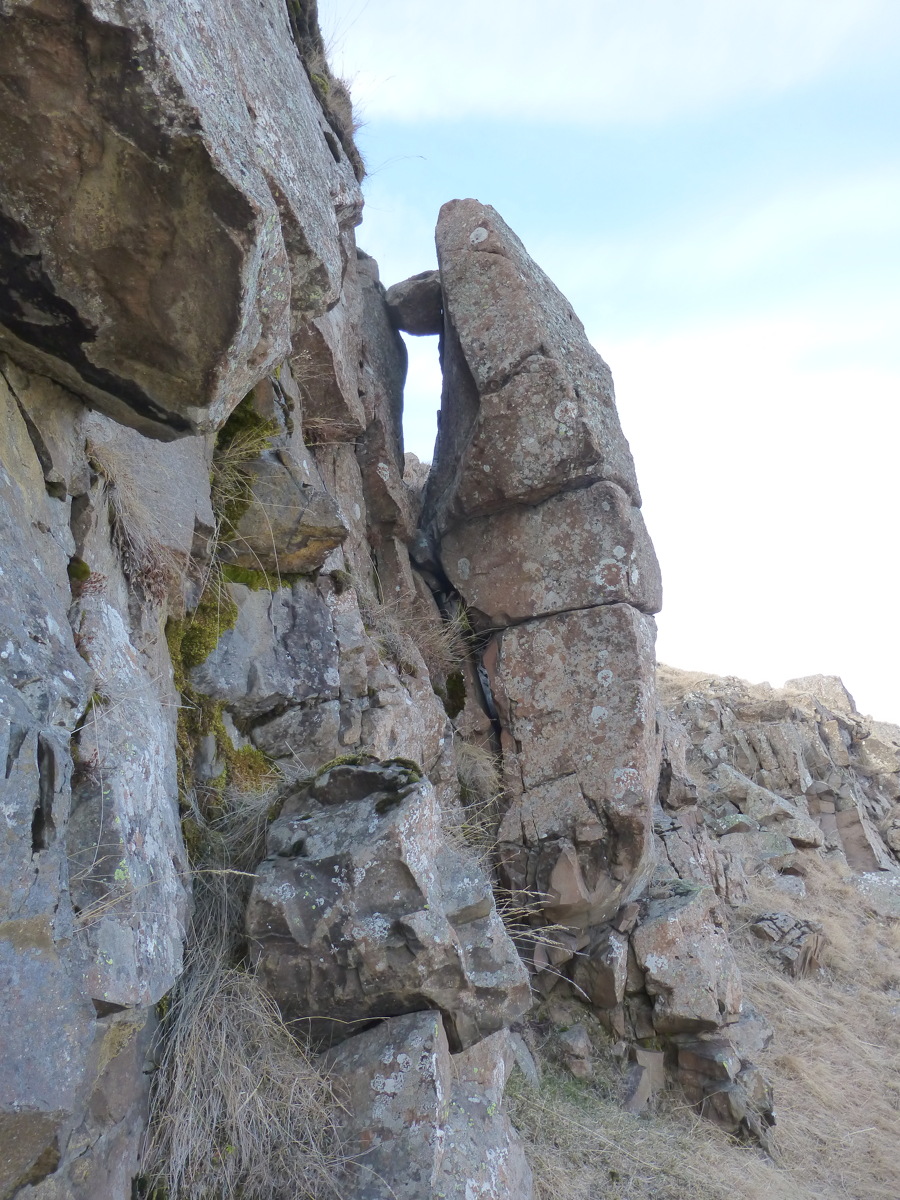
East
And here?
 South
South
Why, landvættir. And here. 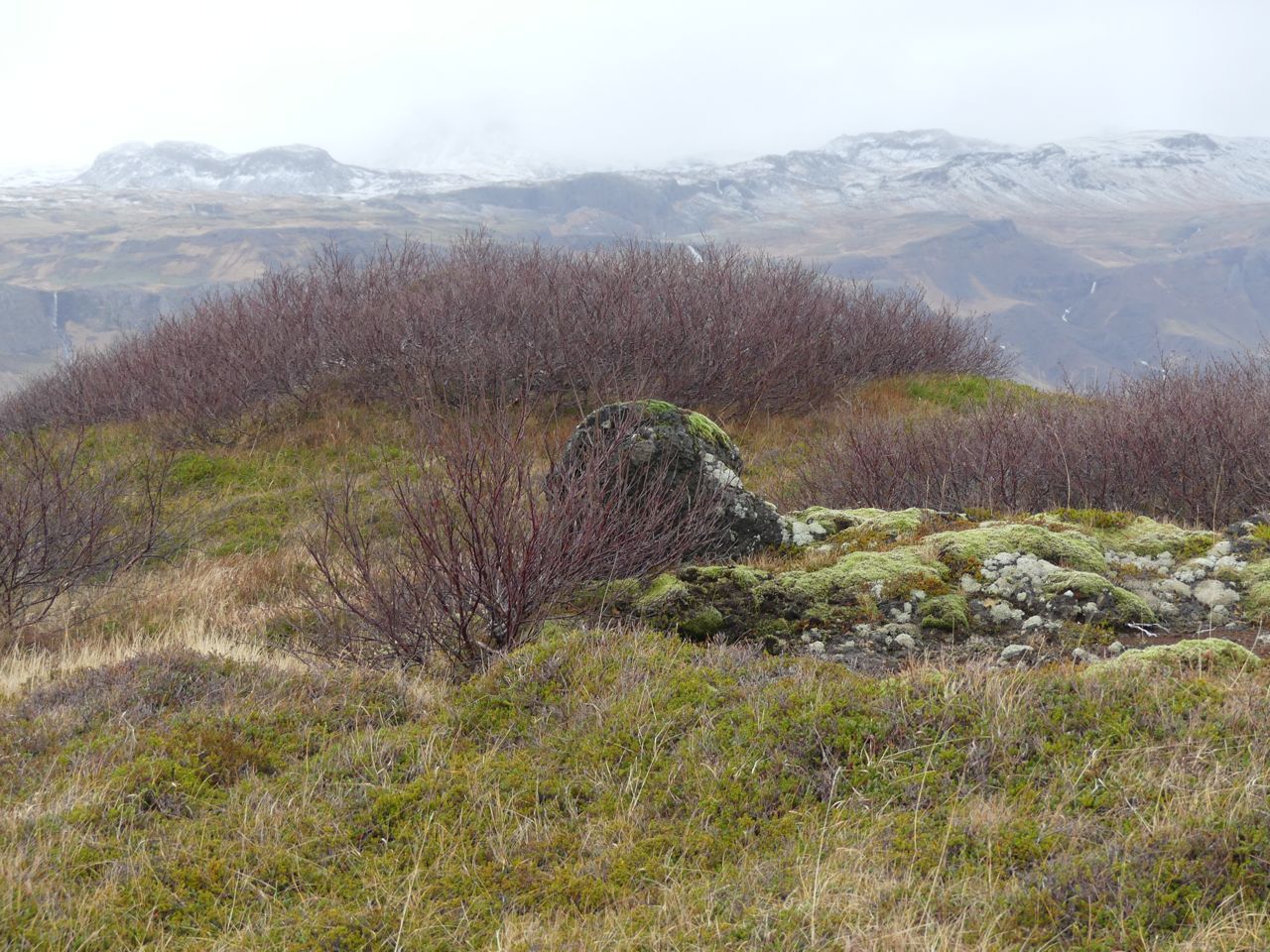 West
West
And here, a mixed population, perhaps. No doubt, a host of others who tagged along in the heads of people in the long boats. 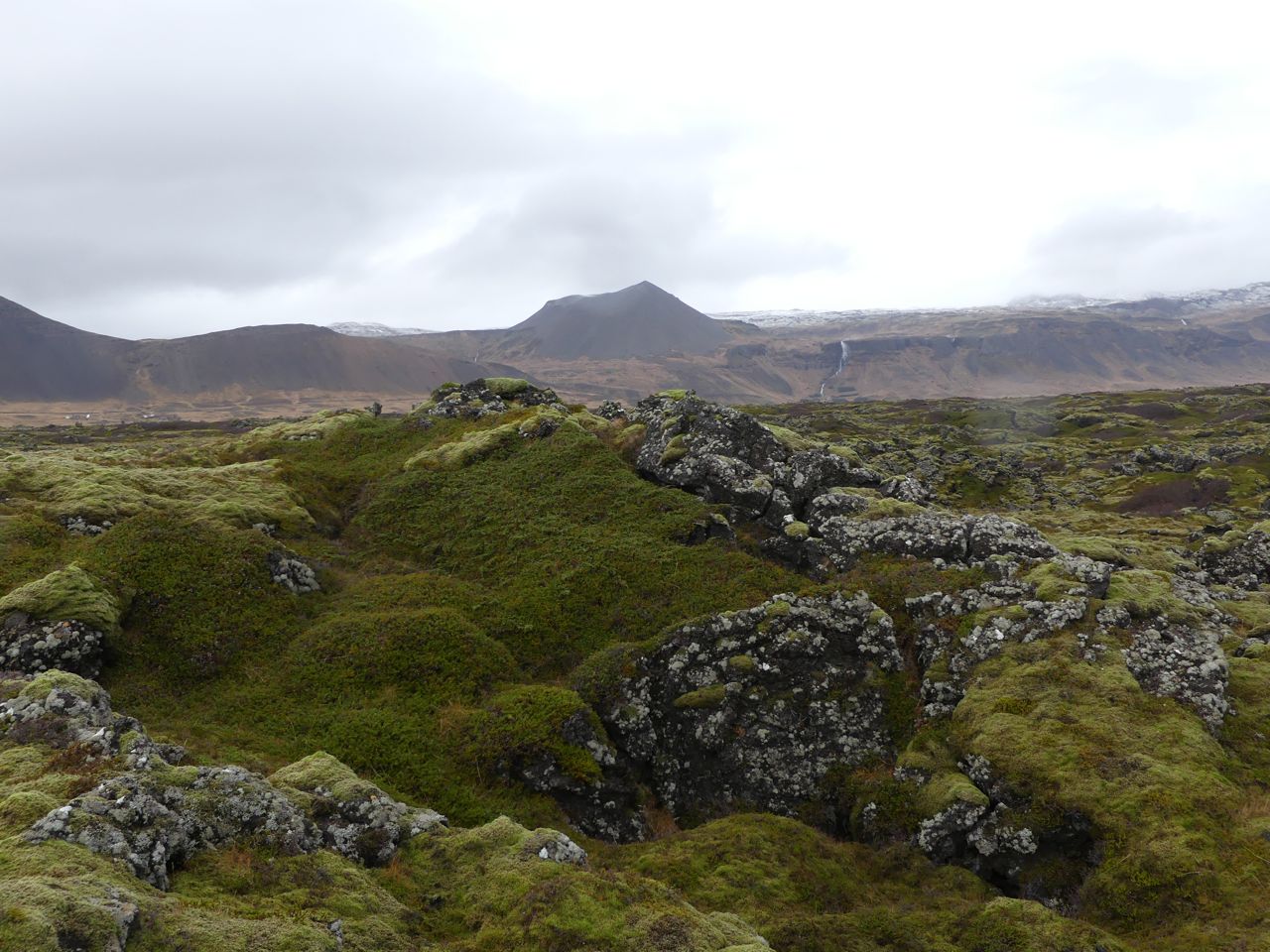 West
West
No doubt, a lot from Ireland. Experiences of what was later solidified, in the same nationalizing process, as nature. 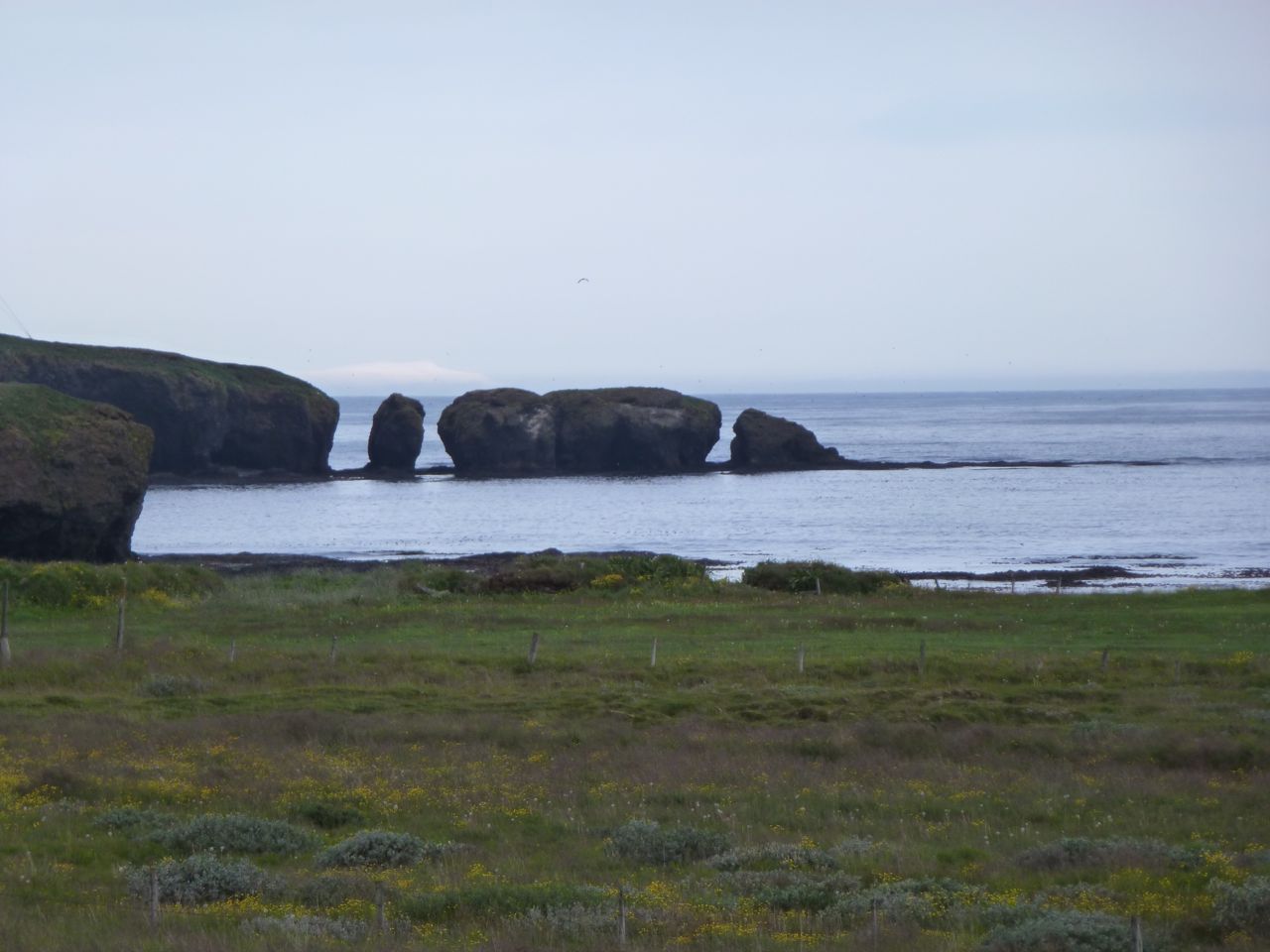 North
North
Luckily, there is more to history than the history of nationalism, and more to living on earth than the consolidation of diverse encounters and traditions with abstraction and consolidation.
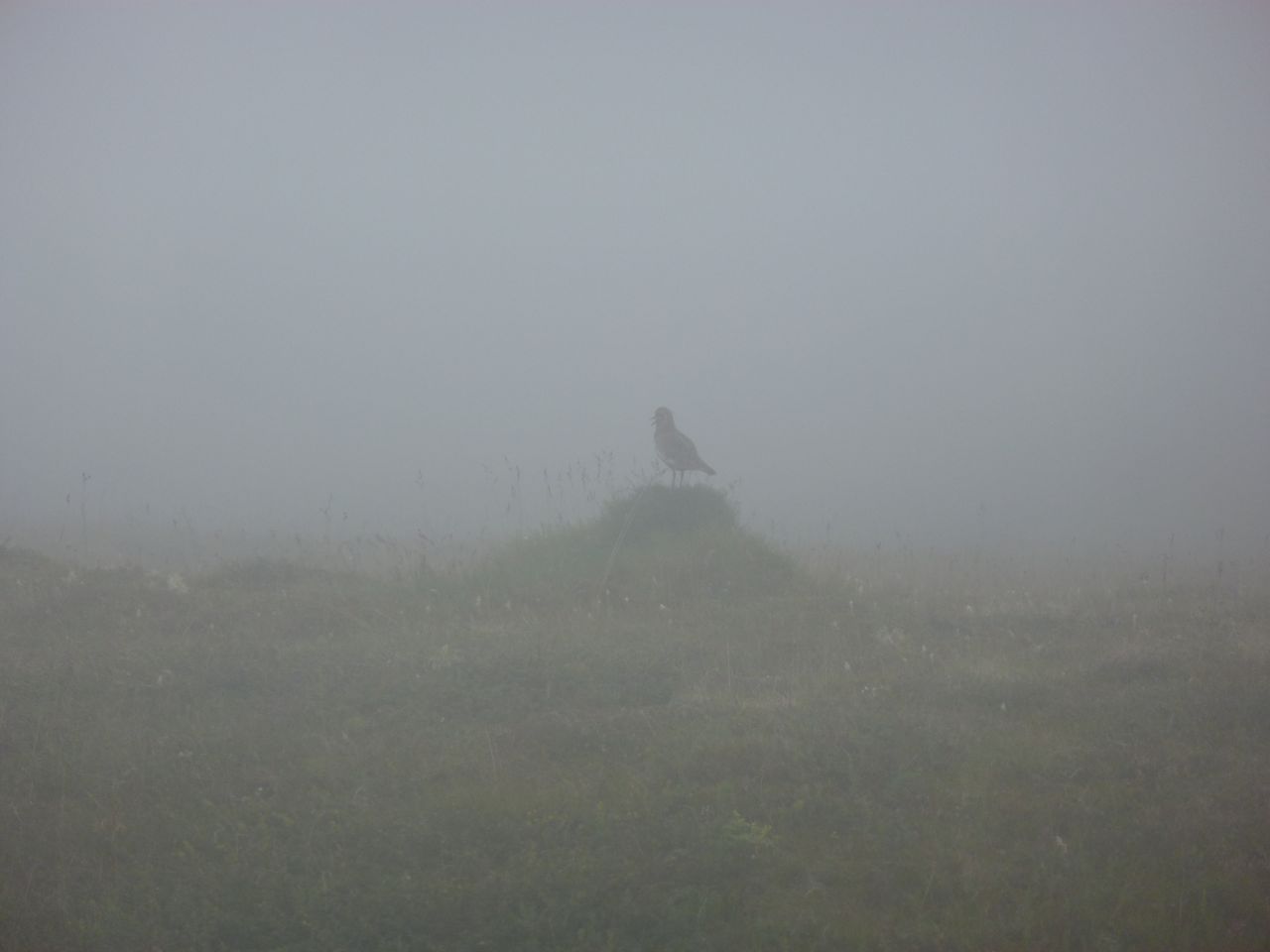 North
North
We are still bodies on earth.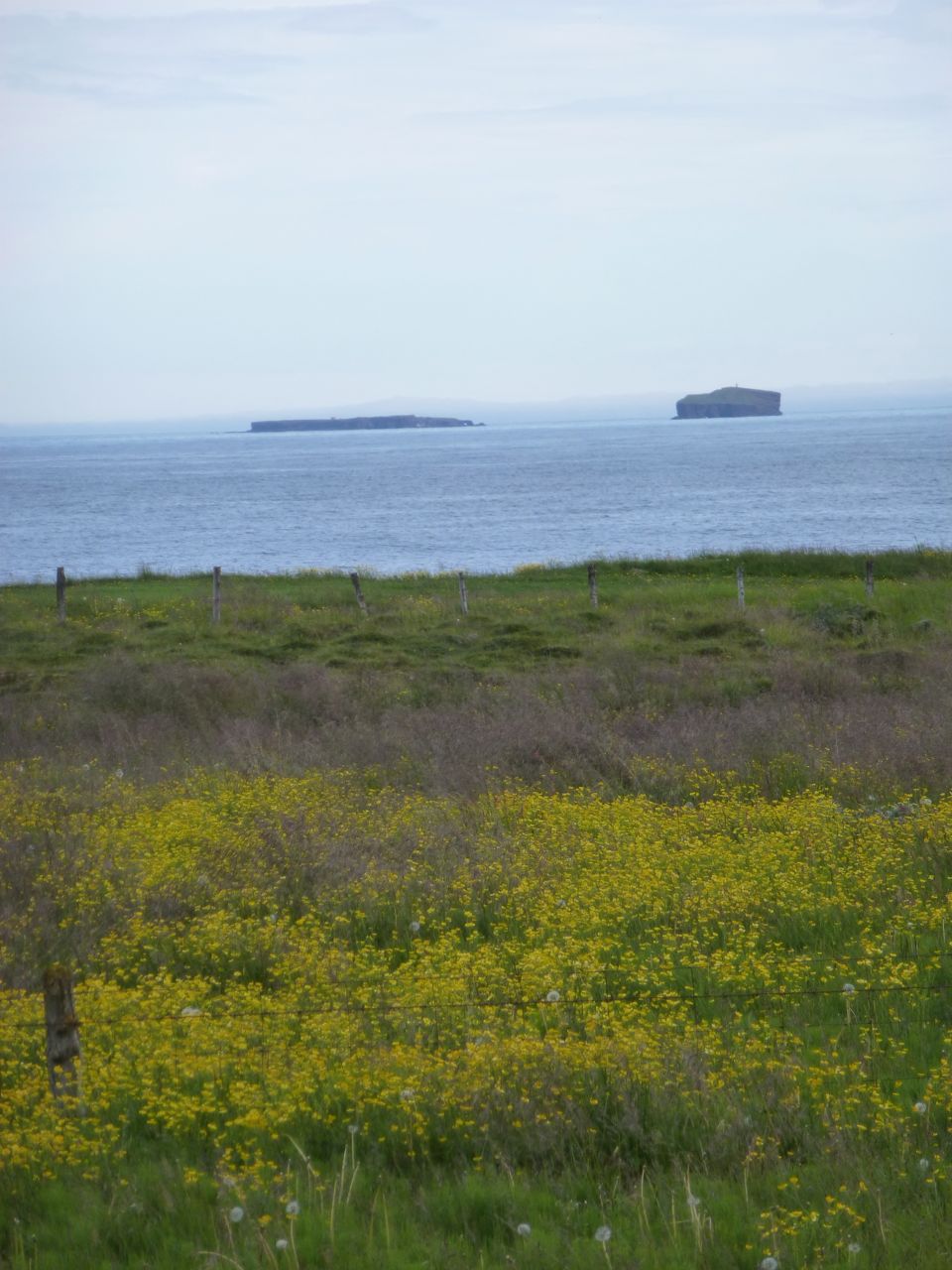 North
North
We are still the earth dreaming.
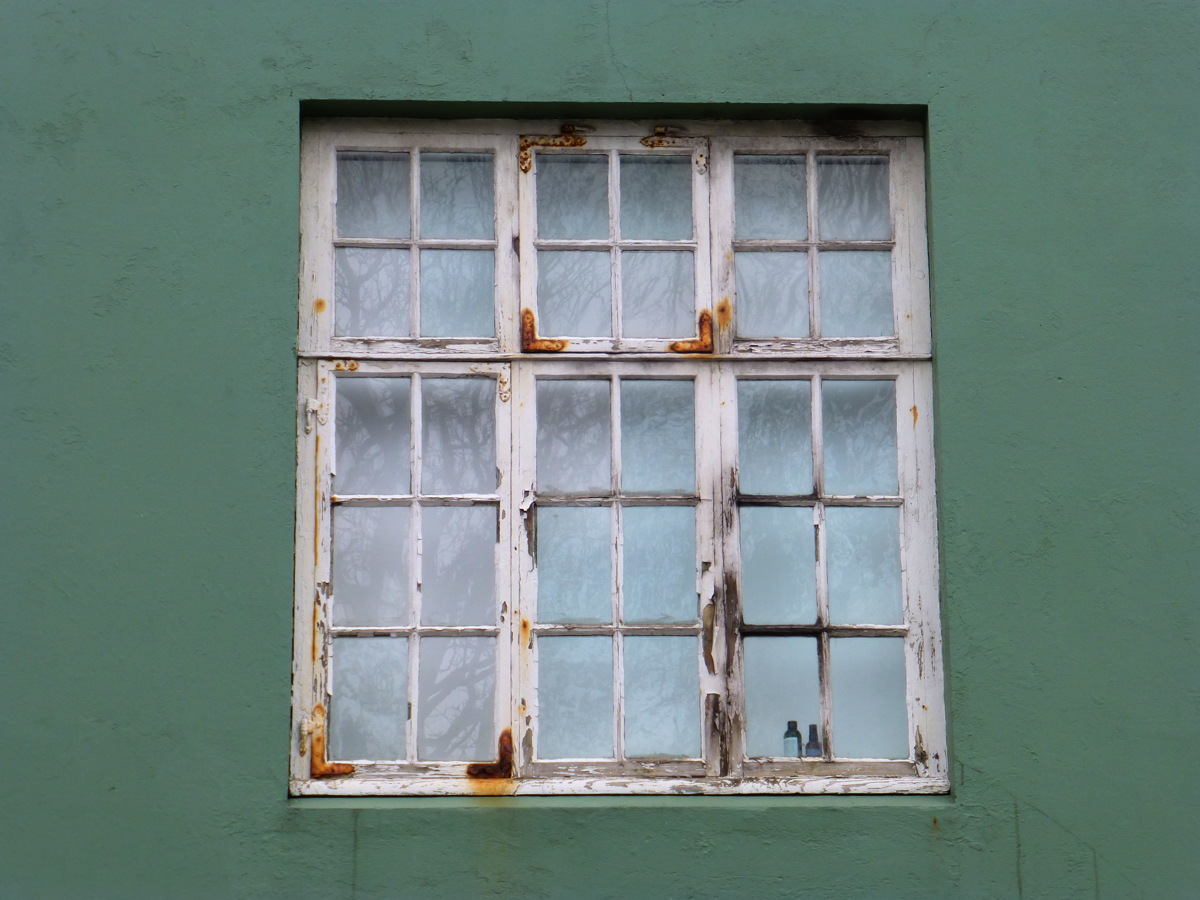 All trees in Iceland are mysterious. Some, it seems, stay indoors and take tinctures.
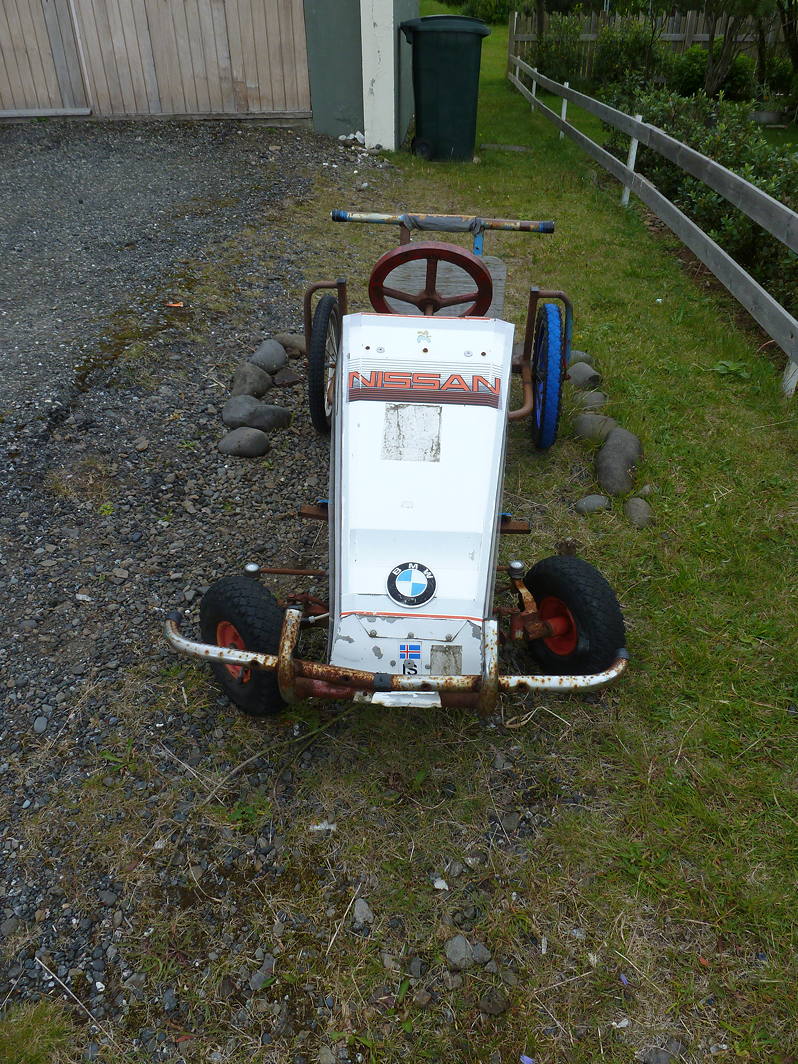 Isn’t that a 1940s Volkswagen fender?
Most humans, unfamiliar with the Earth, try to get as close to her power as possible.
They will find each other, but will be powerless. Iceland is currently financing itself on this illusion, based on a thousand-year-old tradition of hospitality. The land’s hospitality reveals itself when you turn away and walk for, oh, ten minutes into the earth.
Fossunderlendiheiði
There are also ancient traditions of Icelanders reading this mixed landscape of water, volcanoes and wind. Keeping the tradition alive has never been so important or, under the business, so difficult.
The same as anywhere else.  You channel a river system through a hydroelectric dam to power an aluminum smelter for the industrial and economic elite, and deposit the water in the next valley, claiming that all environmental standards have been met…
 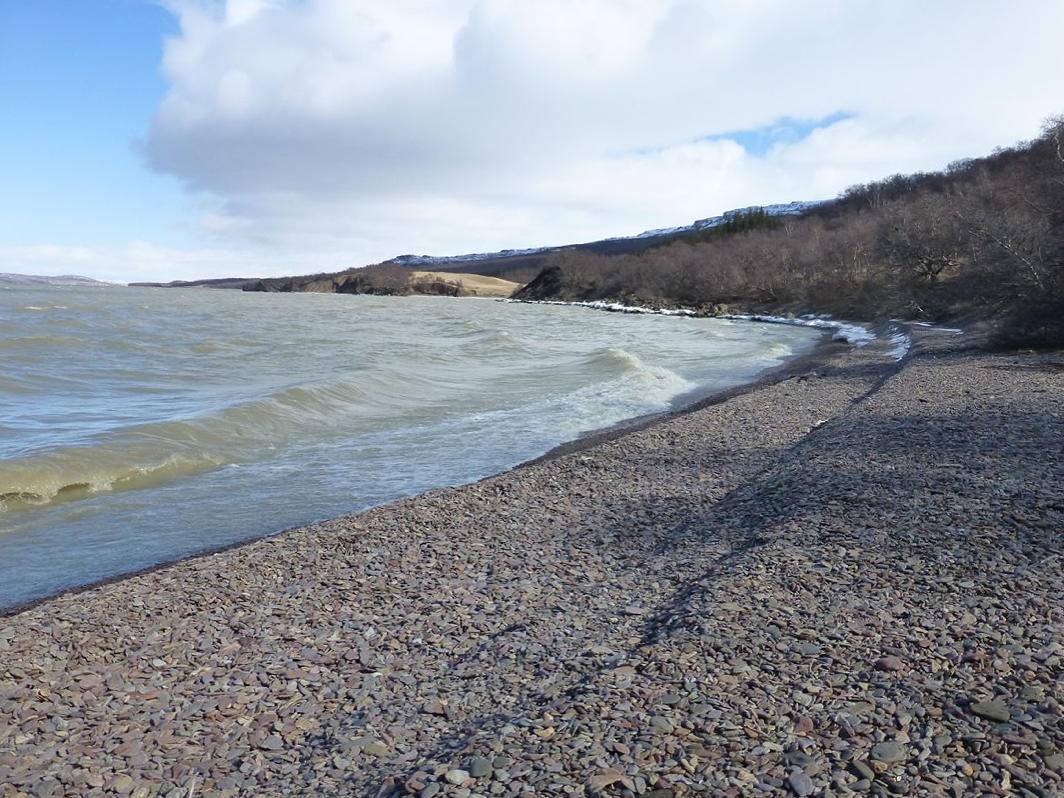 … kill the sacred lake, the birthplace of Iceland’s country and the modern state. This is, of course, called progress. These images were taken in Hallormstaðir, the Town of Rowans, a sacred place a couple hours by foot from Gunnar’s house. It’s a good thing he’s not there to see it!

Werner Daitz
Werner Daitz,the architect of Hitler’s concept of claiming Lebensraum (existential space) from Poles, Lithuanians, Latvians, Estonian, Finns, Czechs, Slovaks, Jews, Serbs and Ukrainians, updated his arguments in 1943, after the debacle of Stalingrad. On the principle that the fate of no one people was at stake but of Europe as a whole, he wrote in The Europe Charter:
A healthy life is only possible when every individual being, just like every naturally-occurring community, follows the Rule of Self-Sufficiency: as a foundational principle, to live in its own space and from its own strength — which is to say to live a non-imperial life. Imperial life is an unhealthy life for an individual, just as it is for a community. And, as it is today [1943], when the Individual human being has the “freedom” to lead an unhealthy life but only at the price of its own decline or to join a partnership under the pressure of an emergent crisis, so does a family, or a family of peoples, also have the undeniable freedom to temporarily lead an unhealthy — an imperial — life. But then it must either return from the compromises demanded by emergent crisis to an autonomous life or disappear.

Ralph Giordano
The article is a chapter in Dietz’s 1943 book The Rebirth of Europe through European Socialism. Daitz inspired Gunnar Gunnarsson’s friend, the architect Fritz Höger, after he spoke to the Nordic Society, a pan-Baltic, cross-cultural association of folk-based writers, which included Gunnar. Remember, though, that “European Socialism” in this context means “Nazism” and “Rebirth” means “the normalization of life after war.” As to what that normalization means, we can thank Ralph Giordano, from Höger’s Hamburg, who hid in a basement for the duration of Daitz’s war, as his father was Jewish and “freedom” meant the freedom to die in Auschwitz. In 1989, Giordano published a book titled What if the Nazis Had Won the War. He noted that Best, who had experience administering the Danes, Estonians, Latvians and Lithuanians through the German terror, developed a four-level administrative model:
Every people must look after itself, after looking after the continental administrators [Germans].
Every people must manage its own affairs, as representatives of the German government.
The central government of every people must work within the oversight of representatives of the Race of Leaders.
Under no circumstances will a replaced people participate in the government at any level.
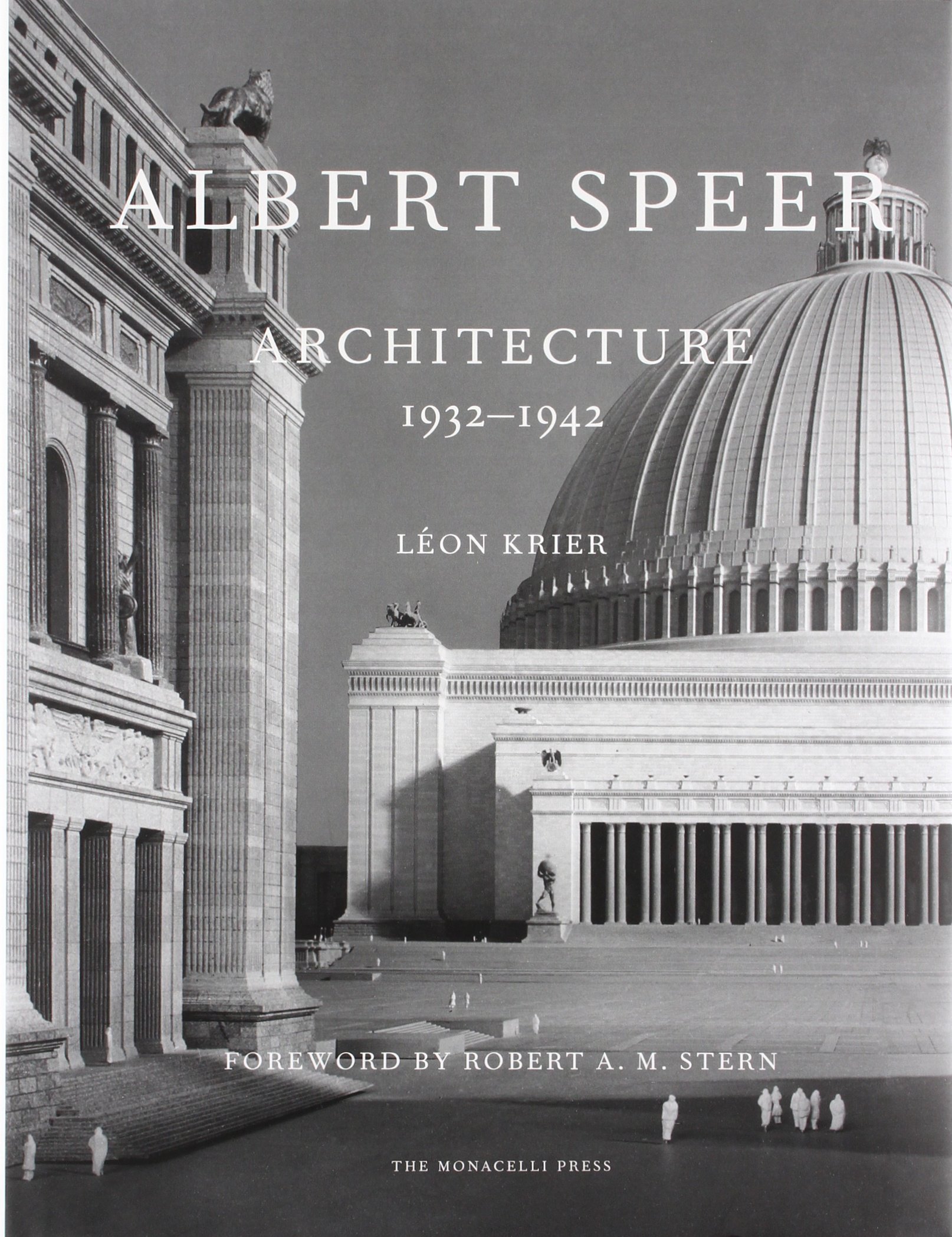
Brutal stuff. In the light of Best’s practical experience, it’s highly likely that Dietz meant that a return to normalcy meant a return to the world of folktale, with all other peoples replaced in order to forestall the creation of a liberal state or melting pot in which individual cultures would disappear. Höger and Gunnar, who met Daitz in 1932, took different lessons from Daitz’s existential war — different from Daitz’s above and from each others’. Höger tried to become the national architect of the Third Reich, to build buildings representing German folk traditions, and failed. Hitler wanted the imperial roman wedding cake architecture of Albert Speer. Gunnar left the continent to live the life as a modern German farmer in Iceland, in a house that Höger built.
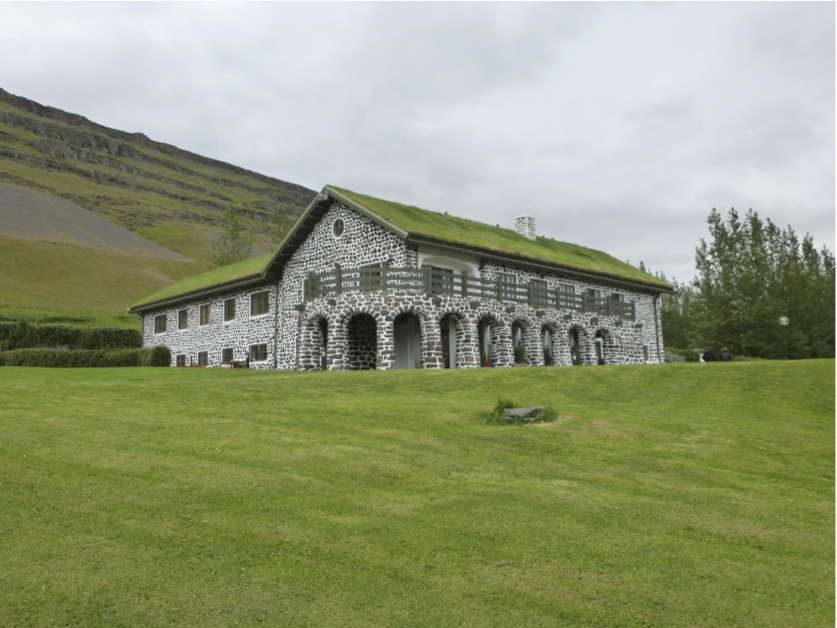
Skriðuklaustur
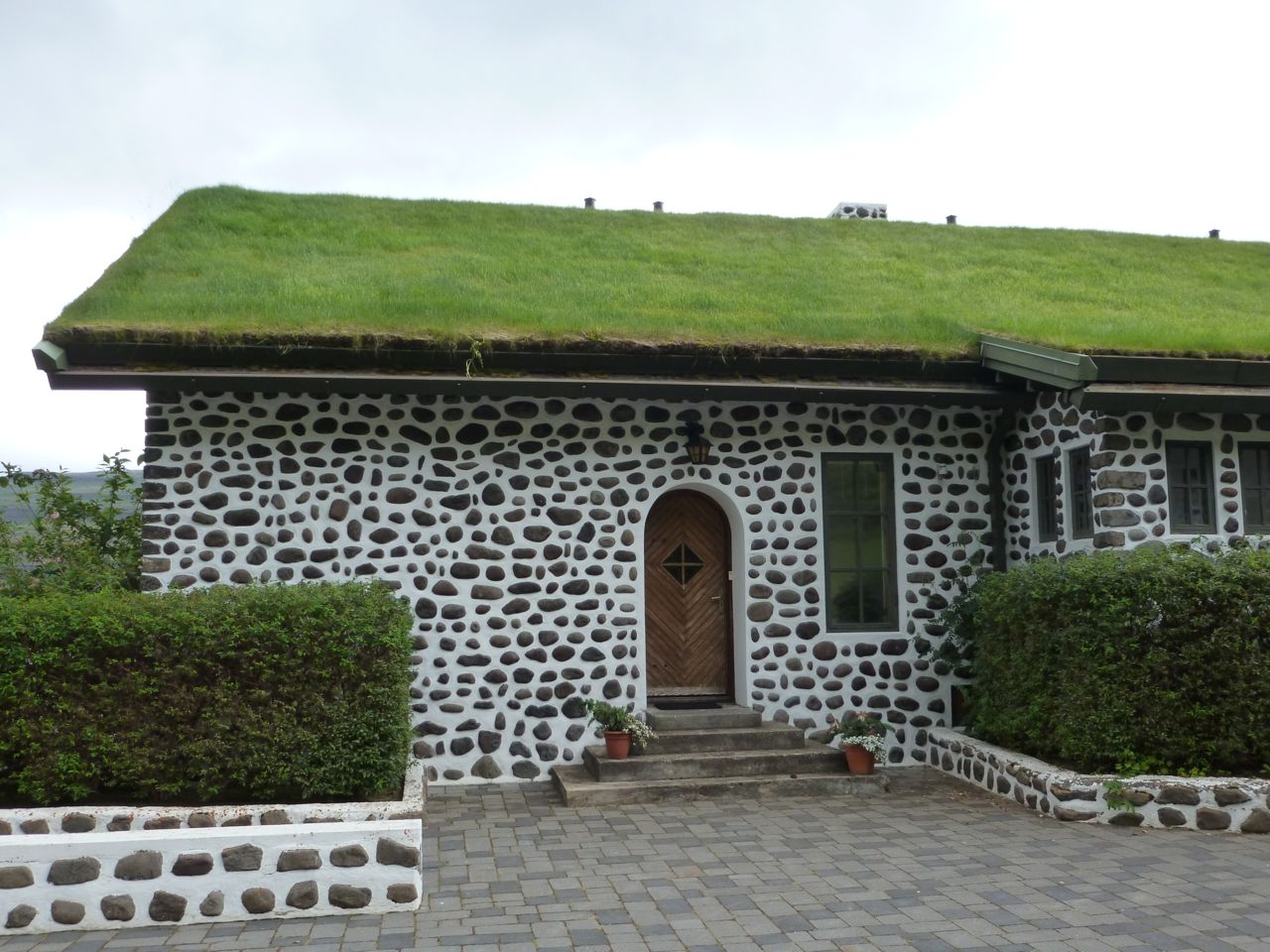
The idea was likely to merge German-inspired administrative skill with Icelandic farm life, to enable more people to succeed on the land. No doubt, the plan was also to avoid Hitler’s war. Note that the building’s turf roof is an echo of old Icelandic turf houses, while the stonework is solid and North-German. Well, not really. Those rocks were supposed to have been square cut, but Gunnar’s Icelandic workmen could find no cuttable stone, so on their own, independent Icelandic initiative, drove down to the Hengifossá River (to the right) and brought home some river rocks and worked with that. The result is comic. Höger was incensed. It’s kind of a fairytale house as a result, but I’m proud of those Icelanders. They broke all of Best’s rules, all at once, even before he started planning the invasion of Denmark in April, 1940. Here they are again:
Every people must look after itself, after looking after the continental administrators [Germans].
Every people must manage its own affairs, as representatives of the German government.
The central government of every people must work within the oversight of representatives of the Race of Leaders.
Under no circumstances will a replaced people participate in the government at any level.
All broken! Even more lovely: for all his ambiguity and his bad choice in friends, Gunnar got it right too and also broke most of those laws, going so far as to tell Hitler the following in March, 1940, in his speech Our Land:
But one must always have the effect on the landscape at front of one’s mind and guard against mistreatment. For the way the landscape is treated is the way the people are treated. If tastelessness becomes the norm in the Icelandic landscape, gets a roothold and spreads widely, it will soon become visible in the spiritual life of the people as well. Perhaps there are already signs of this today.
In other words, none of Speer’s architecture and its imperial pretensions in Iceland, not for Gunnar. The Icelanders would look after their land themselves. None of this kitsch:
Just this:
And a day’s drive to the East, this:
And, everywhere, this kind of thing:
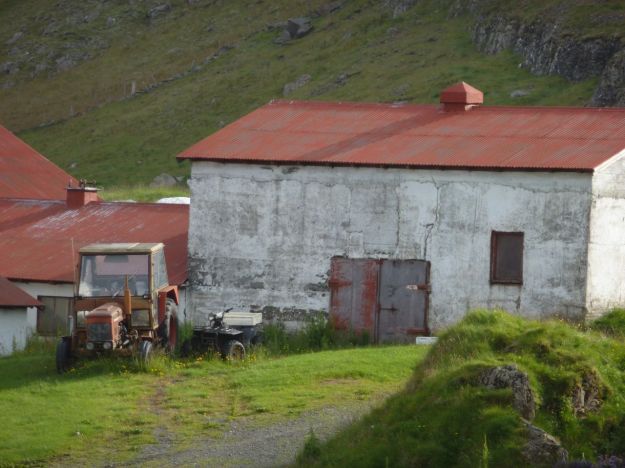 There’s more than one way to knock the stuffing out of imperialism.
 A Farm in Iceland