Category Archives: Uncategorized

Gunnar Gunnarsson and the Minotaur: Gunnar’s Faith, Part 2

Today, I’d like to welcome Friederich Dürrenmatt (1921-1990), Swiss playwright and crime novelist, especially the former. He and Gunnar should have been friends. They were both energetic writers, both pioneers of criminal novels, and actively wrestled over a long period with ideas of ethics, morality, judgement and faith.
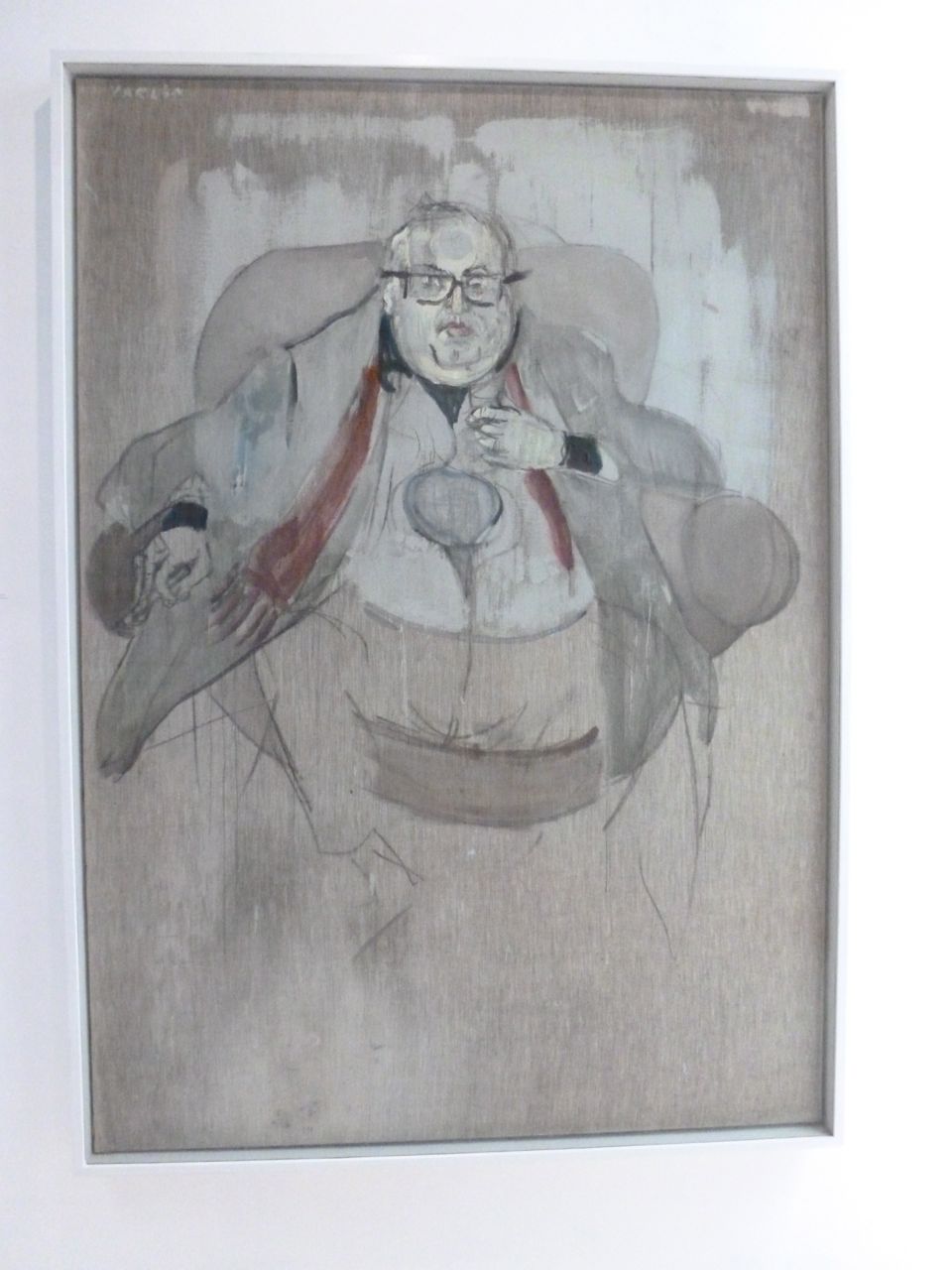
durrenmattToday Dürrenmatt’s old villa above Lac Neuchatel has been turned (on his bequest and with his financing) into a museum of … not his great twentieth century plays or his semi-autobiographical detective novels but his paintings, drawings, etchings and, well, look …

P1230987

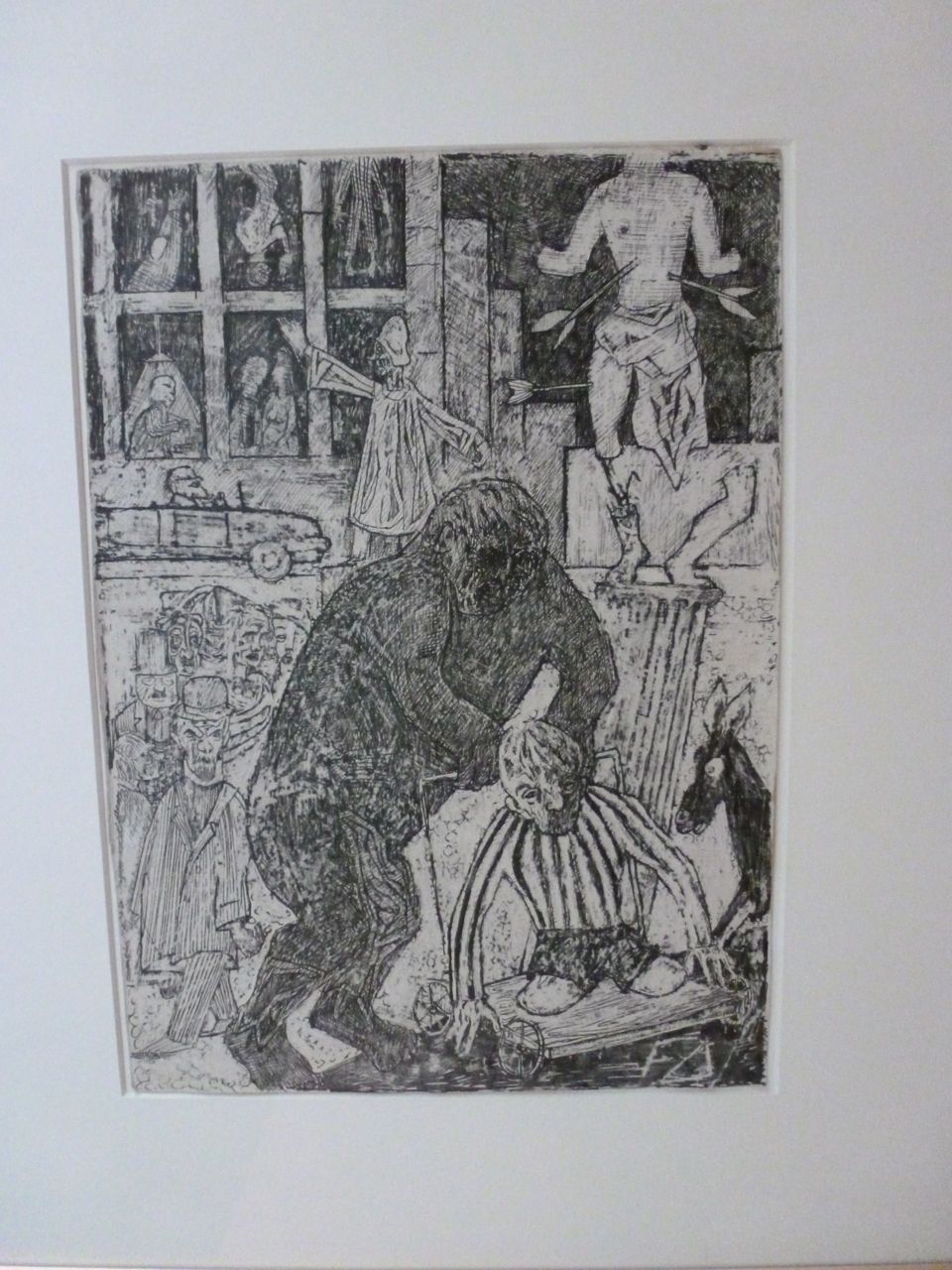
Could be cheerier, right? Well, his youth was spent in Switzerland during the Second World War, and just over the border things looked much like that, actually. Worse yet, when he was quite young, he was a member of the Frontier Club, a parallel movement to Nazism within Switzerland. He soon gave it up, but he carried the guilt forward for his whole life, and, as he put it, without a confessor but himself he had no way to expunge it. One of his most profound attempts was through the play The Minotaur. We know the story from Ancient Greece: a creature half-man and half-beast…

P1230850

is imprisoned in a maze …

P1230817


… the hero comes to slaughter him …

P1230793

… which makes him into a beast …

P1230809


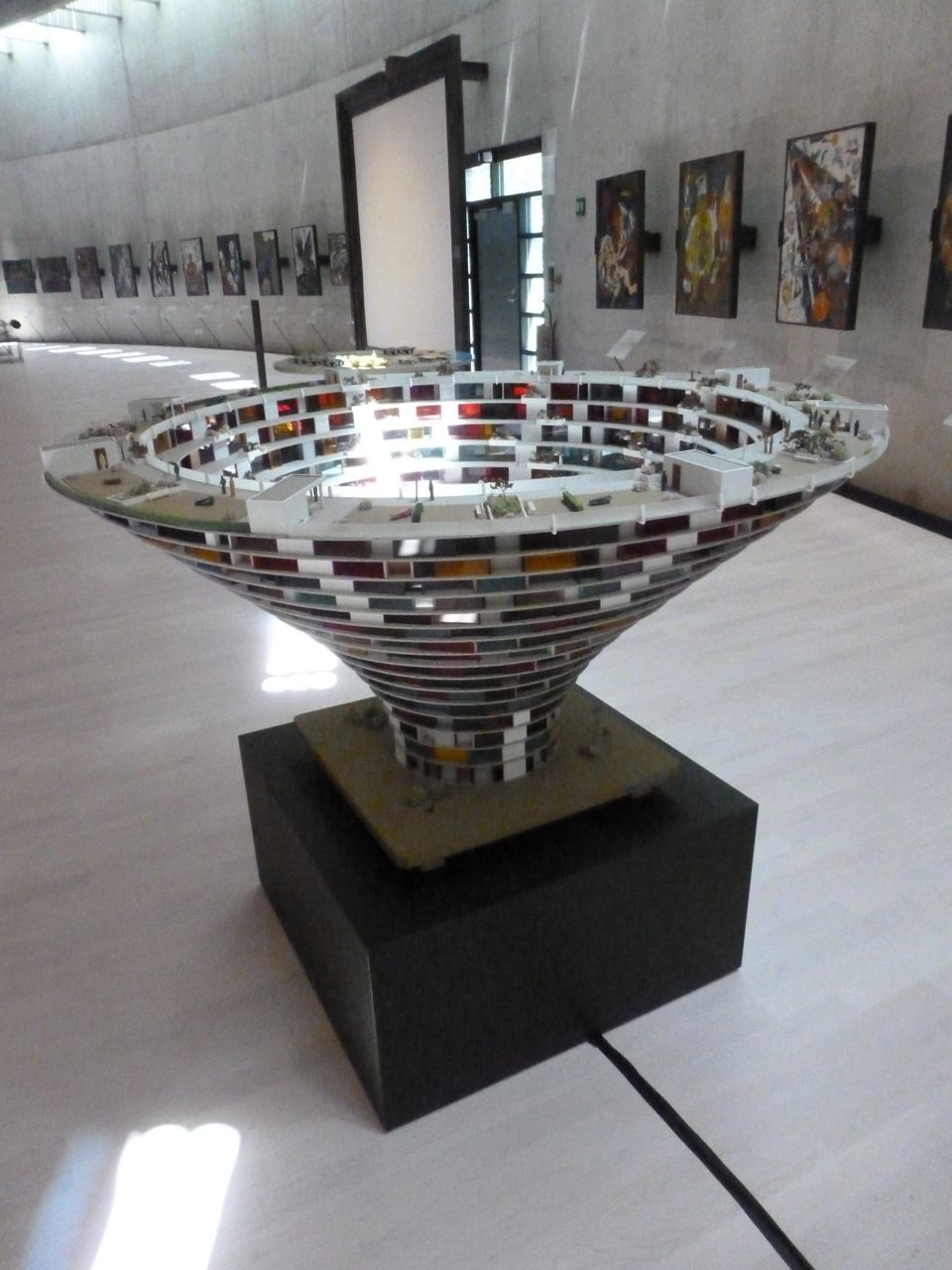
… and the beast into … well, Switzerland portrayed as a Roman Amphitheatre in which lions are eating Christians and the whole works. Either that or sunning on the riviera at Montreaux.


P1230896

I made these images in 2010. When I was there in 2008, this amphitheatre was an image of the bankers of Zurich, being caught at a transaction they wanted to keep secret. The maze and amphitheatre was the frame of the image. In two short years, the curators came up with the improved version above. Here it is below (notice the maze of images that surround it. The whole building is the Minotaur’s lair.)P1230894


The thing about Dürrenmatt’s play is that he fills the stage with mirrors so that even the audience cannot tell which image before them is the minotaur and which is a reflection of it; one might want to slaughter it, but where does one strike? Perhaps the image slaughters the self. Dürrenmatt was concerned with issues like this. He took protestantism more seriously than protestantism. P1230755


His radio play “The Accident” is perhaps most indicative of his method. In it, a travelling salesman suffers a car breakdown in a remote mountain village, on his first day on the job. He is directed to a villa, where a retired judge from Zürich (a foil for Dürrenmatt) and his friends are having dinner. The judge agrees to put the salesman up for the night, in return for his participation in a gentlemanly game. The salesman naively agrees. The game is an interrogation, in which the judges (retired) get to ply their trade by interviewing their guest (the salesman), on the principle that everyone is guilty of something; one only needs to find out what it is, and then absolve the person through sentencing. Well, I won’t give away the plot, but suffice it to say that the salesman’s secret is found, judgement is passed and then trifled with, and ultimately the audience leaves the stage under judgement itself, to argue the nuances away within society, in the bars and night cafés of Zurich. Every one of Dürrenmatt’s plays is a trial. It is the audience that is put on trial. There is no absolution. It is all quite shocking and, for a non Christian, exquisitely Christian, but you see, Neuchatel, where Dürrenmatt lived, actually is home to the minotaur. Sure, the guy is Dürrenmatt, but he is also this (well, androgynous)  guy:

standing


We are looking to what is perhaps an 8,000 year old Stele, carved several thousand years later by the Celts (who are the Swiss). This story of a beast becoming a man, which is the human story, takes place in Neuchatel without a break. For Dürrenmatt, a quintessential Swiss, civilization is a process of taming, which sometimes is a process of caging, and when you do it to yourself… what then? Why, you deflect it upon your audience, and send them home to wrestle with the mystery that cannot be resolved. That, I offer, is Gunnar’s story. All that’s different is that he has come to the story before the Second World War, and Dürrenmatt came to it during it, and Gunnar came to it from Nordic prehistory, while Dürrenmatt came to it from Swiss prehistory. For both of them, protestantism was larger than the church. It was  kind of defiance in and of itself — and not necessarily of a negative kind.

Next: Gunnar’s Bind

Alchemical Coffee at the Cloister Farm

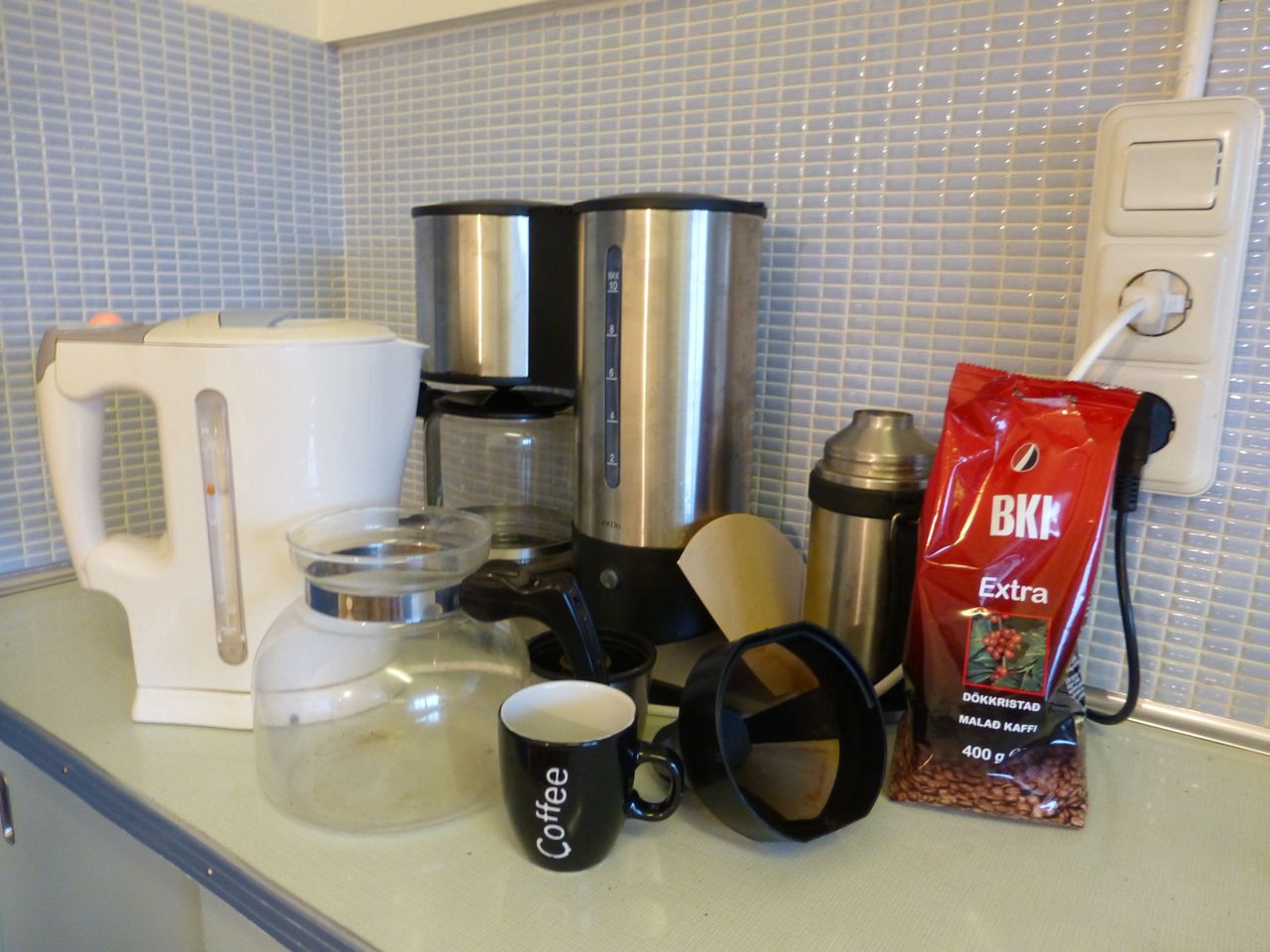
Ah, for the writer who has it all, a dream month in East Iceland and all that Icelandic Light, when the weather breaks and it’s time for a dash to the sea in a Japanese car so small that it fits on half the width of an Icelandic gravel road but which is no good in snow or wind, what one needs is an early cup of coffee before heading through the narrow dark line cut through the drifts to the sea. This, my friends, is not what you might expect, and demonstrates some of the improvisation I have learned from Iceland in my time here. Let me lead you through the ritual of matins:

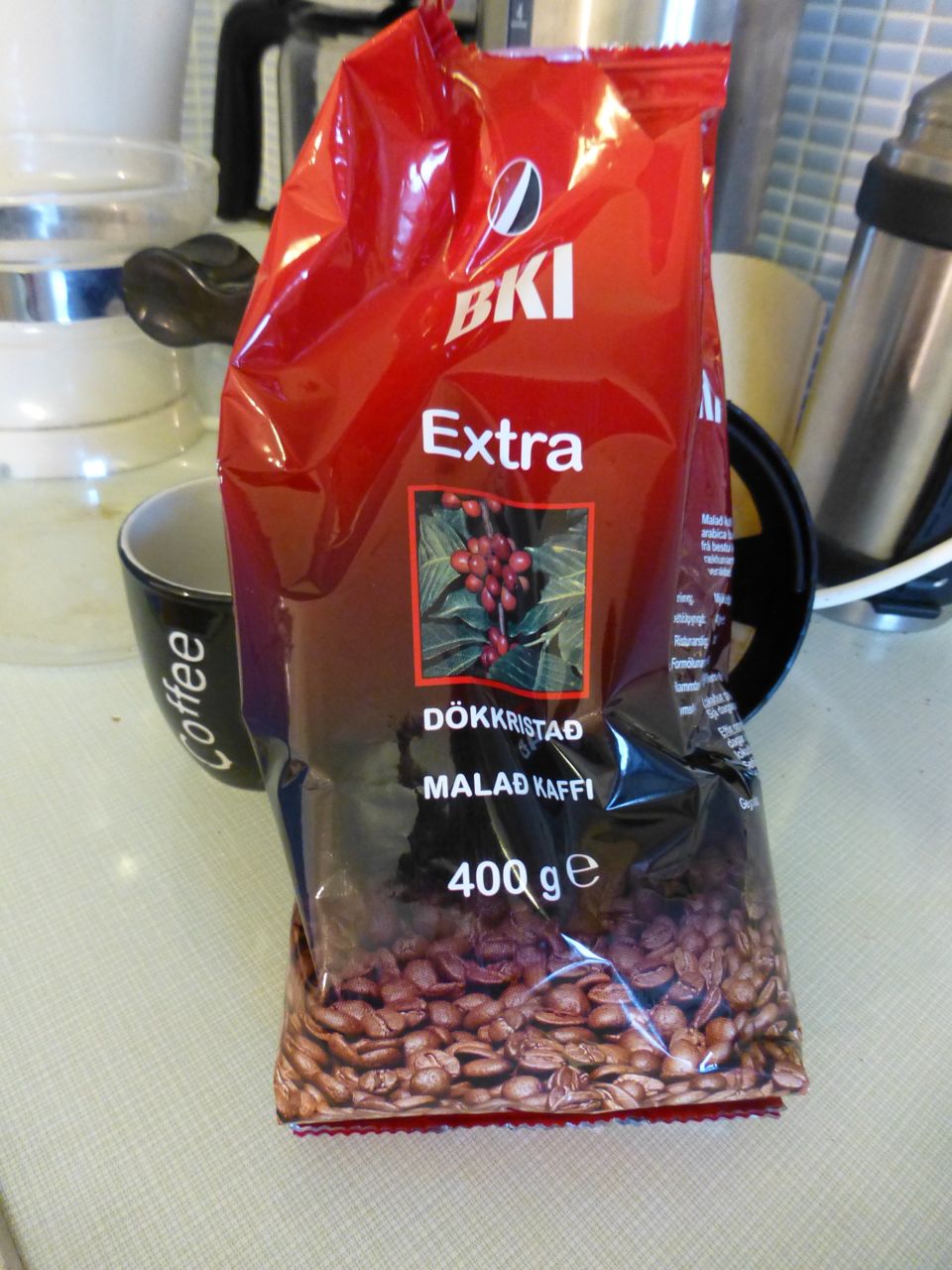
1. The Beans.

P1430824


Only the Best that “Plus” has to Offer Will Do

The body is a spiritual vessel, remember. Spare no expense. $8 instead of $6. You must.

2. The Sacred Tools

P1430818No! Don’t Touch That Thing. It is There to Deceive!

Well, actually, it needs a diaper (Third drawer down. You’re welcome.), but it’s your choice: pour in 12 cups of water to get 4 cups of coffee… and where do you think the other water goes, hmmm? Your socks will find it.

3. The Choice of a Lifetime

P1430822Oh, oh, oh, oh, How?

Spiritual choices are not supposed to be easy. And look at that cup. What a tease.

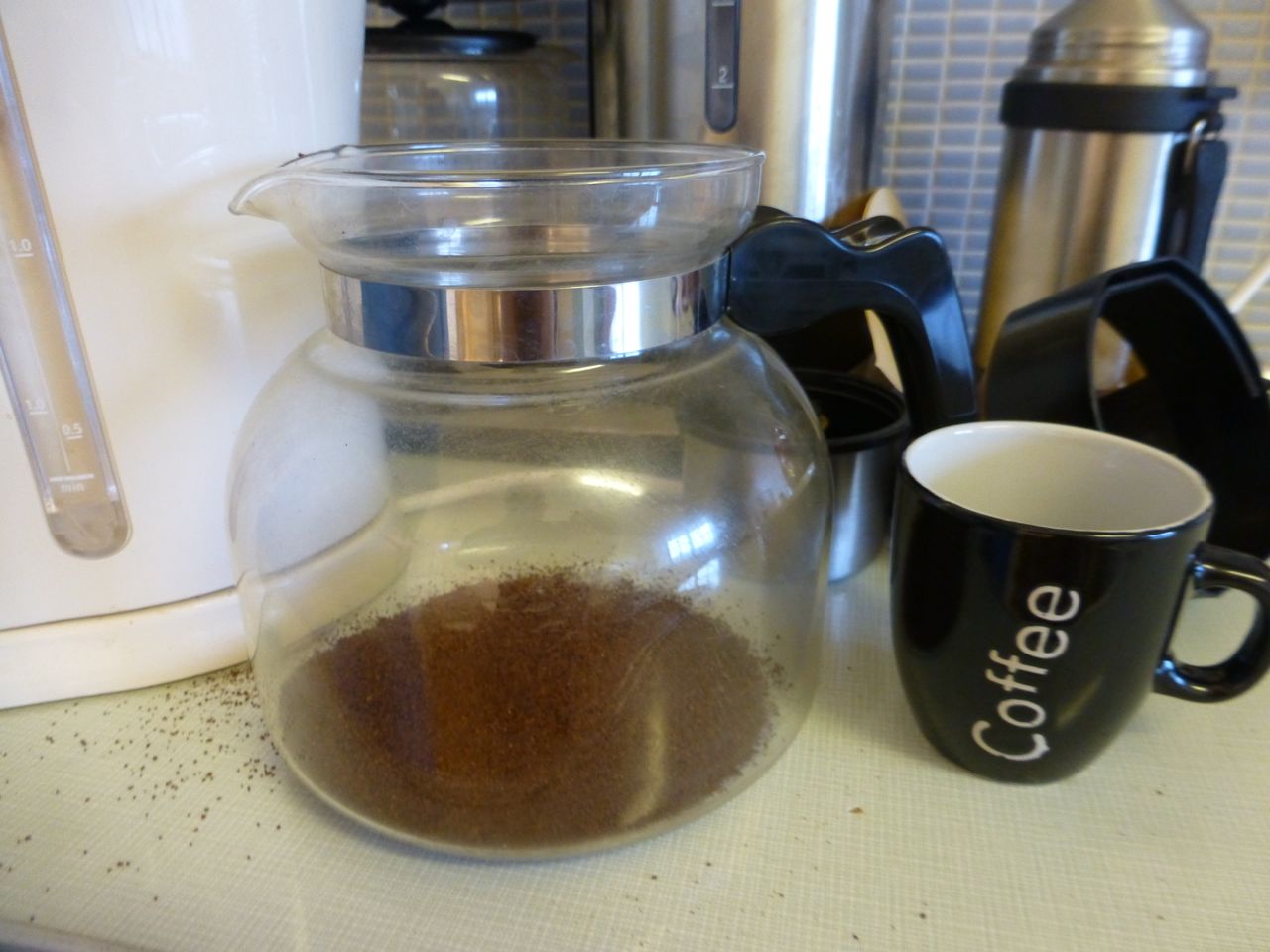
4. The Choice

P1430828This is a variation on the Norwegian Coffee on the Back of a Canadian Stove in 1931 Method Perfected by My Grandmother, Who Was Only an Honorary Norwegian, But When You Were Starving You Were Starving, so You Look Like You Need a Cup of Coffee, Dear.

In the original method, a few drops of cold water settle the grounds and you are there! But, it proved to be rather lukewarm coffee, so… improvise!

5. Add the sacred Icelandic waters…

P1430830

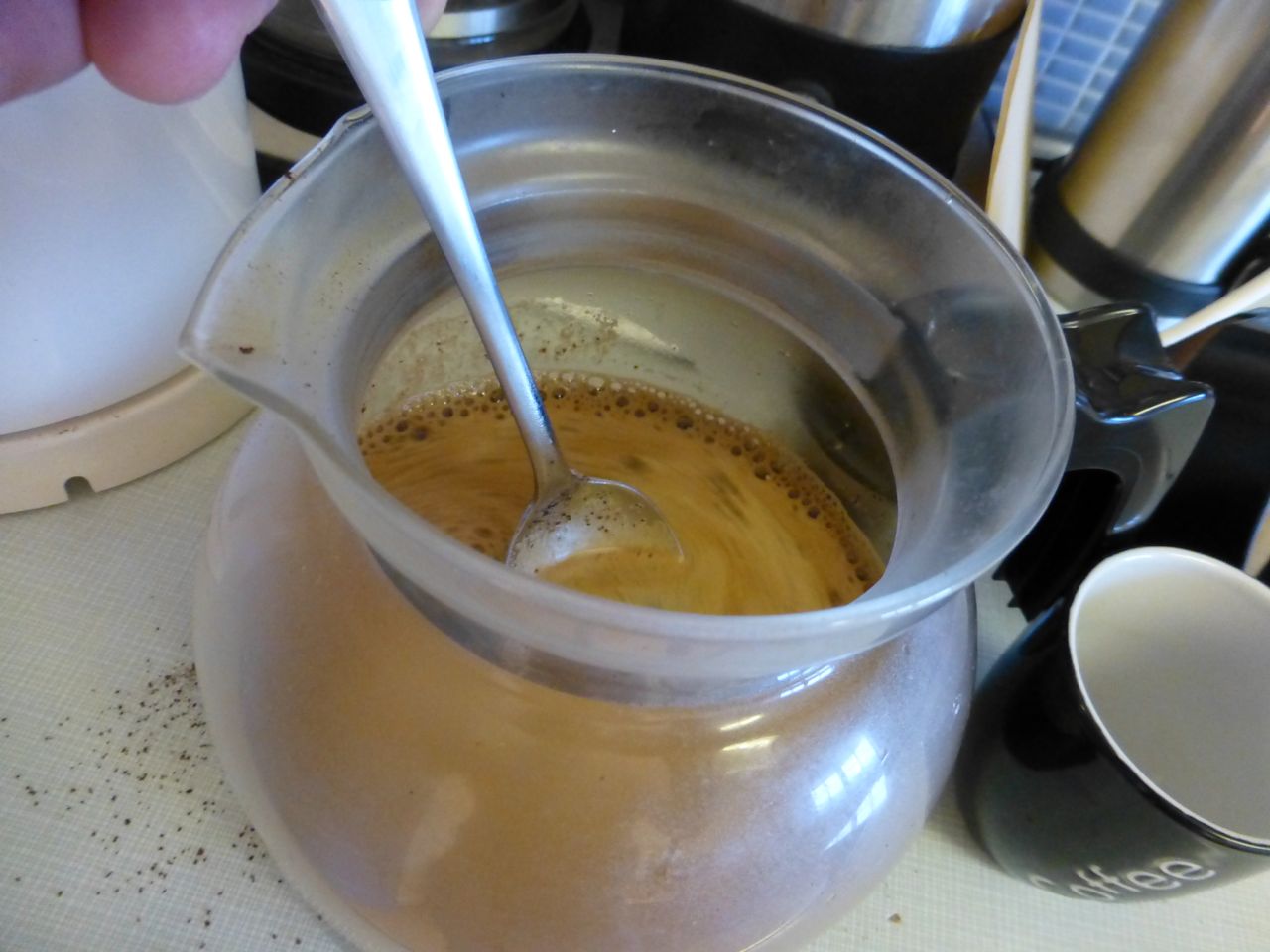
6. Do what Earth does when she spins wool and fate…

P1430831

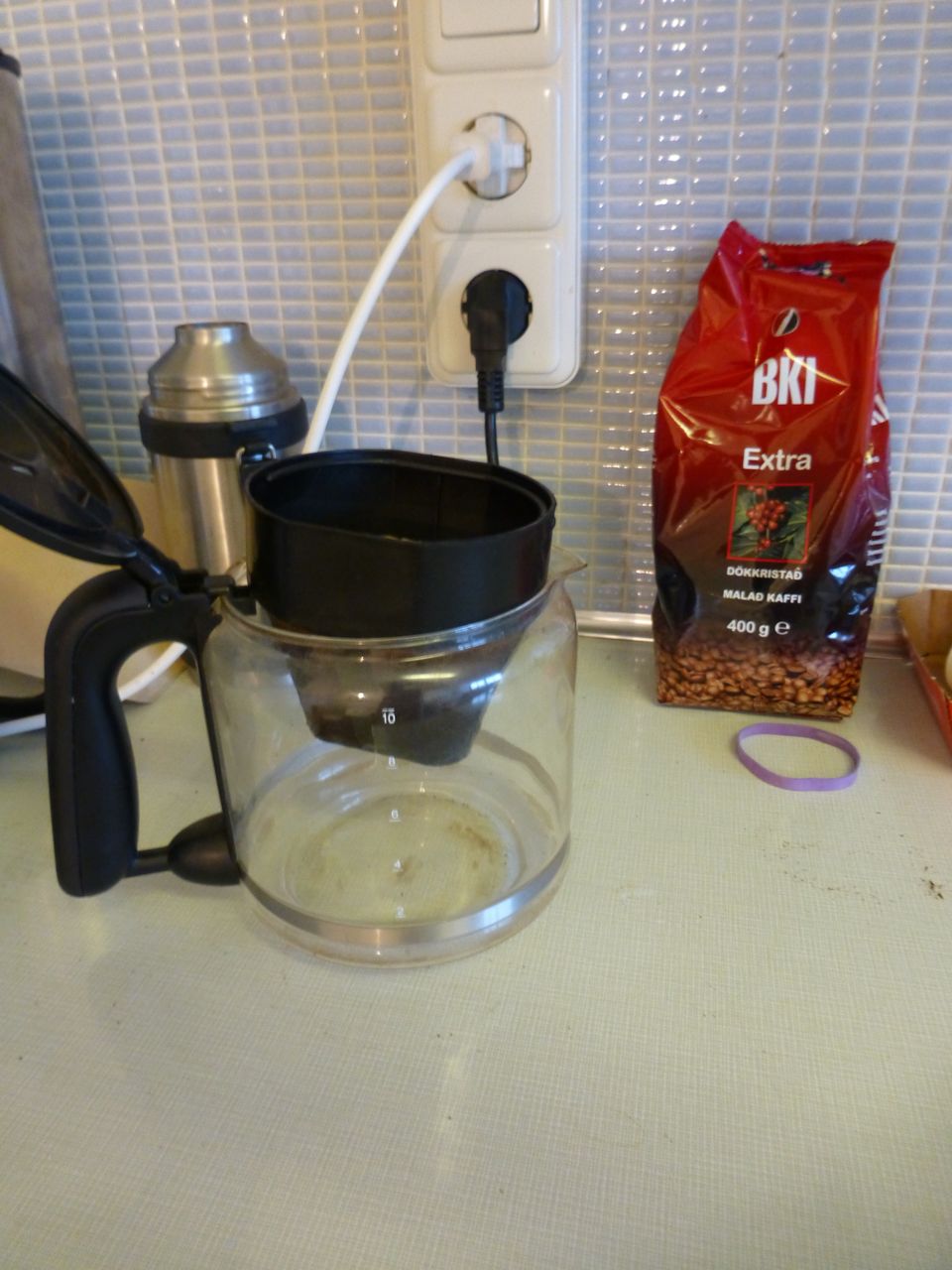
7. Attach A Fancy Fishing Net Kind of Device to  the Other Coffee Pot…

P1430832Well, it’s a bit of a strain and a shaky balance. You’d think it was meant to go in that temptress of a machine in the back or something. Be firm! Be resolute! Have faith!

8. Now for the Alchemy …

P1430834

9. Now for Some Technological Suspense …

P1430839

Is That All?

Wasn’t I promised Extra? Ah, you were, but look at the steam! That’s nice. Warm, like. 

10. The Great Pour

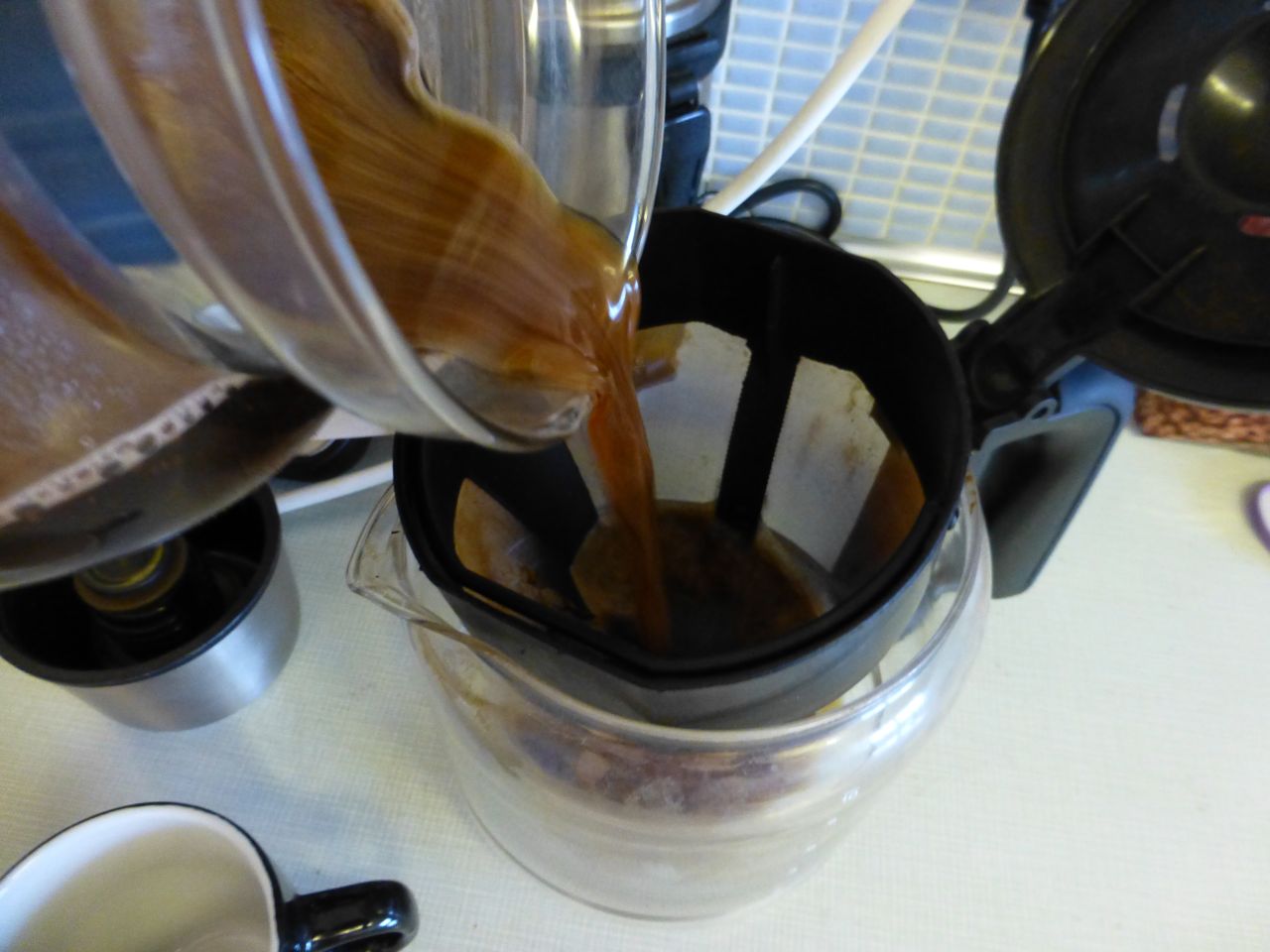
P1430841

No Starbucks Barrista Could Do This For You.

For this, you have to come to Skriðuklaustur, where every day your learning begins.

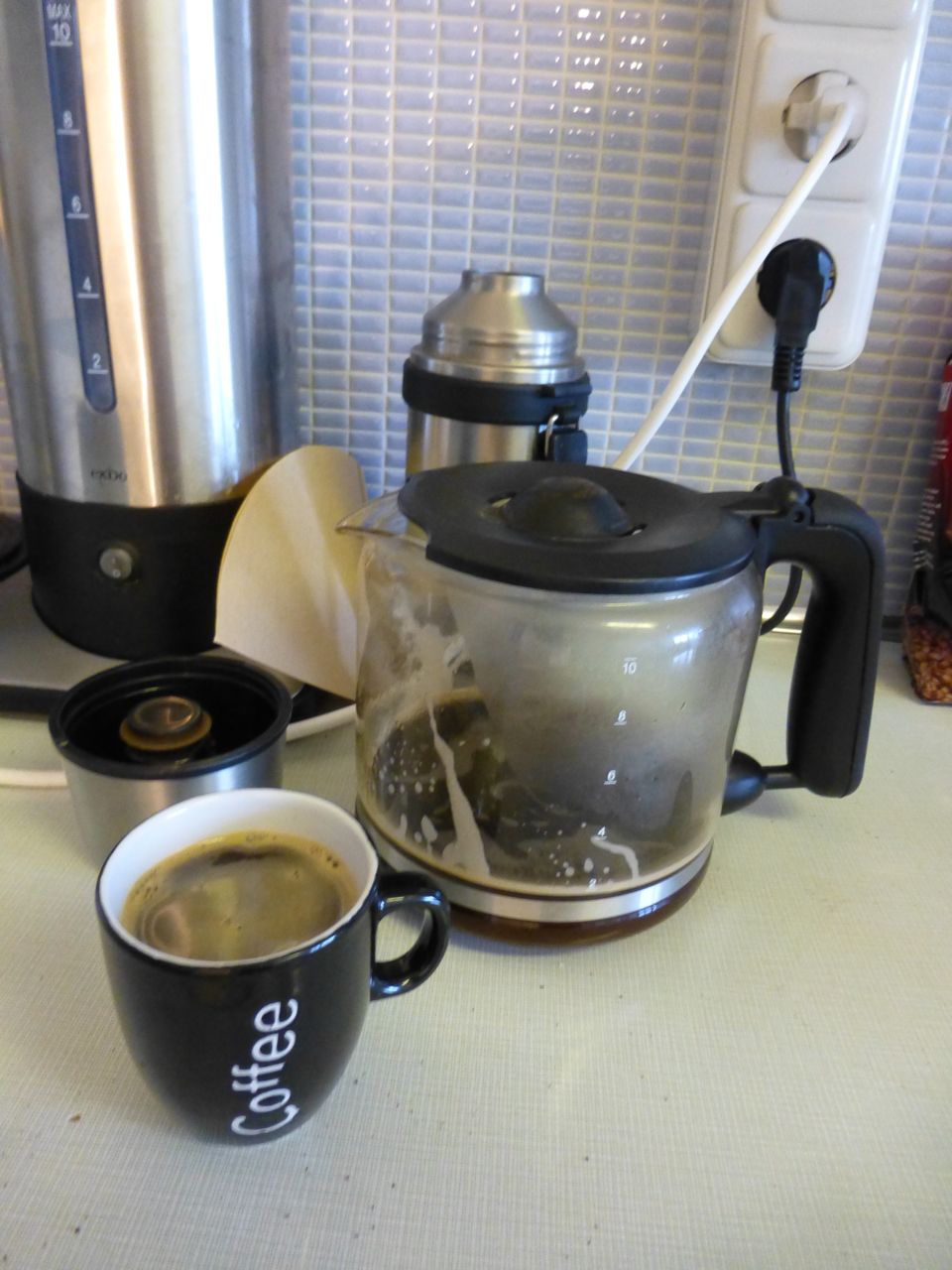
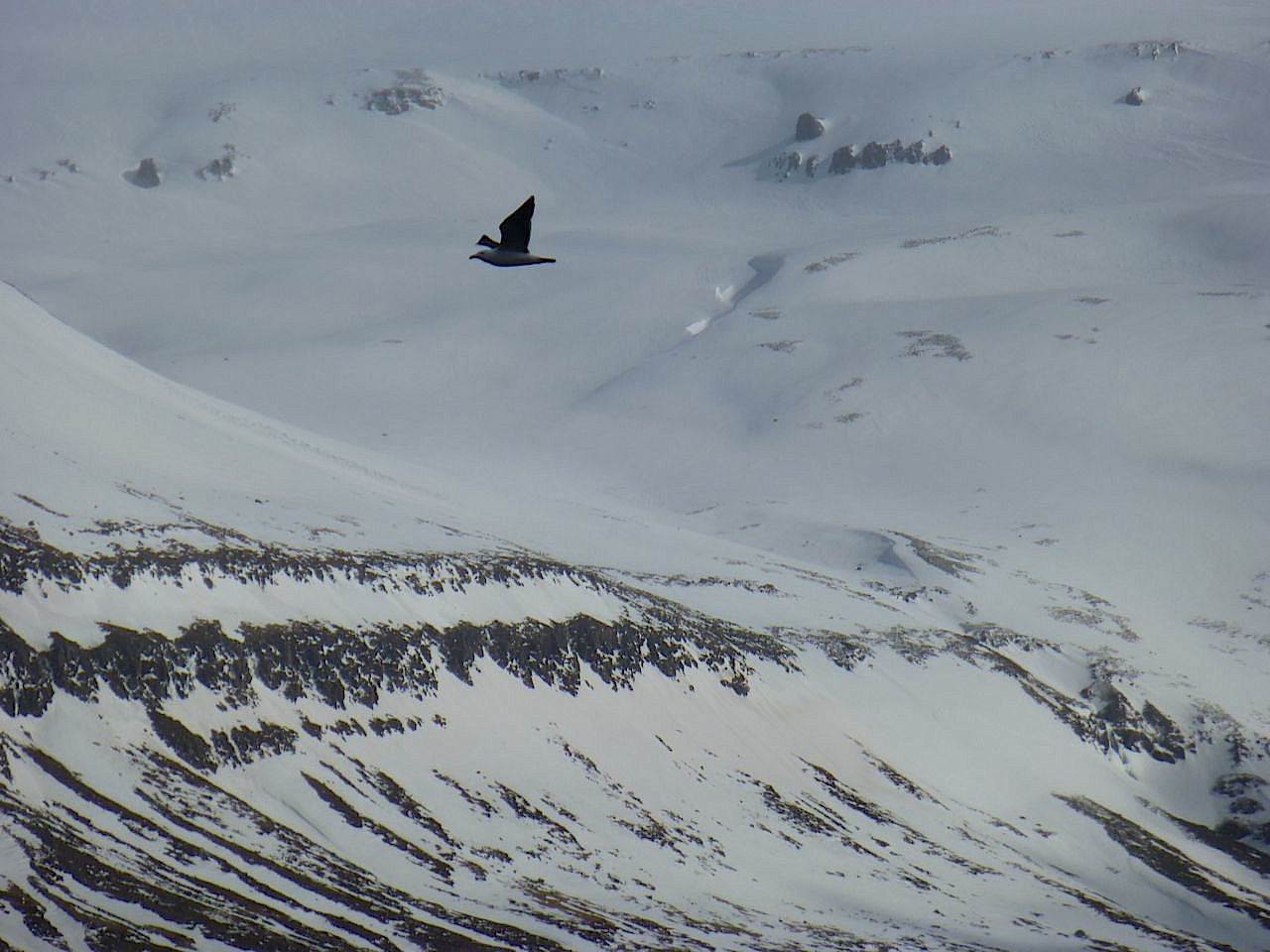
11. The Moment of Truth…

gullYou Made it to the Sea!


Day to Day Life at the Cloister Farmhouse

Right now, Skriðuklaustur is haunted  by a Canadian who spends his days hiking and meditating. Fantastic! But what does that look like on the day-to-day level, which was so important to farmers and monks? Here, for the first time, an inside view of everyday monastic life at Skriðuklaustur, Iceland — not the hiking, the meditation, the research, but the caring for the body, the Skriðuklaustur way! In the morning we can talk about the fantastical technical arrangements and clever (well, you be the judge) solutions for making a kind of alchemical coffee, but right now, dinner! Here’s the flowery decoration that brightened up Easter so, gone a little long in the tooth …

P1430811

The Blossoms Have Grown Roots

Hey, that’s cool. Easter is about springing forth and all. Those are rocks I borrowed from the lake, so I could talk to them. Oh, wait … no talk about meditations!

And here are the spices, also, ahem, a little long in the tooth …

P1430813Sweet (?) Basil Ready for the Pan

There is a 2 page set of instructions for sorting and recycling everything that passes through the kitchen, and it seems to mean business, so when my basil when, ahem, a little, well, let’s say “old”, in its really poorly-sealable but  oh-so-recyclable tray in the fridge, I let it keep the willow company, and now look at it! All grown up and ready to crumble into the pan. Um… the plastic goes in … yeah, tub 3, that’s it. Done.

And now that your mouth is watering, here is the main course, the famous aðalréttir of all Icelandic menus, ta da!

P1430815

Chicken and Pork Gunnar

When the store is 45 kilometres away, creativity is more in what you do with the fridge rather than what the store has to offer.

Recipe:

•Come back from hiking at 5 pm, think about dinner. Remove pork chop and slip into the 1000 year old Viking-era microwave, which has one setting: grill. Grill to thaw. People, when it’s your turn to stay here, try 30 seconds.

• Salvage what one can of the pork chop, mourn, and add a frozen chicken breast. Do not even think of touching that microwave. Put the chicken on top of the nearly-smoking pork chop, to thaw that way.

• Make tea. Drink the tea while congratulating yourself on your resourcefulness. Return. Slice the slightly-thawed chicken, mix with the pork scraps.

• Dice an onion (you bought too many, so use the whole thing), dice 3 garlic cloves (the previous writer bought too many, and there’ll be some for you, too, enjoy), melt some Icelandic butter, sautée the onions and garlic on super duper low on the big burner of the stove. Do not rush this step. Go read a chapter of a book. You get a knack for this after the first time, when you had to open some windows quickly, and you can smell the exact moment on the air when everything is just perfect. Saunter in.

• Add some chopped up parsley, because, well, it’s not enjoying the fridge anymore, and some mushrooms, because mushrooms are really cheap and high quality in Iceland, who knew, and that basil, yes, this is her time!!!! Then add the chicken pork mixture. Stir a bit. Add some cream (this is Scandinavia, and a former Danish colony, to boot, so… without cream, it’s not considered a foodstuff. Simple as that.) Add some frozen peas. Put a lid on all this. Go off and answer ALL your emails, and download and sort the pictures you took today.

The Side Dish

Here are some of the amazing arctic potatoes from Akureyri. The smaller they get, the better. No sense trying to cut off the warts and little blackened frost-got-at-them bits … they don’t appear to affect the flavour, and they are all otherwise as clean as if they had been pressure-washed by a fishing boat scouring apparatus… which, given the Icelandic respect for re-use and re-cycling, is probably the case. But what beauties they are…

P1430817

Potatoes All Dressed Up

They taste a bit sweet when boiled (last fall was tough on potatoes in Iceland), so I hit upon this method: when the feta cheese in oil and herbs you can pick up beside the smjör in the grocery store is all gone and you have to find something else to dress your salad with, well, there’s oil left, right, with spices in it?  That’s the Skriðuklaustur way! Into the oven for 40 minutes they go!

A little freshly-grated sea salt helps, because this is Iceland and here salt is a spice much like cream is in Denmark, and we want to be good guests. And there you have it…fridge hygiene restored, staying on top of the recycling, and when you come back all leisurely and what not, with your pictures sorted and your email mailed or deleted and a chapter of a book read, dinner is delicious. In fact, just between you and me, one could serve this in Reykjavik for about 4400 kronur, but only if you had fresh flowers.

How to Say Hello in Icelandic

Sometimes travellers haven’t quite managed the Hae! or the Góðan daginn!, and for them Icelanders have a secret welcoming code, revealed here for the first time, ever. Here’s how it goes, step by step. At first, everyone is snoozing with their buddies…

P1400905

Sweet Morning Dreaming in Fljótsdalur

Sleeping in at 8:30 a.m.

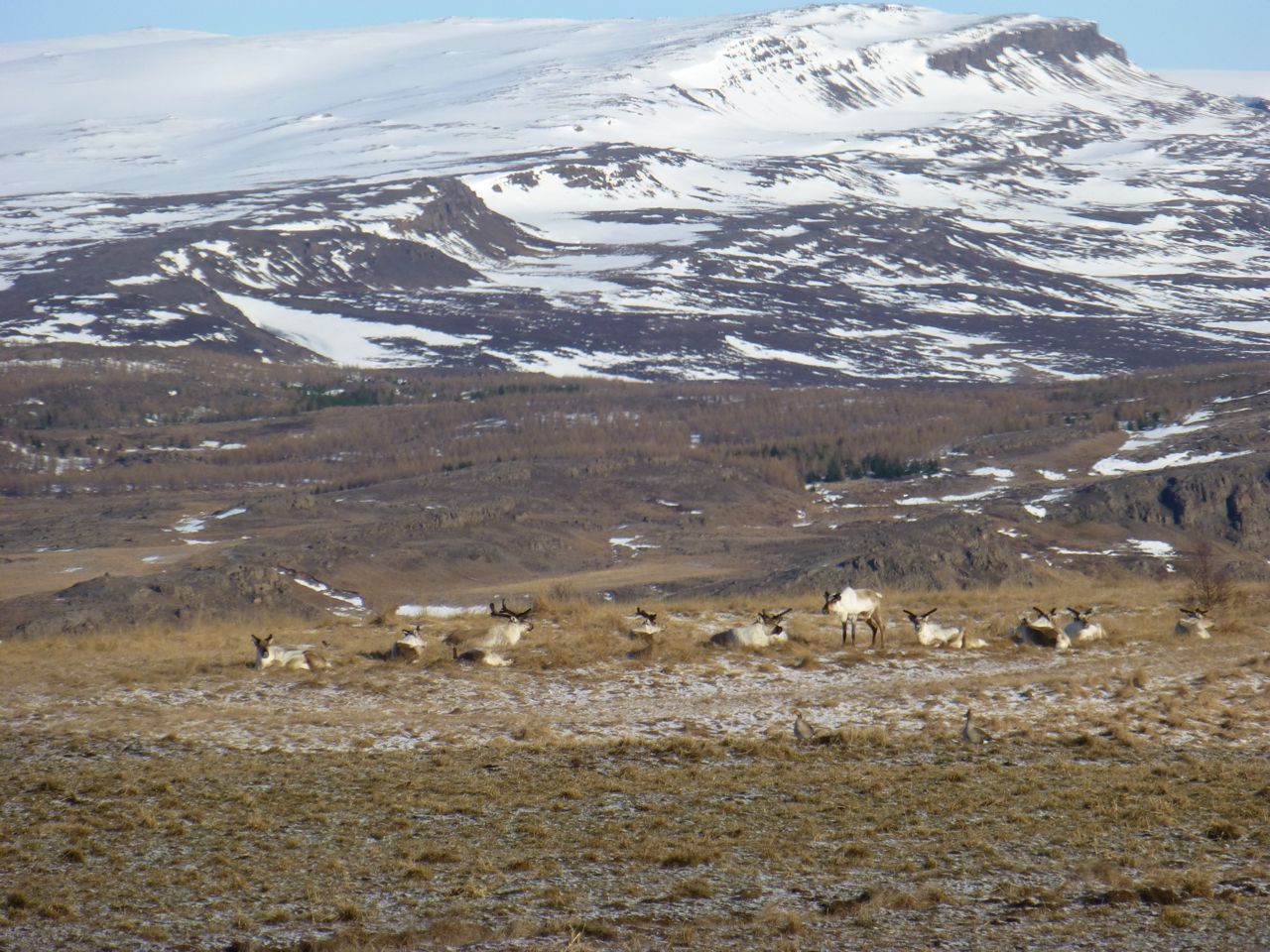
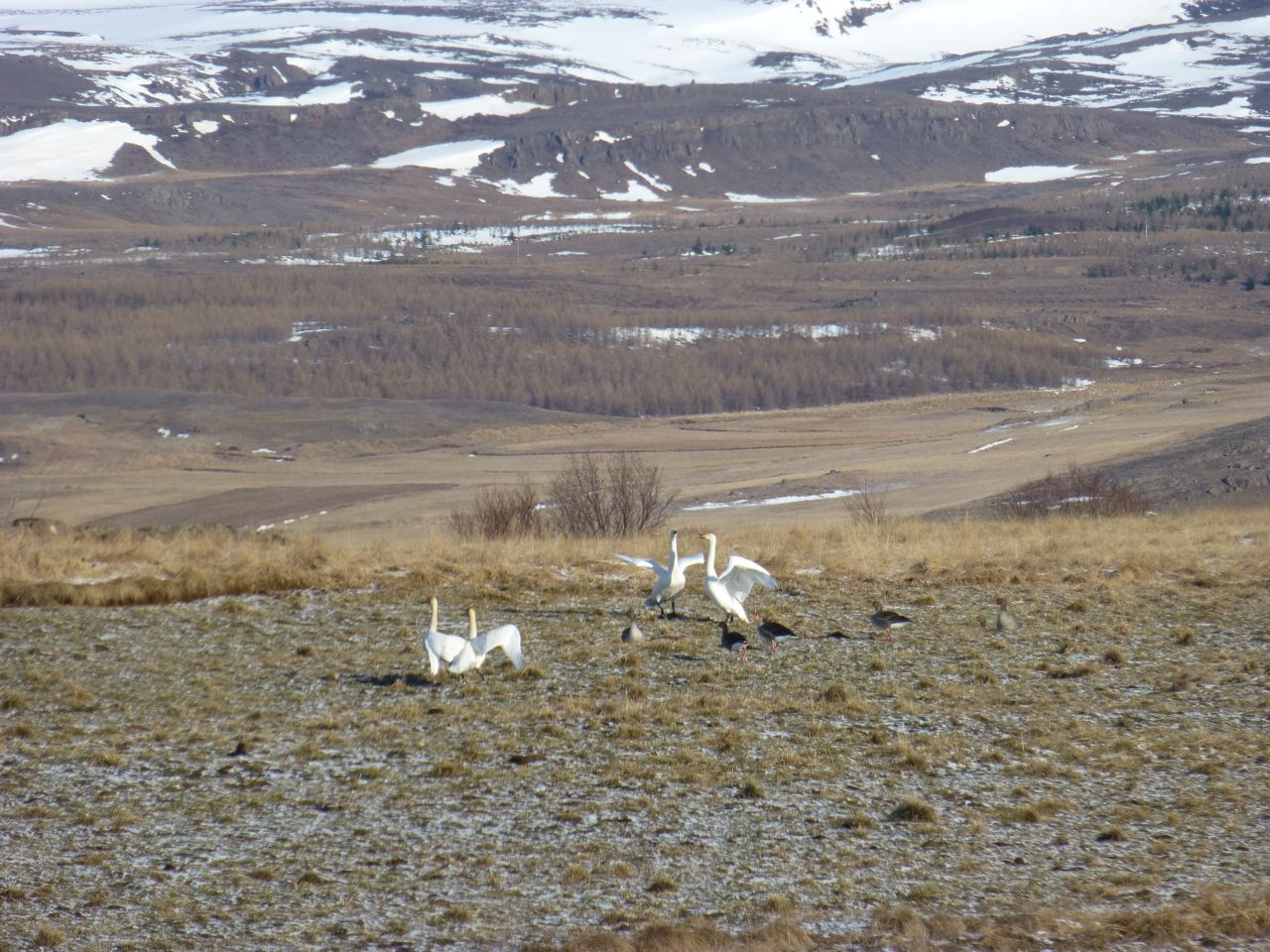
If you didn’t get that, it’s the reindeer people …

P1400911

and the swan people (and their goose comrades) …

P1400906

all zonked out together in the same quilt. But will it last? No, it will not. A traveller has come, and needs a proper greeting …

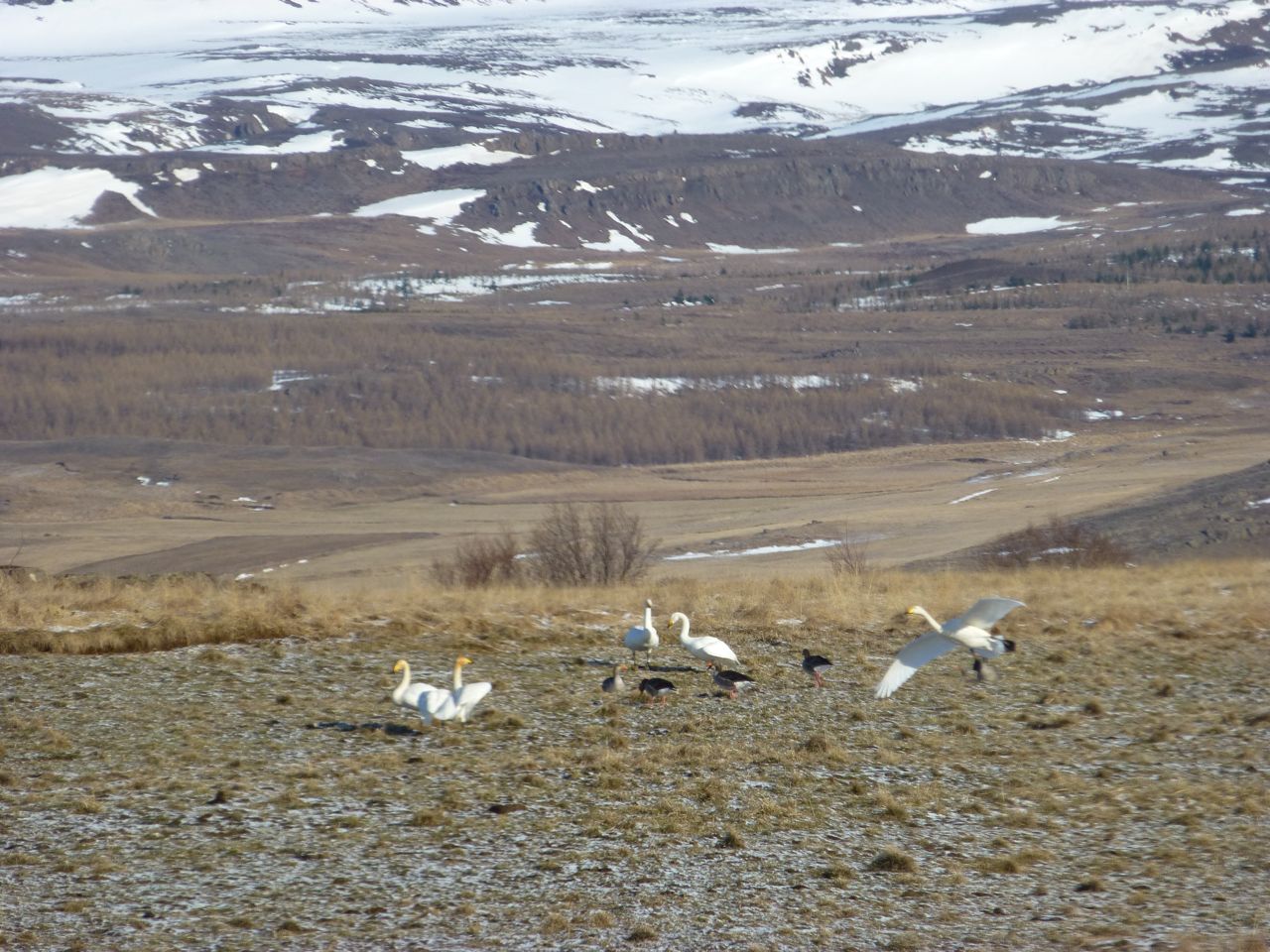
P1400913 At first, a little face to face and then …P1400914…some tra la la and then some honking ….

P1400919 … and then a little bit of confusion because the hosts don’t know if everyone is going out for a nature safari or settling in for breakfast …P1400920

… and then a bit of a gangly entrance (with honking) …

P1400921

… getting more coordinated (more honking) …

P1400922

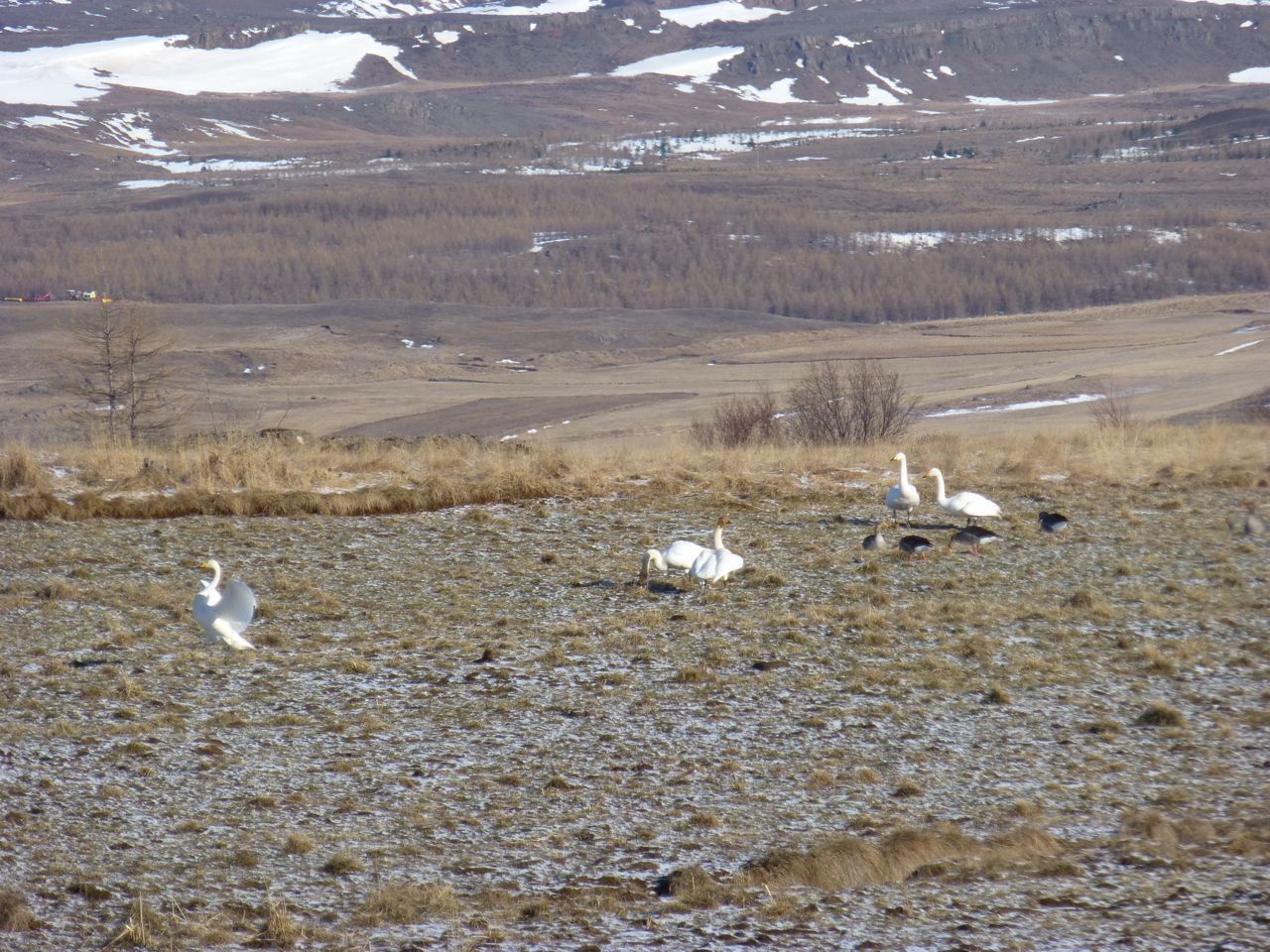
… and, oh, nicely done (Honk! Honk! Honk!) …

P1400923

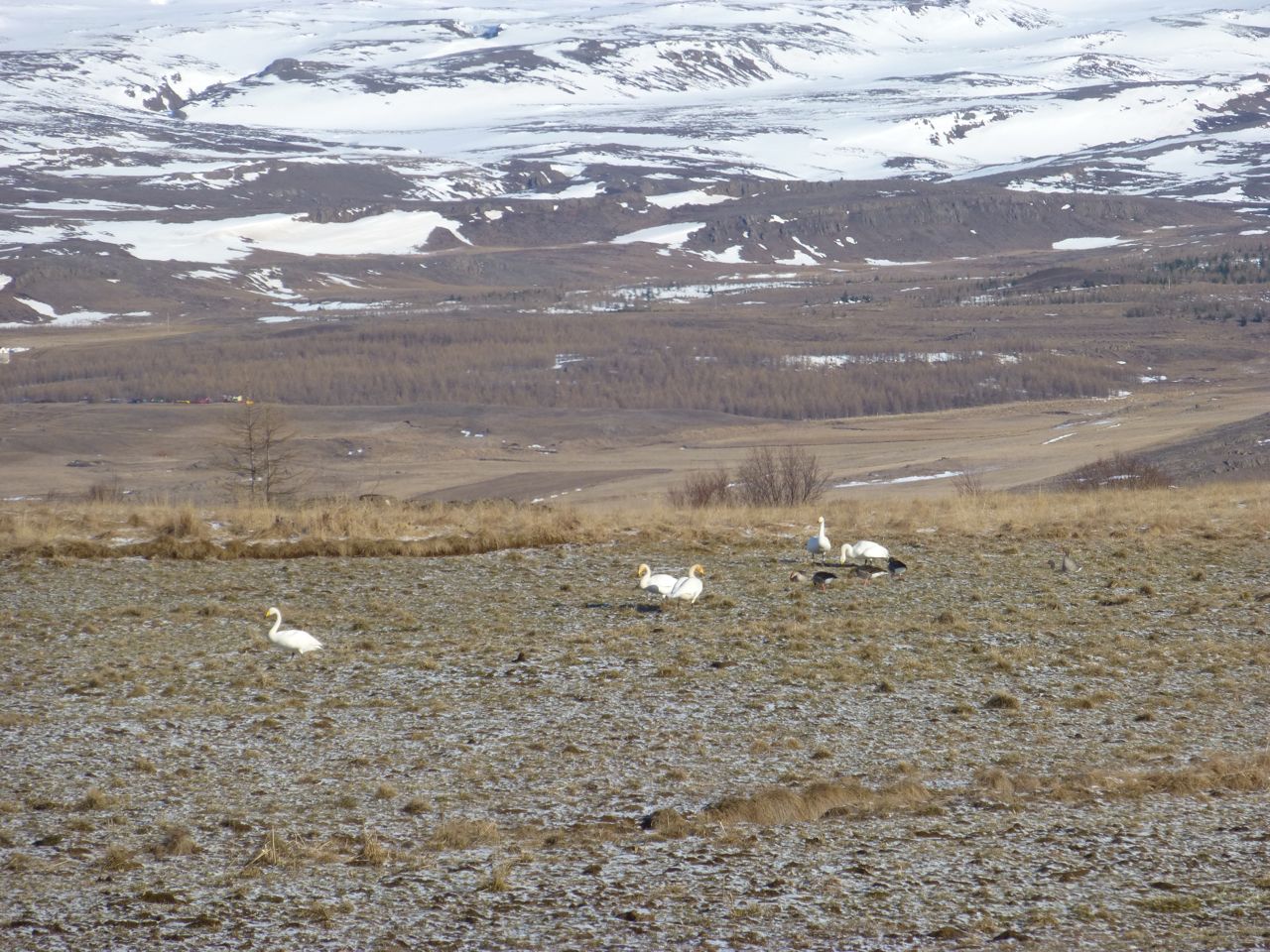
… and everyone settles down in the lovely quiet of the morning to pick at the frozen ground, together, that’s the thing, to – ge – ther…

P1400924

… well, except …

P1400983

… Oh, rats, all that woke the neighbours up. The neighbours have some thoughts about that …

xingGóða ferð!

(And that does not mean hello.)

Gunnar Gunnarsson Secret Agent: Part III

Today I’d like to walk around within the country shared by Modernist Icelandic Writing and Hamlet, which should be fun. I’m also going to try a little experiment in adapting modernist Icelandic literary method to the journey as it unfolds. First, though, I’d like to introduce you to a literary movement and historical period called the Icelandic Enlightenment. That’s a term I coined this morning, to describe a kind of ongoing clash of worlds that followed hard on the heels of the Celtic Renaissance and the French literary genre Surrealism. It looks a bit like this some days:
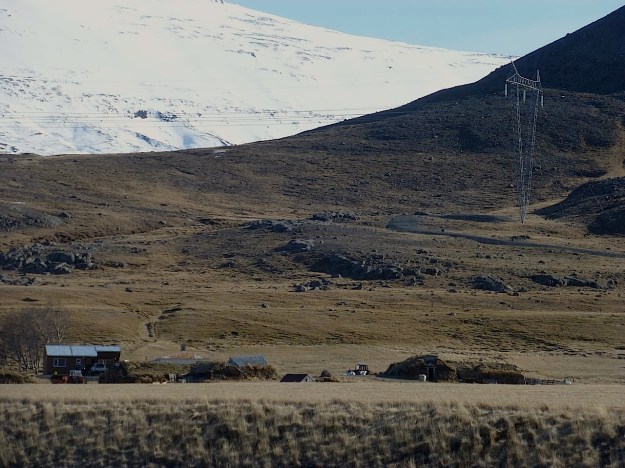
farmwithtowers

Power and Security, Old and New at Landhus Farm

First the sod house, then the enlightened version, the hydroelectric grid, the modernist Icelandic writer Gunnar Gunnarsson, who was raised across the river from this farm, was trying to keep both forms of being in the world both alive.

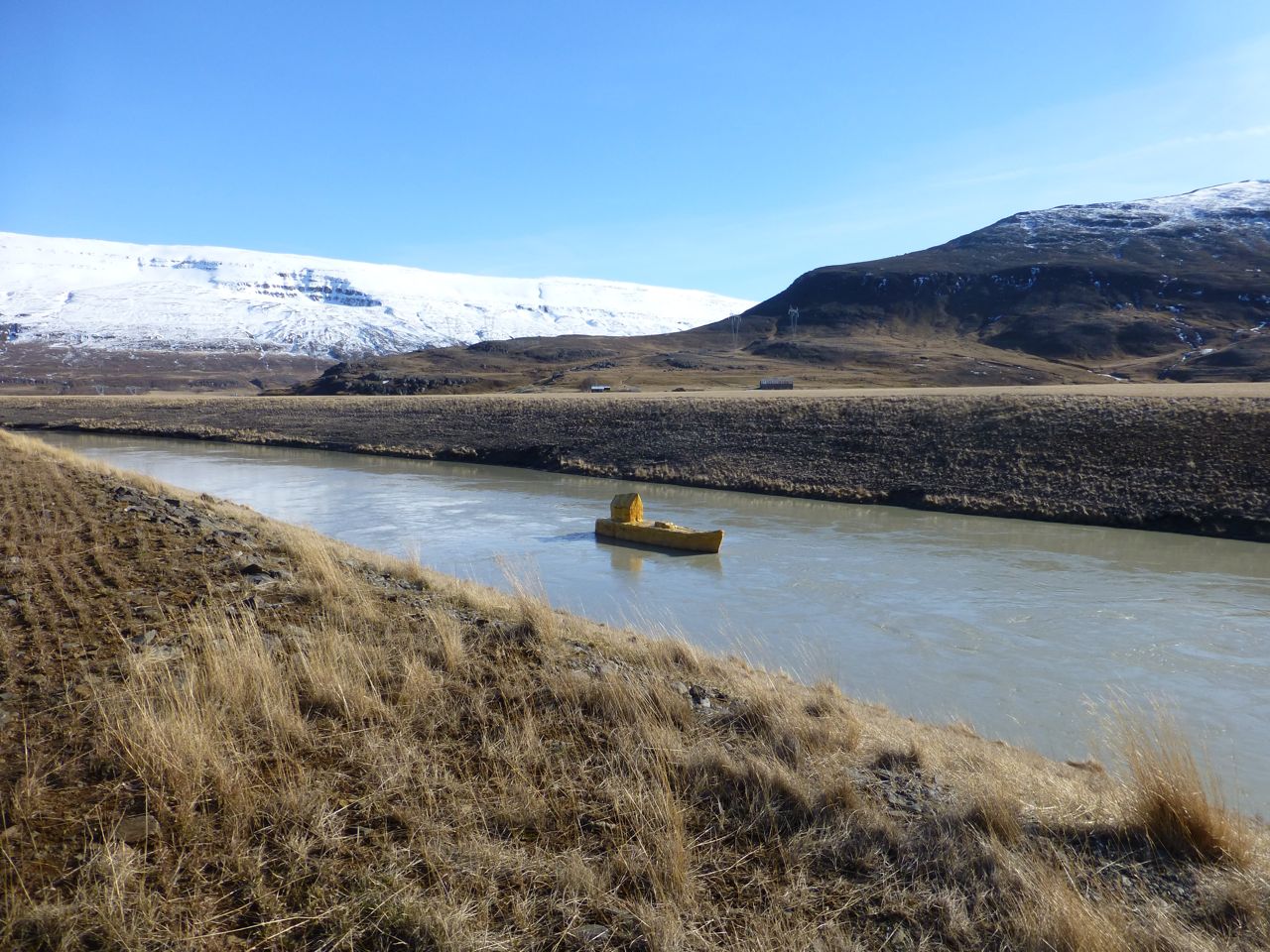
And now, an apology. I wrote river, but in this valley where the lake is a river and there’s no clear point at which the river becomes the lake that is a river, this part of the river is not a river at all but a Penstock Outrace Canal for East Iceland’s controversial Fljótsdalur hydroelectric power station, so I guess I’d better show that to you, too, and come clean from romance …

P1390138

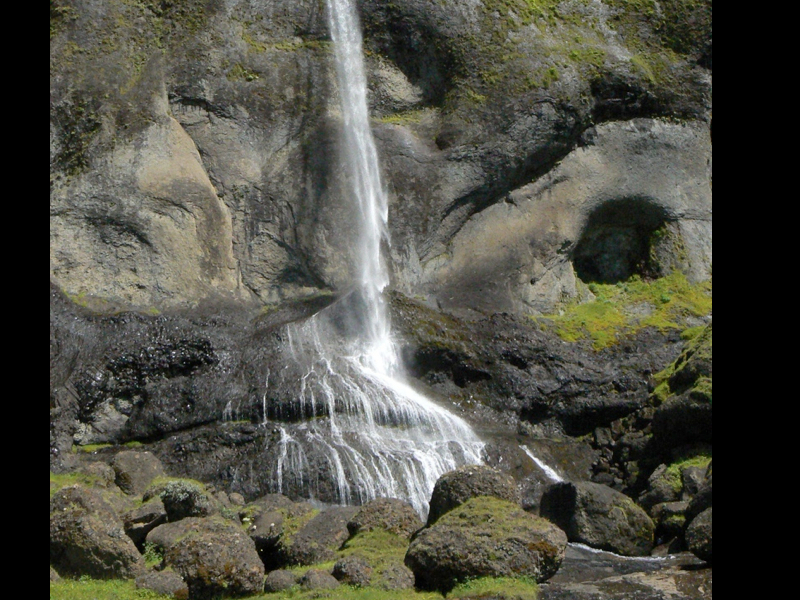
The water, you see, descends a couple thousand metres vertically down through a tunnel bored into the mountain, drives the turbines in the power station, pours out here back into the light, and then, ta da …

P1390139

… into the canal and around this, um, this , ah… well, look …

P1390140

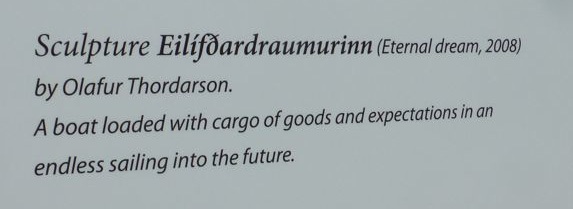
That’s art, that is. A life-sized ship, apparently made out of some approximation of strapping tape plastic-machéd together by techno-sorcery by Olaf Þorðarson, and the whole thing translates into the new Latin, the new commercial trade language of the world, English, like this …
olaf

Well, Almost English.

More like German modernist poetry, really, which explored such forms of atomic compression. More like “A boat loaded with cargo-of-“goods-and-expectations” in an endless-sailing-into-the-future. Nice to see the peoples of Northern Europe coming together in such an unexpected spot for a moment together in the sun. Thanks, Olafur!

Well, and all I wanted today was to tell you about Gunnar and the Nazis, because there’s a story for sure …

Gunnar: (Interjecting.) I was no Nazi! I am sick of people coming to my house in the country and calling me a Nazi because the house has grass on the roof, because my friend Fritz designed it and he joined the Party because it was the only way to secure work, because his design blends North-German, Danish and Tyrolean agricultural folk architecture into a statement about a farmer’s house fitting into the land rather than intruding upon it like a, like a … oh, grrrrrr.

Oh, hi, Gunnar.
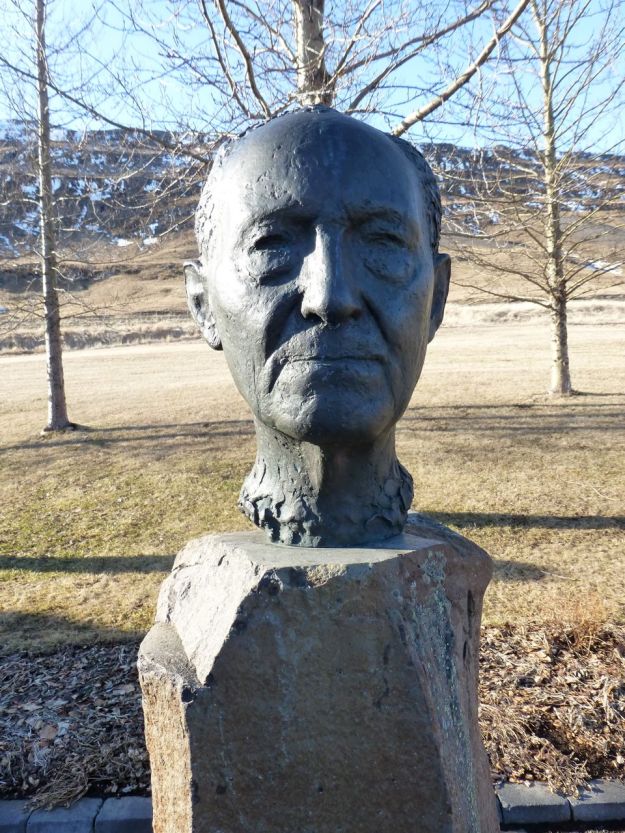
gunnar

Gunnar Gunnarsson, Skald

After that imaginary outburst, he is being a bit tight-lipped today.

A secret agent, even beyond death. Clever.

(Gunnar grumbles inaudibly.)

So … well… that silent battle of wills went on for awhile … no need to bore you with that, but, um, let’s face it. That is the kind of silence one gets when one attempts to talk to the dead. To hear Gunnar better, because I really did wish I could have a talk with him, on his own terms, so to speak, I started translating his book “The Northern Kingdom”, and realized, sheesh, power plants and public art notwithstanding, I forgot to set the scene. I mean, “Icelandic Enlightenment”? I reckon if I’m going to throw terms like that around like spring waterfalls split rocks from their cliffs with a sound like artillery fire…
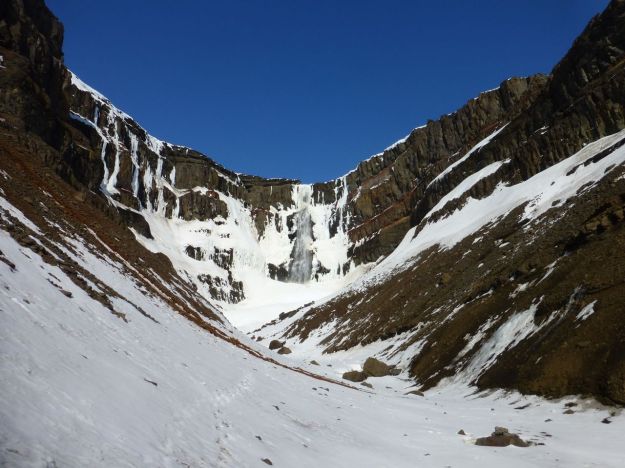
P1380441

Hengifoss, a High Waterfall just up the Road from Gunnar’s House

Soundtrack: Roar…. BOOOOMMM! …. Roar ….. BOOOOOOOMMMMMM! It’s enough to make one start seeing trolls.

…it would be best to show you what I mean. So, to be a better host, and I do mean to make you feel at home here in my grassy house on its grassy hill nestled into its grassy island of Japanese cars in its cold blue sea, here’s another view of that Enlightenment…
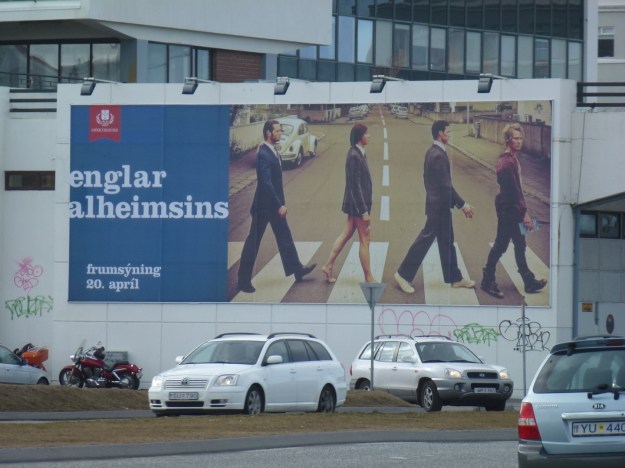
angels

Angels of the Universe, Reykjavik Harbour

None of this old-fashioned monkishness and cloisterly prayer here, I tell you. Actually, I think Gunnar might have liked this. Not the graffiti, though. He would’ve sent a man out there with a bucket of white wash.

So, that was still a bit obscure, darn it, but I’m a writer, just like Gunnar, so, hey, maybe some words will help. Maybe if you could hear a Canadian writer humming and hawing out loud you’d know how things were going with the world today, here in what’s lovingly known as the Northeast, except if you’re on the Faero Islands it’s the Northwest and if you’re on Greenland it’s, um, well…. Oh, bother, we need a writer to sort these things out, that’s what we need. Ah, let me see, yes, here’s that writer, right down the hall here … ah …. yes. Here is is. Um … Harold?

Canadian Writer: (Startling awake from his writerly dreams, or maybe not awake at all.) “The Enlightenment” was the period in 17th and 18th century European history when the human capacity for reason gained cultural ground over the capacity for faith and started to create the scientific world out of a poetic one.

I know, like whew! Get a writer talking and, worse yet, thinking out loud, and words start flapping around like that, and like this, too, I might add …

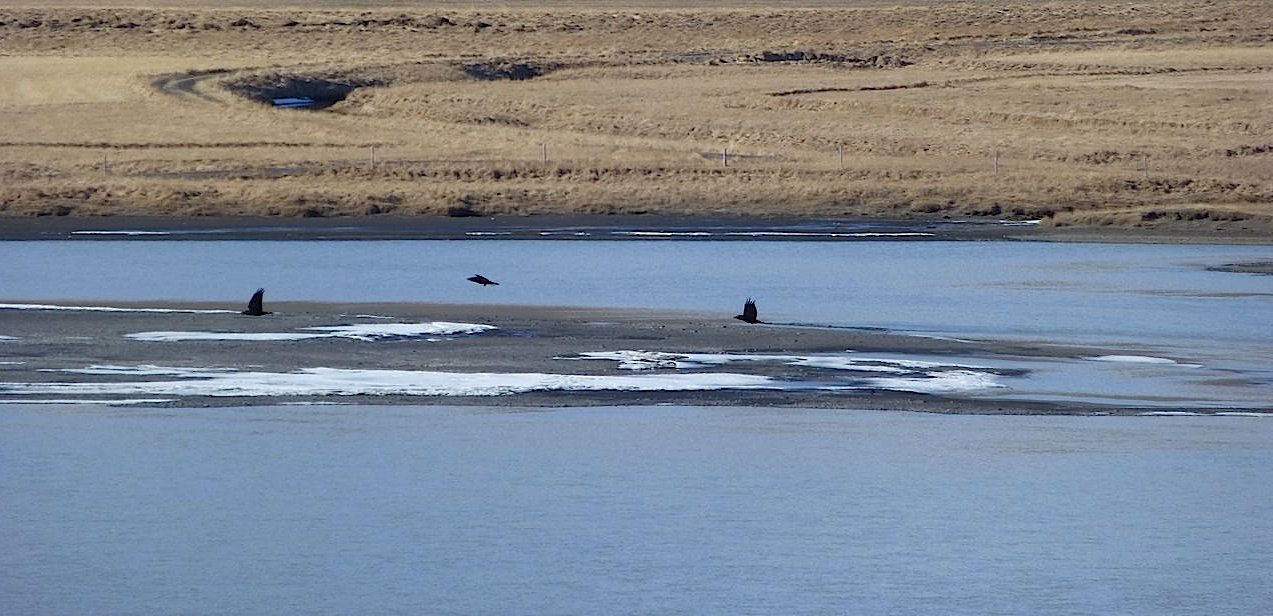
2ravens2

Black Words in the Lagarfljot…

… flying off to check out the sheep folds at the first sign of a writer pulling a camera out of his pocket.

and like this …

Canadian Writer: It was largely a French, German and English business. It hit Iceland late, in the early twentieth century, in the writings of Gunnar Gunnarsson, composer of semi-autobiographical, poetic, political “novels” that brought poetic forms of Icelandic thought into the light — with one crucial difference: this ‘light’ was modernism, not rationalism, as it had been in the original Enlightenment. Big difference, actually.

Raven 1: Aha! You mean, instead of constructing rational, scientific structures for organizing the world based upon the administrative structures of the French court, as did the philosophers and scientific pioneers of the Enlightenment …

Raven 2: Whee!

Raven 3: What a nice day for flying!

3ravens

(They fly off looking for some sheep’s entrails to read. Disappointed, the writer puts his camera away.)

Ah, writers. They’re always wandering off. I guess there’s nothing for it but to continue on bravely without them and hope for the best. As I understand it, denied by the age of his birth the benefits of emerging into a developing culture organized around rational structures, including Science, Mathematics and Engineering, Gunnar was stuck with writing “novels” instead — a kind of intellectual activity that in the post-rational world of his birth and coming of age was most often considered “entertainment” or “fantasy.” Well, actually, most often it was. Yeah. there’s that. Like this 1908 American novel about a girl from a rather hopeless, helpless farm who comes to the, um, big city of, um, God and wins out by her true heart…
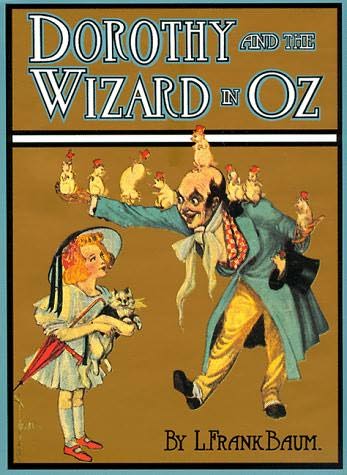
Ozbook04cover

… or this beautiful 1970s German version of the Nobel Prize-Winning 1908 Swedish novel Tösen från Stormyrtorpet (The Lass from the Stormy Croft) about a girl from the isolated poverty of the northern wilderness, who, well, look at the strength in her eyes, eh …images-2
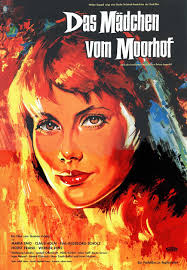
Such was Gunnar’s readership. Not the ideal one for a modernist writer, a man from the Icelandic Enlightenment, but, still, you had to buck up and start somewhere, right, trusting to luck and youth and hope? You most certainly did.
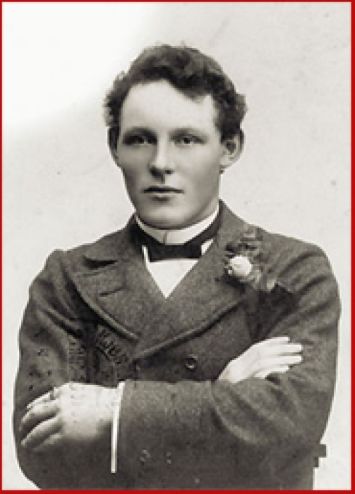
gunnarsogur

The Hopefully Uncertain Young Gunnar

With his big Scandinavian farmer’s hands, newly-planted in Denmark. I don’t know about you, but does it, um, look like his pupils have been inked in by a photographer cursed with red-eye?

Fortunately for Gunnar, it was a foundation stone of modernism (and its revolutionary and energizing core) that these entertaining objects could have political and economic ends, if a man (seemingly, men did this kind of thing) put his mind to it — and it was this that Gunnar was counting on. His contemporary, the American Ezra Pound, was as well. Pound, who was a gifted lyrical poet, was pushed by the catastrophe of the First World War to write stuff like this:

The first thing for a man to think of when proposing an economic system is; 
WHAT IS IT FOR? And the answer is: to make sure that the whole people shall be 
able to eat (in a healthy manner), to be housed (decently) and be clothed (in a 
way adequate to the climate).

Ezra Pound, "What is Money For"

A Very Upper Middle Class English Sentiment, but then, Pound had spent the War in England, and the decade before it, too, where he had gone to discuss Fairyland and the Celtic Renaissance with the poet W.B. Yeats, and had married into this class. I trust you see the pattern …
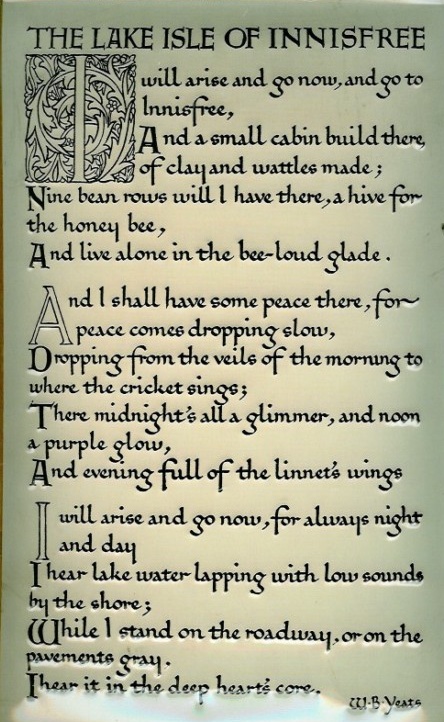
yeats

Yeats’ Dreamy Romantic Fairyland: an Unlikely Start for Ultra-Modernist Poetics

OK, Ireland is not exactly Scandinavian, but it is a green island in a cold sea, and a lot of Irish women, slaves or otherwise spoils of war, were the ancestors of a lot of contemporary Icelanders, so not that distant, really. The romanticism and the romanticized renaissance of ancient land-based ways of poetry and spirituality is, however, very much the point, indeed.

Pound’s new father-in-law did not approve of his new son-in-law’s poetic dandering around. Lawyering was more to his taste, but, still, he loved his daughter, and so did Ezra, so they were stuck with each other, circling around each other like cocks in a betting pit.

l

Dorothy Shakespear Pound

The last of the those Nordic fantasists, the pre-Raphaelites, before the World Went All to Hell.

Pound and Dorothy used to sit before the fire, where Pound declaimed his poems and his enthusiasms and a lot of spiritual stuff about jewels and the love poets of Provence and such like. They went off painting watercolours together. She was quite good at it. He fussed about, trying to get his palette mathematically perfect. Eventually, he came to hate her. Irony of ironies: later, when he was declared insane (Fascist sympathies were, by the logic of the American 1940s, insane.), she was legally declared his keeper.

Raven 1: (Flying by.) For a fuller treatment of this story, I recommend Gunnar Gunnarsson’s great, semi-autobiographical novel, “The Black Cliffs”.

Raven 2: (Doing cartwheels around him.) They’re all semi-autobiographical, dear.

Raven 3: (Bravely keeping up.) Puff puff. Yeah … Puff puff. you’re right.

(They fly off to the Black Cliffs, croaking in ravenish laughter.)

Oh, right. I have to remember that this art form, the essay-fiction-blog-drama-for-page-and-screen thing based on Gunnar’s techniques needs a bit of tweaking now and then, a bit of cognitive lens-focusing, so to speak, a bit of drawing-of-the-curtains that words are naturally heir to. Let me see. (Fiddle fiddle fiddle.) Ah. Yes. There the ravens go … see them?
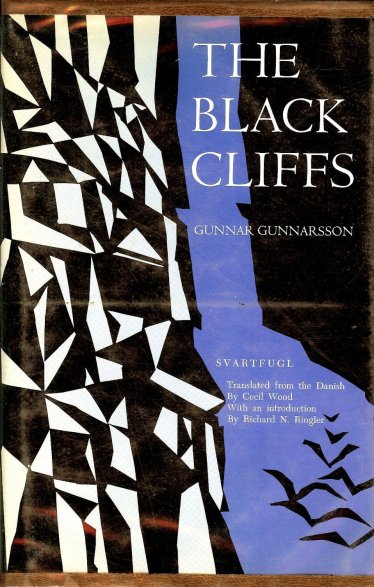
svartfugl

If you read one book by Gunnar, make it this one. Bonus: it’s in English.

Ignore the fact that the ravens look like seagulls overexposed against the sun, because, you know, maybe they are.

Raven 1: Hey! I heard that.

Shh. Here’s the plot: Two couples on a remote farm in the West Fjords (even today, it’s faster on a bicycle than a car, and a horse would be better, or a tunnel — that’s how remote the place is. It’s a good thing it’s beautiful.) run into a spot of trouble, that ends with two of them, a man and a woman, killing their spouses, who they have come to loathe, in order to be together. A lovely political allegory, with Nazi ties, which we will explore another day, that is based on a true Icelandic murder in the dark days of the past winters, before anti-depressants and solariums cheered all the Icelanders up a merry lot.

ggmynd0026

Gunnar, the Famous Writer

Still working on his cheerful look.

Pound’s solution for marrying the worlds of politics, commerce, lawyerliness and poetry was to write a poem, a lyrical entertainment, as that old way of thinking (poetry) had come to be known in the ‘modern’ world. Precisely, he hoped to write a poem that contained so many clear  and innovative connections between history, mythology, literature, philosophy and economics that all thinking men and all men in government would have to read it, if they could hope to do their jobs well, or at all. Out of close to thirty years of that, he was writing stuff like this:

toiletpapercanto

Imprisoned in the American Detention Centre in Pisa Italy in 1943 …

… Pound started his great Pisan Cantos on a sheet of toilet paper. When he won the inaugural Library of Congress Bollingen Prize for the completed sequence (among other things, mourning the death of his fascist heroes, and while still under a charge of treason, to boot), the common people of the United States were enraged (Mind you, that doesn’t really take much. It is a kind of quintessentially American entertainment that even Pound indulged in in his own way. Besides, they wanted romantic novels, not poetry.)

If Pound had only written this!
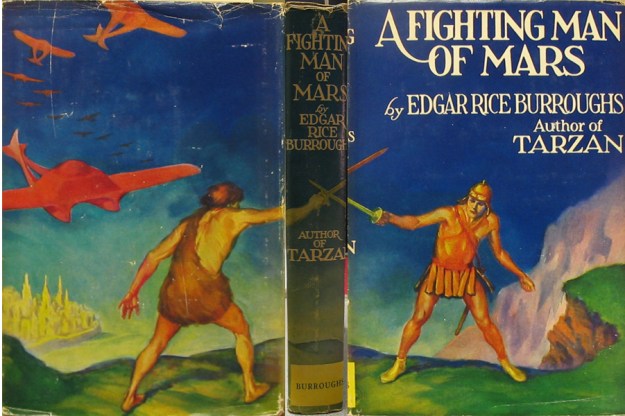
FGHTNGMNFM1948

March 3, 1948

Definitely a missed opportunity, Ez.

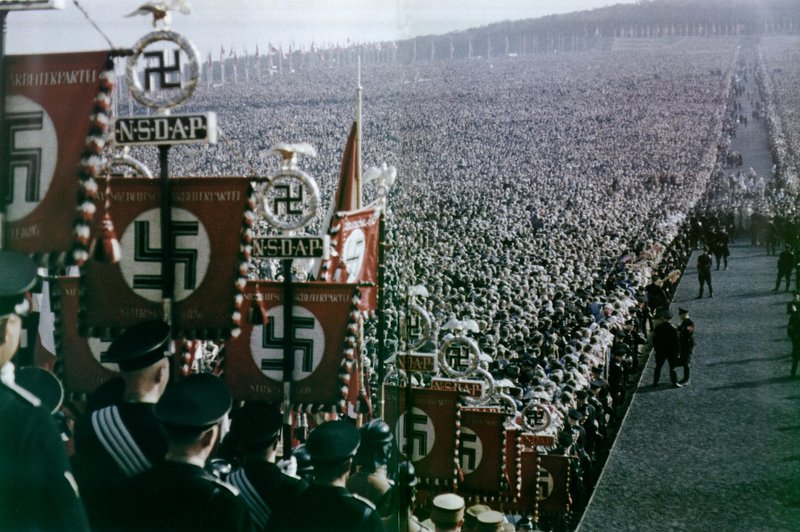
The solution of post-modernist twentieth century writers, to embrace populism and effervescent, even contradictory and illogical points of view was not Pound’s way, and not Gunnar’s, either. That is actually quite understandable, given that the great populist politician of the time used to decorate his speeches like this:
1936nurembergrally

Nuremberg Rally, 1934

Dangerous stuff. It was like shaking jars of nitroglycerine.

That is the plight of modernist writers even in countries or communities emerging into modernism today: they feel themselves the equals to kings, dictators, presidents, prime ministers and bridge engineers, yet all they are given to assert their practical status are tools that most people read as if they were the stuff of fairy tales and wall decoration.

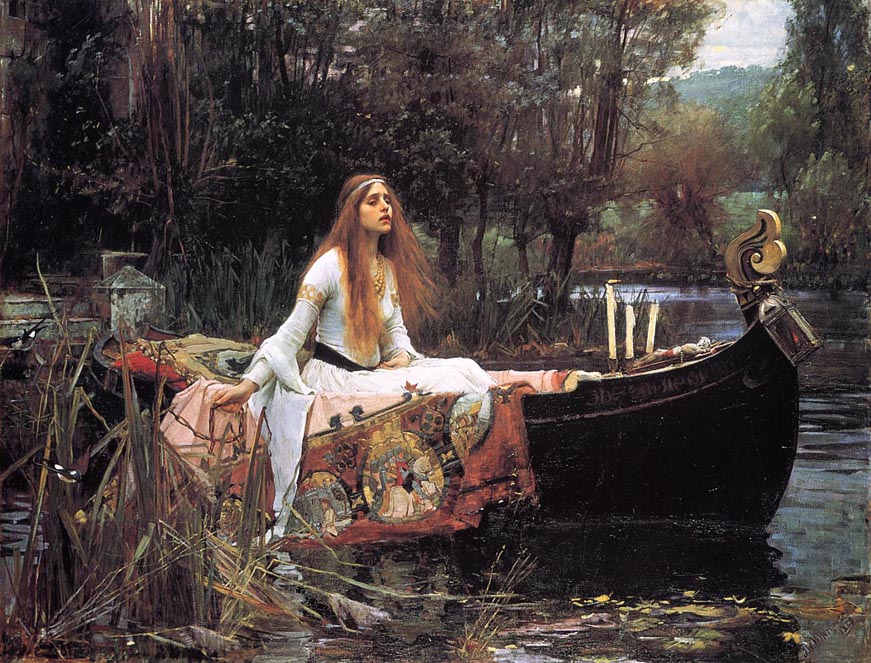
JWW_TheLadyOfShallot_1888

The Lady of  Shallot, by John William Waterhouse

In 1907, Gunnar left Iceland for Denmark. In 1908, Pound left the United States for London. Waterhouses’s painting above is the world of modernism, on a foundation of Nordic fantasy, that they stepped into. It took them into at first differing but then converging directions. It was out of beginnings like this that Pound and Gunnar tried to counter Nazisms own modernized (so to speak) versions of Nordic myth. Entire literary genres sprang up along these lines, including the great German genre of the country physician, which became a dominant art form of the German propaganda ministry during the Third Reich and lives on gloriously in German television soap opera (which played, by the way, a strong role in bringing down the Iron Curtain.) These things live on, I tell you!

What a mess the world can be for a modernist writer hoping for a bit more push and a bit less pull, though. The Swiss playwright, Friederich Dürrenmatt, who had toyed with Nazism when he was young and was wracked by guilt about it for the rest of his life, chose to deal with it by creating plays that were not dramas at all but trials, very bitterly funny trials, of his audience. He hoped to show every audience member his or her own guilt (Yes, Original Sin can be read into that. Dürrenmatt was the son of a pastor, after all — a Swiss pastor, and that means a lot.), and to leave them talking over the ethical dilemna of his plays in the coffee houses of Bern and Zürich, where they could eventually resolve them — not on the stage but in Swiss society itself. Pretty brilliant, really. He was of the generation following Gunnar’s, yet very much of Gunnar’s time and dealing with the issues from a culture and society remarkably similar in many ways to that of Iceland earlier in the century.  Everyone was becoming modern, but no one knew the rules. The rulebook of God was more or less gone. It was left to the last holders of its traditions, novelists, of all things, to make a stab at rewriting it. Here’s one of Dürrenmatt’s attempts:
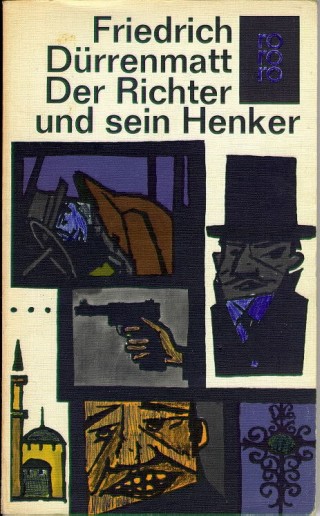
henker-b320

The Judge and His Hangman

One of Dürrenmatt’s comedic crime novel sermon adventure trial objects in a Cold War West German edition.

I hope you don’t mind my showing how Gunnar’s interests were actually central to his time and took place within a particular context, because it was that context he was responding to.

Raven 1: Get on with it. We’d rather you herded some sheep.

Raven 2: Yeah, isn’t it lambing time yet? There’s lots to eat at lambing time.

Hang on, guys, if it’s dead things you want, I think I have just the thing for you. It’s a little bit of a detour down a darker road, but …

Raven’s 1 & 2: Darkness? Oh, goody!
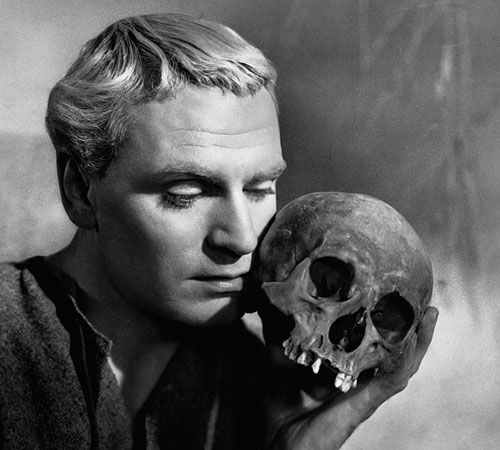
1337339357719611

Laurence Olivier, Hamlet, 1948

The actor contemplates the war just past.

I thought you’d like that.

Ravens 1 and 2: Oh we do, we do!

Raven 1: Yes, we’re glad you’ve recognized that the plight of writers trapped within words and popular impressions of what words can do is not a problem unique to the 20th Century. Modernism started long before that, in England. We should know.

Raven 2: That’s true. Shakespeare recorded the moment in his play Hamlet, he did.

Raven 1: Well said, my love!

Raven 2: Why, thank you. There he wrote the clever and blatantly literal line, “Words, words, words,” and then, to get out of his own head, made his character, Hamlet, say them out loud …

Raven 1: … the poor duff …

Raven 2: So true! A melancholy Nordic philosopher prince who had returned to conservative, pre-modern, pre-humanist and Nordic Denmark from a modernist, Lutheran, self-confessional university in Germany on the cusp of humanism and modernism.

Raven 1: Poor Hamlet.

Raven 2: Heck, poor Gunnar.

Raven 1: So true. Still, like Hamlet, he tried to make the best of it. Here’s what Gunnar had to say about that.

(Dear Reader, ravens, like actors, like writers, try to have some fun with all this grim-ness …)
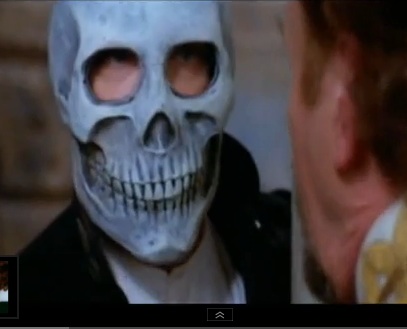
skull

Kenneth Branagh Really Trying to Get Into His Role as a Melancholy Dane 

Shakespeare had more earnest designs for his character: he wanted him to read fate and receive clear answers, in the way a priest once read the Soul or the Book that was God’s World.  I mean, they were even in Capital Letters, so you could find them easily in a hedgerow of words and thoughts. In the modern world, of course, the self-confessional, Lutheran one, there are no clear answers. What was Hamlet left with? Harumph, Hamlet was busy trying to read his soul …

Soul: Definition from the Dictionary of Earth and Air, 1908 Edition

A new-fangled private thing, which had recently before been public, partly because in the world of the Medieval Church souls were public and partly because he was a Prince, and thus the state, yet whose rightful place in the social role accorded this public identity had been usurped by a murderous uncle.

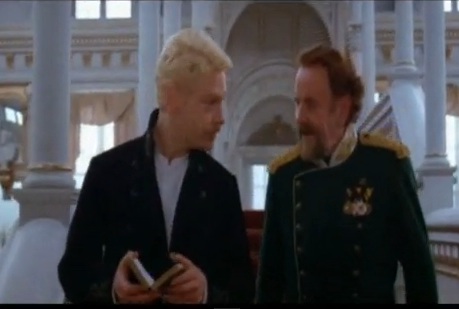
Sigh, isn’t that the way. Anyway, while Hamlet was trying to read the pattern of his thoughts, like some kind of Nordic Buddha, the old courtier Polonius asked him what he was reading …

whatdoyouread

Polonius: What are you reading, my Lord?

And Hamlet? God’s minister of state on this vale of tears? Was he able to say, “Your soul, sinner?” No. He was stuck with the words of some author. There he was, a trained philosopher, in such an embarrassing position. But he was a trained philosopher, so he answered precisely, although not without frustration: “Words, words, words.” He held up his book to make his point. What were once words recording God’s creative speech that put the world into perfect order, were now just nearly inscrutable words on paper, that a man could make mean pretty well anything he wanted them to, that some “writer” was forcing him to speak, and which he had to figure out how to speak with some shard of dignity. What a task! He waved the book around for emphasis of his predicament, like this:
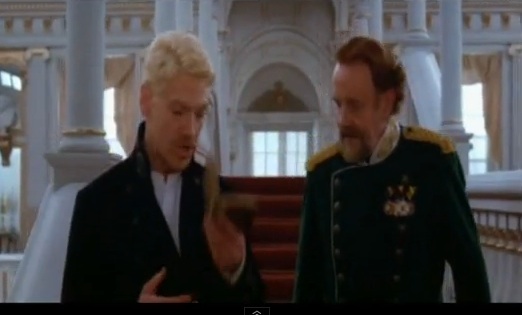
words

Polonius and Hamlet Can Hardly Believe the Embarrassment of It

It was as if Hamlet had been caught reading some kind of fantastical, titillating entertainment or something not befitting of an earnest, enlightened philosopher, like, oh…

images-1

… or this, of all things …fam200299

Actually, that was pretty much the case. Still, frustrating, right? Gunnar might have entered this story 4 centuries late (that’s how far Iceland was from England at that time), but that doesn’t mean that he didn’t rightfully feel some of the same bewilderment as Hamlet did at his own moment of crisis. As he told the students at Herthadalen on June 15, 1926 (He uses a shipping metaphor, because he has been trying to suggest that the countries of Scandinavia are naturally united and protected by the sea) …

Outside our port stands Fate. We do not see her, but she stands there. And even for those who see her, her face is veiled: no one can read in it!

(From “The Northern Kingdom”, 1927)

It’s a downer, for sure. It’s like looking off of the Icelandic shore towards Europe, or off of the Danish shore, anywhere, in the winter, and seeing only:

nord

Another Cold Writer Staring Back

This is called the height of the Icelandic summer, Arctic Circle version.

And to think that all you wanted was a bit of light. Now, to be serious. I loved my day there at the northern tip of the Icelandic mainland, and my Canada is a nordic nation as well, which I will get into on another day, and as a man of northern earth, just as Gunnar was a man of northern earth, I know well enough that the fog is its own language and is full of light. Gunnar would come to that eventually, but it would take time. After all, he had been trained in literature, as was Hamlet, in a different tradition. In his novels, as in his politics, he tried to put them together into one. During these attempts he consistently avoided Shakespeare’s solution, tragedy, or Hitler’s, smarmy romance and shell-shock, or Pound’s, rage and bitterness and impotence, and tried to find a middle way. I admire that deeply. Tomorrow, I will honour it. For now, thank you for playing along.

The Sculptural Path to Story: an Icelandic Saga

Today, a meditation on lines, and the art and society that sprout from them, as a branch to this…

rowan2Gunnar Gunnarsson’s Rowan Tree, Skriðuklaustur, Iceland

Bending to the earth and throwing her branches into the sky. To say that these branches and twigs were hair, or a mane, or arms and fingers would be a kenning, or a skaldic pun. She has her own dignity, though, I’d say. After all, rowans are sacred to the Goddess. Their red berries glow like drops of blood in the snow, or, if you wish, the strawberry coloured lips of the Goddess of the English celts, or, if your mind wanders so far, to the lips of your first love, or your deepest. They are also a symbol of Icelandic nationalism.

Yesterday I started this meditation by talking about elves, to suggest that the earth is very much alive with human imagination, and not in a fantastical way, either. If you missed that, it’s here. Today, I’d like to talk about lines, to show how story rises from that same imagination. A couple weeks ago, I introduced this thought on my Canadian blog, Okanaganokanogan.com, with a thought from the sculptor and painter Ken Blackburn, that all writing and imagery, indeed all artistic culture, begins with a line. Here’s that post, if you’d like to see Ken and his strawberry-coloured raven. I’ve had many joyful arguments with Ken. He represented lines with panache. I argued for knots, deep wells, pools and other points of intersection between worlds. Well, look, maybe we were both right:

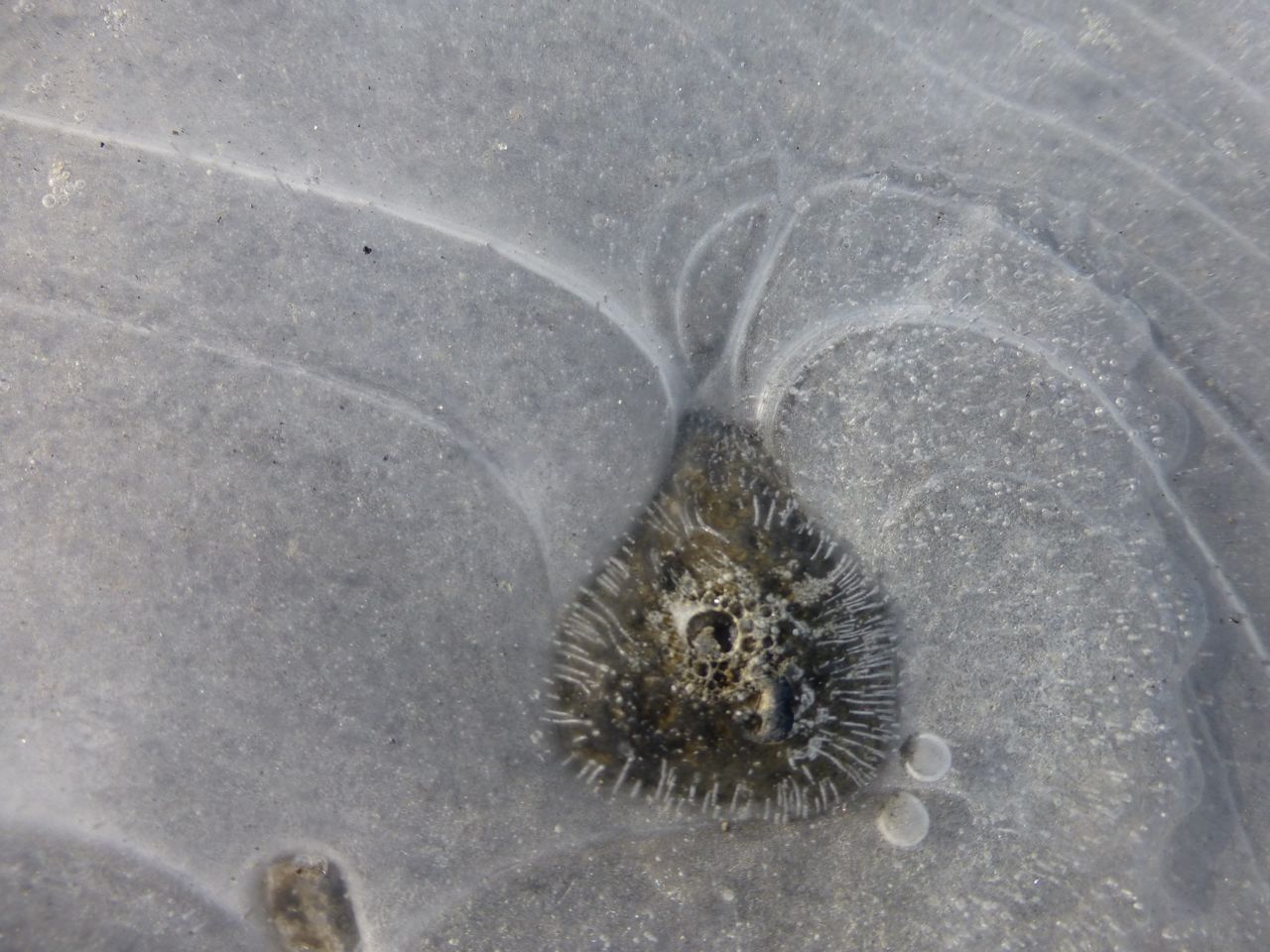
bubbleline1Icelandic Pool with Line, Skutustaðir

If you take the line away, you have a field, but no story.

I learned the skills for that kind of erasure by pruning fruit trees by starlight (I do not exaggerate) in the German Nordic Canadian dream that was my childhood, and learned to adapt it to the crafting of objects made out of words, which I thought for decades was writing, although it was really a form of sculpture. The addition of a line to a field, however complex, creates a tension, which human minds, structured to track game across grass and sand and to recognize the nuance and significance of the tiniest of plant forms and deviations, naturally follow. In terms of the craft which I track as a sculptor and many others lay down somewhat differently as trail makers, or writers, this is the root of story.

lakeelvesandice16

Footsteps on Lake Mývatn, Iceland

With the late afternoon sun rolling around on the horizon, like an eye. A writer looks forward here, into empty snow. A sculptor looks back into its story.

Before the line, there is indeed a pool (or a lake, a pond, a puddle, a sky, a moon, a well, a field, a face, or a room, and so on). It is endlessly fascinating but engages only one half of the split human mind. In storytelling, this is called a situation. To create story out of a situation, there must be two characters, who exchange powers at a point of transfer. That point of interchange transforms them.

ice16

Lines of Cosmic Energy Entering and Departing a Vortex …

… or rising from it. Driveway Puddle in the Early Morning, Skutustaðir
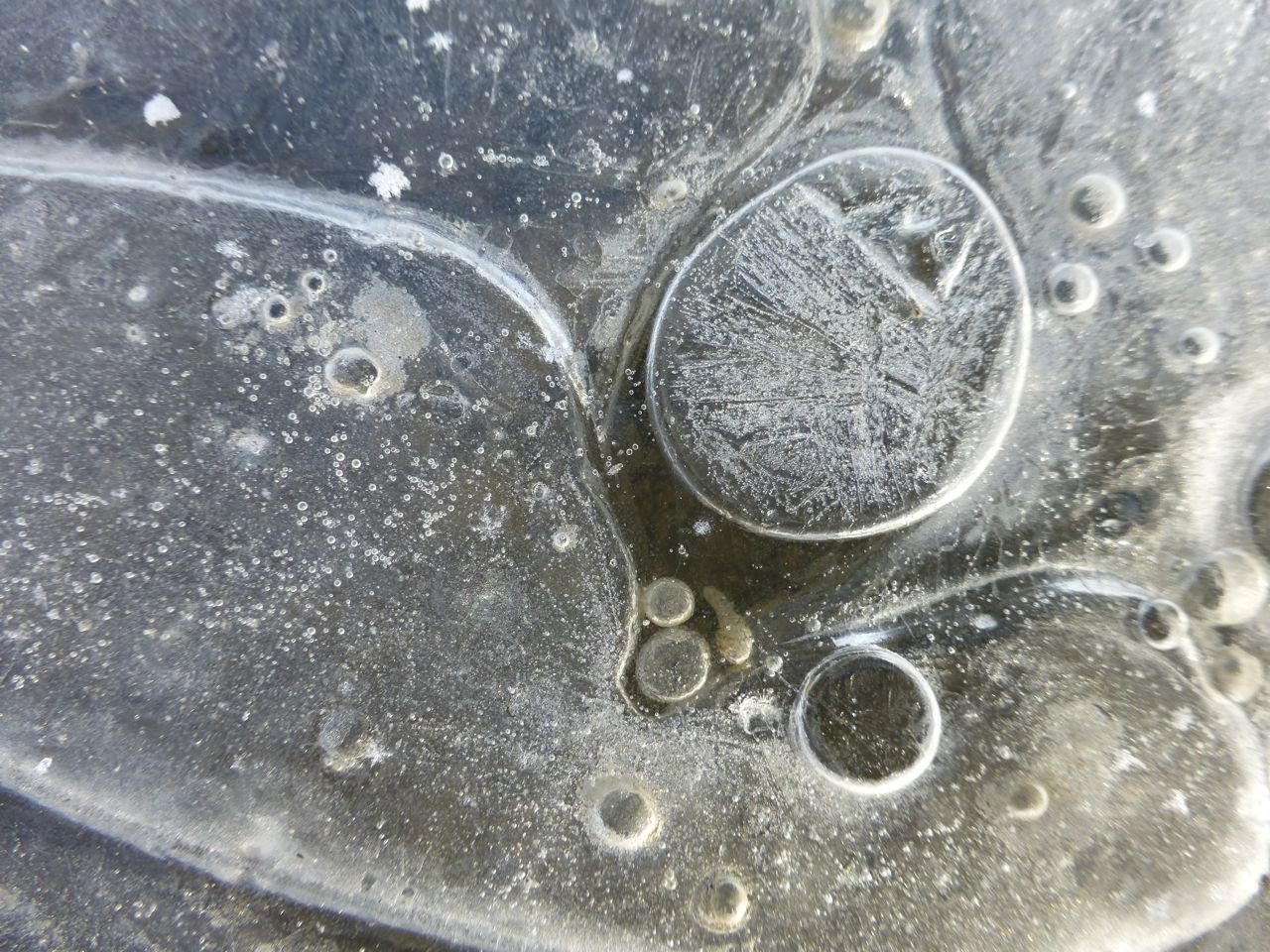
This kind of tension (and this unresolvable paradox), will continue to generate story as long as humans last on earth. This ability to read story into the earth’s processes is the signature of humans. It is the same tension that creates a poem within the boundaries of metre, or the balance that humans call beauty, which is a coming together in complex relationship to lines…

Lineice2

Beauty

Driveway Puddle at 9:30 a.m. on a March Morning, Skutustaðir

Lines, of course, don’t always have to be simple. The one above, for instance, was taken while men with orange vests were fussing over the lone gas pump a few metres away, a woman was driving around crouching me on her way to take her kids to school, and the hotel cook was banging the snow off his boots after sucking the fire out of his morning cigarette before work. Lines, or story, shall we say, can be as complex as this…

energy21

… or this …

ice28

… or this …

iceandlines09

… or this (you can probably surmise that a number of people had to drive around excited me) …

iceandlines44

… or this…

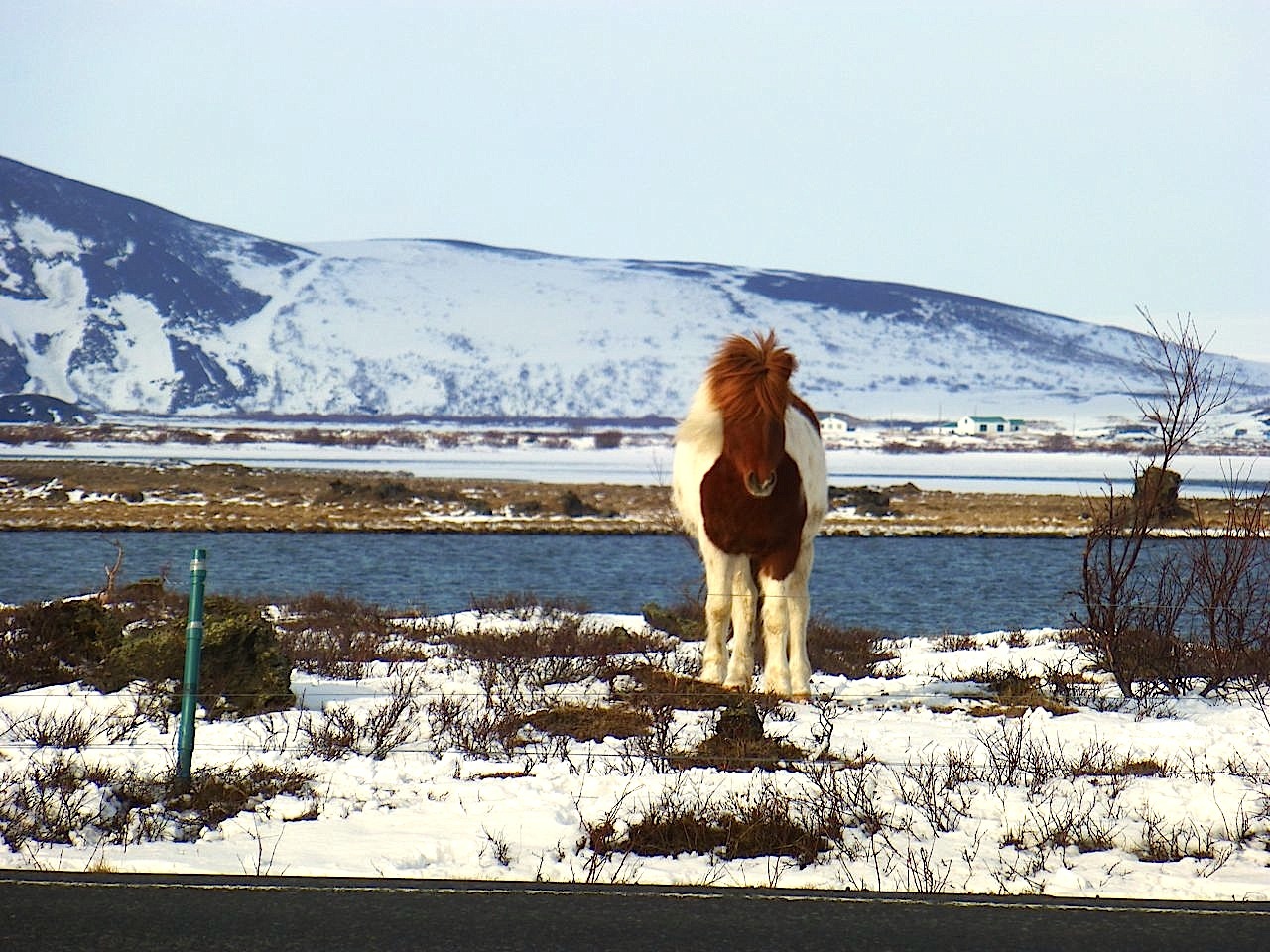
redhorse

Icelandic Horse Held in Its Field by a Line of Human Will …

… and continually at tension, between running free and being led (and fed). Notice the line in the foreground that humans have built in order to move past at speed, without stopping.

Sculptors stop. They get out of their narratives and find their stories telling themselves. The imagination that reads the human body into the sculptural forms of the land, also reads, and indeed creates, story, not as narrative but as something complete and whole in the world, that one can follow without moving at all. Pretty beautiful, I’d say. What does all this have to do with Gunnar Gunnarsson? Ah, I was getting to that. That is where you’ll find me tomorrow: in that story.

Icelandic Houses, Part 1

The following description of Icelandic architecture dates from a book called “The North-west Peninsula of Iceland: being the journal of a tour in Iceland in the spring and summer of 1862, by Charles William Shepherd. You can view it here. It is a distressing and unsympathetic piece of work, which in its basic details could as easily have been written about any farmhouse through Europe, but isn’t, perhaps to shock his audience, perhaps to create some romantic sympathy, perhaps to warn against it. In other words, it has more to do with England and its politics than with Iceland, but, still, it provides some glimpses into the past, which might be useful.

P1020471

Farmhouse Tools, Bustarfell

My grandfather and even my father were trained in the same tools as these in Europe. My childhood was spent with tools just like this in Canada. We didn’t let them rust, as this museum is, mind you. We took them out and used them.  This is what the industrial revolution looks like at the end of the road, where it is paid for by hard, personal work.

Curiously, when Gunnar Gunnarsson went to Germany in 1940, he spoke about the one thing that was on his mind: farm houses. It is a carefully coded political statement, that is best viewed in context. Today, I’d like to give some of that context. First, an Icelandic farmhouse:

Holar

Farmhouse, Holar

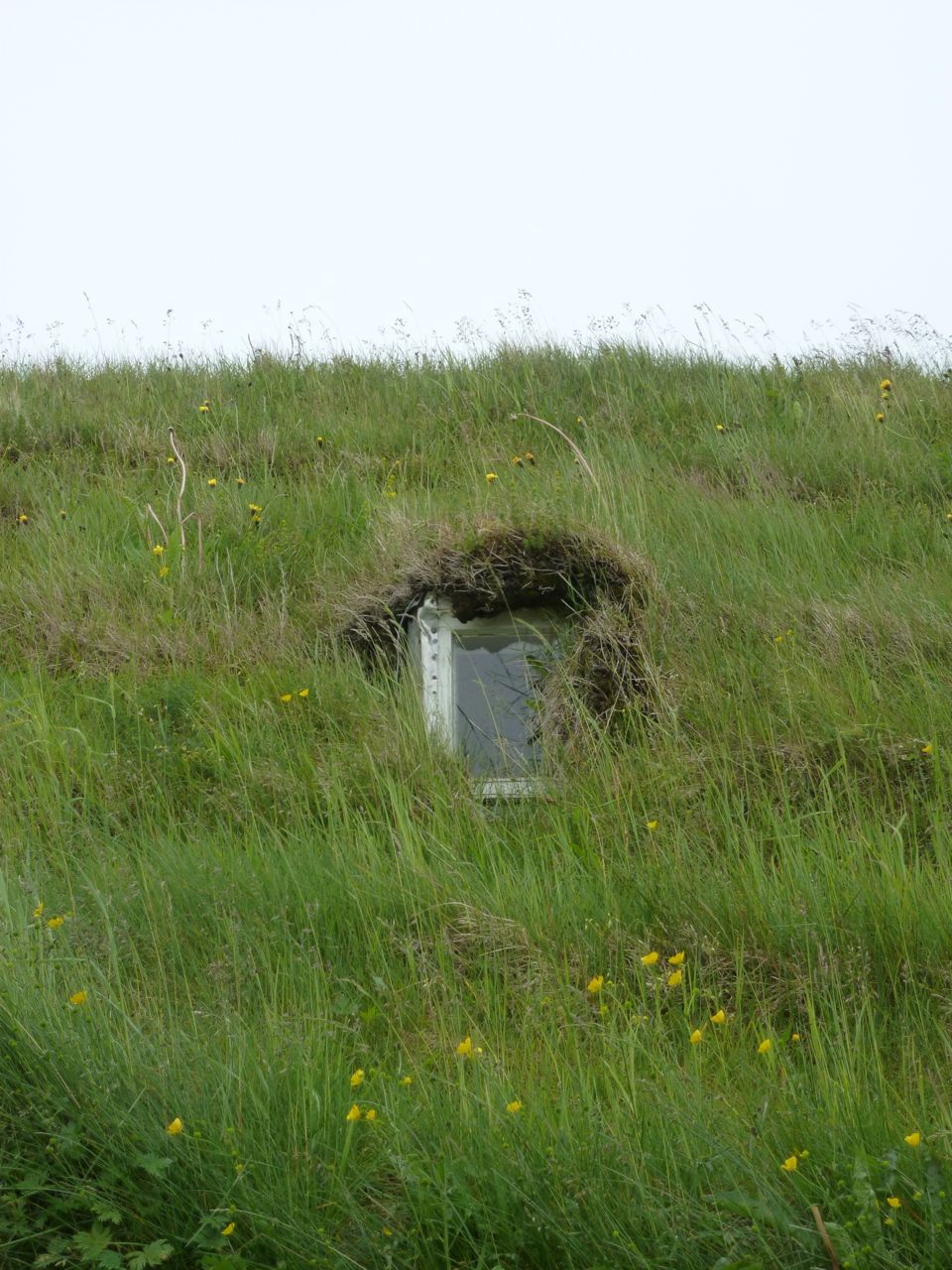
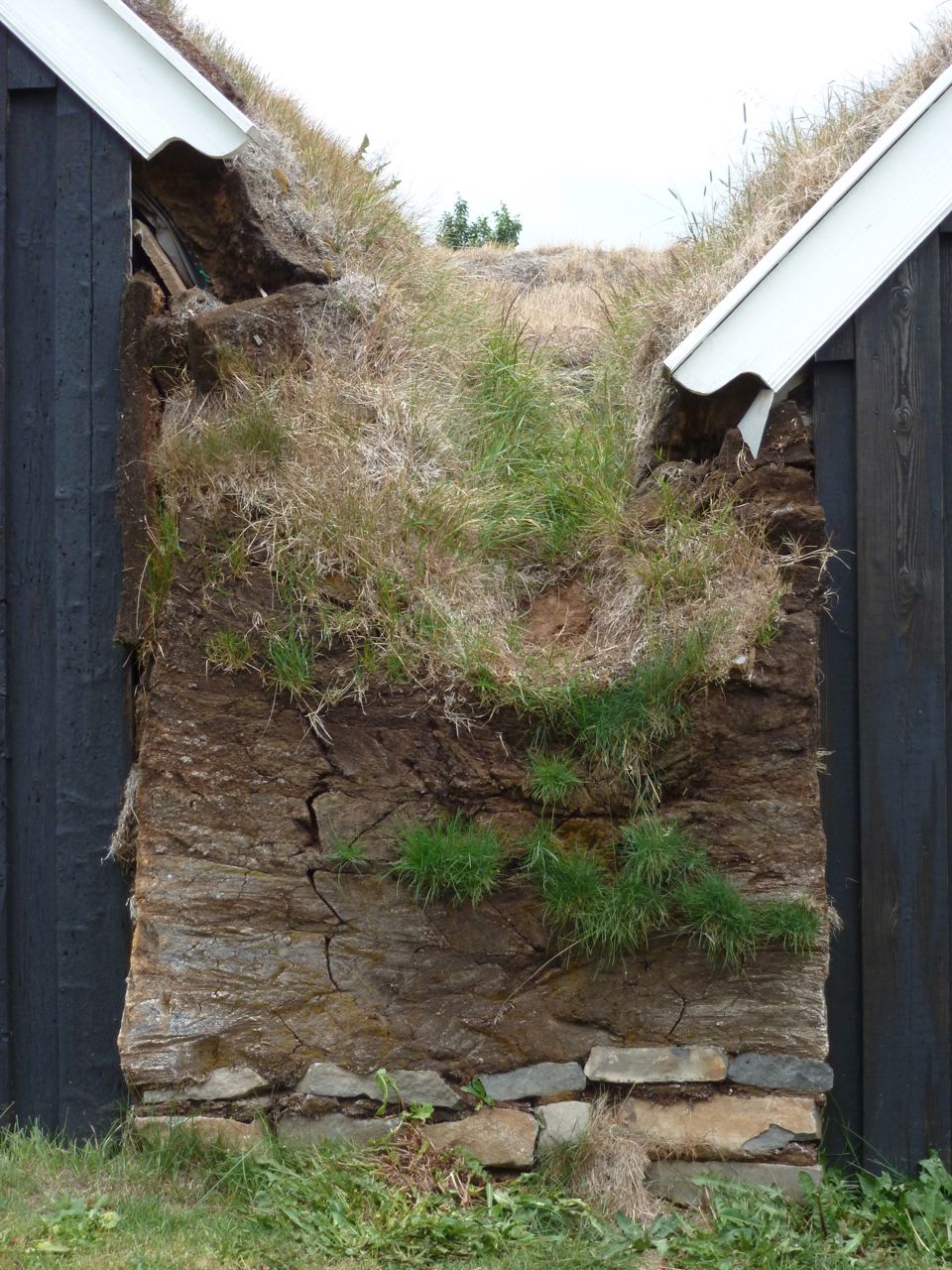
Here’s Shepherd (the images are mine): “Icelandic farm-houses are invariably embedded in walls of turf from two to four feet, or even more, in thickness, through which embrasures are cut for the windows.

window

House Window, Bustarfell

Three sides of the house are thus coated, the front being generally left unprotected, but sometimes the house is entirely surrounded by turf walls, and the roof also has a coating of turf upon it externally. In front it has the appearance of several low bams, with their gable ends towards the approach, in the centre of one of which a low door is cut, while in the others a few small windows are placed here and there in no regular order, and each gable has a weather-cock on its summit. The interior of an Icelandic farm-house, however, it is no easy matter to describe.

P1030757Turf Walls, Holar

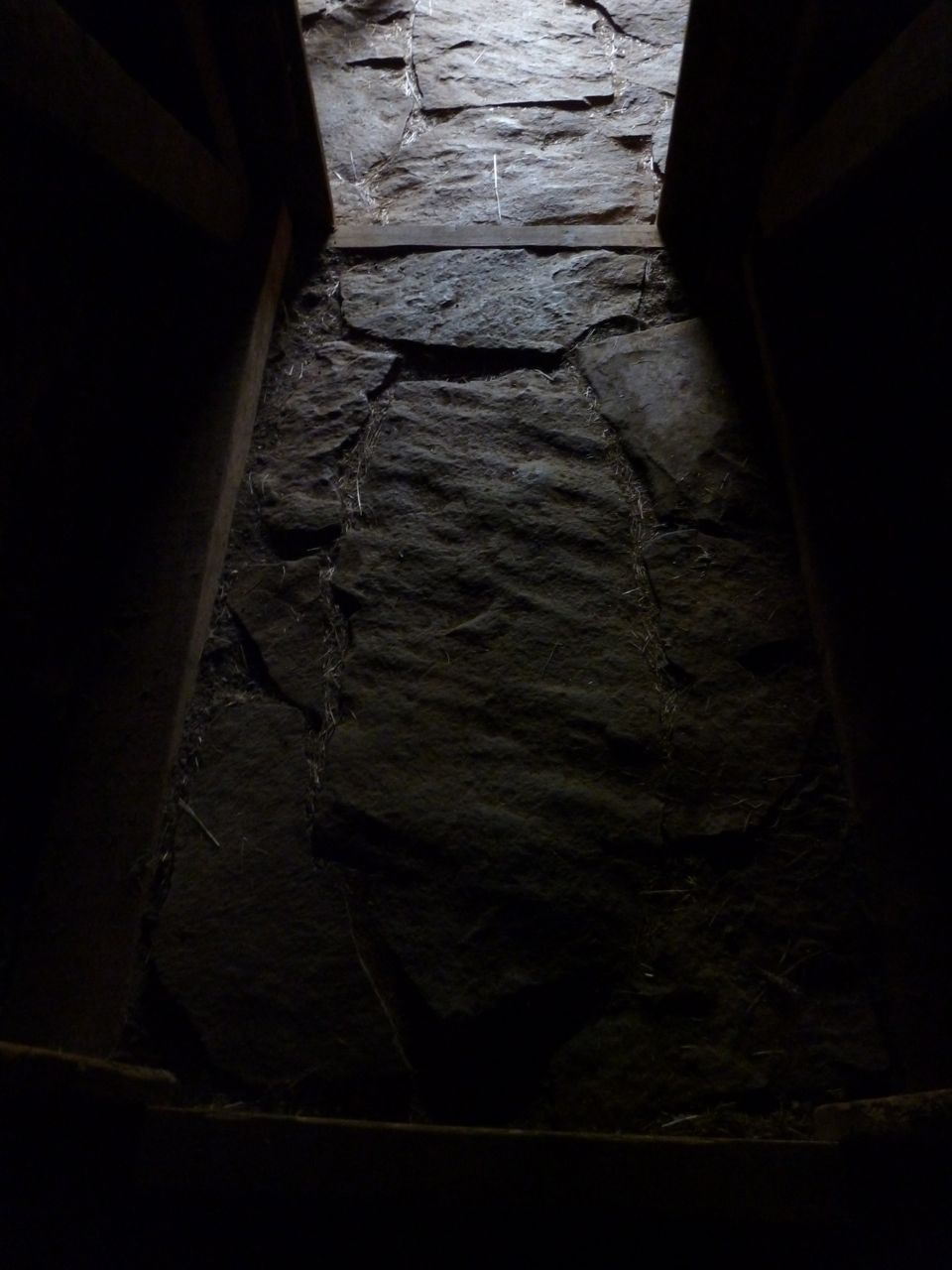
The stranger who enters them is as often as not suffering from a more or less severe concussion of the brain, his head having come in forcible contact with the top of the low door-way. I have often crept through a door not more than three feet high; the general height, however, is between four and five feet Then, there is a descent of a step or two to an uneven, damp earthen floor, which is sometimes in puddles.

P1030771

Farmhouse Entranceway, Holar

All is pitch dark; and the height of the passage barely admits of a person standing upright; nay, not infrequently a half-dried cod, or halibut, suspended from the ceiling, meets the intruder face to face. After a few yards there is an invariable stumble over a door-sill into another passage equally dark, which runs at right angles to the former, and of which there is no knowledge till the opposing earthen wall gives an unpleasant intimation of its presence.

P1030773

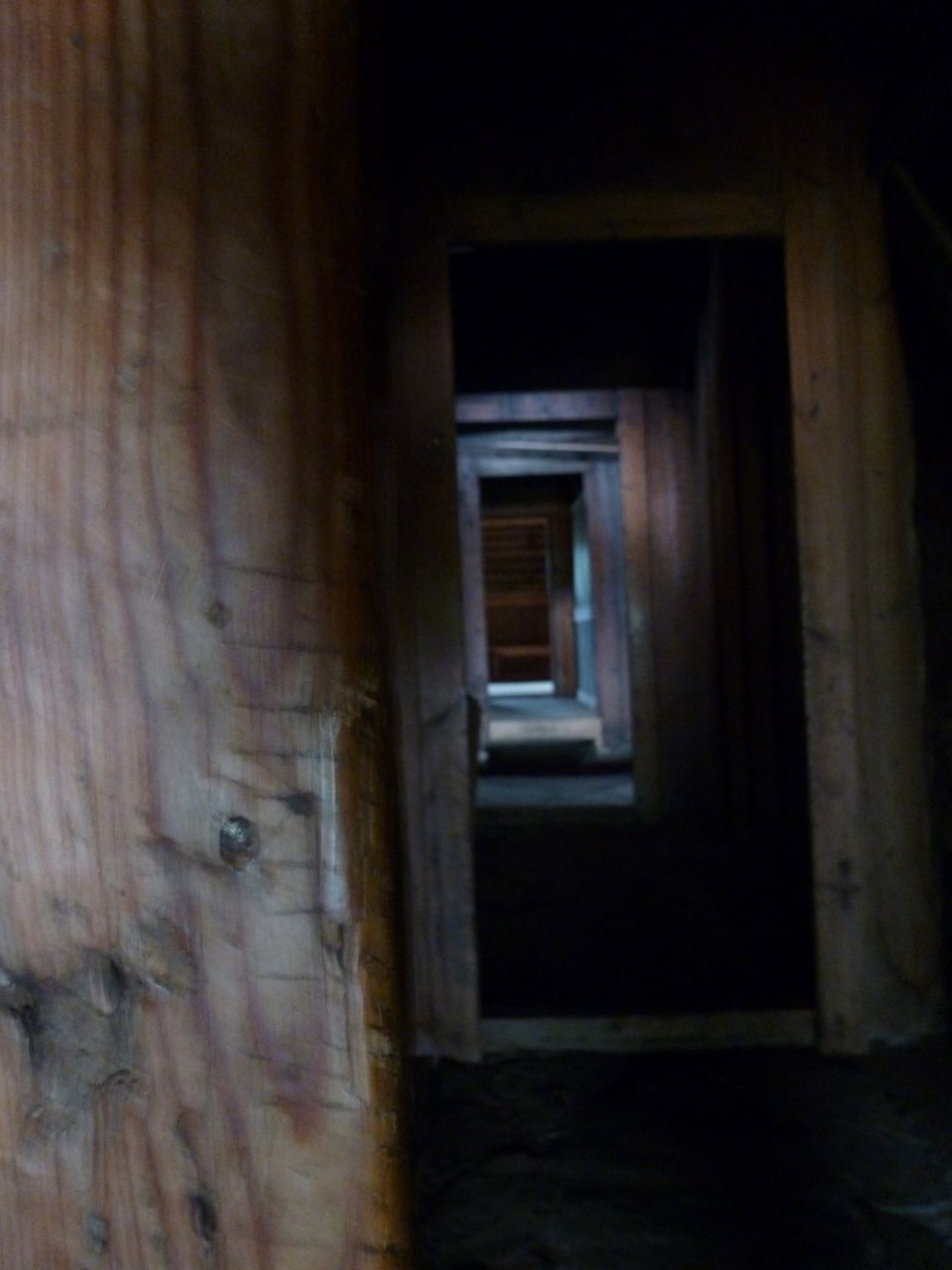
Hallway, Holar

This passage right and lefl is sometimes straight, but always has either its floor or its roof uneven, so that the explorer is continually in danger either of falling down, or of hitting his head against a rolling ceiling. The passage leads on the right and left to rooms which are the best in the house. They are from ten to fourteen feet square, and are coated entirely with deal, and often painted in various colours. One is set apart for visitors, and generally contains a bed, sometimes a four-poster, situated very often in a recess in the wall, before which a curtain is drawn in the day-time ; also, a little table under the window, looking out through a turf embrasure, two or three chairs, a chest of drawers, a small looking-glass, a few Danish prints hanging against the wall, and sometimes a shelf or two of books. A bottle of schnapps and two liquor glasses stand upon the drawers, or window-sill.

P1030761

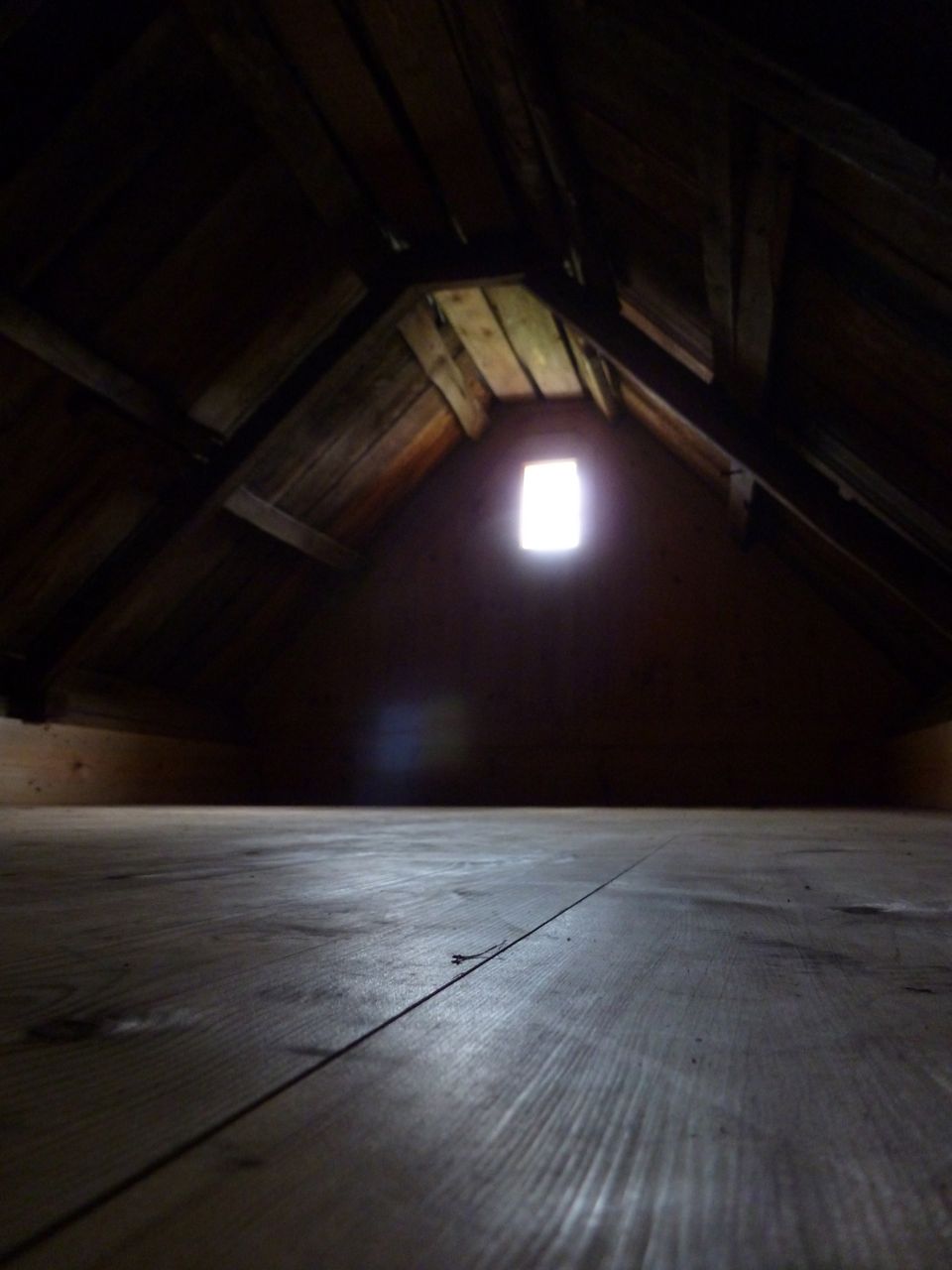
Upper Room, Holar

The floor of these rooms is raised a step above the rest of the ground-floor. Upstairs, over these rooms, are lofts, in which the inhabitants sleep. They are long low rooms, surrounded by a raised bench, from eighteen to twenty-four inches high, and three or four feet in width, on which the sleepers range themselves. The staircase is very irregular and dangerous, being often a ladder with half its spokes broken or loose, and, besides, it is in total darkness.

P1020440

Work Room, Bustarfell

The kitchen, placed on the ground floor and at the back of the house behind the best rooms, is, like the passage leading to it, dark and without windows. It is generally a large room, with a peat fire smouldering in its centre. A round hole in the roof is the only vent for the smoke, so that everything is coated with soot. Quantities of peat and birch-wood are stored around, two or three tubs of water stand at hand, and a huge kettle is always on the large stones that form the fire-place, while many changes of damp garments hang and blacken on the rafters above.

P1020434

Upper Window, Bustarfell

In addition to the kitchen there are other dark apartments, store-rooms, and sleeping-rooms; but the smells from dried fish and half-cured mutton, the choking effect of condensed smoke, the accumulated rubbish and smuts of ages, as well as the danger of breaking the head or neck, completely cured any curiosity we ever possessed of peering into these dark abodes.”

P1030769

Out the Window, Holar

If you haven’t figured out that a traditional Icelandic relationship to darkness, light, and up and down is not the same as that of the 21st century, let alone of those people living in gaslit England, it might be helpful to scroll back up over these images again.

Here’s Shepherd again, in a piece remarkably prophetic of Gunnarsson’s intent…

“The farmer and his family, with his labourers and their families, all live under the same roof. There are no such things as labourers’ cottages in the country; in fact, two houses together are very seldom seen, except in the small towns and fishing villages. The whole household generally take their meals together, and seem outwardly to live on in equality. In the winter, for four or five months, they seldom move far beyond their immediate outbuildings, in which their cows and sheep are stalled.

out

Outbuildings, Bustarfell

These poor animals are stowed away in dark houses like large oblong earth-mounds, with a small door at one end, but with no window; as a substitute, however, the turf on the flat-ridged gable is left loose, so that on fine days a little light and air can be admitted. There are several such buildings adjoining every farm-house, and the mud and filth about their door-ways are truly distressing.”

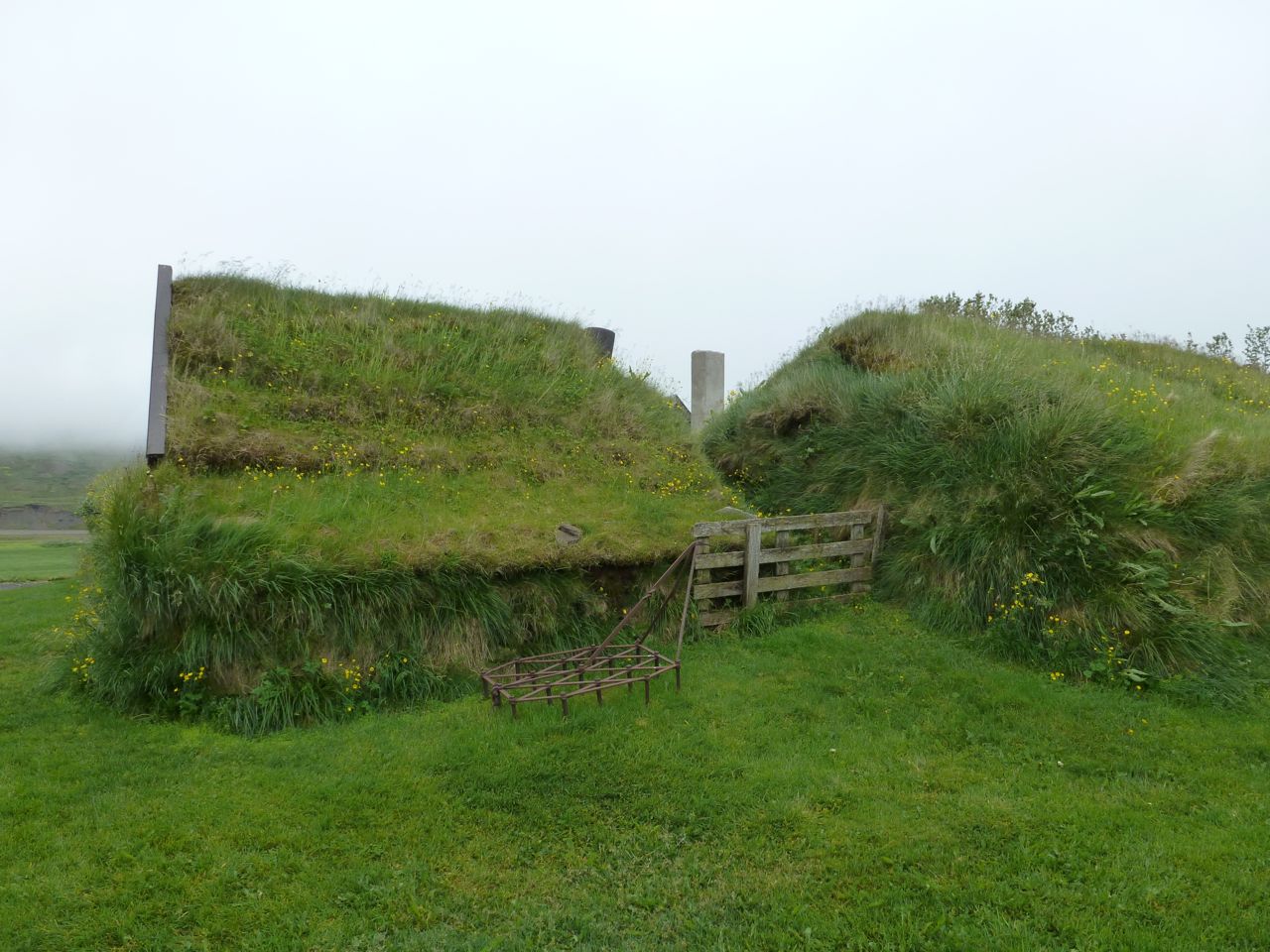
grasshouse2Sod House Given Back to the Grass, North of Hvitserkur

Life was hard (and windy!) in this location and no man or woman can be blamed in any way for leaving. Nonetheless, anyone who left this land also left the map of his or her unconscious that the sod house represented and embodied, with its passages between darkness and light, of low and high space, and of different qualities of light for different functions, moods and different levels of sociability. This map of the unconscious was also Gunnarsson’s map of Iceland. I’ll talk about that in the next post.

Word Farming

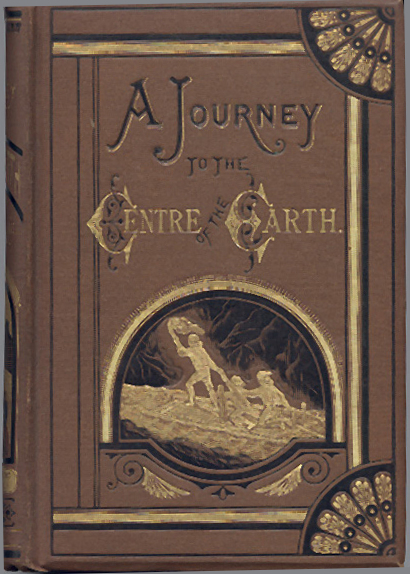
Welcome to a farm as a literary genre. I’m going to land in Iceland on March 16, 2013, and will begin my residency at the novelist Gunnar Gunnarsson’s old farm Skriðuklaustur on March 25. This blog will be an online home for the many explorations that make up this journey to the centre of the earth.

A_Journey_to_the_Centre_of_the_Earth-1874

Hint: This Journey is Not Like Jules Verne’s in 1874. He made his up. 

But the torch is a good touch. Let’s hang onto that, in case it gets dark.

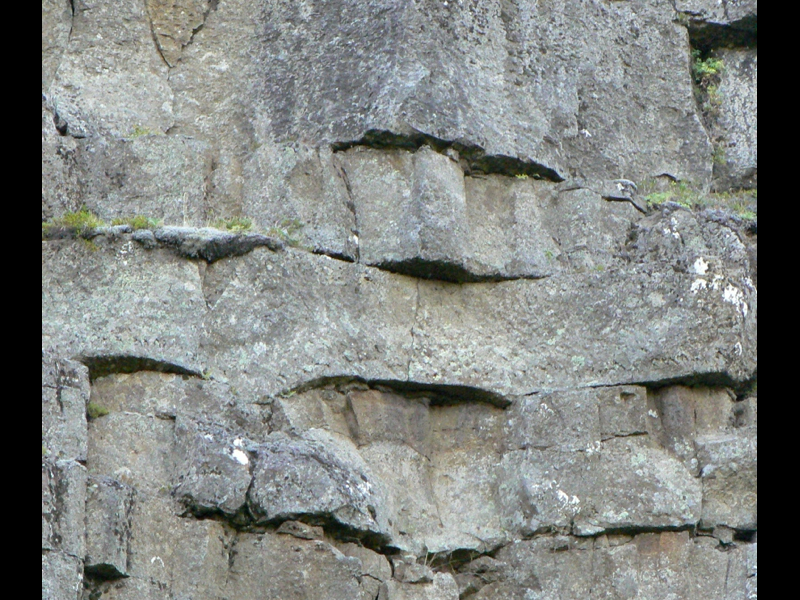
What better way to start than to get to know our characters? They are a puzzling lot, who are not quite the way they seem at first glance. For example, which one of the characters below is the troll? Is he here in Þingvellir?

trolls show pics2.136

Or here west of Vik?

hrbasalt

Or maybe here, east of Kirkjubaerjarklaustur?

trolls show pics2.124Tough, isn’t it! One of the foundations of this project is a discussion of the relationship between rock and the human subconscious, in people who have been acclimatized to a place. We’ll be talking more about that, and, of course, about word farming and other old technologies, too.