Category Archives: sea

Two Speed Iceland

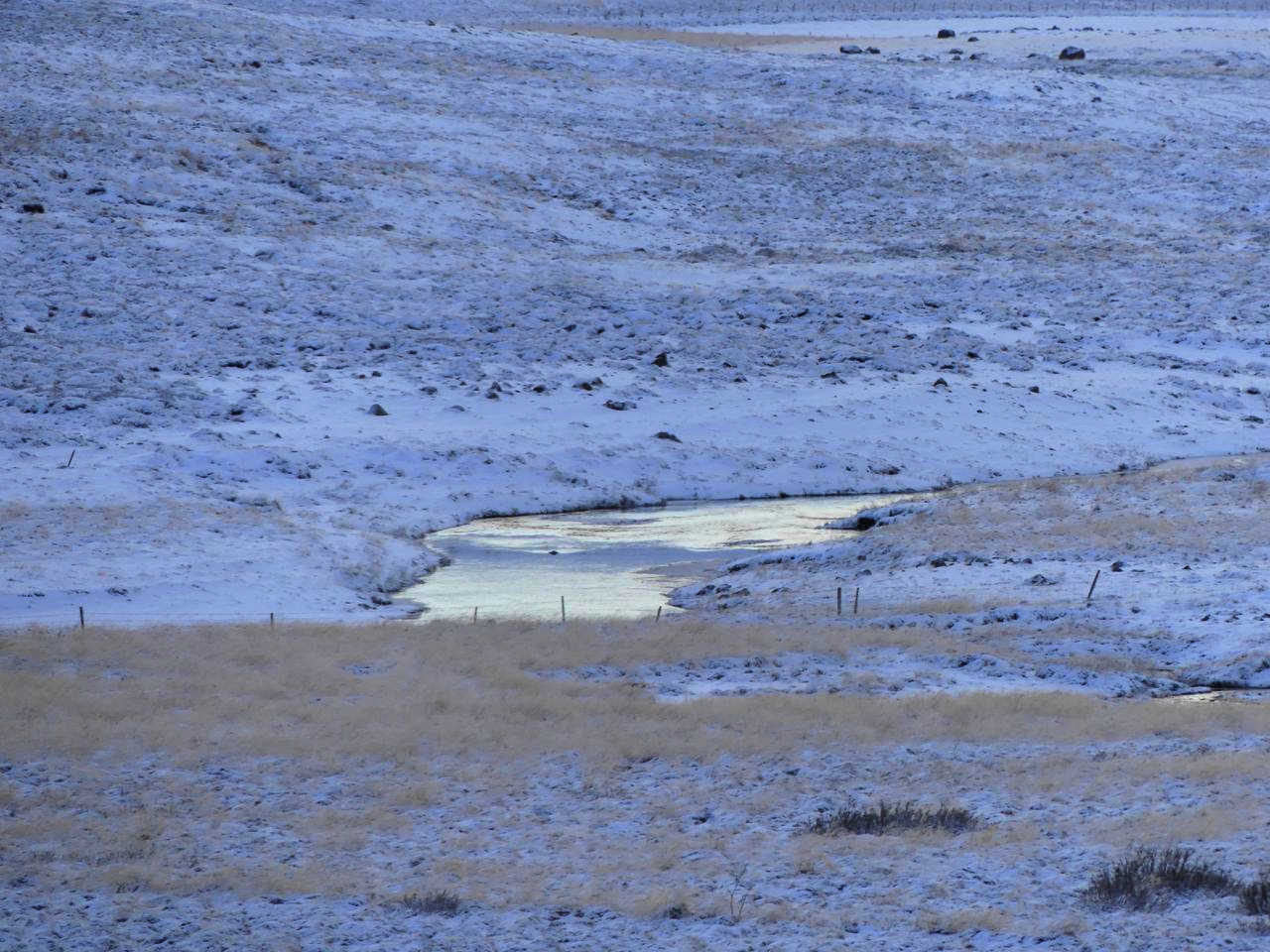
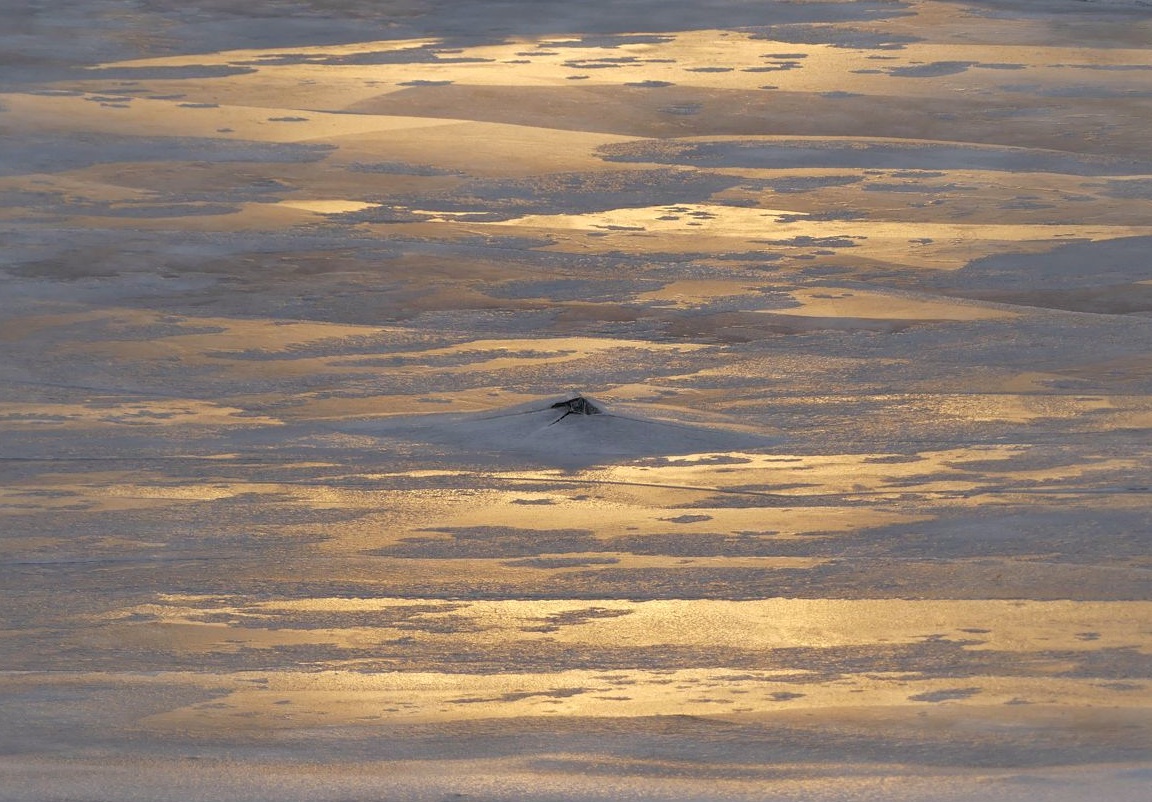
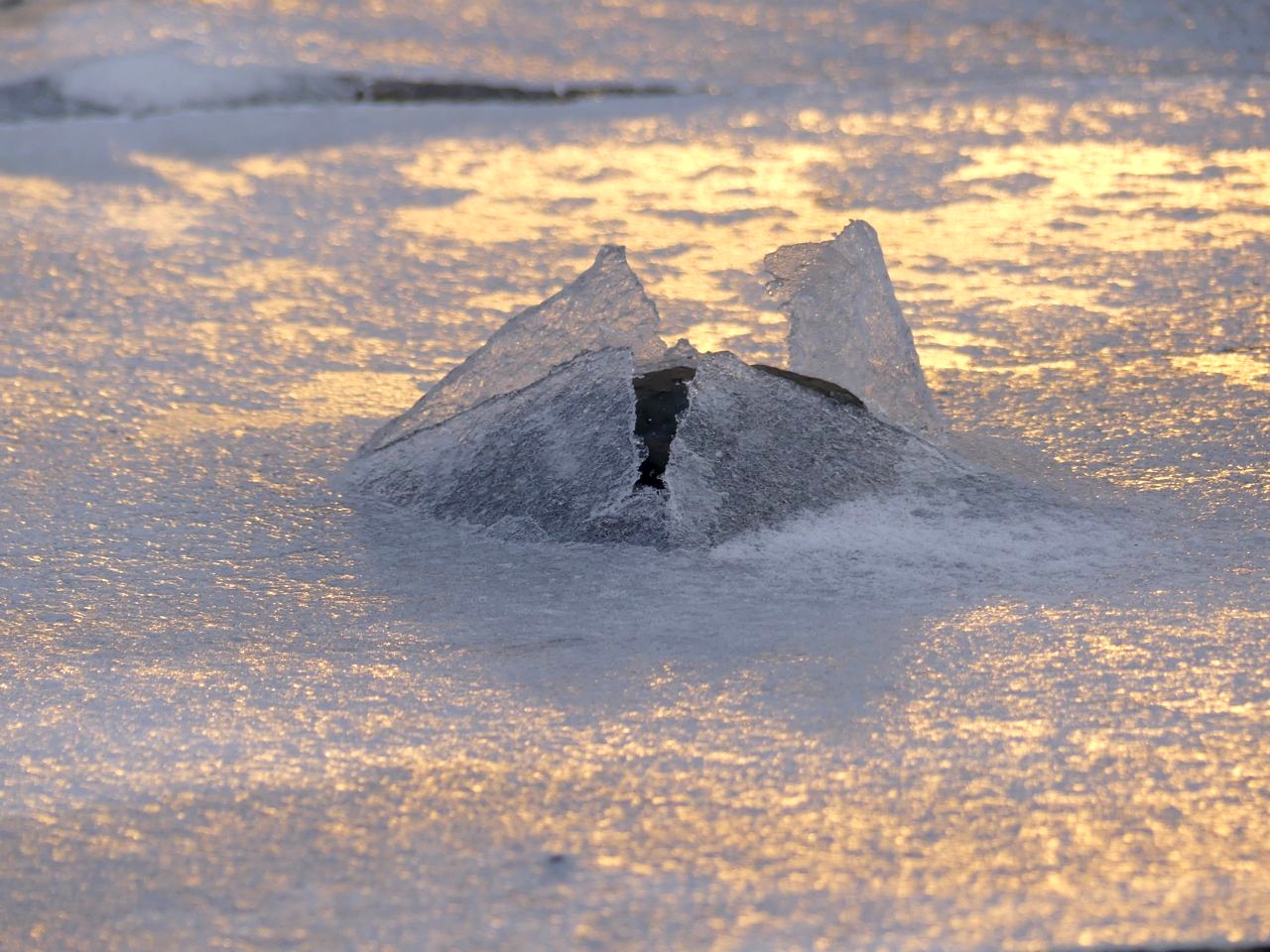
The water swirls, and the wind swirls in the water, and under the effects of a kind of spiritual gravity, they congeal.If humans could move at their speed, they would still be swirling, but we are so fast that they appear still. We are light flickering on the surface of these flows.

And that’s beautiful, too.  That’s Iceland: a country that lives at two speeds, at once.

Death and Life in Iceland

The sea and the land have teeth.

p1310144The Ölfusá Meets the Atlantic at Óseyartangi

For human beasts, life and death are a series of crossings. For earth, water and wind, three  living forces humans wade through, it is a great mixing together.

p1310194The Ölfusá Meets Tides and Waves in the Wind

In a country in which the social lives of humans, and all they have built together, appear less substantial than the forces they live among …

p1310065… they stand nonetheless.

p1310064Church in Laugarbakka

Barely. With a lot of improvisation.

p1310225þorlákshöfn

It is enough. In this land, lighthouses are not just about visible light.

strandStrandkirkja

In a country in which a beach is the sound of the keel of a ship being hauled by men on pebbles up out of the surf (strand) or of men walking through the dunes (sand), houses and lights are all shores.

p1310284What you wash up as is not always your choice. Every landing is also a strand-ing. You might live or you might die. For centuries, Icelandic men went to sea in wooden boats, and came in through the surf to land, not always well.

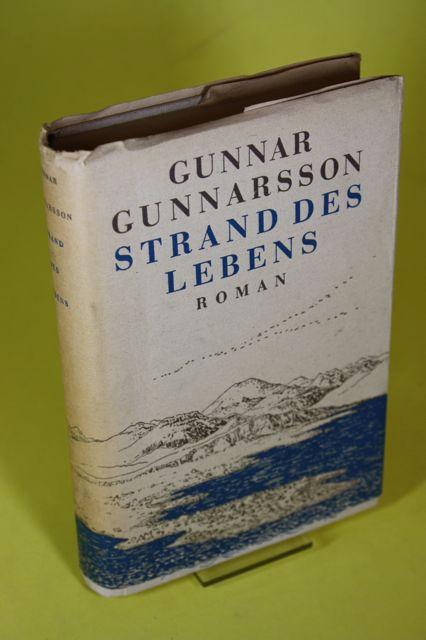
strand2Your fate is not whether you make it alive or dead, but how you face it. That’s grim, but then some things are. Gunnar Gunnarsson wrote about this fateful beach surrounding Iceland during the devastation of World War I. The book was Livets Strand. In German, it was translated as Strand des Lebens.

15580902594In English, the title would be The Shore of Life, but it has never been translated into English. It is an allegory of that war, set in a remote Icelandic fjord. It is the unique, life-affirming, and devastating story of a pastor wrestling with his faith in terrible circumstances, tried by the beauty and horror of life and the often-times inability to distinguish it from death. It is a writer wrestling with how to tell the difference. In an Icelandic context, it is a shore. In this time in which we need it, in many languages. We are at sea.

p1310163We need help help both going out and coming back.

The Harbour Master of Dritvik

For almost four hundred years, hundreds of men camped at Dritvik, on the extreme west coast of Iceland, for the spring fishery, and set out in tiny wooden boats into the open North Atlantic. On a ferocious, rough coast, this troll sat in the sea and made a safe harbour. For hundreds of years he looked out to them at sea and when the men came home they came in on the beams of his gaze.p1350857

He is still watching, still making the harbour, still waiting, and whatever is out there on the Atlantic is still coming in — just not men, and fish. He’s not alone. Trolls rarely are. They are herdsmen, after all. Turn around slowly. You are being watched.

sheep


The Lonely Mountain

At dusk, this volcano broods under its glacier, far from its sisters, above a land the colour of blood.

snaefellsWelcome to Snaefells. Jules Vernes went to the centre of the earth here. Surely, Bilbo fought his dragon Smaug here. This mountain is greater than that, though. She pulses with power, alive and potent within her cloud, creating weather. As an indication of its power, look to her eastern flank.

othermtn

See that? The mountains around Snaefells turn to light in the afternoon, and open up a pathway into other worlds. Snaefells does not. She is here, physical, and present. That is quite the feat, because look at the Atlantic at her feet.

bright2If you thought Iceland was in the North, don’t forget the Gulf Stream, because this is not North. So, yes, Snaefells is at the centre of the Earth. This is Middle Earth, between the worlds of Fire and Ice. For a view of the strength of this effect, compare the water that has bled out of the land, with the bright sea below.

lake2

Iceland is a living animal. Snaefells herds her. Forget this at your peril.

Creative Space in Iceland

I started this blog a year ago, talking about tuns. Here’s the result of a year exploring them or just wandering through them (under the observant eyes of ravens.)

fly

You Are Never Alone in Iceland, Hengifossá

(Well, unless you’re always looking for humans for company. In that case, it might be best to stay in Reykjavik.)

Today, I’d like to illustrate an observation that it’s not people who are creative, but space. Ah, you might ask, what is a tun that it might lead to an observation like that?

scratch

Icelandic Horse Scratching Its Head

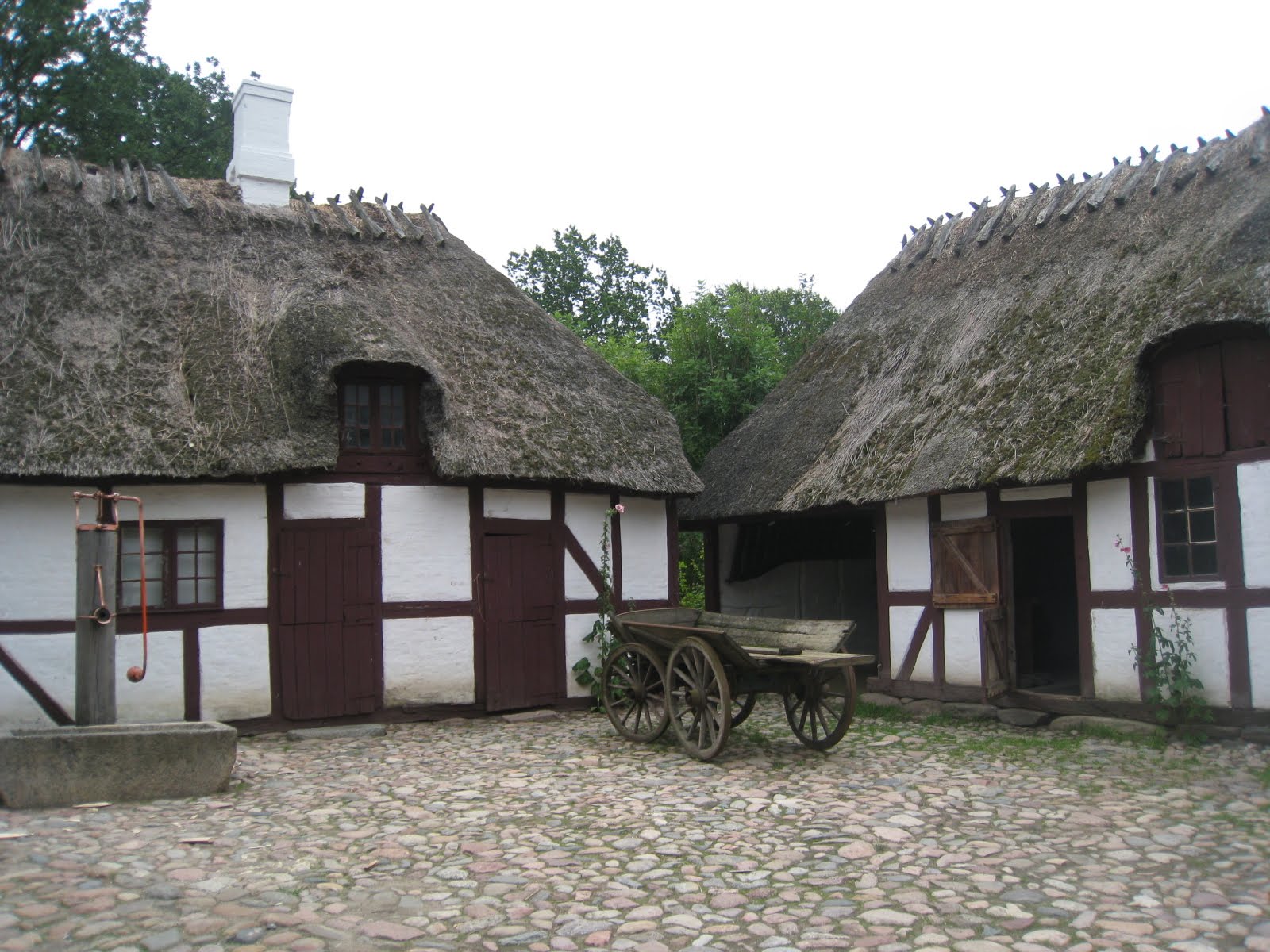
A tun is something that you can observe (and take part in) everywhere in Iceland (and in the North). Here’s a tun in Denmark (the former colonizing power, grrr):

010Half-Timbered Danish Farmhouse

Den Fynske Landsby, Fyn, Danmark. The working courtyard in front follows the ancient Norse (and thereafter Icelandic) architectural model of a tun, an open air working room between buildings. 

A tun is a building without walls or roof, where the money-making activity of the farm took place, and where the manure (the dung, a variant of the word “tun”) was stored, which could be spread on the fields to create future wealth. It is the source of economy.

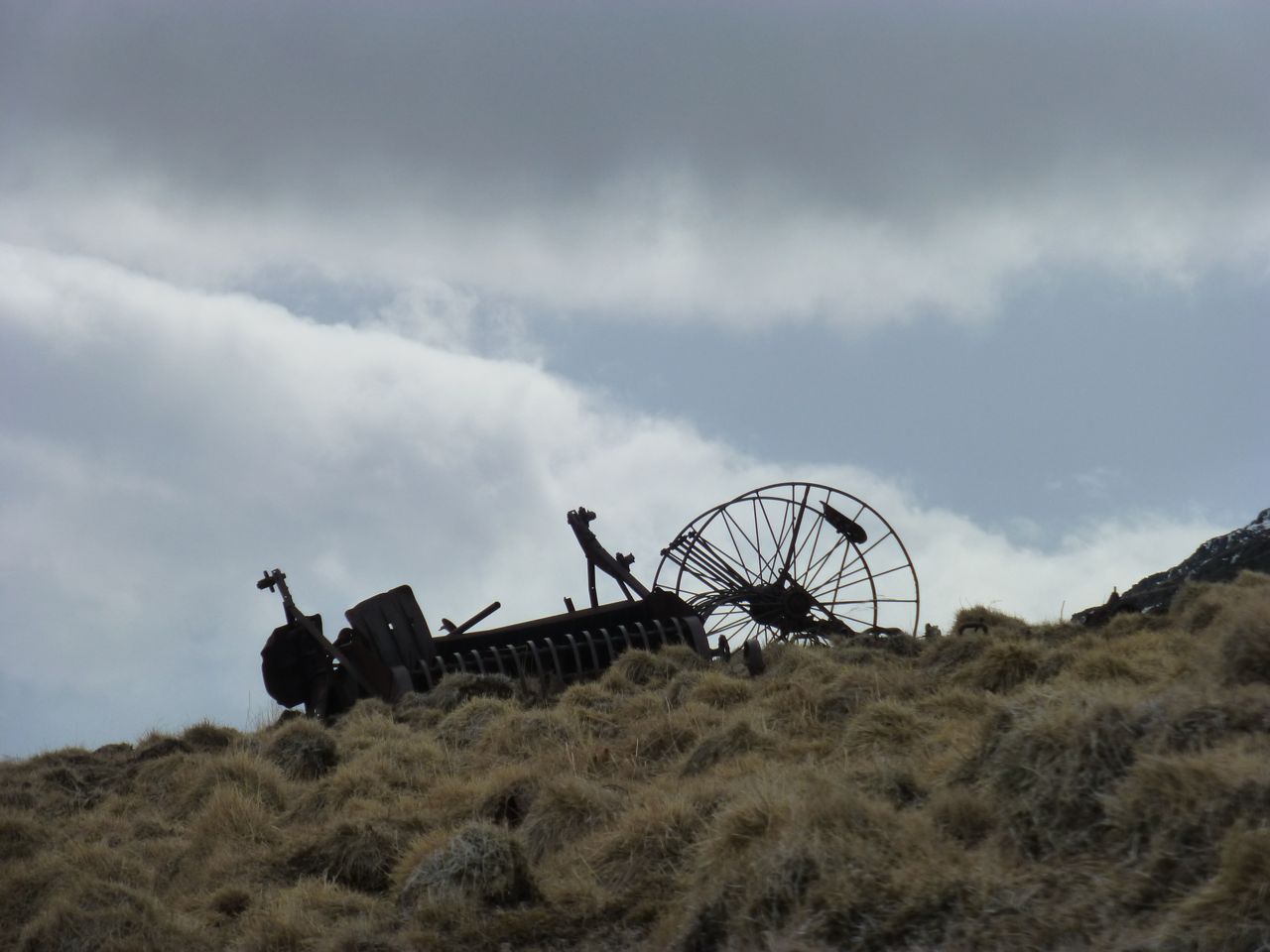
P1460930

Horse-drawn Wealth Spreader Waiting for Re-use

Hedge fund version 1.0.

The tun usually connected to the track to the next farm, or out to the world of trade. Here’s a variant on a tun, from East Iceland…

landhusLandhus Farm Barn, Fljótsðalur

In this case, the tun is the road itself. It’s the architectural space (within the landscape rather than the farmyard) that carries forth the energy of the tun.
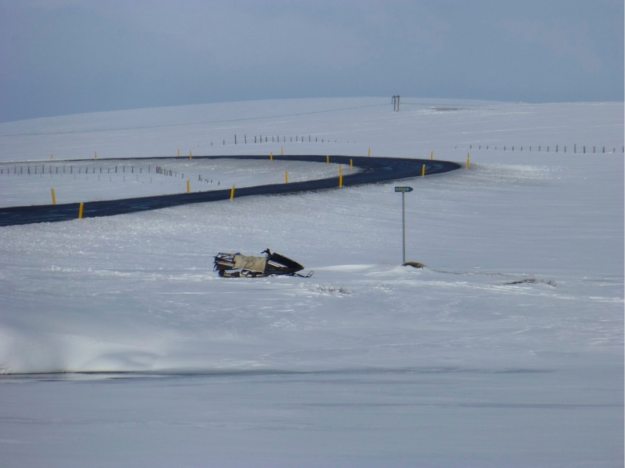
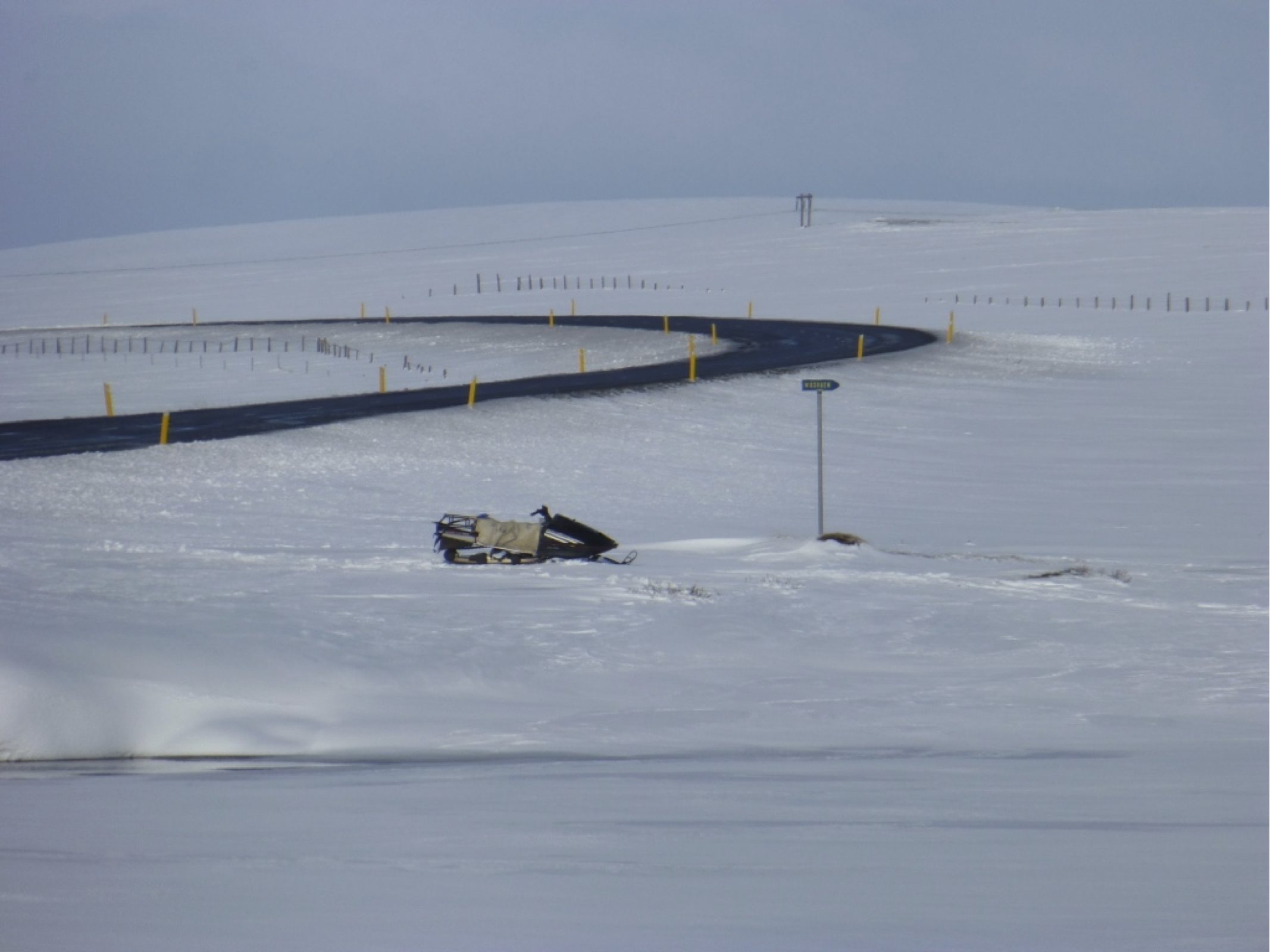
road

Icelandic Highway 1 in March, Mývatnssveit

Park your car here on the way back home from work. 

The word “tun” is the German for “to do”. The English word is “doing.” 

tundungdoing

A nice triad!

It is a place of energy that creates the economy and trade and activity of a country (or a farm), or lets it efficiently take place. It is the place where the future is created. Without it, the activities of humans would not be as organized as it is, nor could it be efficiently packed up and exported from the farm (or the country.) Iceland, of course, is a sophisticated modern country, so we can expect this source of energy to take many forms today. Here are a few:

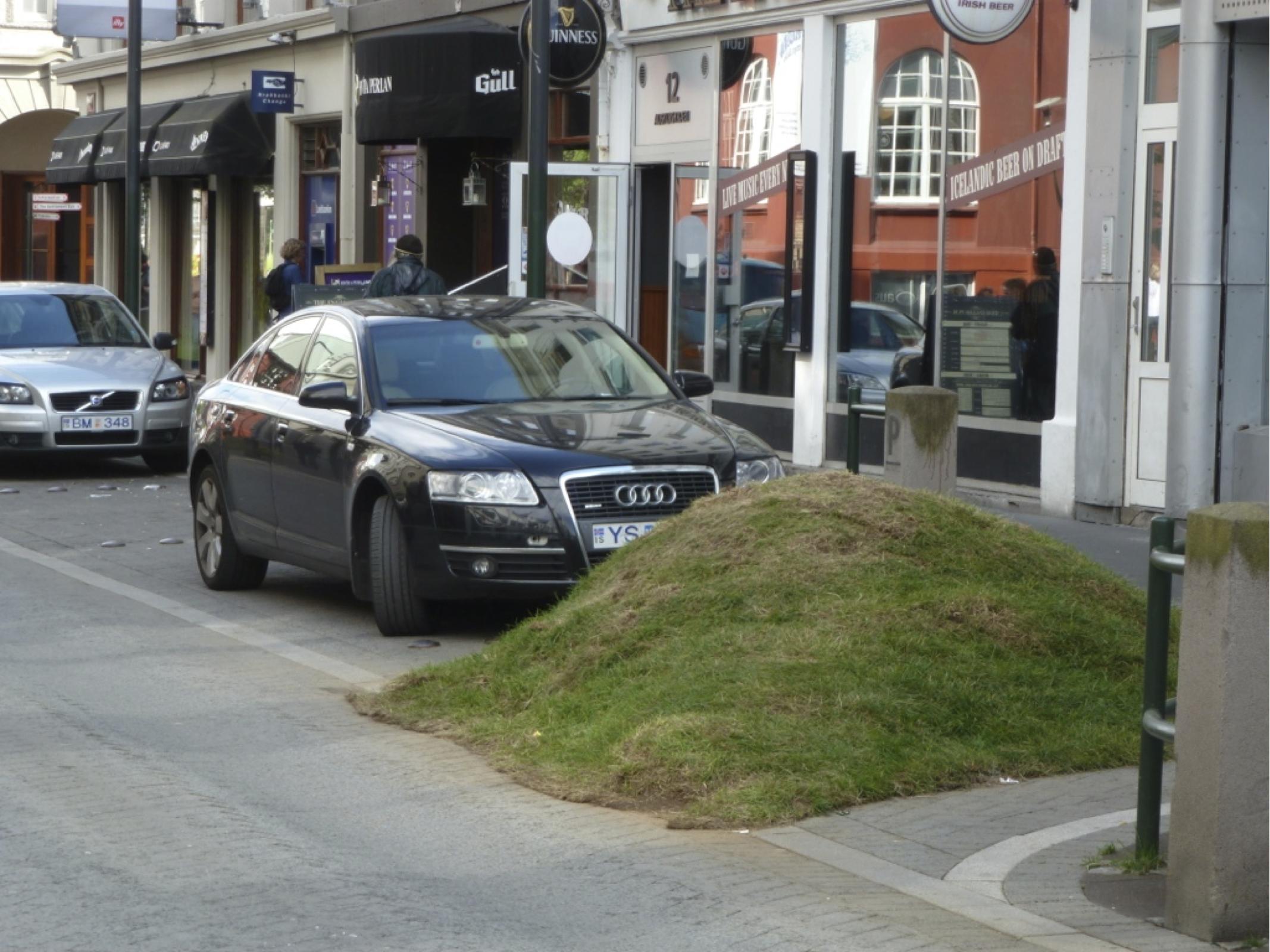
Parking Strip.

streetArt Project in Downtown Reykjavik

The pattern of tun-in-the-pasture is reversed to pasture-in-the-tun. (The tun is Reykjavik.) This pasture, though, is in the shape of a disused turf house. Clever stuff!

Movie theatre.
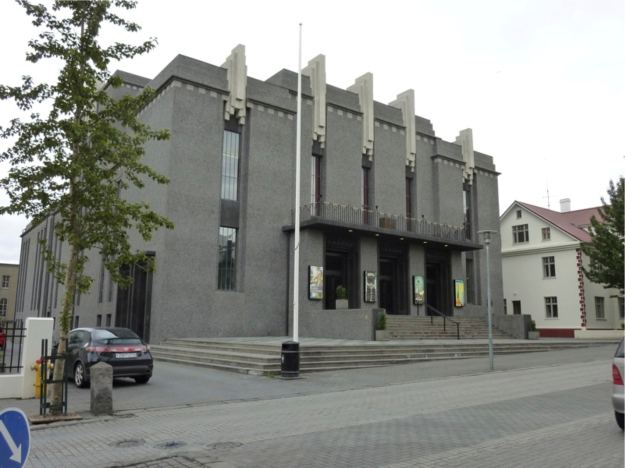
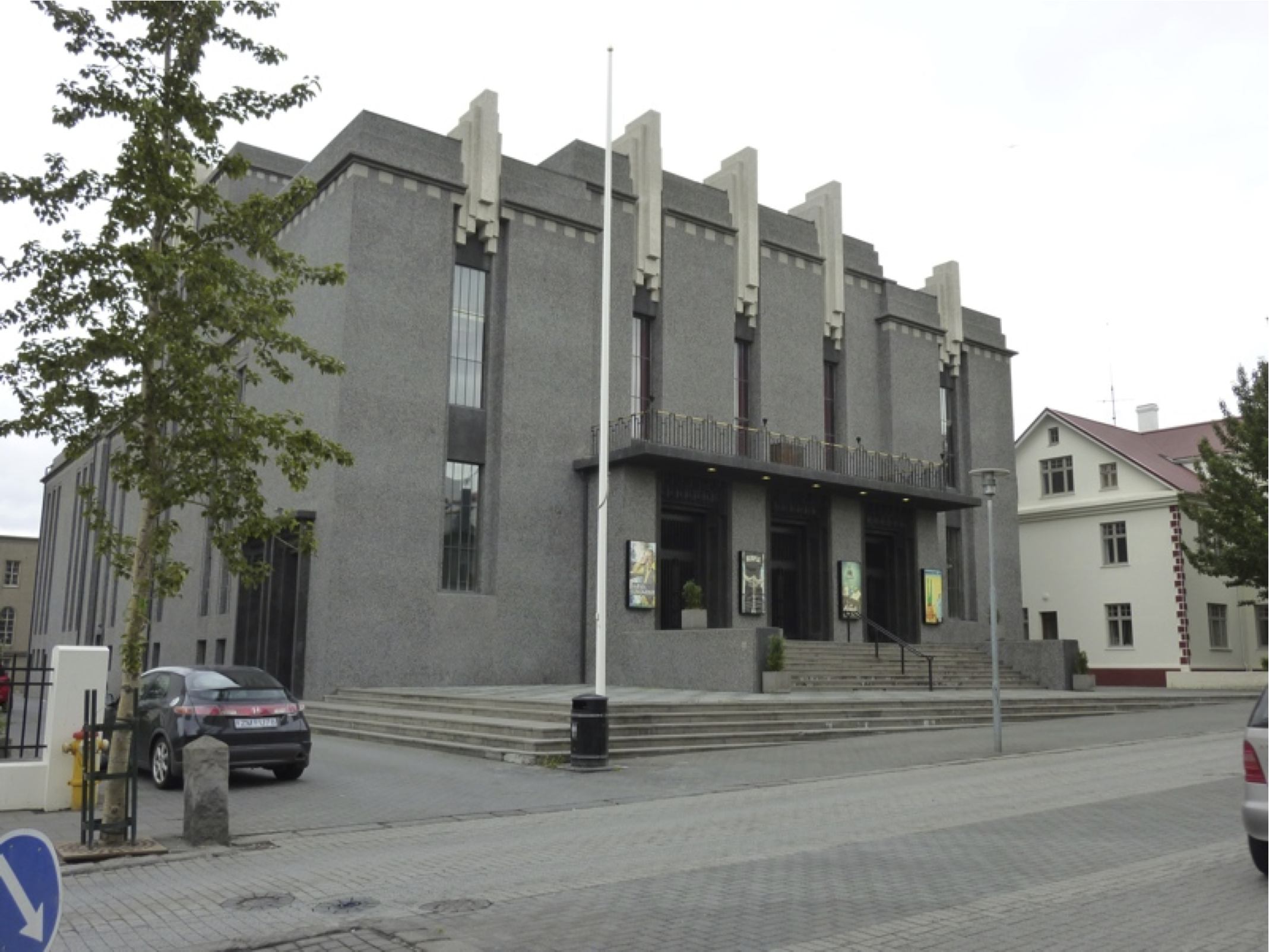
theatreThe Reykjavik Movie Theatre is Also a Place of Exchange.

Note that this is a re-purposed building. In other words, not only is the movie theatre a contemporary tun, but the building acts as one as well.

Church.

church2Vik Church, South Iceland

 A very useful tun for work with souls. In this case, the houses of the village take the place of the buildings of a farmyard.

Forest.
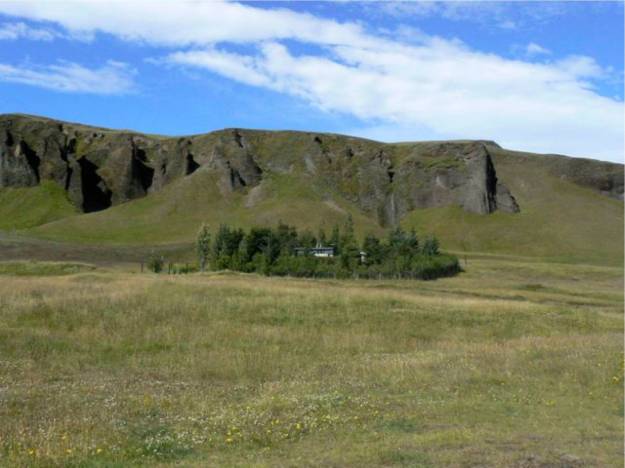
treehouseSummerhouse in Kirkjubærjarklaustur

The trees are part of a nation building program of the Icelandic government. They represent not only shelter and beauty, but future money in the bank. In this sense, they operate as a dung heap in a tun. The land itself has been separated from itself into a special tun space here. Here’s something different…

Youth.
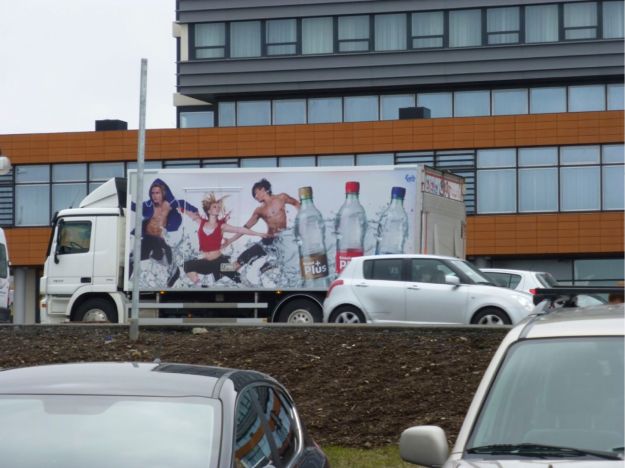
truckA Movable Tun

This tun represents a combined cognitive, social and bodily space. It moves around and around through Reykjavik, invading people’s dreams and re-shaping them into effervescent images of mineral water. Not into the dance scene? No problem…

Farm.
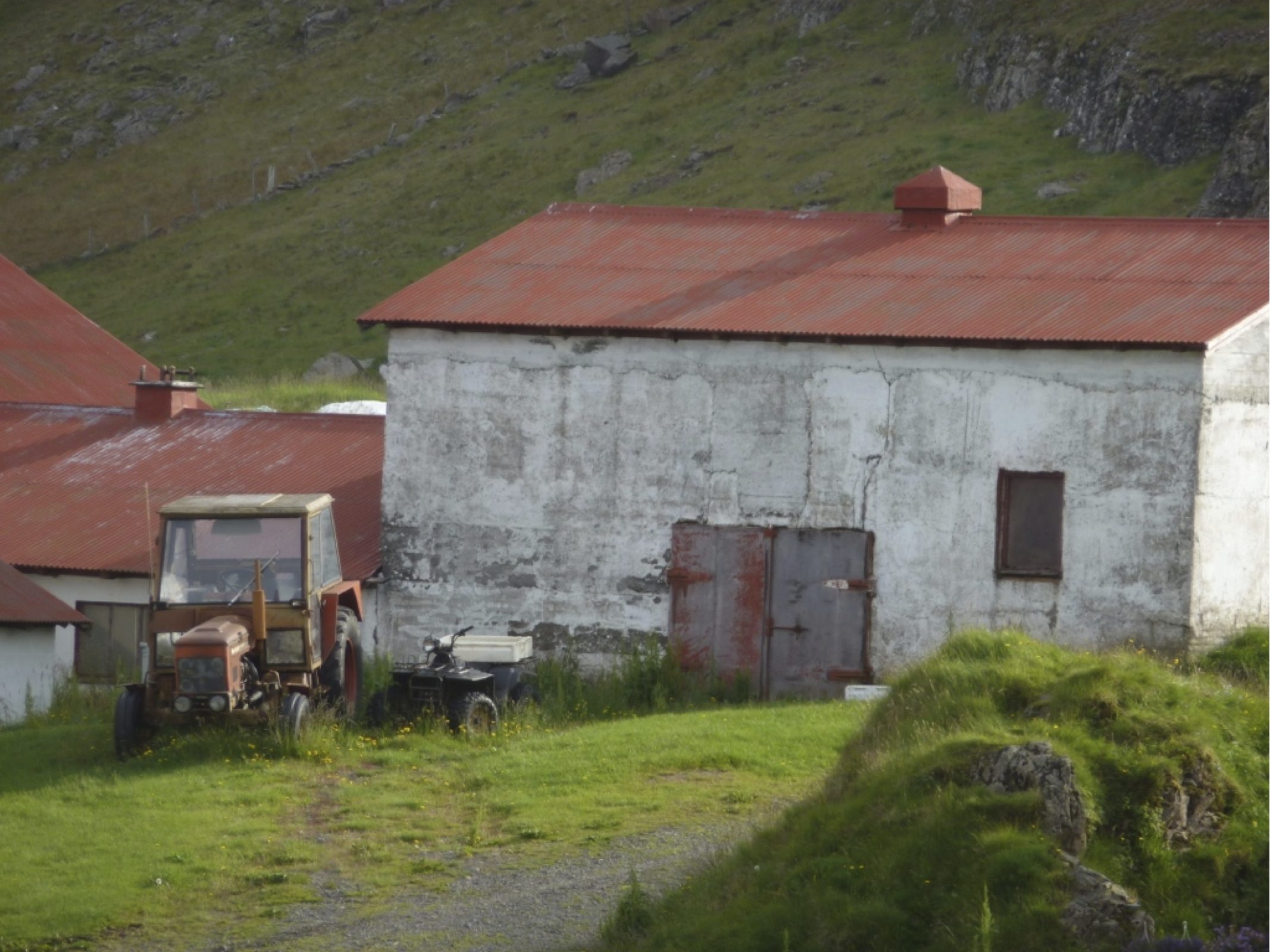
farm

Icelandic Farmstead. 

Note the elf house in the foreground. It’s good to live close to your neighbours.

From the perspective of a capital economy, this capital has depreciated to the point of needing to be replaced with a new depreciation sequence paid for with interest. In a tun-based economy, the expense of taking wealth from the land in order to build structures upon it is a debt that will be erased only when the creative (tun-ish) potential given from the land and embodied in the building and the tractor are mined dry and these materials (dung-wise) rot back into the earth. They are, in other words, a fertilizer. You don’t paint fertilizer. You also don’t throw it away. Want something more adventuresome? Iceland has that too.

Glacier.
skaftafell

Svinafellsjokul, Skaftafell National Park

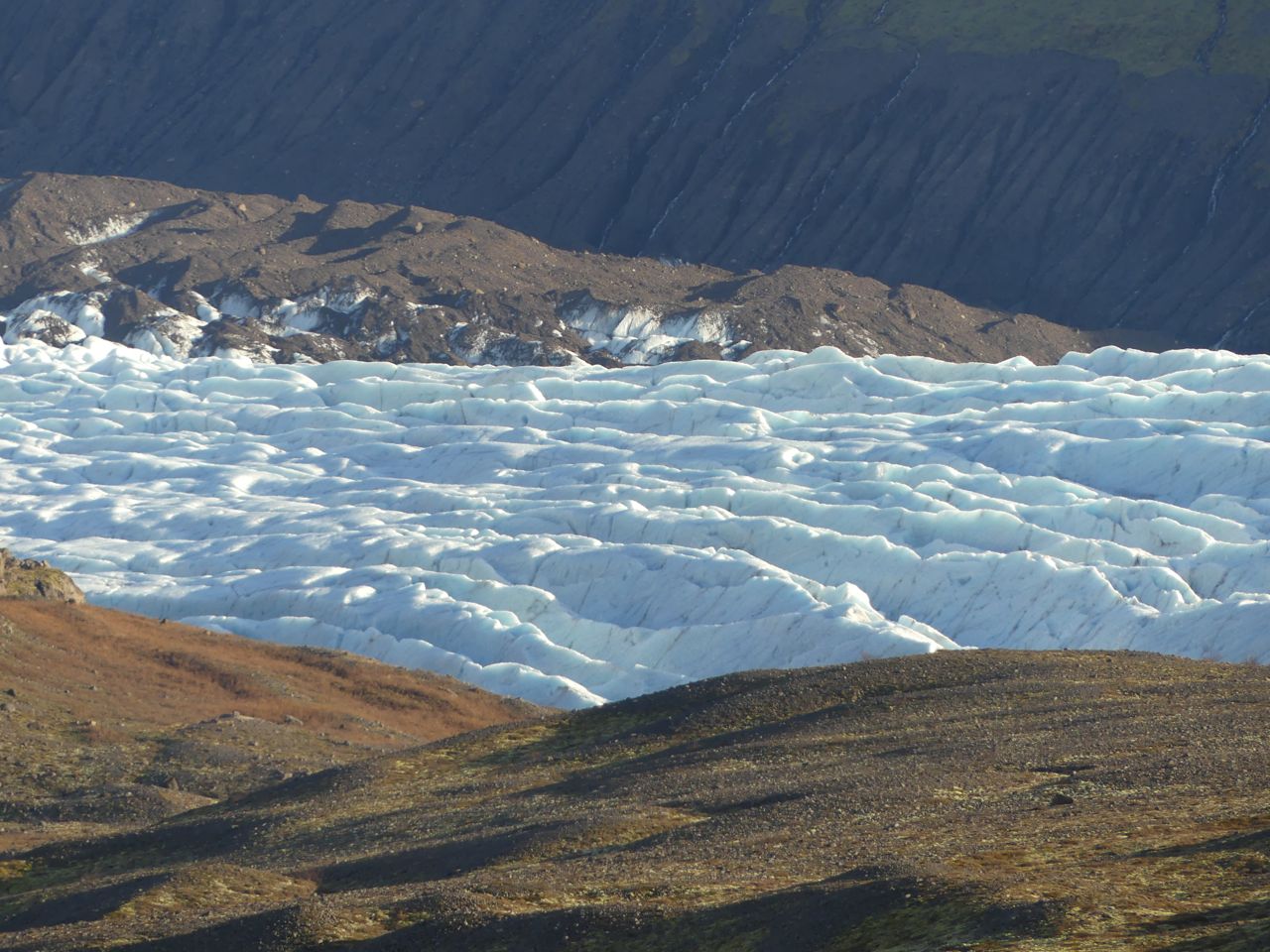
A glacier is part of the common wealth of a country, that which belongs to all of the people and brings water and energy to all. It’s not just the people, either. It also brings energy to the land itself. Here, you can see what that looks like, on the other side of the glaciers.
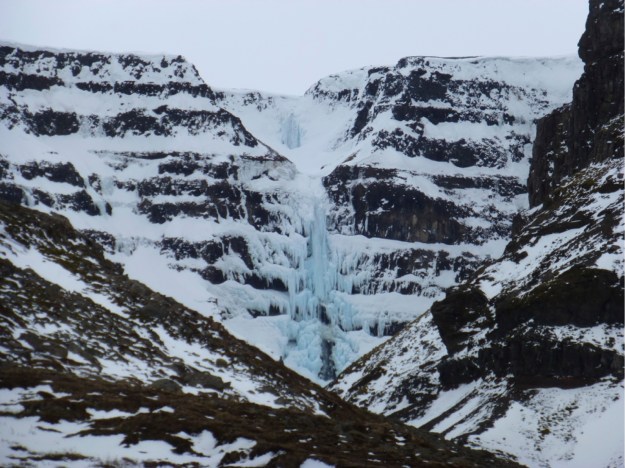
blue

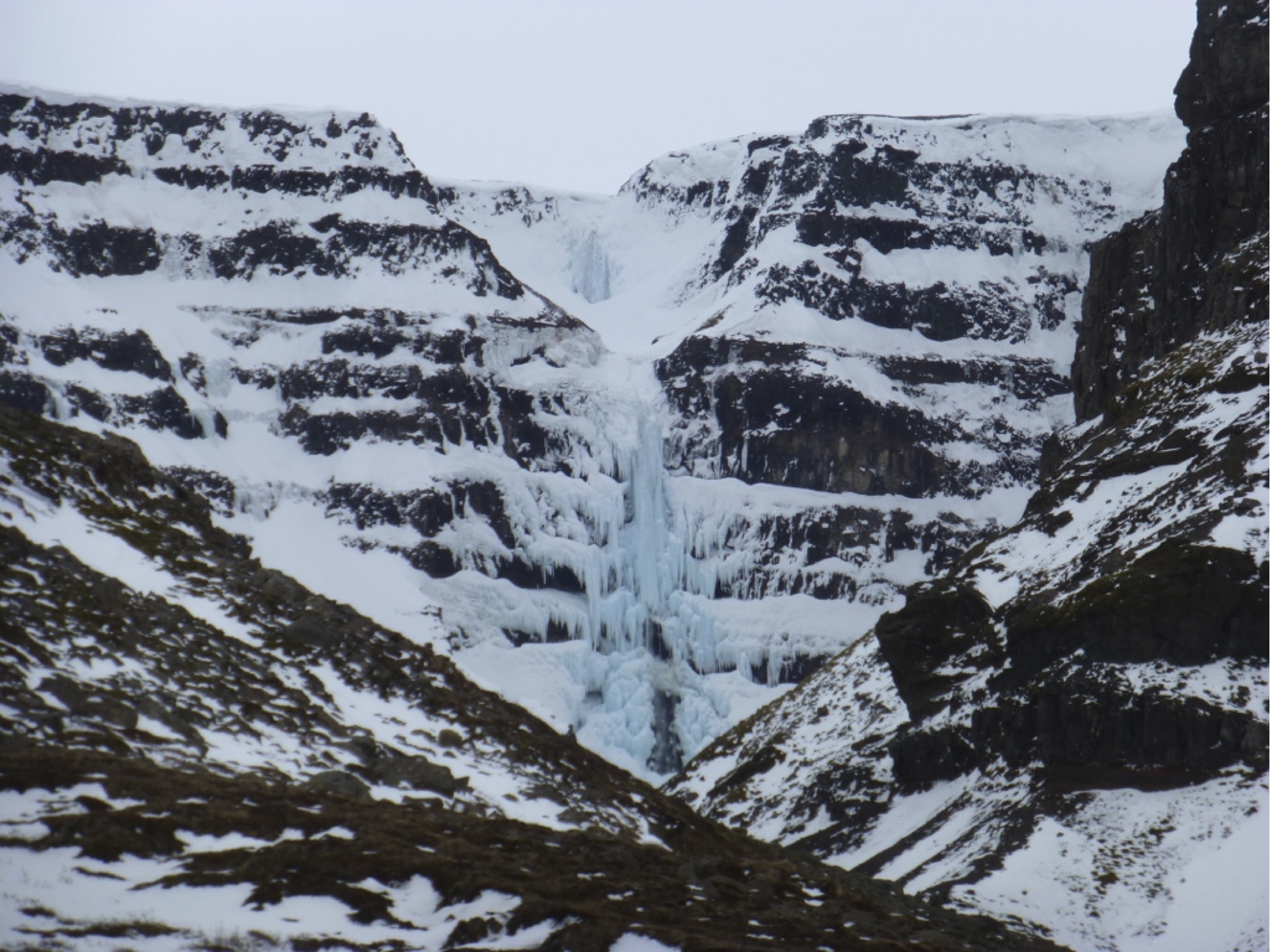
Strutfoss

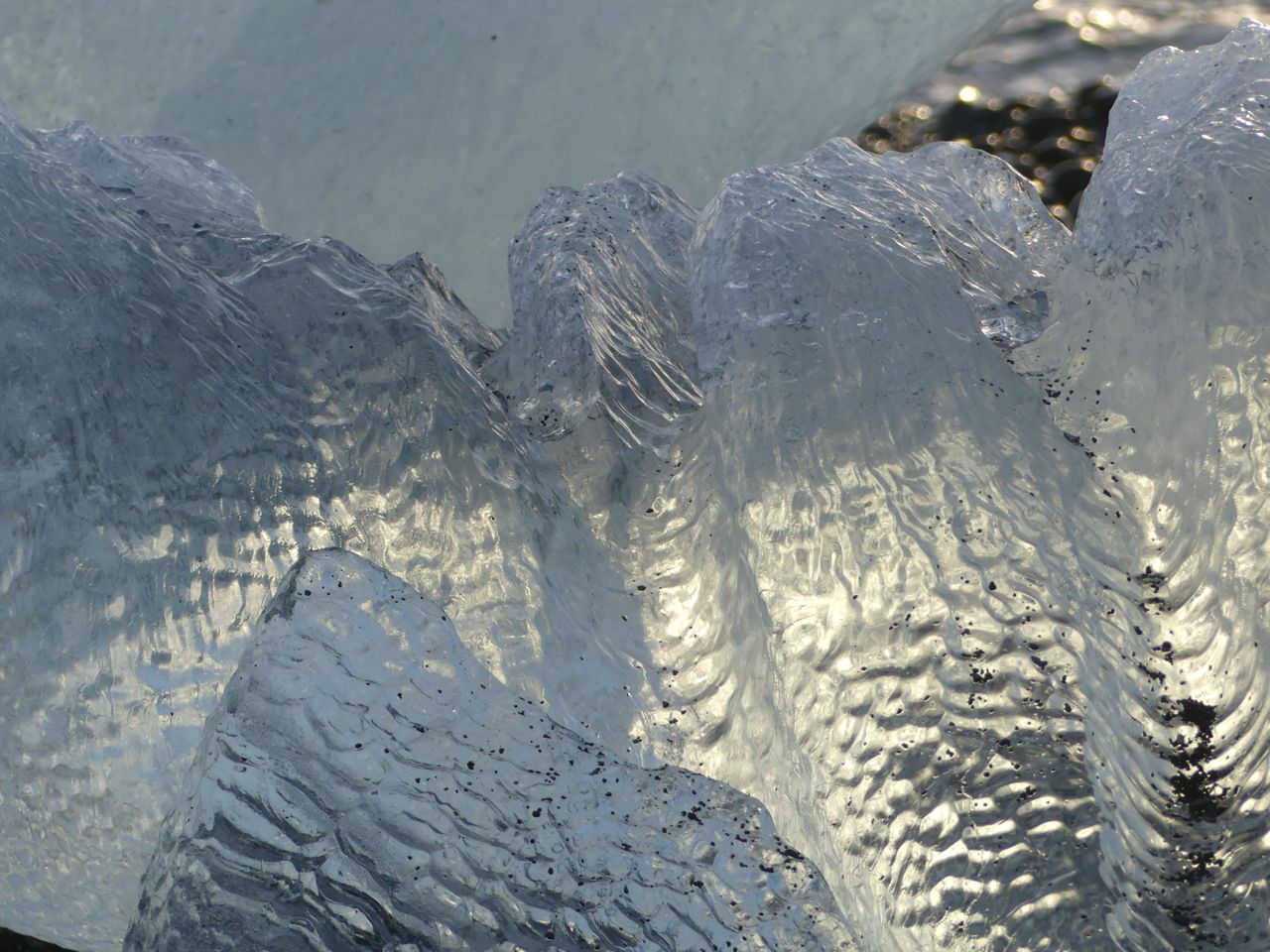
Aka glacier turning into light. Very good for the soul.

A glacier can attract tourists (and mine them for wealth), provide healthy recreation for the people (an idea of nature, imported from coal-smoke-choked industrial England), provide habit for fish …

snaefels

The Laugarfljót, with a view to Snæfells

These are both tun spaces. The mountain generates snow, which generates water. The lake collects the water, to provide habitat for fish. By concentrating energy in this way, mountain and lake make it available for human harvest. (Not that this is their plan.)

Unfortunately, capital-intensive economic systems can mess with that and simplify the idea of a tun almost to unrecognizability, like this:

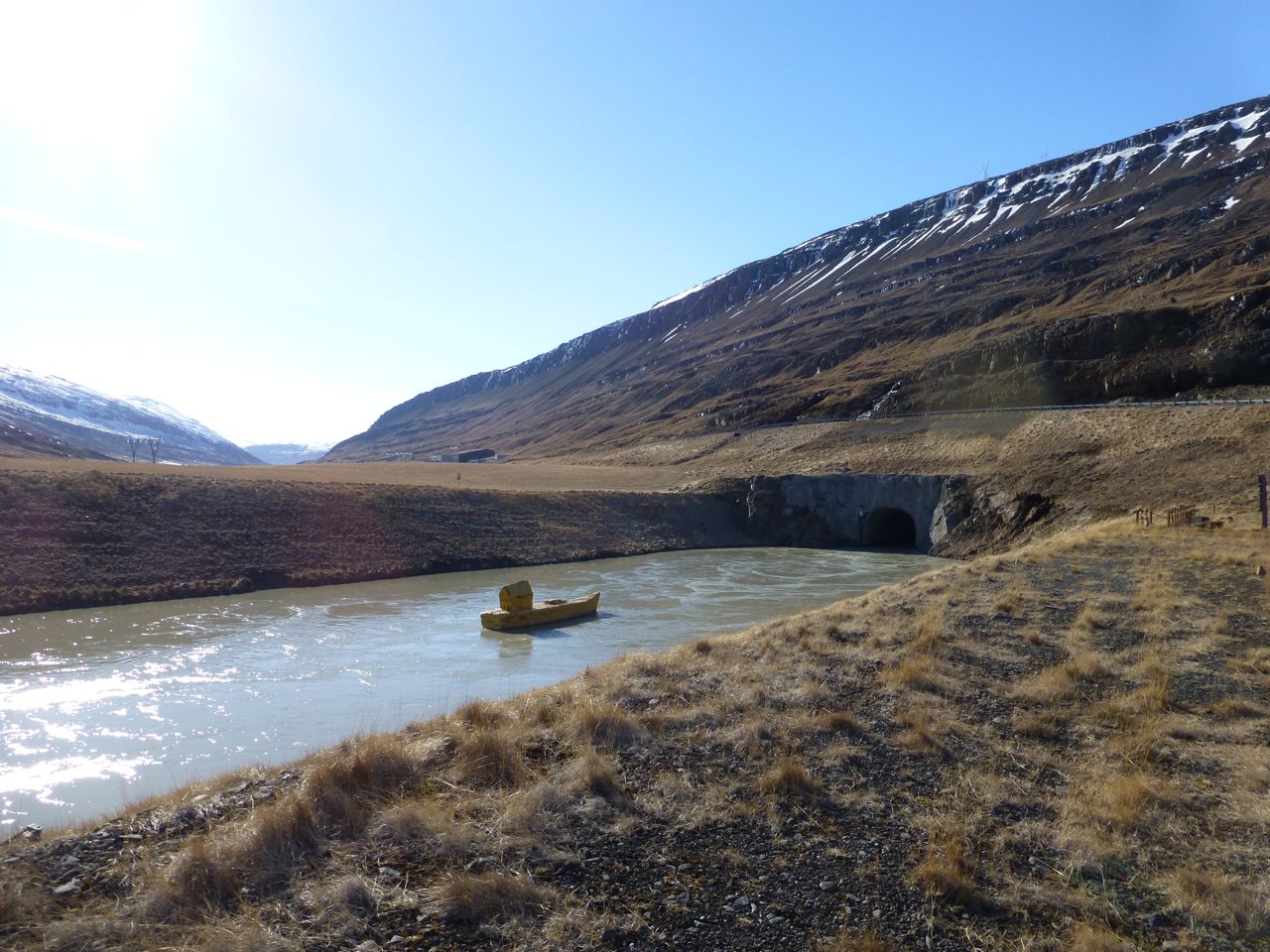
P1390140 This is propaganda in the service of art.

Or art in the service of propaganda. Or a statue in the middle of a hydroelectric dam outflow channel that has diverted the water from Snæfells into the wrong fjord. Something like that. Here, here’s another look: P1390165 See that? The ship steams upriver, loaded with generic manufactured goods, towards the economy created by turning Snæfells’ life-giving properties into cash, that can pay for electric toasters and Swedish toilet paper. It never, of course, arrives. Here’s it’s goal…P1390138

The Heart of the Mountain

The statue was erected on the notion of eternal wealth, just before the economic collapse made the whole notion questionable. Here’s a construction site (abandoned) in Reykjavik, based upon the economic version of this dam …

evolution

OK, So Maybe Not Such a Great Idea After All

If you get too abstract with your tun, you run the risk of running out of manure. Good to know.

Ah, perhaps you’re tired of farms by now? Well, here you go, way up in the north…

Boat.boat

A Sea-Going Tun Space

Powered by human energy (doing). Any fish brought into the boat (the tun) are instantly converted into wealth. Well, as long as your arms are strong and the weather holds.

This particular moveable tun has been sitting on the shore for a long time, but the principle still holds. When you start powering that boat with diesel, then a good chunk of the fish you bring in are not wealth, but payment for an operating debt, and, if you bought the boat on credit, a capital debt as well. If you’re not careful, the whole thing becomes a debt. Instead of organizing the wealth of your labour on the sea (very wet common space) for delivery to social space, the tun organizes social relationships for delivery to you. You have, in other words, lost your tun (doing.) Here’s a solution:

Garden.
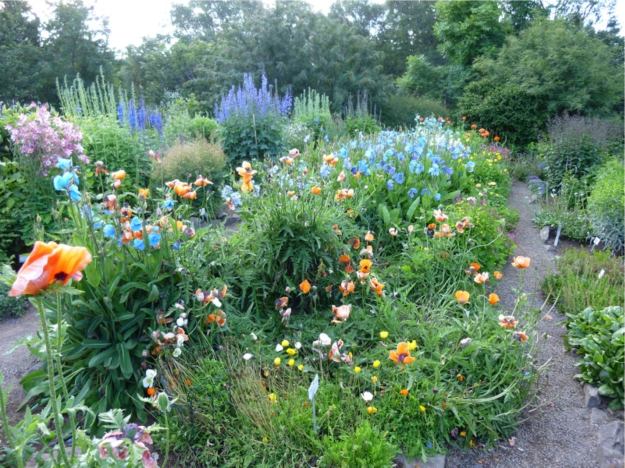
garden

The Akureyri Botanical Garden

This garden is planted in Iceland’s northern capital to see what plants will grow in a cold, northern climate. The concentration is on decorative plants. That is part of Icelandic nationalism, a way of dunging the country so that it brings forth wealth (in the sense of a tun economy, organized around human relationships to common space (land and water, mostly), beauty and fecundity are both forms of wealth.) So is this:

School.
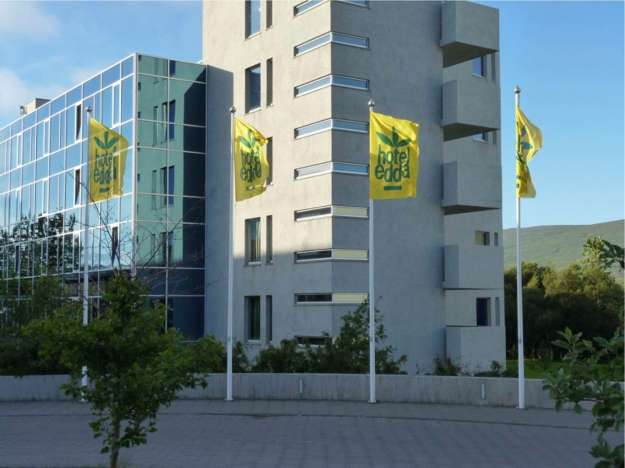
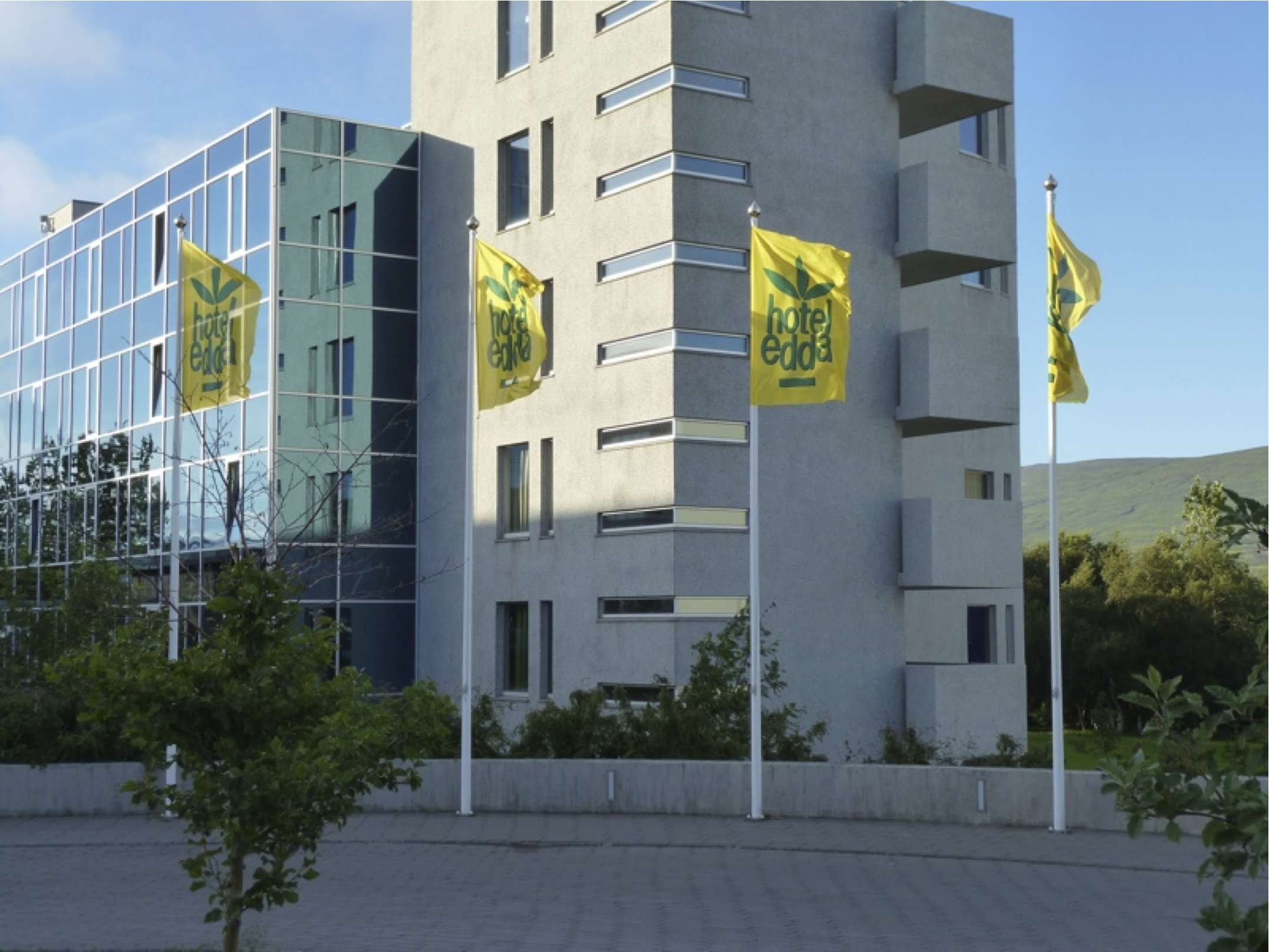
edda

Hotel Edda, Akureyri

In the summer, the richly-endowed residential high schools of Iceland are converted into hotels, serving travellers. This doing (tun) allows for them to be sheltered and fed without capital-intensive infrastructure on the land, that would not turn a profit (dung) and would be a drain on the community (a kind of field.) In other words, without the Hotel Edda concept, travel in Iceland would be greatly reduced. That is pure tun! In the winter, the schools are tuns of a different kind, gathering Icelandic youth together for their common education. It would be best, however, not to think of these multi-use spaces as either schools or hotels, but as a space which allows for and serves both relationships to the land. See? Pure tun! Similarly…

gas2

N1 Gas Station in Blondüos

In sparcely-populated Iceland, a gas station is like a city in itself (Icelandic Staður, German Stadt [city] or Staat [country], English State, and in land terms a Stead, as in a farmstead. Here it’s a gas stead.) Everyone stops (where else?). Everyone eats (hamburgers, chicken, pizza and hot dogs, the national dishes of Iceland, and for the lucky soul a liquorice ice cream bar [available only in Iceland] if you root around long enough in the freezer.) The places so interrupt the roads in a tun-ish kind of way that even the police stop here. Rather than waiting at the side of the road trying to nab people of interest, they just hang out at the N1 and interrogate people while they’re filling up with gas.

Here’s a somewhat more esoteric tun from Kirkjubærjarklaustur:

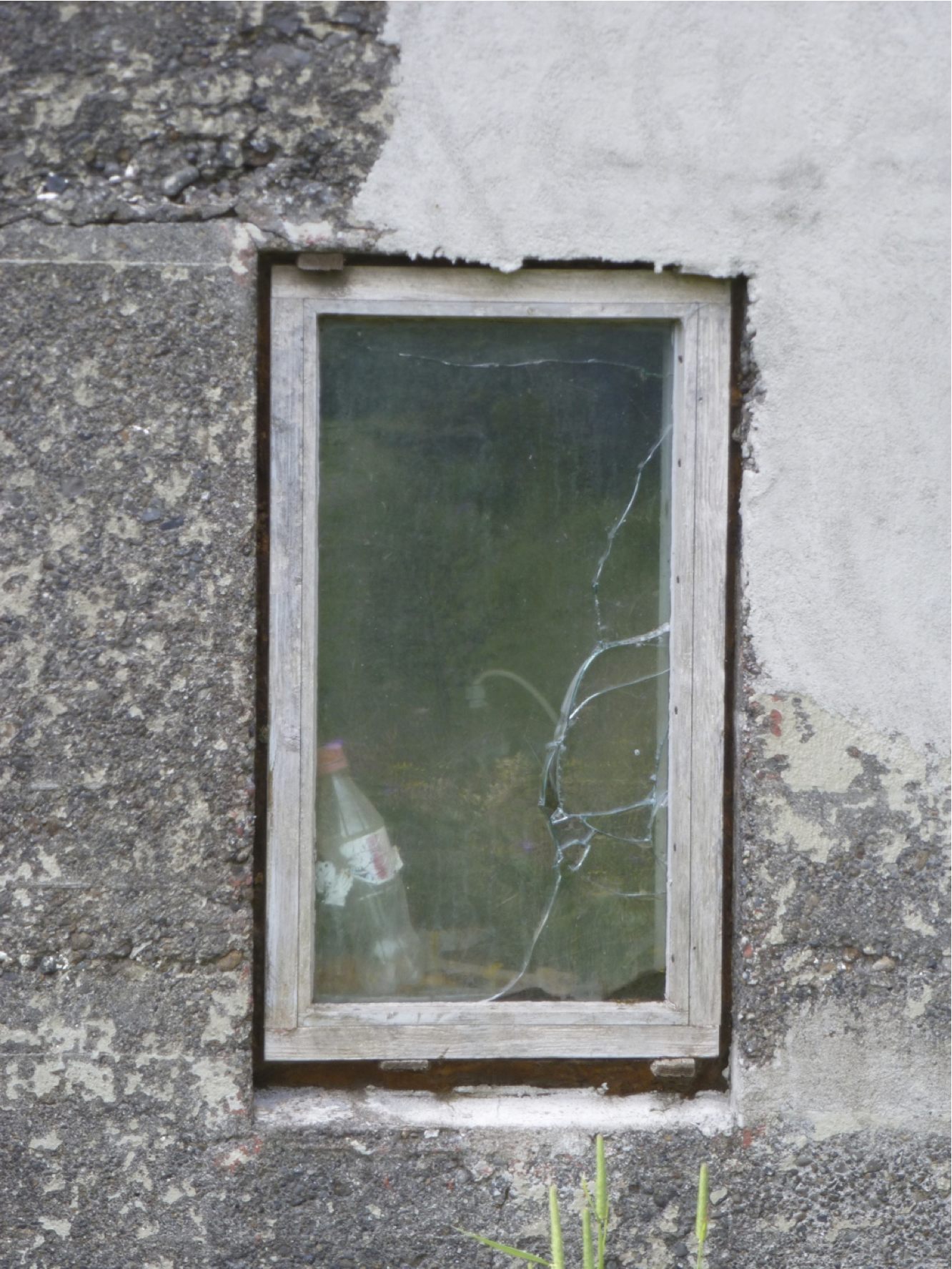
window

A Window on the Tun …

… is part of the function of the tun, even when it’s a bit wonky from a stone cast up by a weed eater or, perhaps (judging from the repaired state of the wall) earthquake.

Similarly, a piece of propaganda-art (or is it art-propaganda?) in downtown Reykjavik provides an anchor point for tourists wandering down to the waterfront (very tun-ish, that)…

Tourism.aluminum2

Leif the Lucky’s Aluminum Ship, with Modern Adventurers

If I was crossing the North Atlantic in a longboat, I’d want it to be a made out of aluminum, too.

… while reminding the Reykjavikers that the money that built their glittering waterfront…

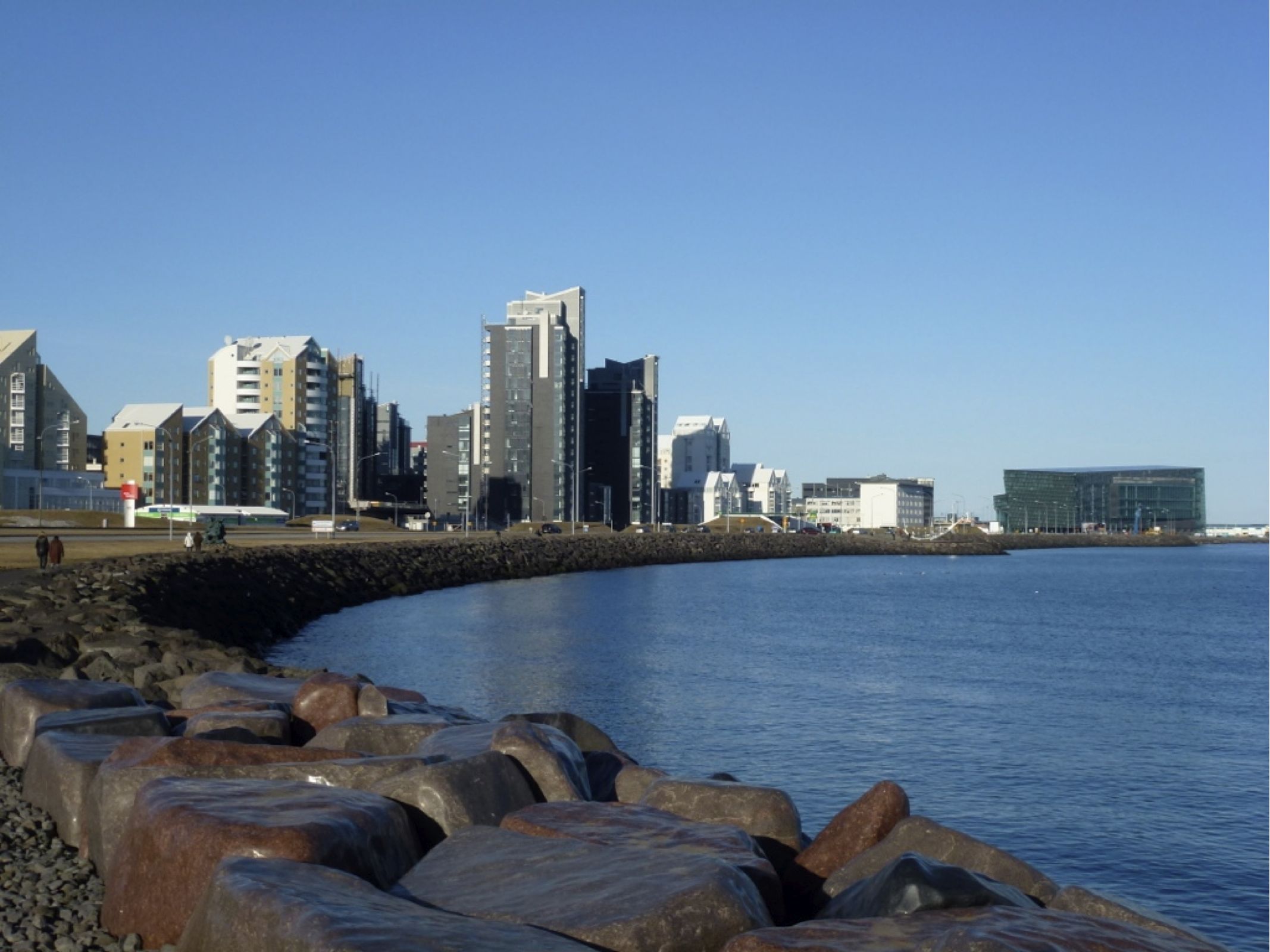
City.

city

Reykjavik: Iceland’s Tun

It interacts with other national tuns to create the worldwide tun network.

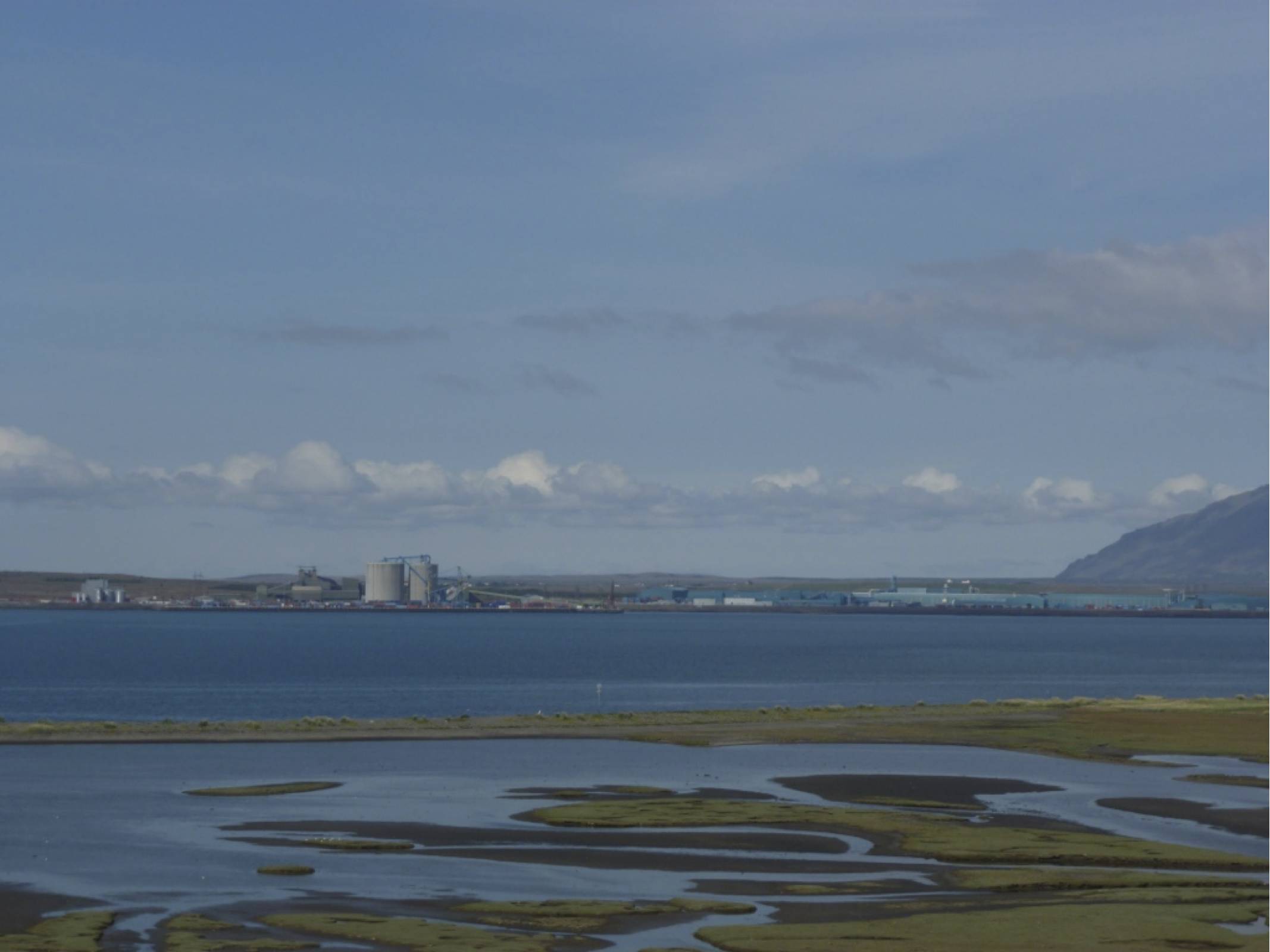
… came from the aluminum smelter (and glacial-melt electricity) across the mountain in Whale Fjord.

Smelter.
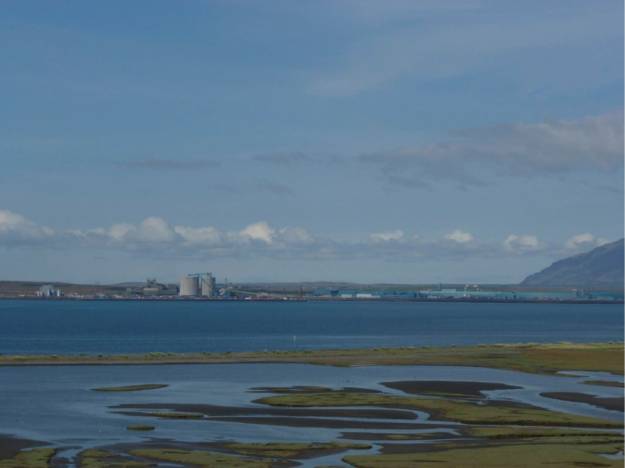
aluminum

Aluminum Smelter with World War II Airstrip (aka bird sanctuary), Hvalfjörður

Leif’s ship points straight this way. This is a capital tun. That it needs space (Iceland) is rather incidental. It might have been British Columbia. Oh, wait, they’ve dammed rivers and diverted them through tunnels and extirpated salmon for an aluminum smelter in British Columbia, too! Like tuns, capital is everywhere. Sometimes it flows right through a tun and obliterates it.

Here’s Reykjavik’s most interesting tun, right on the waterfront …

Harpa.harpa

Harpa

The Reykjavik opera house and performance centre. It also houses a CD shop, a cafe, exhibition space, practice space for dancers, fashion shows and classical, folk and rock concerts. In other words, it provides a space for the concentration of cultural activity of all kinds in sufficient quantity and quality that it can be delivered to the people, the country, and the world. It’s also a beautiful piece of architecture that captures the sun light and casts it in coloured rectangles on the concrete plaza at its base, like sketchings made out of chalk. Tun all the way.

Not all tuns are so complex. Here’s one of the most basic (and powerful) of them all…

Graveyard.

graves

Right Between Church and House

Note the road that comes directly to it. The tithes that came to a church accrued to the landowner who had built the tun space for the people and were, as such, a major form of wealth for Icelandic farms. The byproduct was the dead, who were planted in the tun — a kind of social dung, fertilizing the future (Heaven) or the present (built as it is on human memory, the more the memory the richer the present.)

In this conception of wealth, capital (and money) aren’t exactly the goal, but a product of the tun space. The carefully-bounded space below, on the other hand, added to the tun space…

Field.

field Stallions at Skriðuklaustur

Without the line that bounds this field, there would be no inputs to a tun space. It would only be a potential space. Never underestimate a line, in Iceland or anywhere else.

Here, this image may illustrate that more dramatically. Here we are at Myvatn…

horsefield

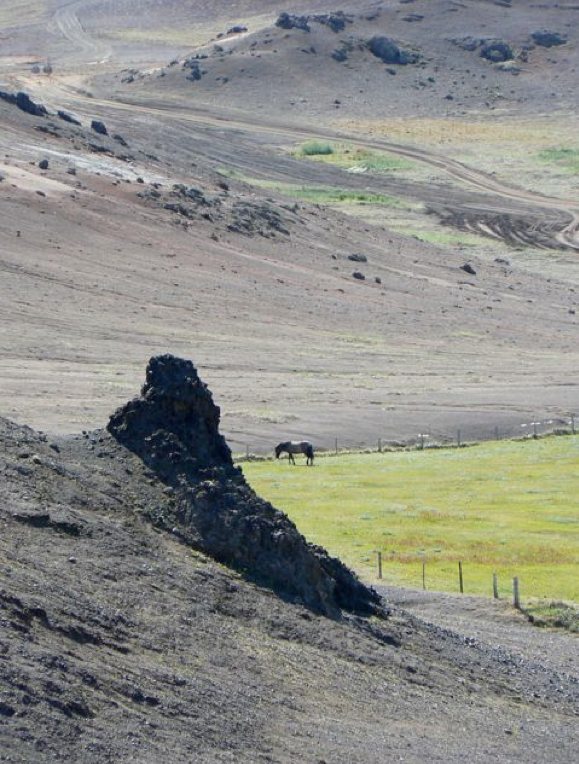
Volcanic Slag, fenced and dunged = Field = Horse 

Simple math.

If we lift the camera just a teensy bit, we get some perspective…

myvatn

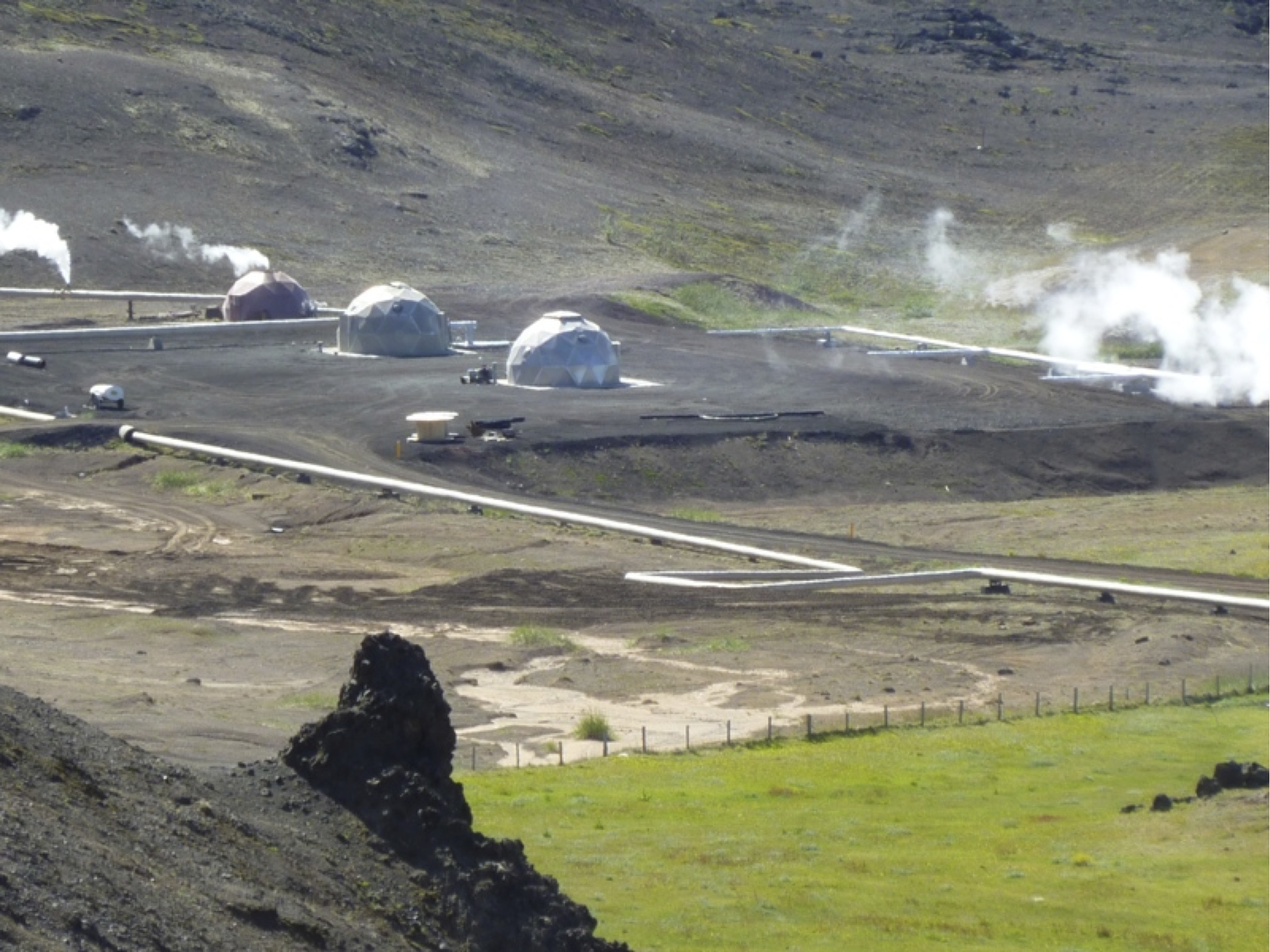
Volcanic Slag + Capital + Cleverness = Geothermal Power

Our horse is behind the rock.

You see how that works? The land has potential. It has a form of potential energy. The application of a particular technological approach towards defining it as space allows for different forms of energy to come out of it. A line gives us a field, gives us a horse. It will be brought into a tun, where this elementary relationship is retained. Capital gives use  geothermal power station. It will be brought into a city, where it’s own elementary relationships are retained. In the first case, the earth is full of life and living relationships. In the second, humans are separated from the earth, which is a field of energy, that can be harvested. The interrelationship between these two ways of being is complex, but at all times the elementary principle remains: creativity comes from the space that is outlined by technology; the outcomes are predetermined. In other words, we who are humans are not separate from technology and cannot just direct it to our will. All we can hope for is to create spaces, which create energy flows that lead to where we wish to go, but we should be very clear as to where they might lead. Here’s a kind of tun that got its start in Iceland over a thousand years ago:

Thing.

thingvaellir

The Thing Place in Þingvællir

The world’s first parliament convened on this spot at the confluence of the walking trails of Iceland in the year 930. All the people came and collectively decided their social arrangements, then followed the trails back to their home farms. This is the tun of tuns.

On the principal that space creates function and energy is latent in the land, some tuns are geographical spaces. Like this…

Fjord.

hrafnseyrie2

Arnarfjörður, from Hrafnseyrie

This was the view that Jon Sigurdson, father of Icelandic independence, took in as a child.

Here’s a slightly altered version:

Harbour.

harbour

Stikkishólmur Harbour

Here’s an example of a common Icelandic tun: a ruin of a lost farm.  The people of Reykjavik come from places like this that were no longer tenable in a capital-fueled society. They do, however, remain.

Ruin.

ruin

Ruined Farmhouse near Arnarstapi

The mistake should not be made, despite the astute and chilling observations of Iceland’s Nobel Laureate, Halldór Laxness, that such buildings were a betrayal of the debt of humans to their land, as they were too capital intensive and not constructed within the flow of seasons and fate. Instead, it’s better to think of them as graveyards and memory artefacts, that continue to bind people to the land, although only in potential, and offer the chance of return. The energy that was squandered (as Laxness saw it) on these buildings, remains in them, as it also remains in the land, and can be mined again. Only in the sense of capital is it lost.

Well, there are many other forms of doings in Iceland. Cataloguing them won’t add to that appreciably. But perhaps this image might sum it up:

Bridge.

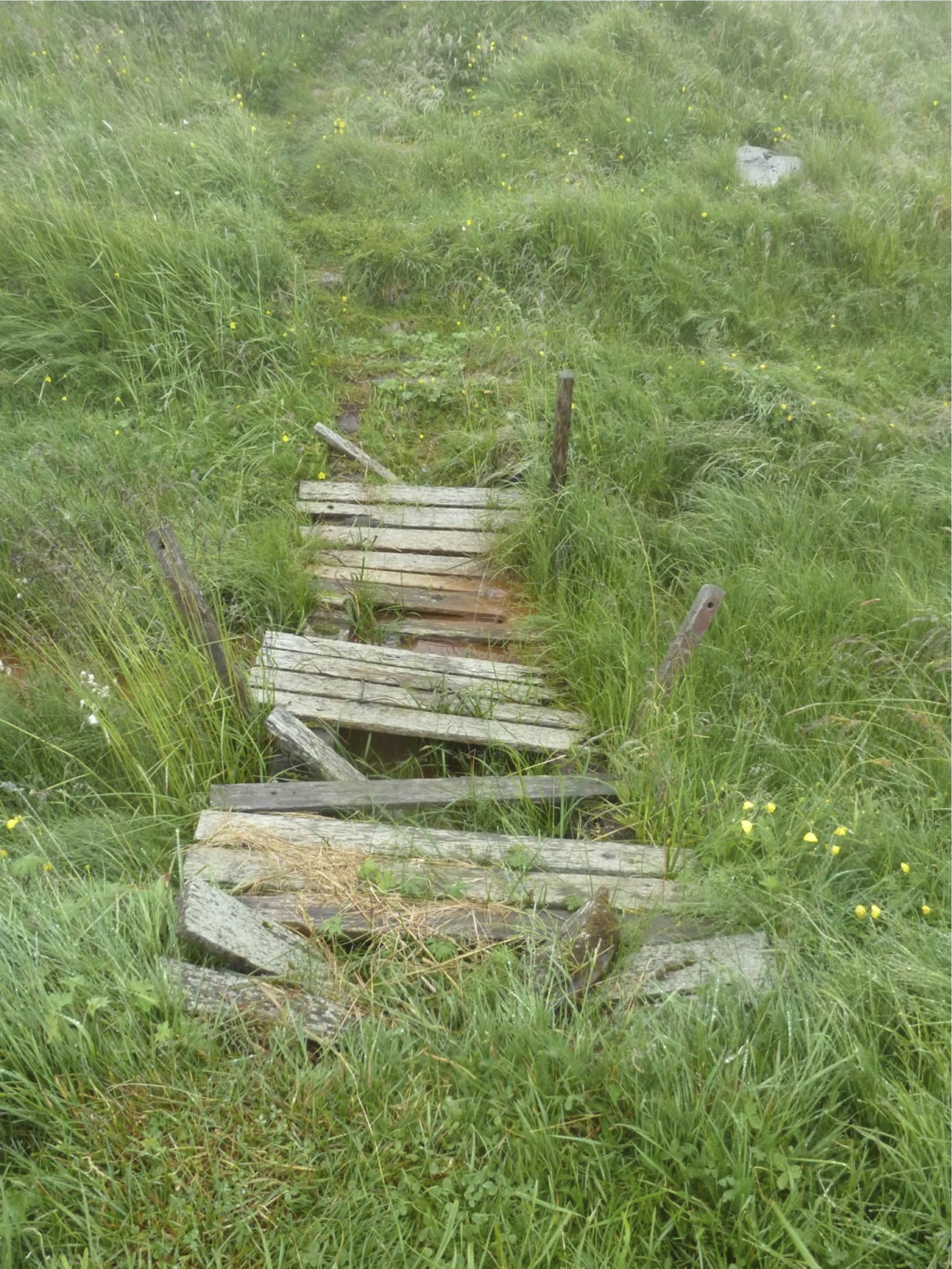
bridgeLike the string that defines a field and allows for concentrated activity, a bridge is another technology both similar to a tun and connected to its energy. It allows for improved delivery of material to the tun, without the contamination of important water sources with the mud generated by foot traffic. In this case, perhaps not so well, but, hey, I used this bridge on my way to the Dwarf Church in Seyðisfjörður, and it did its thing. Oh, and as for bridges, here’s one…

Golf Course.

golfSlowly, a people who have lost their connection to tun space are refinding it, in the golf course surrounding a church which was set up next to an elf city in the lava fields south of Reykjavik. Humans are like horses in a field. They really can’t wander that far.

A Vision for Writers from a Sculptor

There is a line that makes a story. It’s the path any person can walk along to get from one place to another, or the one my dog used to always find in the weeds, because the edges of the gravel are where everything happens, or maybe it’s just because it’s just where someone has passed by. This is a problem that doesn’t even bother sheep.

P1420751

Sheep Tracks, Hengifossá Canyon

If you leave enough tracks they don’t make a trail. They make a net. A net’s a great thing, but if you catch the world with one, what then? Where are you going to drag your catch? 

Maybe it’s not so hard. Maybe sometimes writers just need to be dragged out of their words and given a new pasture to run in.

blue2

Icelandic Writer Staying Close to Home at Feeding Time

Or maybe not. Maybe it depends. A couple days ago the sculptor Ken Blackburn asked me to go out and make a line in Iceland. Everything in the world, he said, starts with a line. So, I made a line. I liked this idea. I could feel what the very beginning of something looked like, and not a story already made which I stub my toe against, which is usually the case. Gunnar’s story (whose house I haunt here) is certainly like that. And would you just look at what found me in its first moment, as I set it into the world …

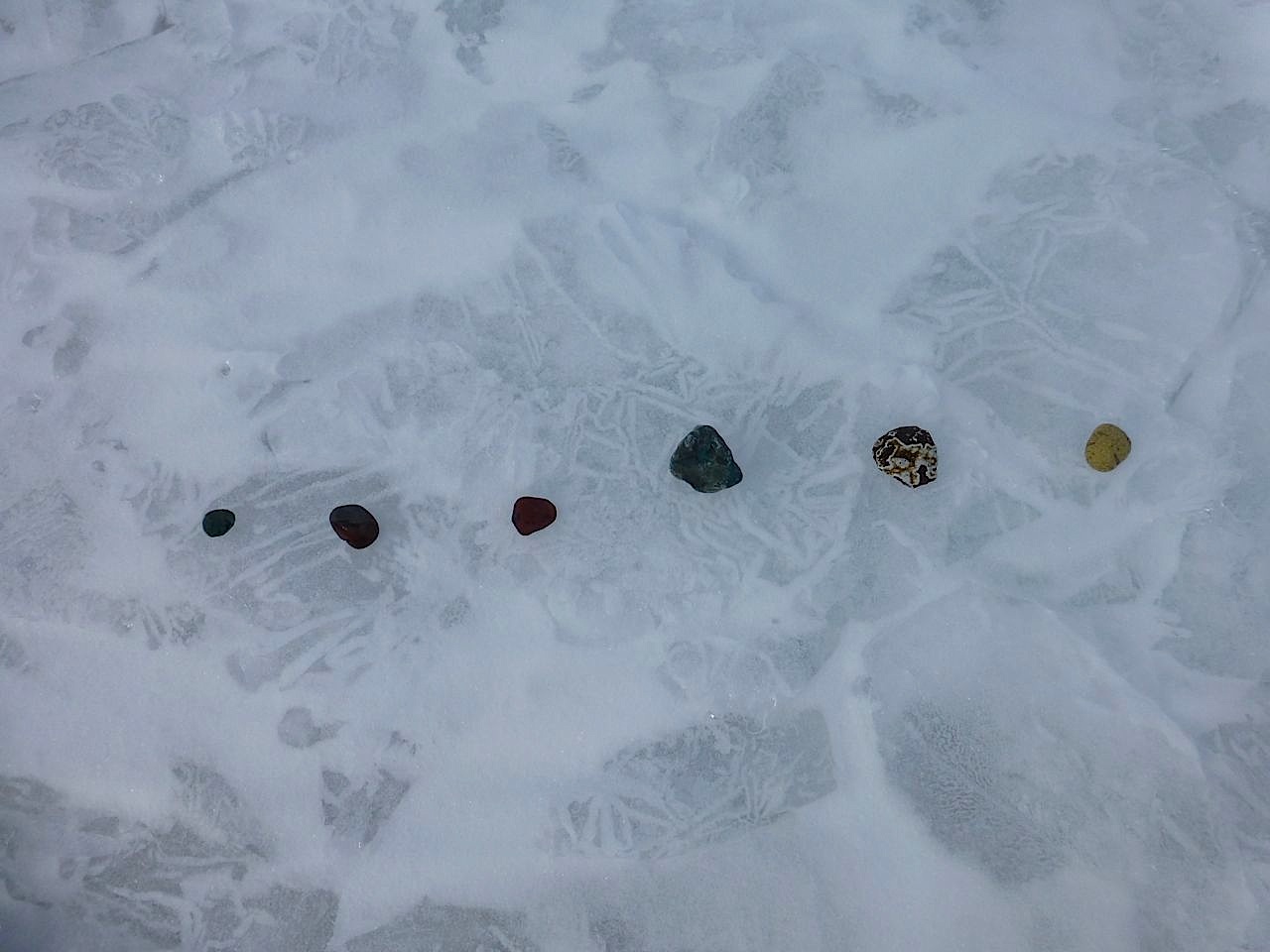
littlelinecloserA Line of Volcanic Stones

In this case, the edge is in the midst of the ice. It leads from itself to itself, and quivers there, while the ice could just as well extend to the edges of the universe. Maybe it does. Maybe it’s only humans who say, “Look! There’s an edge to this stuff.”

Imagine what a story would look like if it were written like that. The beginning and end would lie side to side, cuddling up close in the centre, and all the rest of the story would stretch out in folds of sheets and kicked off blankets to the sides. You might have to pick up the book, and read it any way you wanted. The edge would always find you. Maybe I didn’t stub my toe against Gunnar’s story. Maybe, as a man largely of the 20th century (so far), I was always in it and by walking far enough stubbed into the line that was always there — maybe at the centre, maybe way off to the side … who’s to know in a spherical world? But you see, that’s a writer thinking. What did Ken say? Make a circle, he said. A sculpture, he said, is just a line, too. A circle! Aha!

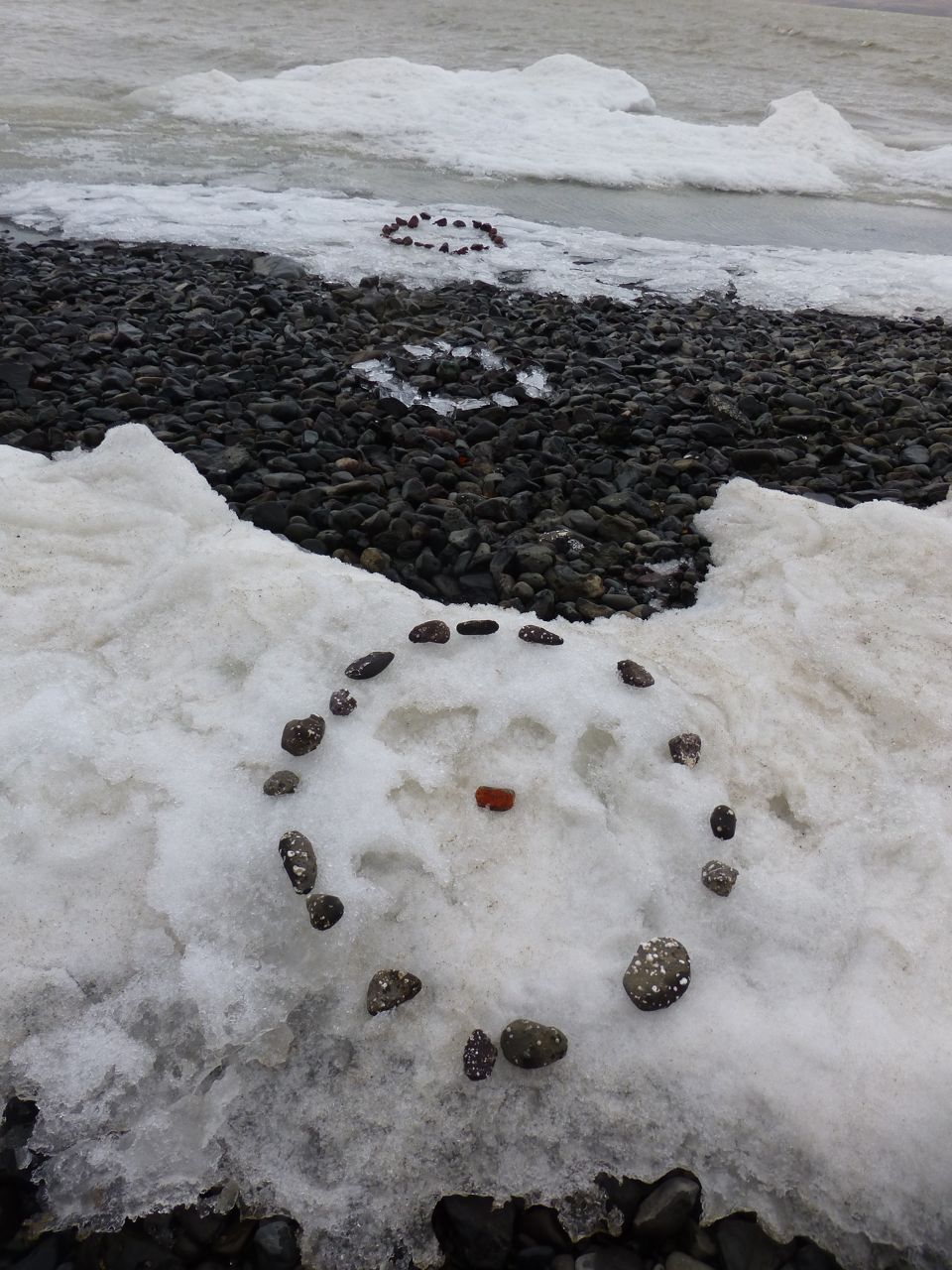
P1430091Well, Sort of a Circle

And, this right on the sight of that original line, too, which looked like this when I showed up today …

P1430070

Gone!

A most unwriterly art form. Writers are always thinking about making a mark that stays. This one, though, is gone … it’s finished. 

Still, a circle, eh. A story that was a circle and not a line, that might have a swan feather in its belly, that might at any time be blown off by the wind … what a book that would make: a book that would mean anything at all, depending on who you are. But wait… I know some books like that. They were the books that Gunnar wrote in the 1930s, especially his “Advent in the Highlands.”

51jjvzSMACL._SL500_SS500_

Advent in the Highlands

The Approved by the 1936 German Propaganda Ministry Version

Don’t jump to straight lines. That book, that Gunnar wrote to promote peace, was used to send German boys to Czechoslovakia, but 4 years later it was used to generate an American desire to go to war, in this edition:

0A36.3L

Advent for Americans

A message of peace for both sides — that circle was Gunnar’s intention. That it was used for other purposes was not. 

So, circles. I thought, well, what if a circle is not alone? What then? So I tried to find out …

P1430110

Two Circles

 Well, that felt good, you know. Look how they turn the space between them into a … well, not a line exactly, but a space that could be a line, or anything… a space of possibility. Not a No-Man’s Land, but an All-Man’s Land. So, I wanted to see how far this would go…

P1430114Three Circles!

Now there’s a line and no line, and the middle circle is within the position of possibility.

What would a story put together like that look like? It wouldn’t be a story, for one thing, so much as a bunch of stones and ice on a beach that the writer and readers could all walk around in together and stub their toes against … but would that be a bad thing? Is that what Gunnar was missing? A third circle? I mean, his stories were all about this…

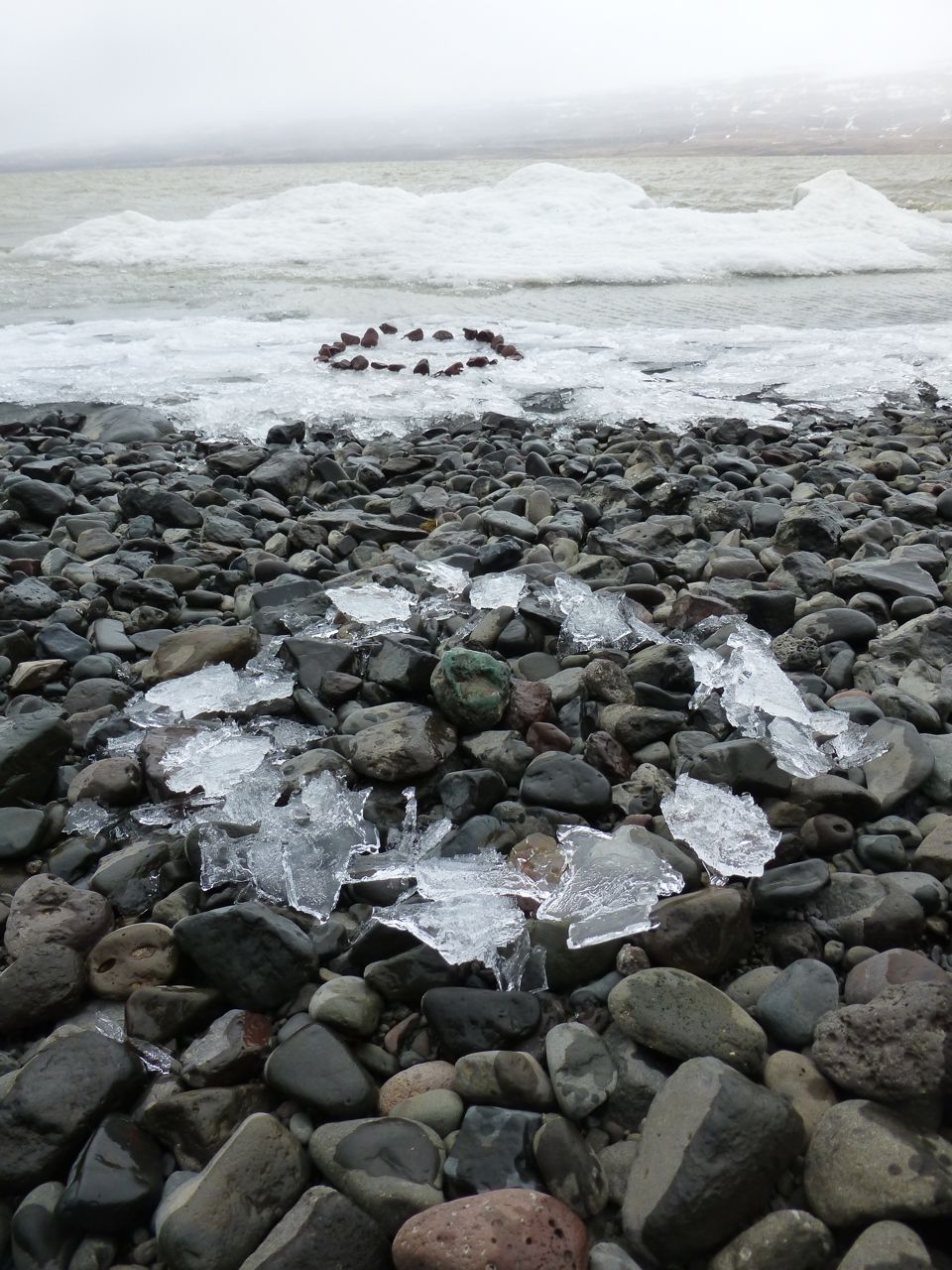
iceringThe Shore of Life

It separates the island from the sea, or the colony from the colonizer, in Iceland’s case, and is deadly and life giving at the same time. Death and life are inseparable in Gunnar’s world. He does not means this as an easy sentiment.

But what if in all his haste to tell a story, to try to save Iceland from colonization and other invasion, through the admittedly ridiculous medium of words, he missed this?

P1430151They Float on Light!

Maybe novels and their traditional structures were the net that caught Gunnar. Maybe that’s an important lesson in literary form, learned from sculpture. I think it is.

Gunnar Gunnarsson, Double Agent: Part 1

Yesterday I mused on the origins of story in lines that cut across pools of presence. Part of the story was the human response to them, that brought them together into art. (If you missed it, you can track through it right here.) Today I’d like to talk about Gunnar Gunnarsson, and how some of those lines are circles, and that they too have a story. Now, circles are very special lines. They have no beginning or end, no directionality and can can extend from every point into every conceivable shape, as long as it has no beginning and end. Circles are eternal. Their boundaries separate into inner and outer representations of … what exactly? Ah, that’s Gunnar’s game. Here’s a circle:

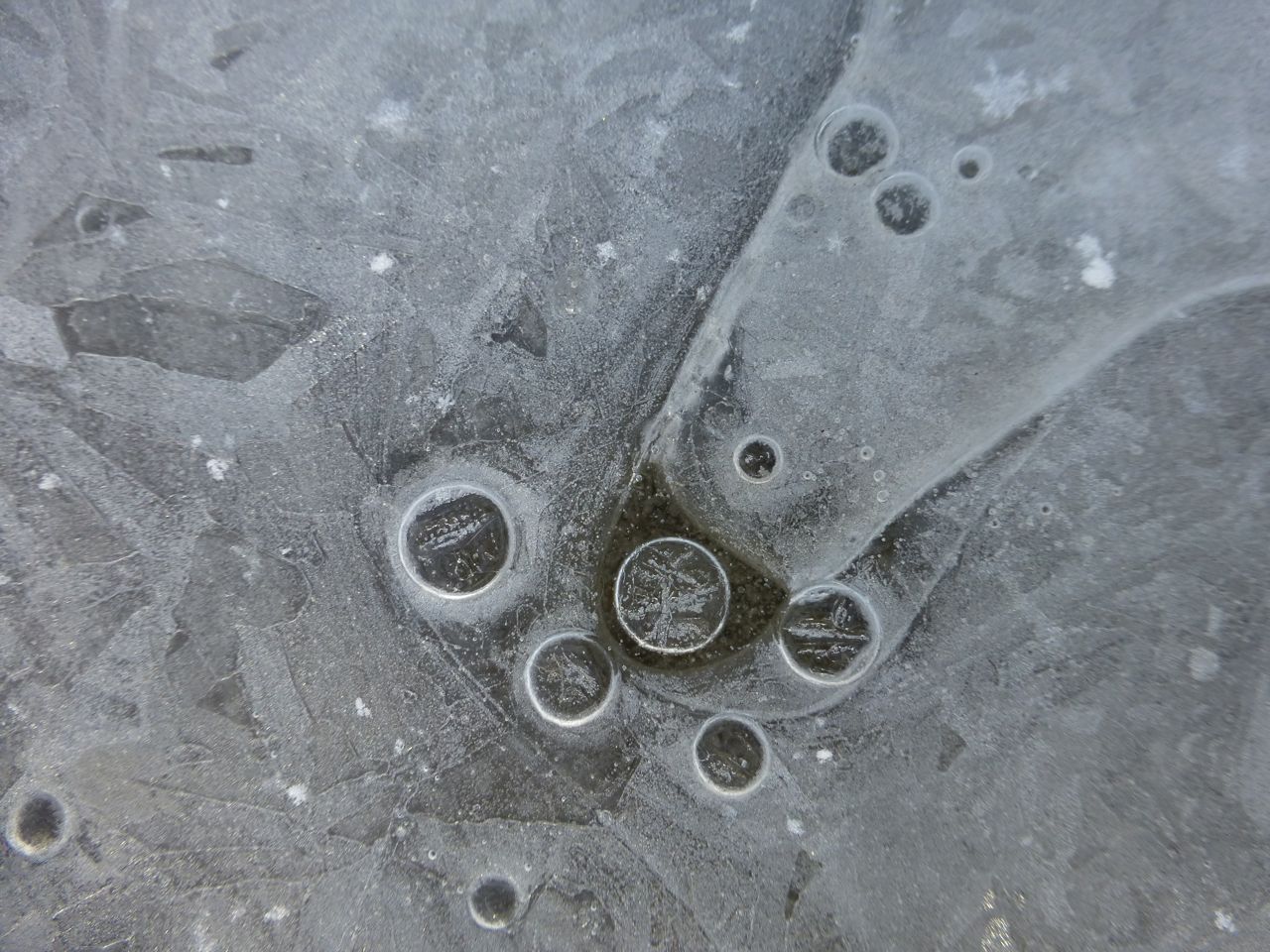
grassline21 Air Caught Within a Seasonal Icelandic Pond

Intersection of Highways 848 and 87

And here’s another:

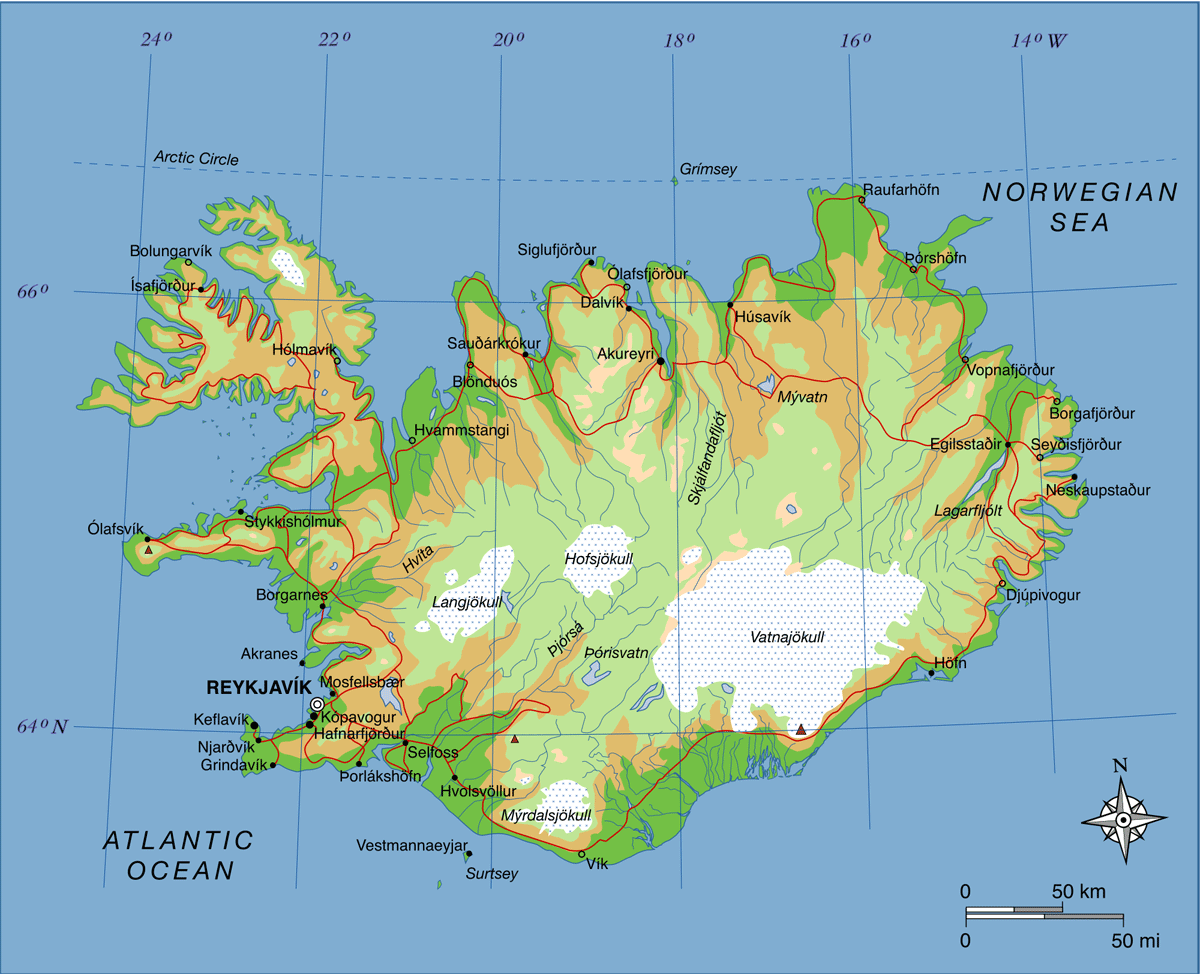
iceland-physical-map

Iceland (Source)

Well, almost a circle. Sort of. If you took off the scrunchy bits. It has a circle-like edge, at any rate. Here, this might be closer:

2maps

Three Maps of Iceland

Two for tourists and one in words to keep tourists away.

That’s a copy of the text “Unser Land” or “Our Land” that Gunnar read on his spring 1940 tour of 50 cities in Germany, immediately after the sod was laid on the roof of his house and just before the German invasion of Denmark and Norway. Here’s how Gunnar starts off:

It rises majestically out of the sea when approached from the water. It grips the heart like a heroic song, touched with eternity, sown with destiny. There is nothing small about its appearance.  Even though its face varies from place to place, it remains integral — a pure vision.

A pure (or untrammelled) vision? It’s like a shaman’s spirit stone or a statue of Mary with the Christ Child. Speaking of which, here’s one:

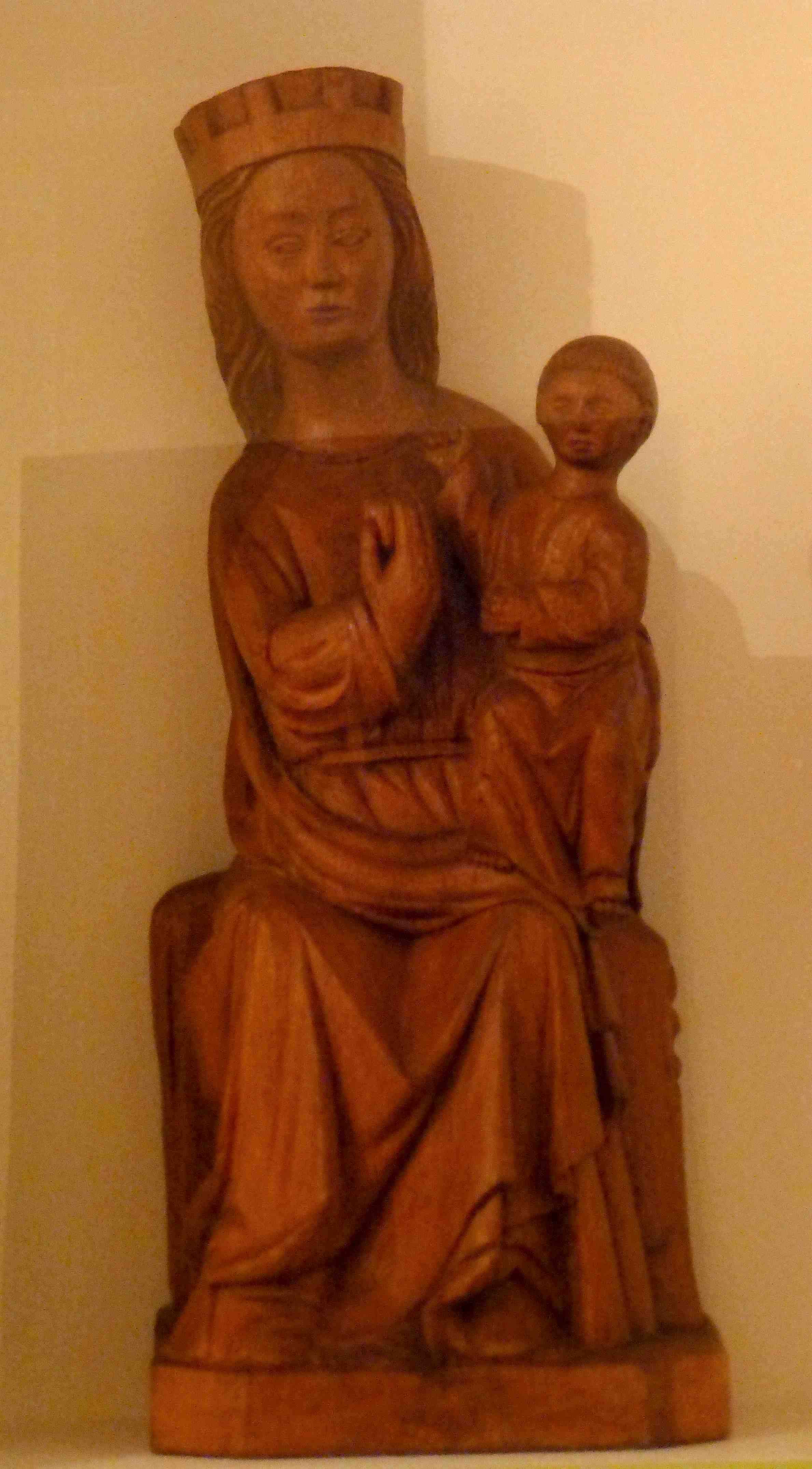
madonna2

The Skriðusklaustur Madonna…

… in her glass box, with reflected light, and looking very Icelandic indeed (replica).

By “pure vision” Gunnar had many things in mind, including nature in its rawest, least adapted, least, shall we say, artistically crafted, farmed, developed, urbanized or written version and the Madonna. Now, even if we accept that Gunnar idealized his mother and lost her at the age of eight, and then bought the farm next door some 45 years later and set up his writing desk where he could look up the valley and see that childhood, which he called the purest image of eternity, and even if we accept that Iceland, the land, is alive and represents human consciousness just as the consciousness of Icelanders represents the land (which, indeed, Gunnar argues in the latter part of his speech), and even if the madonna above comes from his farm in East Iceland, the Madonna and Iceland — or even Gunnar’s farm — just aren’t exactly the same thing. In his text, though, they are. The title gives us a clue as to what he means by that: “Our Land”. Whose land? Apart from raw, physical and spiritual nature, like this …

ice28here are some of the many possibilities:

ourlandThe Our Land Game

In playing this game, it’s good to remember that Gunnar was a showman and a businessman speaking to his main audience: the Germans, who had swarmed (to take a word from the German) to his books for decades. Indeed, they had done so to a whole genre of Nordic romances from Sweden, Norway and Iceland, that was fed, ultimately, into the German war machine. In other words, Gunnar was speaking to two audiences at the same time: Icelanders (himself, most specifically) and Germans who had a longing to get out of Middle Europe and to create a new centre of balance around the Baltic (somewhat removed from them by the Treaty of Versailles). If I’m right, he intended his text to be a cipher, read differently by both groups. The madonna was intended for the Germans. The pure nature for the romantics. The way of looking both ways at once, for himself. Himself, Gunnar was a boy from the fjords of East Iceland, a farm kid, from a long line of farmers. He remained so to the end. In the context of 1940, with German and Russian invasion of Poland a fait accompli and Germany reassertive along the south shore of the Baltic, “Our Land” meant several further things, which I will speak to over the following few days in this Easter season of death and rebirth, grace and forgiveness. One of them was “land to live upon,” a concept which was one of the cornerstones of Germany’s violent foreign policy, by which Germany sought to fulfill what it (or at least Hitler) saw as its “destiny” — another word that Gunnar carefully sows at the beginning of his speech. His audience would have been all ears. In my next post I will discuss the bearing this concept had on Jews and their culture and the horrific story of the Holocaust, but let’s be kind to ourselves. These things are hard and need their time and space to unfold. Until then, look at the world of Gunnar’s nature, islands of air, always different, always the same, and frozen into one picture of pure spiritual vision. Applying this boyhood observation of paradise to the divisive and self-devouring complexities of German political life in the 1930s might have been unwise on Gunnar’s part, but the boyhood observation is a thing of beauty…

iceandlines51


The question is: what does one, as a man, make out of that? And that cross we will carry tomorrow.

Elves and Men in Iceland

In his Book Livet’s Strand (The Shore of Life), written in 1915 during the height of the Great War that destroyed Western Civilization and left us all trying to make sense of the ruins, Gunnar Gunnarsson explored the idea (to heartbreaking length) that the earth is a shore on which life crashes again and again and again. On this shore, life is rescued and lost, celebrated and lost again, and in the end only endured. Today, 98 years later, I’d like to rescue that earth from this apocalyptic image — without denying its truth and the very real anguish which gave birth to it. To set the scene, two posts ago I gave this image of the living sea in the Skaga Fjord, in which I suggested that the sea was life itself and all other life is only a replication of it …

aliveThe Greenland Sea

Very much alive in Skagafjörður

Today I’d like to modify Gunnar’s rather black and white statement with the observation that the land has its own life. For evidence of it, a journey to Skudustaðir on Myvatn (The Lake of the Midges), is well advised. There is life within the stone there — life intimately connected with human consciousness, too. Here, for example …

P1320873House and Barn

That’s Elf House and Human Barn, actually, and the road going north and south. Folk wisdom holds that elves are more beautiful than people and reveal themselves only when they wish. No argument there.

Sure, Tolkein dreamed of his elves and so did the Victorian fabulists, but these are not those elves. Those ones are social and linguistic constructs and physical animations rising from the literalism of Christian civilization. I have deep respect for Christian tradition, but would like to show that in the North it has a very specific and illuminating context. These “elves” or “other people” are bodily perceptions that humans brought here from older continental traditions stretching back into the deep stone age. Here’s some charmed rock …

innerelves

The Other World

Or, to give life to an old phrase that now is a name for bedrock: the living rock. It is not a metaphor, but neither is it one of Tolkein’s stories.

There is, for one thing, a world within the rock, with faces frozen into stone. Now, I will be following up on those faces in the next few days, but today I’m laying down words about the rock as the sculpture that it is …

elfin5

Rock Entrails in Skutustaðir

Open up a human body and you get much the same thing.

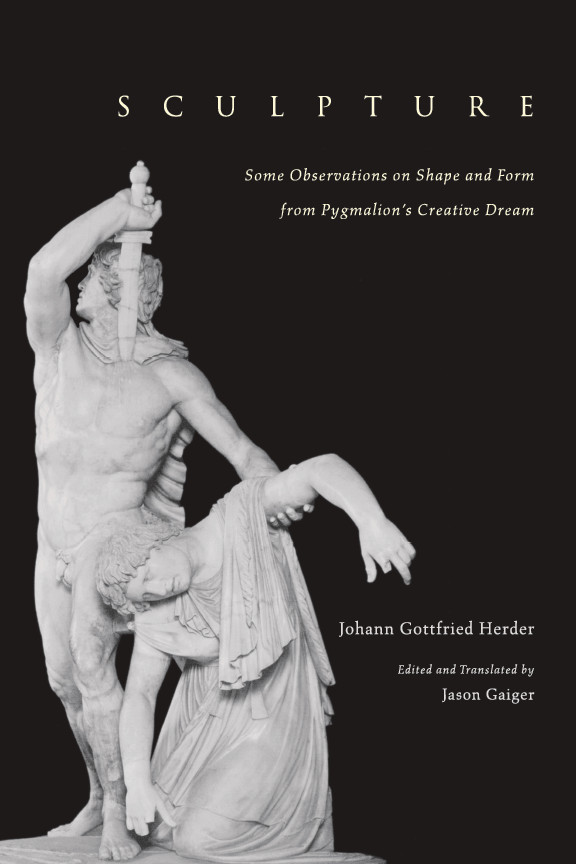
In the 18th Century, the German philosopher Johann Gottfried Herder wrote a vital book on aesthetics that shows light on this kind of art. It has been impeccably translated in a new edition from the University of Chicago.

978-0-226-32755-6-frontcover

The Publisher’s Page on this Book is Here.

In this book, Herder argues that sculpture is a representation of the human body, seen at the intersection of time and space — that three-dimensionality is just this intersection. Intriguingly, to observe this form of mirror, a human must walk around the sculpture, to see it unfold in time. It is a way of movement that anyone knows who has gone walking in the hills and seen their story unfold with each footstep, and sensed them moving behind one’s back. And what does a human see when his or her body is glimpsed within the earth, rather than within the sea, or on Gunnar’s shore?

elfin4Elves in the Their Kingdom

One also sees their sheep…

elfinElvin Ram

These effects are not just observable in the intestines of the stone, mind you. Even the surface stone, it’s skin, the shape it takes on exposure to the sun and human sight, is alive …

elfin6Elvin Sheep Skull with A Halo of LIchen

What do I mean by “alive” in this context? I mean that the stone has the power to cast forth shapes within the observing mind. It is a kind of template. The mind I’m talking about is a point of intersection between humans, earth …

lakeelves1 Lake Elf in the Spring Sun

Skutustaðir, Iceland

 … and with other wanderers from the sea, like these lichens …

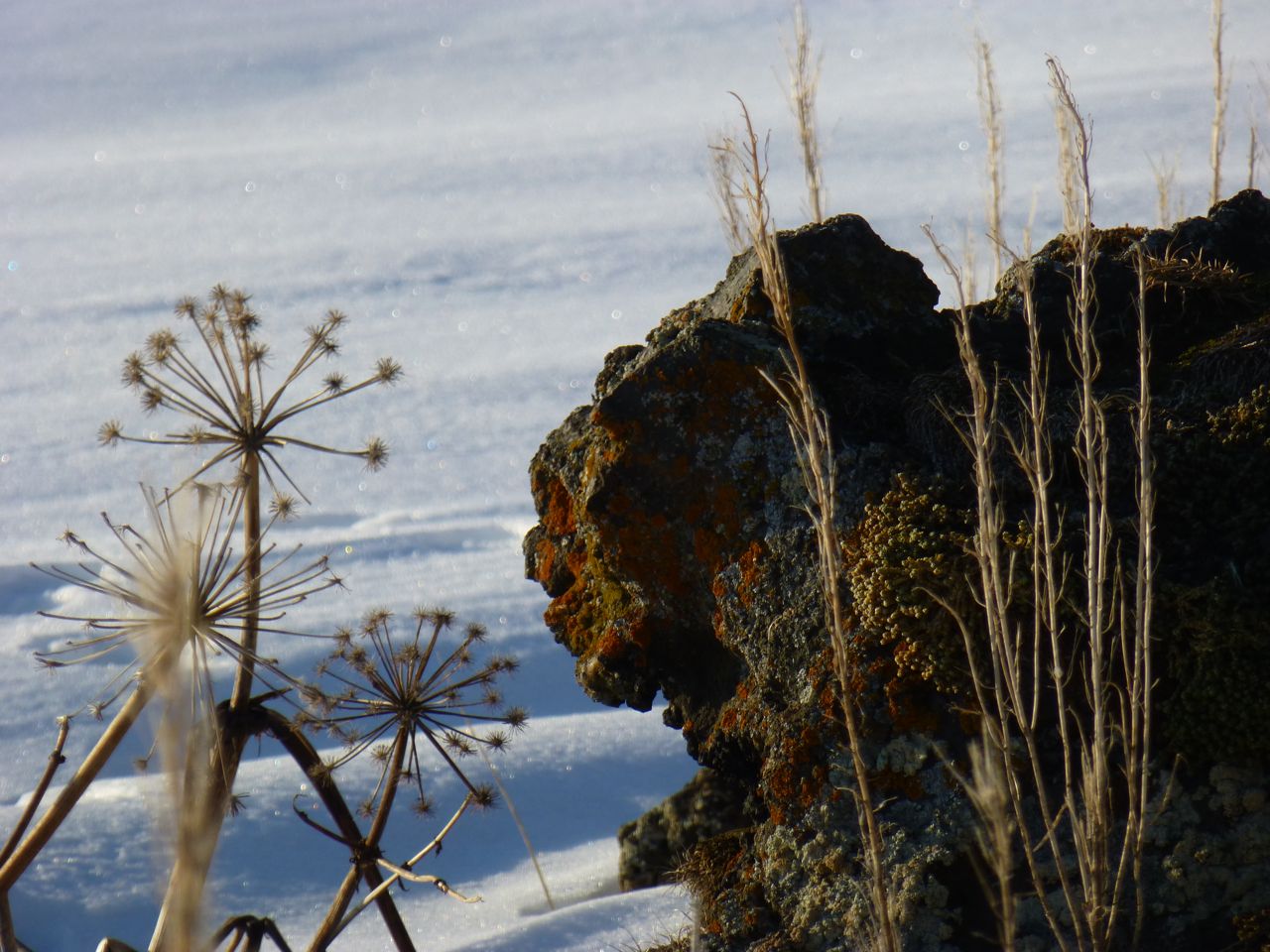
head2Lake Elf with Jewels of Lichen

The orange lichen blooms in the faeces of birds. Cool!

Even more dramatically …

elfsnow2Lake Elf Replicated in Lichen

Sometimes the patterns laid down by the stone allow for these type of human readings to rise directly from the lichens themselves, as the stone is read in time …

elflichen3Lichen Elf

Skutustaðir, Iceland

This is the way the human mind reads the earth. In contemporary terms, ‘reading’ refers to decoding marks on paper, which spell out words, which encapsulate ideas and signify the things of the world, all coloured by human “spells”, traditions, conventions, and cognitive biases. Reading the earth operates on the same principle, with the difference that it came long before spells and words, and is a way of “reading” or participating in the earth with the body, rather than with the mind. Gunnar’s anguish during the Great War was that the link to God had been lost, and that God cared nothing for his people, and was remorseless — as remorseless as nature. That is, in itself, a very modern reading, but in no way does it negate the physical context in which it stands, in which humans stand upon and within the earth, bring forth children upon it, and tell this most ancient story, not of earth as a shore of death on which life, or God, shall we say, crashes and breaks again and again like waves of untrained and disastrously led soldiers marching into the machine guns of the Somme, but is alive. Who are the other people? The question is absurd. They are our selves, built upon the forms of the earth, continually springing to life, indominatable, and enduring.

elfsnow

Tomorrow I will continue this discussion by extending it into the forms of human sight, the line, and the basics of art. Now, I’m going out to walk among the horses of Iceland. Bless bless!